

The two months I’d pick for Tokyo weather are May and November. In the Japan Meteorological Agency’s 1991–2020 normals for the city, May averages a high of 23.6 °C with 10 days of rain, November a high of 16.7 °C with 7, and both sit under 70 percent humidity. Late March to mid-April and the second half of October come next, with more people or more rain to work around.
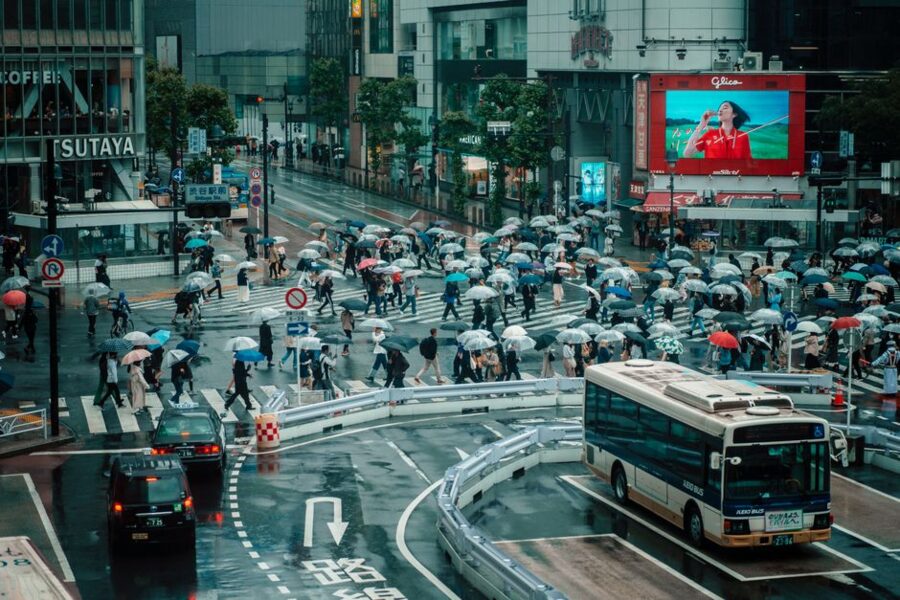
The wettest months are not the rainy season. September (224.9 mm) and October (234.8 mm) out-rain June (167.8 mm), because typhoons and the autumn rain front arrive with heavier downpours; June has the most wet days, 11.6 on average, and the least sun. The hottest month is August, with an average high of 31.3 °C and a low of 23.5 °C. That is the 30-year average, and the summers since 2023 have run far above it.
Three things change a plan. A typhoon, most likely in September, which stops trains on a schedule announced the day before. A heatstroke alert, issued from late April to late October, which on the worst days is my cue to stay indoors from late morning to late afternoon. And snow, which settles on central Tokyo only two or three days a winter and needs only a few centimeters to tangle the rail network.

Tokyo’s climate normals, month by month
These are the Japan Meteorological Agency’s normals for its Tokyo station (平年値, 1991–2020), the 30-year averages every Japanese forecast compares against. A “day of rain” here means at least 1 mm fell. Humidity is the monthly mean of relative humidity, which hides how much higher it climbs on a still summer night.
| Month | Mean high | Mean low | Rain | Days of rain | Sunshine | Humidity |
|---|---|---|---|---|---|---|
| January | 9.8 °C | 1.2 °C | 59.7 mm | 4.5 | 192.6 h | 51% |
| February | 10.9 °C | 2.1 °C | 56.5 mm | 5.2 | 170.4 h | 52% |
| March | 14.2 °C | 5.0 °C | 116.0 mm | 9.2 | 175.3 h | 57% |
| April | 19.4 °C | 9.8 °C | 133.7 mm | 9.5 | 178.8 h | 62% |
| May | 23.6 °C | 14.6 °C | 139.7 mm | 10.1 | 179.6 h | 68% |
| June | 26.1 °C | 18.5 °C | 167.8 mm | 11.6 | 124.2 h | 75% |
| July | 29.9 °C | 22.4 °C | 156.2 mm | 10.5 | 151.4 h | 76% |
| August | 31.3 °C | 23.5 °C | 154.7 mm | 7.9 | 174.2 h | 74% |
| September | 27.5 °C | 20.3 °C | 224.9 mm | 11.0 | 126.7 h | 75% |
| October | 22.0 °C | 14.8 °C | 234.8 mm | 10.5 | 129.4 h | 71% |
| November | 16.7 °C | 8.8 °C | 96.3 mm | 7.4 | 149.8 h | 64% |
| December | 12.0 °C | 3.8 °C | 57.9 mm | 5.2 | 174.4 h | 56% |
| Year | 20.3 °C | 12.1 °C | 1,598.2 mm | 102.5 | 1,926.7 h | 65% |
Two things in the table surprise people. Winter is the sunny season: December, January and February together get more sunshine than June, July and September. And the city is wetter in autumn than in early summer, which matters more than the rainy season’s reputation suggests, because autumn rain comes in fewer, heavier bursts. September and October average more than five days each with 10 mm or more.
The normals also lag the recent heat. The agency’s yearly counts for the Tokyo station show three summers in a row far beyond the average, then a cooler, wetter one.
| Year | Days at 30 °C or more | Days at 35 °C or more | Days the temperature never fell below 25 °C |
|---|---|---|---|
| Normal (1991–2020) | 52.1 | 4.8 | 17.8 |
| 2023 | 90 | 22 | 57 |
| 2024 | 83 | 20 | 47 |
| 2025 | 88 | 29 | 55 |
| 2026 (to November 23) | 58 | 12 | 16 |
The 29 days at 35 °C in 2025 are the most since records began in 1875, and 2023 holds the record for days at 30 °C. If you are planning a July or August trip, plan for the recent summers, not the 30-year line.
The months, one by one
For the trip as a whole, with the seasons in brief, start with the Tokyo travel guide. Month by month, the weather runs like this.
January
January is cold, dry and bright. The average high is 9.8 °C and the average low 1.2 °C, and on about eight mornings the temperature drops below freezing. It rains or snows on four or five days, and on 23 days the sun shines for at least 40 percent of the daylight hours, the best record of any month.
Wear a proper winter coat, a scarf and gloves for the morning and the evening, with lighter layers under them. Trains, shops and restaurants are heated hard, so you will spend the day taking the coat off and putting it back on. Lip balm and hand cream earn their space: average humidity is 51 percent, the lowest of the year.
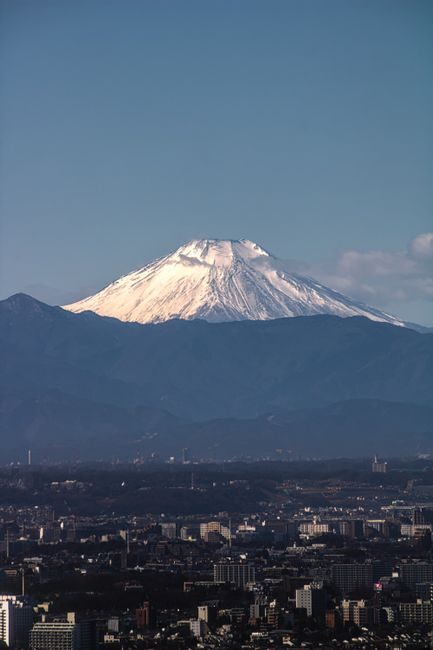
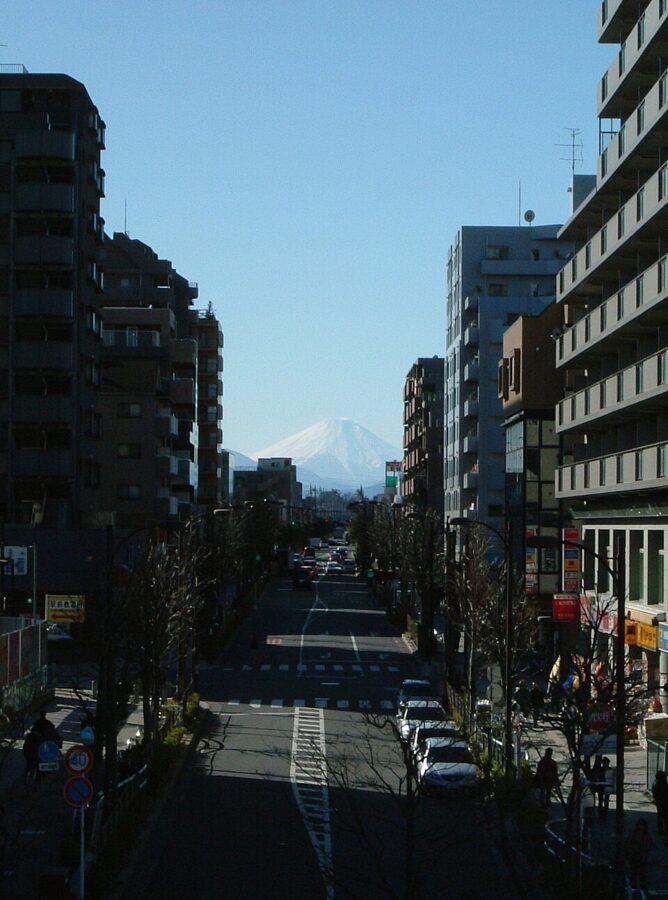
Good for: clear views of Mount Fuji from the observation decks and the western suburbs, short lines at most sights after the first week, and winter sales. Bad for: the first days of the year, when offices close (December 29 to January 3 is the usual break) and many smaller restaurants and museums take time off around them, and for anything that needs long evenings.

February
February is the driest month (56.5 mm) and still cold, with a high of 10.9 °C. It is also the likeliest month for snow: snow falls, at least briefly, on three or four days in an average February, more than in any other month. Most of it melts by noon.
The wind picks up toward the end of the month. February and March each average more than two and a half days with winds of 10 meters per second or more, the gusty northwesterlies that make a 10 °C afternoon feel several degrees colder. Dress as for January, and add a hat if you burn easily: the air is dry and the sun is strong.
Good for: plum blossom (the agency’s sample plum tree in Tokyo flowered on January 14 in 2026 and January 29 in 2025, so the trees are in flower through February), quiet museums and cheap hotel rates outside the long weekends. Bad for: the start of cedar pollen season. The Tokyo Metropolitan Government’s 2024 pollen forecast put the ten-year average start at about February 15 and expected about 35 days of high counts in the 23 wards that spring.
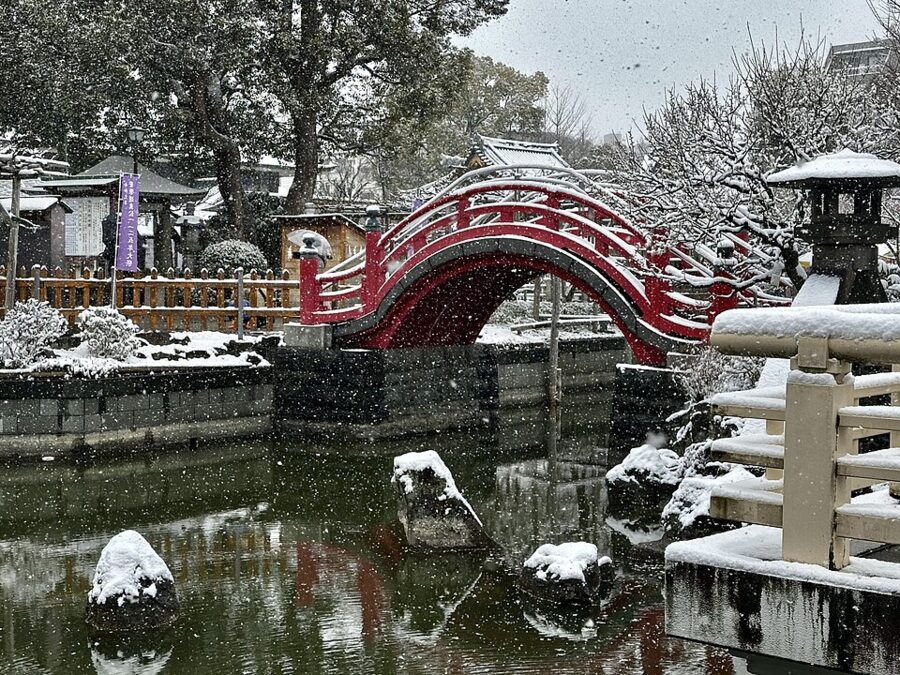

March
March is the month the weather can’t decide. The average high climbs to 14.2 °C, but a warm day in the 20s can be followed by a cold rain in single digits, and rainfall doubles from February to 116 mm over nine days. Snow is possible into the last week: 1 cm settled on March 29, 2020, on trees already in blossom.
Pack layers rather than one heavy coat: a light down jacket or a lined trench, a sweater, and a shirt you can strip down to in a heated train. An umbrella starts to earn its place in the bag.
Good for: the start of cherry blossom season. The agency’s sample tree at Yasukuni Shrine flowers on March 24 on average and reaches full bloom on March 31, and the actual dates swing widely: flowering came on March 14 in 2021 and 2023 but March 29 in 2024, and in 2026 it opened on March 19 and was in full bloom on March 28 (the agency’s cherry records). Bad for: prices in the last week of March, when spring school holidays and the blossom arrive together.
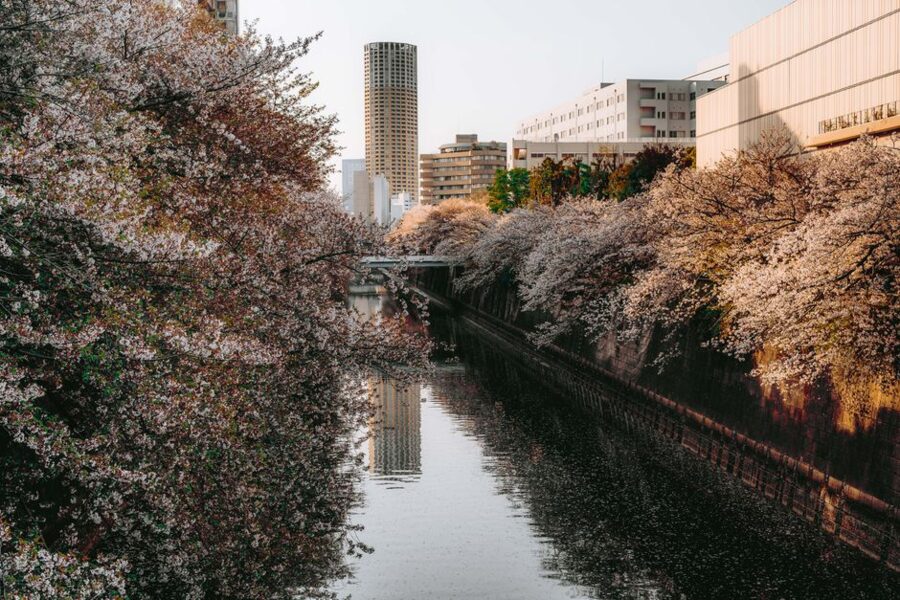
April
April is mild and changeable: a high of 19.4 °C, a low of 9.8 °C, and nine or ten days of rain. The first week usually holds the end of the blossom; after that the city turns green fast. The occasional warm day reaches 25 °C (two in an average April), and the evenings stay cool.
A light jacket or cardigan over a long-sleeved shirt covers most days. Bring something warmer for the evening if you plan to sit outside, and a compact umbrella.
Good for: walking, gardens and day trips in the cool weather, and the second half of the month, when the blossom crowds have gone and Golden Week has not yet arrived. Bad for: April 29 onward, the start of Golden Week, the national holidays that run into early May and fill trains, hotels and every sight within reach of the city. The heatstroke alert season also starts in late April, though the index rarely gets near alert level that early.
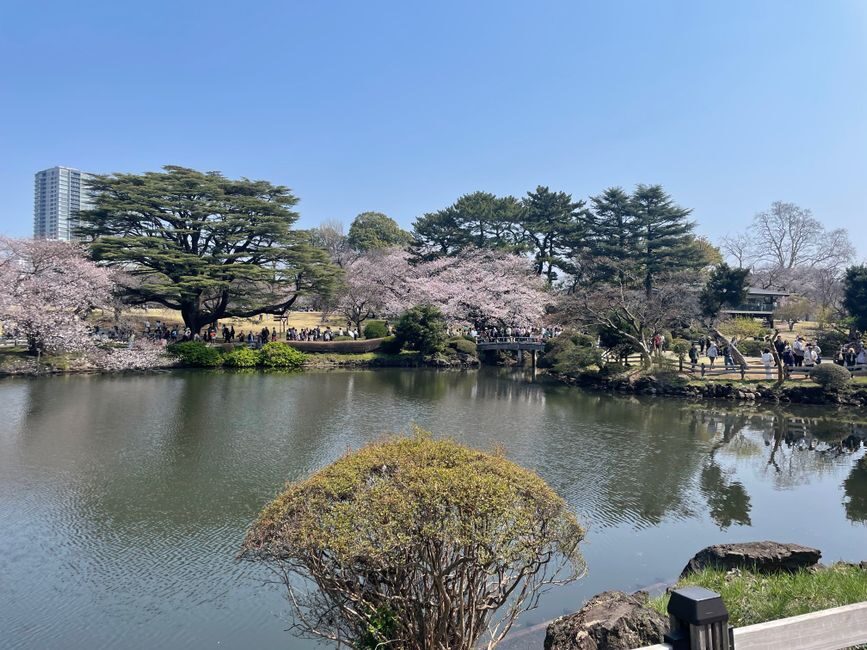
May
May is my pick for the best weather of the year. The high is 23.6 °C, the low 14.6 °C, humidity 68 percent, and the month gets 179.6 hours of sunshine, more than any month except January. Twelve days in an average May reach 25 °C, and it starts to feel like early summer by the last week.
Short sleeves for the day, a light layer for the evening. Sunscreen matters more than people expect: the sun is near its highest and the air is still clear.
Good for: everything outdoors, from walking the city to hiking and the Fuji area, which in May often still has snow on the summit. Bad for: the first days of the month, when Golden Week crowds peak, and for anyone who assumes May is dry. It averages 139.7 mm over ten days, and in 2025 it brought 206 mm.
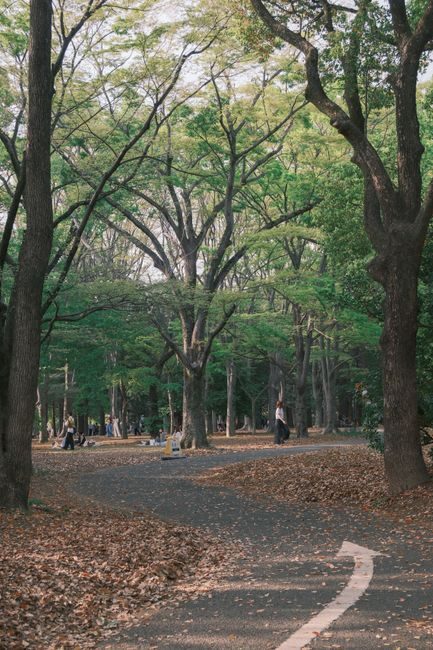
June
June is the rainy season (tsuyu, 梅雨). The normal start for the Kanto-Koshin region, which includes Tokyo, is June 7, and the month averages 11.6 days of rain and 124.2 hours of sunshine, the least of the year. It rarely rains all day every day; it is overcast, warm (a high of 26.1 °C) and sticky, with 75 percent humidity, and the drizzle comes and goes.
Dress for warm and wet: quick-drying clothes, shoes that survive a puddle, and a compact umbrella that lives in your bag. Leave the leather shoes at home. Indoors the air conditioning starts in earnest, so a thin layer helps on a long train ride.
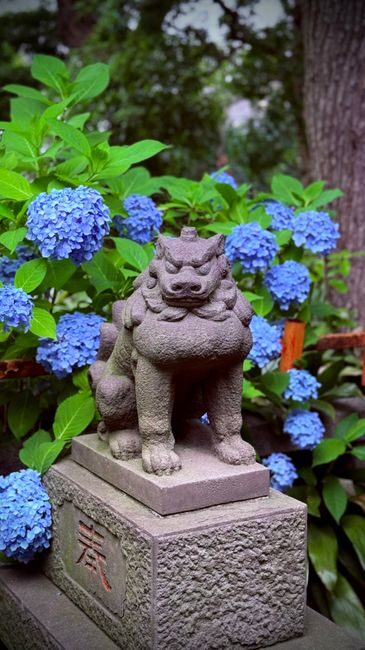
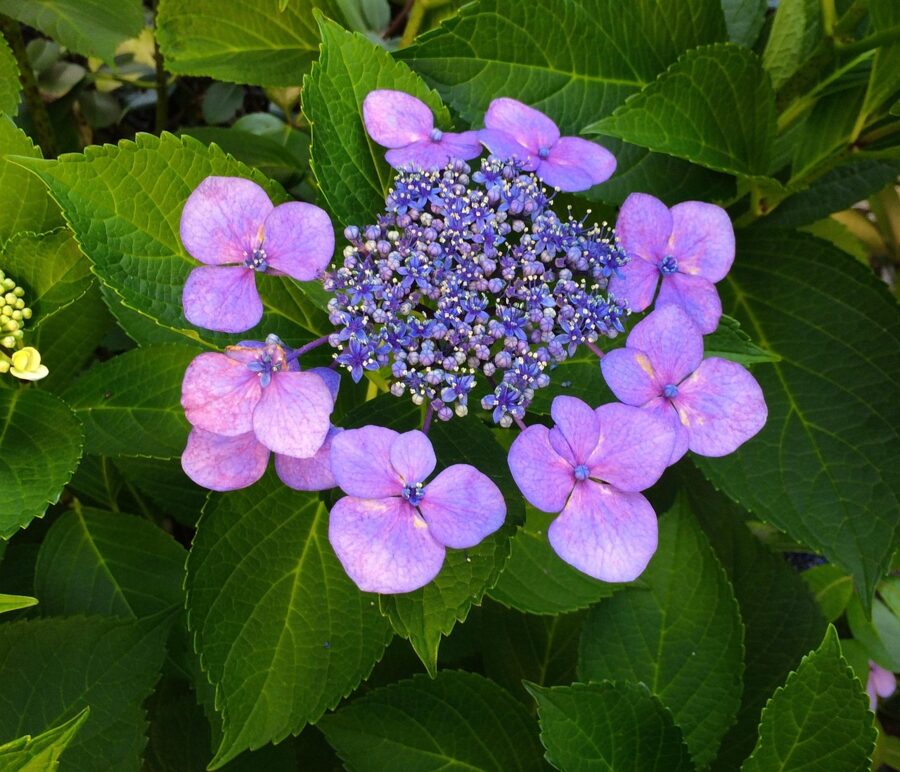
Good for: hydrangeas, which flower right on cue (the agency’s sample shrub opened on June 1 in 2026 and June 6 in 2025), shorter lines at the big sights, and the indoor city: the rainy-day things to do in Tokyo are at their best. Bad for: views and photographs, and for a year like 2026, when June brought 436.5 mm, about two and a half times the normal.
July
July starts wet and ends hot. The rainy season’s normal end is July 19, and after it the high climbs from the mid-20s to the low 30s; the month averages 29.9 °C by day, 22.4 °C at night and 76 percent humidity, the highest of the year. Seventeen days in an average July reach 30 °C, and thunderstorms arrive on late afternoons.
Wear the lightest clothes you own, in fabrics that dry fast. A hat, sunscreen, a refillable bottle and a small towel or handkerchief for the sweat are standard kit here; many Tokyo commuters carry all four. Keep a thin layer for the air-conditioned trains.
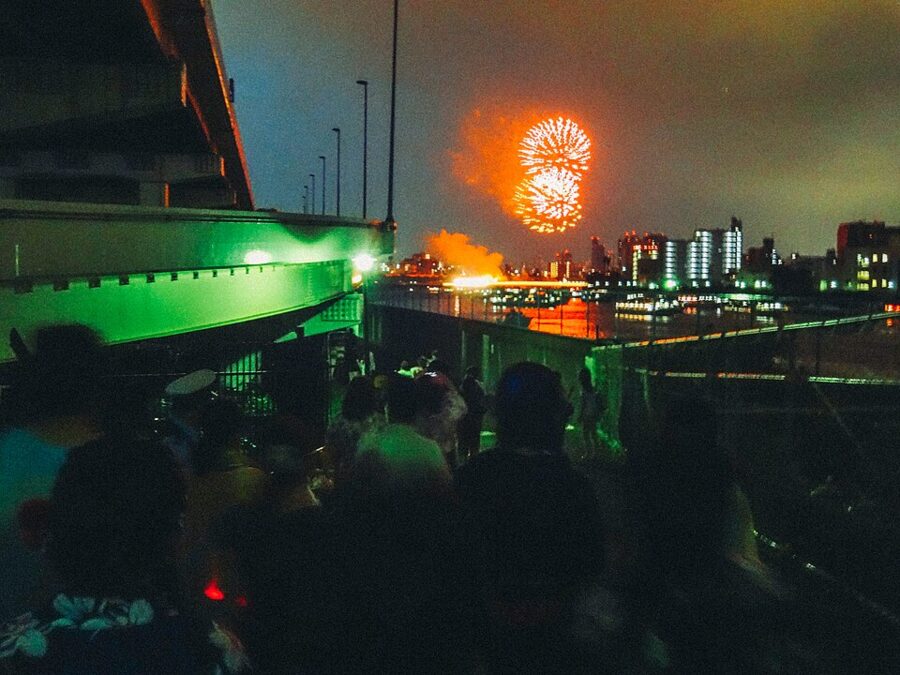
Good for: summer festivals and fireworks, beer gardens, and Mount Fuji, whose official climbing season opens in July. Bad for: the second half of the month, when the school holidays and the full heat arrive together. I would not schedule a long outdoor day in Tokyo after the rainy season ends without a plan for the early afternoon. Summer storms are the other risk to an evening outdoors: the Sumida River Fireworks Festival, held on the last Saturday of July, was called off at 19:40 on July 27, 2013, less than half an hour in, after heavy-rain and flood warnings and a thunder advisory.

August
August is the hottest month: an average high of 31.3 °C, an average low of 23.5 °C, and 22.6 days at 30 °C or more in the normals. Recent summers have been worse. August 2025 averaged 29.6 °C for the whole month, day and night, tying August 2010 as the hottest month on record, and the year’s top temperature, 38.5 °C, came on August 30.
Dress as for July and plan the day around the heat: outdoor sights from opening until about 11:00, museums, department stores and long lunches through the afternoon, and the evening outside again. August also has the most thunderstorms, about three days a month, usually short and violent late in the day.
Good for: the best beer-garden and night-market weather of the year, and indoor attractions with good air conditioning. Bad for: Obon week in mid-August, when much of Tokyo travels and the trains out of the city are full, and for children and older travelers, who suffer most in the heat. Typhoons start to reach the Kanto region this month (0.8 in an average August).

September
September is still summer with an umbrella. The average high is 27.5 °C and eight days reach 30 °C, but the defining number is rain: 224.9 mm on average. September 2026 brought 696.5 mm and only 45.8 hours of sunshine, the second-wettest and second-dullest month in Tokyo’s record (the agency’s 2026 monthly figures). September is also the peak for typhoons, with 1.2 approaching the Kanto-Koshin region in an average year.
Pack for July with a better umbrella and shoes that can take a soaking. Keep a day or two of slack in the itinerary for a typhoon; a trip that depends on a single day (a flight, a ticketed visit, a day trip) should have a fallback.
Good for: fewer people than August once the school holidays end, and the first cool evenings at the end of the month. Bad for: the heat in the first half, the rain, and anyone with a tight schedule. The heaviest single day of rain on record in Tokyo was 371.9 mm on September 26, 1958, when the Kanogawa typhoon passed.
October
October is the wettest month by total, at 234.8 mm, and also the month the city cools down: the average high of 22.0 °C hides a slide from summer-like days at the start to jacket weather at the end, and the humidity drops with it. The early part still sees typhoons (0.7 in an average October), and October 2004 holds the record for the wettest month in Tokyo, 780 mm.
Long sleeves for the evening and a light jacket by the end of the month. An umbrella stays essential until the last week.
Good for: the second half, which is often clear, dry and comfortable, and the start of the season for clear Fuji days. Bad for: the first half in a wet year. October 2025 got only 74.1 hours of sunshine against a normal of 129.4, and on October 12, 2019, Typhoon Hagibis brought the second-strongest gust ever measured in the city.
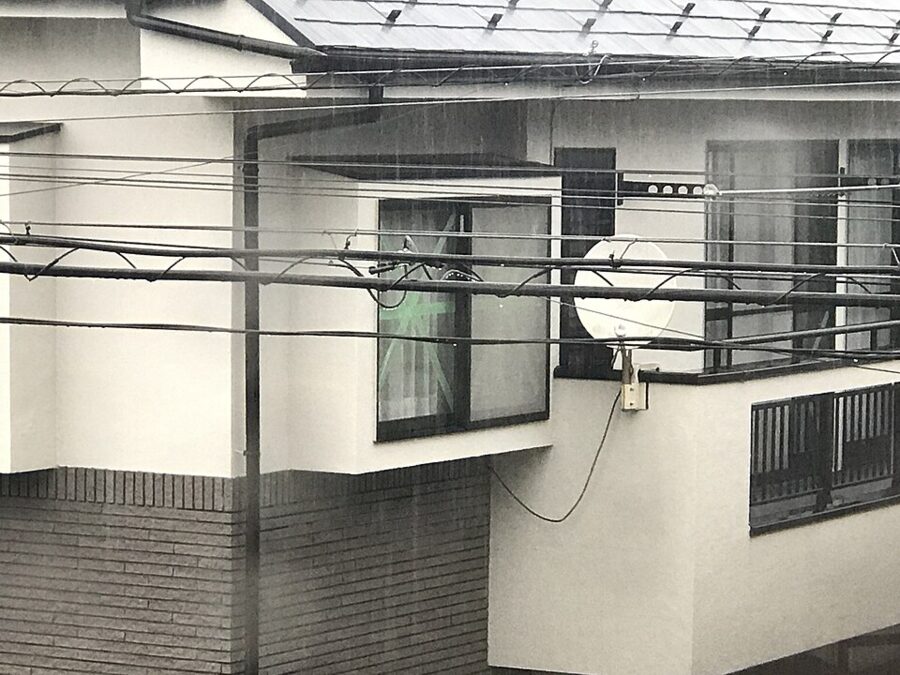

November
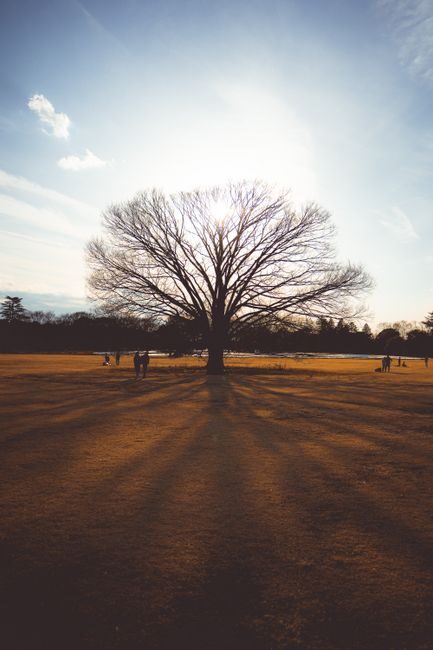
November is the other month I’d choose. The high is 16.7 °C, the low 8.8 °C, rain falls on seven days, and humidity is down to 64 percent. Most days are clear and still, and the light is low and golden by mid-afternoon.
Bring a sweater and a light coat, and a warmer one for the last week. The heating comes on indoors toward the end of the month.
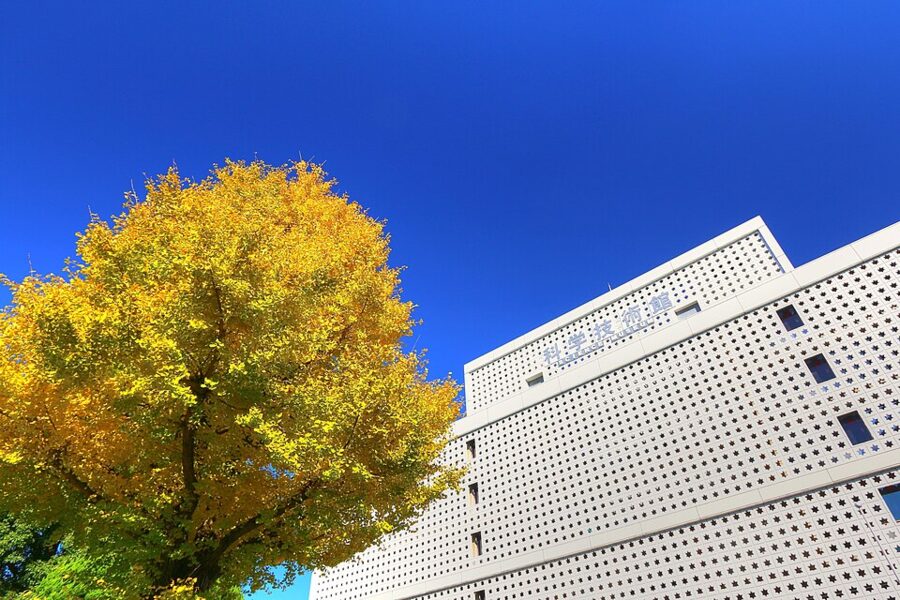
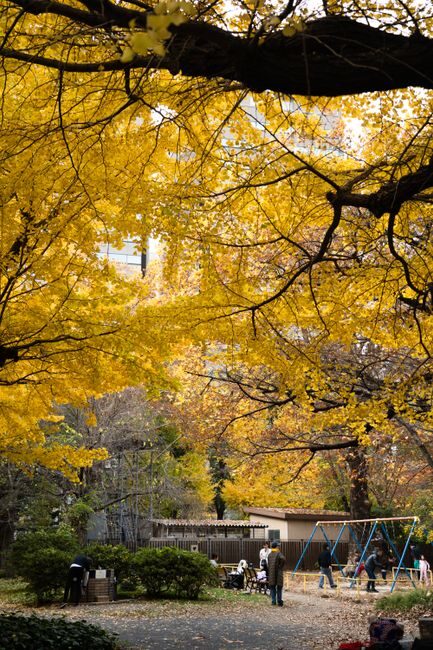
Good for: autumn color in the city parks and gardens. The agency’s ginkgo tree turned yellow on November 22 in 2025, against a normal of November 23 (ginkgo records), and its maple turned red on November 23, five days before the normal of November 28 (maple records). In central Tokyo the color peaks from late November into early December. Bad for: the busiest weekends at the famous leaf spots, and for the end of daylight: by the end of the month the sun sets before 16:30.
December
December is cold, clear and short. The high is 12.0 °C, the low 3.8 °C, rain falls on five days, and the month averages 174.4 hours of sunshine. December 2024 got 0.5 mm of rain in the whole month. The days are the shortest of the year: the National Astronomical Observatory’s table for Tokyo puts sunset at 16:28 from December 1 to 13 in 2026, and sunrise as late as 06:50 by the end of the month.
A winter coat from mid-month, with layers under it. Gloves for the evenings.
Good for: the last autumn leaves in the first week, clear mountain views from the city, and the illuminations that line the business districts after dark, which suit the early sunsets. Bad for: the last days of the month, when businesses start closing for New Year and long-distance trains are full.

The rainy season (tsuyu)
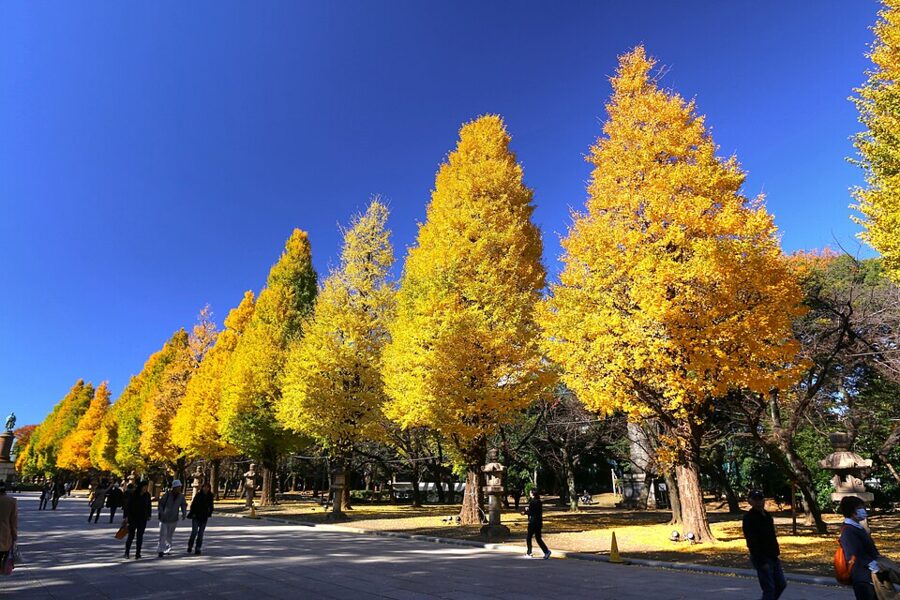
The agency’s normal dates for the Kanto-Koshin rainy season are about June 7 for the start and about July 19 for the end, the 1991–2020 averages. They are dates for a change of weather pattern, not a switch. The agency says each start and end sits in the middle of a transition that usually takes about five days, and it fixes the official dates only after the summer, from what the weather actually did; the real-time announcement in June or July is provisional.
The spread is wide. The agency’s record since 1951 has starts as early as about May 22 (2025) and as late as about June 22 (2007), and ends from about June 28 (2025) to about August 4 (1982). In 1993 it could not name an end date at all. Recent years:
| Year | Start | End | June–July rain against normal |
|---|---|---|---|
| 2022 | about June 6 | about July 23 | 91% |
| 2023 | about June 8 | about July 22 | 110% |
| 2024 | about June 21 | about July 18 | 113% |
| 2025 | about May 22 | about June 28 | 73% |
| 2026 | about June 2 | about July 19 | 136% |
What it means on the ground: gray skies most days, drizzle that stops and starts, and an occasional heavy downpour. June averages 11.6 days with at least 1 mm of rain, so more than half the days stay dry or close to it, but you rarely get a clean blue one. The air is warm and damp, and clothes take a long time to dry in a hotel room.
I would not cancel a trip over it. The rainy season is a good time for museums, food, department stores and the covered shopping streets, for the hydrangeas, and for hotel rates. It is a bad time for anything that depends on a view: Mount Fuji hides for weeks, and the observation decks look at cloud.

Summer heat: the alerts, the shelters and the humidity
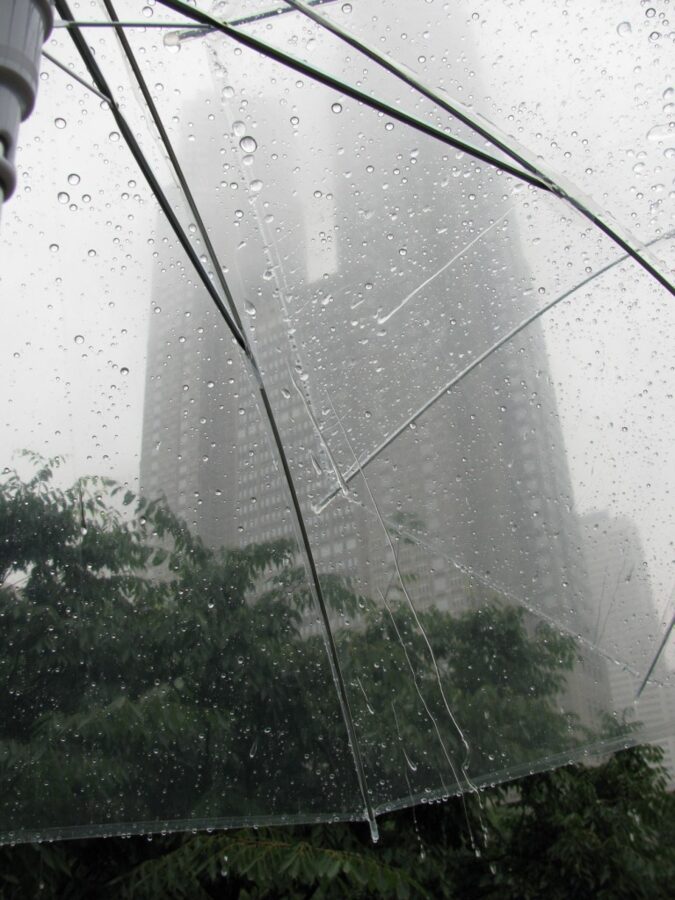
The temperature on the forecast understates a Tokyo summer, because the humidity does the damage. That is why Japan’s heat warnings use the wet bulb globe temperature (WBGT, 暑さ指数), an index built from air temperature, humidity and sunlight, instead of the thermometer. The Ministry of the Environment’s English heat page grades it in five bands: under 21 is almost safe, 21–25 caution, 25–28 warning, 28–31 severe warning, and 31 or more danger.
Two alert levels sit on top of the index. A heatstroke alert (熱中症警戒アラート) is issued for a prefecture when the forecast WBGT reaches 33 at any monitoring point in it, at 17:00 the day before and again at 05:00 on the day. A special heatstroke alert (熱中症特別警戒アラート), created in April 2024, comes when every monitoring point in the prefecture is forecast to reach 35; it is issued at 14:00 the day before. For these alerts, “Tokyo” means the 23 wards and the Tama area, not the islands.
The alert season runs from late April to late October; the 2026 season ended on October 21 at 05:00, and the ministry plans to start the 2027 one in late April. On an alert day the advice is plain: stay in air-conditioned places, drink and take salt often, and stop exercise anywhere you can’t keep cool. On a special alert day, schools, employers and event organizers are asked to cancel, postpone or change outdoor activity wherever they cannot keep everyone cool.
The city’s answer is a network of cool places. Under the revised Climate Change Adaptation Act, in force since April 2024, each ward and city can designate cooling shelters (クーリングシェルター), usually libraries, community centers and shopping centers with air conditioning, which must open to the public when a special alert is issued. The Tokyo Metropolitan Government adds its own TOKYO Cool Share Spots, registered since the summer of 2023 and including parks and waterside places, and maps both on its heat portal during the season (the metropolitan government’s cooling shelter page; the 2026 listings closed in October). Across Japan, 1,262 municipalities had designated cooling shelters as of October 20, 2026, according to the ministry’s shelter list.
In practice, you rarely need a designated shelter in central Tokyo. Every station concourse, department store, convenience store and underground mall is cooled, and the city is built to move between them. What you need is the habit: water before you are thirsty, a hat, shade on the walk between stations, and an afternoon indoors.
Watch the nights as well as the days. The low in August averages 23.5 °C, and in 2023 the temperature stayed at 25 °C or above all day and night on 57 days. The warmest night on record, a low of 30.4 °C, came on August 11, 2013, according to the agency’s Tokyo records. Check that your hotel room’s air conditioner works on the first night, not the third.
Typhoons
A typhoon counts as approaching a region when its center comes within 300 km of one of the agency’s stations there. By the agency’s count for Kanto-Koshin, the normal is 3.3 a year: 0.2 in June, 0.4 in July, 0.8 in August, 1.2 in September and 0.7 in October. Real years swing around that, from one approach in 2015 to six in 2016, 2018 and 2025.
Most typhoons that approach do not hit Tokyo head-on. They bring a day of heavy rain and strong wind, sometimes two, and the agency publishes the forecast track several days ahead. Tokyo’s strongest measured gust, 46.7 meters per second, dates from September 1, 1938, and the second-strongest came with Hagibis in 2019.
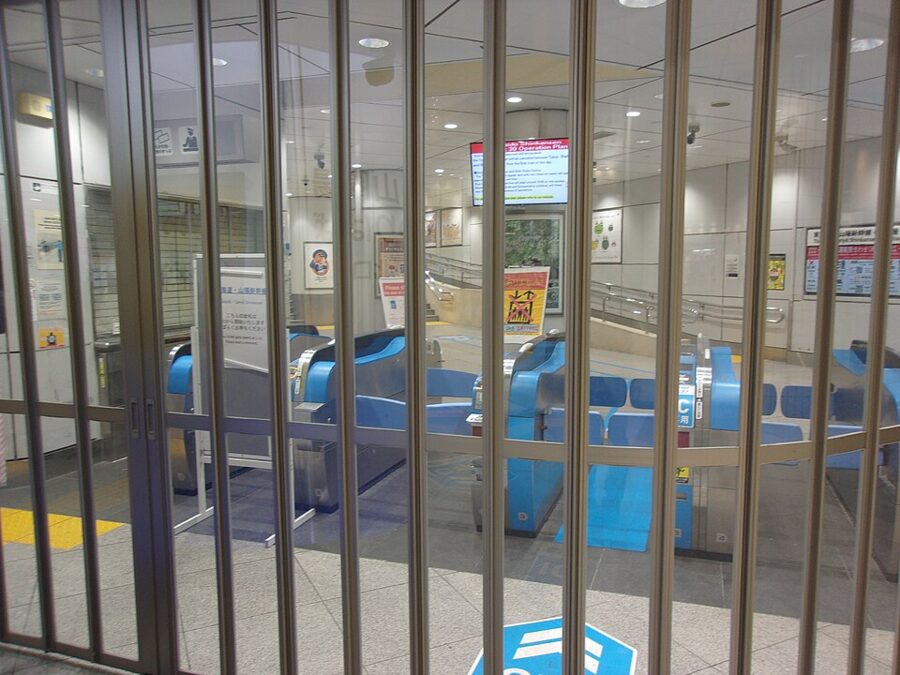
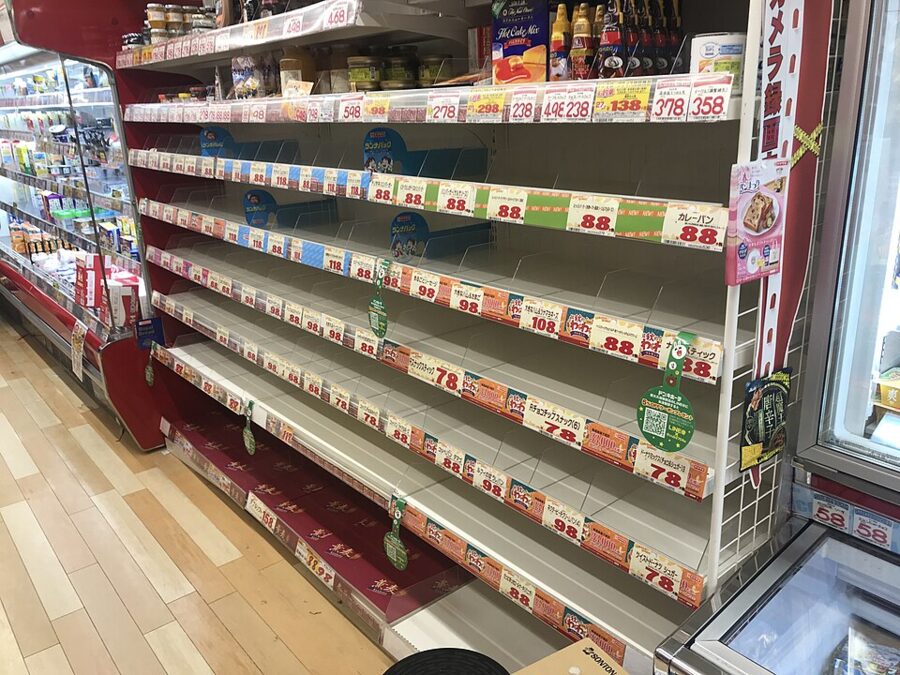
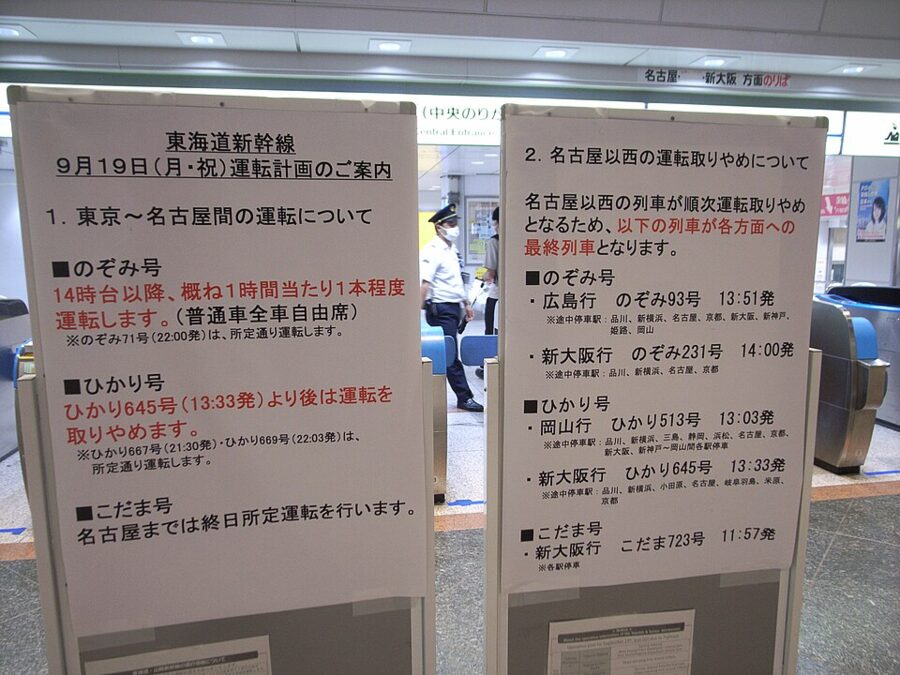
A typhoon day in Tokyo runs on a timetable. Railways announce planned suspensions (計画運休) a day or more ahead: on August 16, 2024, for Typhoon Ampil, JR Central cancelled every Tokaido Shinkansen train between Tokyo and Nagoya for the whole day, and Tokyo Metro said it would suspend the Tozai Line between Toyocho and Nishi-Funabashi from around 12:00. Shops and restaurants close early, shelves of bread, water and instant food empty the day before, and by mid-afternoon the city is shut indoors.

The morning after can be slow. On October 1, 2018, after Typhoon Trami passed overnight, JR East held every conventional line in the Tokyo area at the first train while crews checked tracks for fallen trees and debris, and lines reopened one at a time. Flights take longer to recover: that same day Japan Airlines and All Nippon Airways cancelled 183 flights between them, mostly at Haneda and Itami, affecting about 24,500 passengers.
What to do: check the track a few days out, move anything that needs a train or plane away from the forecast day, stock water and food the day before, and stay in. The day after a typhoon passes is often clear and hot. The guide to getting around Tokyo covers how the trains, the last train and the ticket refunds work when the network stops.


Winter: clear days and the rare snow
A Tokyo winter is dry and bright. January’s average cloud cover is 4.3 tenths of the sky, half of June’s 8.5, and from December to February the city averages more than 500 hours of sunshine. Northwest winds come down off the mountains having dropped their snow on the Sea of Japan side, which is why Tokyo stays clear when Niigata is buried.
That clear air is the season’s gift. Winter mornings are the best time to see Mount Fuji from the city, and the time to pay for an observation deck: Tokyo Skytree and Tokyo Tower both face it across the western suburbs. It is also the season for the clear-day day trips from Tokyo, above all to the lakes north of Mount Fuji.
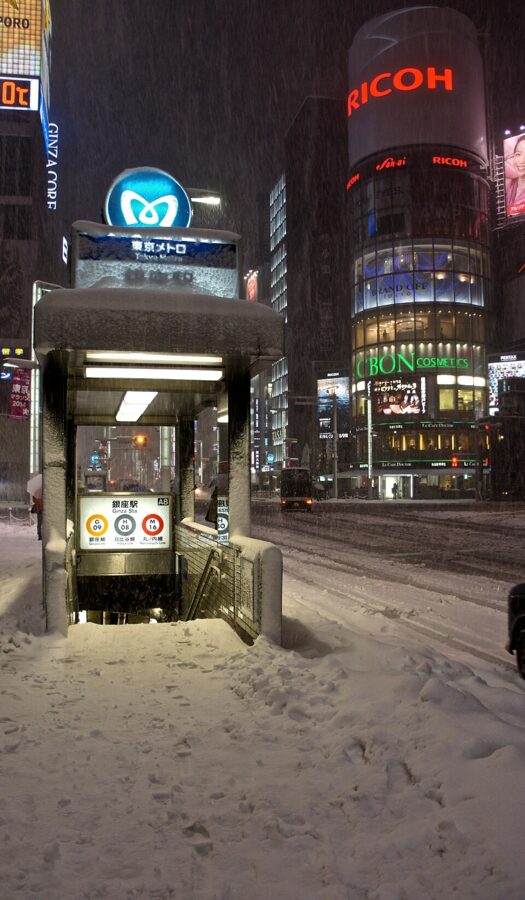
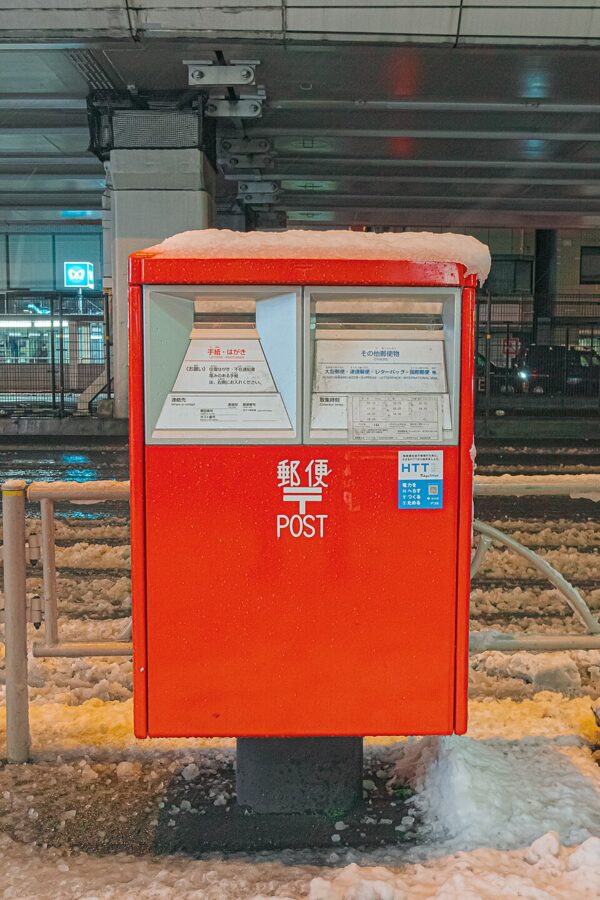
Snow is a different matter. The agency’s normal is 8 cm a year, falling on about eight days, but snow settles to a depth of 1 cm or more on fewer than three days in an average winter, and many winters bring almost nothing: the 2024–25 winter’s deepest snow was 1 cm, on March 19. Then a low-pressure system tracks along the south coast and the city gets a real fall. On February 8, 2014, 22 cm fell in a day, and after a second storm a week later the snow lay 27 cm deep, the deepest since 1969; on January 22, 2018, 23 cm fell in a day.
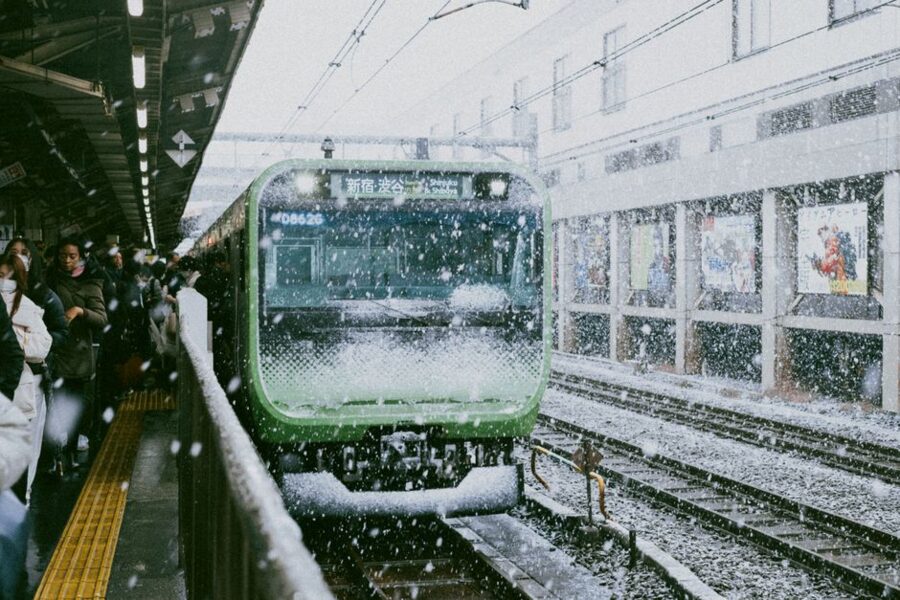
Tokyo is not built for it. On the night of February 5, 2024, when 8 cm settled, two Yurikamome trains stopped on the raised guideway near Takeshiba and Shiodome and passengers walked along the guideway to the next station; the next morning parts of the JR Chuo and Ome lines and the whole Yokohama Line were stopped, and the Tokyo Fire Department said about 120 people had been taken to hospital, mostly after falls. The Tokaido Shinkansen ran at reduced speed between Shinagawa and Odawara.
If snow is forecast: get where you are going the evening before, wear shoes with grip (smooth city soles on packed snow are the cause of those hospital trips), and expect taxis to vanish. The day after is usually bright and the snow melts fast in the sun.


What to pack, season by season
Tokyo is a city of walking and public transport, so the rule is clothes you can wear for hours outside and then sit in a heated or air-conditioned train. Layers beat one heavy item in every season.
- Winter (December–February): a warm coat, scarf, gloves and a hat for mornings and evenings, light layers under them for heated interiors, lip balm and moisturizer for the dry air, and shoes with grip in case of snow.
- Spring (March–May): a light down jacket or lined coat in March, a light jacket in April, short sleeves with a layer for the evening in May, a compact umbrella, and sunscreen from late April. Antihistamines if you react to pollen.
- Rainy season and summer (June–August): quick-drying, breathable clothes, shoes that tolerate water, a compact umbrella, a hat, sunscreen, a refillable bottle, a small towel, and one thin layer for cold trains and offices. Twice as many changes of shirt as you think.
- Autumn (September–November): summer clothes and a strong umbrella for September, long sleeves and a light jacket for October, a sweater and coat by late November.
Two things you can skip: a heavy raincoat, since umbrellas are sold everywhere and the rain is warm for half the year, and a big winter parka for Tokyo alone; it is a city of 1 °C mornings, not -10 °C ones. If you add a ski or snow trip to the itinerary, that changes.
Forecasts and warnings worth using
The Japan Meteorological Agency’s own forecast and warning map in English is the primary source behind Japanese forecasts: daily and weekly forecasts, warnings for heavy rain, wind, snow and storm surge, and the typhoon track. Warnings there are issued by ward and city, so you can see whether yours is under one.
For alerts on your phone, two free apps push warnings in English. NHK World-Japan’s news app sends earthquake, tsunami and weather emergency warnings along with English breaking news. The Japan Tourism Agency’s Safety tips app pushes earthquake early warnings, tsunami warnings and weather warnings in 15 languages.
For trains, the operators publish their own status in English. JR East’s English service status for the Kanto area lists delays and suspensions line by line. On hot days, the ministry’s heat page gives the current index and the forecast for monitoring points across Tokyo.

One habit makes the difference: check the weekly forecast on the evening you arrive, and again each evening after. A planned suspension, a heat alert and a special heat alert are all announced the day before, and the people caught out are the ones who looked on the morning. May and November rarely need checking at all, which is the other reason they are the months I’d pick.