

Most of the bars in Golden Gai (ゴールデン街) open around 20:00, charge ¥500–1,500 for the seat before the first drink, and hold five or six people. The last JR Yamanote Line trains leave Shinjuku at 00:41 and 00:44. That gives a first night about four hours, which is room for two bars, maybe three, and not for a crawl.
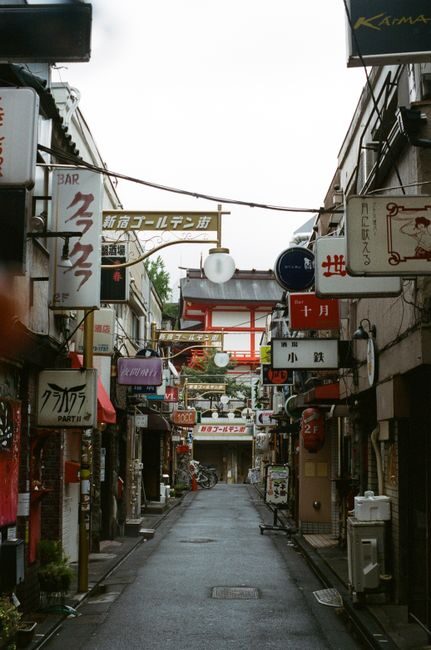
The rest is easier than its reputation. Look at the door before you open it: bars that want first-timers usually say so there, often with the charge written up in English. Go in a pair or a three, not a six. Carry cash, ask the price if it isn’t posted, and leave the phone in your pocket in the lanes, because photography on these private alleys needs a permit and a fee.
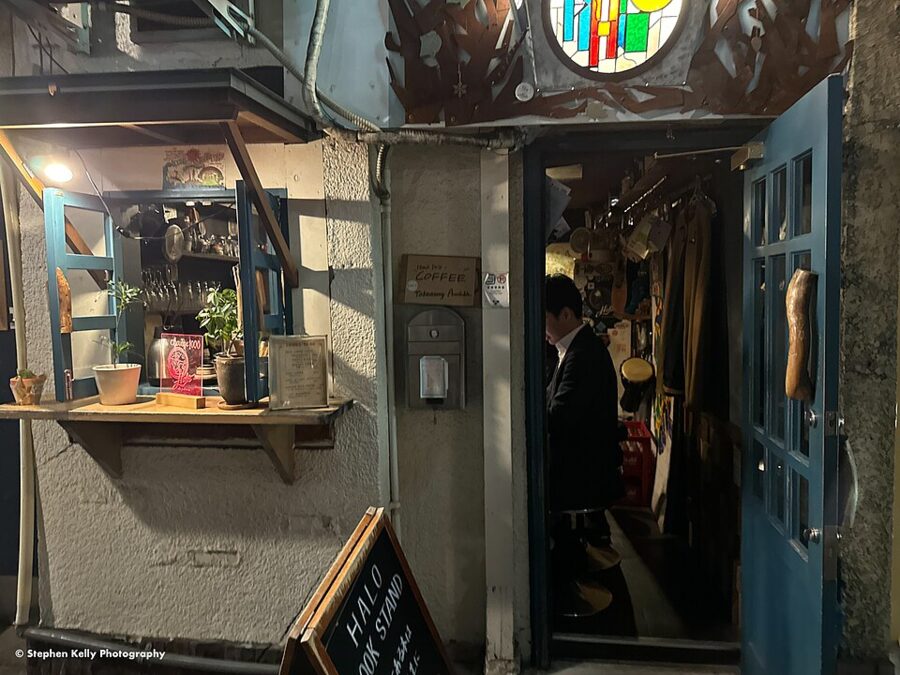

For the night by district, Shibuya and Roppongi included, the Tokyo nightlife guide covers the city, and the guide to Shinjuku covers the station, the west side and the gardens. Golden Gai is one block of that, about 280 bars that began as a postwar black market, and it runs on its own rules.

What a first night costs
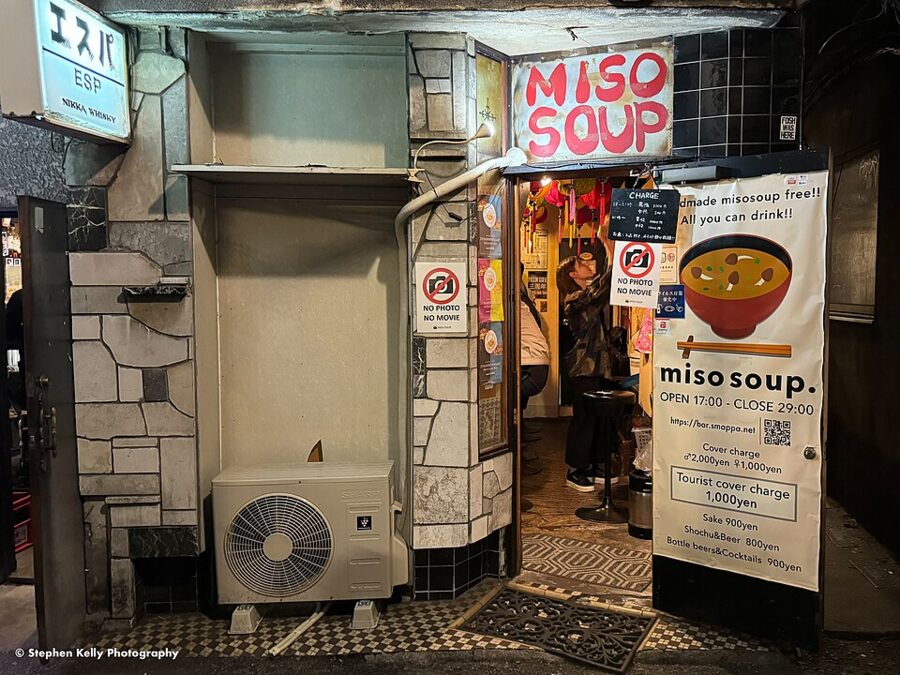
The fixed cost is the seat. The Golden Gai association’s guide to drinking in the district says most bars add a seat charge or an otoshi (the small dish served when you sit down) on top of the drinks, and puts the usual range at ¥500–1,500, varying bar by bar. It also says the number of bars waiving the charge for foreign visitors has grown, and that some bars have no menu at all.
Drink prices are the part nobody publishes. Neither of the two associations that run the block lists them outside festival days, and each bar prices its own. The useful benchmark comes from those festivals: on the association’s party days, participating bars drop the charge and sell a drink from ¥500, which tells you the floor.
Do the sum before you go. Two bars at a ¥1,000 charge each cost ¥2,000 before anything is poured; five bars on a crawl cost ¥5,000 in seats alone. That is why I’d pick two bars and stay a while in each.

A few bars state their policy in the association’s own listings. YOURS, in the basement of the Maruha Building, described itself for the August 2026 festival as no-charge at any time. Most bars post nothing of the kind, which is why the association’s advice is to check the system and the price before you sit, so the bill holds no surprise.
Cash, cards and the bottle on the shelf
Neither association publishes a rule on cards, and it varies by bar. Some have gone the other way entirely: the C, upstairs on Akarui Hanazono Gobangai, described itself in its August 2026 festival listing as fully cashless. Carry enough yen for two charges and four drinks, and ask at the door if you plan to pay by card.
Regulars play a different game. Many bars keep a botoru kipu, a bottle bought outright, labeled with the customer’s name and left on the shelf; on later visits the regular pays only the seat charge. The association points this out as the cheap way to drink in Golden Gai. It also tells you who the bar is really for.
When to go
The Tokyo Convention & Visitors Bureau’s guide to the district says most bars open around 20:00. The Sanko association, which runs the northern lanes, gives business hours for the district as roughly 19:00 to 05:00 in its terms for film crews. Arrive at 18:00 and you will be standing in a lane of shutters.
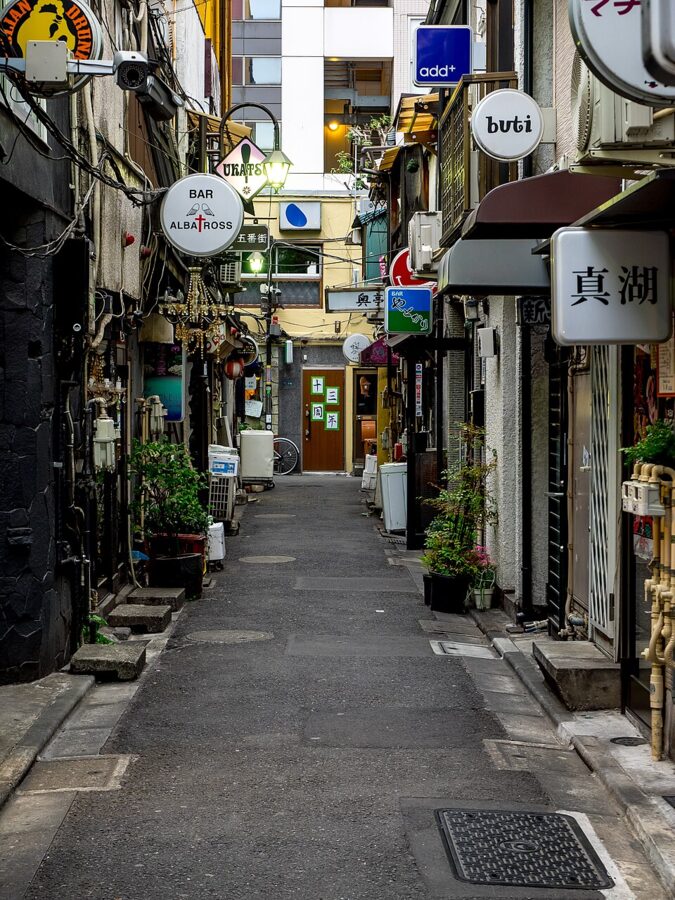

I’d go on a weeknight: the rooms are tiny, and a full one stays full. Late in the night the mood changes, and the association asks one thing of you when a bar fills: give your stool to someone who has just come in. Golden Gai expects you to move on, and the association calls the district a place of hashigo-zake, drinking your way from one bar to the next.
The festival Sundays
On a few Sundays the associations throw the block open in the afternoon. The Sanko association runs a cherry-blossom festival in April (the 2025 one was on Sunday, April 20, from 15:00 to 22:00), and the Golden Gai association runs a summer thanks festival at the end of August (in 2026, Sunday, August 30, 15:00–22:00, rain or shine). An autumn festival has also run in November as part of the Shinjuku Machi Fes street festival (in 2024, on November 10). On those days participating bars take no seat charge and sell drinks from ¥500.
The participants’ list for the August 2026 summer festival ran to 163 bars, and it is the best directory the district has published in years: street, floor, years in business and a line from each owner. Its notice to festival guests is blunt about what changes at 22:00: the event ends, and prices and service after that are up to each bar. Some bars skip the festival and trade as normal, so look for the participant mark on the door.
The festivals are the easy first visit, and the upstairs bars use them. At the 2026 summer festival a drink of ¥500 or more earned one stamp in a ground-floor bar and two stamps in a bar on the second to fourth floors or in a basement. The associations know which doors people are afraid of.
How to find it from the East Exit
Golden Gai sits in the southeast corner of Kabukicho, in Shinjuku ward, at 1-1-6 Kabukicho. The bureau puts it five minutes on foot from Shinjuku Station, which covers the JR lines, the Toei Oedo and Shinjuku Lines, and the Seibu, Keio and Odakyu Lines. From JR, the exit is the East Exit.
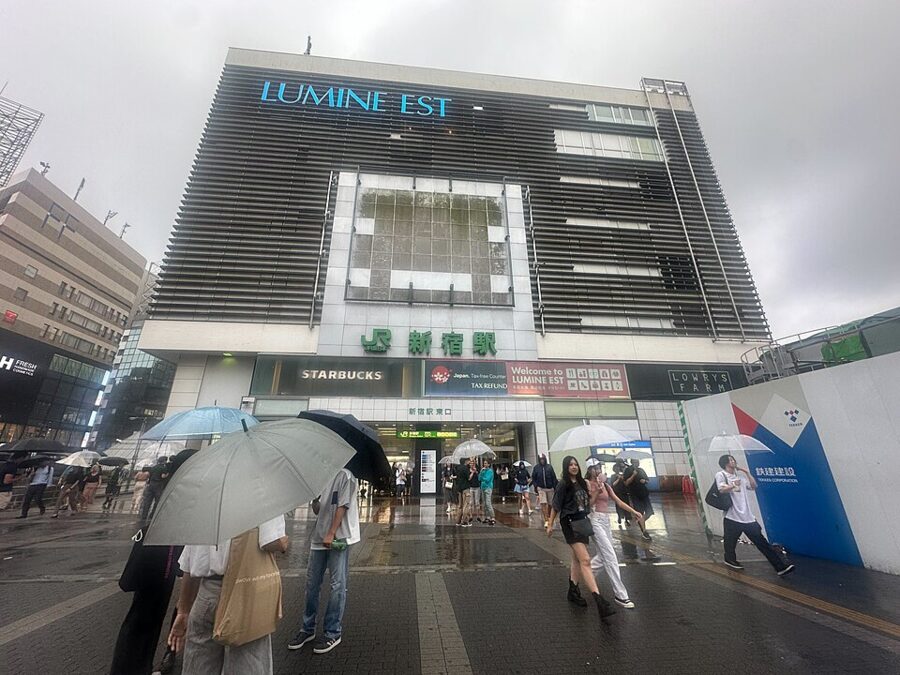

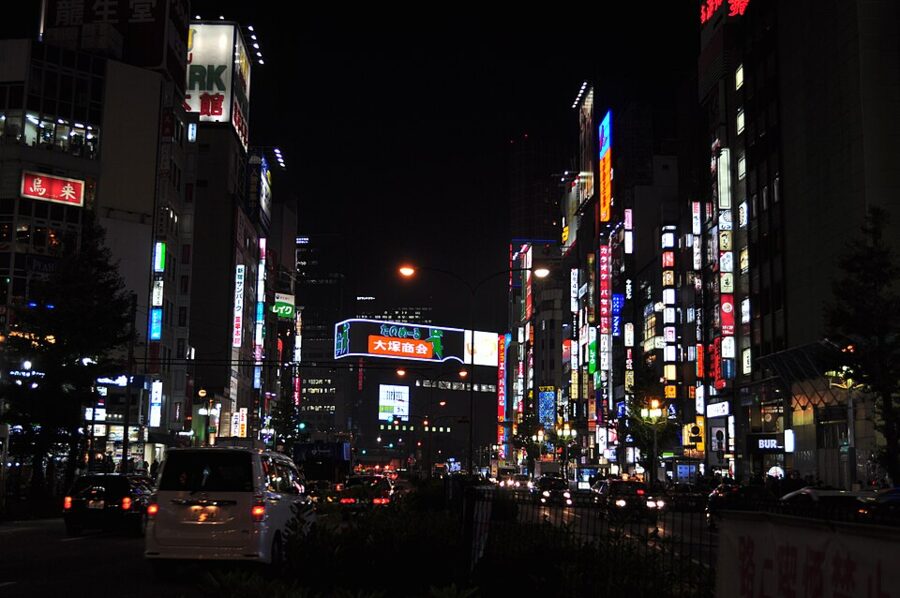
From the East Exit, walk up to Yasukuni-dori, the big avenue at the bottom of Kabukicho, and turn right. Pass the Shinjuku City Office on your left. A little further on, a tree-lined footpath, the Shiki no Michi (四季の路), leaves the avenue on the left; walk up it, and the Golden Gai lanes open off its right-hand side.

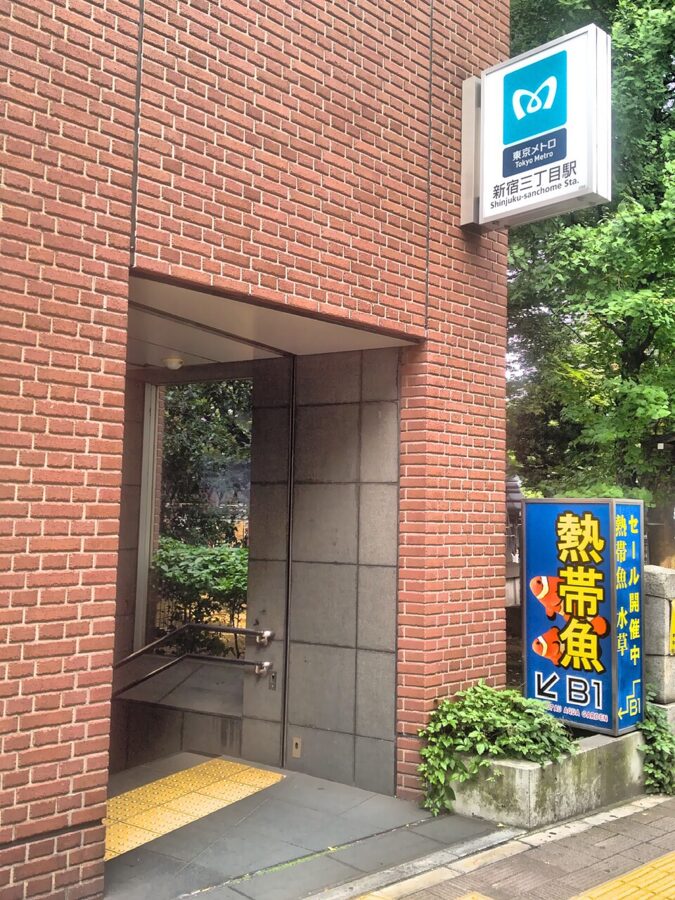
From the subway, the closest exit is on the other side. Hanazono Shrine’s access page puts Exit E2 of Shinjuku-sanchome Station (Tokyo Metro Marunouchi and Fukutoshin Lines, Toei Shinjuku Line) at zero minutes from the shrine, and the JR East Exit at seven. Golden Gai is directly behind the shrine, across the narrow Hanazono Koban-dori.

The Shiki no Michi
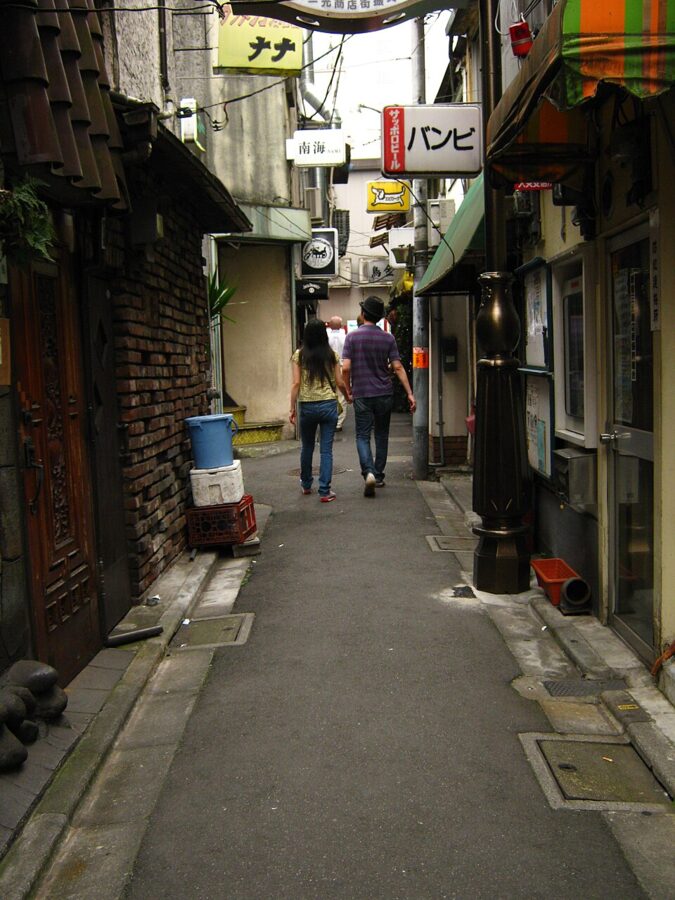
The footpath is a former tram line, and it explains the shape of the block. Shinjuku City’s page on the park says the Shiki no Michi was the private track of Toden tram route 13, between Shinjuku Ekimae and Suitengumae, which closed in March 1970. After the war the trams took another route, and the line served only as a spur to the Okubo depot. The ward took over the trackbed and opened it as a walkway park on June 24, 1974: 260 meters long, 2,311 square meters, and it has a public toilet.
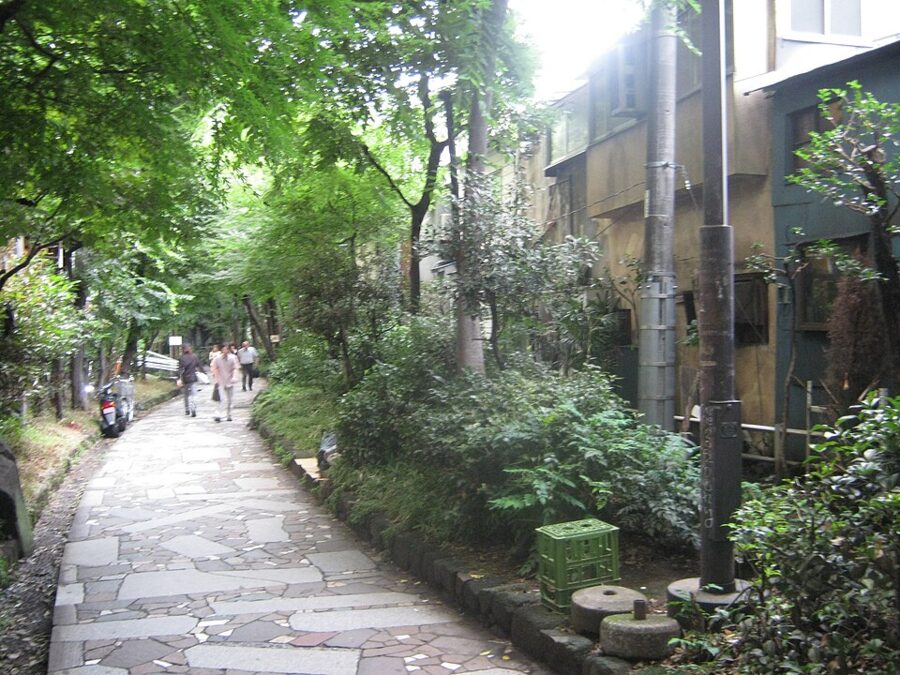

That toilet matters. Most bars are a single small room, and the association’s rules, printed in Japanese and English, point out that public toilets are nearby and ask you not to use the back alleys. Find it before you need it.
Hanazono Shrine
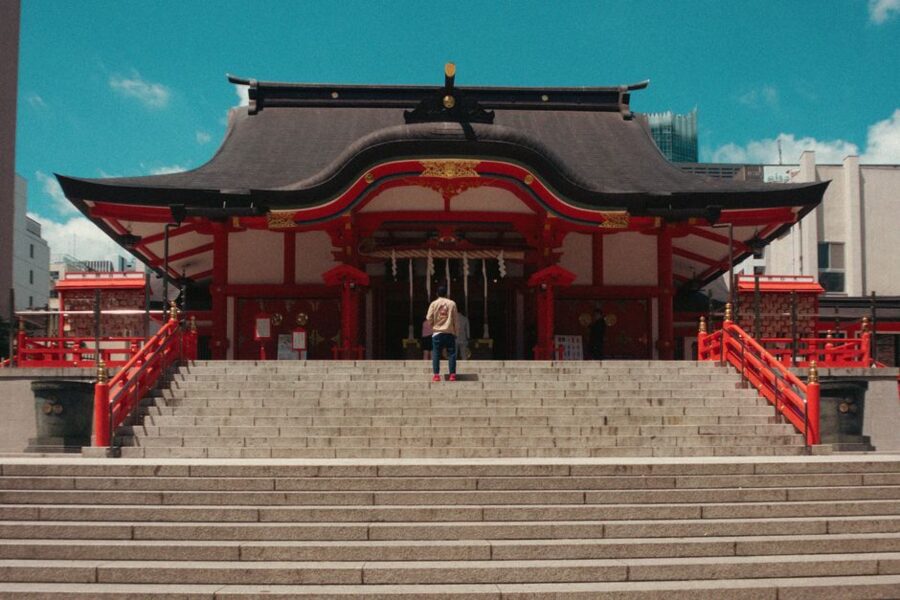
The shrine on the east side is more than a landmark. Golden Gai lies inside Hanazono Shrine’s parish, and plenty of bars keep its paper talismans and its bamboo kumade rakes behind the counter. The shrine’s own history traces its ties to performance back to 1780 and 1811, when it put on shows in its grounds to pay for rebuilding after fires, and forward to Kara Juro’s tent theater after the war.
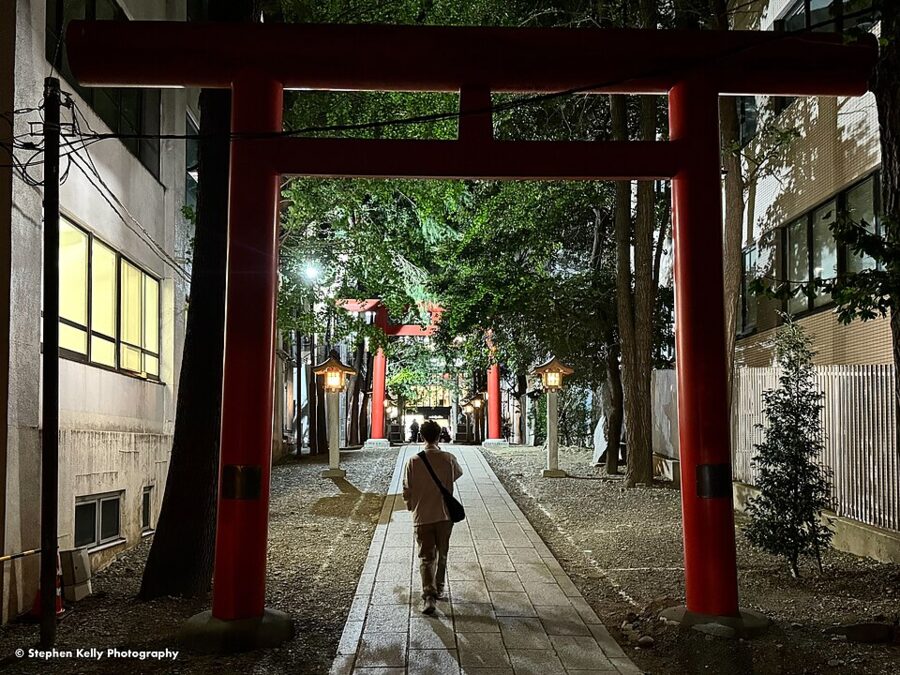

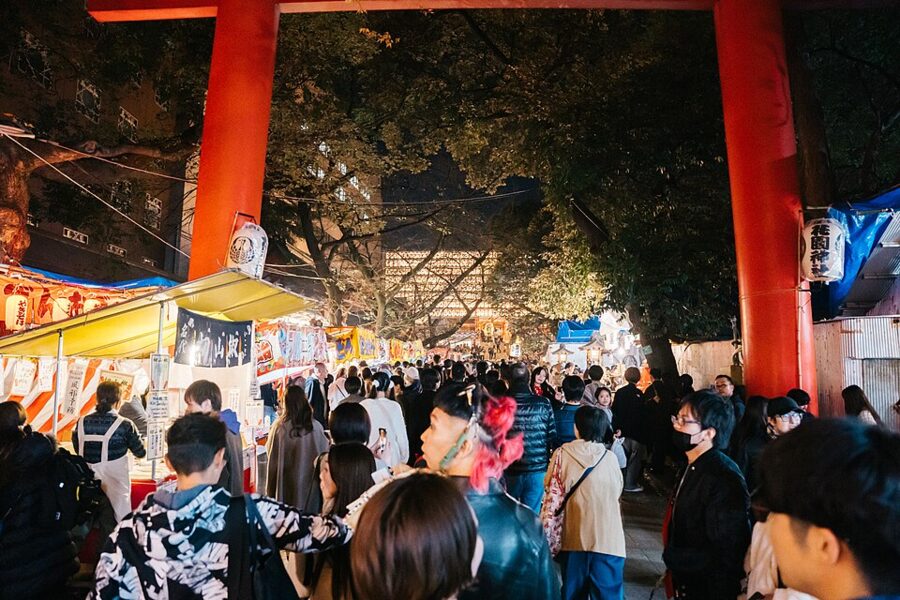
Two dates on the shrine’s calendar change the night around Golden Gai. The grand festival falls in late May, over four days in 2026. The Tori no Ichi fair, on November’s days of the rooster, fills the grounds with about 260 stalls selling kumade until the lanterns go out around midnight, and the shrine may restrict entry after 18:00 when it is crowded. Every Sunday morning there is also an open-air antique market in the grounds.

The six alleys, and the seventh name
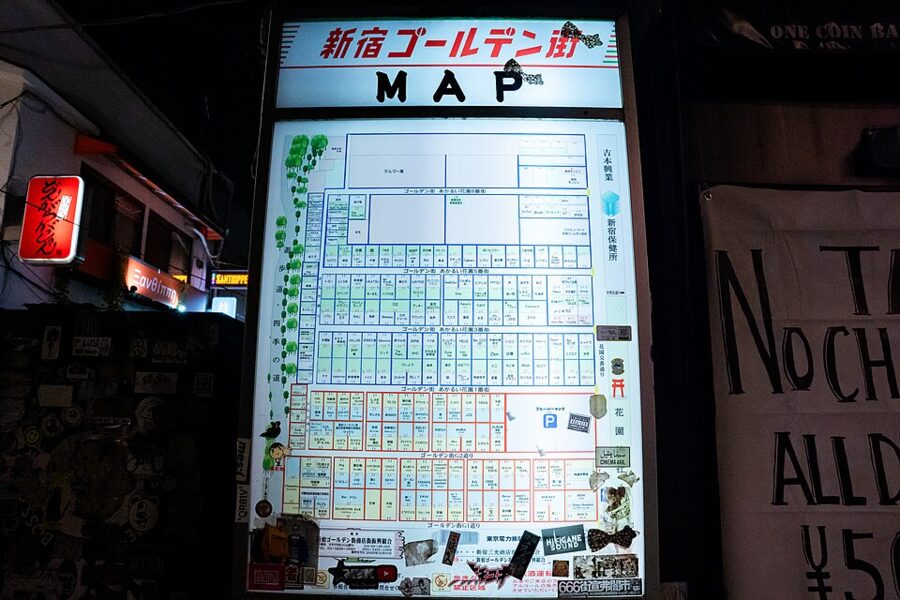
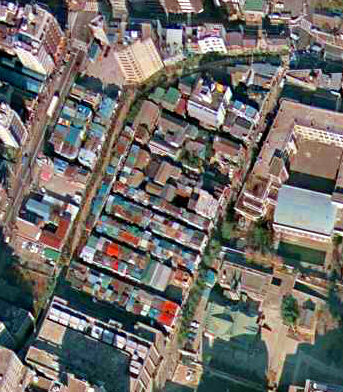
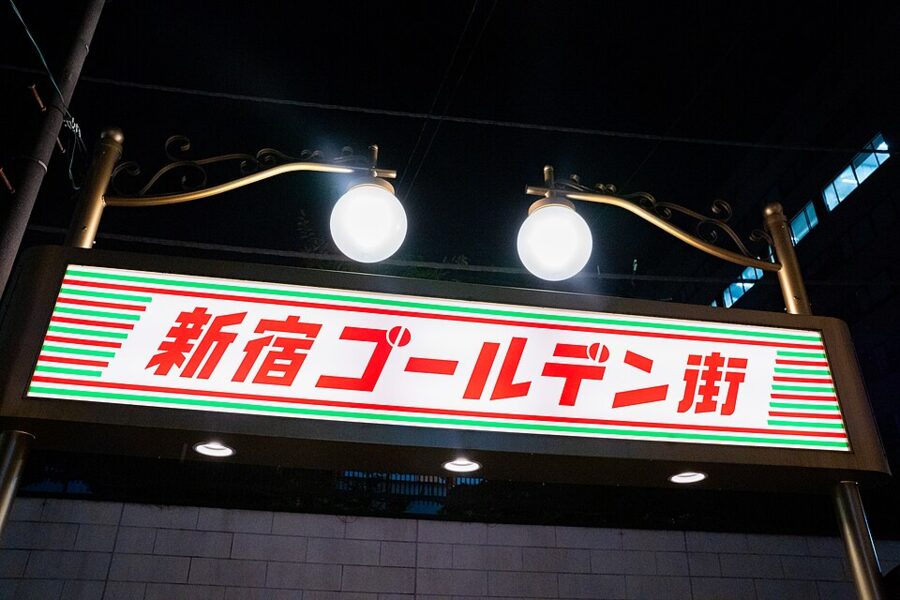
The visitors bureau describes Golden Gai as a tight block of six rows of alleys. The Golden Gai association’s history of the district names seven lanes: G1-dori and G2-dori, Akarui Hanazono Ichibangai, Sanbangai, Gobangai and Hachibangai (1st, 3rd, 5th and 8th streets), and Maneki-dori. The “G” is for Golden. The whole block is about 2,000 tsubo, roughly 6,600 square meters.
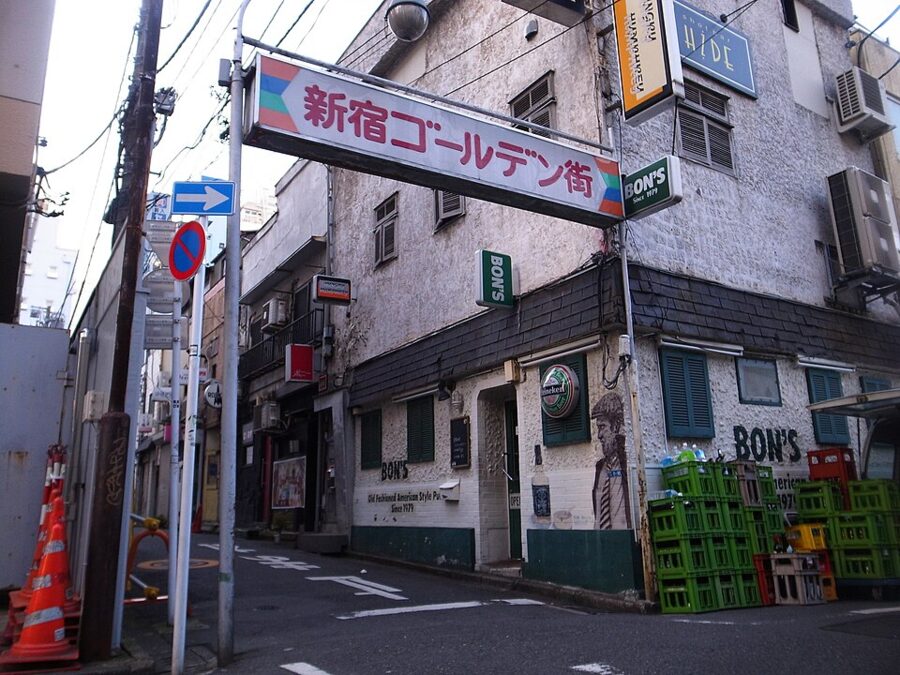

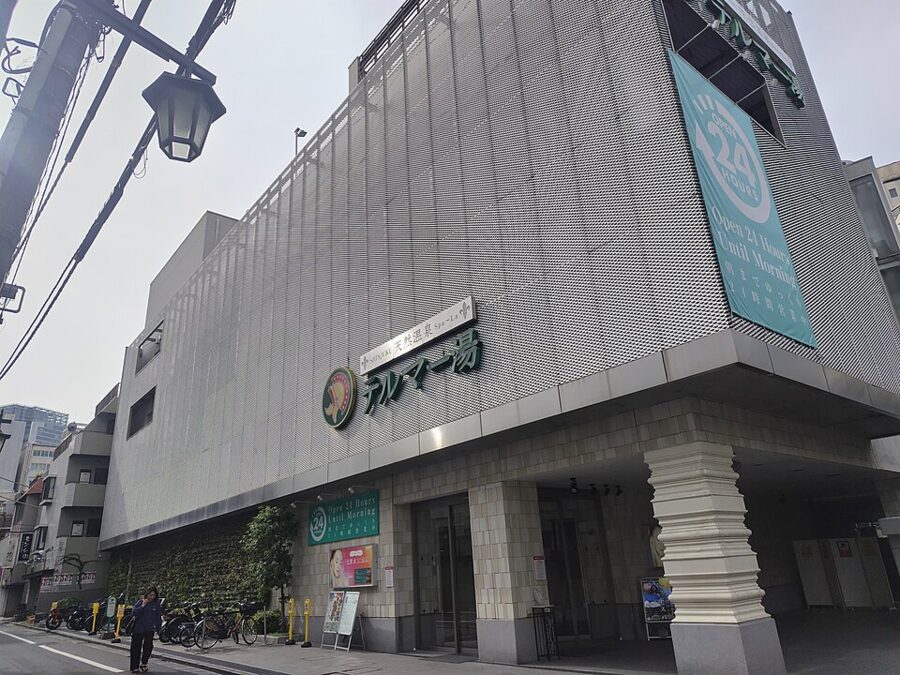
The edges are fixed. Hanazono Koban-dori runs down the east side, the Shiki no Michi down the west, a TEPCO substation closes the south end, and the north end stops at Thermae-yu, the 24-hour hot-spring bath.
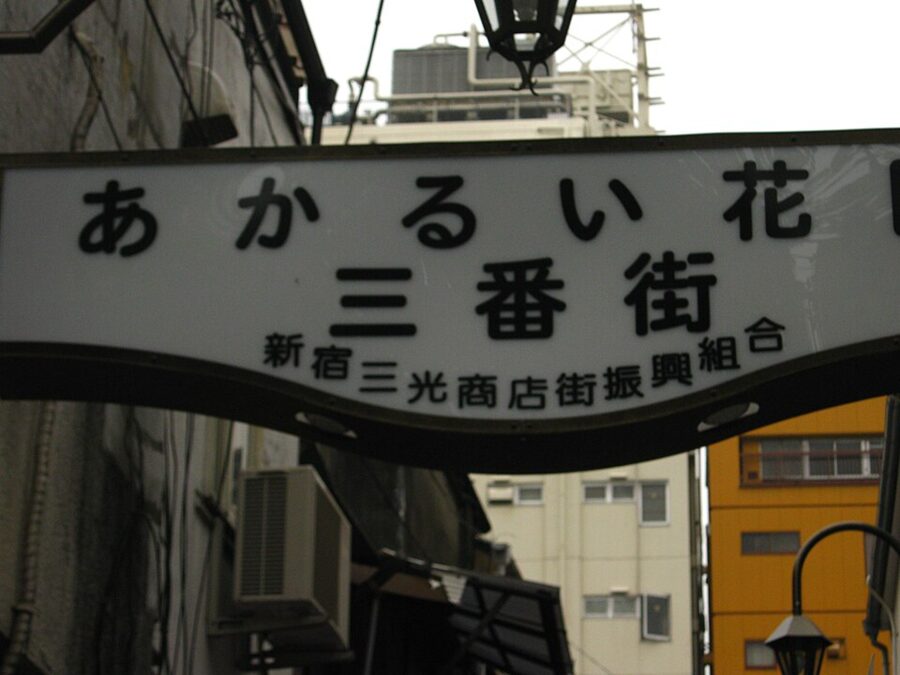
Two associations split the lanes, and you will see both names on the signs. The Shinjuku Golden Gai Shopping District Promotion Association has the south, G1 and G2. The Shinjuku Sanko Shopping District Promotion Association has the north: Akarui Hanazono Ichibangai, Sanbangai, Gobangai, Hachibangai, Maneki-dori and the Maruha Building. Ichibangai sits on the line, which is why a permit to film it needs both.
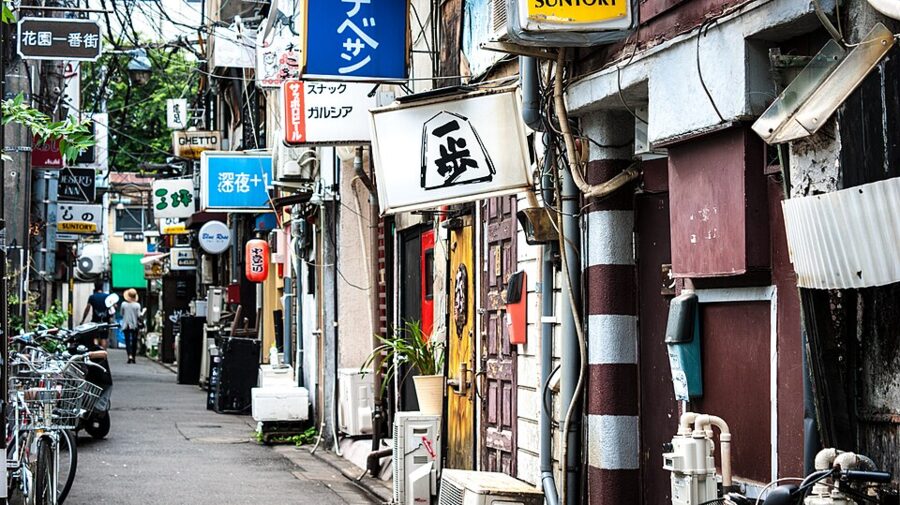

The Sanko association publishes the only full member list. Its directory and lane map (map last updated April 4, 2026) lists 190 member shops: 54 on Sanbangai, 54 on Gobangai, 32 on Maneki-dori, 24 on Ichibangai, 15 on Hachibangai and 11 in the Maruha Building. The Golden Gai association, which covers G1 and G2, publishes no member list; the associations’ figure for the whole block is more than 280 shops.



How a Golden Gai bar works
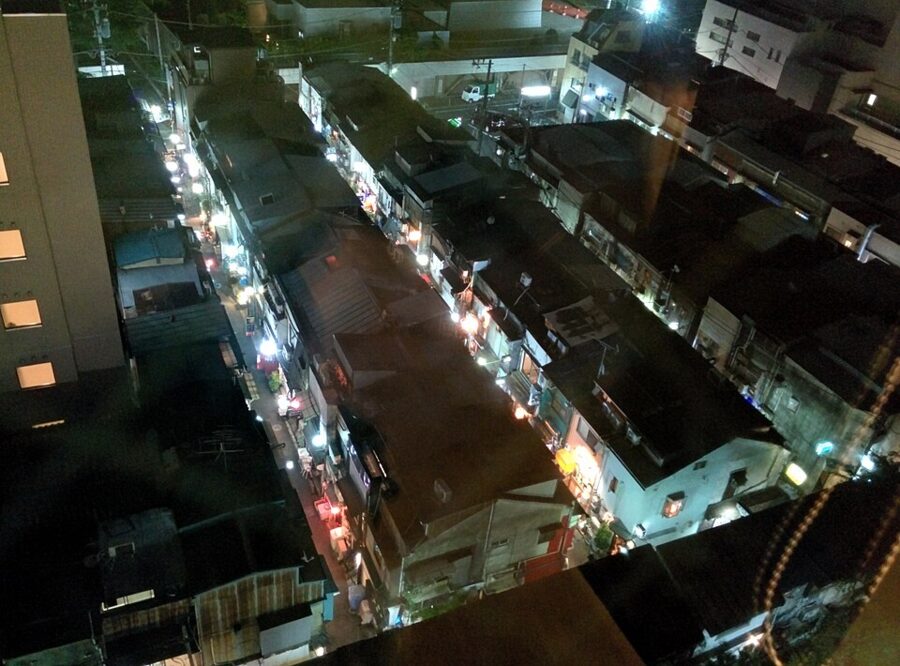
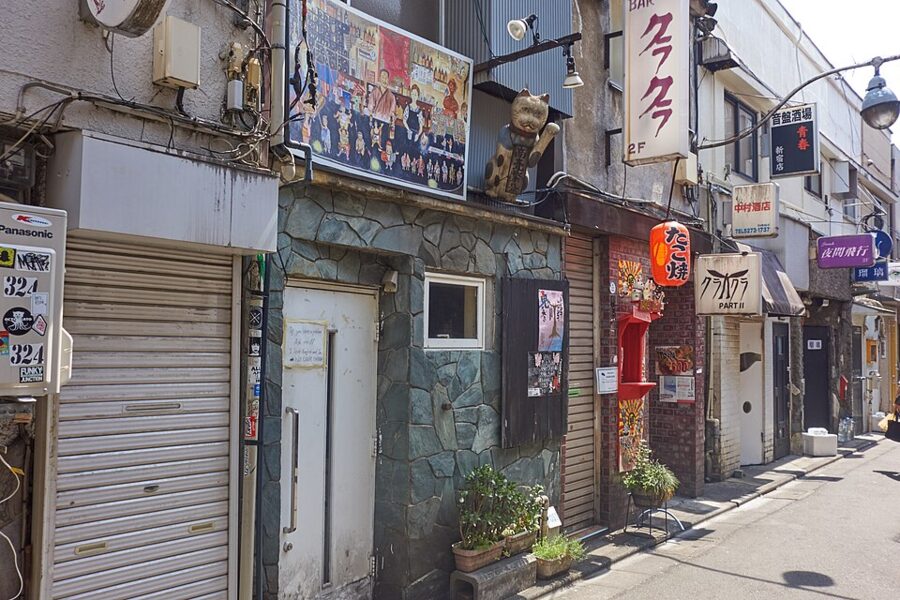
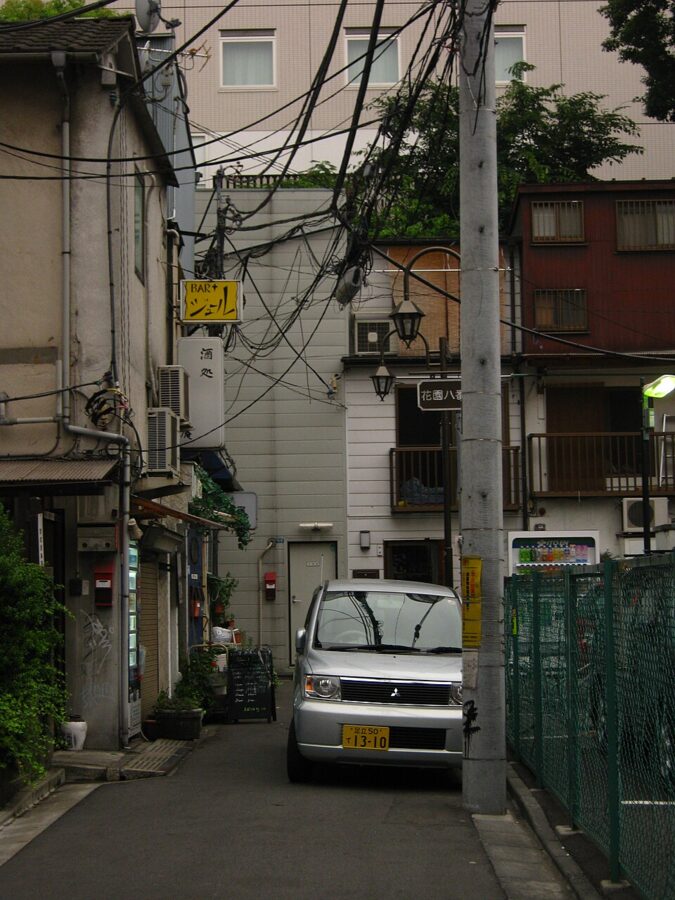
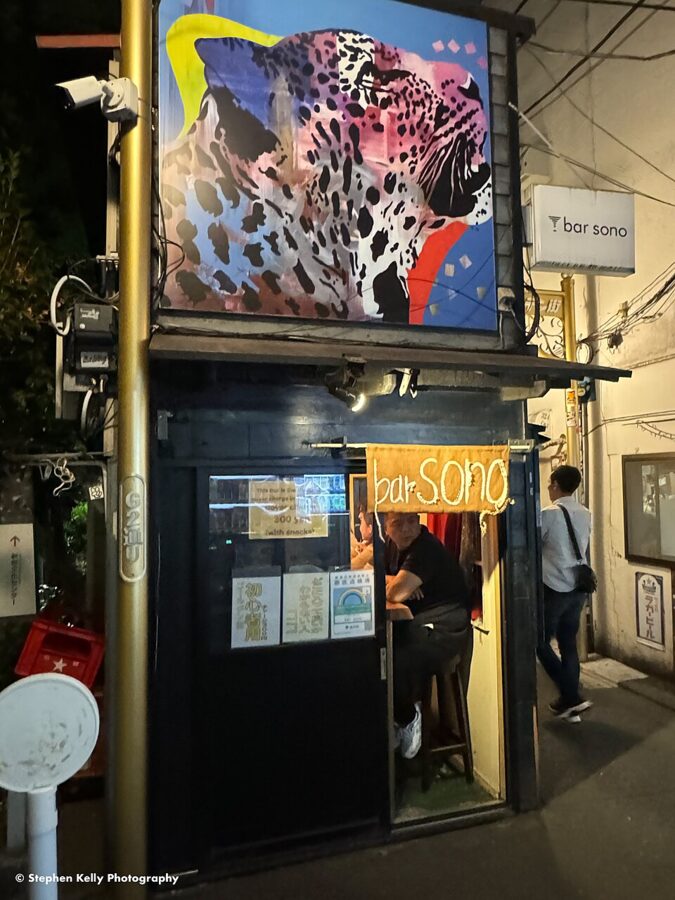
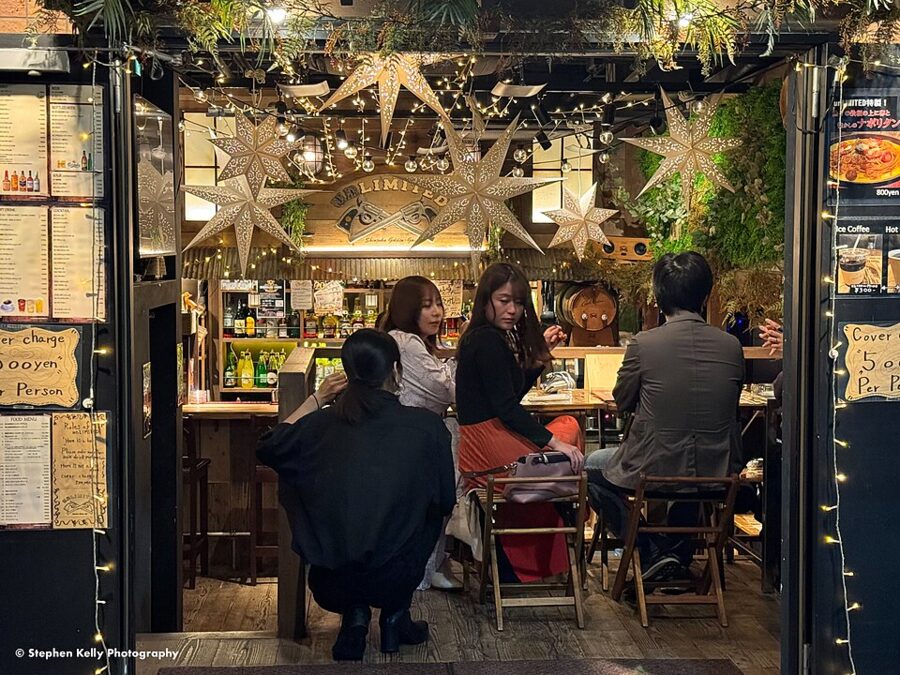
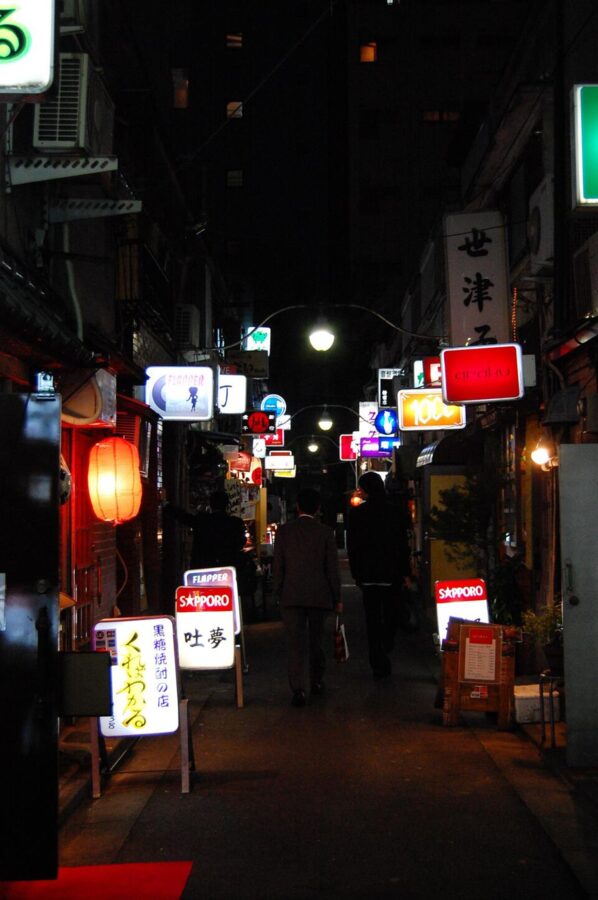
Golden Gai’s bars are measured in tsubo, the Japanese unit of about 3.3 square meters. The association’s history says the rooms are 3 or 4.5 tsubo, roughly 10 or 15 square meters, and that a handful of people at the counter makes them full. The visitors bureau says many seat five or six. Some have no seats at all and drink standing.
Start at the door
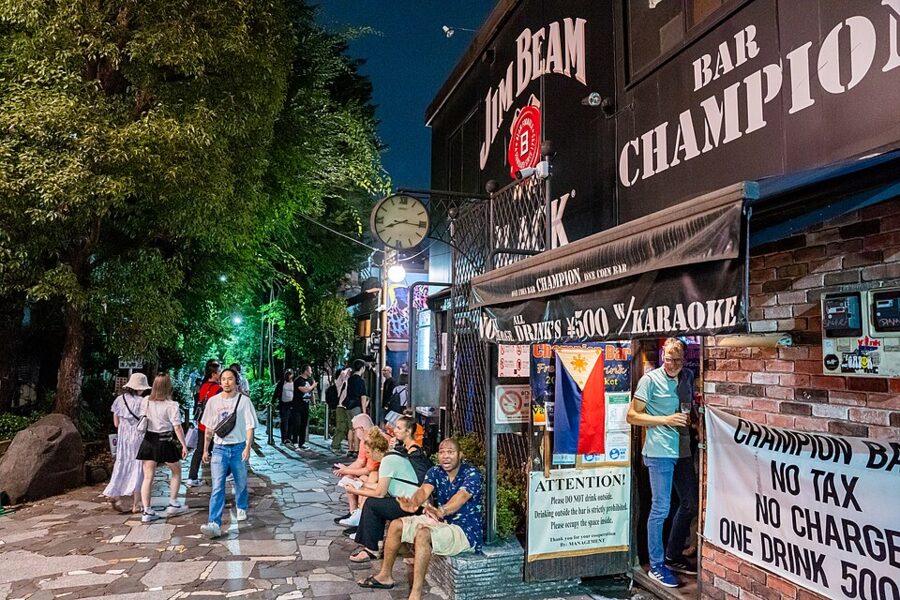
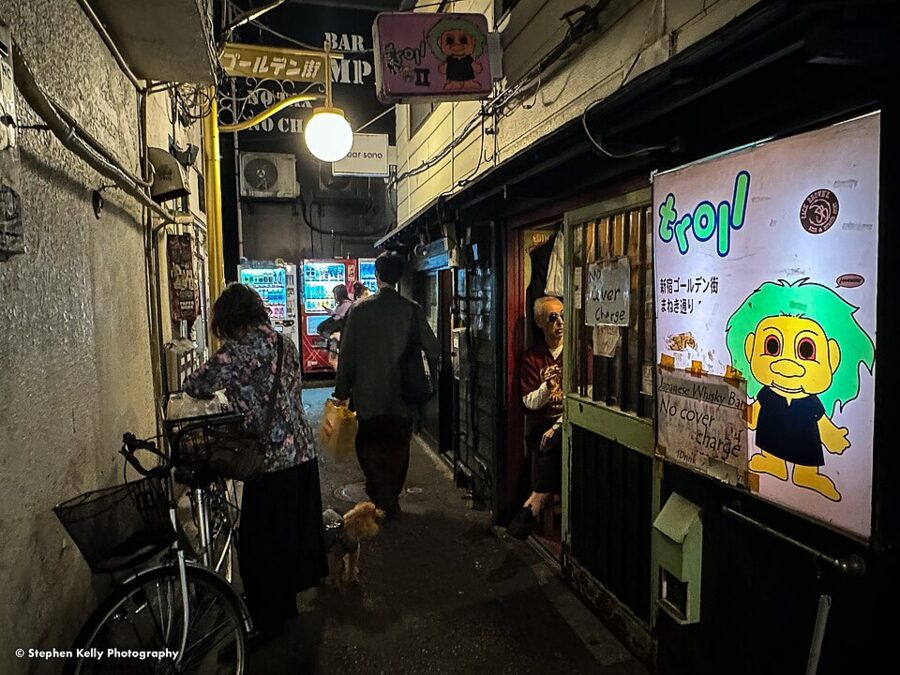
The door is the menu, the price list and the bouncer. Bars that want walk-ins post the seat charge, the drink price and often a line in English; bars that don’t, post nothing, or post a sign that says regulars only. The association’s own advice is to confirm the system before you go in, and to ask before entering if you are more than two or three.
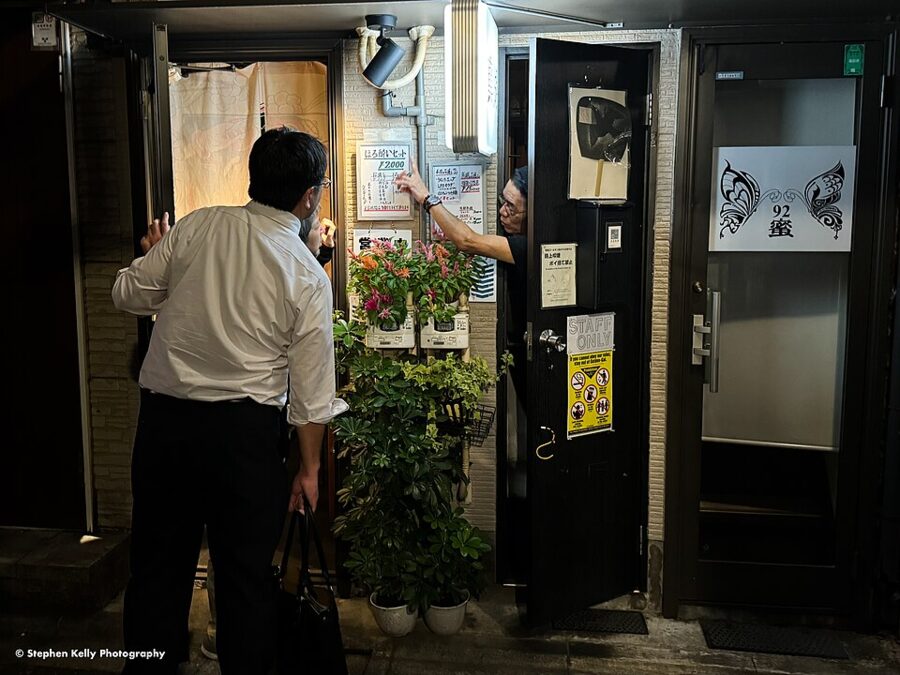

Groups are the most common mistake. The association asks visitors to avoid coming in large numbers: rooms are small, many customers drink alone, and a party of six changes the room. Some bars refuse groups outright. A few use two units knocked together and take 10 to 20, and they say so in their listings; Cambiare, upstairs on Sanbangai, told 2026 festivalgoers its room was large and suited to beginners and groups.

Upstairs bars
A third of the district is up a staircase. Of the Sanko association’s 190 member shops, 116 are on the ground floor, 63 on the second floor, four on the third, three in basements and one on the fourth. The stairs are steep and narrow, and the sign at the bottom is often all you get.
Several of the larger rooms are upstairs, and the walk-in trade is thinner there, which is why the festival doubles the stamp count. A few upstairs bars put their invitation in their listing: CON TON TON, on the second floor on Gobangai, said musicians and actors drink there and that first-timers and solo drinkers are very welcome. red., also on Gobangai’s second floor, called itself a homey bar with cold-brew coffee and hot dogs and said beginners were very welcome. The 3rd ROOM on Hachibangai claims the district’s only fourth floor, with a balcony.

Regulars-only doors, and why
Some doors are shut to you, and the association says so plainly. A number of bars are kaiin-sei, members only, and turn away a first-time customer unless an existing regular brings them in. The visitors bureau puts it the same way: some bars are for members only, others open to everyone.
The reason is the room. A bar with five stools runs on six or seven regulars who keep bottles on the shelf, and one table of strangers can push all of them out. The association goes further: many bars deliberately keep their threshold high, because the owners and regulars are steeped in film, theater, literature and art, and the conversation is the point. A door that says no is house policy, not a verdict on you; try the next one.
The most famous closed door opens once a year. Toppu (突風), on G1-dori, was founded in 1958 and belongs to the voice actor Hidekatsu Shibata; in its listing for the August 2026 festival it said it is normally members only, so the festival was the chance to go in.

How to behave once you are in
The association’s house rules are short. Treat the owner, the staff and the bar’s regulars with respect; talk to the stranger beside you, which is the whole point, but don’t bully, brag or pick fights. “I’m the customer” gets you banned, and bars do ban people.
Stay a reasonable time, give up your seat when the room fills, and ask the owner where to go next. The association says owners will point you to a few good bars if you ask, and in a district where everyone drinks in three places a night, they know who is open and who welcomes newcomers.
Smoking inside depends on the bar. The festival notice warns that some bars are non-smoking; if smoke bothers you, check the door, or ask before you sit.
Bars that tell you who they’re for
These bars described themselves this way in their entries for the August 2026 summer festival, the newest list either association has published. Owners change, and the door on the night has the last word.
- Genshi Shinbo (原子心母), ground floor on Sanbangai: rock and other music, 26 years, Golden Gai beginners welcome.
- CON TON TON, second floor on Gobangai: a bar for musicians and actors, first-timers and solo drinkers very welcome.
- red., second floor on Gobangai: cold-brew coffee and hot dogs, beginners very welcome.
- Cambiare, second floor on Sanbangai: a large room, recommended for beginners and groups.
- YOURS, basement of the Maruha Building: karaoke, no charge at any time.
- Bar Champion, ground floor on G1-dori: a karaoke bar for 30 years, singing free.
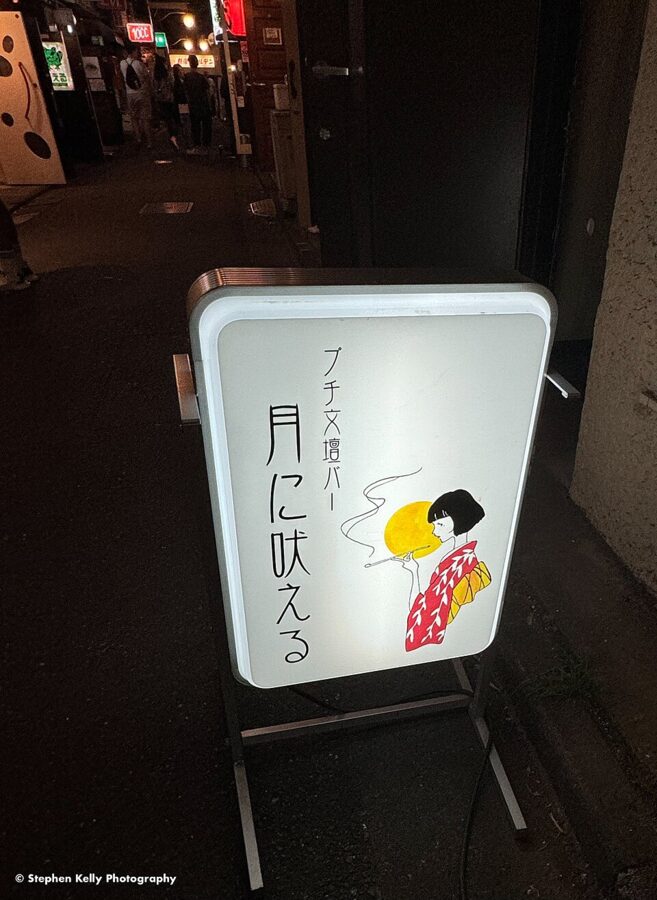
- Tsuki ni Hoeru (月に吠える), ground floor on G2-dori: a literary bar where readers, would-be writers and publishing people drink.
- bar 図書室 (Toshoshitsu, “the library”), second floor on G1-dori: shelves of manga and a room that talks about them.

Some of the oldest names are in the same list. Futaba, on G2-dori, gave its age as 78 years and its theme as lively argument, with a black rotary phone that still works. Gamaguchi on G1 gave 54 years. Roberiya on Gobangai has been in one family for 63 years, the last 13 under the second-generation owner, who says she was born and raised in Golden Gai.
None of them posted a first-timer policy, so treat the door as the answer.
The rules on the alleys
The lanes are private property. The Golden Gai association’s rules, in Japanese and English, say the district is private land run by the two associations, and list six things not to do: smoke in the lanes, drink while walking or carry a glass out of a bar, take photos or video without approval, hang around, sit or make noise in the lanes, urinate in the back alleys, and damage or write on signs and buildings.

The no-smoking rule is about fire before it is about manners. The association spells it out: the district is made of wooden row houses. Shinjuku ward adds its own law on top: under the ward-wide ban on smoking in the street, cigarettes and heated tobacco are banned on any road in the ward, walking or standing still, outside designated smoking spots. The same ordinance widened its ban on littering to food containers, straws, chopsticks and skewers from October 1, 2026.
The nearest public smoking spots on the ward’s list are in the Shinjuku Station East Exit plaza and beside the Yasukuni-dori rail overpass by Seibu-Shinjuku Station. On festival days the organizers set up a smoking area in the car park between G2-dori and Ichibangai; on other nights, smoke inside a bar that allows it, or walk.
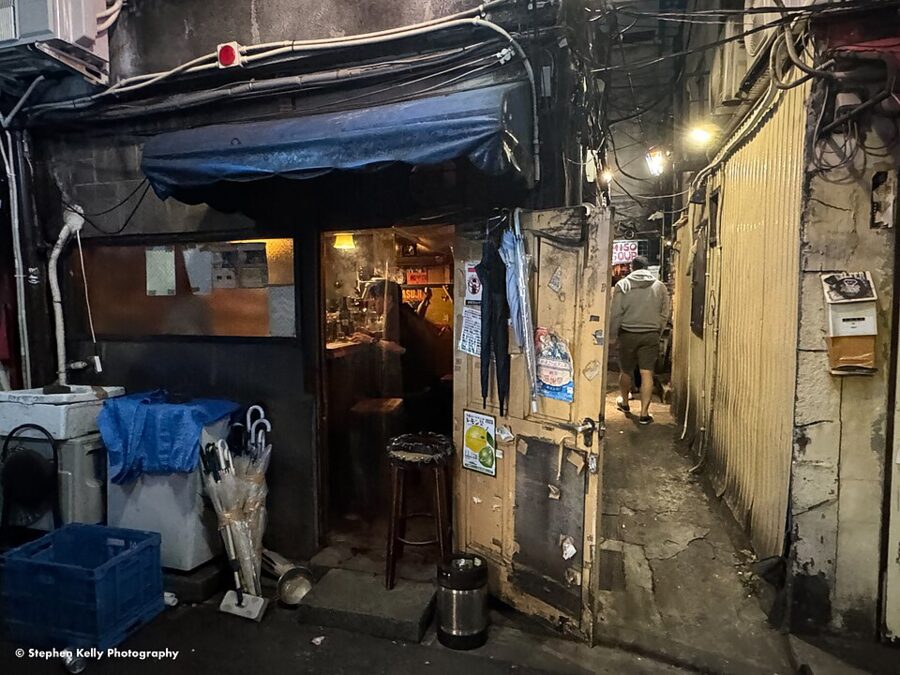

Photography
This is the rule visitors break most, and the associations enforce it. The Golden Gai association’s photography terms say the land is managed by the two shopkeepers’ associations and a landowners’ cooperative, that all of it is private, and that filming here needs permission and costs money. Permission is needed even for a shot of the streetscape or a close-up of one sign.
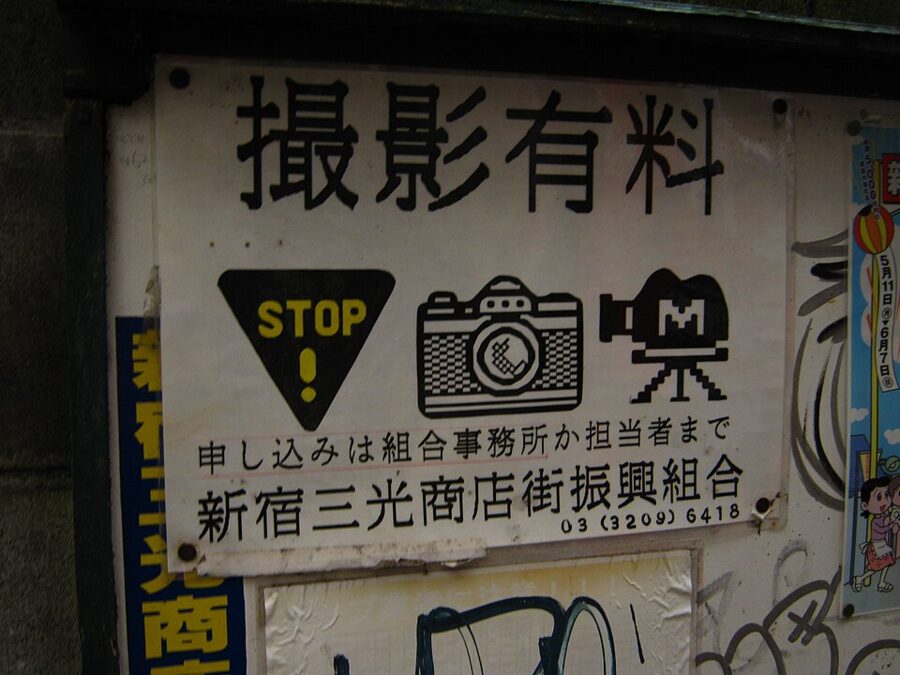

The fees are per hour and exclude consumption tax. In the Golden Gai association’s lanes, still photography for a magazine costs ¥30,000 an hour, a student or personal shoot ¥10,000 an hour until 18:00 and ¥20,000 after, and web use is charged the same way. Crews submit a plan in advance, wear the association’s armband during the shoot, and need each bar’s own permission to film inside it.
The Sanko association’s photo terms for the northern lanes are stricter in tone. Every road in its area is private, filming of any size needs a permit, anyone posting to social media must show the permit number, and the association may refuse shoots during business hours. Unauthorized filming is billed at the standard rate, and those who keep going after a warning are reported to the police.
There are two easy outs. Photos inside a bar are the bar’s call, not the association’s, so ask the owner. And the Sanko terms exempt snapshots and souvenir photos taken by member shopkeepers themselves, as long as they are not used commercially, so the person behind the counter can take your picture.
Touts, padded bills and the police warnings
The real risk of a Golden Gai night is on the walk in, not in the lanes. The streets between the station and the bars run along the edge of Kabukicho, and the Metropolitan Police Department’s page on what drags down Tokyo’s nightlife districts starts with touts. Its advice is never to follow one.
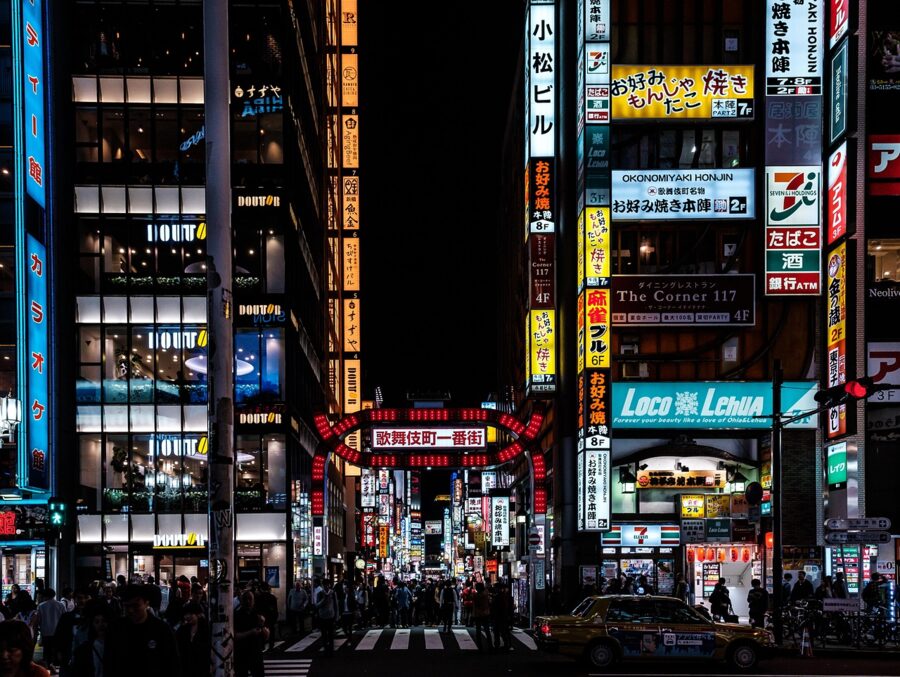
The police describe the tricks in detail. Touts steer people to overpriced bars and illegal sex businesses; some pose as staff of a well-known restaurant and tell customers with bookings that it is full and they will be taken to a sister shop, which turns out to be a rip-off bar. The page shows the price list from one bar that was raided, with a ¥400,000 registration fee and a 40 percent service charge in small print.
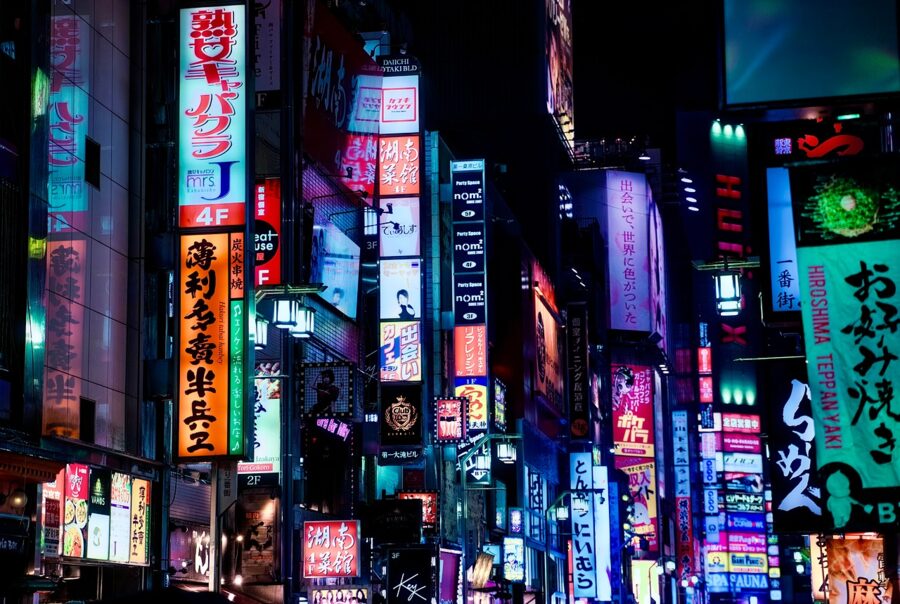
Two more warnings apply to anyone drinking alone. The police describe women met on the street or on social media who invite a man for a drink at the bar where they work, where strong drinks follow and cash or cards go missing. They also describe customers who woke up to card charges they never made.
Shinjuku has its own law against touting. The ward’s tout ordinance took effect in September 2013, banning touting for izakaya, karaoke, hostess clubs and host clubs in public places, and loitering to do it. The ward tightened it in April 2016 and has applied fines and public naming since June 2016, which means anyone who approaches you with a bar offer on the street is already breaking it. Walk on, and call 110 if something goes wrong.
Golden Gai itself is a different case from the tout bars. The bars here have fixed doors and posted charges, and the associations publish their rules. A bill that surprises you is still possible in a bar that posted nothing, which is the whole argument for reading the door.
How a black market became Golden Gai
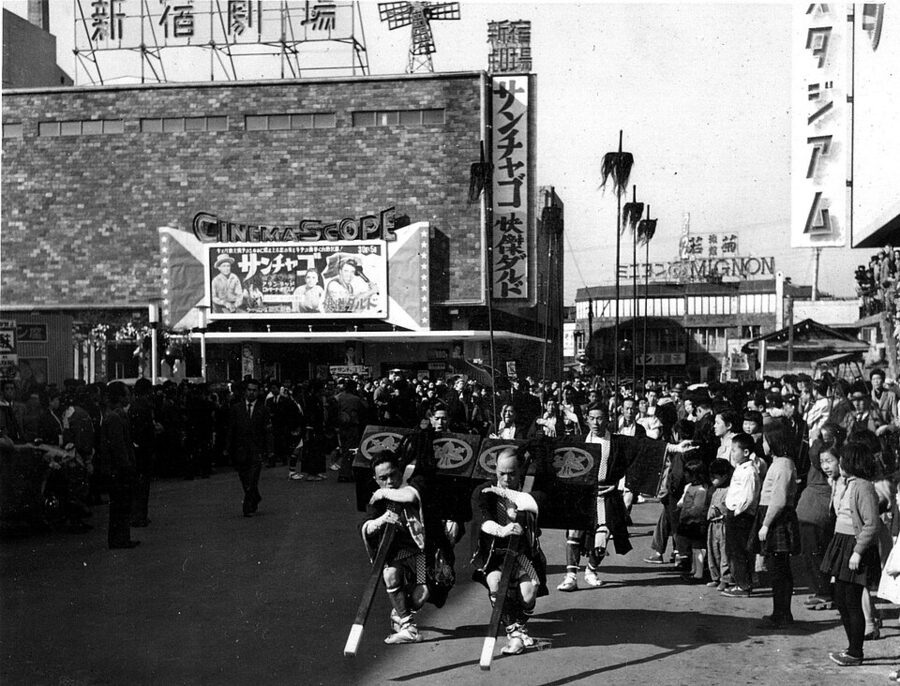
The district started as a relocation order. According to the association’s history, the black markets that sprang up around Shinjuku Station after the war, including the Wada-gumi market in front of the station, were cleared in the late 1940s to build the station plaza and widen the roads. The order came in 1949, when the occupation authorities called for the markets to go, and the city and the police told the stallholders to move by the following year.
Two moves, two associations
The replacement site was the Sanko-cho neighborhood, now Kabukicho 1-chome. Two groups moved in: stalls from the Wada-gumi market, and the street stalls and shacks that had grown up around the old licensed quarter in Shinjuku 2-chome. That is why there are two associations. The south, today’s Golden Gai association, began with the 2-chome shops; the north, today’s Sanko association, began with the Wada-gumi stalls, and the buildings still differ in form and size.
Most of those early shops were not bars. The block was known as Yoromeki Yokocho, and nearly every shop traded as an eatery while running unlicensed prostitution, a trade known as aosen, the “blue line,” to distinguish it from the licensed “red line” districts. When the Anti-Prostitution Law took full effect in 1958, every one of those businesses closed, and the block became what it is: a grid of bars.
The writers’ bars
In the 1960s the landowners’ cooperative renamed G1 and G2 “Shinjuku Golden Gai” to set them apart from the rest of Hanazono-gai. Through the political years of the 1960s and early 1970s, the association’s history says, people sorted the bars into three kinds: literary bars, gay bars and rip-off bars.
The literary bars won the reputation. In 1976 the novelist Kenji Nakagami won the Akutagawa Prize and the nonfiction writer Ryuzo Saki the Naoki Prize at the same ceremony, both regulars, and the national press followed them into the lanes. After that, the association says, it was held that anyone who wanted to count as a cultural figure needed a bar of their own in Golden Gai. The regulars over those decades included the manga artist Fujio Akatsuka, the artist Taro Okamoto, the director Nagisa Oshima and the actor Yusaku Matsuda.

The bubble and the land sharks
In the late 1980s the bubble economy reached the block, and with it jiage, the buying-up of land by force. The association’s history describes an open fight between the land buyers and the bar owners, and suspicious fires in 1986. The owners formed the Society to Protect Shinjuku Hanazono Golden Gai and resisted the redevelopment, selling T-shirts drawn by famous patrons to pay for it and holding year-end rice-pounding parties on the footpath to show the district was still alive.
The fight was slow work. Because the land and building rights in the block are tangled, the society began by going to the Legal Affairs Bureau and identifying the owner of each plot, one at a time. The bar run by the society’s leader was hit by suspicious fires more than once; after one, the owner put chairs out in the burned shell and reopened with whatever beer and snacks had survived in the fridge, and other bars sent food and drink.
The bubble burst and the buying stopped, but it left the lanes full of empty, shuttered bars, and for a while the block looked like a ghost town. The owners pushed the ward for roads, sewers and gas, and a new tenancy law that took effect in 1992 made owners willing to let to newcomers. By the 2000s, young owners were opening bars and the customers came back, foreign visitors among them.

The 2016 fire, and what came after
On April 12, 2016, at about 13:30, fire broke out in part of Maneki-dori. Three buildings, shops with homes above, burned across about 300 square meters; a smoke detector on the second floor of the building where it started had been removed for renovation work. In July 2017 the Tokyo District Court convicted a man of starting it and sentenced him to three and a half years. Every damaged bar was repaired to its old form and went back to business.

The fire changed how the block is governed. Shinjuku City’s page on the district says the ward and the local associations formed a town-planning council in January 2017, which adopted a long-term plan in July 2018 under the slogan of protecting the atmosphere while making the district safer from disaster. On November 10, 2020, the four local associations adopted fire-prevention rules, and anyone renovating a building now files a plan with the association before starting.
In 2021 the landowners’ cooperative changed its name from the Hanazono-gai Commercial Cooperative to the Golden Gai Commercial Cooperative. On February 17, 2022, the council briefed the district on the direction of its rebuilding rules, through a district plan and the treatment of the narrow lanes as roads. None of this has altered how a night in the lanes works, which is the point of it.

The rest of the night
Most Golden Gai bars serve snacks at most; Menya Garon, a ramen shop on Hachibangai, is one of the exceptions. Eat first. Shinjuku Sanchome, south across Yasukuni-dori, is the closest place for a proper dinner, and the other famous lane of small places is across the tracks.

Omoide Yokocho
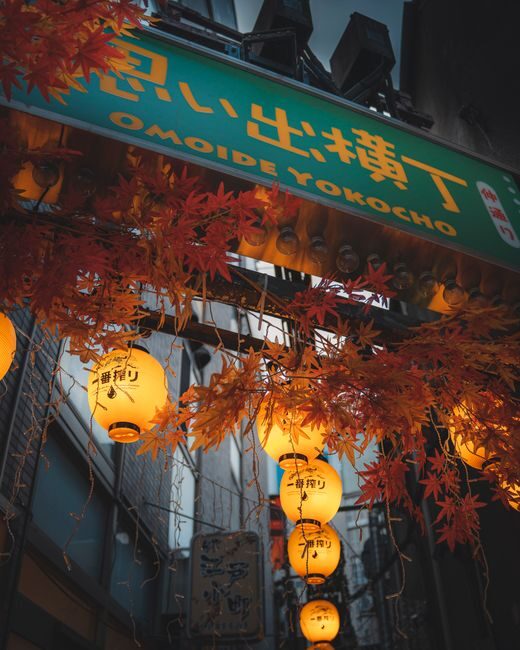
On the west side of the station, Omoide Yokocho (思い出横丁) is Golden Gai’s food-first cousin. Its official site counts about 60 restaurants, mostly grilled-offal and yakitori counters, and about 80 shops in all, packed into about 630 tsubo, roughly 2,100 square meters. It suits a 19:00 start, before the Golden Gai doors open.
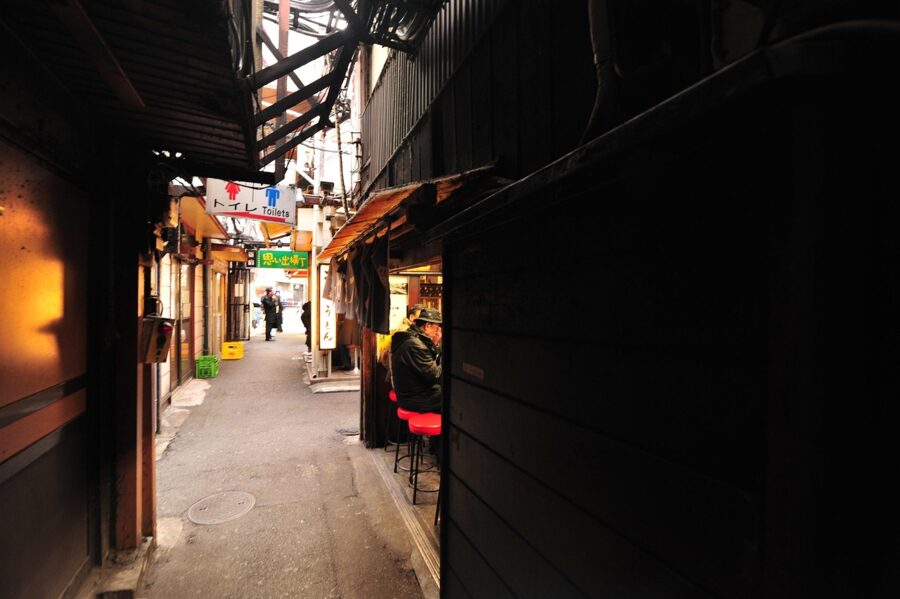
The order that works is food on the west side at 19:00, then under the tracks and along Yasukuni-dori to the Shiki no Michi by 20:30, when most Golden Gai bars have their lights on. The Tokyo food guide covers what to order at a counter like these.
Kabukicho, in one line
Kabukicho, the blocks to the west and north, is where the touts work; walk through it to the bars and don’t stop.
Last trains from Shinjuku
The last trains decide how long the night is. On the JR East timetable for the Yamanote Line inner loop at Shinjuku, toward Shibuya and Shinagawa, the last train leaves at 00:41 and terminates at Osaki. On the outer loop toward Ikebukuro and Ueno, the last train leaves at 00:44 and terminates at Ikebukuro, and the last one that continues around through Ueno to Shinagawa leaves at 00:12. The times are the same on weekdays and weekends for late 2026.
For the subway, the private lines and what to do when you miss all of them, the guide to getting around Tokyo has the full last-train list.
So: in by 20:00 from the East Exit, two bars with the charge on the door, and a seat at the counter rather than a photo in the lane. Then out by 00:30, down the Shiki no Michi and along Yasukuni-dori, for the 00:41 or the 00:44.