

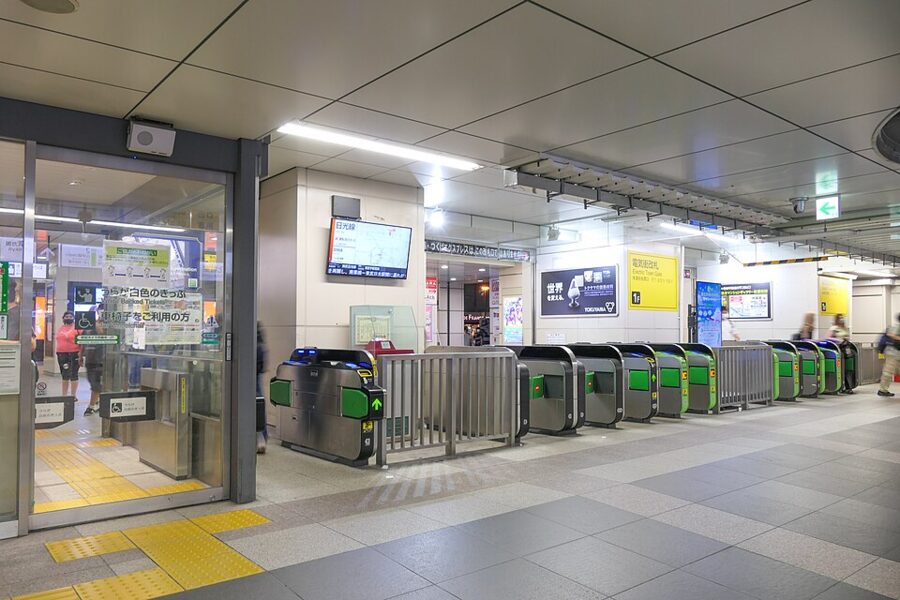
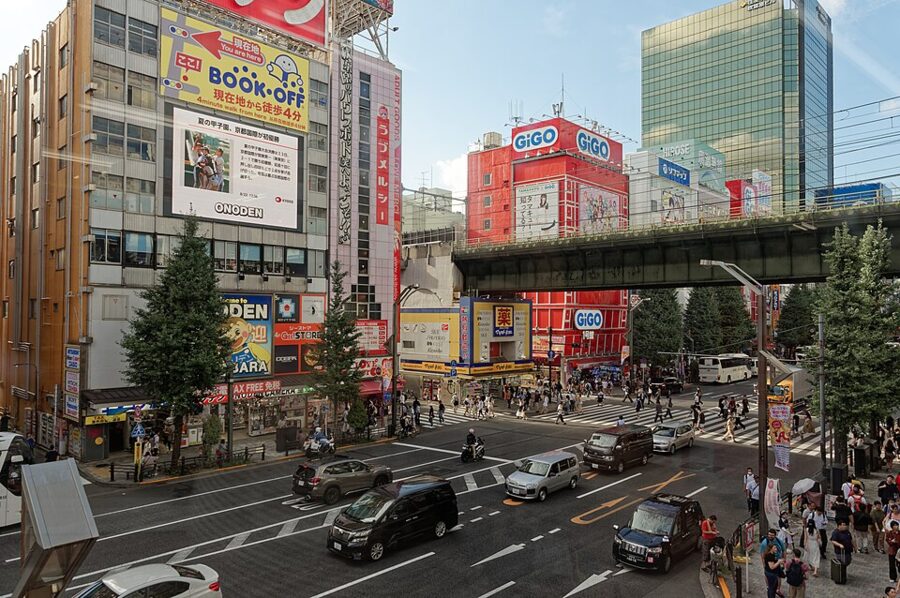
Take the Electric Town Exit at JR Akihabara Station, walk two minutes west, and you are on Chuo-dori, the avenue that holds most of what people come to Akihabara (秋葉原) for. On Sundays it closes to cars from 13:00 to 17:00 through March and from 13:00 to 18:00 between April and September. That is the afternoon to walk it, and the afternoon to expect crowds.
Two things changed the shopping math in the last two years. GiGO Akihabara Building 1, the red arcade that had stood on Chuo-dori as a SEGA and then a GiGO for 33 years, shut on August 31, 2025. And from November 1, 2026, tax-free shopping in Japan works by refund: you pay the full price, tax included, and get the tax back only after a customs check on the way out of the country.

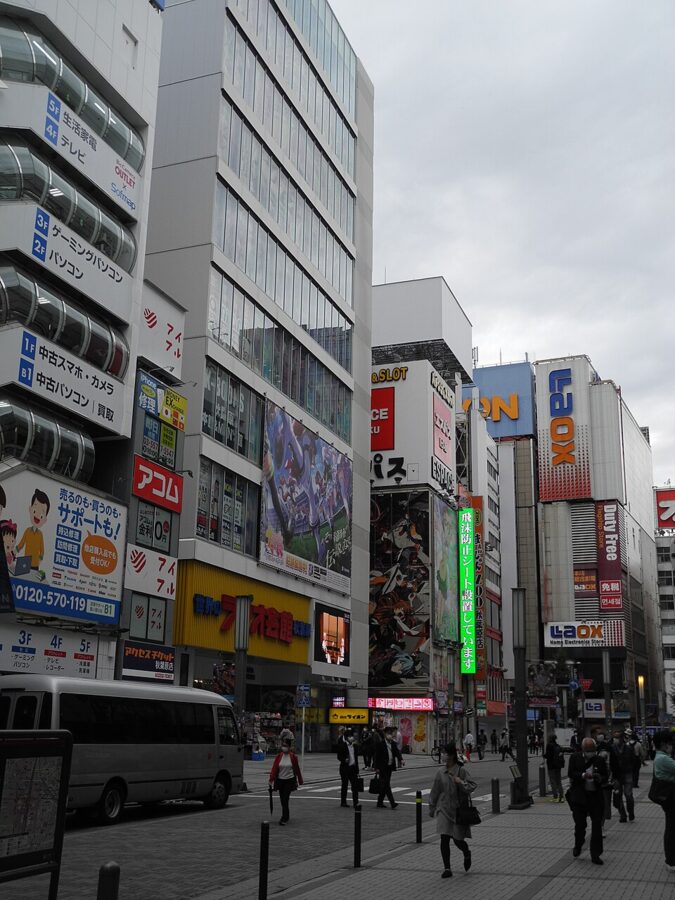
The district is small. From Manseibashi on the Kanda River to the Sotokanda 5-chome crossing at the north end is a little over half a kilometer of Chuo-dori, and nearly every shop, arcade and maid cafe worth naming sits within ten minutes of the station. What eats the time is height: a single building can hold seven floors of figures, trading cards and capsule toys.

My verdict, before the detail: come on a weekday afternoon if you want to shop, and on a Sunday if you want the street. Skip the electronics megastores unless you need something specific, spend your hours in the multi-floor hobby buildings, and walk ten minutes in any direction for the parts of the area most visitors miss.

Which station, and which exit
JR Akihabara is the obvious way in. The JR Yamanote and Keihin-Tohoku lines stop on the second floor and the Sobu Line local trains on the third, and Tokyo Station is about four minutes south. The station has four sets of ticket gates, and the one you pick decides which side of the tracks you start on.
The Electric Town Exit (電気街口) is the one you want for Chuo-dori, Radio Kaikan and the arcades. The Central Gate (中央改札口) puts you on the station square between the Akihabara UDX tower and Yodobashi Akiba, and next to the Tsukuba Express. The Showa-dori Exit faces the office side to the east and the Hibiya Line. The fourth gate, Atre 1, connects the Sobu Line platform straight into the station building.
The names are newer than the station. The Electric Town and Showa-dori exits were once plain West and East, and were renamed at the request of the local electric town association. Inside the gates, a row of shops and food counters called ecute Akihabara opened on the first floor on April 7, 2025, which helps if you are changing trains and want a coffee without leaving.
JR Akihabara is not a quiet station. In fiscal 2024 it averaged 221,421 boardings a day, ninth among JR East’s stations and more than Ueno two stops north. At weekday rush hour, the Showa-dori side jams with commuters changing to the Hibiya Line; the Electric Town side is the easier exit before 10:00.
The subway and the Tsukuba Express
The Tokyo Metro Hibiya Line station (H16) runs under Showa-dori, east of the JR tracks, with exits numbered 1 to 5. It is the best choice from Roppongi, Ginza or Ueno, but it lands you on the wrong side for the hobby shops, so allow five minutes to walk under the tracks to Chuo-dori.
The Tsukuba Express platform is about 35 meters below ground, and its exits are A1 to A3. A1 and A2 connect to the JR Central Gate, and A3 opens into the Yodobashi Akiba entrance.
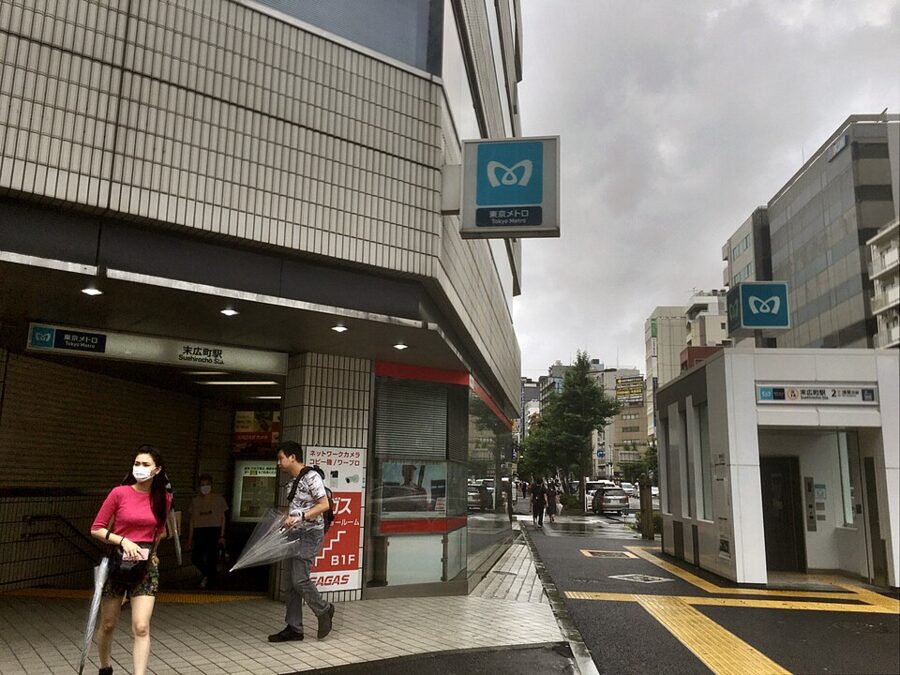

Suehirocho (G14) on the Tokyo Metro Ginza Line is the station I would use from Asakusa or Shibuya, and from Ginza or Ueno too if you would rather start at the shop end than cross under the tracks. It sits directly under the Sotokanda 5-chome crossing at the north end of the electric town, so you can start there and walk the whole of Chuo-dori south toward JR Akihabara and the river, with the shops on both sides. Each direction has its own entrance; there is no underground passage between the two platforms.
If you are planning the rest of the city’s trains around this, the getting around Tokyo guide covers IC cards and passes.
The layout in one paragraph
Chuo-dori runs north and south. The electric town and the subculture shops cluster along it between the Manseibashi crossing at the river and the Sotokanda 5-chome crossing at Suehirocho, with the dense backstreets on its east side between the avenue and the JR tracks. East of the tracks, along Showa-dori, Akihabara turns into offices, business hotels and Yodobashi Akiba. If you get lost, find the Sobu Line overhead: its tracks cross Chuo-dori just south of the station, and everything is measured from there.

Electronics: the megastores, the parts shops, and what to buy
Akihabara’s electronics trade started under the railway. After the war, students at a nearby electrical college built and sold radios, parts sellers set up stalls around them, and in 1949 an occupation order clearing street stalls pushed the dealers into spaces under the Sobu Line tracks. By the 1970s, this square kilometer was handling about a tenth of Japan’s home appliance market.
That era is long gone. Suburban chains and online shopping took the appliance trade from the 1990s on, the shops moved to personal computers and then to anime, and what is left of electronics in Akihabara falls into two groups: the giant stores and the tiny parts dealers.
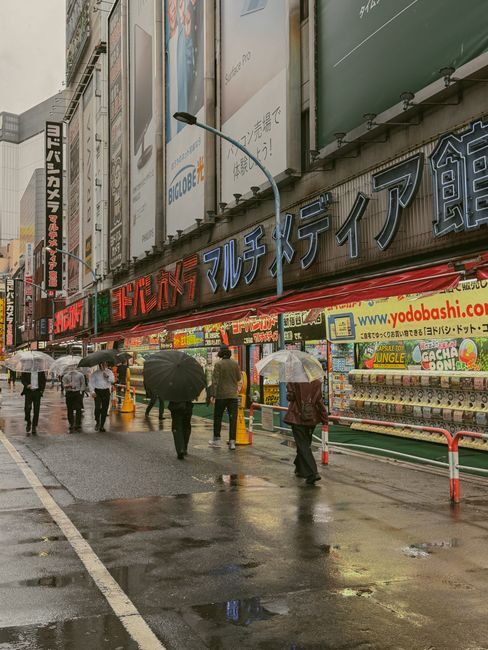
Yodobashi Akiba and Bic Camera
Yodobashi Akiba, east of the station by the Central Gate, opened on September 16, 2005, on the site of a haulage warehouse beside the old freight yard. It is open 9:30–22:00 and holds a full department store’s worth of electronics, plus cameras, toys and model kits. The 8F restaurant floor runs 11:00–23:00, which makes it one of the few places in the area still serving food at 22:00, and there is a batting cage on 9F open until 23:00, if you need one.
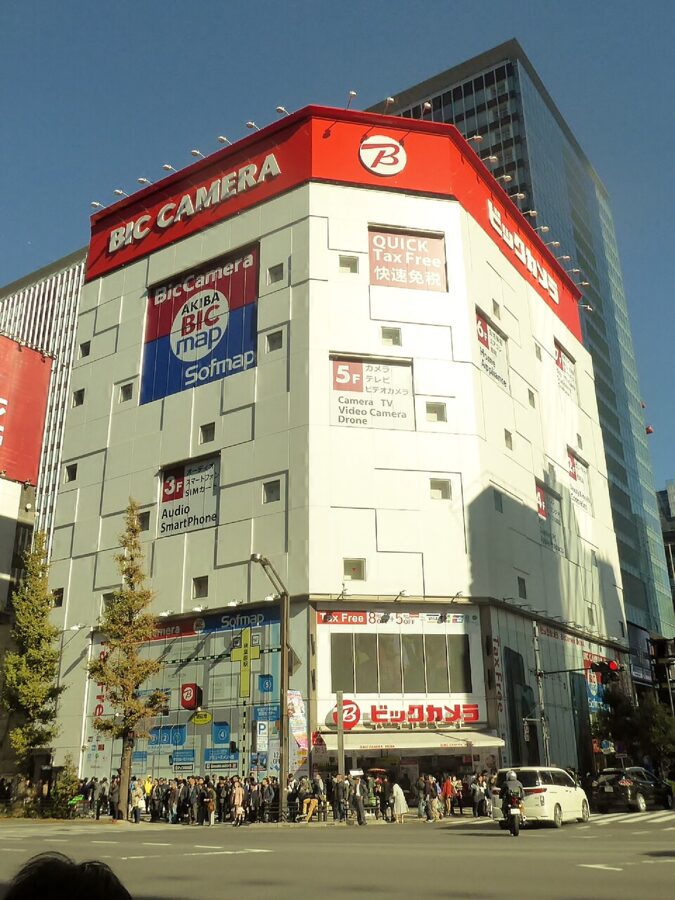
On the Chuo-dori side, Bic Camera AKIBA stands at Sotokanda 4-1-1, a two-minute walk from the Electric Town Exit. It is open 10:00–22:00 every day. If you only want one big store, I would pick by which side of the tracks you are on, because the stock overlaps far more than the advertising suggests.

What is a good buy for a visitor
Less than you would think. Japan runs on 100 volts, and eastern Japan, Tokyo included, on 50 hertz, so a rice cooker or hair dryer built for the home market may need a transformer elsewhere, or may not work well even with one. Laptops, phone chargers and most camera chargers take anything from 100 to 240 volts and are fine; check the label on the plug, not the box.
Warranties are the next catch. Many products sold here carry a domestic-only guarantee, and the box will often say 国内専用 (domestic use only). That label also matters for game consoles: the cheaper Nintendo Switch 2 sold in Japan is a Japanese-language model that only works with a Japanese Nintendo account, so read the box before you pay for one to take home.
Where Akihabara still wins is Japanese-market items that never get exported: certain lenses, earphones, audio gear, and anything in the hobby electronics line. If you want a mainstream laptop or phone, you will rarely beat the price you can get at home once the warranty is counted.
The parts shops
The original trade survives in the narrow streets around the Sobu Line tracks. The Akihabara Radio Center, a warren of tiny stalls under the tracks, is the direct descendant of the 1949 move, and the side streets west of Chuo-dori hold dealers in resistors, switches, LEDs and cables that most people outside the hobby will never need.
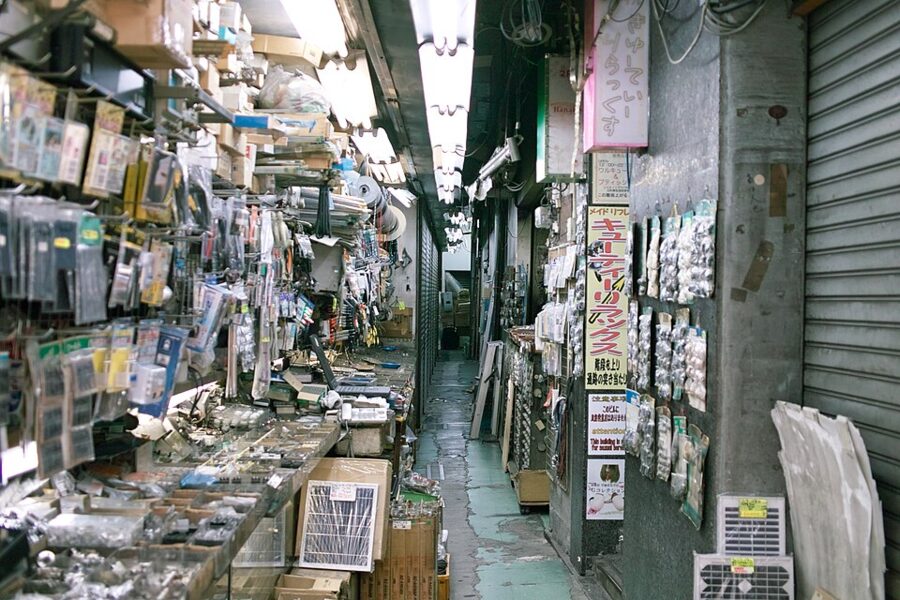

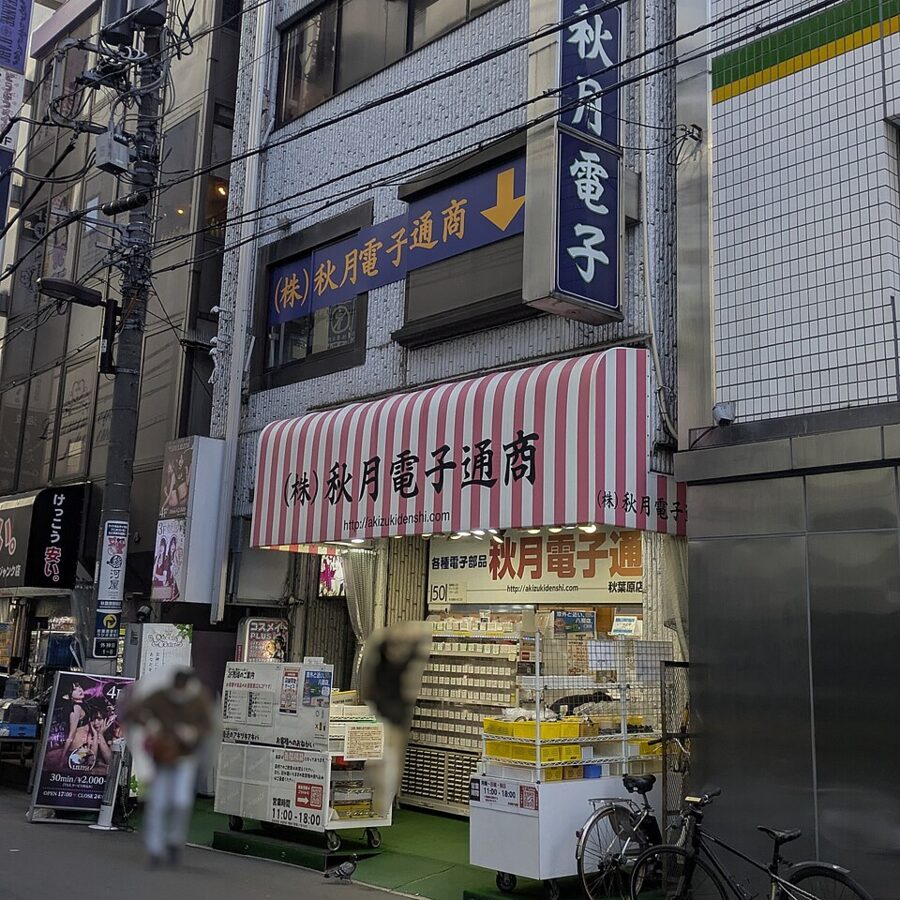
Akizuki Denshi Tsusho has sold electronic parts in Akihabara since 1970 and is still the shop hobbyists go to first, packed floor to ceiling with small labeled bags. Sengoku Densho runs its main store nearby. Inside Radio Kaikan, Wakamatsu Tsusho sells parts and secondhand gear under the same roof as the figure shops.

Tax-free: the rules changed on November 1, 2026
Until October 31, 2026, a tax-free shop knocked the 10% consumption tax off at the counter. For purchases made on or after November 1, 2026, Japan uses a refund method. You pay the tax-inclusive price, and the tax comes back only after customs confirms at the airport or seaport that you are taking the goods out of the country.
The customs rules for the refund set the threshold at ¥5,000 or more, before tax, per store per day. You must leave Japan with the goods within 90 days of purchase and scan your passport at a tax-free kiosk at the departure airport before security. A green result means you are done; a red one means you take the goods to a customs counter for inspection.
Two details catch people. Food, drinks and cosmetics are no longer sealed in special bags, but if you use them in Japan you lose the refund on them. And at Narita, Haneda Airport and five other major airports you can also complete the check through Visit Japan Web on a dedicated Wi-Fi network in the departure lobby, which only works if you set the account up before you arrive at the airport.
Anime, manga and figures
This is why most people come, and the stores sort themselves fairly neatly by what you want: new goods from the big chains, secondhand and rare pieces from the specialists, and everything in between from the multi-tenant towers where each floor is a different shop.
Radio Kaikan
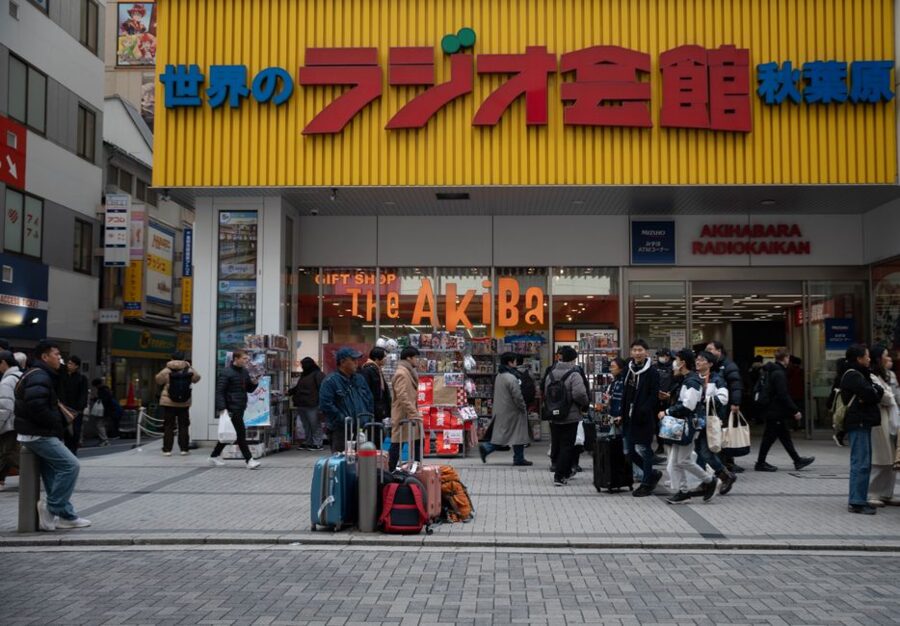
The yellow sign reading 世界のラジオ会館 (“Radio Kaikan of the world”) faces the Electric Town Exit. The first building on the site opened in 1950; the 1962 tower was the first high-rise in the district, and the current ten-story building reopened on July 20, 2014, after a rebuild. Radio Kaikan is open 10:00–20:00.
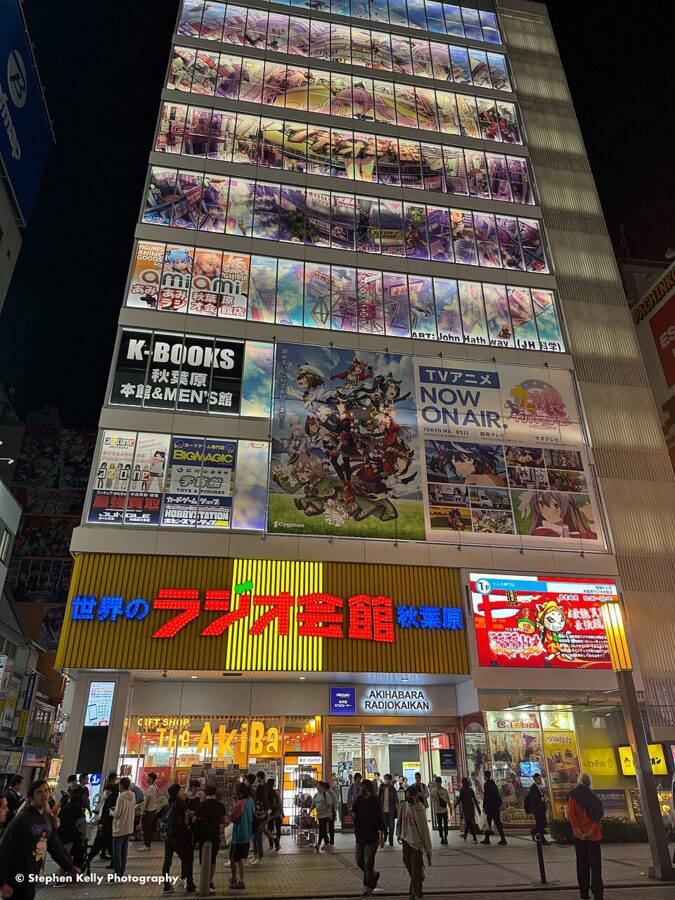

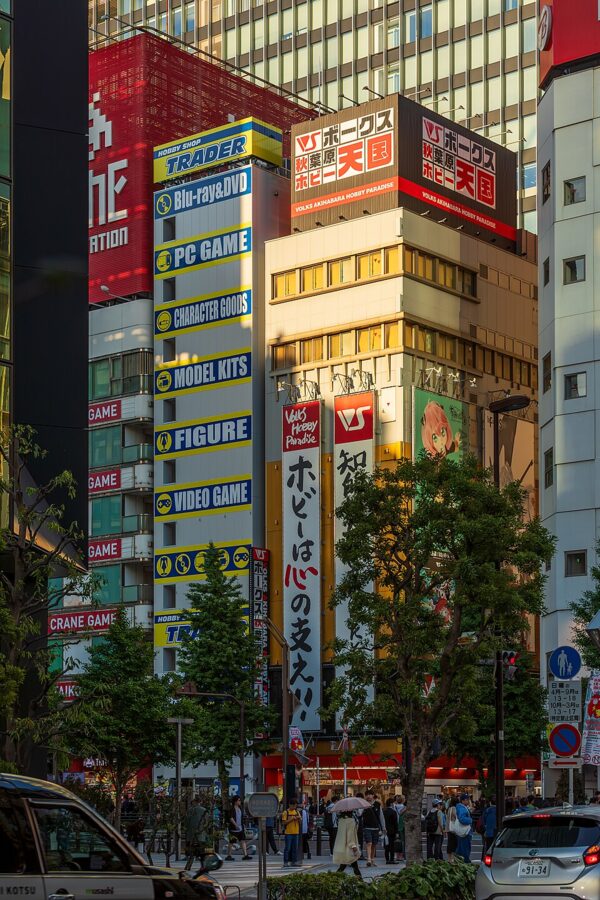
Inside, each floor is split among specialists. Kaiyodo, the figure maker whose garage kits helped turn the district toward anime in the late 1990s, runs its Hobby Lobby Tokyo here. AmiAmi, K-Books, Volks, Rashinban and several trading card shops share the other floors, and the tenth floor is an event space.
Use it as a sampler. Within an hour you will know whether you are a new-release person, a secondhand person or a card person, and the rest of the district is organized along the same lines. On weekends the wait for a ride up gets long; the stairs are faster.
Animate Akihabara
For new manga, light novels and character goods, Animate Akihabara at Sotokanda 4-3-1 is the most organized store in the area. It finished a full renovation on August 8, 2026, and the ANNEX building now gives its basement and first floor to a capsule toy floor called POP @P CAPSULE.
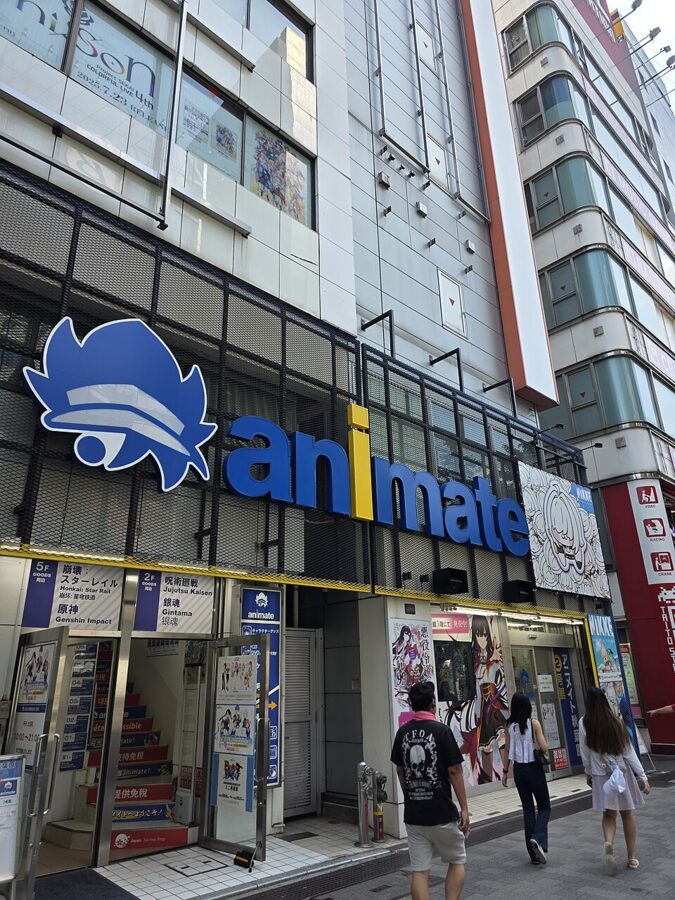
Buildings 1 and 2 are open 10:00–21:00 every day; the ANNEX runs 10:00–21:00 on weekdays and closes an hour earlier on weekends and holidays. Upper floors host official pop-up shops that change every few weeks, which is the main reason fans come back to the same building.
Secondhand: Mandarake and the rest
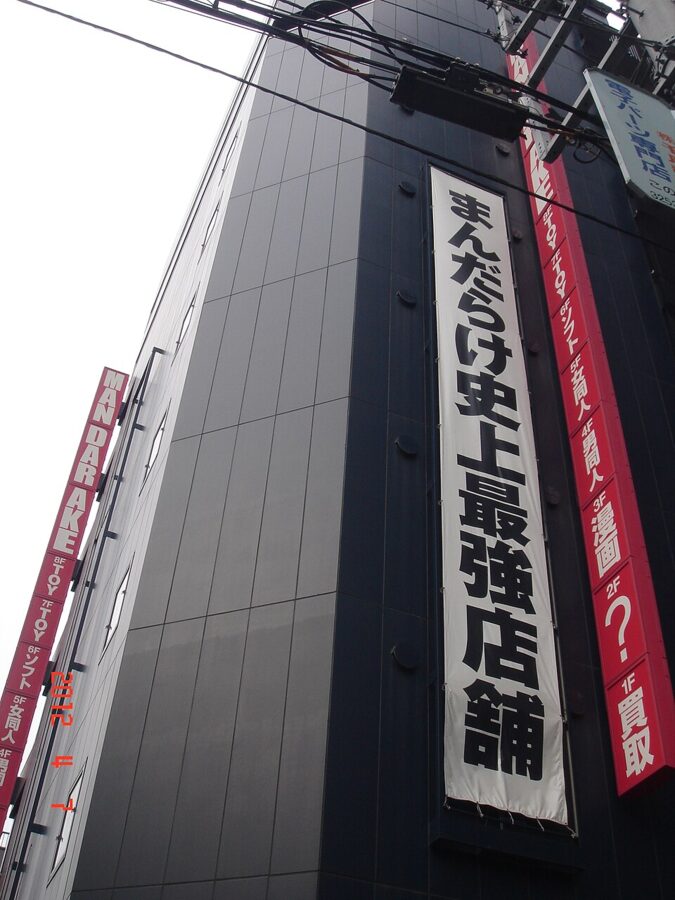
Mandarake Complex, eight floors of secondhand manga, figures, cels and vintage toys in Sotokanda 3-chome, opens at noon. Each floor is arranged by subject, and in late 2025 the doll and magical girl toy section moved up to 5F. If you are looking for an out-of-print volume or a figure from twenty years ago, this is the first stop; if you are not, it is a museum where everything has a price tag.

Akiba Cultures Zone at Sotokanda 1-7-6 is the other multi-tenant tower, open 11:00–21:00, with hours varying by floor. The building opened in 1990 as Laox The Computer-kan, the six-story computer store that marked the district’s turn away from appliances and toward PCs, and became Akiba Cultures Zone in July 2011. It feels more like a collector’s building than Radio Kaikan, with smaller shops and fewer tourists.
Prices for figures vary more between shops than between brands, so look in two places before buying anything over ¥10,000. Box condition matters to the secondhand stores, and the tags say so: 箱傷み means a damaged box, and the price usually reflects it.
Arcades, retro games and the claw machines
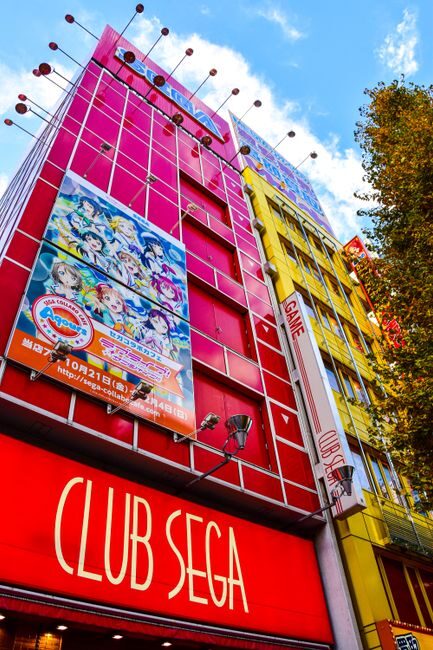
The arcades are where the district has changed most visibly. In 2022, GENDA took full ownership of SEGA’s former arcade chain, and from that March the SEGA signs came down in favor of GiGO. Then on August 31, 2025, GiGO Akihabara Building 1, the red building that had been the area’s landmark arcade for 33 years, closed too.
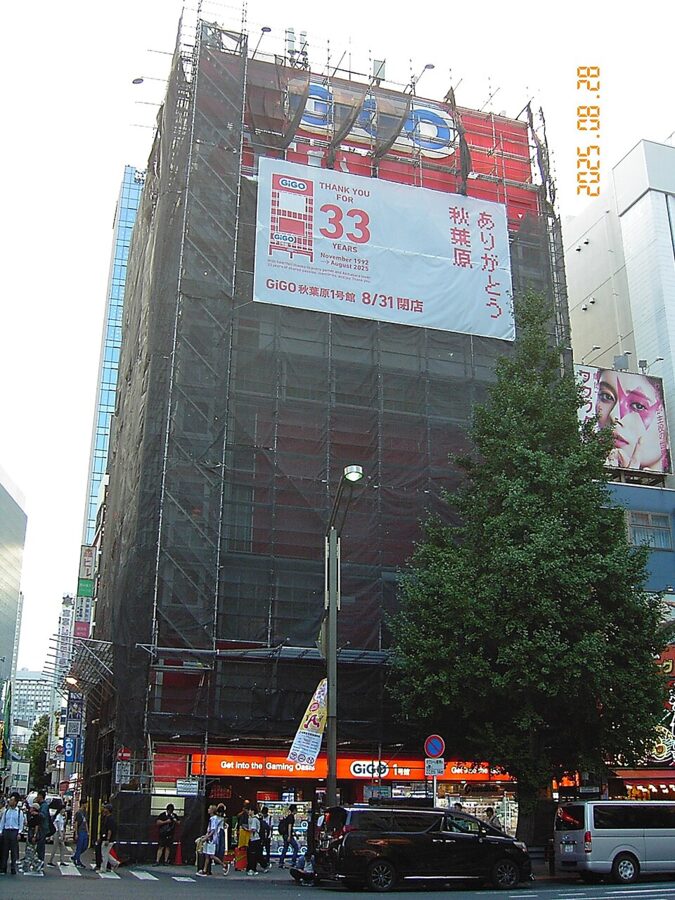

What remains is still more arcade floor space than most cities have. GiGO runs three buildings in Akihabara as of November 2026: Building 2 at Sotokanda 1-15-1, Building 3 on Chuo-dori at 1-11-11, and Building 5 at 1-10-1.
GiGO Akihabara Building 3 is the one to pick if you only go to one. It is three minutes from the Electric Town Exit, open 10:00–23:30 every day, and covers claw cranes, photo booths, rhythm games, video games and card games across several floors, with a collaboration cafe upstairs (last order 19:40).
The Taito Station in the East-West Free Passage is the arcade you walk past without trying: it sits in the public passage between the Electric Town and Central gates. It reopened with a larger floor on December 20, 2024, and runs 10:00–23:30 daily, almost entirely claw cranes and capsule toys.
How the claw machines work
The prizes are rarely meant to be lifted. Most crane setups are built so you push, tip or slide a box toward the chute over several plays, which is why the person next to you seems to be nudging rather than grabbing. Watch someone finish one before you start.
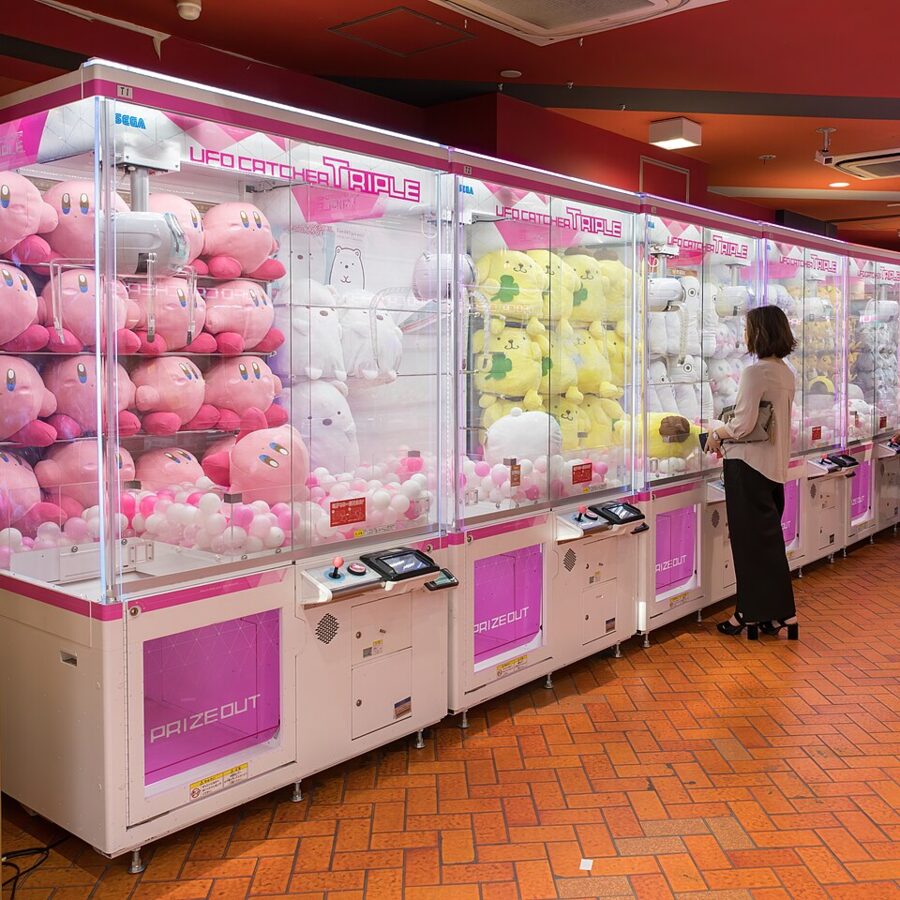

If you have sunk a lot of coins into one machine and the prize is wedged, you can call a staff member over; they will often reset the prize to a better position. Set a budget before you start. The machines are designed for exactly the person who says “one more.”
Retro games
Super Potato occupies the 3rd to 5th floors of the Kitabayashi Building at Sotokanda 1-11-2 and opens 11:00–20:00 every day. The shelves go from Famicom and Mega Drive to obscure 1980s machines and LSI handhelds, and the 5th floor is a small retro arcade with a rest space.
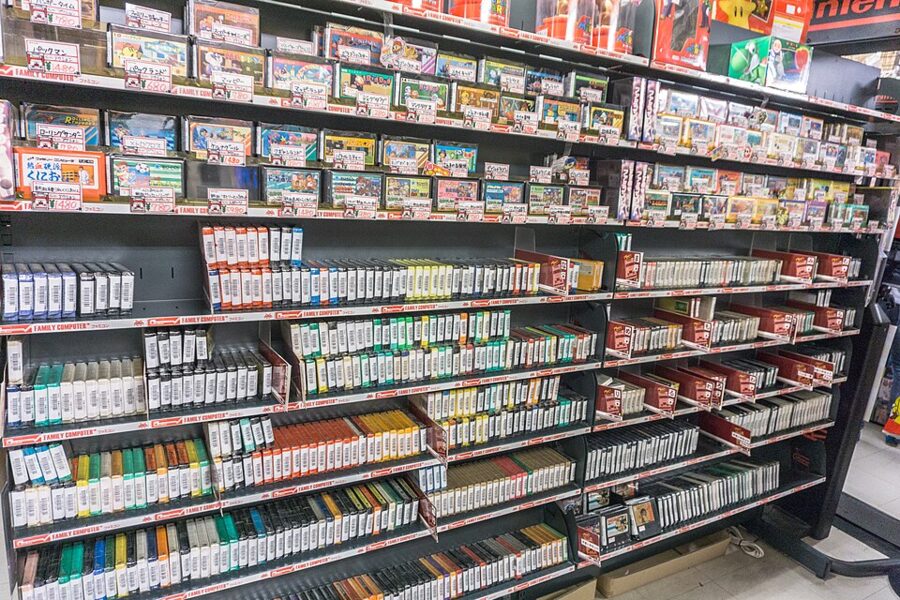

Before you buy, know what you can play at home. Famicom cartridges do not fit a Western NES without an adapter, and Japanese discs for the original PlayStation and PlayStation 2 will not boot on an unmodified console from another region. A boxed Japanese game you only want to display is a different purchase from one you want to play, and the price difference between the two can be large.
Maid cafes: what they cost and the rules
The first permanent maid cafe opened in Akihabara in March 2001. By the end of 2011 the district had 132 maid-themed shops, and about half of everything that opened in that decade had already closed. The survivors are mostly chains with printed price lists, and that is what you should look for.
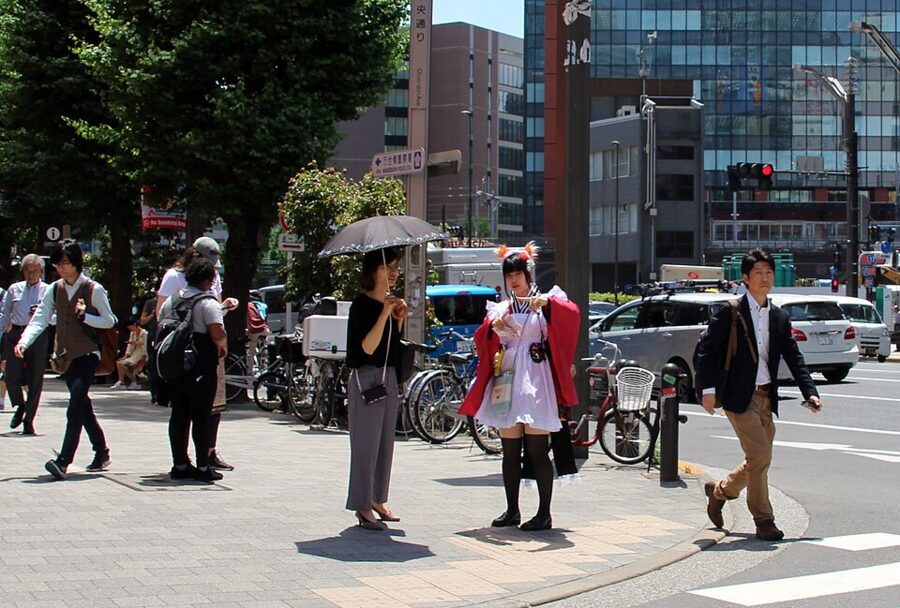

The system is the same at the large chains. You pay an entry charge, order at least one item, and get a fixed stay, usually an hour. Staff greet you as master or princess, there is a short chant over some dishes, and drawing on your omurice in ketchup is part of the service.
At @home cafe, the admission fee is ¥850 for adults aged 23 to 59, ¥600 for ages 19 to 22 and over 60, ¥400 for teens, and free for children 12 and under. Each visit needs at least one drink, and the cafe’s own example puts an adult with one drink at ¥1,600; the basic stay is one hour. It has three Akihabara branches: on the 5th floor of Akiba Cultures Zone, at Sotokanda 1-11-4, and on the 5th floor of the Don Quijote building at 4-3-3.
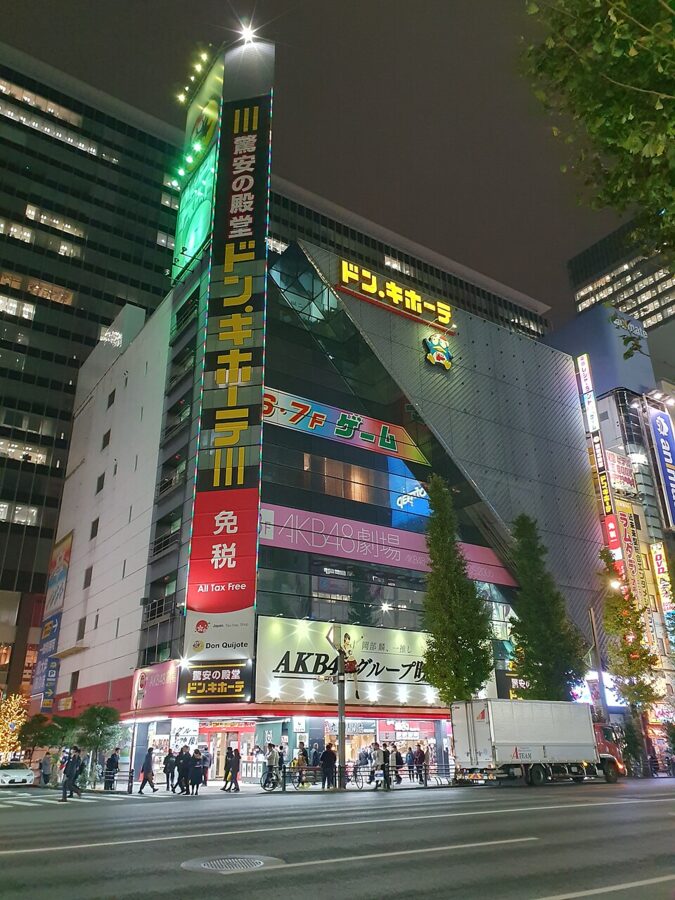

maidreamin charges an entry fee of ¥880 for adults, and it is charged again for each hour you stay, on top of food and drink. The chain puts a typical visit at ¥1,650 to ¥5,000 per person. It has seven Akihabara branches, so you will pass one whichever street you take.
The photo rule
You cannot photograph the staff or the room. Photos with a maid are sold as cheki, instant prints taken by the staff; at @home cafe the photo menu lists a regular cheki at ¥900, a large one at ¥1,110, and a solo shot of a maid of your choice, decorated in front of you, at ¥1,200. Pictures of your own food are fine. Ask before anything else.
The touts, and Chiyoda City’s rules
The trouble in Akihabara is not the big maid cafes. It is street solicitation for smaller “concept cafes” and bars, some serving alcohol late, where the bill can climb with drink orders and charges you were never shown. By 2024 there were noticeably more of them, along with more complaints about them.
Chiyoda ward, which calls itself Chiyoda City in English, has banned touting in public places by ordinance since fiscal 2014, and in July 2020 it made Sotokanda, the address of most of the electric town, a priority district. From November 5 to 19, 2026, the ward took public comment on a draft that would tighten the rules. News reports put the core of it at fines for repeat touting in the priority districts, reaching ¥50,000 after a third violation, with the amendment expected at the ward assembly in February 2027.
My rule is simple. Choose a cafe from its own price list and walk in. If someone has to follow you down the street to sell you an hour of their company, the price will be worse than the one on any menu. For the rest of the city after dark, the Tokyo nightlife guide covers cover charges and how to spot a rip-off.
The Sunday pedestrian street
The Chuo-dori pedestrian zone (歩行者天国, hokoten for short) runs every Sunday, 13:00–17:00 from October to March and 13:00–18:00 from April to September. It covers about 570 meters of Chuo-dori, from the Sotokanda 5-chome crossing to the Manseibashi crossing. Rain, strong wind or a bad forecast can cancel it on the day, and the association posts each week’s decision that morning.
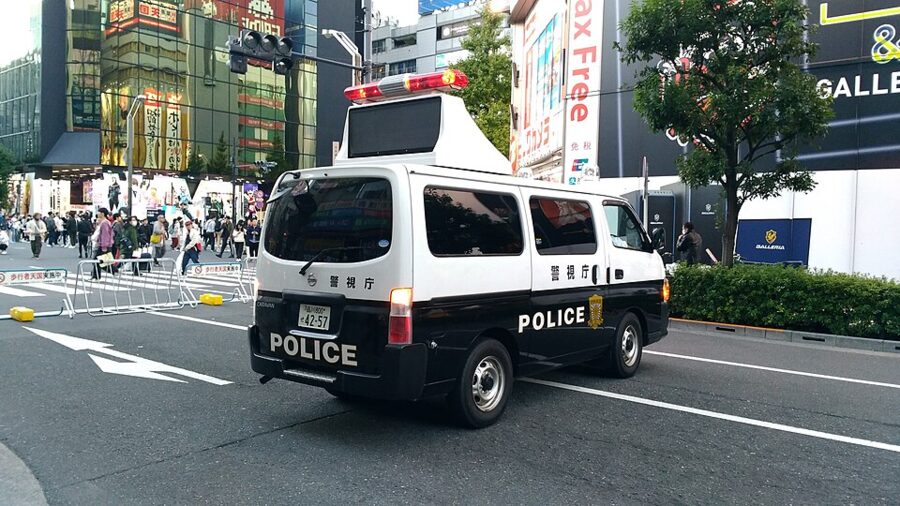

The rules are strict, and for good reason. Selling, performing, live music and riding a bicycle are all banned inside the zone, so walk your bike if you have one. Smoking on the street is banned across the area under a Chiyoda ward ordinance in any case, with designated smoking spots instead.
The zone started in 1973. It was suspended after June 8, 2008, when a man drove a truck into the crowd at the Chuo-dori and Kanda Myojin-dori intersection and then stabbed passers-by, killing seven people. It came back on a trial basis on January 23, 2011, only on Sundays and over a shorter stretch, under a set of local rules agreed between the ward, the police and the shop associations.
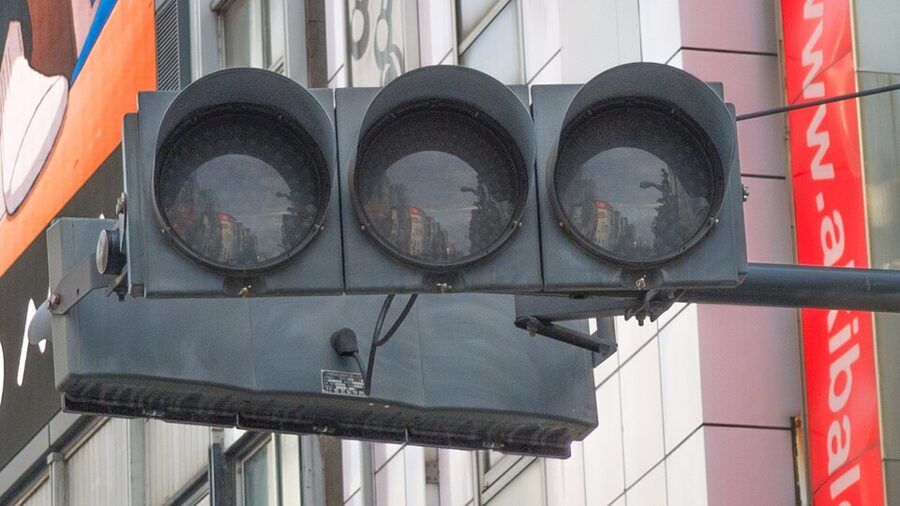
Is it worth planning around? For photographs and for walking the length of Chuo-dori in the middle of the road, yes. For shopping, no: the stores are at their most crowded, and the wait to ride up at Radio Kaikan turns into a line. I would shop on Saturday and walk the street on Sunday.
Eating in Akihabara
Akihabara was a freight yard and a produce market before it was an electric town. The Kanda produce market stood by the station until it moved to Ota ward in 1989, and the canteens that fed its workers mostly went with it. For years the local advice was to eat in Kanda or Ochanomizu instead; since the 2000s redevelopment, ramen chains and curry shops have filled the gap, and curry in particular became a crowded field.
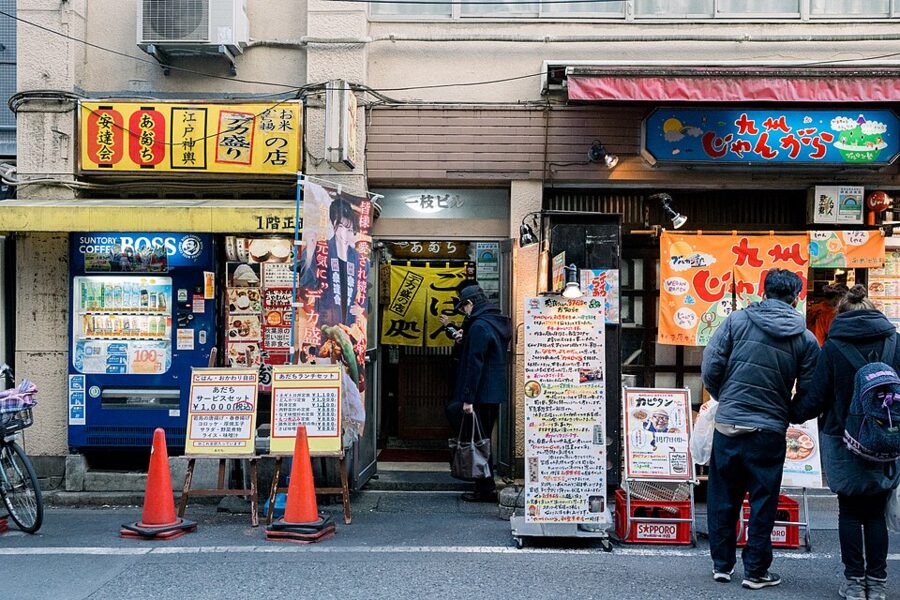
The best-known bowl in the district is at Kyushu Jangara’s Akihabara main store, at Sotokanda 3-11-6 near Suehirocho. It serves Kyushu-style pork bone ramen 11:00–22:00 every day (last order 21:45), takes no reservations, and has a line before opening on weekends. The kakuni, slow-braised pork belly, is the topping regulars add.

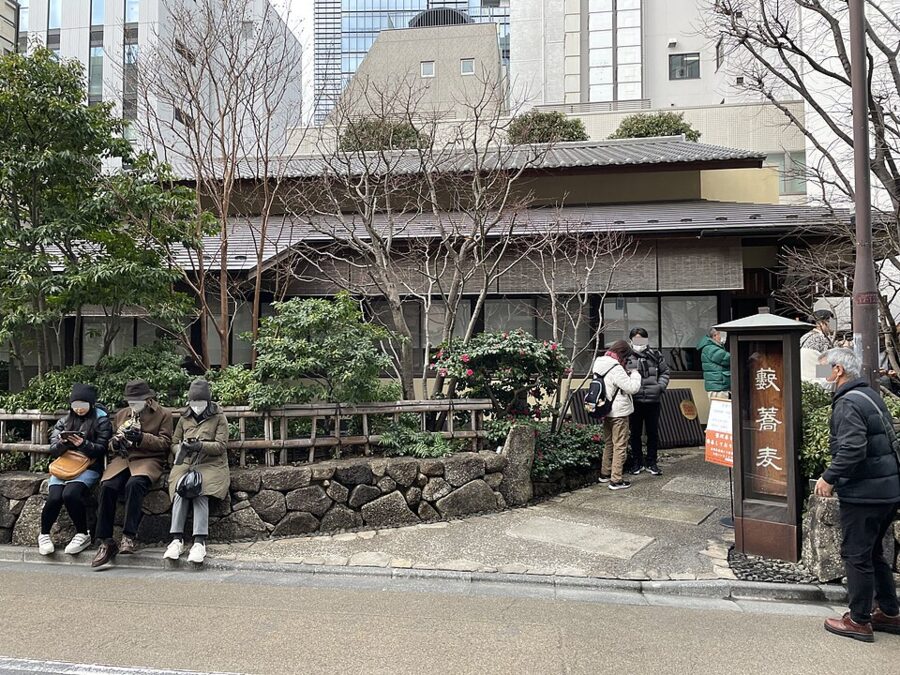
For a sit-down meal across the river, Kanda Yabu Soba at Kanda Awajicho 2-10 is open 11:30–20:30 and closed Wednesdays. The old wooden building burned in February 2013, and the rebuilt shop reopened in October 2014. Order the seiro, cold buckwheat noodles on a bamboo tray, and expect a line at noon.
For standing places and quick meals, there are counters selling cheap noodles and curry around both sides of the station, and the curry shops in the backstreets west of Chuo-dori trade on speed. Akihabara empties early, though. Most shops close at 20:00 or 21:00, and if you are still hungry at 22:00, the Yodobashi Akiba restaurant floor or the bigger restaurant districts are your options; the Tokyo food guide covers where to go.
Next door on foot
Akihabara’s edges are where the area gets quieter, older and, to my mind, more interesting. Everything below is a walk, not a train ride.
Manseibashi and mAAch ecute: 5 minutes south
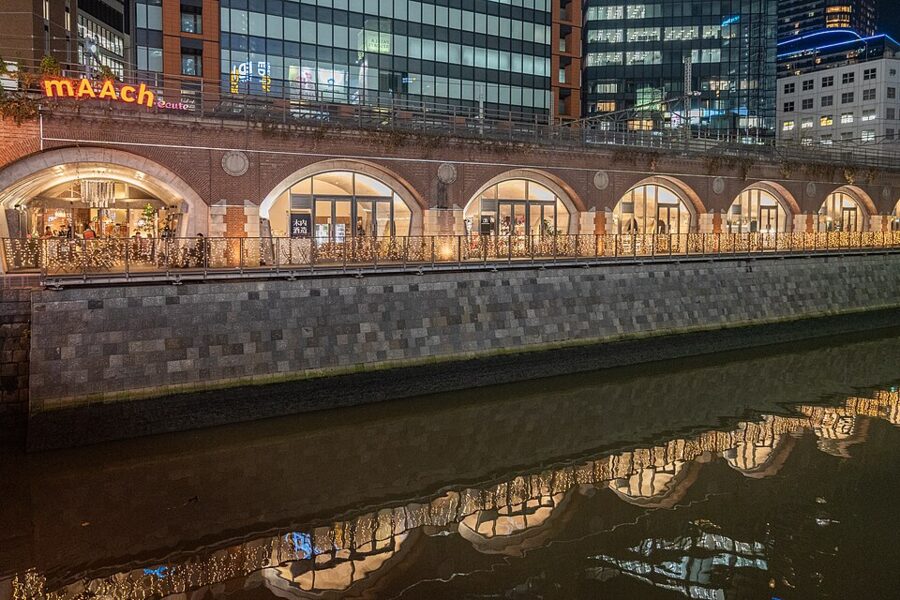
Walk south down Chuo-dori to the Kanda River. Mansei Bridge carries the avenue across, and beside it is the brick viaduct of Manseibashi Station, which opened in 1912, closed in 1943, and housed the Transportation Museum from 1936 until 2006.
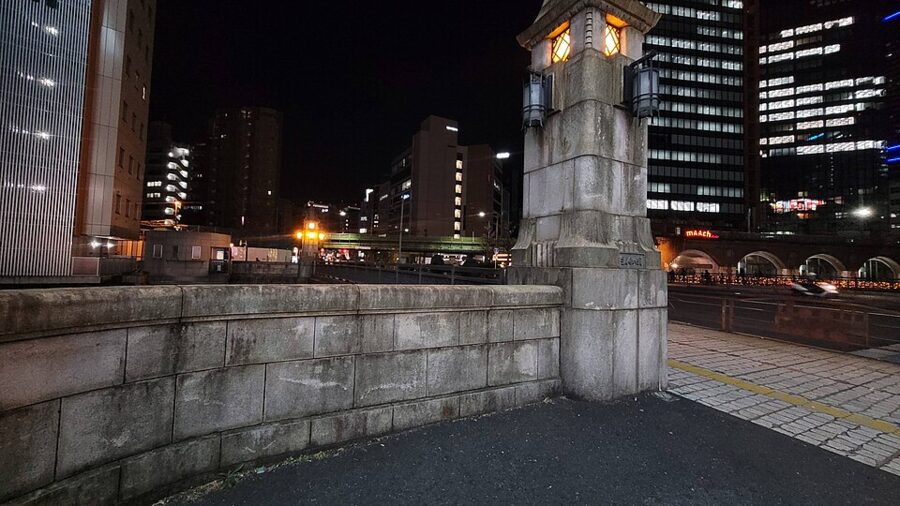
Since September 14, 2013, the arches have held mAAch ecute Kanda Manseibashi, a row of shops and cafes inside the old brickwork. You can climb the preserved 1912 and 1935 staircases to a glass-walled deck on the former platform, where Chuo Line trains pass on either side. The staircases and platform are open 11:00–22:00 Monday to Saturday and 11:00–20:30 on Sundays and holidays.

Kanda Myojin: about 10 minutes west
Walk west from the electric town, up the slope past Suehirocho, and you reach Kanda Myojin, the shrine whose parish covers Akihabara, Kanda and Nihonbashi. The grounds are free and open at all hours. Its link to the district is not subtle: local IT firms come here for blessings, and the shrine sells charms aimed at electronics and data.
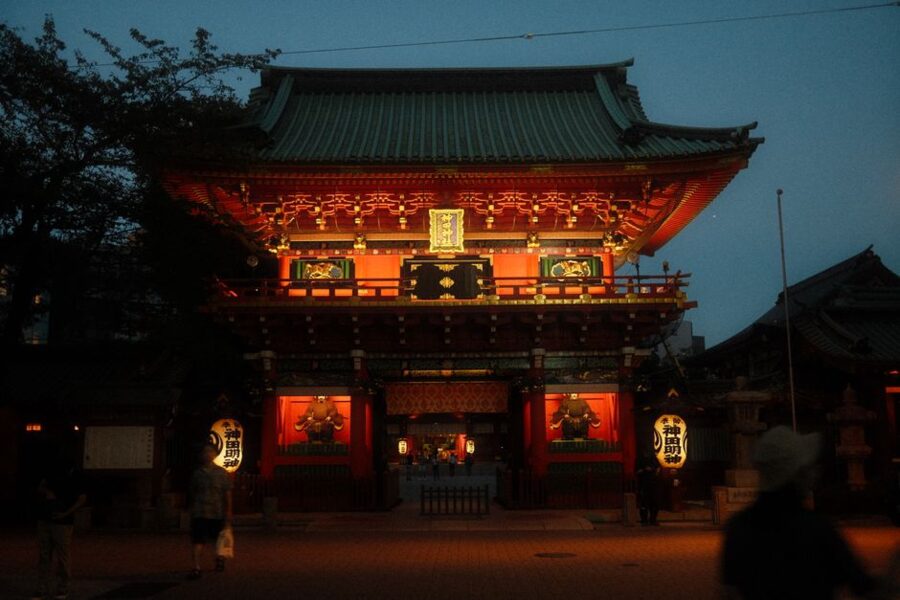
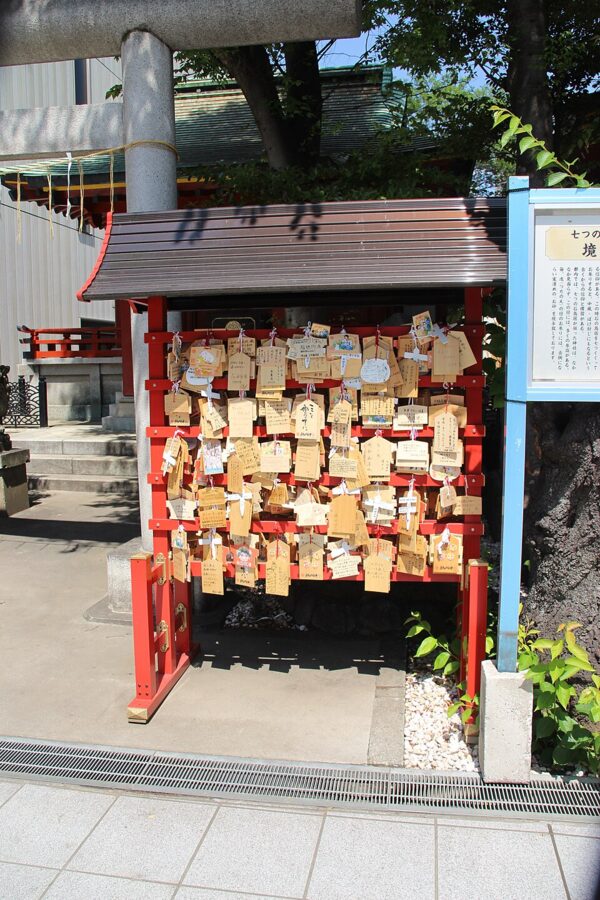
Look at the ema, the wooden prayer plaques hung by the main hall. A good share of them are drawn in anime style, some by people with real talent. The full Kanda Matsuri, with a procession through Akihabara, runs in mid-May in odd-numbered years, so the next one is in May 2027; in the first days of January, the line to pray stretches down the street and the roads around the shrine are packed.

Ochanomizu: 15 minutes west
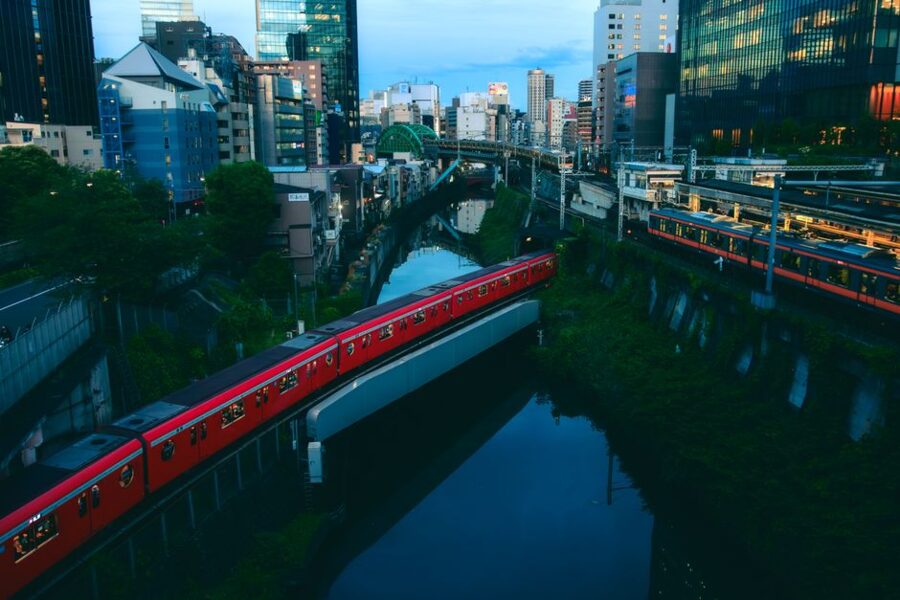
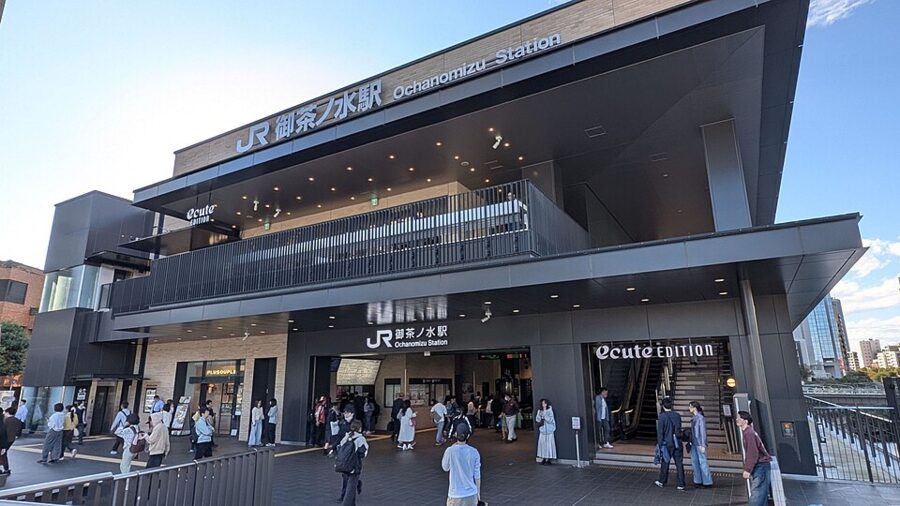
Carry on past Kanda Myojin and cross the Hijiribashi bridge to Ochanomizu. JR Ochanomizu Station’s Hijiribashi Exit has been rebuilt, and from the bridge you can watch the red Marunouchi Line trains pop out of a tunnel and cross the Kanda River below the JR tracks.

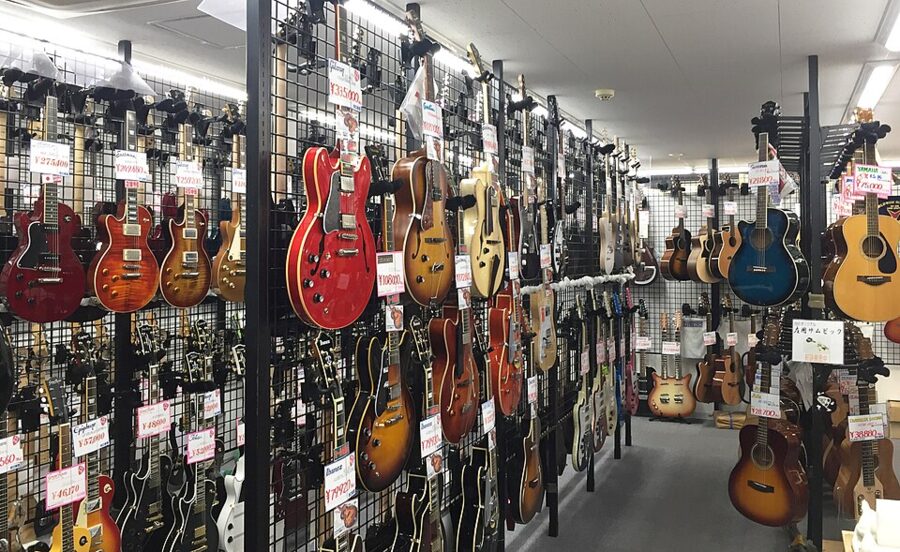
South of the station, Meidai-dori is lined with musical instrument shops, most of them selling guitars, and several devote entire floors to one category: basses, vintage pieces, left-handed models. It is a student district too, with universities and secondhand bookshops leading on to the Jimbocho book town.
2k540 and the walk to Ueno: north under the tracks
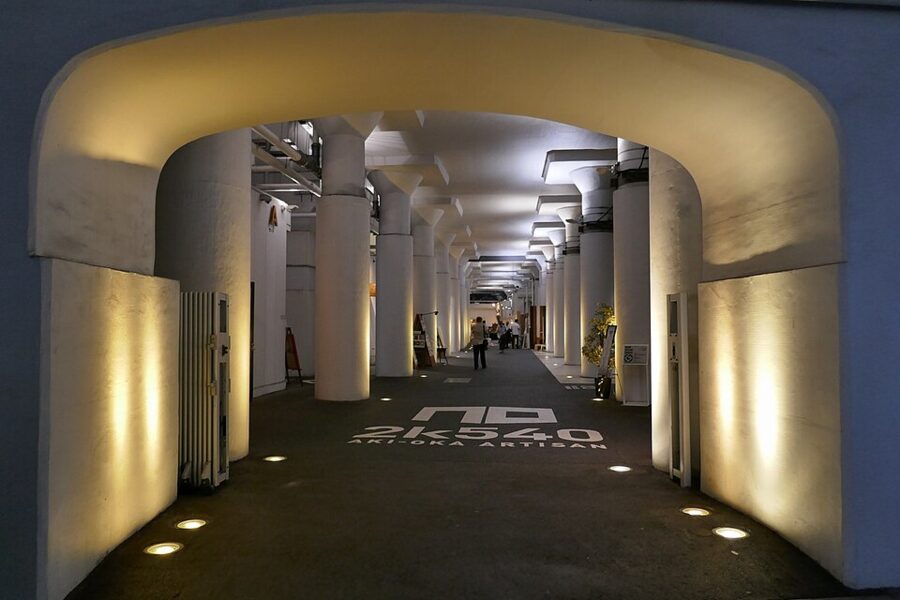
Head north under the JR tracks from the station, past the Kuramaebashi-dori crossing, and you reach 2k540 Aki-Oka Artisan, an arcade of craft studios and small shops under the viaduct, open 11:00–19:00 and closed Wednesdays. The name is a rail distance: the site is 2,540 meters from Tokyo Station along the line. It opened on December 10, 2010.

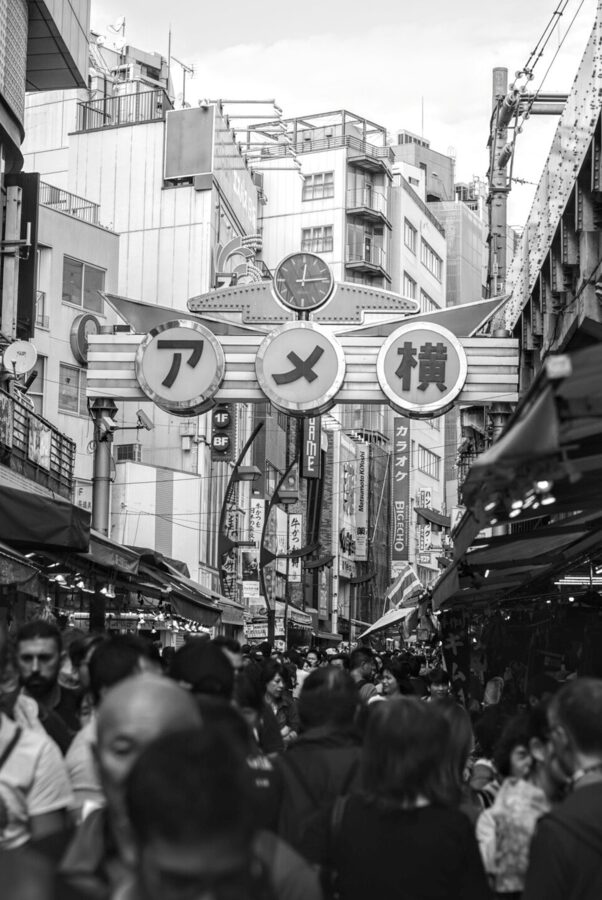
Keep walking north under the tracks and you come out at Okachimachi, where the Ameya-Yokocho market street runs up to Ueno. The whole walk from Akihabara to Ueno takes about 25 minutes and is better on foot than by train, since it is only two stops on the Yamanote Line anyway. Ueno has the park and the museums, and for a base, the where to stay in Tokyo guide covers the area.

Akihabara pairs with almost anything on the east side of the city, and it is one of the Tokyo neighborhoods where a half day goes further than you expect. For the bigger picture, start with things to do in Tokyo.
So: the Electric Town Exit, two minutes west, and Chuo-dori. Shop on a weekday, walk the street on a Sunday before 17:00 while the winter hours last, and keep the receipts for anything over ¥5,000 in your carry-on, because from November 2026 the tax comes back at the airport, not at the counter.