

Nine of the Don Quijote (ドン・キホーテ) branches you are most likely to walk past in central Tokyo never close. MEGA Don Quijote Shibuya Honten, Shinjuku Kabukicho, Shinjuku Tonanguchi, Akihabara, Ginza Honkan, Asakusa and Roppongi all run 24 hours, and so do the two stores by Ikebukuro Station, according to the chain’s own store pages in November 2026.
What changed on November 1, 2026 is the price at the till. A tax-free shopper now pays the full tax-included price, and the consumption tax comes back later, after a customs kiosk at the airport confirms the goods are leaving Japan and after you register a refund method online. The threshold has not moved: ¥5,000 before tax, at one store, on one day.
So the useful question is not which Don Quijote is the best one. It is which one is on your way, and whether you will be at the airport early enough to clear the kiosk before you check in your bag. Both are answered below.

Which branch to use in each district
The table gives the branches a visitor actually passes, with the hours and walking directions each store lists on its own page in November 2026. Every one of them takes tax-free purchases.
| District | Branch | Hours | From the station |
|---|---|---|---|
| Shibuya | MEGA Don Quijote Shibuya Honten | 24 hours | JR Shibuya, Hachiko Exit, 5 min |
| Shibuya | MEGA Donki Shibuya Bekkan (annex) | 24 hours | Hachiko Exit, 5 min |
| Shinjuku | Shinjuku Kabukicho | 24 hours | Shinjuku, East Exit, about 5 min |
| Shinjuku | Shinjuku Tonanguchi | 24 hours | Shinjuku, Southeast Exit, about 1 min |
| Akihabara | Akihabara | 24 hours | Electric Town Exit, about 3 min |
| Ginza | Ginza Honkan | 24 hours | Shimbashi, Ginza Exit, about 5 min |
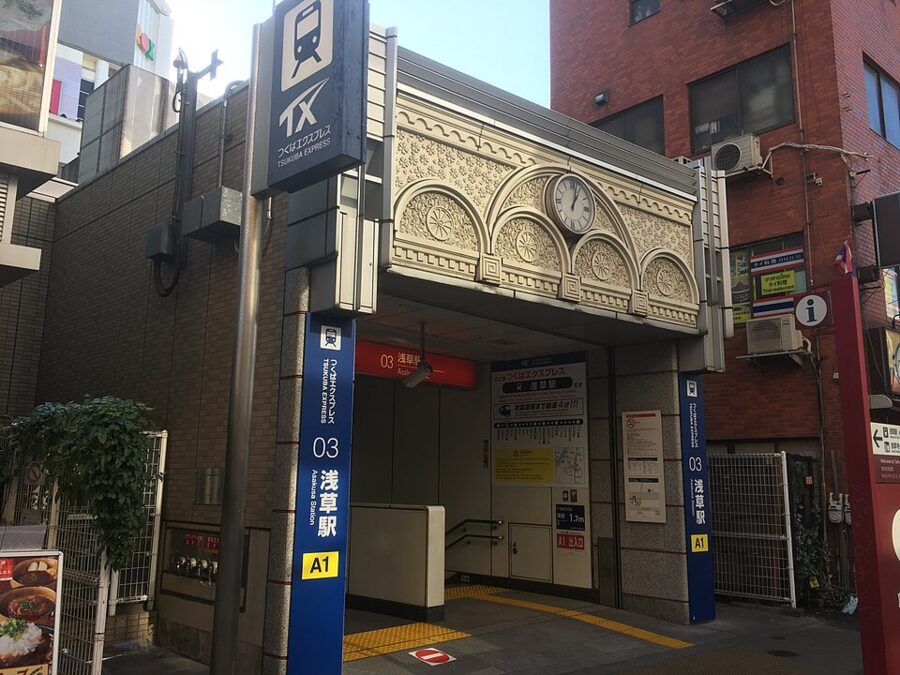
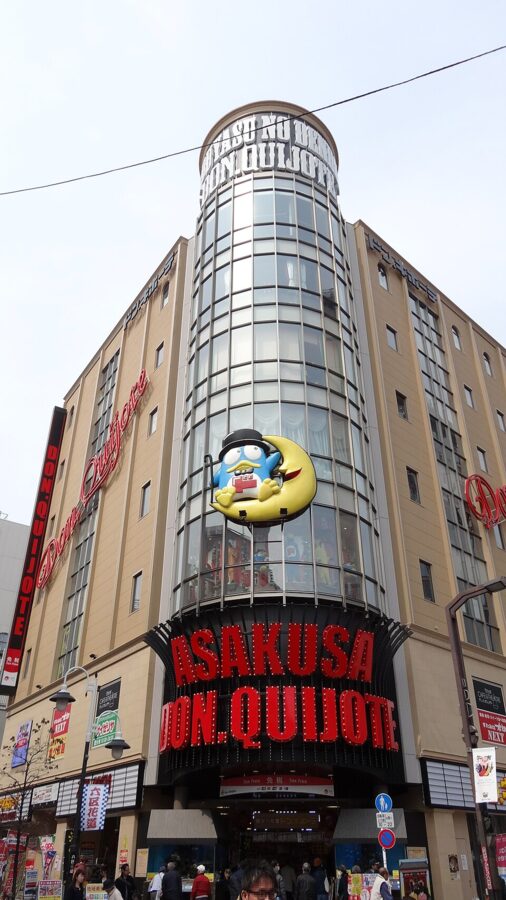
| Asakusa | Asakusa | 24 hours | Tsukuba Express Asakusa, Exit A1, about 1 min |
| Asakusa | Asakusa EKIMISE | 10:00–20:00 | Inside Tobu Asakusa Station building, 4F |
| Ikebukuro | Ikebukuro Higashiguchi Ekimae | 24 hours | Seibu East Exit, about 1 min |
| Ikebukuro | Ikebukuro Ekinishiguchi | 24 hours | JR North Exit, about 2 min |
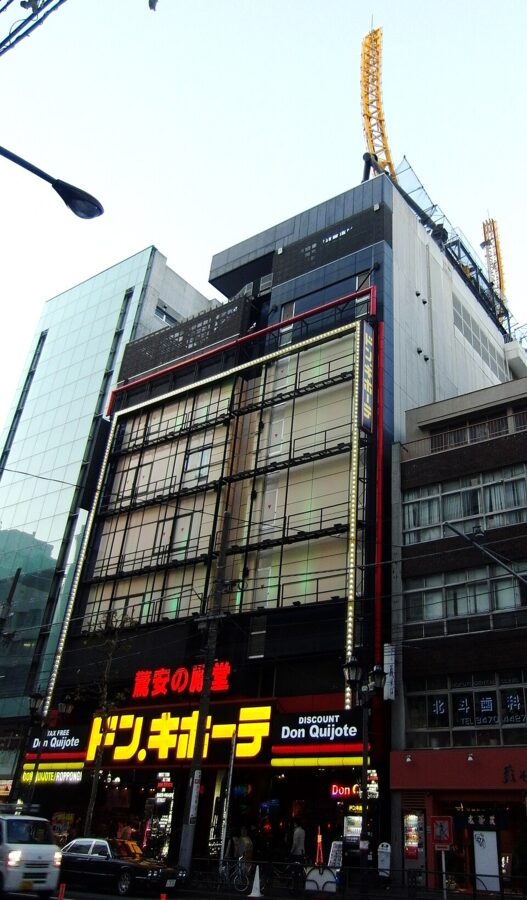
| Roppongi | Roppongi | 24 hours | Oedo Line Exit 5 or Hibiya Line Exit 3, about 3 min |
| Ueno | Okachimachi | 09:00–01:00 | JR Okachimachi, about 2 min |
| Ueno | Ueno (Yushima) | 09:00–04:00 | Chiyoda Line Yushima, Exit 4, about 2 min |
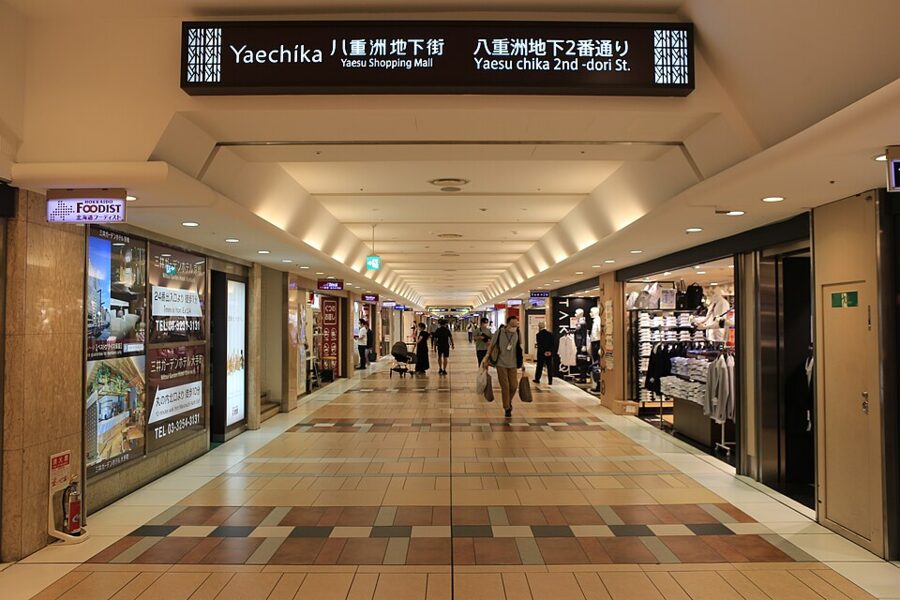
| Tokyo Station | Okashi Donki / Osake Donki | 09:00–21:00 (Fri, Sat to 21:30) | Yaesu underground mall, direct from the Yaesu exits |
| Haneda Airport | Sora Donki | 09:00–22:40 | Terminal 3, 5F |
One standing exception applies to every 24-hour store on the list. On its stocktaking night a branch closes at 01:00 and reopens at 09:00 or 10:00 the next morning, and the date goes up on the store’s page a few weeks ahead. If you are planning a 03:00 run, check that page the same day.
Shibuya: the Honten, or the annex for contact lenses
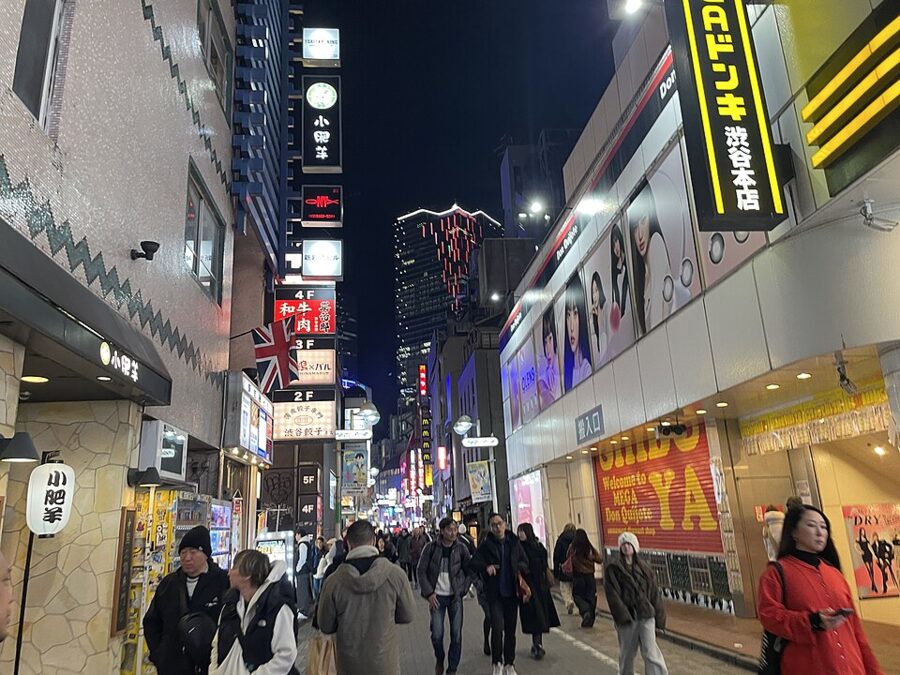
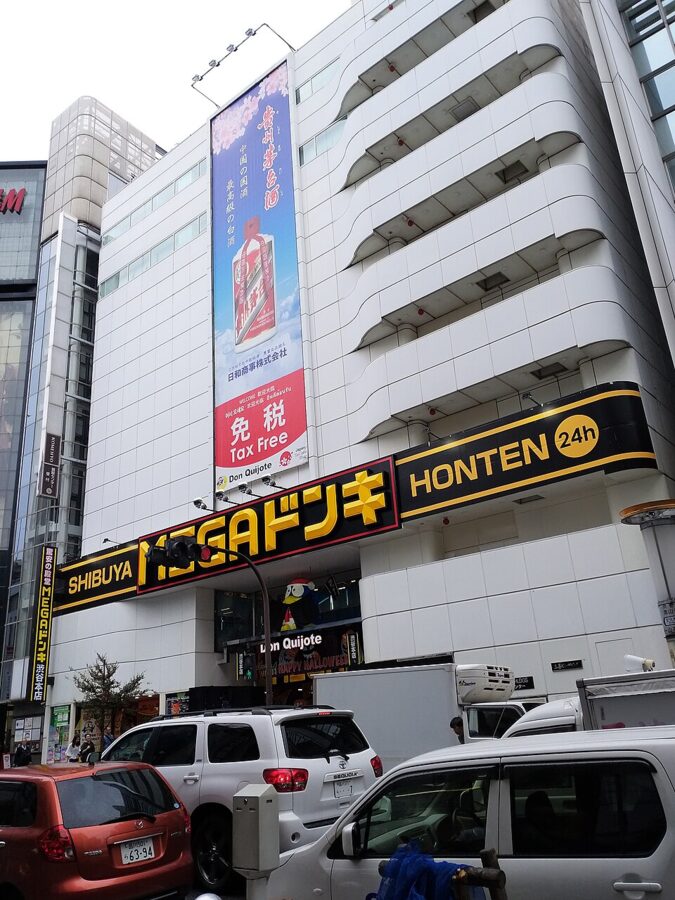
For Shibuya, the answer is MEGA Don Quijote Shibuya Honten (MEGAドン・キホーテ渋谷本店) at Udagawacho 28-6. It is the MEGA format, which in Don Quijote’s terms means wider aisles and a grocery floor, so it is the central store with room to push a cart. It also has a foreign-currency exchange machine, an ATM, a Donpen-yaki stand on 1F, and a partner car park with free hours on receipts from ¥1,000.
A short walk up Dogenzaka, the MEGA Donki Shibuya Bekkan at Dogenzaka 2-25-12 went to 24 hours on August 1, 2026, and the Honten’s color contact lens corner moved there in full. The building opened in August 2023 as Domise, a shop that sold nothing but the house brand, and was converted to the annex later. Note that the Honten’s own page still gives the annex as 10:00–05:00; the annex’s page, updated with the change, says 24 hours.
Shinjuku: Kabukicho at night, Tonanguchi for a train
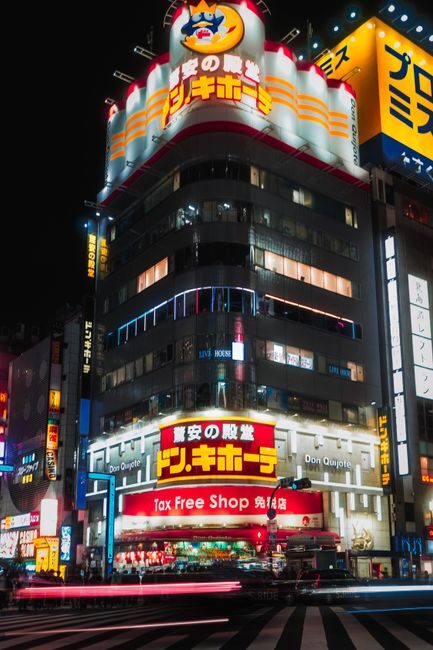
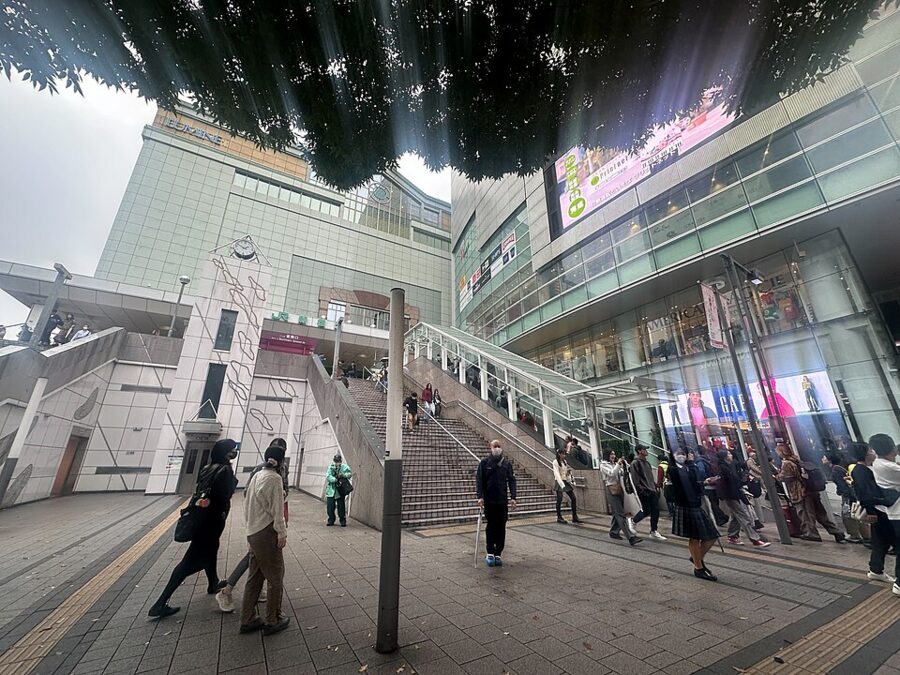
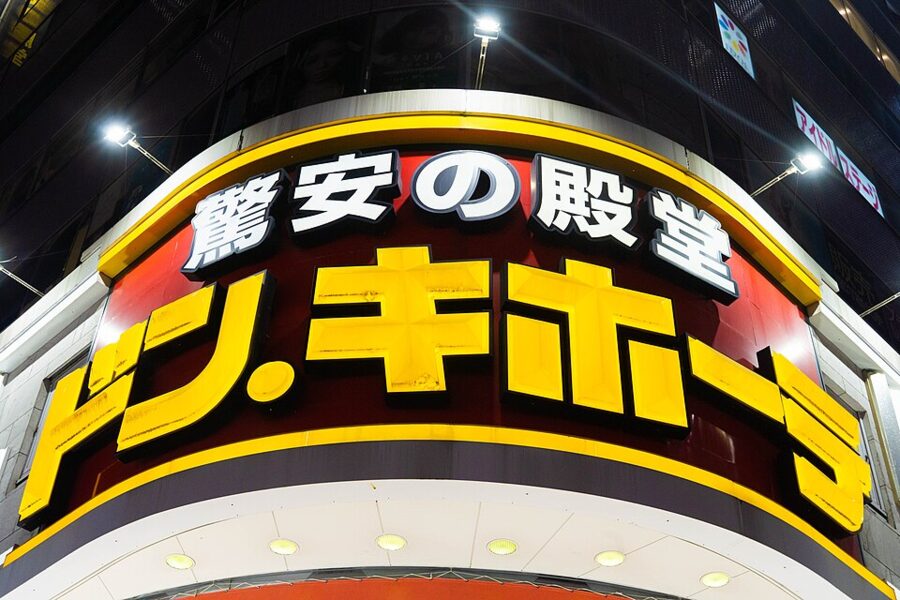
In Shinjuku there are two stores a visitor uses, on opposite sides of the tracks’ east flank. The Shinjuku Kabukicho store at Kabukicho 1-16-5 sits on Yasukuni-dori at the mouth of the bar streets, open 24 hours with no parking. It is the one for after dinner. It is not on Don Quijote’s list of branches with a currency exchange machine.
The Shinjuku Tonanguchi store at Shinjuku 3-36-16 is about a minute from the Southeast Exit, open 24 hours, with an ATM and an exchange machine. If you are catching a train from Shinjuku, this is the one. Its annex at Shinjuku 3-35-16, about two minutes from the same exit, closes at 02:00.


Akihabara: one stop in a day you were spending there anyway
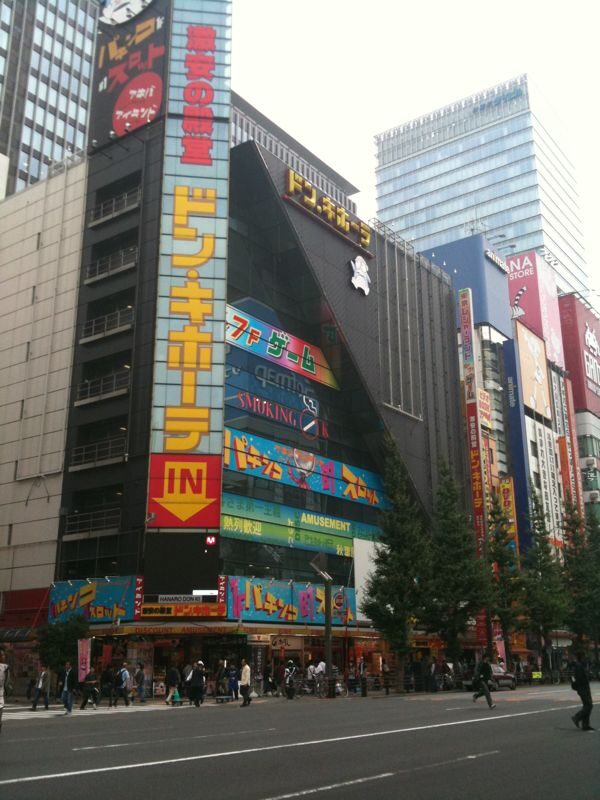
The Akihabara store at Sotokanda 4-3-3 is about three minutes from the Electric Town Exit along Chuo-dori, open 24 hours. The building is the reason people photograph it: a maid cafe on 5F, an arcade on 6F and 7F, and the AKB48 Theater on 8F, with a money exchange counter and food stalls on 1F. As a shop it is a normal Don Quijote with more character goods; if you are not already in Akihabara, it is not worth the detour.

Ginza: the late-night store under the expressway
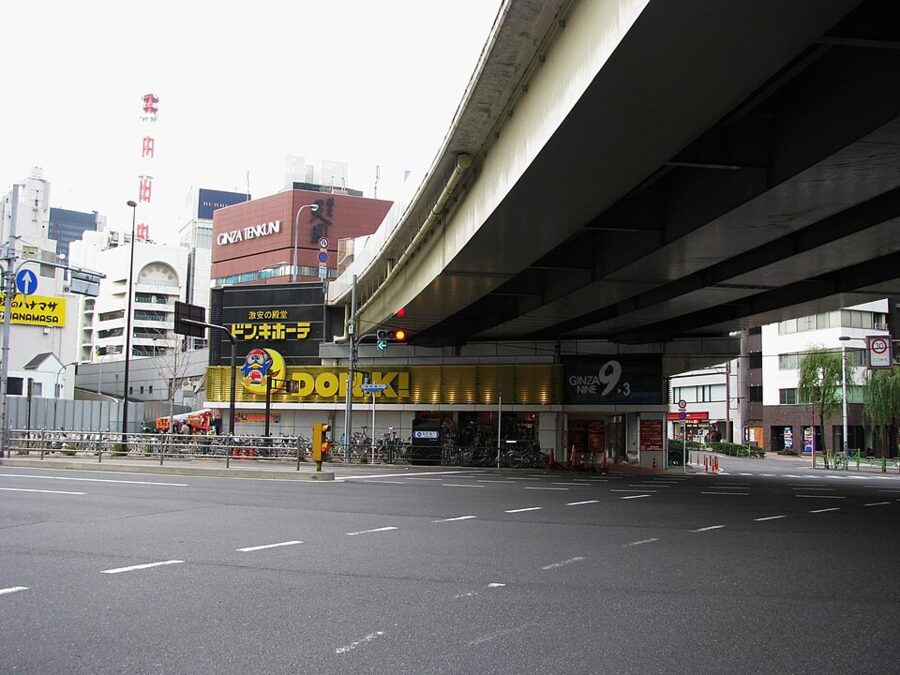
Ginza runs on department-store hours, and the Ginza Honkan in the Ginza Nine 3 building at Ginza 8-10 is what is open when they are not: 24 hours, about five minutes from the Ginza Exit of Shimbashi Station. It has a concierge desk and an exchange machine. Its partner parking discount is for members of the chain’s majica app only.

Asakusa: the big one by the Tsukuba Express, the small one by the Ginza Line
The Asakusa store at Asakusa 2-10 is about a minute from Exit A1 of the Tsukuba Express Asakusa Station, which is a different station from the Ginza Line and Asakusa Line stops of the same name. It runs 24 hours and the upper floors are a small entertainment complex: a Saizeriya and a shabu-shabu buffet on 5F, karaoke on 6F, a live house on 7F.

The Asakusa EKIMISE store is on 4F of the building above Tobu Asakusa Station, a minute from Exit 7 of the Ginza Line, open 10:00–20:00. It is smaller and closes early, but it is the one on your way if you are riding the Tobu line out to Nikko.

Ikebukuro and Roppongi
Ikebukuro has a 24-hour store on each side of the station. Ikebukuro Higashiguchi Ekimae at Minami-Ikebukuro 1-22-5 is about a minute from the Seibu East Exit; Ikebukuro Ekinishiguchi at Nishi-Ikebukuro 1-43-12 is about two minutes from the JR North Exit. Both have exchange machines. Take whichever side you came out of; crossing Ikebukuro Station underground costs more time than the stores differ by.
The Roppongi store at Roppongi 3-14-10 stands on Gaien-higashi-dori by the Roppongi 5-chome crossing, about three minutes from Exit 5 of the Oedo Line or Exit 3 of the Hibiya Line. It is open 24 hours, which in Roppongi mostly means after midnight.

Ueno, Tokyo Station and Haneda
Ueno has no 24-hour branch. Okachimachi at Ueno 4-1-10, about two minutes from JR Okachimachi Station at the Ameyoko end, closes at 01:00; the Ueno store at Yushima 3-38-10 stays open to 04:00. Under Tokyo Station, Okashi Donki and Osake Donki in the Yaesu underground mall sell only sweets and alcohol, 09:00–21:00, to 21:30 on Fridays and Saturdays; it opened in May 2021 as the first of the chain’s sweets-only shops and is the last-minute stop before a Shinkansen.
At the airport, Sora Donki is on 5F of Haneda’s Terminal 3, 09:00–22:40, the first of the chain’s airport shops when it opened in June 2016. It takes tax-free purchases too, but the kiosk rule below still applies, so buy before you check in, not after.
What Don Quijote is, and why every store is a maze
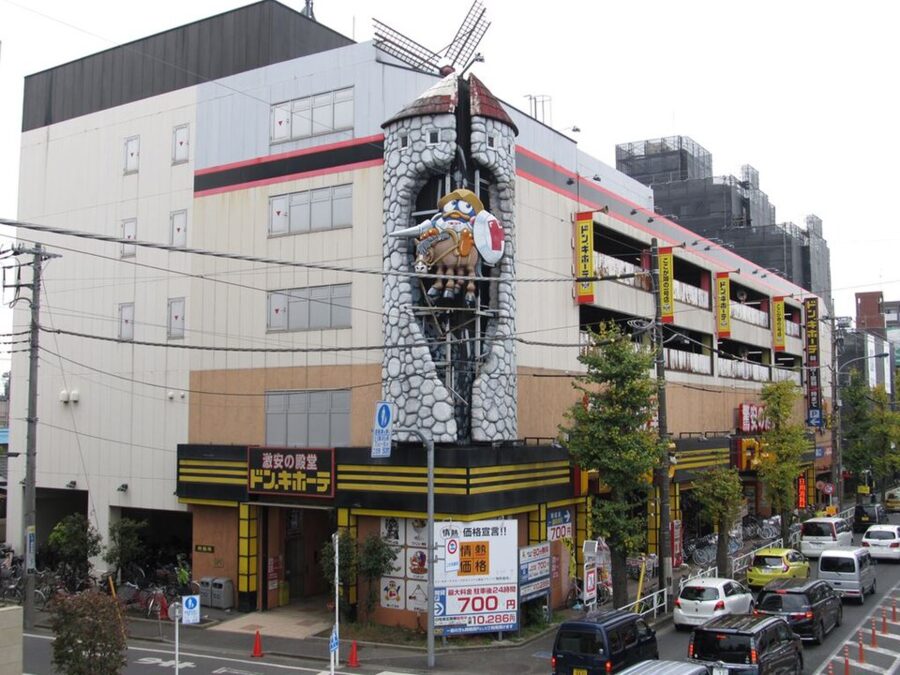
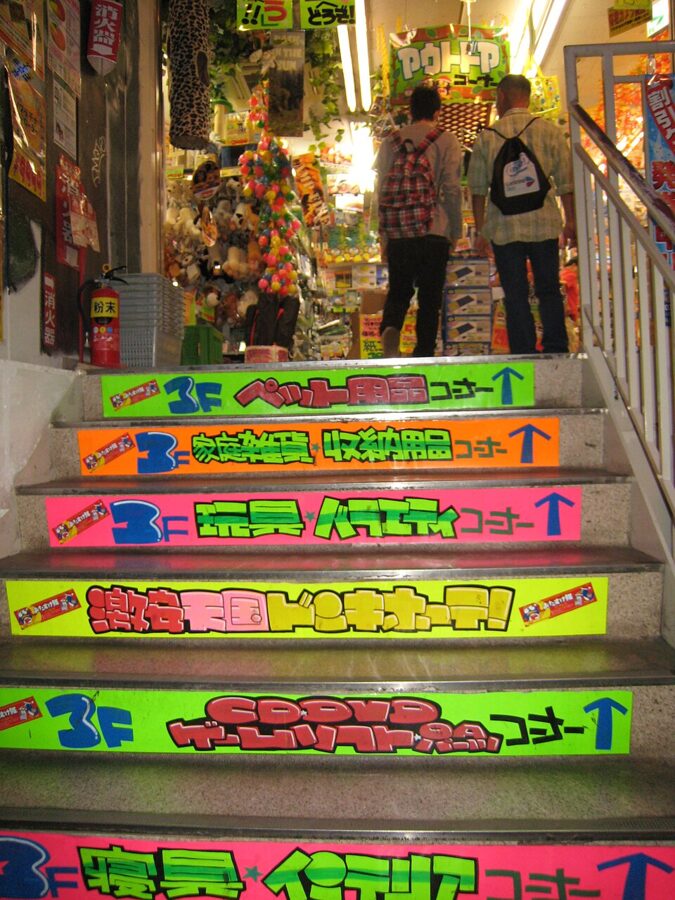
The chain began as a single shop called Dorobo Ichiba, “thieves’ market”, which Takao Yasuda opened in Nishi-Ogikubo in October 1978. It had 18 tsubo of floor, about 60 square meters (another account gives 20 tsubo), no warehouse and no money for one, so the stock went on the shop floor to the ceiling, with windows cut in the boxes and handwritten cards explaining what was inside.
The late hours came from the same shop. Yasuda priced stock at night after closing, passers-by asked whether he was open, and he started opening.
The first store under the Don Quijote name followed in Fuchu, in western Tokyo, in March 1989, and lost about ¥10 million a month at first. The second, in Suginami, opened in November 1993; by then Fuchu was turning over ¥2 billion a year. The chain reached its 47th prefecture with a store in Kochi on February 18, 2025.

Three habits from those first shops still decide how a branch feels. The compressed display is policy, meant to make you hunt. The price cards are the “POP flood”: each store employs one to three card writers who work with the floor staff, in a house lettering the company calls Donki moji.
And prices are set locally. The same item can cost different amounts at two branches in the same city, because the decision belongs to the store or area manager, and items marked as low-price guarantees are refunded the difference if another store, another Don Quijote included, sells them cheaper.

MEGA Don Quijote is a different format with the same name. The company describes it as its general supermarket concept: wider aisles, fresh food, aimed at families and older shoppers. A regular Don Quijote, by the same description, does not stock fresh food as a rule and is aimed at a younger crowd. In central Tokyo, the two Shibuya stores are MEGA branches; the others in the table above are the regular kind.
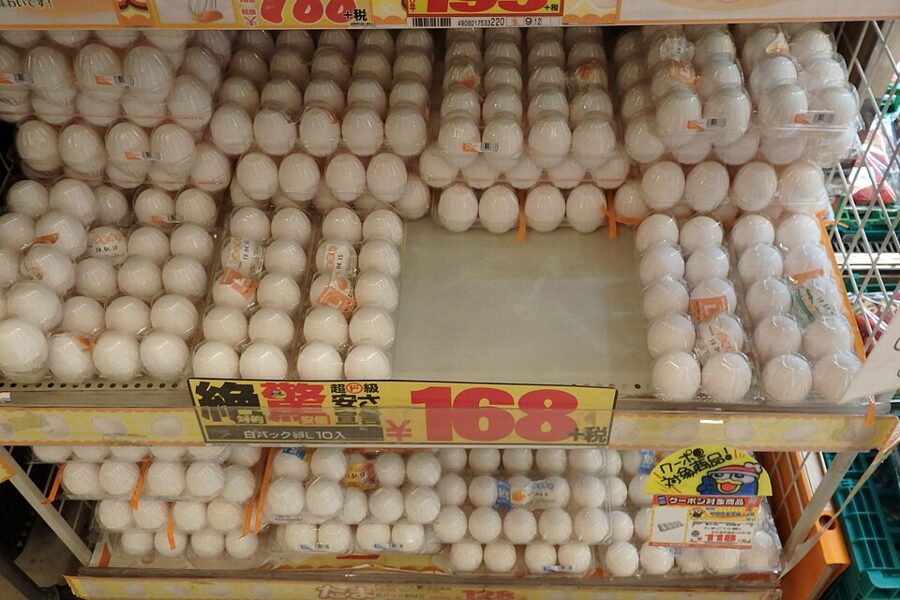

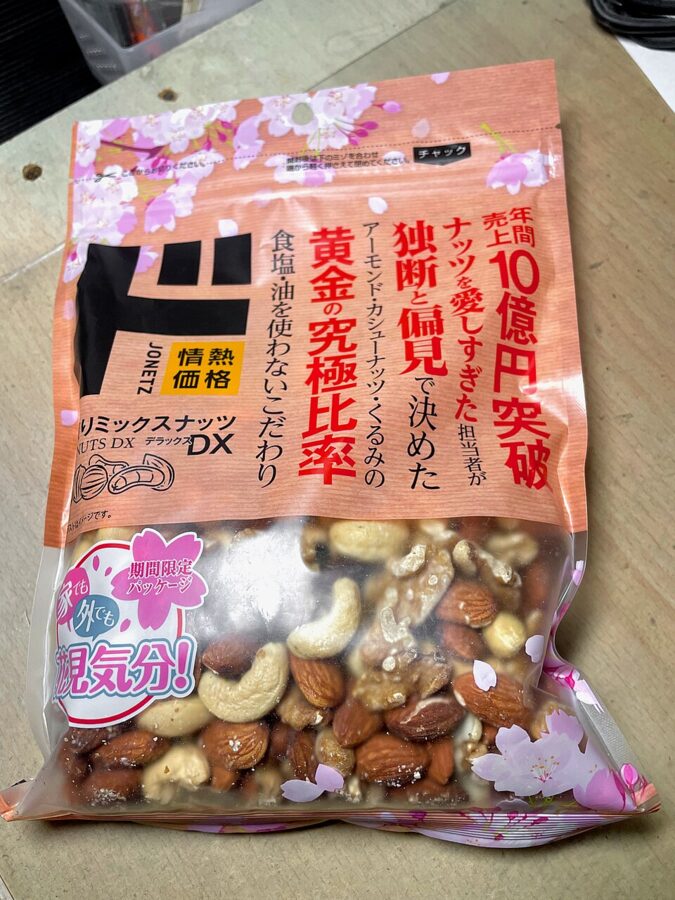
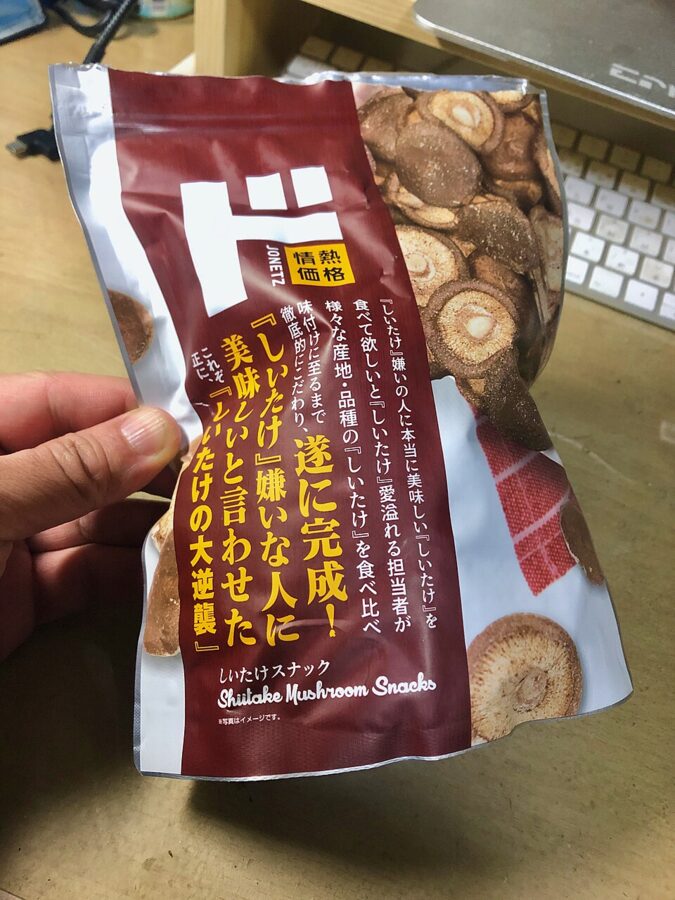
The house brand is Jonetsu Kakaku (情熱価格), “passion price”, launched in 2009 and relaunched in 2021 as what the company calls a “people brand”. The packs carry a large black katakana ド. The mascot is Donpen, a blue penguin in a nightcap, picked in 1998 from a staff contest with a ¥1 million prize; the design came from a woman who wrote price cards at the second store.

The song is “Miracle Shopping”, subtitled “the Don Quijote theme”, and it plays in the stores more or less without a break. It is also the hold music if you phone a branch. The words, the tune and the voice are all by Maimi Tanaka, a former employee with a career as a professional musician; the CD is sold in the stores, for anyone who wants it at home.
What to buy there, and what is cheaper elsewhere
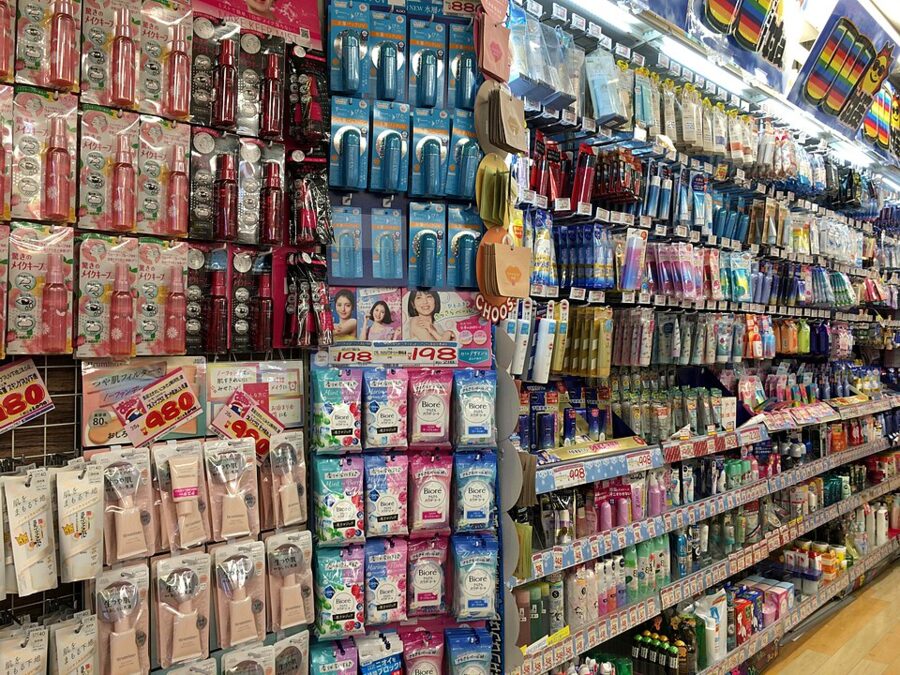
Don Quijote sells party goods, food, alcohol, cosmetics, household goods, clothing, leisure goods, interior items, appliances, phone accessories, jewelry and brand-name goods, with the mix varying by store. Because prices are set per branch, I would not cross the city to save a few yen on a snack; a branch near your hotel serves for ordinary shopping. Here is how the main categories compare.
Snacks and food
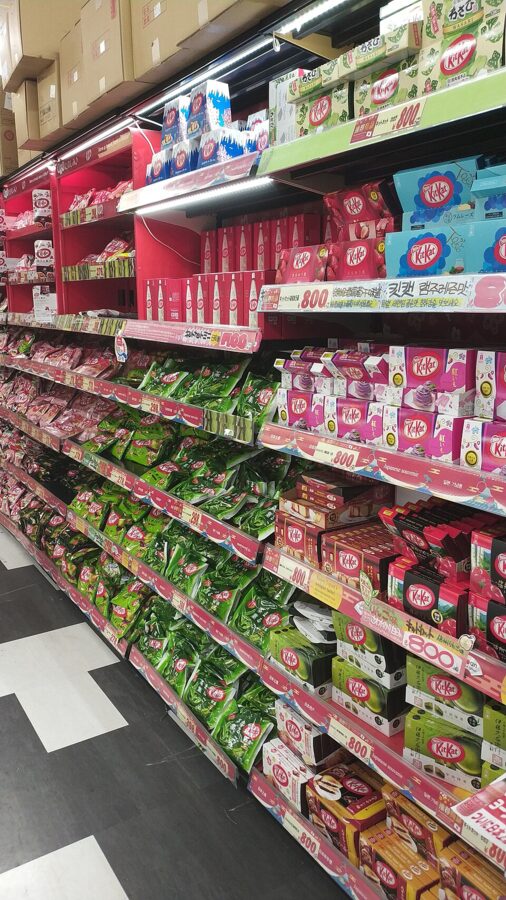
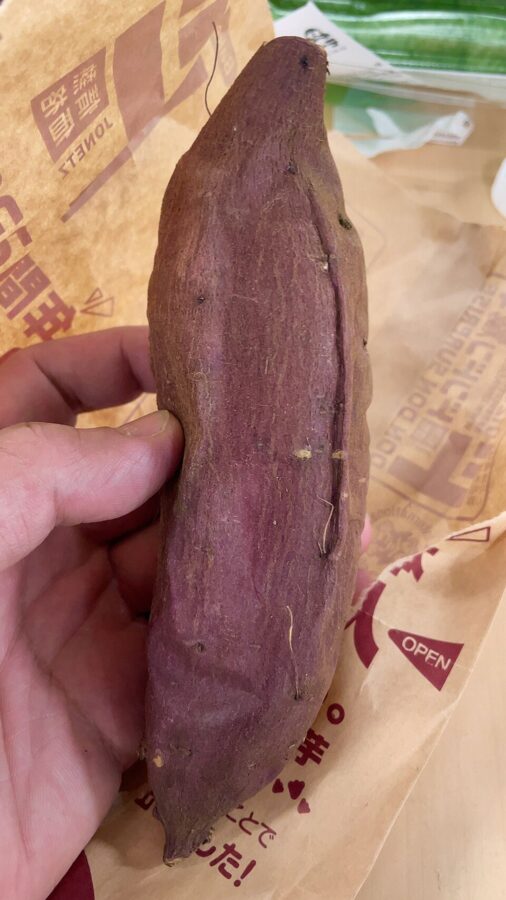
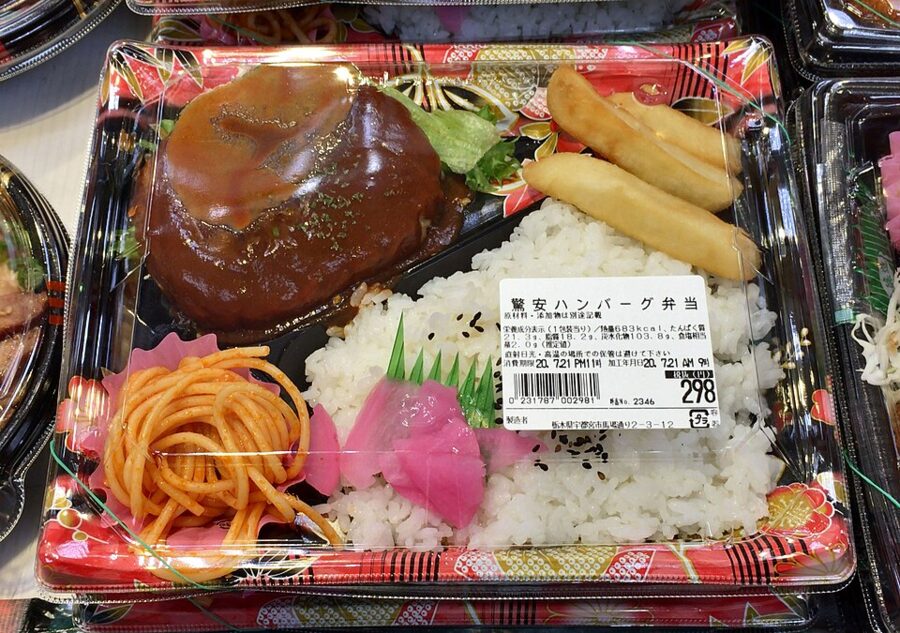
This is the floor most visitors are there for, and it is where Don Quijote is strongest: one aisle carries regional and limited-edition sweets, big multipacks to split among coworkers, and house-brand snacks you will not see elsewhere. Kit Kat in Japan-only flavors is the classic thing to carry home, and the chain also sells roasted sweet potatoes to eat on the spot. For a single bottle of water or one onigiri, a konbini is faster; for fresh fruit, a supermarket; for gift-boxed sweets with a famous name on them, a department-store food floor. The Tokyo food guide covers those.


Food bought tax-free has to leave Japan with you, unopened in practice, because one eaten packet voids the refund on the whole receipt (more on that below). Food you plan to eat on the trip goes through on a separate, ordinary receipt. Don Quijote’s own rules also exclude from tax-free sale anything that can be neither carried on board nor checked, and warn that alcohol, liquids and food can be restricted by your own country.

Cosmetics and contact lenses
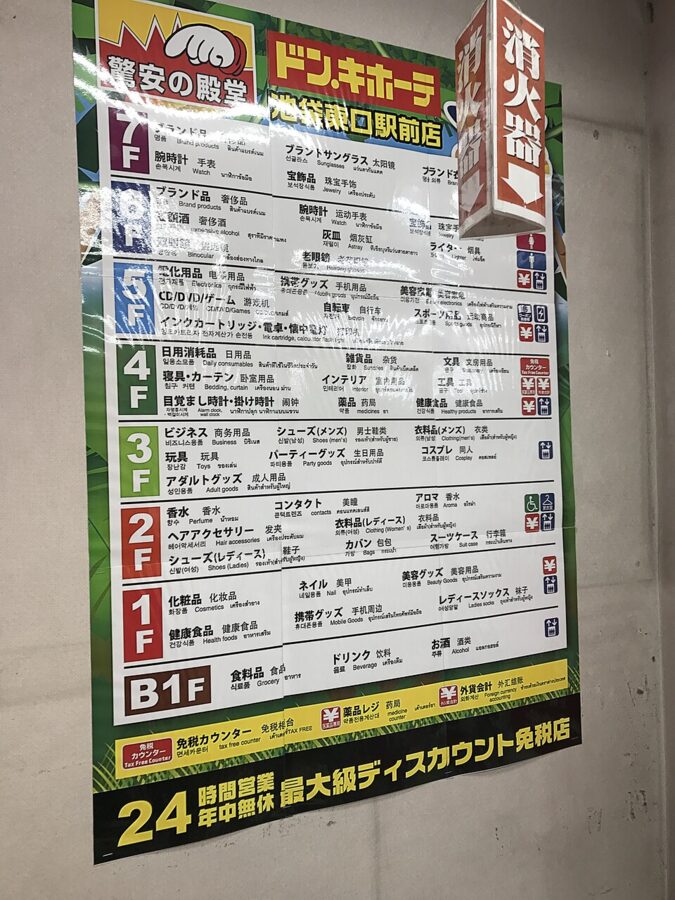
Skincare, sunscreen and sheet masks from the drugstore brands fill the cosmetics floor, which in the Ikebukuro guide below is the ground floor. Perfume and brand cosmetics are on the company’s list of goods that cannot be returned or exchanged, so check the box at the register. Colored contact lenses in Shibuya are at the annex since the 2026 move, and contact lenses are also on the no-returns list.
Medicine: what you can buy, and when
Every Don Quijote store page carries the same line: medicines are sold only while a pharmacist or registered seller is on duty. In a 24-hour store that means the medicine shelves can be closed to sale in the small hours, even with the store open around them, and the Ikebukuro floor guide below marks a separate medicine register. Medicines that by law need a pharmacist’s explanation can only be sold when one is present.
As of November 2026, some cold and cough medicines are classed under Japan’s revised drug law as liable to misuse, and they sell with a check at the counter and a limit on the number of packs. The company also caps quantities on some goods in tax-free sales. Before you buy, compare the ingredient list against your own country’s import rules; decongestants and cough suppressants are the usual problems.
Electronics, brand goods and costumes
Phone cables, adapters, power banks and travel hair dryers are worth buying here when you need them at night. Larger appliances are sold for Japan’s 100-volt supply, so check the rating before anything with a motor or a heater goes in the suitcase.
The watches and handbags in the glass cases are parallel imports, bought from brands’ overseas stores, authorized overseas dealers and duty-free shops rather than through the Japanese distributor. Don Quijote’s brand-goods page says each item is checked to the standard of the Japan Distribution Self-Management Association, of which the company is a member, and warns that Louis Vuitton and Hermès pieces almost never come with a box. The warranty runs from the date stamped in store.
Party goods and cosplay costumes are the other thing Don Quijote has that a drugstore does not. In the Ikebukuro floor guide below they share 3F with toys.
Tax-free under the refund system from November 1, 2026
From purchases made on November 1, 2026, Japan replaced on-the-spot tax exemption with a refund. The Japan Tourism Agency’s page for travelers sets out the rules, and Don Quijote’s tax-free page adds its own. Don Quijote notes that in its late-night and 24-hour stores the time printed on a receipt may not match the business day the change applied to.

At the till
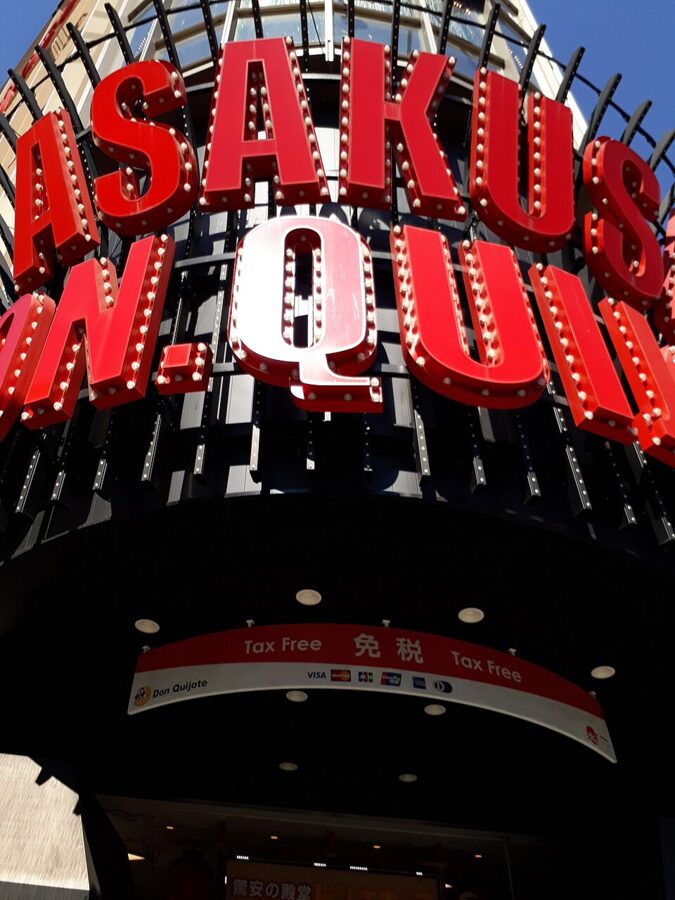
The minimum is ¥5,000 before tax, at one store on one day, which works out to ¥5,500 at the register for goods taxed at 10%. Bring your passport itself; a copy or a photo is refused. A traveler registered with Visit Japan Web can show its tax-free QR code instead. The tax-free sale has to be done on the day of purchase at the store where you bought, so yesterday’s receipt cannot be added to today’s.
Don Quijote also refuses one buyer paying for a group, and when you pay by card or wallet app the name has to match the passport. The sealed bags for food and cosmetics have been dropped under the new system, but anything you eat or use before departure breaks the refund. If some of what you are buying is for use in Japan, tell the staff before you pay so it goes on a separate receipt.
At the airport
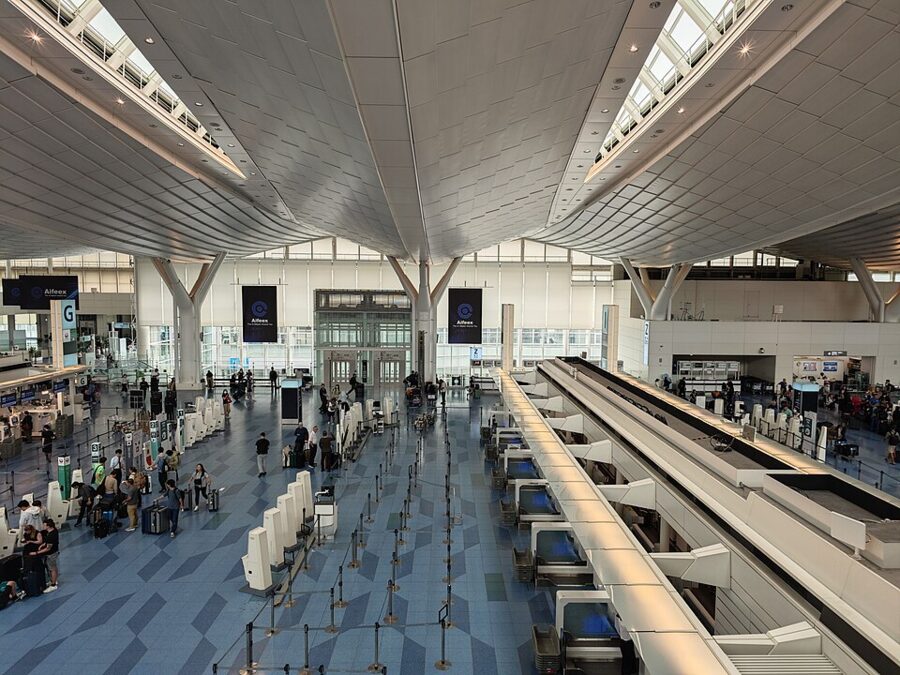
Within 90 days of purchase, before you check any bag, scan your passport at a tax-free procedure kiosk in the departure lobby. The screen shows green, and you are done, or red, and you take the goods to the customs inspection area. Customs gives the kiosk locations for every airport and seaport on its map page. At Narita, Haneda, Kansai, Chubu, Fukuoka, New Chitose and Naha you can do the same step online through Visit Japan Web, on the dedicated Wi-Fi in the departure lobby before security.
The kiosk will not work once the goods are in the hold, and airlines will not hand a checked bag back for it. The agency’s departure questions are blunt about the rest: inspection is per receipt, so one missing item cancels the refund for everything on that receipt, and if you have eaten or used some of it, you go to a customs officer at the counter instead of the kiosk. Departing from Haneda or Narita, add the time for a red result to your arrival plan.

Getting the money back
The refund is paid by a refund company, not by the store. Register a refund method within 180 days of purchase on the site Don Quijote’s parent group uses, through the QR code printed on the receipt. A registration made on another refund company’s site will not work for a Don Quijote purchase. You can choose a credit card, Alipay or WeChat Pay, or cash at the airport; the group charges no fee, but the cash option carries the refund company’s own charge.
Returns are tighter on tax-free goods. A change of mind is accepted within 30 days, before you leave Japan, at the store that sold the item, with your passport, every receipt and every item from that purchase. Faulty goods have 90 days.
Brand goods, perfume, cosmetics, expensive alcohol and contact lenses cannot be returned or exchanged at all. Don Quijote does not ship tax-free purchases abroad; some branches will deliver to a hotel or certain airports in Japan.
How to shop one without losing an hour
Every big branch is stacked by floor, and the floor guide by the entrance and the lifts is the map. Read it before you go up, decide which two or three floors you need, and take the stairs between neighboring ones. The order in the Ikebukuro guide below is typical: food and drink in the basement, cosmetics on the ground floor, clothing and bags above, then household goods and medicine, electronics, and brand goods at the top.

Don Quijote does not publish its busiest hours; its store pages send you to a map app’s live crowd graph. I would check that graph for the branch you are heading to before you set out, and in a 24-hour store, pick the hour it shows as empty.
Two rules catch visitors out. Photography inside the stores is banned without the company’s permission, posting to social media included. And nothing can be opened or eaten before it is paid for; branches with an eat-in area allow food only there.
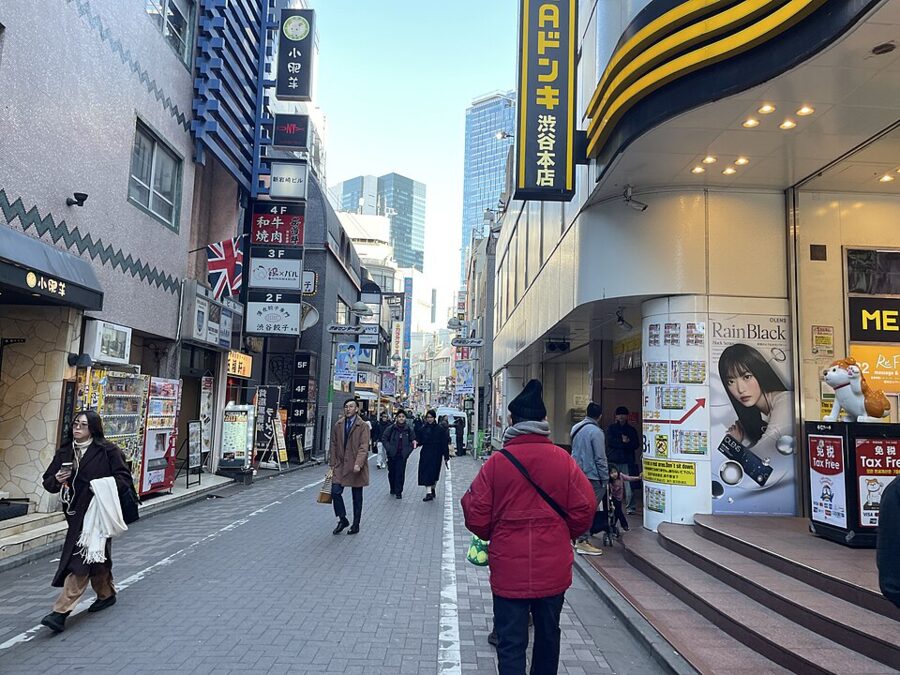

Payment is the easy part. The Kabukicho store’s page lists credit cards, UnionPay, transit IC cards such as Suica and PASMO, iD and QUICPay, and a long list of foreign wallet apps: Alipay+, WeChat Pay, KakaoPay, Naver Pay, Toss Pay, GCash, TrueMoney, Touch ‘n Go and more. The catch is in the small print: electronic money other than the chain’s own majica works only at some registers. Every store has a translation tool at the counter, and 17 Tokyo branches have a currency exchange machine, including Shibuya Honten, Tonanguchi, Akihabara, Ginza, Asakusa, Roppongi, Okachimachi, Ueno and both Ikebukuro stores.
Take a basket rather than a cart in the regular stores; the aisles are narrow by design. If your shopping has outgrown your luggage, suitcases were on the bags floor of the Ikebukuro guide above. Pack the tax-free goods so you can show them at the airport kiosk before check-in, receipt by receipt.
The store that is open when nothing else is
Most Don Quijote stores open between 09:00 and 11:00 and close between midnight and 05:00, and some never close. Of the 56 Don Quijote, MEGA and Picasso stores the company’s store finder lists for the 23 wards in November 2026, 24 run around the clock. A few more stay open until 05:00, among them Gotanda Higashiguchi (08:00–05:00), Nakano Ekimae (10:00–05:00) and Kita-Senju Nishiguchi (09:00–05:00).
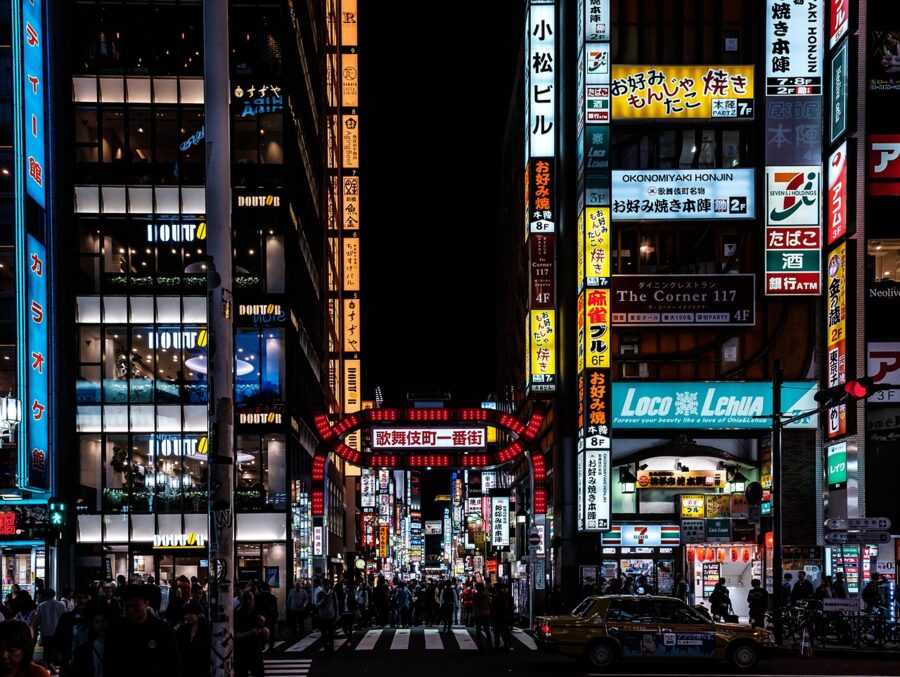
What a 24-hour branch is good for at 02:00: a charging cable, an adapter, an umbrella, socks, a cheap bento, and painkillers if the medicine counter is staffed. It is also the one place in the district to buy a suitcase at that hour.
The timing that matters is the last train, not the store. A Don Quijote open all night does not help if the last JR Yamanote Line train has gone and you are paying for a taxi home; the Tokyo nightlife guide covers last trains.
Drugstores, 100-yen shops and food floors
Each alternative does one thing better, and on a short trip one stop at each is enough.
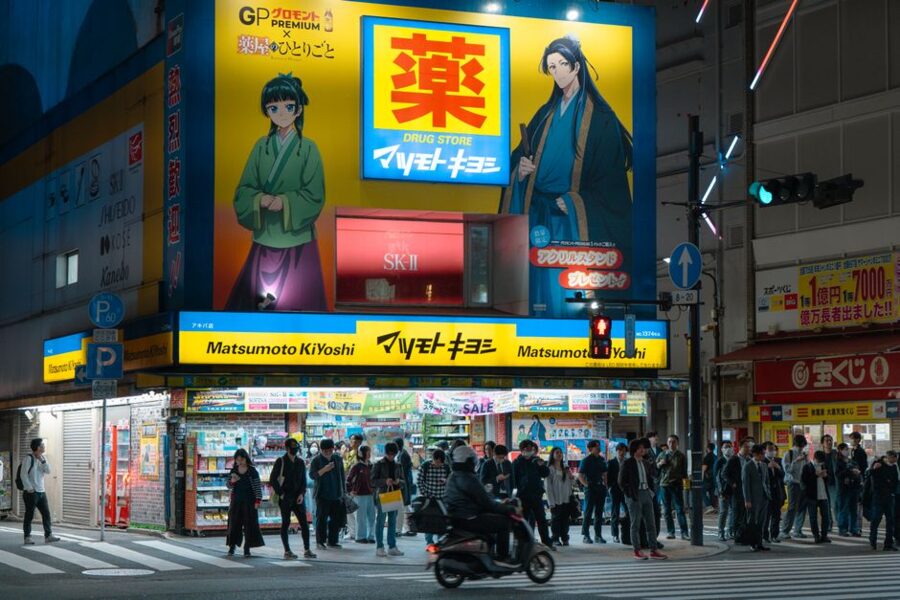
Drugstores such as Matsumoto Kiyoshi: for a specific medicine or a skincare list, in a shop quicker to walk through than a seven-floor Don Quijote.
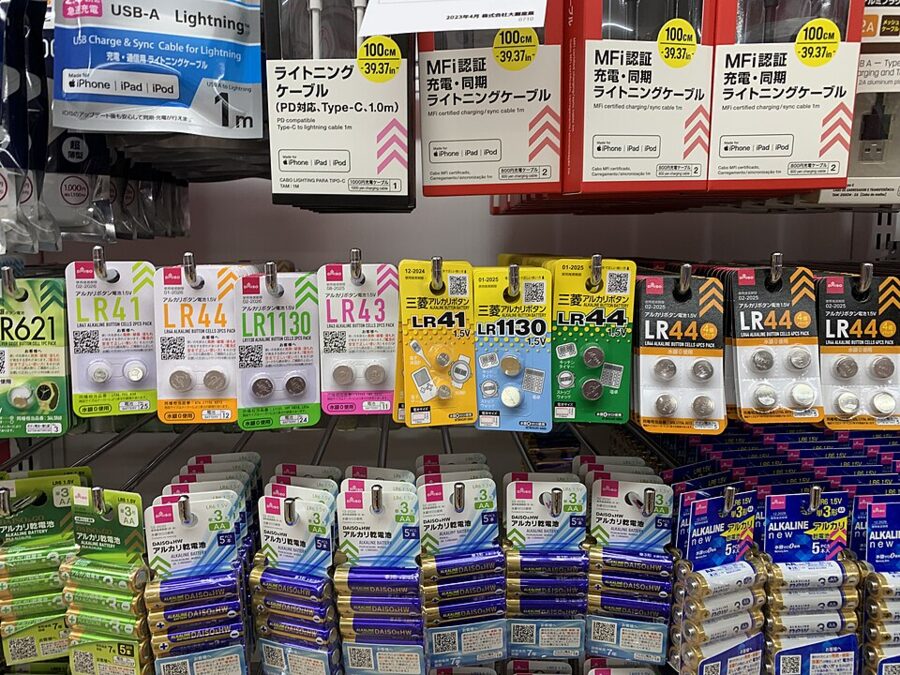
100-yen shops such as Daiso: for chopsticks, small kitchenware, stationery, batteries and cables at fixed low prices, and souvenirs bought by the dozen.

Department-store food floors: for gift-boxed sweets with a name your recipient will recognize, and for the best of the day’s bento. The food guide linked above covers them, and the first-trip guide covers money and cards.

The nine 24-hour branches from the first paragraph will still be open at whatever hour you get there. The airport kiosk will not wait for a checked suitcase, though, so pack the tax-free bags where you can reach them and reach the departure lobby early.