

An adult ticket to the Main Deck of Tokyo Tower (東京タワー) costs ¥1,500, the same at the window as online, and the last entry is 22:30. That late door is the tower’s best argument. Shibuya Sky stops letting people in at 21:20, and from 150 m up, close to the center, the lit streets of Minato ward still look like streets rather than a map.
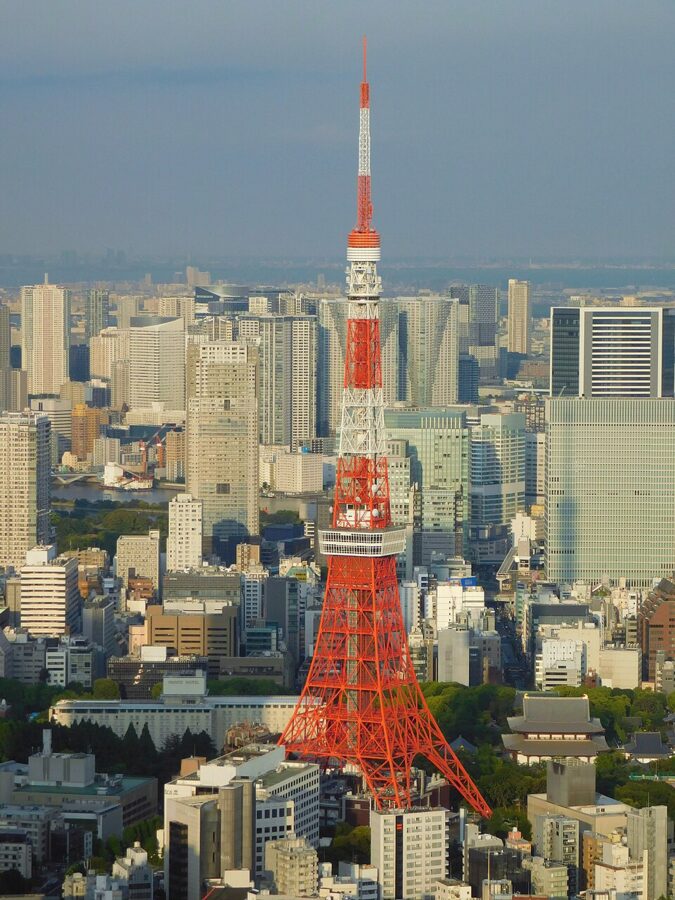

Here is the short version for late 2026. Buy the Main Deck ticket if you only want the view; buying it ahead saves the ticket line and nothing else. Book the Top Deck Tour online if the sky is clear, because it is ¥3,300 on the web and ¥3,500 at the counter, and it runs in timed 15-minute slots. Pick the slot that puts you at 250 m about half an hour before sunset, then stay on the Main Deck below until the lights come up.
Against Tokyo Skytree, the verdict is simple. Skytree is higher and further away from everything; Tokyo Tower is lower, cheaper for the basic deck, open later, and surrounded by the city you came to look at. The free observatory at the Metropolitan Government Building in Shinjuku beats both on price, and I would still go up Tokyo Tower once for the night view.
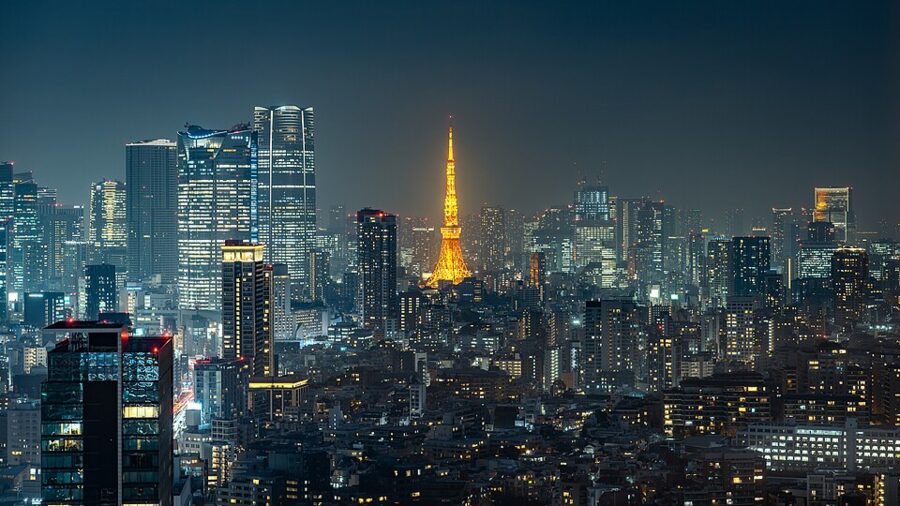

Give the whole visit two to three hours if you add Zojo-ji temple at the foot of the tower, which you should; its main hall is open from 06:00, long before the tower, and costs nothing.

333 meters, December 1958, and a measuring quirk
Tokyo Tower opened on December 23, 1958, after a year and a half of building that started on June 29, 1957. It was designed by Naito Tachu, the engineer who had already drawn Osaka’s Tsutenkaku and the Nagoya TV Tower, working with Nikken Sekkei, and it was paid for by Maeda Hisakichi, a newspaper owner from Osaka. Its job was to replace the separate masts that each broadcaster had put up around central Tokyo with one tower that could reach the whole Kanto plain.
The height came from that job. The tower’s own account says the engineers worked out that 333 m was what a signal needed to cover Kanto from Mito to Numazu; that the tower opened in Showa 33 is, it insists, a coincidence. Maeda wanted it taller than the Eiffel Tower, and in 1958 it was, by about 20 m.
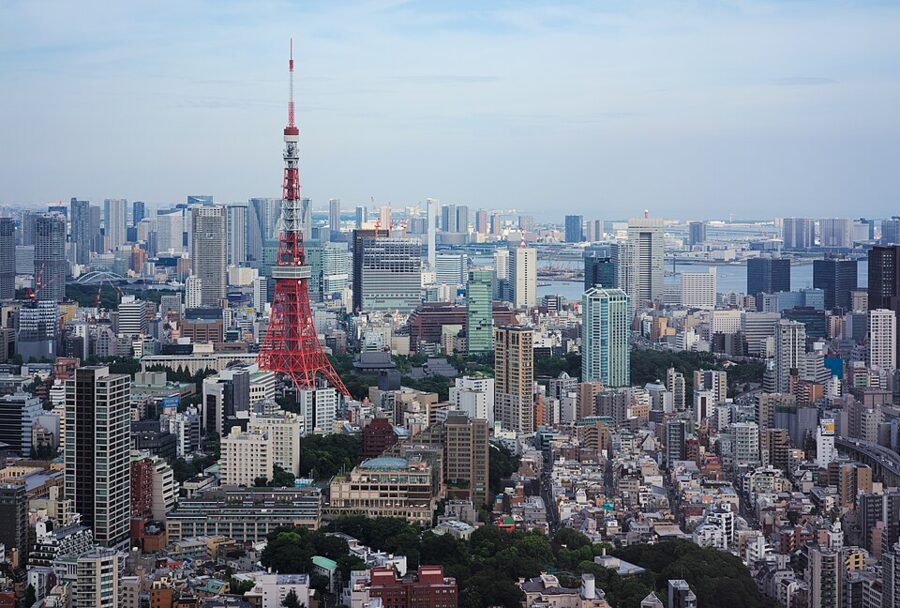

The two deck heights need a footnote. The tower signs them as 150 m and 250 m, and those are the numbers on every ticket. The construction figures put the floors at 125 m and 223.55 m above the ground, and the gap is the hill: the base sits about 18 m above Tokyo Bay, so the advertised figures are close to the decks’ height above sea level. Either way, the Main Deck is the one with the glass floor and the Top Deck is the one with the mirrors.
The upper deck was never meant for visitors. It was a work platform for antenna maintenance until it opened to the public in July 1967, under the name Special Observatory, and the two decks took their current names in March 2018 after a refit. The standard account of the steel says the slender members above that upper deck were rolled from about 90 scrapped US Army tanks bought after the Korean War, because good steel was scarce in Japan at the time.
Broadcasting moved on. The main TV transmitters for Tokyo switched to Skytree on May 31, 2013, and Tokyo Tower became the backup mast while keeping FM radio. A month later, on June 21, 2013, it was registered as a Tangible Cultural Property. The paint, which is international orange and white rather than red, is still renewed by hand with brushes, and the work happens before opening time; the tower plans that cycle at about once every seven years.
The Main Deck at 150 m
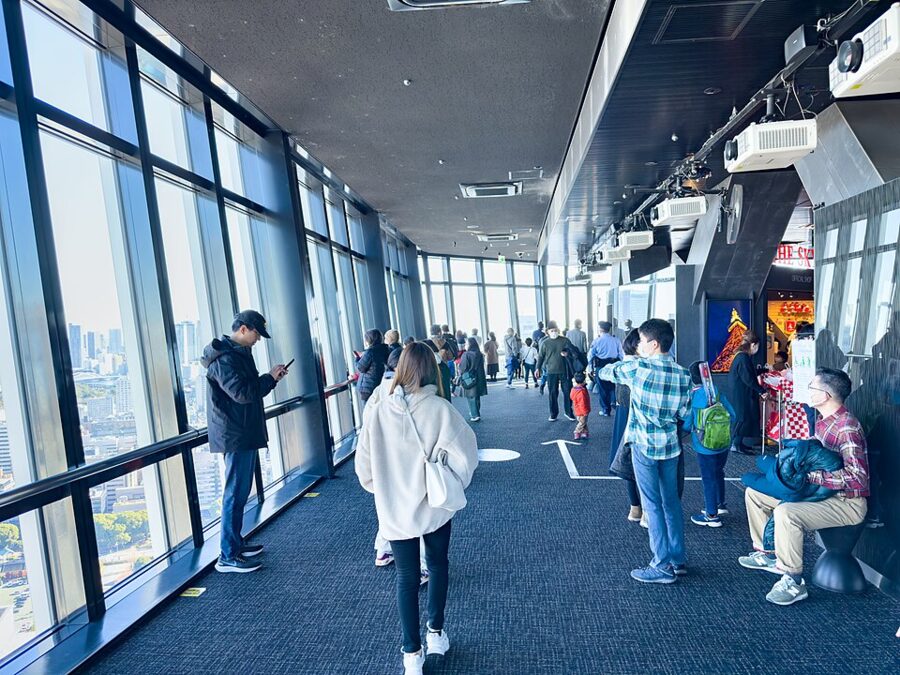
The elevator from the first floor of Foot Town, the building between the tower’s legs, takes you up to the second floor of the Main Deck. You leave from the first floor, one level down, so the visit runs as a loop: arrive on the upper ring, walk it, go down a floor, walk the lower ring and catch the down elevator there. There is no time limit on either floor. There is also no re-entry once you are back on the ground.
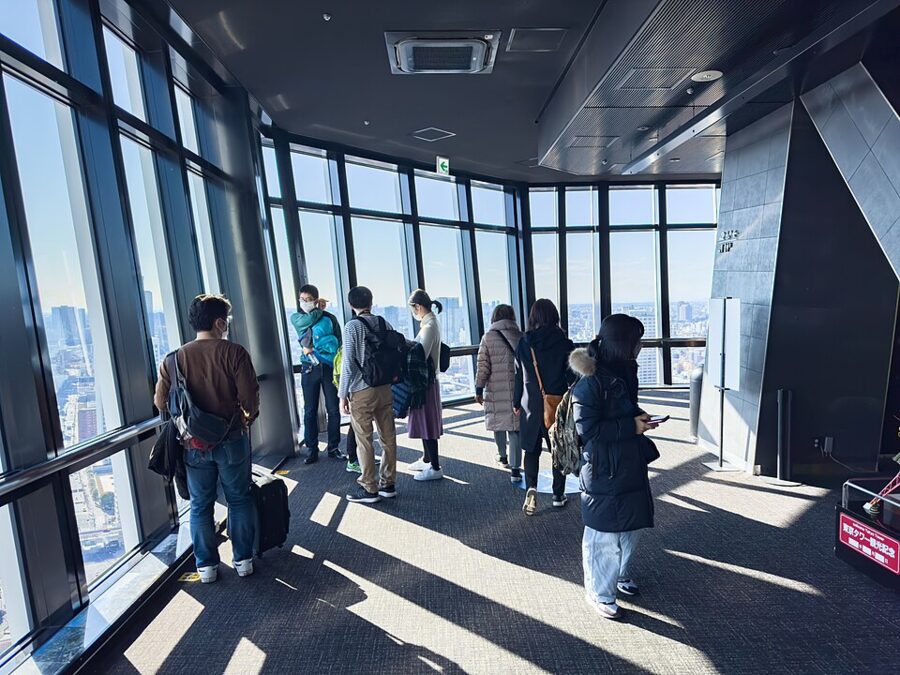

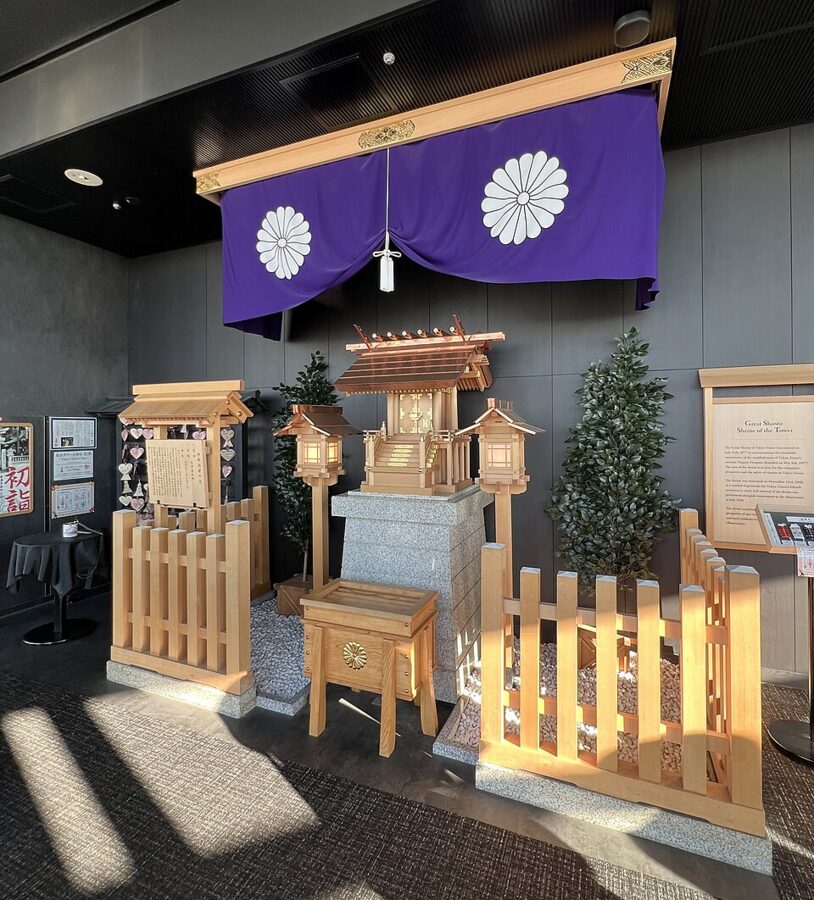
The upper floor holds the official shop, a post box shaped like the tower, the photo spot, the Top Deck Gate and a small shrine, Tower Daijingu, set up in 1977 and said to be the highest shrine in the 23 wards. The lower floor has the Skywalk Window, Cafe La Tour, the Club333 stage where the tower’s own attendant group performs on a regular schedule, and the end of the outdoor stairs. The Main Deck floor plan marks all of it.

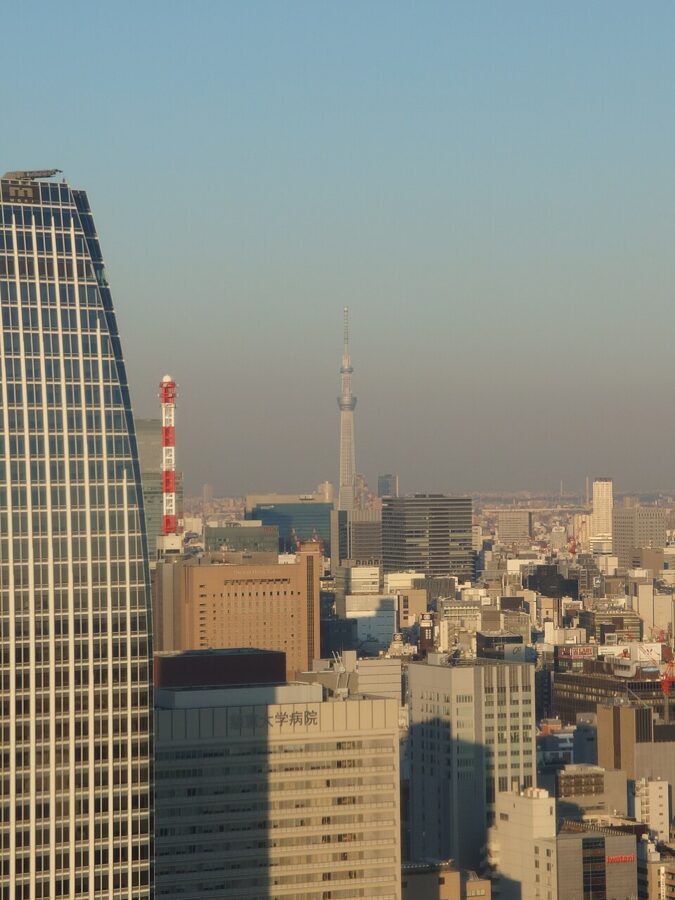
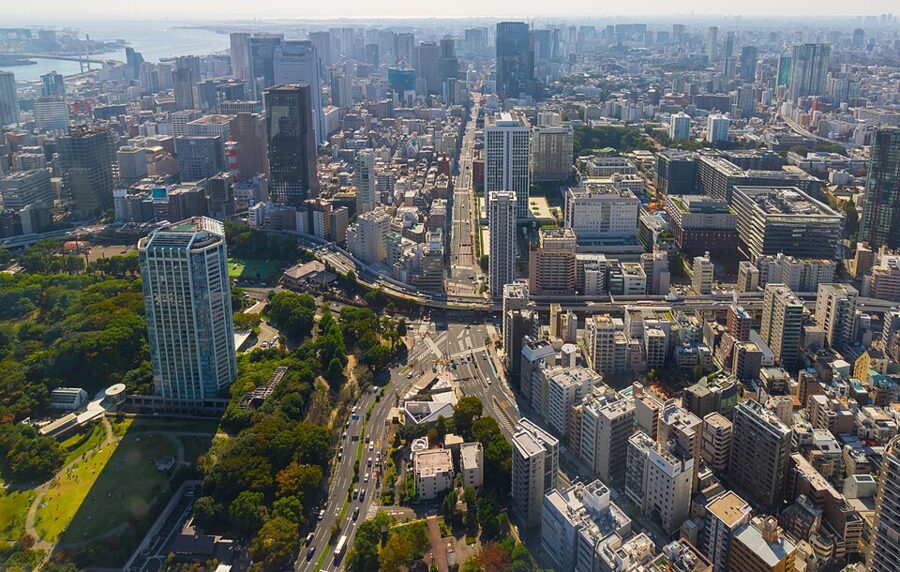
What you see is the close-up city. To the north are the towers of Toranomon and Kasumigaseki and the green of the Imperial Palace beyond them; to the east, Zojo-ji’s roofs directly below, then Hamamatsucho, the bay and Rainbow Bridge; to the west, Roppongi Hills and the new Azabudai Hills block; to the northeast, Skytree, about 8 km away and looking taller than it has any right to. On a clear day Mount Fuji shows to the southwest, more often on dry winter mornings than in the haze of summer.

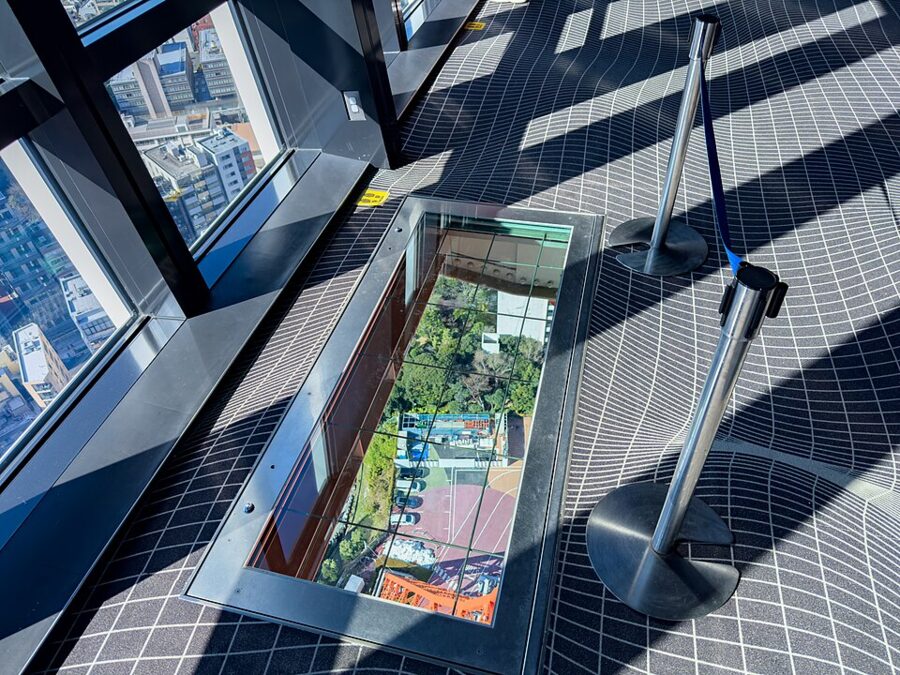

The glass floor is the Skywalk Window, and the tower says it looks straight down 150 m. The orange legs fan out below you into the parking lot and the trees of Shiba Park. It is not large, it is not scary for long, and almost everyone stands on it anyway.
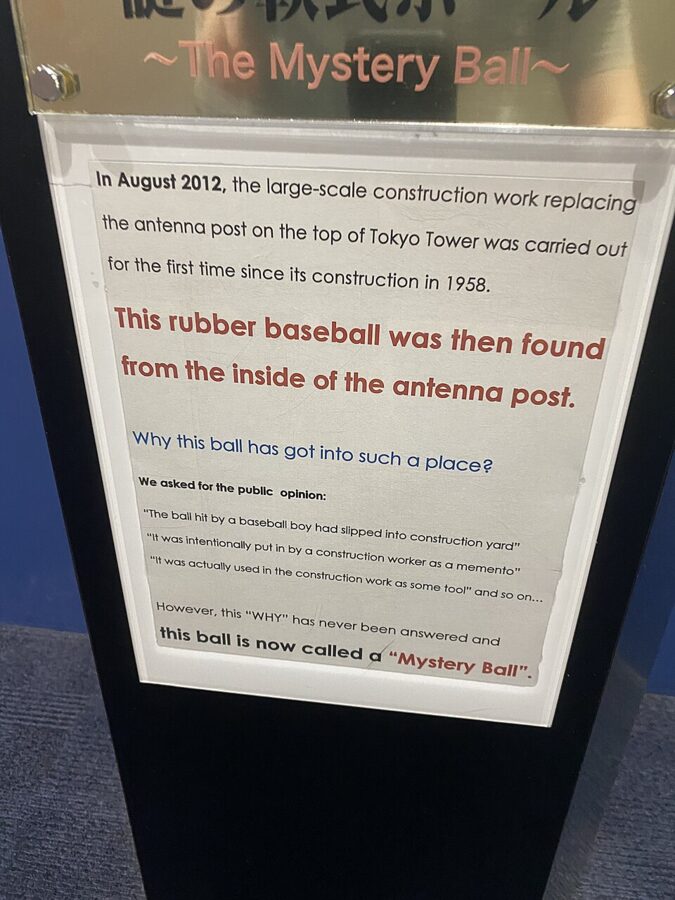
One small exhibit is worth finding. When the old analog antenna at the top was cut down in 2012, the crew found a soft rubber baseball inside the hollow post at about 306 m, and nobody has explained how it got there. The ball went on display in the tower in December 2012.

The 600 steps
You can walk up instead. The open-air stairs climb inside the frame of the tower from the roof of Foot Town to the Main Deck, about 600 steps by the tower’s count (the reference figure is 590), and the tower puts the climb at 12–13 minutes. It costs nothing extra: you need the normal Main Deck ticket, and you get a free certificate at the top.
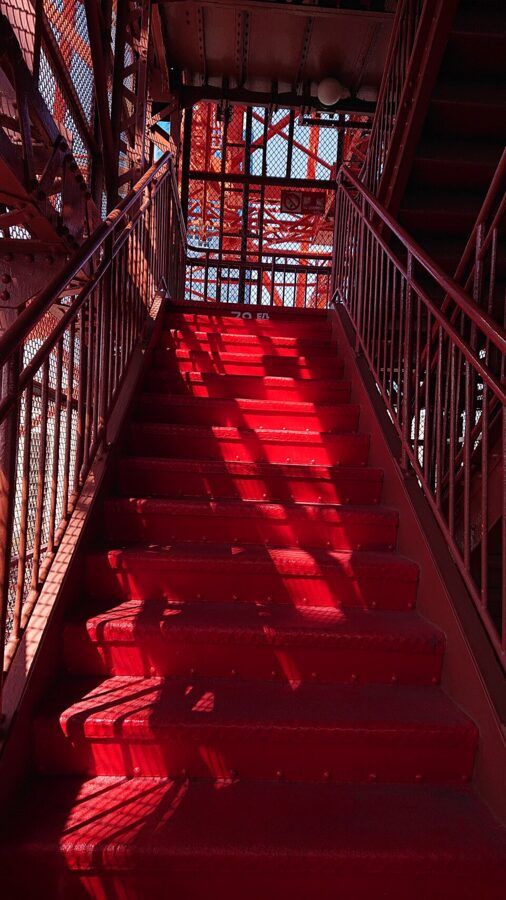

The up stairs open only on Saturdays, Sundays and public holidays, 09:00–16:00. The down stairs open every day, 09:00–20:00. Both close in rain, in bad weather and whenever a heatstroke alert is in force, which in July and August is often; the tower can change the hours without notice.
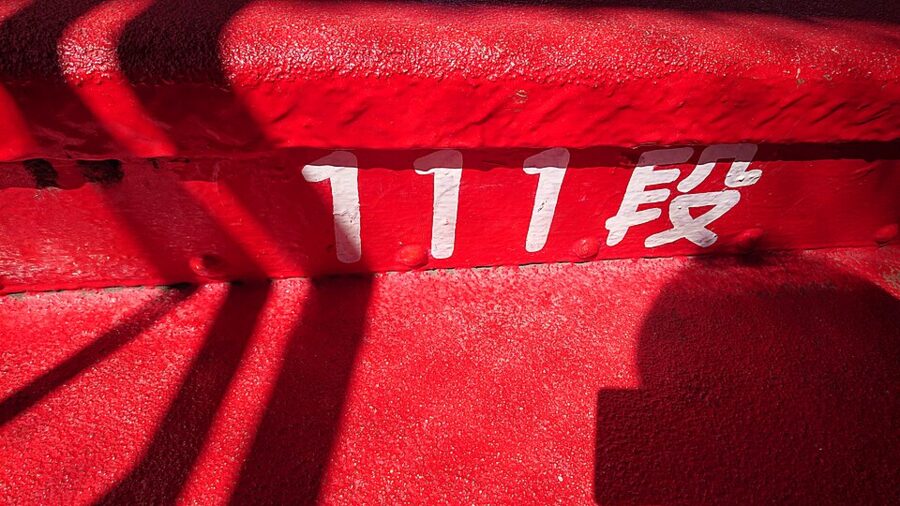
The certificate is the part people remember. The climb is the better view, framed by steel at every landing, with step counts painted on the treads so you know how badly it is going. You can combine the stairs with a Top Deck Tour booking, but you still have to be at the gate on the Main Deck for your slot.

The Top Deck Tour at 250 m
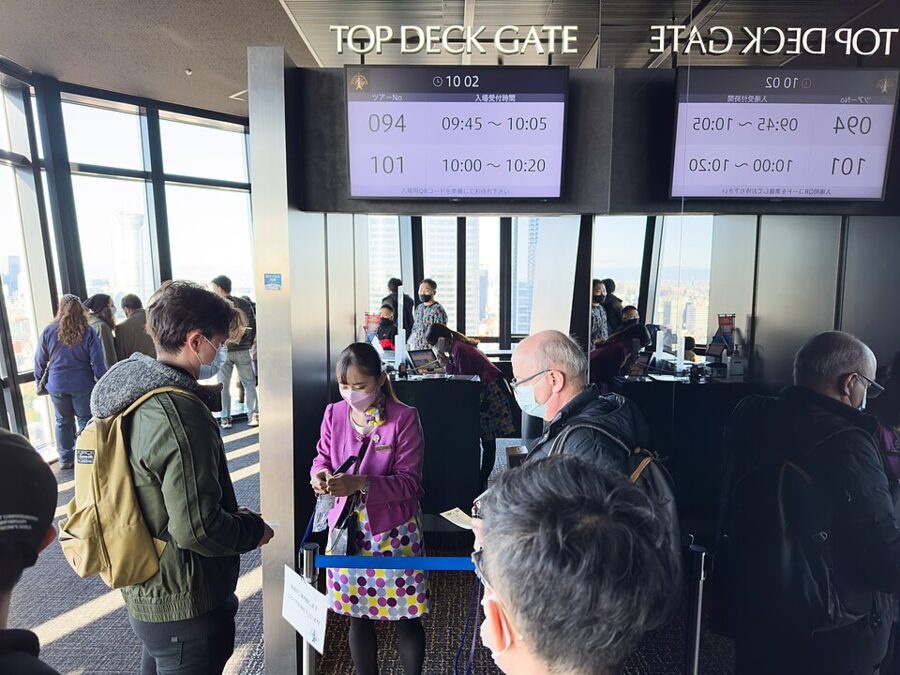
The Top Deck is only sold as a tour, and the tour is a timed entry rather than a guided walk. Slots run every 15 minutes from 09:00 to 22:15, and you can stay on the Top Deck until 22:45. The ticket includes the Main Deck, so you go up as usual, look around, and present the ticket again at the Top Deck Gate on the second floor of the Main Deck when your time comes. The tower allows about five minutes from the ground elevators to the gate.

Past the gate, the tour route runs through two rooms before the deck. The first, Tower Archives, plays the tower’s history across 59 screens. The second is named Koh-Yo-Kan after the grand Meiji-era restaurant that stood on this plot, Momijiyama, before the tower company bought the land. Then the elevator, and the deck.
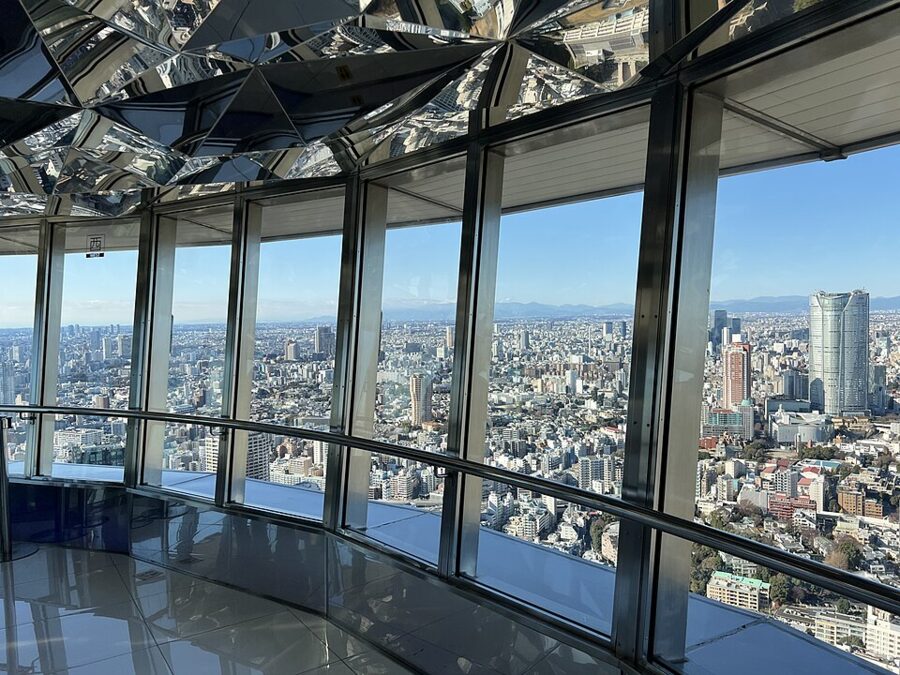
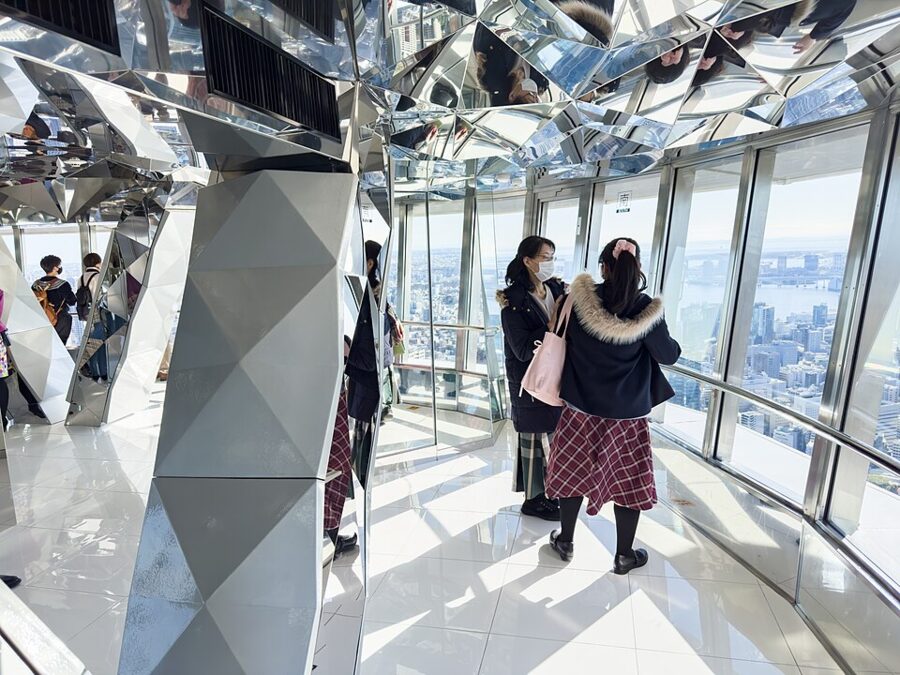
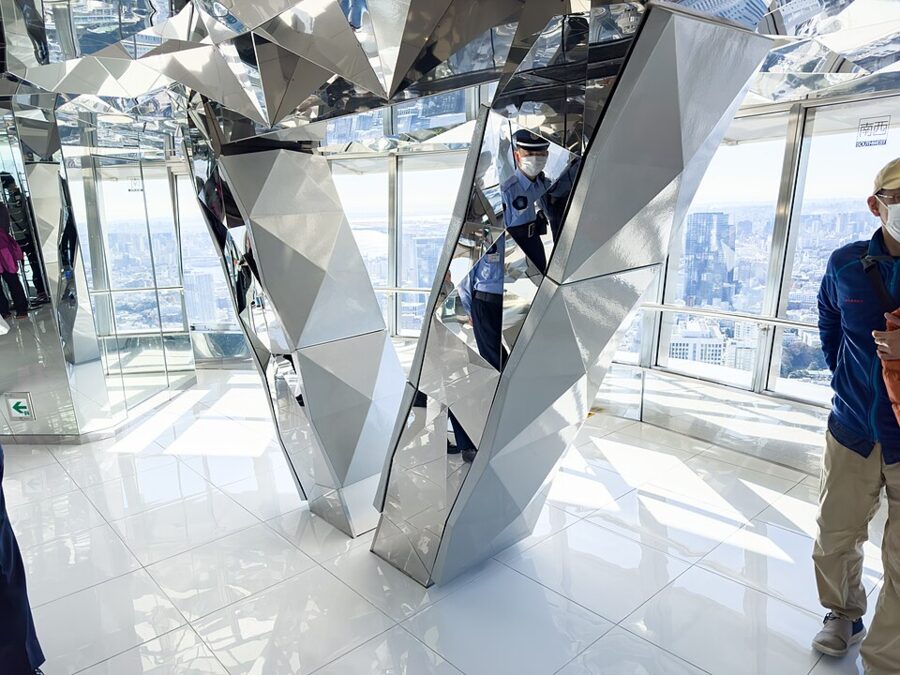
Up there the windows are floor to ceiling, the walls are angled mirrors, the floor has lit panels the tower calls light tatami, and the city is 100 m further down than it was. You get a drink and a photo card, one card per group. The extra height flattens the view rather than widening it much; what you gain is the sense of standing above every building nearby, including the new office towers that now crowd the Main Deck’s sight lines.

The rules bite in three places, and all three are in the Top Deck Tour questions. Late for your slot means no tour and no refund, although the Main Deck stays open to you. Dates and times cannot be changed; you cancel and buy again. For tickets bought since November 1, 2025, cancellation costs the full price from two days before the visit, so free cancellation ends three days out.
Wind is the other risk. The tower suspends the Top Deck in winds of 20 m per second or more, in snow and for safety checks, and refunds the ticket when it does. On a gusty winter day, buy close to the time, or buy only the Main Deck and decide at the counter.

The Tokyo Diamond Tour
The premium version is the Tokyo Diamond Tour: ¥7,000 for an adult, seven departures a day on the hour from 12:00 to 18:00, at most ten people each, 70 a day in all. You meet in the Maple Lounge on the first floor of Foot Town 15 minutes before departure, use a separate lane and elevator, and get escorted up with a performer and an attendant. The lounge, with free drinks and snacks, is yours from 11:00 to 19:00 that day, and the Main Deck as many times as you like until 23:00.

Is it worth more than double the Top Deck Tour? Only if the re-entry matters to you, say a daytime visit and a night visit on the same ticket, or if you want the lounge for an hour with children. The last departure is 18:00, which in winter is after dark and in midsummer is before sunset, so the timing works best from October to February.
Tickets and prices, late 2026
These are the tower’s own figures from its fee and hours page as posted in November 2026. “Child” means elementary and junior high school students; the youngest band is preschool children aged four and up, and children under four go free.
| Ticket | Adult | High school | Child | Age 4+ | Hours, last entry |
|---|---|---|---|---|---|
| Main Deck (150 m), web or window | ¥1,500 | ¥1,200 | ¥900 | ¥600 | 09:00–23:00, last 22:30 |
| Top Deck Tour (150 m and 250 m), web | ¥3,300 | ¥3,100 | ¥2,100 | ¥1,500 | 09:00–22:45, last slot 22:00–22:15 |
| Top Deck Tour, window | ¥3,500 | ¥3,300 | ¥2,300 | ¥1,700 | as above |
| Tokyo Diamond Tour, web only | ¥7,000 | ¥6,500 | ¥4,700 | ¥3,300 | departures 12:00–18:00 |
The Main Deck is a walk-up ticket and costs the same either way. Buying it online only means you skip the line at the counter on the first floor of Foot Town, which on a clear weekend evening is worth something. Note that the Main Deck’s last entry can come earlier than 22:30 when the deck is crowded, so a late arrival on a holiday night is a gamble.

The Top Deck Tour is reservation-only, but reservation includes the same day: the Top Deck ticket page sells slots for today as long as they last, and the counter on the first floor of Foot Town sells them too, for ¥200 more. Web tickets take credit cards only (Visa, Mastercard, JCB, Amex and Diners); pay cash at the counter. There is no phone booking. You show the QR code from the confirmation email, printed or as a screenshot.
Holders of a Japanese disability certificate pay half price, with one companion at the same rate; web buyers get the difference refunded at the operation center on the ground floor. The tower also sells set tickets with teamLab Planets in Toyosu and with a subway pass. Groups of 20 or more get a Main Deck discount.
When to go
Go at sunset. The point of this tower is the switch from day to night over a city that is close enough to read, and the Main Deck is open long enough afterward that you never feel pushed out. In Tokyo the sun sets at about 16:30 in late November and early December and at about 19:00 in late June, so a winter visit can be done before dinner and a summer one becomes the evening.
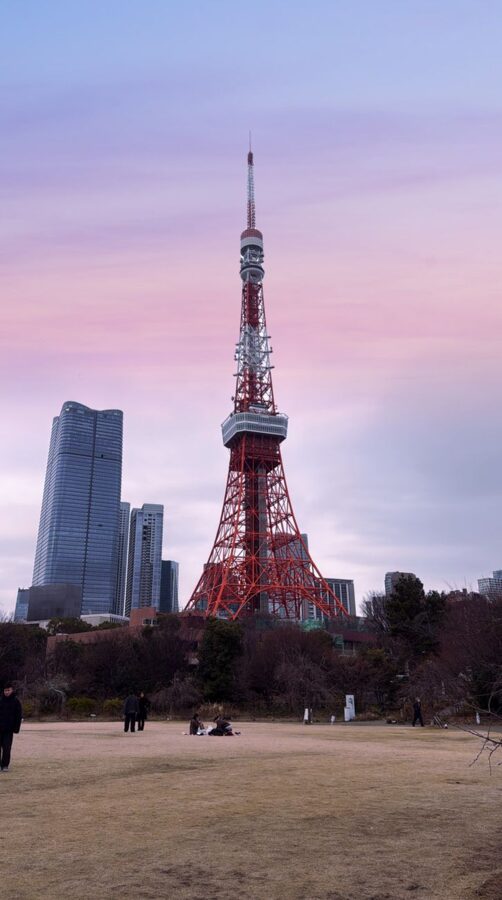
For the Top Deck, the slots around sunset are the ones to book early. Book the one that lands you at 250 m about 30 minutes before the sun goes, watch it from up there, then drop back to the Main Deck for the lights. If the forecast is cloudy, skip the upper deck altogether: there is nothing at 250 m on a gray day that you will not see at 150 m.
Clear mornings are the other good window, especially from November to February, when the air is drier and Fuji turns up more often. The tower opens at 09:00. Midsummer is the weakest season: haze, heat, and the outdoor stairs closed whenever there is a heatstroke alert, which the Tokyo weather in July and August makes routine.
The lighting: Landmark Light and the Infinity Diamond Veil
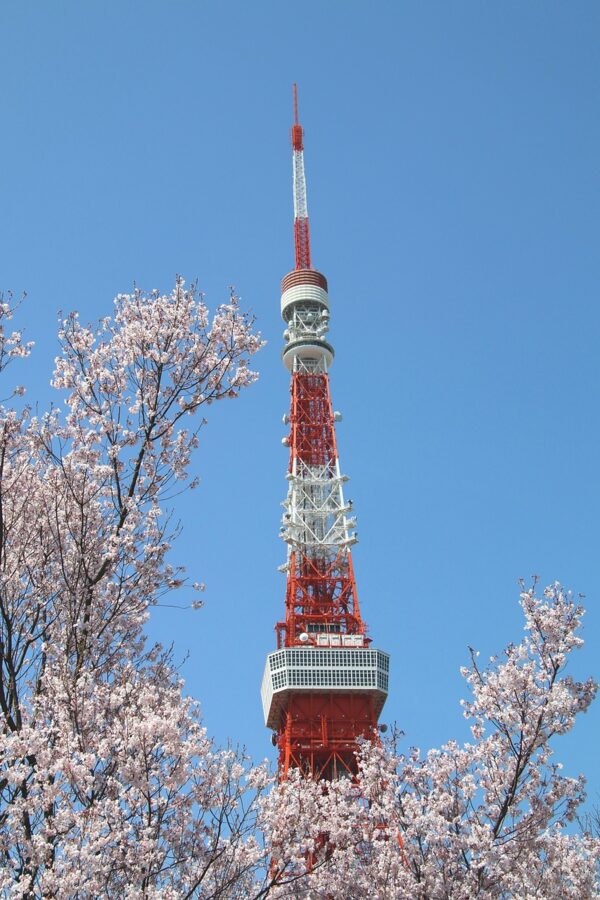
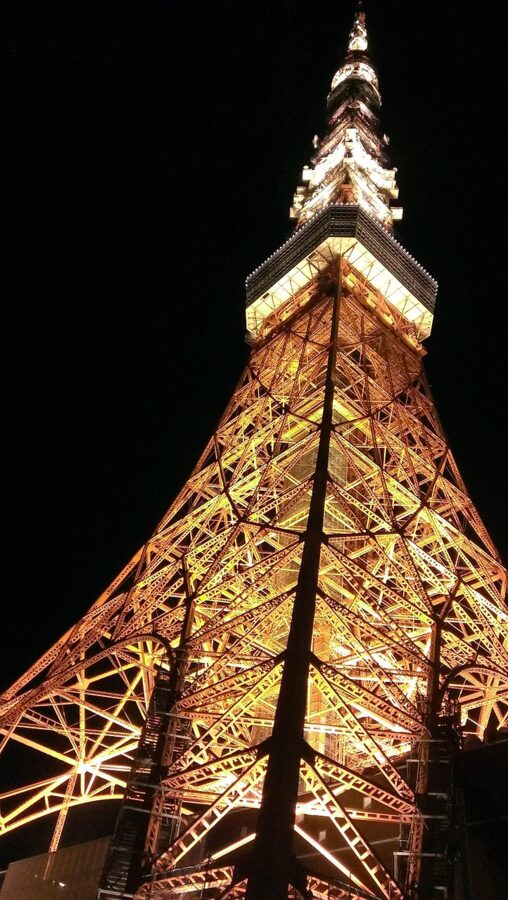
The tower has two lighting systems, and the lighting page keeps a monthly calendar of which one is on. The everyday one is the Landmark Light, 180 floodlights that wash the whole frame. They come in two versions: white metal-halide lamps from the night of July 7, the Tanabata festival, every year, and warm orange sodium lamps from early October.
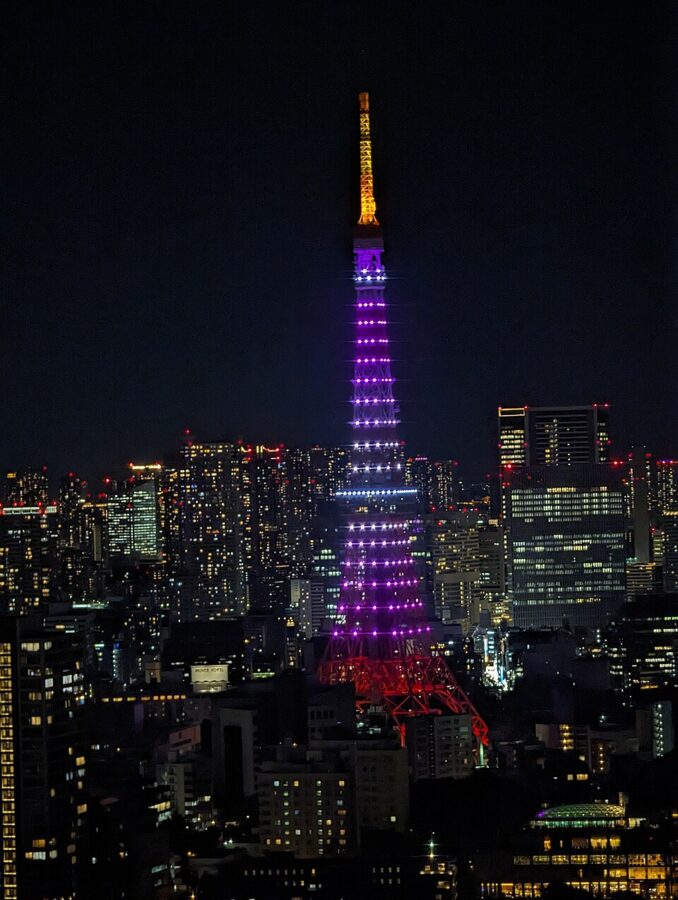
The second system is the Infinity Diamond Veil, switched on in October 2019: 268 LED units on 17 tiers that can make any pattern. It runs as a regular show every Monday and Thursday from 20:00 to 22:00 in the color assigned to that month, with two designs alternating every 30 minutes and the whole tower blinking white for four minutes at each changeover. It is also what the tower uses for special lightings, which take over the calendar for events, anniversaries and campaigns.
The month colors repeat every year: Reborn Yellow in January, Lovely Red in February, Cherry Pink in March, Fresh Green in April, Sky Blue in May, Wisteria Violet in June, Sea Blue in July, Mountain Green in August, Autumn Purple in September, Sunset Orange in October, Maple Red in November and Forever Green in December. Special lightings move often and with short notice, so check the calendar on the day rather than planning a trip around one.
Two smaller things happen every night. On the hour, from sunset until midnight, the rings above both decks, which the tower calls the Diamond Tiara and the Diamond Choker, sparkle pure white for two minutes. And the lights generally go off at midnight; the tower itself repeats the legend that couples who watch the moment together stay happy, which explains the people loitering under the legs at 23:55.
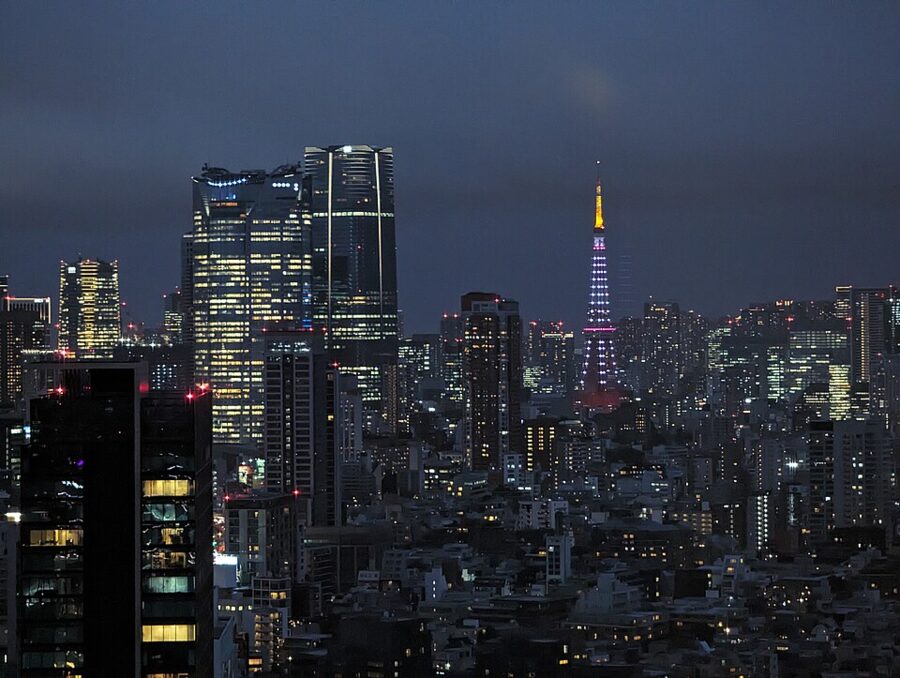
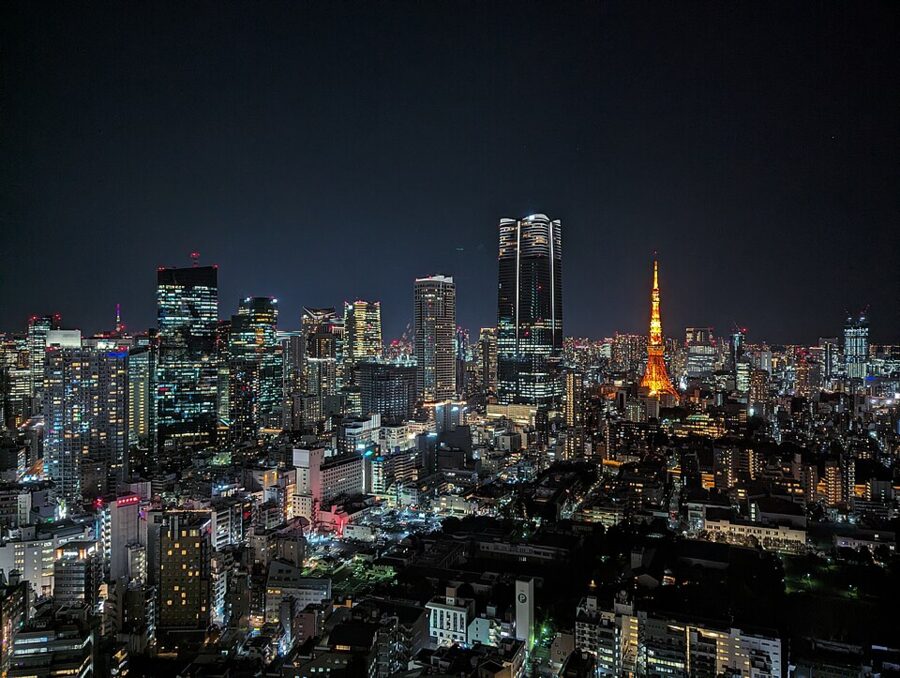
To see the lighting you have to be outside, so plan the deck first and the street afterward. The best close views are from the park and temple below, described next; the best distant ones are from Roppongi Hills, from Azabudai Hills and from the decks in Shibuya and Shinjuku, where the tower is the one orange point in the skyline.
At the foot: Zojo-ji, the shoguns, and Shiba Park
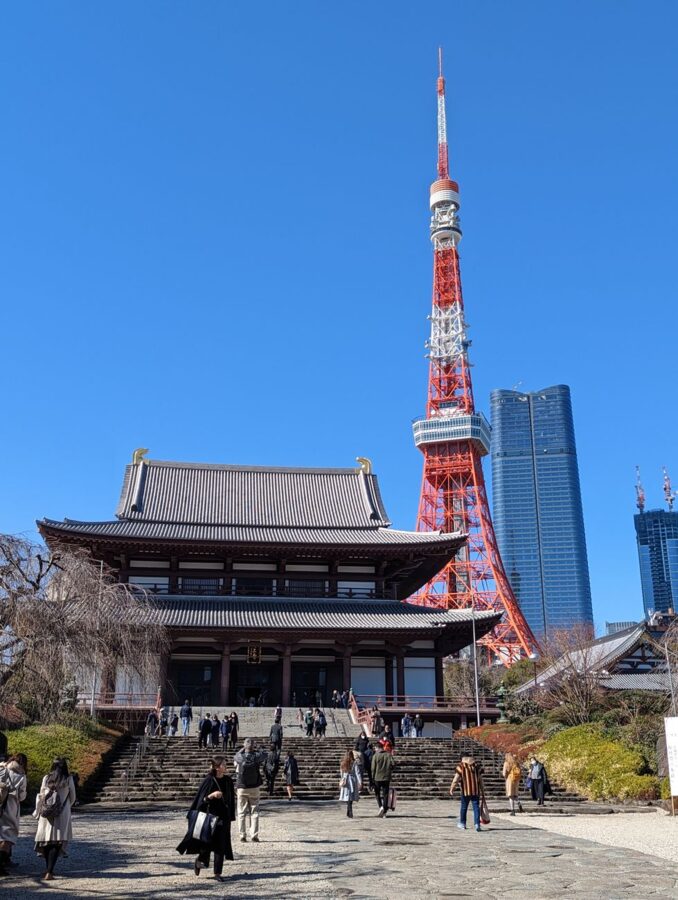
Zojo-ji (増上寺) was here first, by several centuries. The temple was founded in 1393, became the Tokugawa family temple in 1590 and moved to this spot in 1598, and in the Edo period its grounds covered the whole hill, the land the tower now stands on included. Its own history is blunt about what came after: land taken in the Meiji years, two great fires, and the air raids of 1945 that burned almost everything.
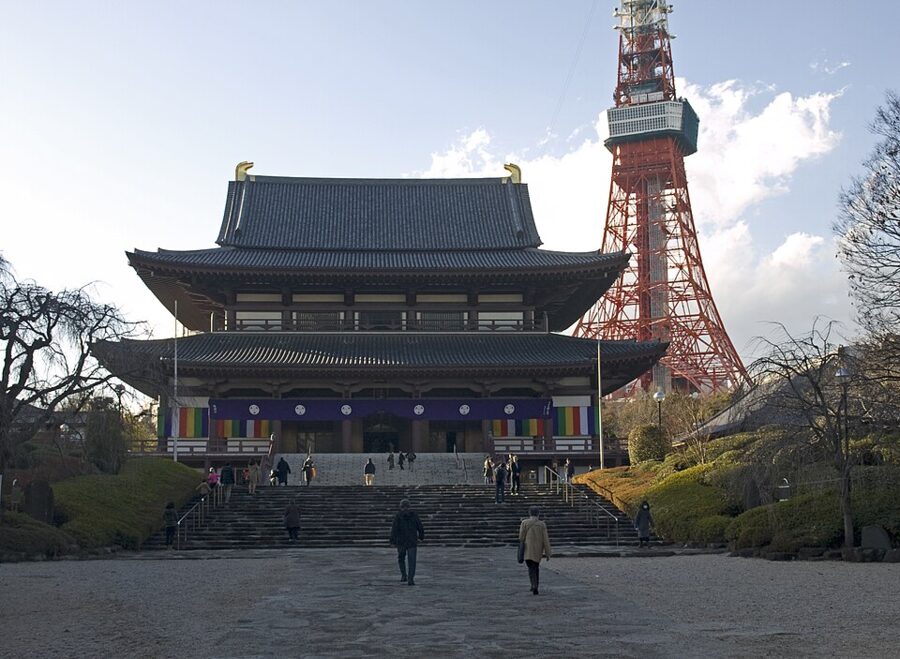

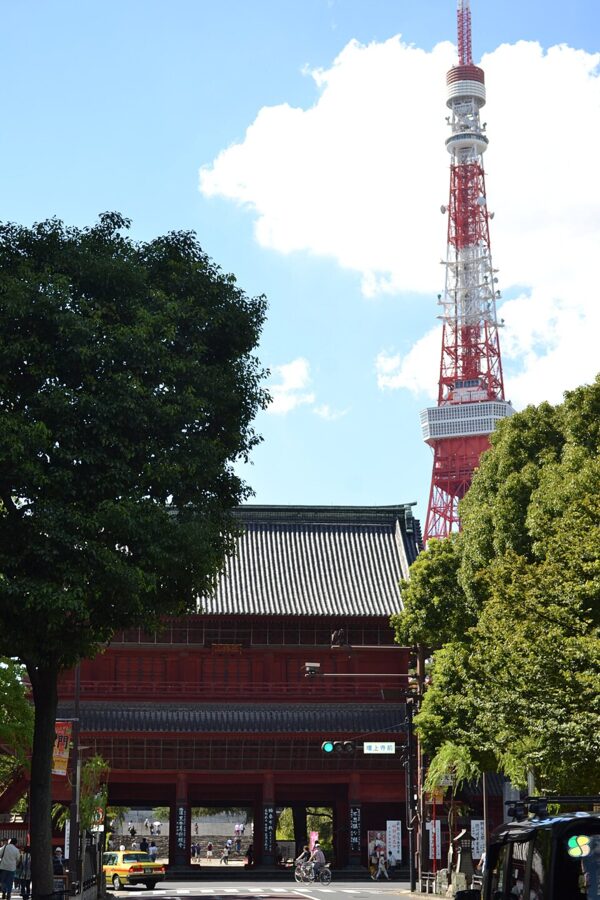
The view everyone wants is the main hall with the tower rising behind it, and you can take it any day from the forecourt. The other classic, the tower above the red Sangedatsumon gate, is out of reach for years: the gate, built in 1622 and the oldest structure on the grounds, has been under conservation repair since January 2025, with the work planned to finish in June 2032.

Behind the main hall is the Tokugawa shogun family mausoleum. Six shoguns lie here: Hidetada, Ienobu, Ietsugu, Ieshige, Ieyoshi and Iemochi, along with Iemochi’s wife, Princess Kazunomiya, and 38 people in all. Their original mausoleums, carved and lacquered buildings that were National Treasures, burned in the raids of March 10 and May 25, 1945.
The dates line up in an odd way. In the summer of 1958, while the tower was going up next door, a team led by the national Cultural Properties Protection Commission opened the shogun graves, studied the remains, cremated them and reburied them together on the present plot. The tower company had bought its plot, part of the old temple precinct, the year before, and the first foundation work in June 1957 cleared part of the temple’s cemetery.
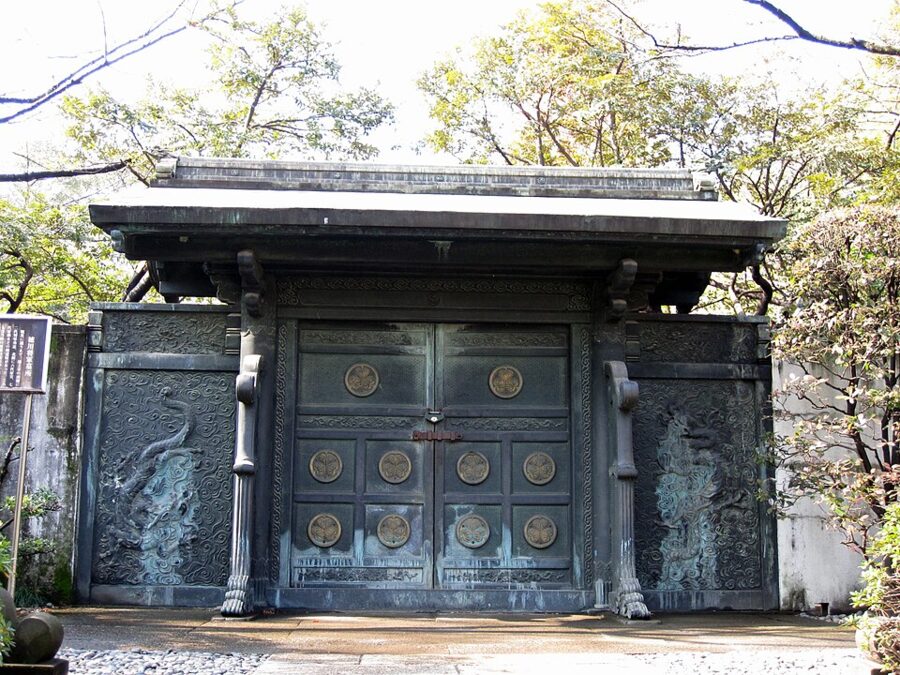

The mausoleum costs ¥500 for adults, and high school students and younger go in free. It is open 11:00–15:00 on weekdays (last entry 14:45) and 10:00–16:00 on weekends and holidays (last entry 15:45), and it closes on Tuesdays, or opens as usual when Tuesday is a holiday. On weekends and holidays volunteer guides from Minato ward often explain the graves. The temple posts its own closures, so check before you build an afternoon around it.
The other paid sight is the treasure gallery in the basement of the main hall, ¥700 for adults, ¥300 for junior high and high school students, or ¥1,000 together with the mausoleum. Its centerpiece is a 4 m by 6 m model of Hidetada’s mausoleum, made by the Tokyo School of Fine Arts for the Japan-British Exhibition in London in 1910. It spent the next century in the British Royal Collection and came back to the temple in 2014; it is now the best way to see what burned.
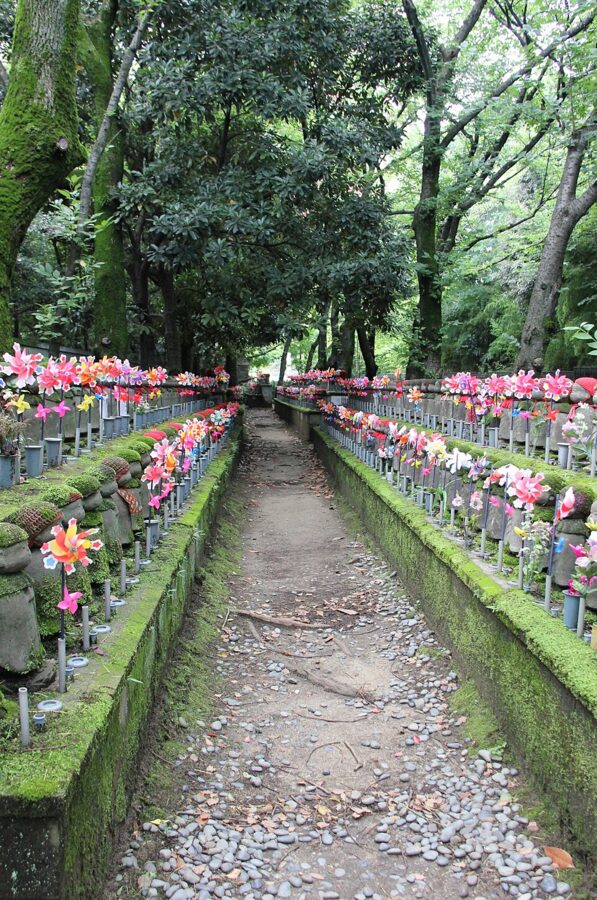

Walk the rest of the temple grounds for free. The rows of small stone Jizo statues, set up since 1975 for children’s health and safe birth, are the picture people remember.
The Ankokuden hall houses the Black Honzon, an Amida statue Ieyasu carried into battle, shown only on January 15, May 15 and September 15 each year. The great bell, cast in 1673, took seven attempts, and a Himalayan cedar on the grounds was planted by Ulysses S. Grant when he visited in 1879.
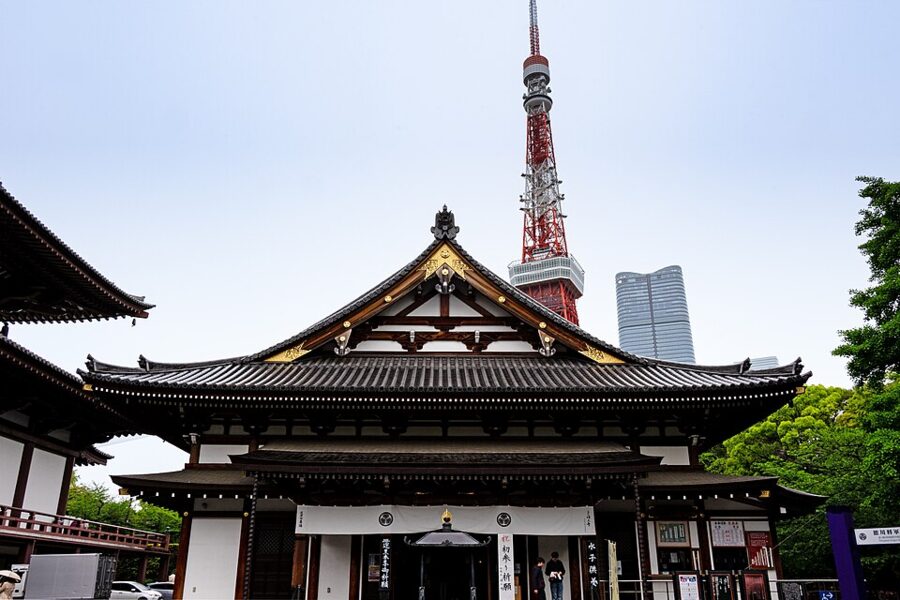

The temple’s visitor answers give the useful hours: the main hall 06:00–17:30, the Ankokuden 09:00–17:00. There is no visitor parking, and the main hall has an elevator for wheelchair users. In practice this means Zojo-ji works best before the tower, in daylight, with the deck saved for dusk.

Shiba Park and the photo spots
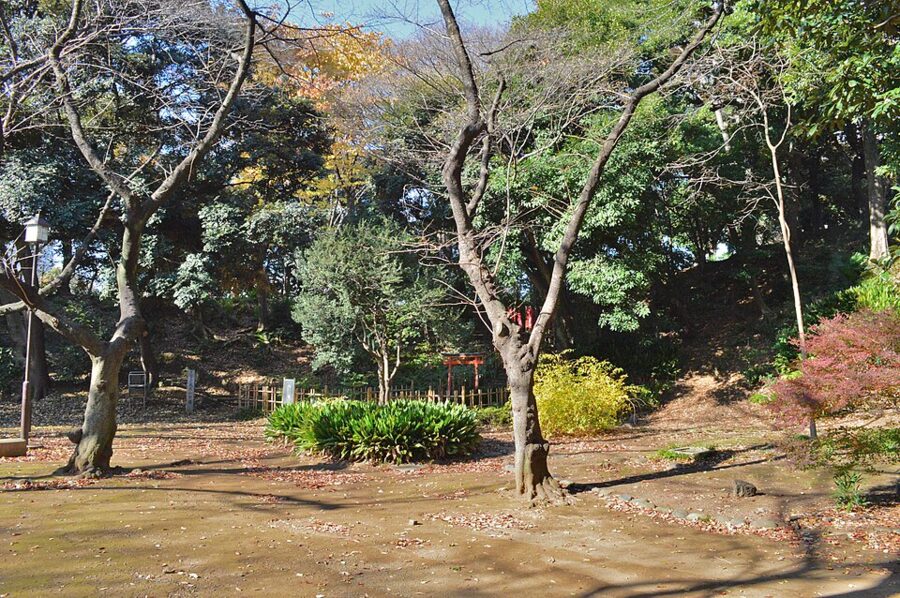
Shiba Park wraps around the temple. It opened in 1873 as one of the first five public parks in Tokyo, and it once included the temple grounds, which were split off in 1947 to keep religion and state apart. Today it is several pieces under different managers, with a keyhole-shaped burial mound, Shiba Maruyama Kofun, on a wooded hill, and the Minato ward section, opened in 2002, with open ground and a clear view of the tower.
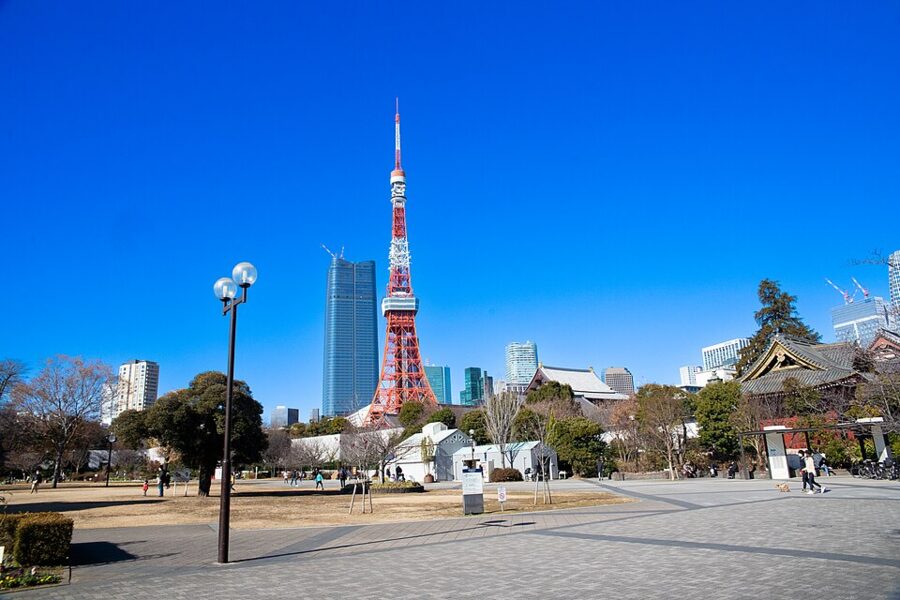

The Minato ward tourism association keeps a list of the best places to photograph the tower, and four are close. The first is the moment you come up the Akabanebashi Exit stairs at Akabanebashi Station, with the tower looming straight above you. The second is Nagai-zaka, the slope between Akabanebashi and Kamiyacho. The third is the Minato ward lawn, and the fourth is Shiba Park’s 4th section by Exit A6 of Onarimon Station, a lamp-lit avenue aimed at the tower, at its best after dark.
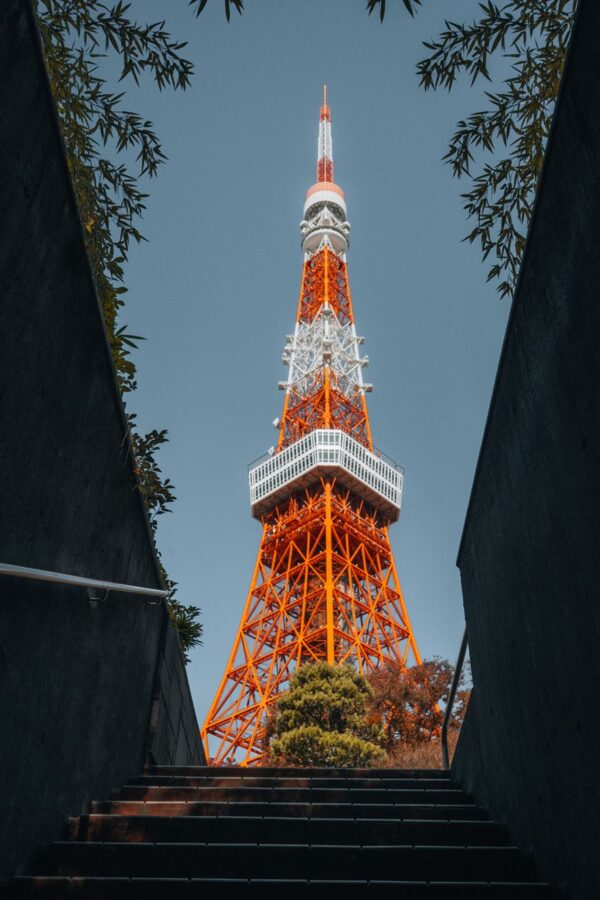
Their list also includes the stairs of the underground parking garage on the Momiji-dani slope, where the walls frame the tower. The tower’s own access page asks people not to stop and photograph on those stairs, for safety and so drivers can get past. The two bodies disagree; I would take the picture from the top or bottom step and keep moving.
Foot Town: food, shops and a sumo stage
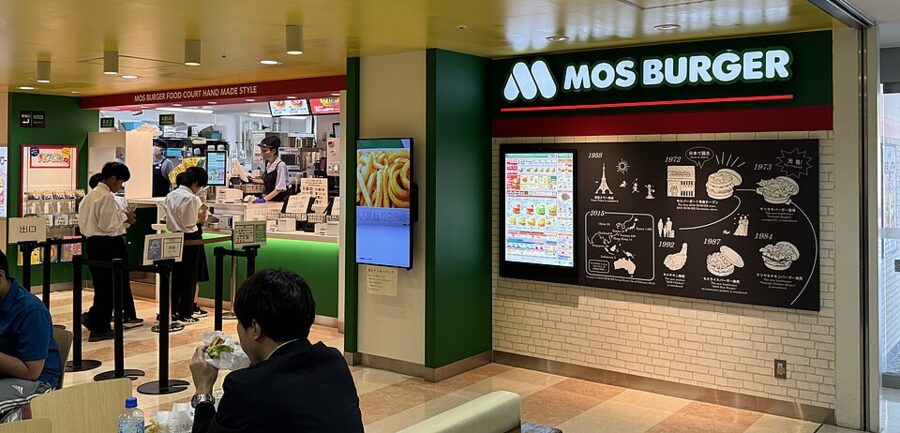
Foot Town is the five-story block between the legs, and the Foot Town directory lists what is in it. The first floor has the ticket counter, information desk, coin lockers, the Maple Lounge and Histories Alley, a corridor of photographs and dioramas of the construction. The second floor is the food court and souvenir floor, with Tantanmen Kinkatsu for soupless dandan noodles, Siddique Palace for Pakistani halal food, MOS Burger, Pizza-La Express, Sake Cafe Diamond, Baskin-Robbins and a Lawson, plus the Minato ward tourist information center.
The third floor has the official shop, Galaxy, the Tower Gallery for temporary shows, and a Mother Farm Cafe, which is less random than it sounds: Maeda, the tower’s founder, opened the Mother Farm dairy park in Chiba in 1962. The fifth floor is a sumo show venue, Tokyo Sumo Club Entertainment, and the roof has the entrance to the stairs and a pickleball court. Foot Town has turned over its tenants many times: the aquarium on the first floor closed in September 2018, and the One Piece Tower theme park, which opened in March 2015, closed in July 2020.
Getting there
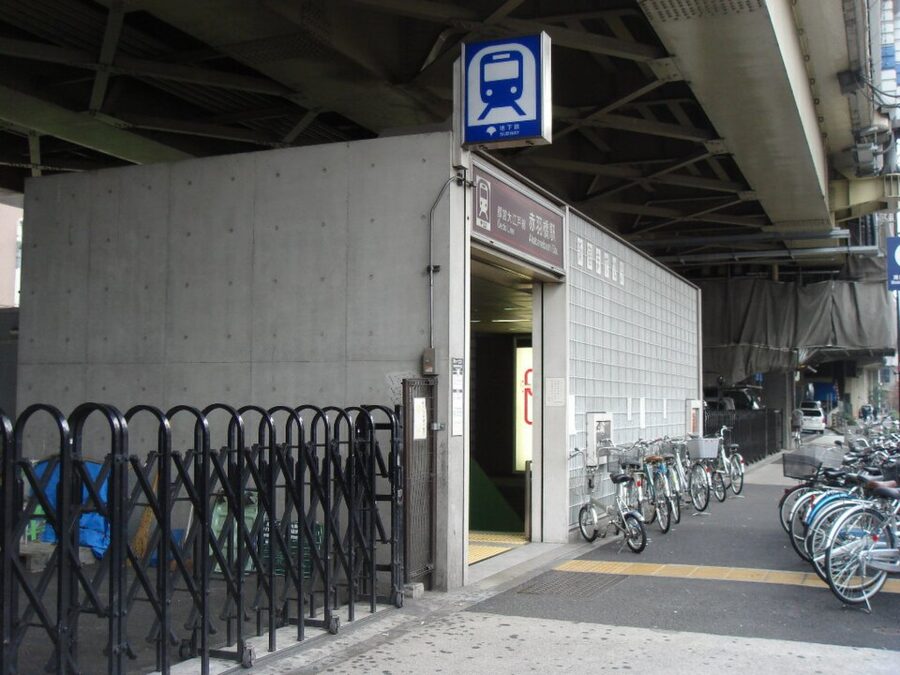
Six stations are within a 15-minute walk, and the tower’s access page gives the exit and the time for each. The nearest is Akabanebashi (赤羽橋) on the Toei Oedo Line, station E-21: take the Akabanebashi Exit and walk 5 minutes uphill. It is two stops from Roppongi and seven from Shinjuku’s Tochomae, which makes it the easy link to the free deck in Shinjuku.

The others, by the tower’s figures:
- Onarimon, Toei Mita Line, Exit A1: 6 minutes.
- Kamiyacho, Tokyo Metro Hibiya Line, Exit 1: 7 minutes.
- Shibakoen, Toei Mita Line, Exit A4: 10 minutes.
- Daimon, Toei Asakusa Line, Exit A6: 10 minutes.
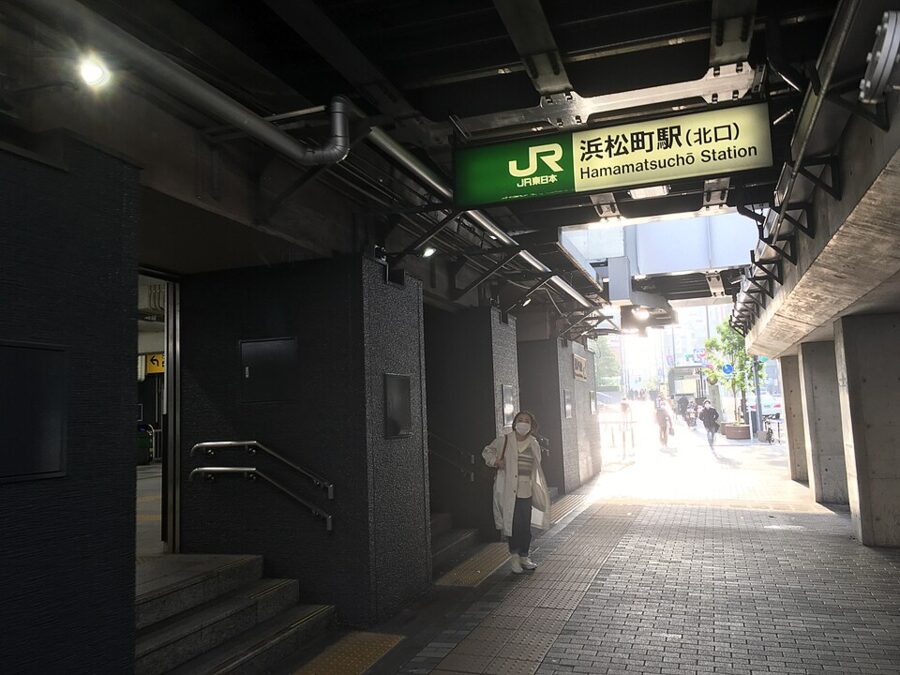
- Hamamatsucho, JR Yamanote Line, North Exit: 15 minutes.
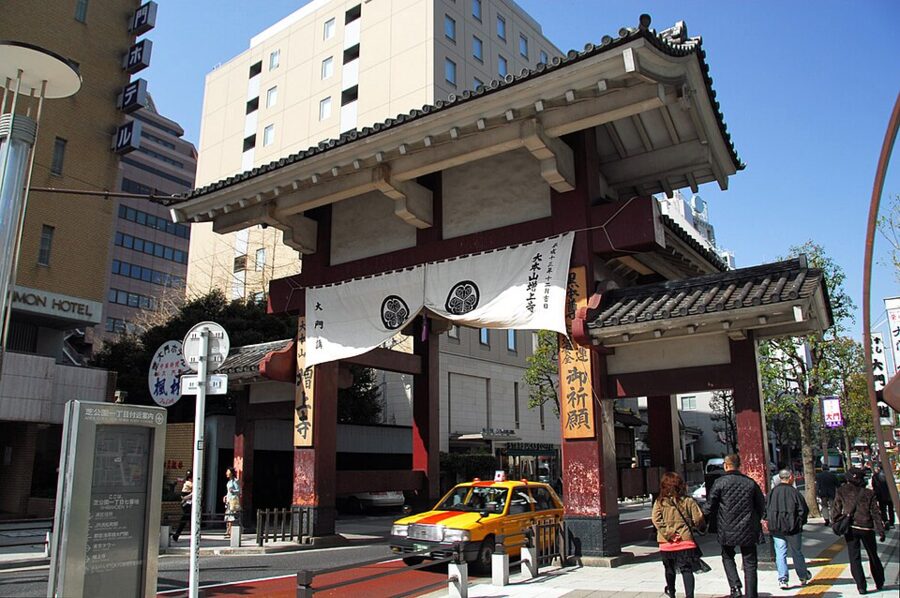
The longest walk is the best one. From Daimon or Hamamatsucho you go west under the Daimon gate, through the temple grounds past the main hall, and arrive at the tower from below, which is the order I would take anyway. Hamamatsucho is also where the Tokyo Monorail from Haneda Airport ends, and the Yamanote and Keihin-Tohoku lines stop there; the getting-around guide covers the passes and IC cards for all of these lines.

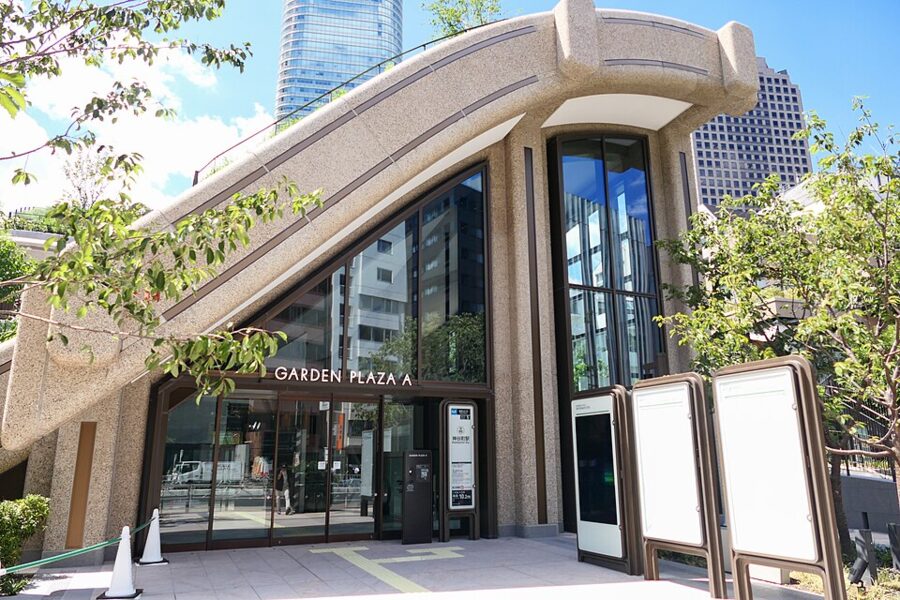
From Roppongi you can walk. Azabudai Hills, the block that opened in 2023, is about 10 minutes from Roppongi Station (Hibiya Line Exit 3 or Oedo Line Exit 5), and its access page lists Kamiyacho’s Exit 5 as connected directly to the complex. From there the tower is a short walk to the east, so a night that starts in Roppongi can end on the deck, or the other way round.

Buses work too. From Tokyo Station the Tokyu bus route 東98, from the Marunouchi South Exit, reaches the Tokyo Tower stop in about 20 minutes, 2 minutes from the entrance. The tower also lists a free hydrogen shuttle bus that loops from Tokyo Station’s Marunouchi side through Takeshiba, Hinode Pier and Takanawa Gateway, about 60 minutes from Tokyo Station to the tower.
Driving is possible and pointless. The tower’s ground-level and underground lots charge ¥800 for the first hour and ¥400 for each 30 minutes after that, open 09:00–23:00. Bicycle parking is free for two hours, and there are ward bike-share and kick-scooter ports on site.
Tokyo Tower, Skytree, Shibuya Sky or the free decks
The things to do in Tokyo guide has my overall ranking of the city’s views; here are the numbers side by side, from each operator’s page in November 2026.
| Deck | Height | Adult price | Hours | Best for |
|---|---|---|---|---|
| Tokyo Tower Main Deck | 150 m | ¥1,500, web or window | 09:00–23:00, last entry 22:30 | The late, close-in night view |
| Tokyo Tower Top Deck Tour | 250 m | ¥3,300 web, ¥3,500 window | Slots 09:00–22:15 | Sunset on a clear day |
| Tokyo Skytree, Tembo Deck | 350 m | From ¥1,800 web, by date; ¥500 more at the counter | Varies by day | Height and the long view east |
| Tokyo Skytree, both decks | 350 m and 450 m | From ¥3,000 web, by date | Varies by day | The highest view in the city |
| Shibuya Sky | Open roof | ¥2,700 web before 15:00, ¥3,400 from 15:00; ¥300 more at the window | 10:00–22:30, last entry 21:20 | Open air above the scramble |
| Metropolitan Government, South Observatory | 202 m | Free | 09:30–22:00, last entry 21:30 | The view for nothing |
Skytree’s prices move with the date, and the floor figures above are the cheapest days; its counter adds ¥500 a ticket. Shibuya Sky sells online up to two weeks ahead and, when the web allocation sells out, the window is sold out too; its roof closes in bad weather. The Metropolitan Government observatories close on set days: the South Observatory on the first and third Tuesdays of each month, the North Observatory, open only until 17:30, on the second and fourth Mondays.
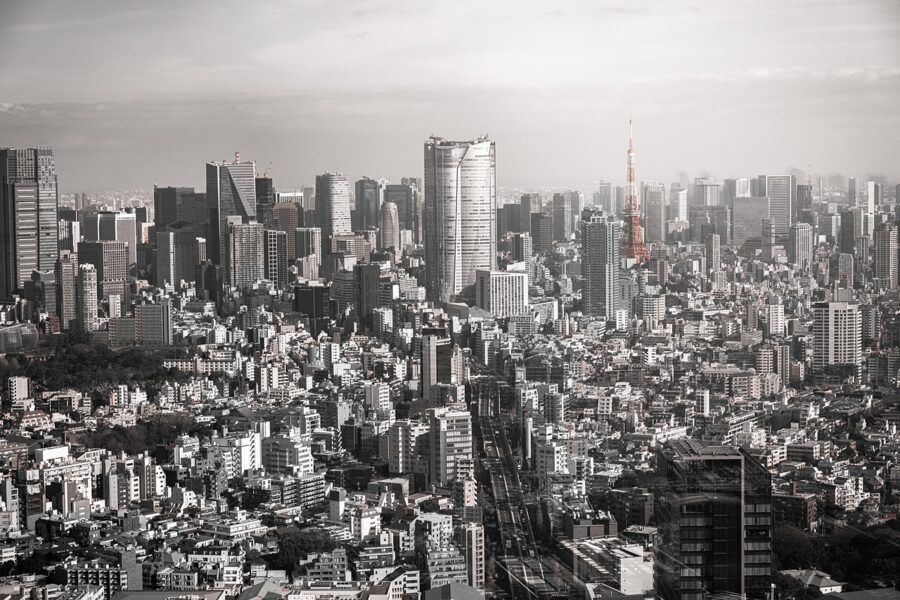
My verdict, in order. If you only pay for one view in Tokyo, Shibuya Sky before 15:00 gives you open air for ¥2,700.
If you want a night view without a schedule, Tokyo Tower’s Main Deck at ¥1,500 and a 22:30 last entry is the cheapest paid ticket on this list, with a later last entry than Shibuya Sky or the free deck. If you want height for its own sake, Skytree. And if the budget is zero, the South Observatory in Shinjuku is free until 21:30.
What Tokyo Tower has that none of the others do is itself. From Skytree or Shibuya you look at Tokyo Tower; from Tokyo Tower you look at a skyline with no orange tower in it. That trade is why I would pick it for the night and somewhere else for the day.
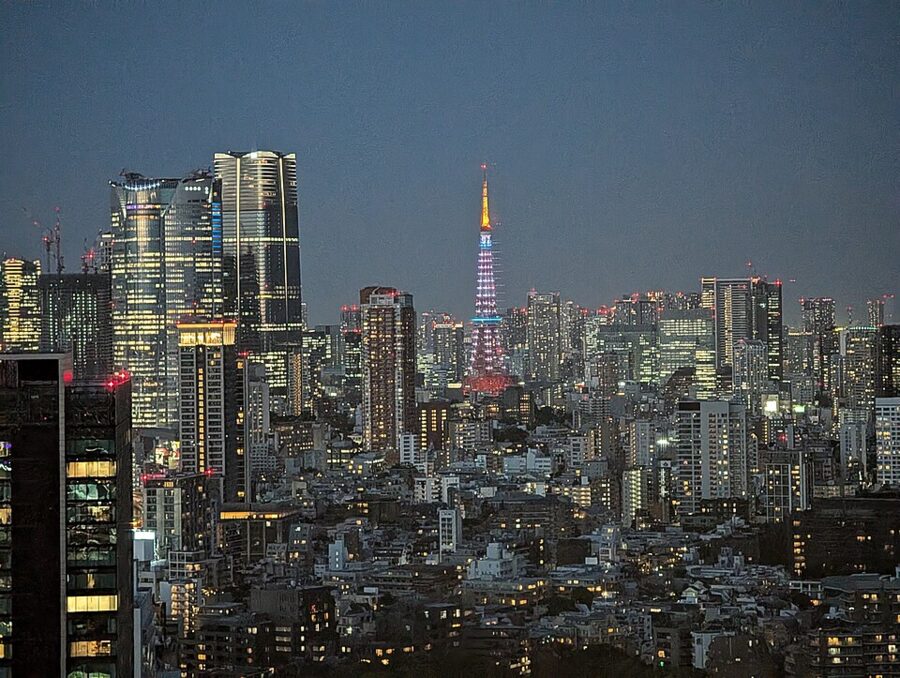
After the deck, the Hibiya Line from Kamiyacho or the Oedo Line from Akabanebashi takes you back to Roppongi in a few minutes, and the Tokyo nightlife guide picks it up from there. Or stay out under the legs until midnight and watch the lights go off. Either way, the Main Deck ticket is still ¥1,500 and the door still closes at 22:30, so the only real decision is whether the sky is clear enough to pay for the extra 100 m.