

A standard room in a Tokyo business hotel (ビジネスホテル) is about 11 square meters, and for two people the number on the booking page that matters more than the price is the width of the bed. APA, Toyoko Inn and Sotetsu Fresa Inn all sell an 11 to 12 m² room with a bed of about 140 cm as their basic double. That is a room for one person that two can share for a night. Mitsui Garden’s doubles at Ueno and Kyobashi are 18 m² and cost about twice as much.
The prices below are the lowest each chain’s own booking page showed when I checked on November 24, 2026, for the night of Wednesday, January 13, 2027, tax included and room only unless I say otherwise. On that night a Toyoko Inn single in the 23 wards ran from ¥8,300 to ¥14,400, a Dormy Inn room in Ueno was ¥12,330, and an 18 m² double at Mitsui Garden Hotel Ueno was ¥20,800.
| Chain | Who it suits | Standard double |
|---|---|---|
| APA Hotel | Solo travelers who want a station-side room and, at the newer towers, a big bath | 11 m², 140–142 cm bed |
| Toyoko Inn | The cheapest predictable room, with free breakfast; children of elementary school age stay free in a parent’s bed | 11–12 m², 140 cm |
| Dormy Inn | Anyone who wants a big hot bath at night and a free bowl of noodles at 21:30 | 13.8–14.9 m² (Ueno Okachimachi) |
| Sotetsu Fresa Inn | Plain rooms in Ginza, Kyobashi and the business districts east of Tokyo Station | 11.9 m², 140 cm (Ginza 7-chome) |
| Mitsui Garden Hotel | Couples who want floor space and a proper breakfast | 18 m² (Ueno, Kyobashi) |
| Richmond Hotel | Couples and families; members check out at 12:00 for free | 15–18 m², 140–150 cm |
| Super Hotel | Early risers on a budget; free breakfast at the standard branches | Floor area not posted on branch pages |
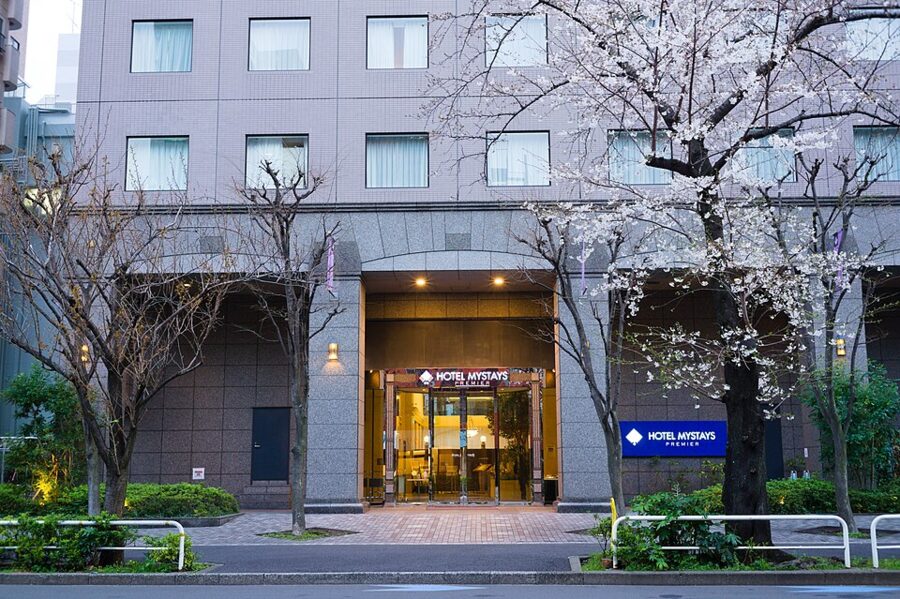
| Hotel MyStays | Longer stays; a microwave in the room | 12 m², 120–140 cm (Asakusa) |
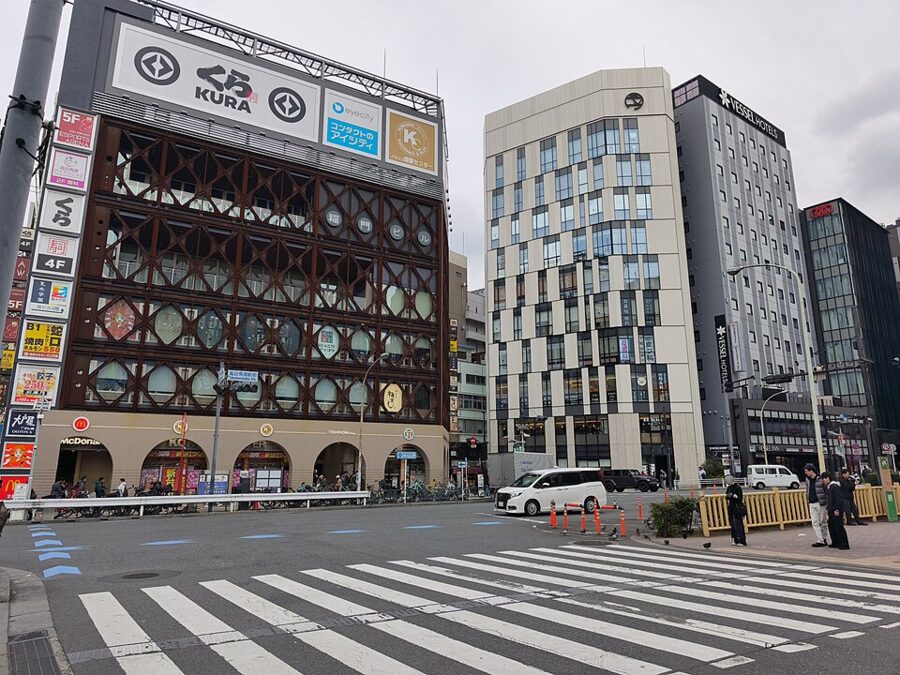
| Vessel Inn | Families with teenagers: under-19s sleep free with a parent | 13 m², double-size bed (Ueno Iriya) |
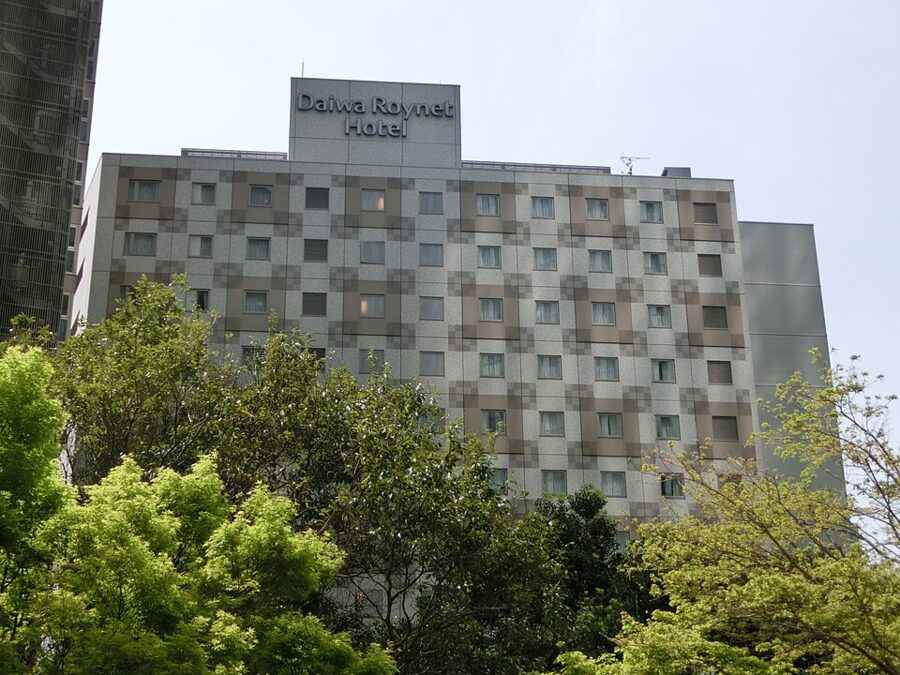
| Daiwa Roynet | Space for the money | 18–21 m² (Ginza, Kyobashi) |
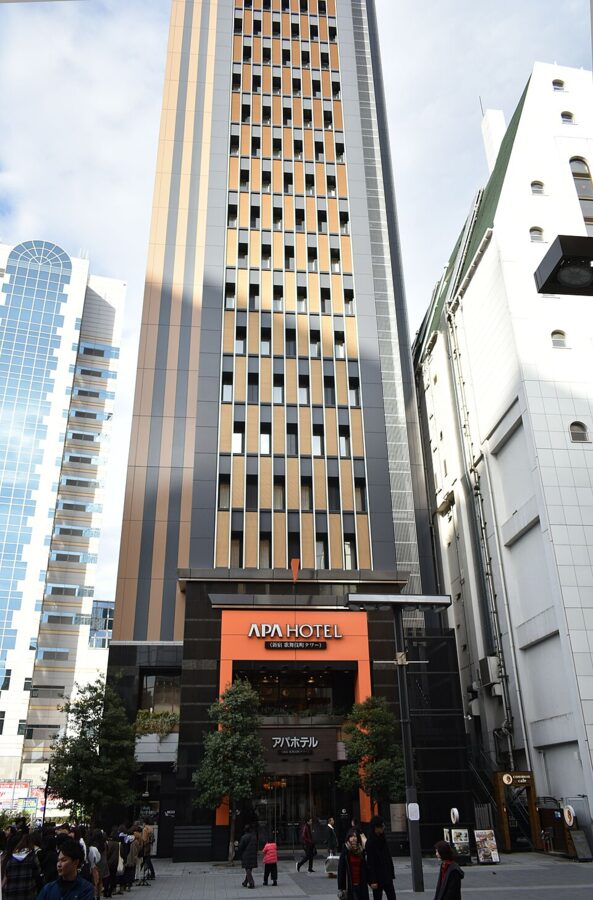

For a first trip, my order is Dormy Inn if the budget stretches to about ¥12,000 a person, Toyoko Inn if it does not, and Mitsui Garden or Daiwa Roynet for two people sharing for more than a couple of nights. APA is the default because it is everywhere, with 93 hotels in Tokyo on its own list in November 2026, but its prices move by the day, so it is never the default on price.

Named hotels by district, at every price from capsule to palace view, are in the best hotels in Tokyo guide, and the choice of district is settled in where to stay in Tokyo. The chains repeat the same room in dozens of Tokyo buildings, so once you know the chain you know most of the room.
What a Japanese business hotel is
A business hotel is a hotel that sells the room and very little else: no bellhops, no room service, often no restaurant of its own, and a building next to a station. The format is Japanese and older than it looks. The first one, by the usual account, was a one-person-per-room inn opened in Kyoto by Hokke Club on September 12, 1920. The chains below grew out of very different businesses: a house builder, a railway, a student-dormitory company, a family-restaurant group and a weekly-apartment landlord.
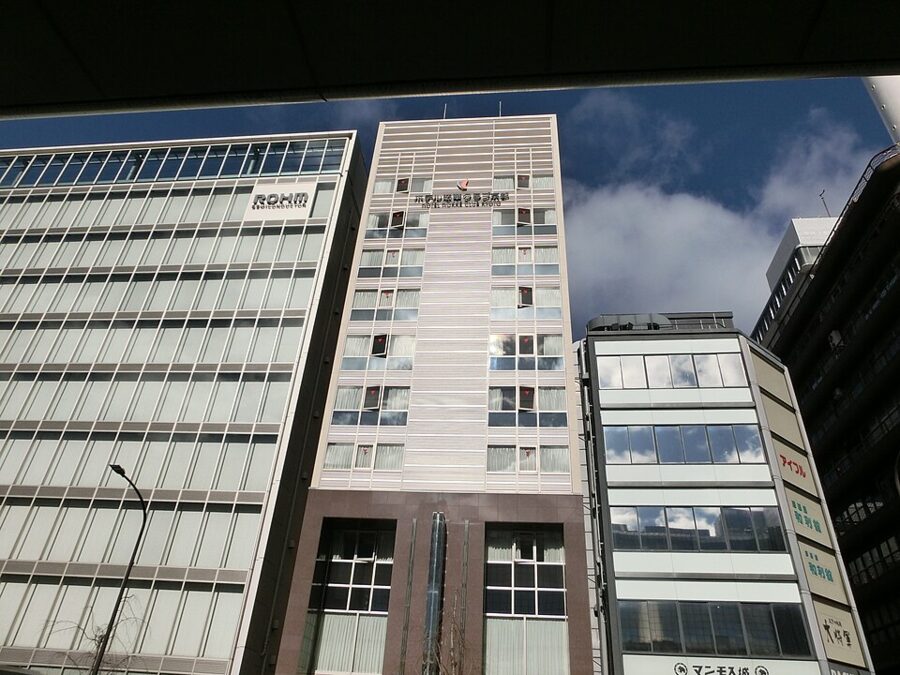
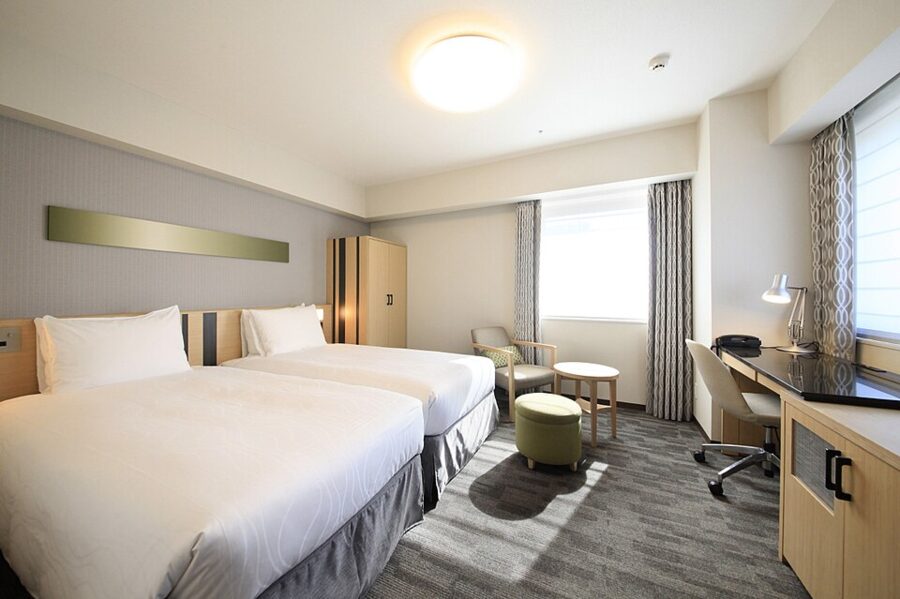
The rooms are sold by area, and the area is on the room page. Eleven square meters is the floor: APA’s singles and doubles at Shinjuku Kabukicho Tower and at Shinagawa Sengakuji Ekimae are both 11 m², and a Toyoko Inn single at Shinagawa is 11 m² too. Twins run from 13 to 19 m² at the budget chains and 24 m² at Richmond Hotel Tokyo Suidobashi. Anything at 18 m² or more is a room two people can open two suitcases in at once.
Beds: semi-double, double, queen
Bed width is the second number, and it matters more than the first. A Japanese “double” (ダブル) is usually 140 cm wide, about an American full. A “semi-double” (セミダブル) is 120 to 122 cm at the chains below, and some hotels sell it for two. Vessel’s booking engine is unusually blunt about it: a double-size bed is filed as 131–150 cm, and a semi-double as 100–120 cm.
Single rooms in Tokyo often have a double-width bed. Toyoko Inn’s single at its Shinagawa Takanawa-guchi branch is an 11 m² room with a 140 cm bed, and it describes the bed as double size; at APA Shinjuku Kabukicho Tower the single gets a 122 cm bed and the double a 142 cm one in the same 11 m². If two adults want two beds, search for a twin (ツイン), and expect 13 to 19 m².
The unit bath and what is in the room
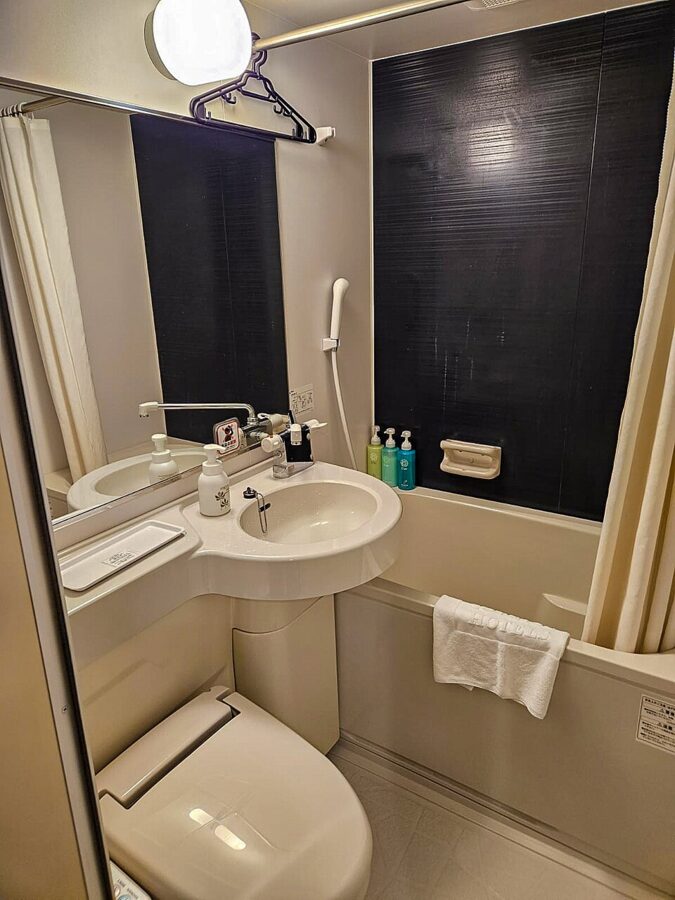
Almost every business hotel room has a unit bath (ユニットバス): a molded plastic module with a short, deep tub, a shower over it, a washbasin and a toilet with a bidet seat. It is cramped and it works. The chains that matter for bathers are the ones with a shared hot bath on the top floor, which in Tokyo means Dormy Inn everywhere and APA at its newer towers.
The rest of the room is standard across chains: a desk, a wall-mounted TV, a hair dryer, an electric kettle, an empty fridge (switched off at APA until you turn it on), nightwear and free Wi-Fi. Since Japan’s plastic-recycling law took effect in 2022, many chains put toothbrushes, razors and combs at a self-service bar in the lobby instead of in the room. Daiwa Roynet does this outside its Premier hotels, and APA Shinagawa Sengakuji Ekimae calls its version an amenity bar.
Check-in, check-out and cleaning
Check-in is 15:00 almost everywhere, and check-out is 10:00 or 11:00. That hour is worth more than it sounds on a departure day. The posted times at the branches I checked:
| Branch | Check-in | Check-out |
|---|---|---|
| APA Hotel Shinjuku Kabukicho Tower | 15:00 | 10:00 |
| Toyoko Inn (all Tokyo branches checked) | 15:00 | 10:00 |
| Super Hotel Asakusa | 15:00 | 10:00 |
| Dormy Inn Ueno Okachimachi | 15:00 | 11:00 |
| Sotetsu Fresa Inn Ginza 7-chome | 15:00 | 11:00 |
| Mitsui Garden Hotel Ueno | 15:00 | 11:00 |
| Hotel MyStays Asakusa | 15:00 | 11:00 |
| Vessel Inn Ueno Iriya Ekimae | 14:00 | 11:00 |
Room cleaning on multi-night stays is now opt-in at many branches. APA Shinagawa Sengakuji Ekimae does not clean between nights unless you hang the request card on the door by 09:00, and changes the sheets every third night. Super Hotel Asakusa works the same way, with a full clean every fourth day. Fresh towels are left outside the door.
The chains, one by one
APA Hotel (アパホテル)
APA is the biggest name in the business and the easiest to find: the group’s own count, as of November 10, 2026, was 1,138 hotels and 141,805 rooms, and its Tokyo list ran to 93 hotels on November 24, 2026. It started as a house builder in Ishikawa prefecture, opened its first hotel in Kanazawa in 1984 and reached Tokyo, at Itabashi, on July 7, 1997. It builds its rooms close to the smallest floor area the rules allow.
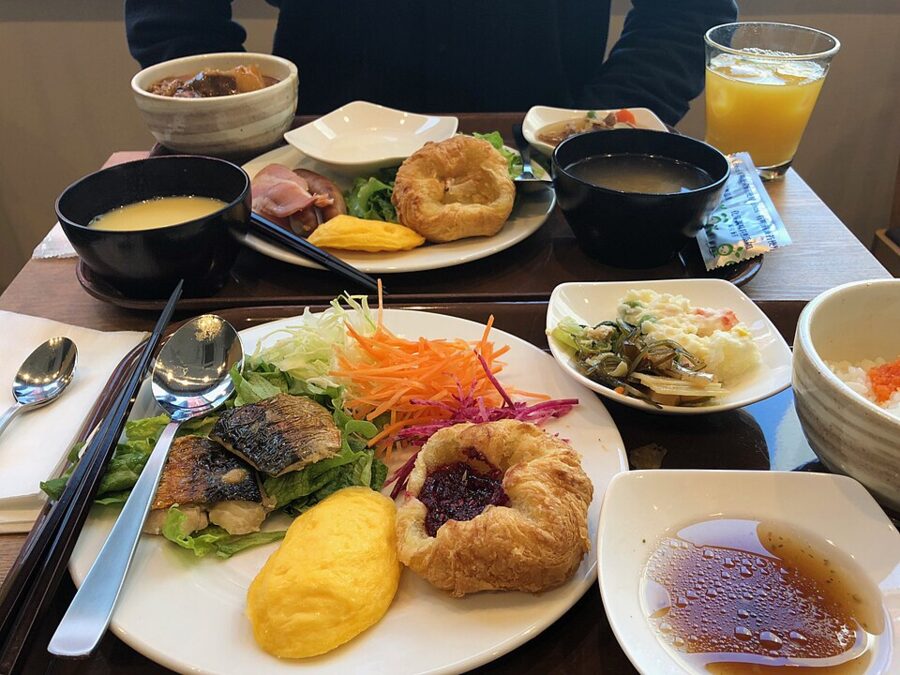
At APA Hotel Shinjuku Kabukicho Tower, seven minutes from the East Exit of JR Shinjuku Station and two from Seibu-Shinjuku Station, the single is 11 m² with a 122 cm bed, the double 11 m² with a 142 cm bed and the twin 17 m² with two 113 cm beds. The large bath and open-air bath on the 28th floor are free to guests from 15:00 to 01:00 and again from 06:00 to 10:00. Breakfast in the second-floor cafe, 07:00–10:00, is ¥2,000 booked ahead or ¥2,300 on the day, and ¥1,300 or ¥1,500 for children aged 4 to 11.
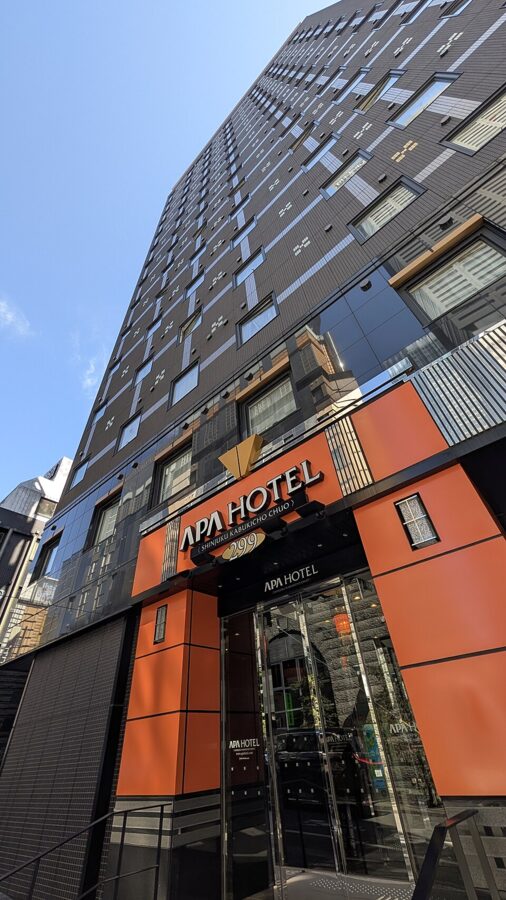

APA prices like an airline, high when the hotel is filling and low when it is not. In late November 2026 the Kabukicho Tower’s own booking calendar swung between ¥17,200 and ¥32,200 for one adult within a single week, with some nights sold out. Same room, nearly double the price, a few days apart. If your dates are flexible, APA is the chain where moving them a night pays.
The other two Tokyo branches worth knowing for their baths: APA Hotel Shinagawa Sengakuji Ekimae, a minute from Exit A2 of Sengakuji Station on the Toei Asakusa and Keikyu lines, has a 21st-floor bath open 06:00–10:00 and 15:00–02:00, and its 11 m² double has a 140 cm bed. APA Hotel Ueno Ekimae, a minute from Exit 3 of the Ginza and Hibiya lines at Ueno, keeps the same bath hours on its 15th floor. At both, preschool children share a parent’s bed free, one per bed, which is the rule across the chain.
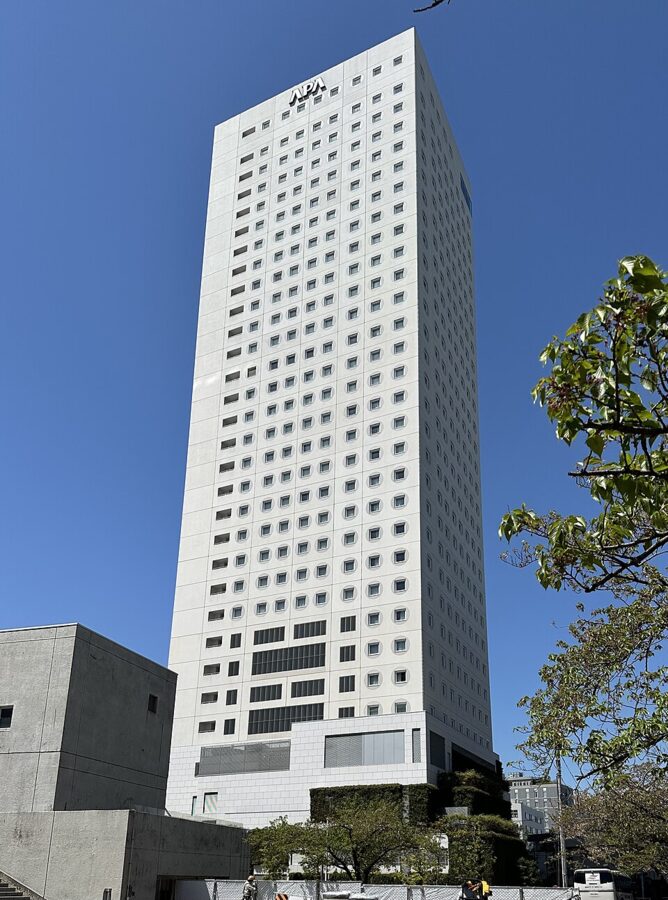

Toyoko Inn (東横イン)
Toyoko Inn opened its first hotel, Toyoko Inn Kamata No.1, in Ota ward in 1986, and took its name from Kamata’s position halfway between Tokyo and Yokohama. It has no link to the Tokyu railway or its Toyoko Line. It had 361 hotels, overseas included, by February 2026, and the opening in Kochi on February 7, 2026 made it the first chain in every one of Japan’s 47 prefectures. Tokyo has 51.
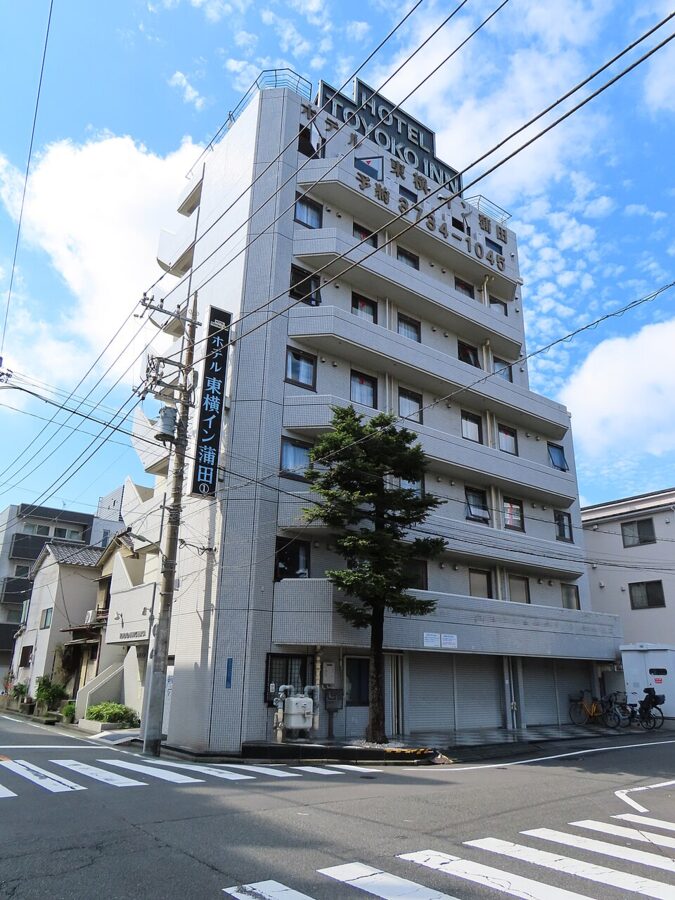

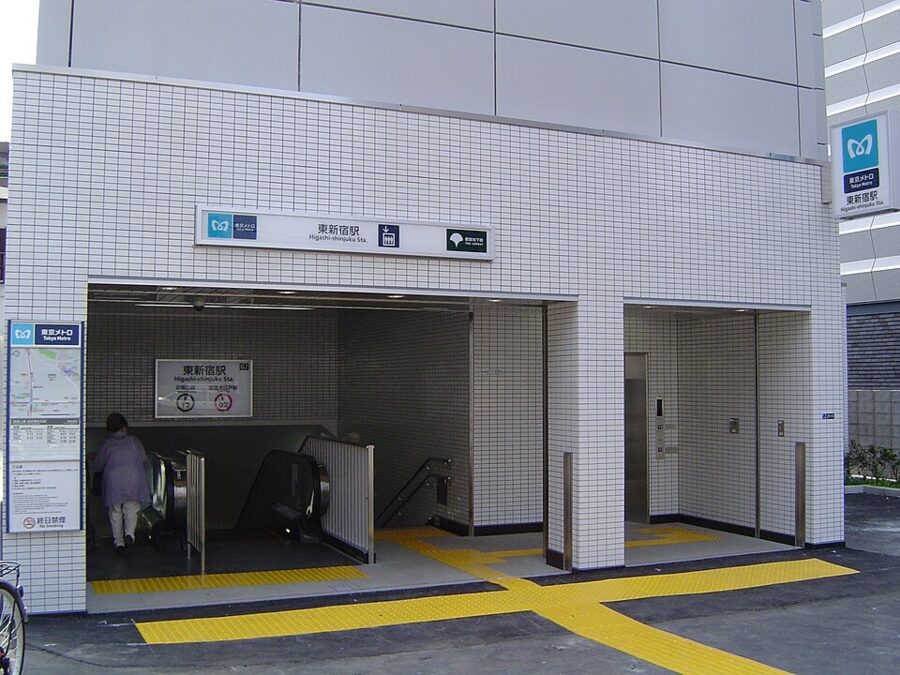
Every Toyoko Inn is the same building inside, which is the point. At Shinagawa Takanawa-guchi the single is 11 m² with a 140 cm bed, the economy twin 13 m² with two 90 cm beds and the king double 13 m² with a 180 cm bed. At Shinjuku Kabukicho the double is 12 m², the twin 14 m² with two 110 cm beds and the queen room 14 m² with a 160 cm bed. Check-in is 15:00 and check-out 10:00, and the free buffet breakfast runs 06:30–09:00; you can carry the tray up to the room.
The chain says it keeps one price per hotel rather than chasing demand, and its Tokyo prices sit in a narrow band: on January 13, singles ran from ¥8,300 at Akabane to ¥14,400 at Nihombashi Bakurocho. Toyoko Inn Tokyo Shinjuku Kabukicho, three minutes from Exit A1 of Higashi-shinjuku Station on the Toei Oedo Line, was ¥10,800 for one and ¥12,800 for two. Toyoko Inn Tokyo Kanda Akihabara, three minutes from Exit C4 of Bakuro-cho Station, was ¥9,000, and Toyoko Inn Tokyo Asakusa Kuramae No.2, a minute from Exit A2 of Kuramae, was ¥9,300. Shinagawa Takanawa-guchi and Tokyo-eki Yaesu Kita-guchi, the two by the big stations, showed no rooms at all for that night.
Two rules make Toyoko Inn the family pick at the bottom of the market. Children of elementary school age or younger stay free when they share a parent’s bed, and they eat breakfast free too. And individual bookings can be canceled free until 12:00 on the day of arrival under the chain’s accommodation terms, revised September 29, 2026; after noon the charge is 100%.
Dormy Inn (ドーミーイン)
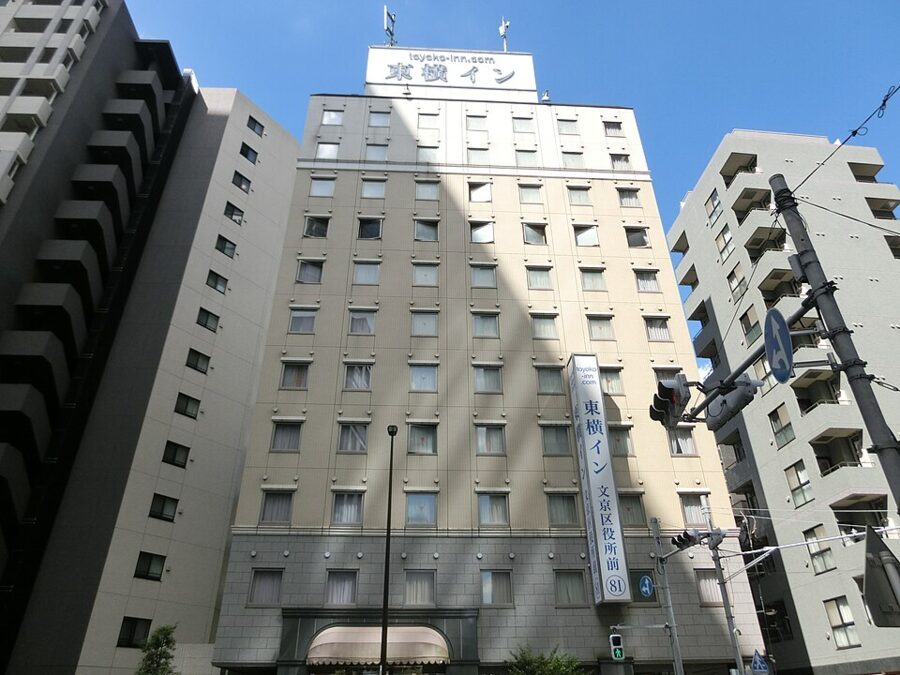
Dormy Inn belongs to Kyoritsu Maintenance, which started out running student dormitories in Tokyo in 1980 and opened its first business hotel in August 1993; its student halls already carried the Dormy name. Tokyo has 11 Dormy Inns plus two Onyado Nono inns in Asakusa run by the same company. Each has a large shared bath, separate for men and women, which is the reason to book it.
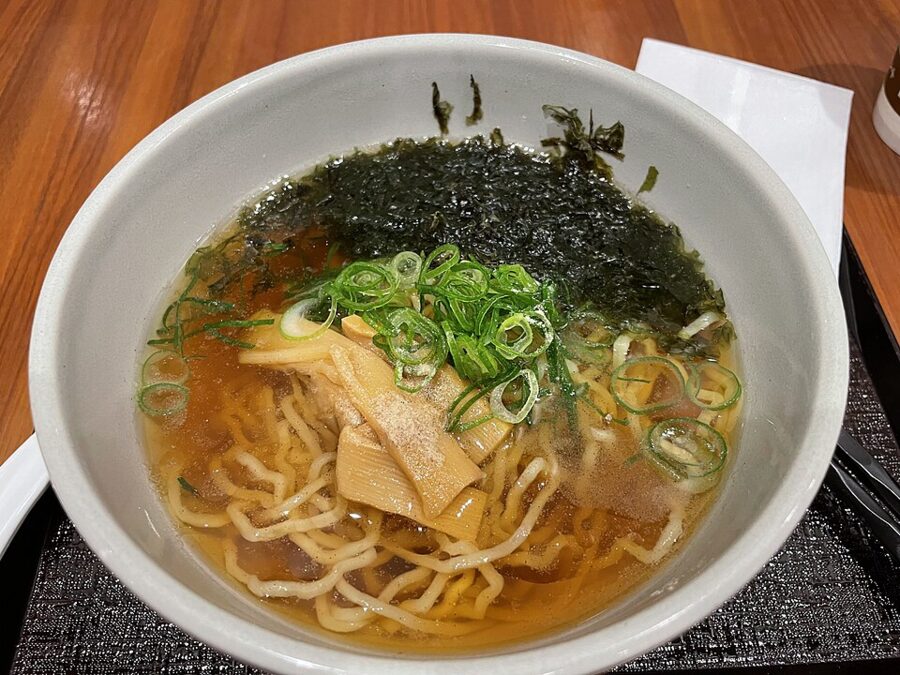
The free extras are a list, and the chain posts it: welcome drinks, ice bars and ice-cream wafers after the bath, a small lactic-acid drink in the morning, washing machines that add their own detergent and take about 30 minutes, and yonaki soba, a half-size bowl of soy-sauce ramen served free at night. Dryers cost ¥100 for 20 minutes. The chain’s idea is that you walk the corridors in its loungewear, as if at home.
Dormy Inn Ueno Okachimachi, five minutes from the Hirokoji Exit of JR Ueno and the North Exit of JR Okachimachi, is a fair sample. The 12th-floor bath, Kachi no Yu, has a semi-open-air tub and a sauna, open 15:00 to 10:00 the next morning, with the sauna closed 01:00–05:00; the noodles are 21:30–23:00. Singles are 13.2–15.0 m², semi-doubles 13.8–14.2 m² and doubles 13.8–14.9 m², a size up from APA and Toyoko Inn. Breakfast, 06:30–09:30, is ¥2,000 for adults and ¥1,000 from age 3 through elementary school.
Dormy Inn quotes per person, not per room, so read the small print before comparing. On January 13, 2027, the standard room-only plan at Ueno Okachimachi was ¥12,330 for one adult, or ¥14,130 with breakfast. Only one child can share each bed, and a child who needs bedding of their own is charged the adult rate. Breakfast prices vary by branch: ¥1,500 at Dormy Inn Akihabara and ¥2,500 at Dormy Inn Ikebukuro.
Sotetsu Fresa Inn (相鉄フレッサイン)
Sotetsu Fresa Inn is the hotel brand of the Sotetsu group, the railway that runs west out of Yokohama. The first opened at Kamakura-Ofuna on December 1, 2007, and Tokyo now has about 20, clustered in Ginza, Kyobashi, Nihombashi, Kanda and around Hamamatsucho and Daimon. They are plain, quiet and well placed.
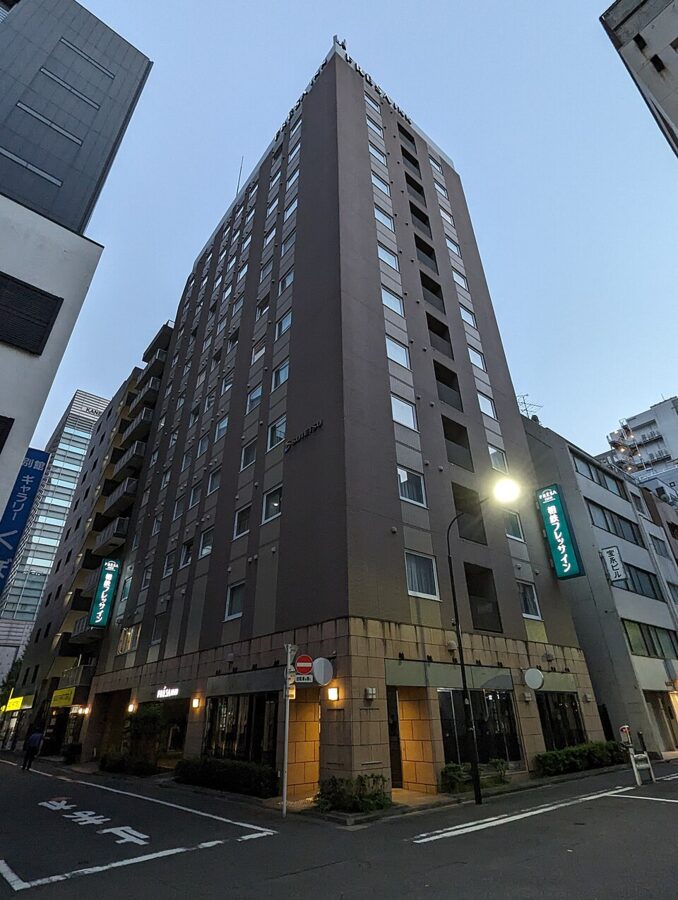
Sotetsu Fresa Inn Ginza 7-chome has 286 rooms, five minutes from Exit A3 of Ginza Station and Exit A1 of Higashi-ginza, and seven from the Ginza Exit of JR Shimbashi. Its single is 11.2–11.7 m² with a 140 cm Simmons bed, the double 11.9 m², the twin 14.8 m² with two 120 cm beds, and the 23.5 m² premium twin takes a third person on an extra bed. Breakfast in the second-floor restaurant is ¥1,530, and the lobby has a coin laundry and a microwave. Sotetsu Fresa Inn Ginza 3-chome is a few blocks away, so check which one you booked.
The membership is the problem with Fresa just now. Sotetsu Hotels Club normally takes up to 15% off and moves check-in to 14:00 and check-out to 12:00, against 15:00 and 11:00 for everyone else. But the member system was suspended for maintenance in a notice dated October 16, 2026, with no restart date posted: no logins, no coupons, no new sign-ups. Until it returns, Fresa is a 15:00-to-11:00 hotel.
Mitsui Garden Hotel (三井ガーデンホテル)
Mitsui Garden is the upper end of the category, run by Mitsui Fudosan’s hotel company, founded in 1981. Tokyo has 13, including the Premier line at Ginza, Nihombashi, Roppongi, Jingugaien and Toyosu. The rooms are bigger and the breakfasts are real restaurants.
Mitsui Garden Hotel Ueno, a minute from Exit 1 of the Ginza and Hibiya lines and two from the Asakusa Exit of JR Ueno, asked ¥20,800 for an 18 m² double for two on January 13, 2027, and ¥20,900 for one. Its 18 m² twin was ¥25,600. Mitsui Garden Hotel Kyobashi had the same 18 m² double at ¥20,820 and a 23.5 m² twin at ¥23,330. Check-in is 15:00 and check-out 11:00.
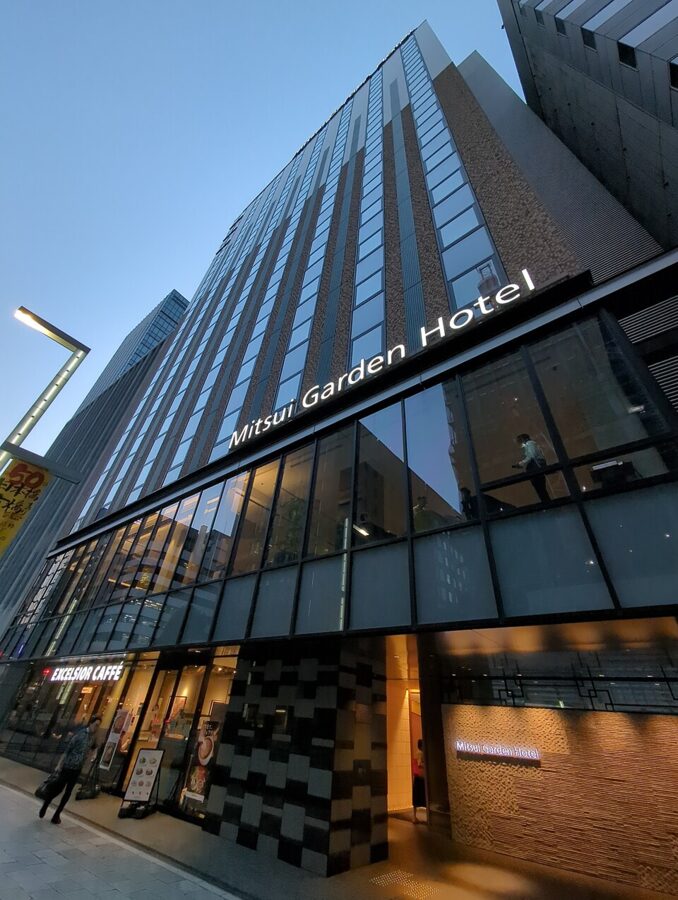
Two people paying ¥20,800 for 18 m² is ¥10,400 each, which is a Toyoko Inn single’s price for a room with space to walk round the bed. That is the case for Mitsui Garden. For one person, it is hard to justify over a Dormy Inn with a bath.

Richmond Hotel (リッチモンドホテル)
Richmond Hotels belongs to Royal Holdings, the group behind the Royal Host family restaurants, and took its name in October 2007 from Richmond Hotel Tokyo Mejiro, which opened in 1988. Tokyo branches include Mejiro, Suidobashi, Tokyo Shiba, Musashino, Kinshicho and the two Premier hotels at Asakusa International and Tokyo Oshiage. It is the chain for couples who want 15 to 18 m² without paying Mitsui Garden prices.
Richmond Hotel Tokyo Suidobashi has an 18 m² double with a 150 cm bed and 24 m² twins with two 100 cm beds, five minutes from Korakuen Station on the Marunouchi and Namboku lines and two from Tokyo Dome City. That makes it the obvious bed for a game or concert at Tokyo Dome. Richmond Hotel Tokyo Mejiro, two minutes from JR Mejiro on the Yamanote Line, has rooms from 15 m², and its doubles have 140 cm beds; breakfast there is ¥1,700, and preschool children eat free.
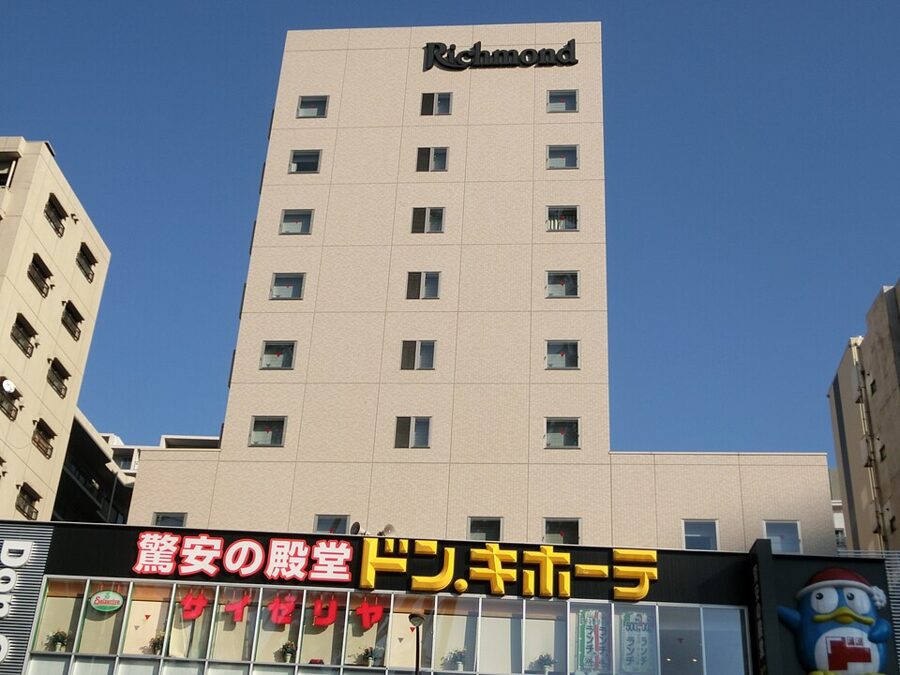
The Richmond Club is free and the most generous of the free programs for short stays. Members get 100 points per ¥1,000 booked on the official site, a flat 300 points a night through any other site, and free late check-out to 12:00, which otherwise costs ¥1,000. Five thousand points become a ¥5,000 voucher. All three Tokyo branches above have coin laundries.

Super Hotel (スーパーホテル)
Super Hotel is an Osaka company with 25 Tokyo branches on its English list, and the one chain here built around sleep and an early start. Breakfast is free at the standard branches, there are eight pillows to choose from at the front desk, and the front desk itself keeps short hours: at Super Hotel Asakusa, 15:00 to 24:00. Arrive after midnight and the booking is treated as canceled, at 100% of the rate.
Super Hotel Asakusa, eight minutes from Asakusa Station and, by its own count, a minute from Senso-ji, had its early-booking plan with breakfast at ¥10,800 for one and ¥13,680 for two on January 13, 2027; that plan needs booking 30 days ahead. Its evening welcome bar, 17:00–21:00, pours soft drinks and alcohol free, and breakfast runs 06:30–08:30 Monday to Saturday. Check-out is 10:00. The hotel cleans multi-night rooms only on request, and every fourth day regardless.

The Premier branches are a different deal. Super Hotel Premier Tokyo Station Yaesu Central, three minutes from the Yaesu Central Exit and a minute from Exit 26 of the Yaesu underground mall, charges ¥2,000 for breakfast and checks out at 11:00; Super Hotel Premier Ikebukuro charges ¥1,500 and has natural hot-spring baths. Preschool children share a bed free at every branch, but the child still counts toward the room’s capacity, so book a room for the full head count.
Hotel MyStays (ホテルマイステイズ)
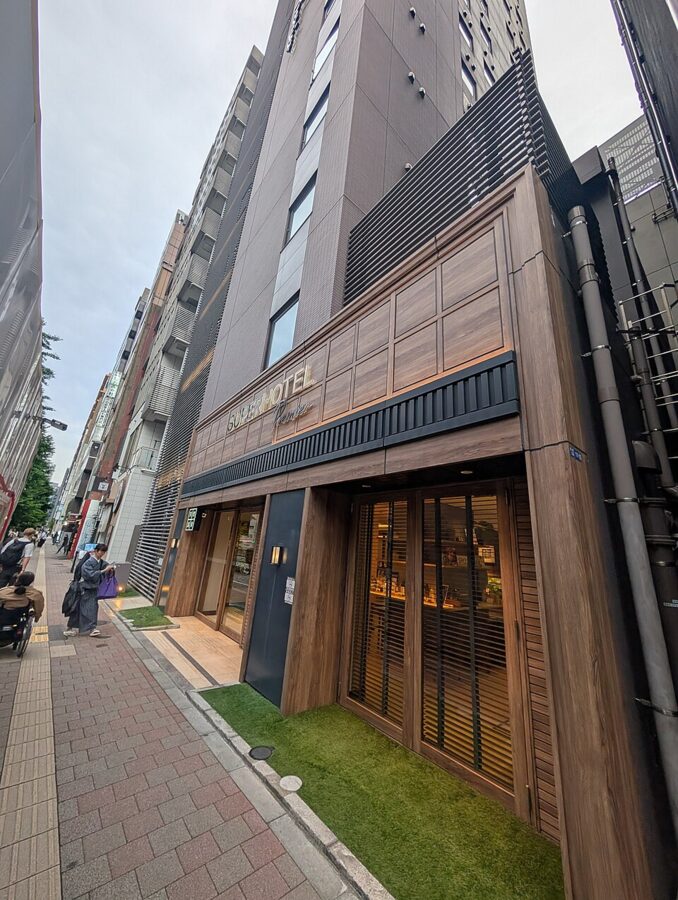
MyStays began in 1999 as a company renting furnished weekly apartments, and it still shows: microwaves in the rooms, some mini kitchens, and paid laundry corners. The operator renamed itself Iconia Hospitality on July 1, 2025. Tokyo has about 20 MyStays hotels, from Nishi-Shinjuku, seven minutes from the West Exit of Shinjuku Station, to Asakusa, Ueno, Kanda, Hamamatsucho, Gotanda and Haneda.
Hotel MyStays Asakusa is four minutes from Kuramae Station on the Toei Oedo Line, in Kuramae, south of the temple district. Its standard rooms are 12 m² with a 120 cm semi-double; the doubles renovated in 2026 are also 12 m² but with a 140 cm bed, and some face the Skytree. Every room has a microwave. Check-in is 15:00 and check-out 11:00.

Vessel Inn (ベッセルイン)
Vessel Hotels is based in Fukuyama, in Hiroshima prefecture, and came to Tokyo in 2011 with Vessel Inn Ueno Iriya Ekimae. Tokyo has three Vessel Inns: Ueno Iriya, Asakusa on the Tsukuba Express, and Takadanobaba, with a direct entrance from Exit 4 of Takadanobaba Station. Its one big idea is the most useful family rule in the category: children aged 18 and under stay free when they share a room and bed with their parents or grandparents.
Breakfast is extra for children from age 6. At Ueno Iriya, two minutes from Exits 3 and 4 of Iriya Station on the Hibiya Line, a child’s breakfast is ¥800 from 6 to 12 and ¥1,500 from 13, and free at 5 and under.
The 13 m² single there has a double-size bed and is sold for one or two. On January 13, 2027 it started at ¥9,072 on a members-only sale, with a five-room first-come plan at ¥8,000 including breakfast; the 19 m² twin started at ¥12,464 for one. Check-in is 14:00, an hour earlier than most.

Daiwa Roynet (ダイワロイネットホテル)
Daiwa Roynet is run by the Daiwa House group, and its selling point is floor space. Tokyo branches are Ginza Premier, Nishi-Shinjuku Premier, Tokyo Kyobashi, Ikebukuro Higashiguchi, Shinbashi, Tokyo Osaki and Akabane. At Daiwa Roynet Hotel Tokyo Kyobashi every room is 21 m² or larger, the double has a 154 cm bed, and there are 27 m² rooms for three and 52 m² rooms for four.
Ginza Premier, 20 seconds from Exit 10 of Ginza-itchome Station on the Yurakucho Line, runs from 18 to 23 m². Nishi-Shinjuku Premier, five minutes from Exit 2 of Nishi-shinjuku Station on the Marunouchi Line, starts at 21 m². Ikebukuro Higashiguchi starts at 15 m², and Shinbashi has 13 m² compact rooms alongside 23 and 24 m² ones, so the brand alone does not guarantee size. Outside the Premier hotels, toiletries are at a lobby bar, and the branches have coin laundries.
Membership and booking direct
Every chain here has a free or cheap membership, and every one gives its best rate on its own site. Member discounts run from 5% to 15% on the chains that give one, before points. Booking through a platform also usually means no member perks: Toyoko Inn applies its Club Card discount only to stays booked on its own site or app, and APA pays 1% in points on outside bookings against up to 12% on its own.
| Chain | Program and cost | What it gives, as posted |
|---|---|---|
| Toyoko Inn | Club Card, ¥1,500 once (¥1,000 for students), no annual fee | 5% off; one free single night per 10 stays; booking 12 months ahead instead of 9 |
| APA Hotel | APA Hotel member, free | Points up to 12% on official-site bookings (15% with the APA card); 5,000 points cash back |
| Dormy Inn | Dormy’s, free | 1% of the pre-tax booking in points, through the app; the lowest rate on the official site |
| Sotetsu Fresa Inn | Sotetsu Hotels Club, free | Up to 15% off, 14:00 check-in, 12:00 check-out; suspended since October 16, 2026 |
| Mitsui Garden | MGH Rewards Club, free | 5% off every stay plus 5% back in points (10% at higher levels); breakfast coupons |
| Richmond | Richmond Club, free | 100 points per ¥1,000 direct, 300 points a night elsewhere; free check-out to 12:00 |
| Super Hotel | Smart Membership | 500 points a night on official bookings, whatever the rate; cash back in ¥1,000 units |
| Hotel MyStays | GoTo Pass, free | Best-rate guarantee; 5% off hotel restaurants and shops |
| Vessel | Vessel Club, free | Member prices; 7 to 10 points per ¥100 before tax |
| Daiwa Roynet | Members program, free | Member prices; points by rank; one free hour of late check-out at upper ranks |
The Toyoko Inn Club Card is the only one that costs money, and it pays for itself fast: 5% off from the first night, plus ¥200 off for booking on the official site and another ¥200 for paying online, so a ¥9,800 single becomes about ¥8,900. APA’s points work out as cash back once they reach 5,000. The Super Hotel scheme gives a flat 500 points a night, which on a ¥10,800 room is a better return than a percentage. Mitsui Garden’s MGH Rewards Club takes 5% off at once, and on January 13 that made the Ueno double ¥19,760.
Two programs changed in 2026. Dormy’s replaced Dormy Inn’s d Point earning on January 13, 2026. Sotetsu ended its ¥500-a-night cash back with stays on March 31, 2026, then suspended the whole club in October. MyStays’ GoTo Pass and Daiwa Roynet’s members program are free sign-ups worth a minute.
Where the Tokyo branches cluster
The chains go where the commuters go: around the big Yamanote Line stations and along the subway lines into the office districts. A business hotel is only as good as its walk from the gates, and every room page posts that walk in minutes and names the exit. The rail side, including which lines connect without leaving the gates, is in getting around Tokyo.
Shinjuku
Shinjuku‘s business hotels are mostly on the Kabukicho side of the station, east and north, where the rooms are cheap and the walk home passes the bars. APA Hotel Shinjuku Kabukicho Tower and Toyoko Inn Tokyo Shinjuku Kabukicho are both there, and the Toyoko Inn is closer to Higashi-shinjuku on the Oedo Line than to JR Shinjuku, 15 minutes from its East Exit. Sotetsu Fresa Inn Higashi-shinjuku Ekimae sits right beside Exit B2 of the same station. On the quieter west side, Hotel MyStays Nishi-Shinjuku and Daiwa Roynet Hotel Nishi-Shinjuku Premier are the chain options.

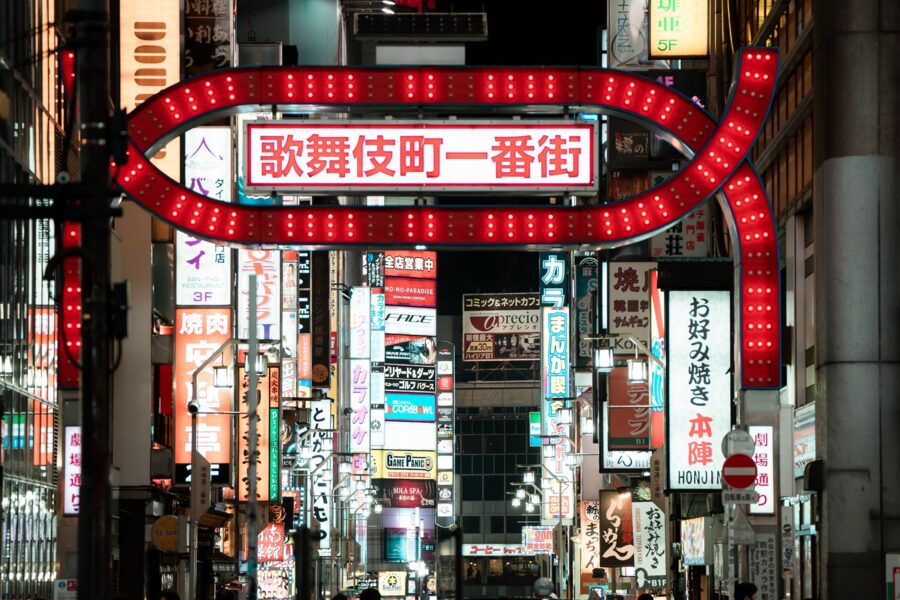
What Kabukicho is like after midnight, touts included, is covered in the Kabukicho guide, and the full Shinjuku hotel choice, east side against west, is in where to stay in Shinjuku. For a light sleeper, I would take a west-side room or a different district.
Shinagawa
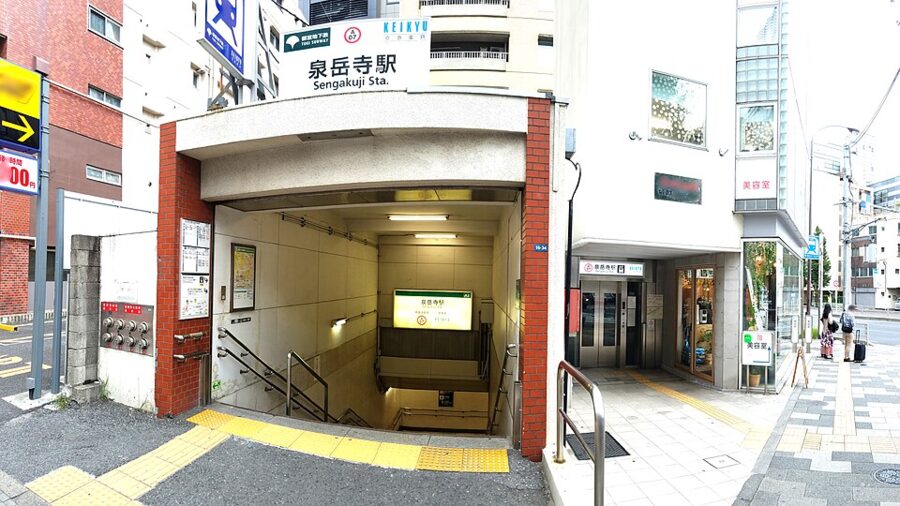
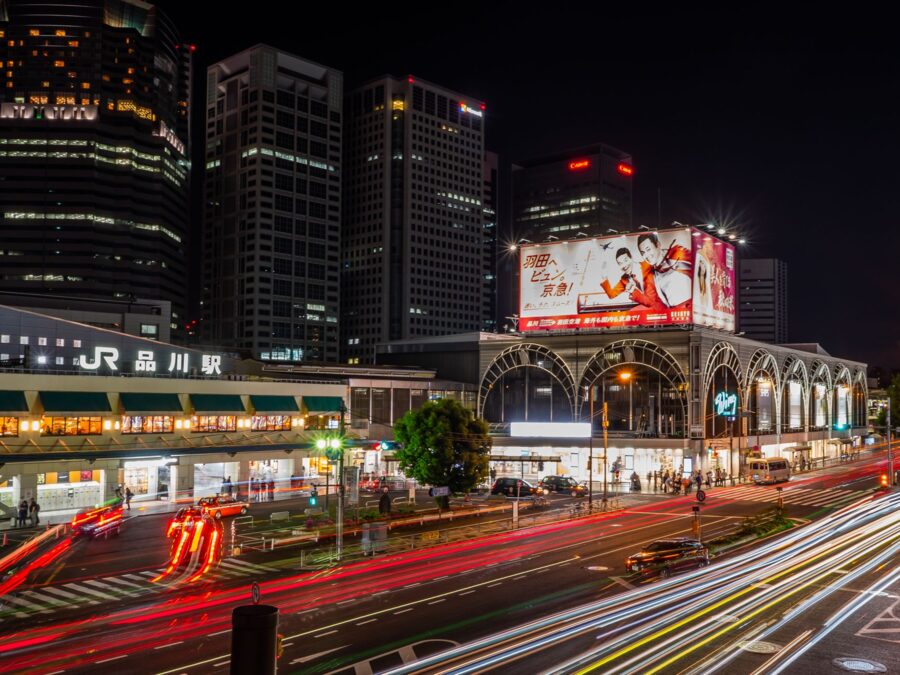
Shinagawa is the business-hotel base for an early flight from Haneda or a Shinkansen to Kyoto. APA Hotel Shinagawa Sengakuji Ekimae is a stop north, by Exit A2 of Sengakuji, on the line that runs through to Haneda Airport, and five minutes from the north gate of Takanawa Gateway. Toyoko Inn Tokyo Shinagawa-eki Takanawa-guchi is two minutes from the Keikyu and Shinkansen platforms, and showed no rooms for January 13. The Shinkansen run itself is in Tokyo to Kyoto.

Tokyo Station and Kyobashi
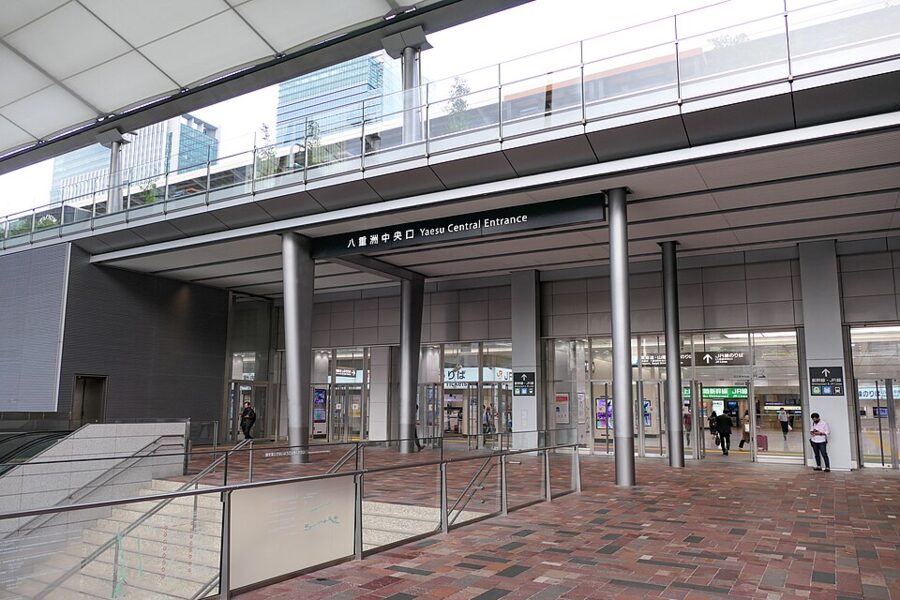
The chain rooms around Tokyo Station are on the Yaesu side and south into Kyobashi, not on the Marunouchi side, which belongs to the luxury hotels. Super Hotel Premier Tokyo Station Yaesu Central is three minutes from the Yaesu Central Exit; Toyoko Inn Tokyo-eki Yaesu Kita-guchi is three minutes from the Yaesu North Gate and from Exit A7 of Nihombashi Station. In Kyobashi, Mitsui Garden, Sotetsu Fresa Inn and Daiwa Roynet all have branches within a few blocks of one another, and Ginza is a short walk south.

Ueno
Ueno is the best-value base on the Yamanote Line, and the one with the airport train: the Keisei Skyliner to Narita Airport leaves from Keisei Ueno. Dormy Inn Ueno Okachimachi is a minute from Ameyoko market, APA Hotel Ueno Ekimae a minute from Exit 3 of the subway, and Mitsui Garden Hotel Ueno two minutes from JR’s Asakusa Exit. Vessel Inn Ueno Iriya Ekimae is one subway stop north on the Hibiya Line.
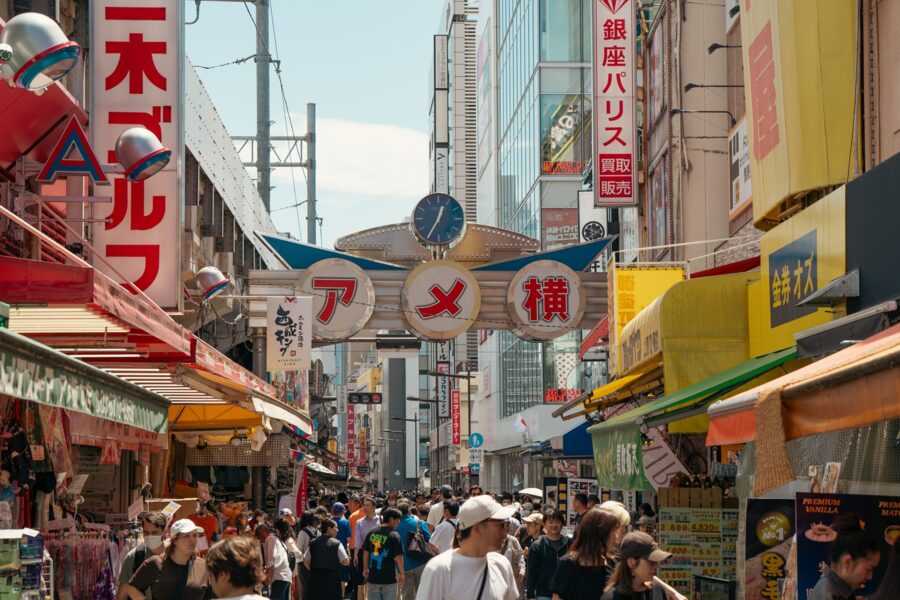
Asakusa
Business hotels in Asakusa are mostly a few minutes south of the temple, around Tawaramachi and Kuramae, where the Ginza, Asakusa and Oedo lines meet. Super Hotel Asakusa is the exception, a minute from the back of Senso-ji. Toyoko Inn Tokyo Asakusa Kuramae No.2 is a minute from Exit A2 of Kuramae; Hotel MyStays Asakusa is four minutes from the Oedo Line platforms there; Toyoko Inn Tokyo Ueno Tawaramachi-eki is three minutes from Exit 2 of Tawaramachi on the Ginza Line.
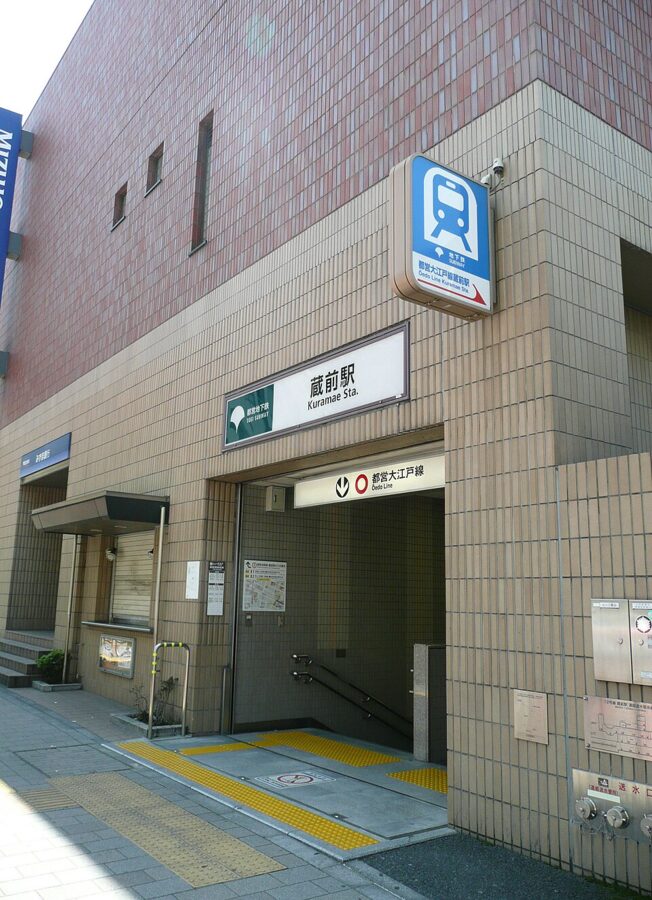

Ikebukuro
Ikebukuro has the most chains for the money on the north of the loop. Dormy Inn Ikebukuro has natural hot-spring baths, as does Super Hotel Premier Ikebukuro. Toyoko Inn has two buildings four minutes from Exit 20a on the north side, No.1 and No.2, and No.2 was one of the cheapest Toyoko Inns in the 23 wards on January 13, at ¥8,500. Daiwa Roynet Hotel Ikebukuro Higashiguchi is on the east side, with rooms from 15 m².
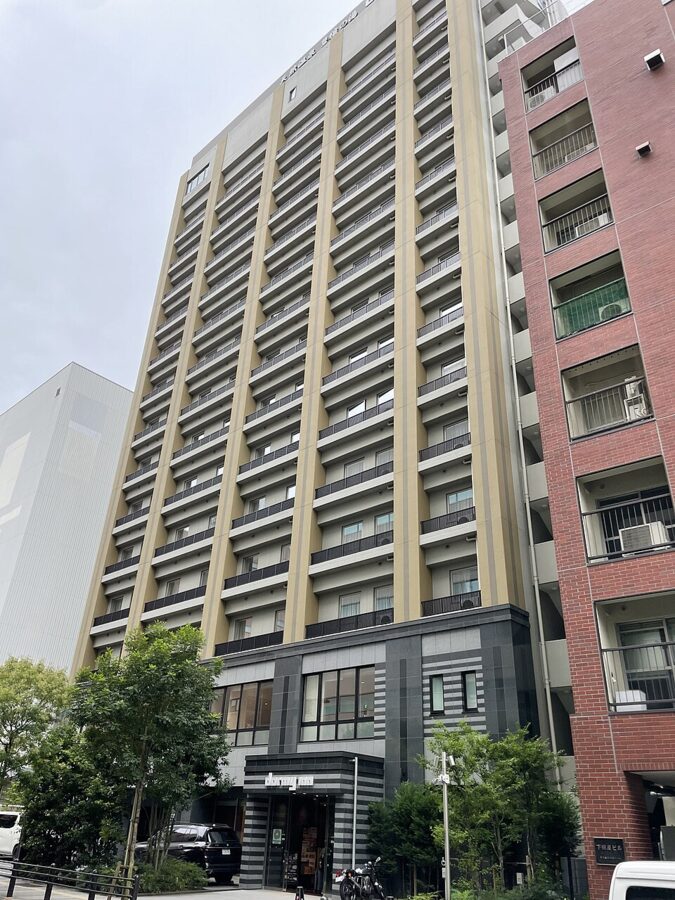

Akihabara is the other cluster worth a look, with Dormy Inn Akihabara and Toyoko Inn’s Kanda Akihabara branch; what is there by day is in the Akihabara guide.
Two people, families and big luggage
Two people
Two adults in one business-hotel bed works for a night or two if the bed is 140 cm and nobody is tall. A 120 cm semi-double for two is a bad night. The safe rule is to read the bed width on the room page, which every chain here posts, and to treat anything under 140 cm as a one-person bed. Twins cost a few thousand yen more and are 13 to 19 m²: Toyoko Inn’s economy twin at Shinagawa is 13 m², APA’s at Kabukicho 17 m², Vessel’s at Ueno Iriya 19 m².
Price per person changes the picture for couples. The cheapest Toyoko Inn room for two at Kabukicho was ¥12,800 on January 13, ¥6,400 each; a Mitsui Garden double at ¥20,800 is ¥10,400 each for 50% more floor. At Dormy Inn, which prices per person, look at the total before comparing.
Children
The rules for children sharing a bed differ by chain, and they are the single biggest saving for families:
| Chain | Children free in a parent’s bed |
|---|---|
| Vessel | Aged 18 and under, with parents or grandparents; breakfast extra from age 6 |
| Toyoko Inn | Elementary school age and younger, breakfast included |
| APA Hotel | Preschool children, one per bed |
| Super Hotel | Preschool children, counted in the room’s capacity |
| Dormy Inn | One child per bed; a child who needs bedding pays the adult rate |
For a family of four, the bigger rooms are rare and worth booking early. Sotetsu Fresa Inn Ginza 7-chome’s 23.5 m² premium twin takes three with an extra bed; Daiwa Roynet Tokyo Kyobashi has 27 m² rooms for three and 52 m² rooms for four; Super Hotel Asakusa has connecting rooms of bunk-style twins for two to six, at ¥25,640 for two adults with breakfast on January 13.
Laundry
Laundry is where business hotels beat bigger hotels for a long trip. Dormy Inn’s washers are free and dose their own detergent; Toyoko Inn, Richmond, Daiwa Roynet, Sotetsu Fresa Inn and MyStays have coin or paid laundries; APA has coin laundries at some branches and a paid cleaning service.
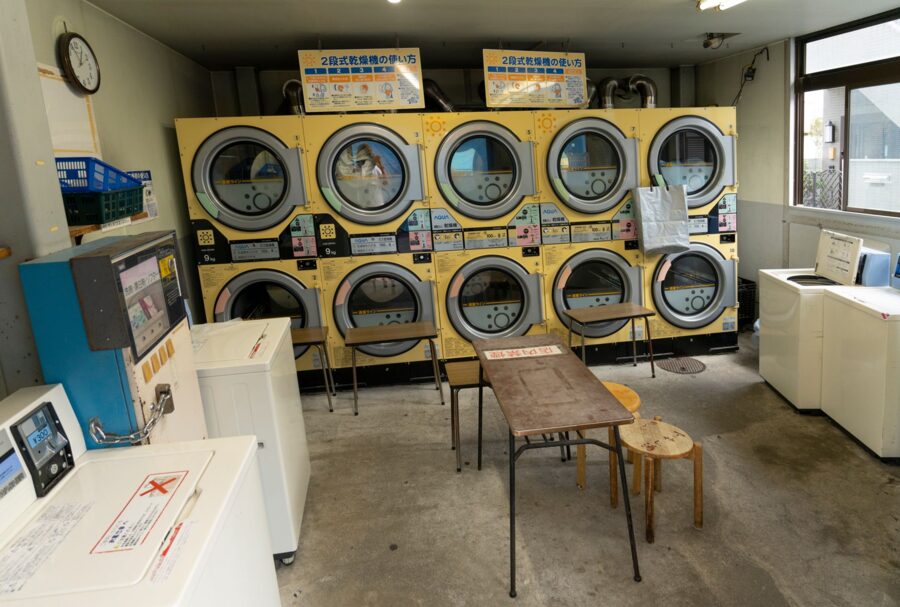
Suitcases
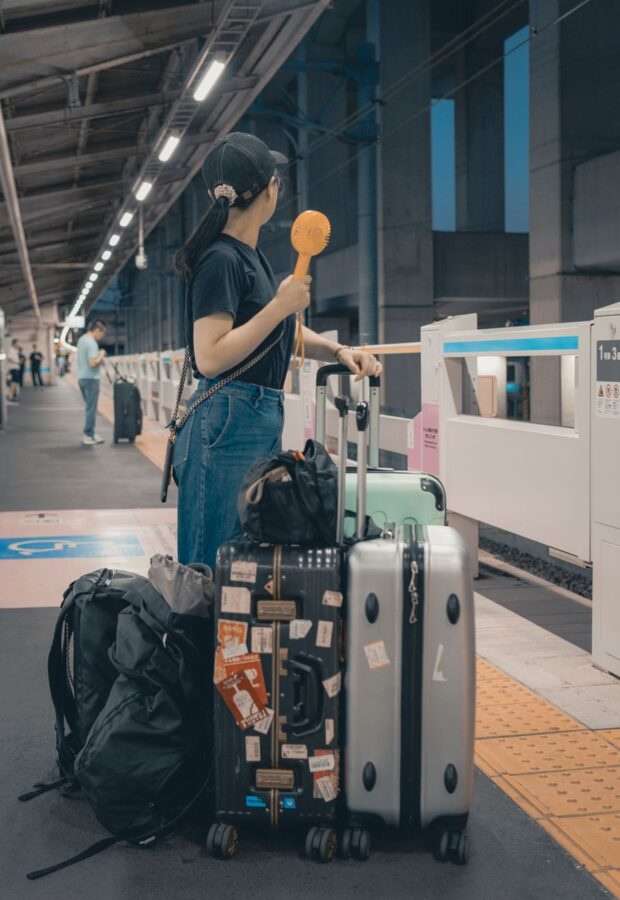
An open 28-inch suitcase takes most of the free floor in an 11 m² room. APA’s newer rooms have tall bed frames with space underneath for luggage, and Toyoko Inn’s beds are designed to take a trunk below. The bigger fix is not to bring the suitcase into the room at all on the first and last day.
Front desks hold bags before check-in and after check-out on the day; APA’s Kabukicho Tower, for one, takes them at the desk but not fragile, valuable or refrigerated items. Toyoko Inn has free self-service lockers at some branches, usable 06:00–24:00 from check-in date to check-out date. Many of its Tokyo branches also take same-day luggage delivery from the airport through the Airporter service: drop the bag at the arrivals counter and pick it up at the hotel.
Tax, cancellation and the bill
Prices on Japanese chain sites include the 10% consumption tax. They do not include the Tokyo accommodation tax, which is per person per night and paid at the hotel: nothing under ¥10,000, ¥100 from ¥10,000 to ¥14,999 and ¥200 at ¥15,000 and over. Many business-hotel stays for two pay nothing, because the rate is split between two people: a ¥12,800 room for two is ¥6,400 each.
The tax changes on April 1, 2027. Under the revised Tokyo accommodation tax it becomes 3% of the rate per person, and nothing below ¥13,000 per person. That moves a ¥10,800 single from ¥100 to nothing, and a ¥20,800 Mitsui Garden double for one from ¥200 to ¥624. For two people sharing that double, ¥10,400 each, it falls from ¥100 a person to nothing.
Cancellation is the other line to read. Toyoko Inn’s rule, free until 12:00 on the day of arrival, is the most forgiving here. Everyone else varies by plan, and the cheapest plans are usually prepaid and non-refundable. Super Hotel cancels you at full price if you have not checked in by midnight, so it is the wrong chain for a late flight.
That leaves the 140 cm bed in an 11 m² room. For one person it is a bargain at ¥9,000 to ¥12,000 a night with a bath or breakfast thrown in; for two it is the room to book for one night, and the reason to pay for 18 m² from the second.