

A bowl of ramen at Ichiran’s Kabukicho branch costs ¥1,180 at any hour of the day or night, a seat under the Godzilla head at TOHO Cinemas Shinjuku costs ¥2,200, and a drink in a bar that a stranger walks you to costs whatever that bar decides. That is most of what you need to know about Kabukicho (歌舞伎町), the grid of streets north of Shinjuku Station’s East Exit. The district is open all night and fine to walk through, and the trouble is almost always behind a door that someone else chose for you.

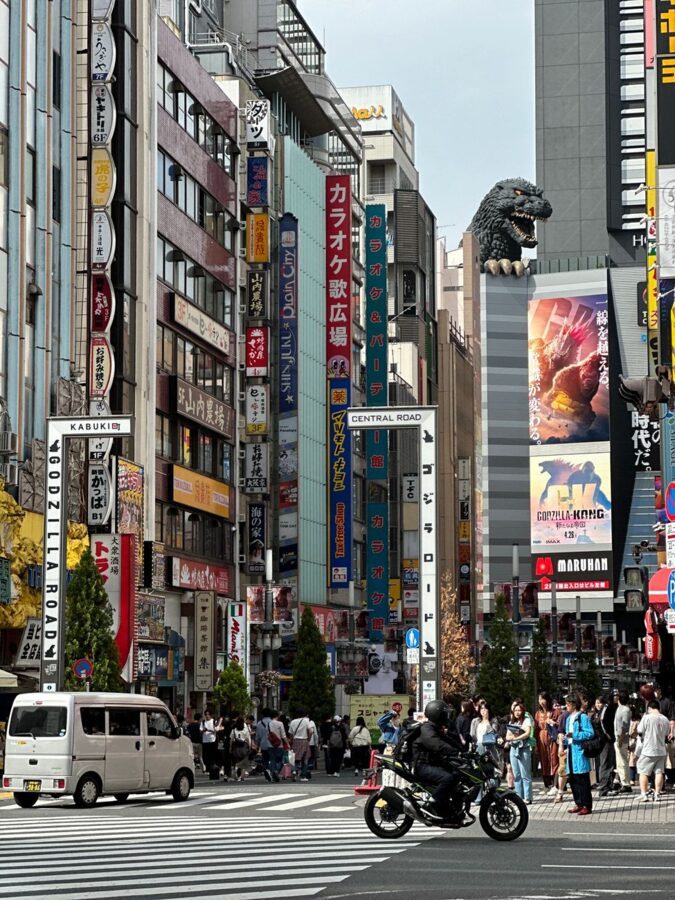
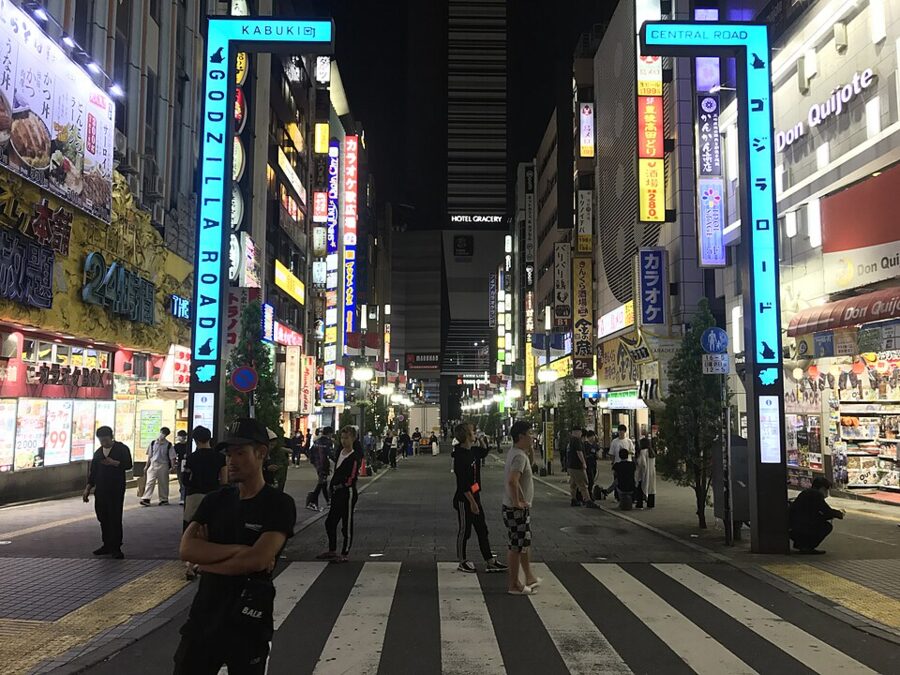
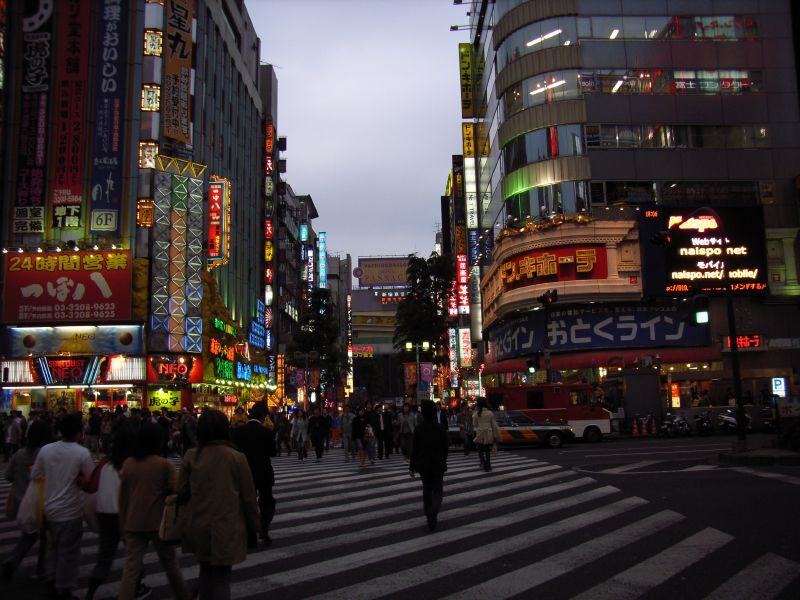
Go for the food and the hours. The food hall on the second floor of Tokyu Kabukicho Tower opens at 06:00 and closes at 05:00 the next morning, Ichiran never closes, the Karaoke-kan branches here sing until 06:00, and the GiGO game center runs until 01:00. Add two cinemas at opposite ends of the price scale, a club and a concert hall under the tower, and the Godzilla head that has looked down Central Road since 2015.

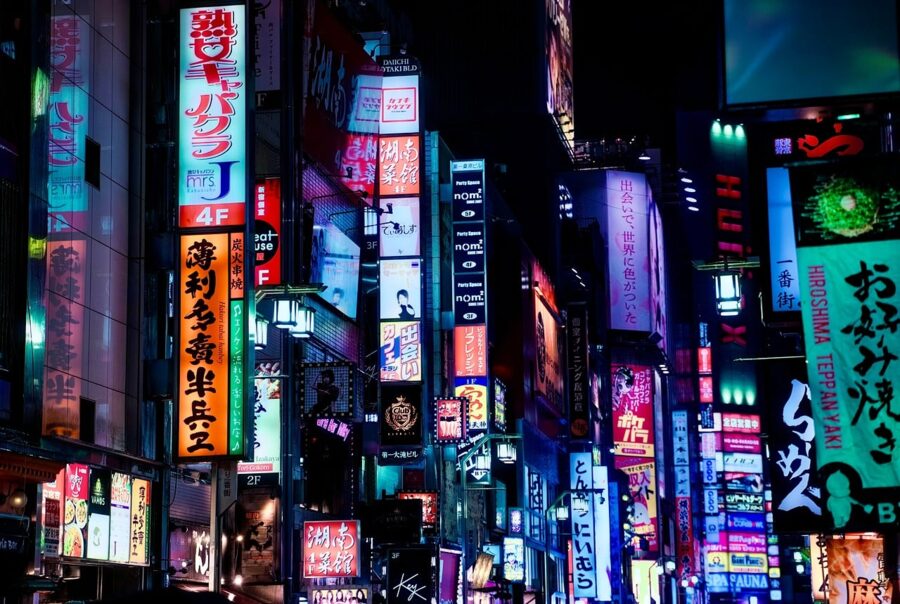
The one rule is the one that the Metropolitan Police Department, the Shinjuku police station and Shinjuku City all repeat: never follow a tout. Touting on the street is banned in Shinjuku City, so anyone who stops you with a menu, a “no cover charge” line or a cheap all-you-can-drink deal is already breaking the rules, and the bars at the end of that walk are the ones the police keep warning about. Choose the door yourself, from a sign with a price on it.
A normal night costs what you can add up in advance. Ramen and a film come to ¥3,380 a head; karaoke is priced by the half hour, with each branch’s rates on the chain’s own store pages; a game center costs whatever you feed it. Nothing in that list involves a bill you have not seen.
Plan the end first. On JR East’s Shinjuku timetable for late 2026, the last JR Yamanote Line trains leave Shinjuku at 00:41 toward Shibuya (it terminates at Osaki) and 00:44 toward Ikebukuro (it terminates there), and the station is a seven-minute walk from the tower. After that it is a taxi from Yasukuni-dori, a room nearby, or the first train.
Finding your way in
Kabukicho is the block bounded by Yasukuni-dori to the south, Meiji-dori to the east, Shokuan-dori to the north and the JR tracks to the west. It is split in two by Hanamichi-dori, the street that runs east to west just north of the tower and the Toho Building. South of it is Kabukicho 1-chome, with the cinemas, the tower, the chain restaurants and back streets packed with bars and sex shops; north of it is 2-chome, with many of the host clubs near Kuyakusho-dori, love hotels to the east, and offices and apartments along Shokuan-dori, where Kabukicho runs into the Korean restaurants of Okubo.
From JR Shinjuku Station, take the East Exit, walk north to Yasukuni-dori and cross at the Kabukicho intersection; the guide to Shinjuku Station covers which exit is which and how to reach it from the platforms. Seibu-Shinjuku Station, the terminus of the Seibu Shinjuku Line, opens straight onto the west side of the district, a minute from the tower. The Toei Oedo Line’s Shinjuku-nishiguchi Station is about six minutes away, and Higashi-Shinjuku has exits inside the district’s eastern edge.
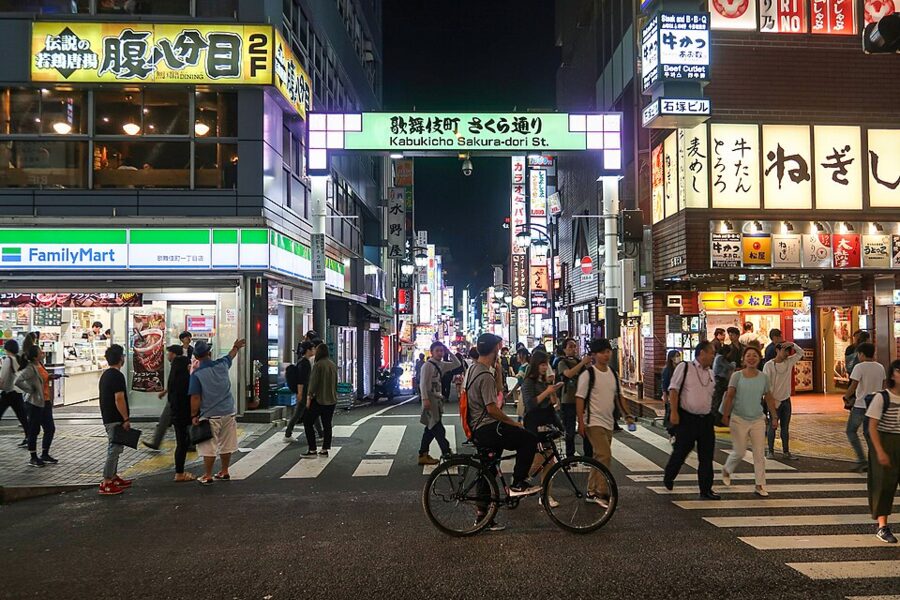

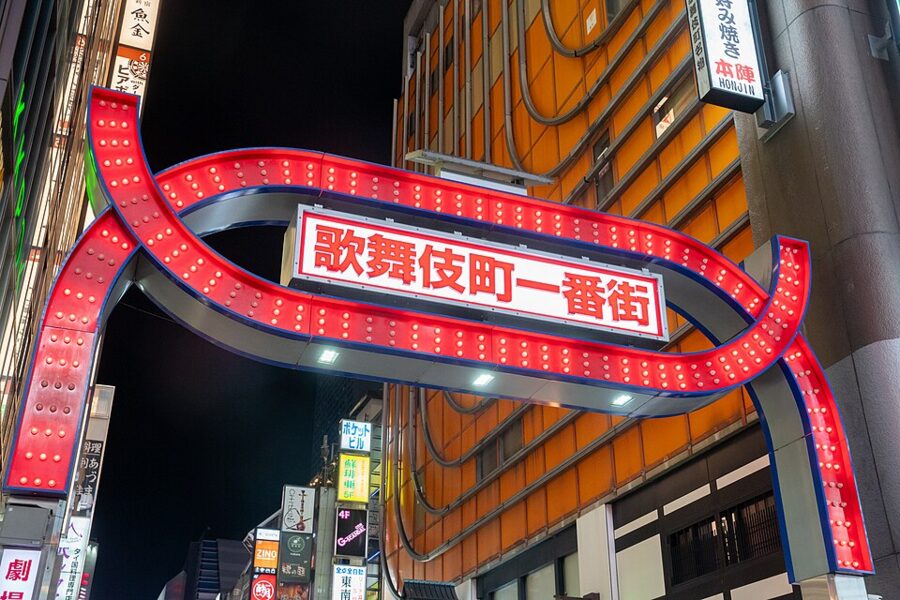
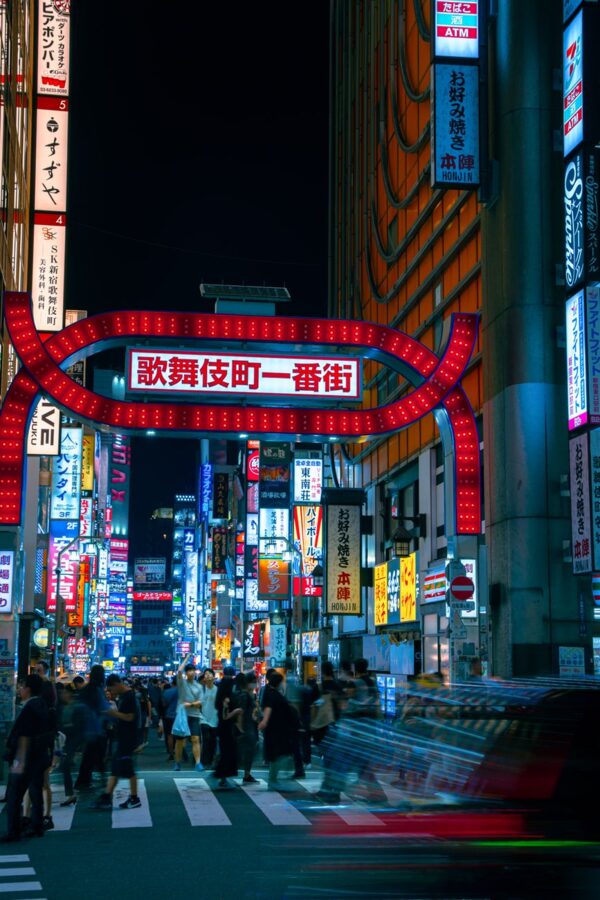
A handful of streets do most of the work. Kabukicho Ichiban-gai, under the red arch, is also called Theater Street (劇場通り); Central Road runs from Yasukuni-dori to the Godzilla head; Sakura-dori and Seibu Shinjuku-dori are the other main streets; and Kuyakusho-dori, on the east side, is named for the ward office. Shinjuku City’s own office stands on it, so the district the ward has spent twenty years trying to clean up is also its own address.
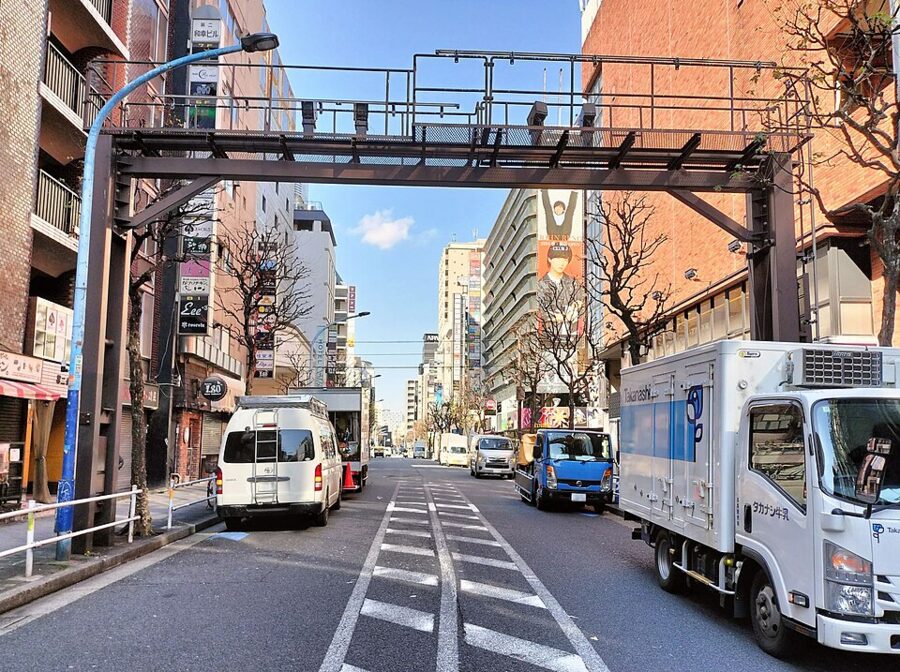
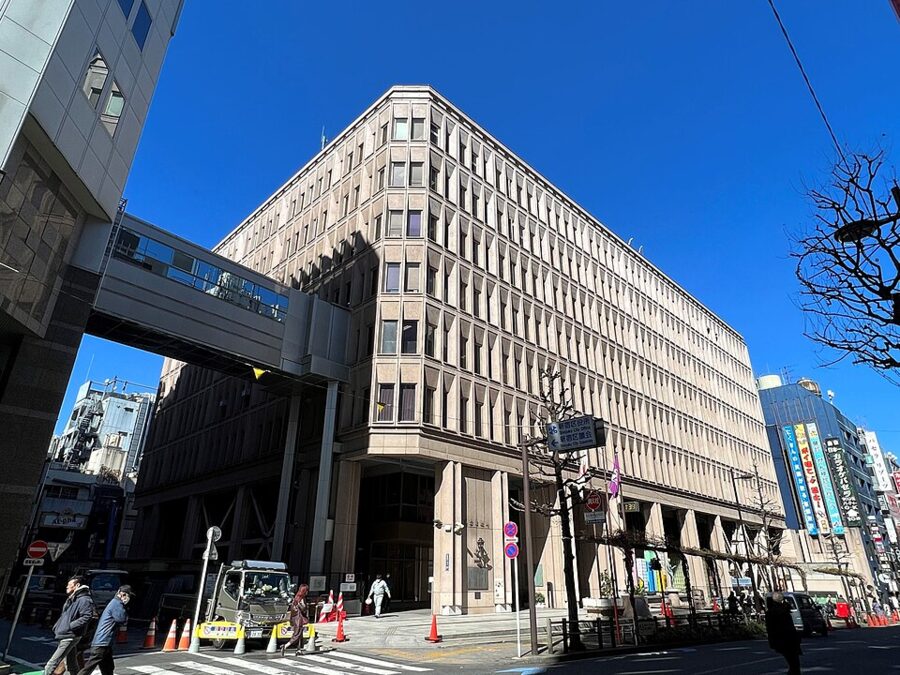
The Shinjuku Toho Building and the Godzilla head
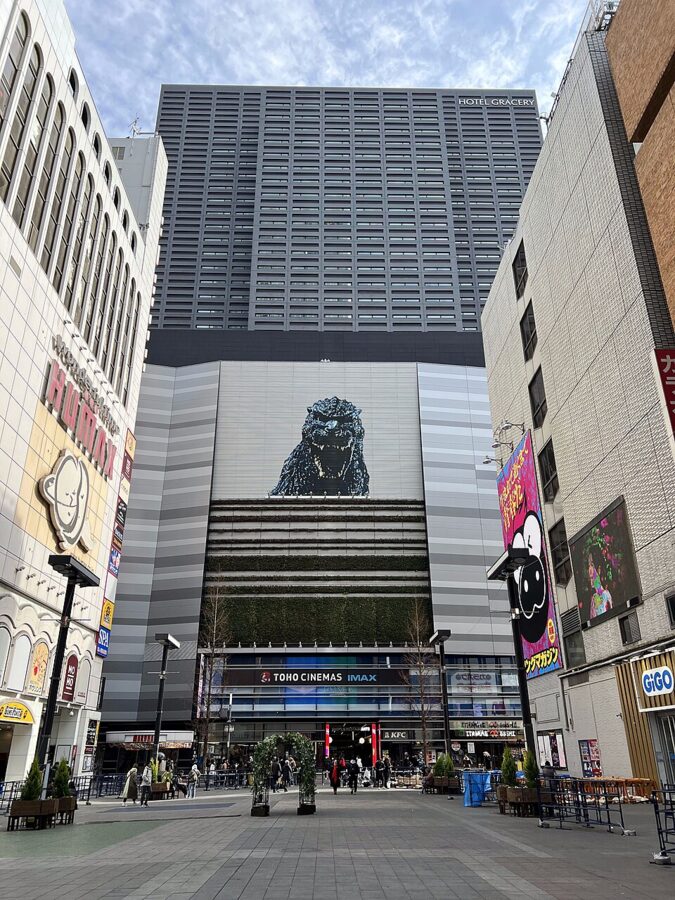
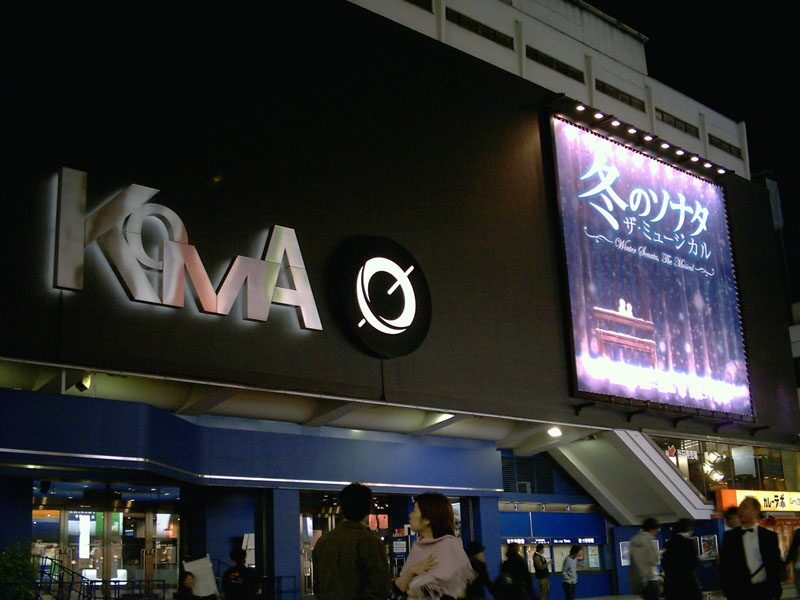
The Shinjuku Toho Building opened on April 17, 2015, on the site of the Shinjuku Koma Theater and the Shinjuku Toho Kaikan next to it. It is 30 floors of film company property: shops and restaurants on the first two floors, TOHO Cinemas Shinjuku on floors 3 to 6, and Hotel Gracery Shinjuku from the eighth floor up. The Godzilla head, about 12 meters tall, sits on the eighth-floor terrace beside the hotel lobby, and in 2015 the ward gave Godzilla a special resident certificate; it has served as a Shinjuku tourism ambassador since.
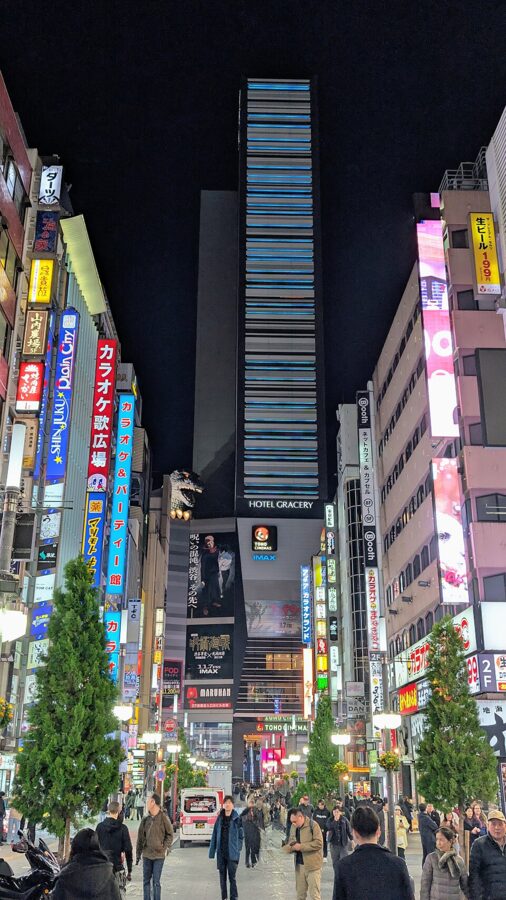

You cannot walk out onto the terrace. Hotel Gracery closed the Godzilla terrace to everyone on November 6, 2023, “for the time being”, along with the outdoor seats of its lounge, and its own answer to the question of seeing the head says the terrace is still shut. The only way closer than the street is through the hotel: entry to the eighth floor to see the head is limited to staying guests and customers of the GRACERY LOUNGE.
The GRACERY LOUNGE is open 09:30–22:00 (food until 21:00, drinks until 21:30), takes no cash, and looks at the head through the window. A Godzilla latte costs ¥1,870 and the Godzilla-versus-Mothra pancake ¥3,300, tax and service included, at the prices the Shinjuku Convention & Visitors Bureau listed in April 2026. The lobby on the same floor has a Godzilla diorama that changes twice a year. If you only want the photo, Central Road is free and the angle is better.
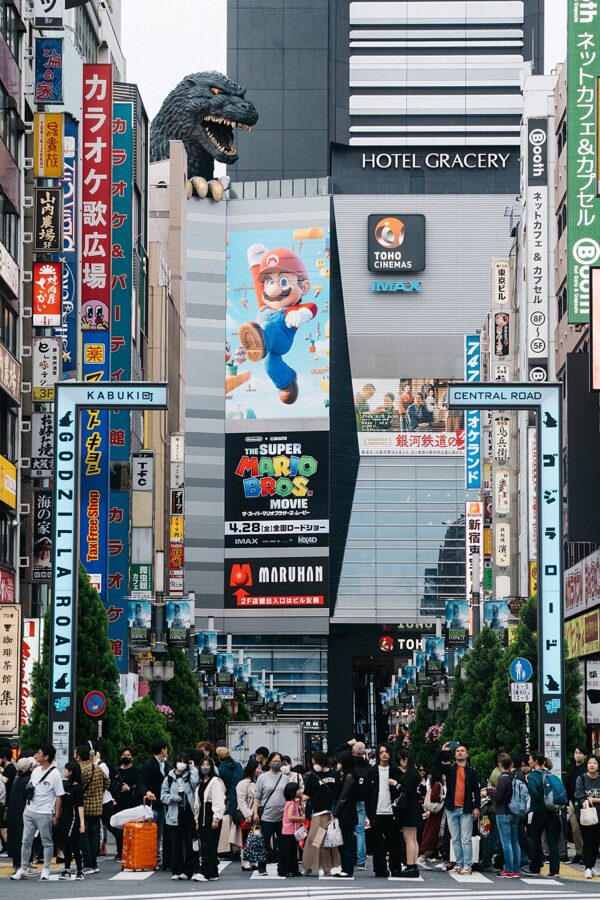

TOHO Cinemas Shinjuku is the biggest multiplex in Shinjuku by screens and seats, with 12 screens and 2,302 seats, and it reopened on February 25, 2026, after a refit that added self-order counters and a refillable drink station. The late-2026 prices are ¥2,200 for adults, ¥1,400 every Wednesday and on the first of each month, and ¥1,400 for anyone 60 or over. IMAX with laser adds ¥700, and the electric recliners called Premier Luxury Seats add ¥3,200.
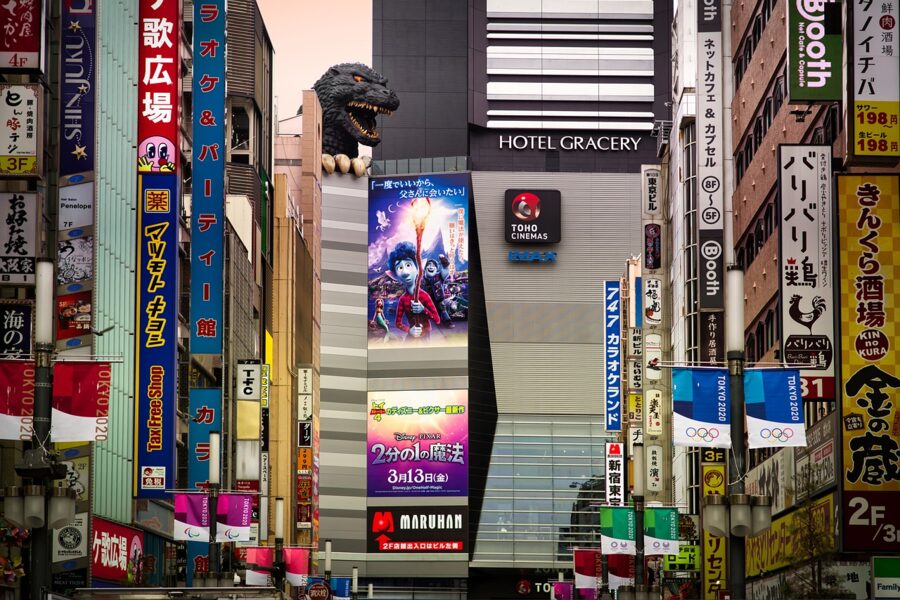
Tokyu Kabukicho Tower, floor by floor
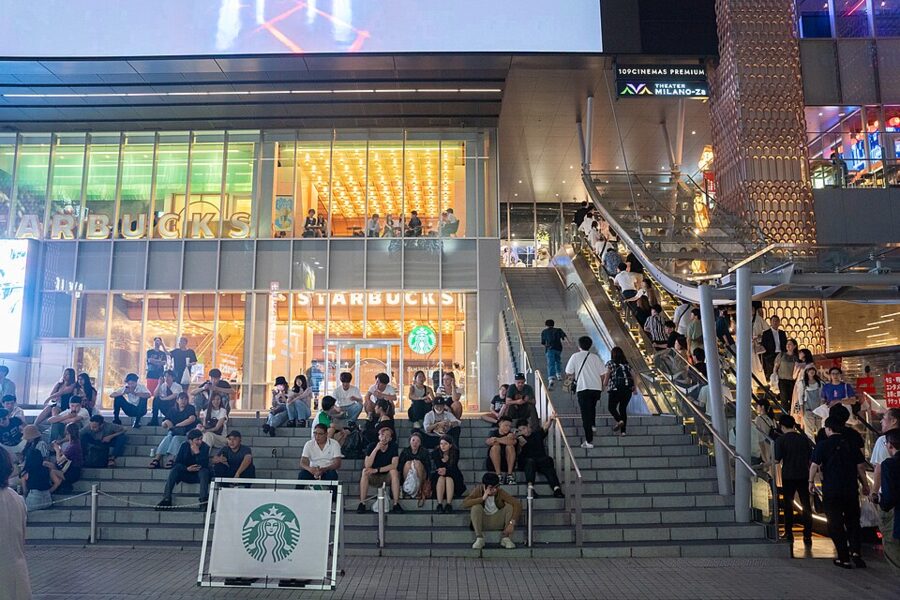
Tokyu Kabukicho Tower opened on April 14, 2023 (its two hotels followed on May 19), on the site of the Shinjuku Tokyu Milano cinema complex, which had closed on December 31, 2014. It is about 225 meters tall, with 48 floors above ground and five below, and it has no offices or apartments: everything in it is a hotel, a stage, a screen or a place to eat. The facade is meant to look like a fountain, a nod to the spring of the old Kani River that is said to have risen near the plaza and to the district’s guardian goddess, Benzaiten.
The tower’s floor guide lists these hours for late 2026:
| Floor | What is there | Hours |
|---|---|---|
| B1–B4 | Zepp Shinjuku (TOKYO), a concert hall for up to 1,500 standing, and ZEROTOKYO, a nightclub on three floors | By show or event |
| 1F | Starbucks | 07:00–22:00 |
| 1F | SHOGUN BURGER (wagyu burgers) | 11:00–23:00, last order 22:30 |
| 1F | Tourist information center | 10:00–19:00 |
| 1F | tkts ticket counter | 12:00–14:00 and 15:00–19:00 |
| 2F | Shinjuku Kabuki Hall (food hall) | 06:00–05:00 the next morning |
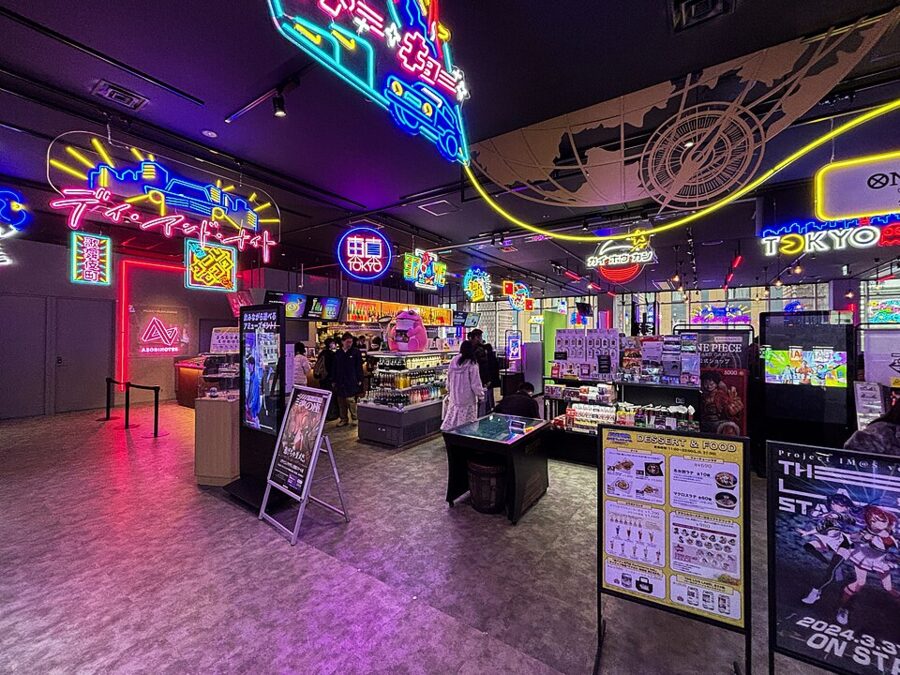
| 3F | namco TOKYO (games and a cafe-bar) | Monday–Thursday 11:00–23:00; Friday–Sunday 11:00–01:00 |
| 5F | prus sauna | 24 hours |
| 6F–8F | THEATER MILANO-Za, about 900 seats | By show |
| 9F–10F | 109 Cinemas Premium Shinjuku | By screening |
| 17F | JAM17 Dining & Bar; JAM17 Terrace | Dinner to 22:00; terrace 17:00–02:00 |
| 18F, 20F–38F | Hotel Groove Shinjuku | Hotel |
| 18F, 39F–47F | BELLUSTAR TOKYO, including Bar Bellustar | Bar 17:00–24:00 on weekdays, from 13:30 at weekends and on holidays |

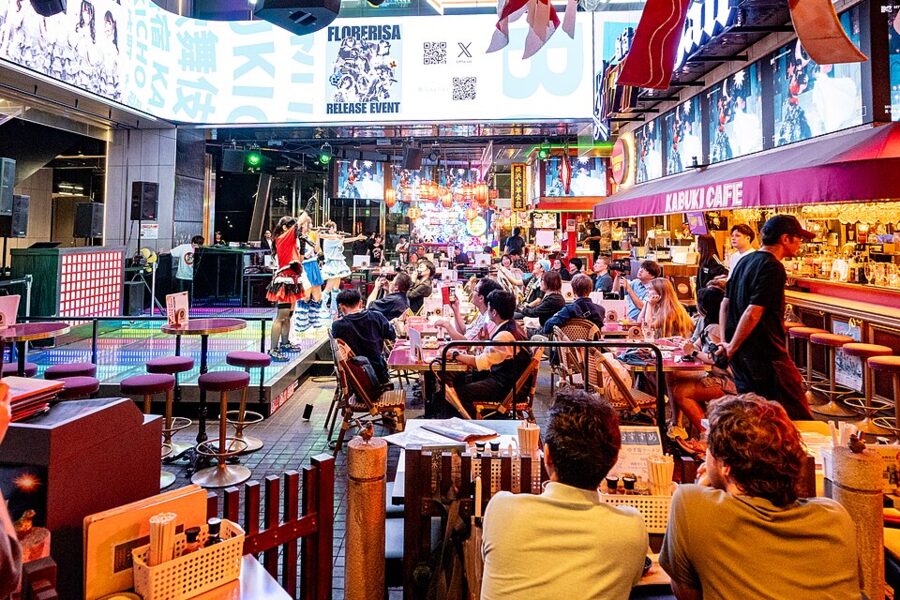
Shinjuku Kabuki Hall, the second-floor food hall, is the part to use. It covers about 1,000 square meters around a festival theme, with music, video and a small stage, and it comes from the company behind the Ebisu and Shibuya yokocho food alleys. Counters serve dishes from regions of Japan and from Korea, and you eat at shared tables. It is loud, and at 03:00 it is still serving.
That floor had one false start. When the tower opened, its second-floor toilets were gender-neutral; after complaints that they felt unsafe, the operator partitioned them into separate men’s and women’s toilets, which opened on August 4, 2023.

ZEROTOKYO is the club, and its visitor FAQ sets the rules. Club nights are for 20 and over, with photo ID checked at the door (a passport works); there is no dress code as such, but staff can turn away tank tops, sandals and flip-flops; cameras go in a coin locker; and the club is cashless except for the lockers. A techno night there on May 23, 2026, cost ¥4,000 at the door and ¥3,000 for an advance fast-pass ticket.
Zepp Shinjuku takes up to 1,500 standing for concerts, and THEATER MILANO-Za, on the sixth to eighth floors, keeps the name of the Milano-za cinema that stood here for 58 years.
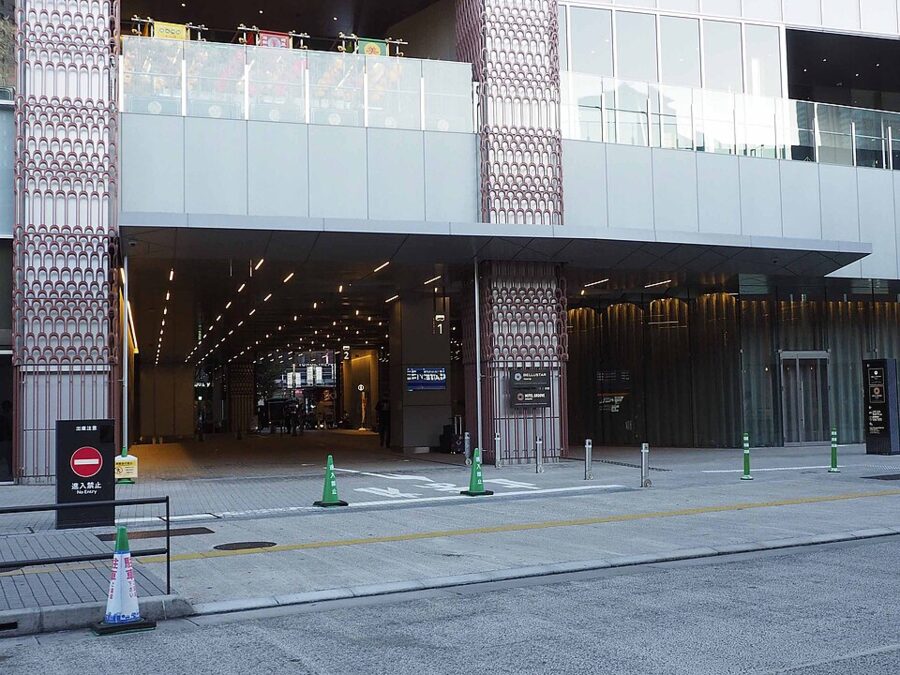
The tower’s two hotels sit above all this. Hotel Groove Shinjuku takes floors 20 to 38, and BELLUSTAR TOKYO, the expensive one, has floors 39 to 47, with a restaurant on the 45th floor; both have their lobbies on the 18th floor. Other places to sleep on the Kabukicho side, from business chains to the Gracery, are in the guides to where to stay in Shinjuku, Tokyo business hotels and the best hotels in Tokyo.
Cinemas, karaoke and game centers
Kabukicho has been a cinema district since the 1950s, and the two cinemas left face each other across the plaza. TOHO Cinemas, at ¥2,200, is for the blockbuster and the IMAX screen. 109 Cinemas Premium Shinjuku in the tower is the other end: eight screens and 752 seats, every one of them a recliner, sound supervised by Ryuichi Sakamoto, and a 35 mm film projector kept in Theater 8 at his suggestion.
Its standard prices are ¥4,500 for a Class A seat and ¥6,500 for Class S, the middle rows, at any age, and they include a welcome snack and drink worth ¥1,600 and ¥2,500. Ticket holders can use the lounge from an hour before the film. It is about twice the price of TOHO for the same film, and I would pay it for a three-hour film on a wet night, not for a cartoon.
Karaoke is where much of Kabukicho’s late night goes. The Karaoke-kan chain has three branches here: Kabukicho Honten at 1-17-10 and the Kabukicho branch at 1-22-7, both open 11:00–06:00, and the Shin-Kabukicho branch at 1-12-3, which runs 11:00–06:00 from Sunday to Thursday and 11:00–08:00 on Fridays, Saturdays and the nights before holidays. Rooms are priced by the half hour, with fixed-price “free time” plans, and each branch’s rates are on its page.
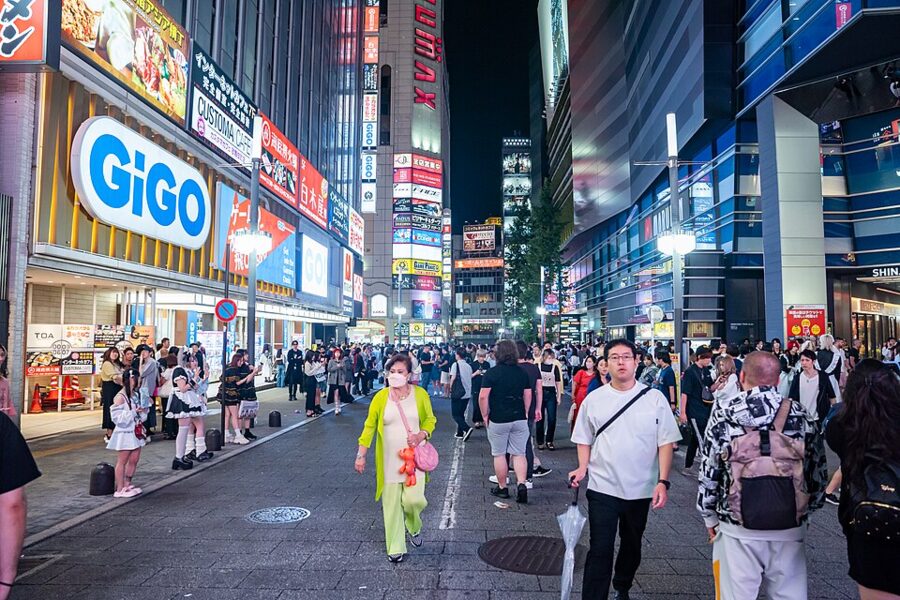

For games, GiGO Shinjuku Kabukicho is the classic: crane games, photo-sticker booths, driving and music games and capsule toys on two floors at Kabukicho 1-21-1, open 10:00–01:00 every day, and it takes transit IC cards such as Suica as well as phone payments. namco TOKYO in the tower is the newer, more grown-up version, with drinks.
Eating late
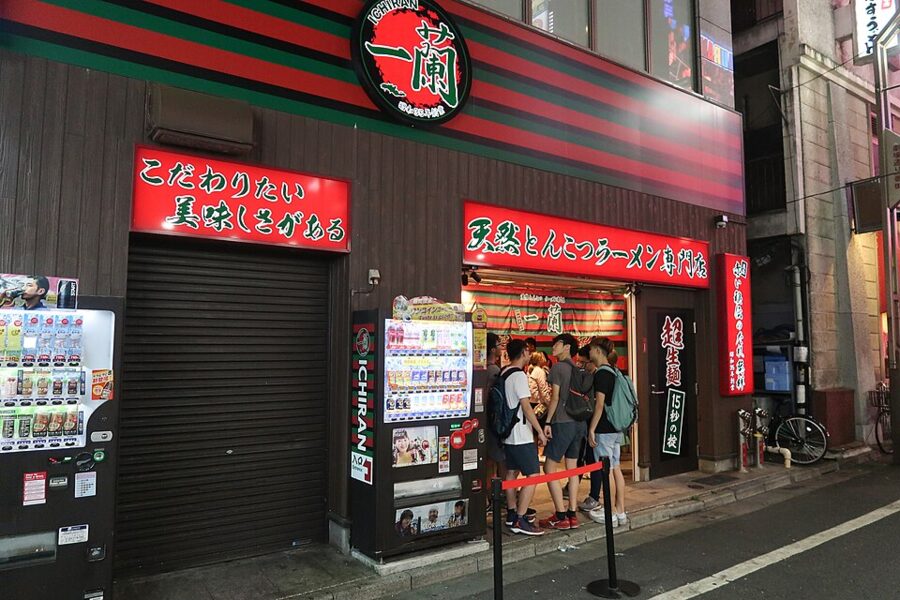
Kabukicho eats around the clock, which is its best feature for anyone jet-lagged. Ichiran Shinjuku Kabukicho, at 1-17-10, is open 24 hours and serves its tonkotsu ramen in single booths for ¥1,180, with a half serving of extra noodles for ¥150 and a draft beer for ¥650. Between 22:00 and 06:00 it adds a late-night charge, as the menu notes, so the 03:00 bowl costs a little more than the noon one.

Kabuki Hall in the tower is the group option, since everyone can order from a different counter. For something Japanese with a show attached, Hanamichi Tokyo Kabukicho, an Edo-themed building at 1-6-12 that opened on October 1, 2023, has a restaurant floor with short stage shows on the third floor. In its basement is Kabukicho Gekijo, which bills itself as the only playhouse for taishu engeki (popular theater) inside the Yamanote loop: period drama and dance in kimono, pitched as traditional theater for a casual audience. It is the closest thing to kabuki the district has ever had.
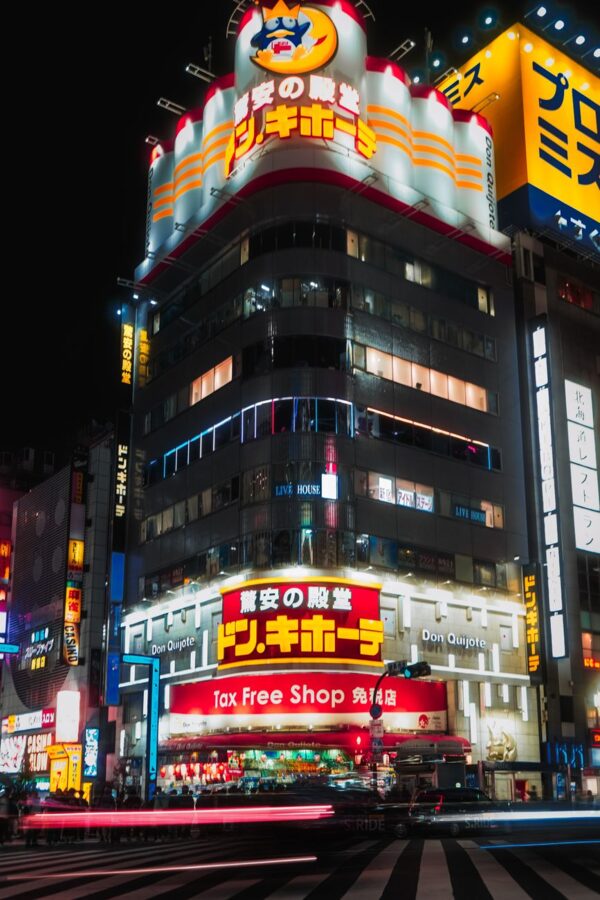
The rest is the usual Shinjuku spread of yakiniku, sushi, izakaya and chain restaurants along Central Road and Ichiban-gai, many with menus in the window. The wider guide to Tokyo food covers what to order, and the Don Quijote on Yasukuni-dori, at the foot of Central Road, sells snacks, drinks and anything you forgot to pack; the Don Quijote guide has the details.
How the night works
The rule of Japanese bar pricing is that you pay to sit. Most izakaya and bars add a seat charge per person, often with a small dish called otoshi that you did not order, and small bars write theirs on a board by the door. A seat charge you can read on the door is normal; one that nobody will tell you is not.
Hostess clubs and other places where staff sit with you work on a different system, charged by time: a set period, then extensions, with drinks for the staff and a service charge on top. Tokyo’s ordinance on padded bills requires those businesses to post their prices, so a legitimate one shows you the whole system before you sit down. The Metropolitan Police Department has published a photo of the price list from one bar it raided, where the small print read “registration fee ¥400,000, service charge 40 percent.” That is what a price list designed to be missed looks like.
Pay attention to how each place takes money. ZEROTOKYO and the GRACERY LOUNGE take no cash at all, while some small bars take nothing else, so ask before you order rather than when the bill arrives. Keep your card in your pocket until you have read the bill: the padded-bill cases the police describe end with a card charged while the customer was too drunk to object.
The drinking age in Japan is 20, and clubs check ID at the door. The Shinjuku Convention & Visitors Bureau’s manners page for visitors notes that Shinjuku City bans smoking and littering on its streets, asks you not to drink on them, and warns that public bins are rare: carry your rubbish back to the shop or the hotel.
Last, the trains. The 00:41 and 00:44 Yamanote departures both stop short, at Osaki and Ikebukuro; the last train that runs all the way round through Ikebukuro and Ueno to Shinagawa leaves at 00:12. Some subway lines stop before midnight, and the full table for each district is in the Tokyo nightlife guide. Yasukuni-dori is the easiest place to find a taxi afterward.
Touts, padded bills and spiked drinks: what the police say
The Shinjuku police station’s notice on drinking safely in Shinjuku, updated on November 9, 2023 and also posted in English, says padded-bill cases from bar touts around Kabukicho have been increasing. Its advice is short: touting on the street is banned in Shinjuku City, never follow one, check which drinks an all-you-can-drink deal actually covers before you start, and look a bar up before you go. The Metropolitan Police Department’s page for foreign visitors, updated on May 22, 2026, adds that touts take tourists to bars they work with, then charge large sums or put big charges on the card while the customer is drunk.

The tricks the police list are specific. Some touts pose as staff outside a well-known restaurant and tell customers, even ones with a booking, that it is full and that they will take them to a sister branch, which turns out to be an unrelated padded-bill bar. Some approach men with offers of “porn actresses” or “underage girls”, take a deposit, and leave them waiting in a hotel for someone who never comes, then demand cancellation fees or hush money. And a woman met on a dating app or social media may suggest a bar she knows, where she works, and quietly leave before the bill.
The worst version involves the drink itself. In the police’s English guide to nightlife districts, a tout leads you to a bar, the first drink is very strong, you fall asleep, and you wake up with an empty wallet, no memory and charges on your card. In Shimbashi, the same page says, bars have spiked customers’ drinks and then taken them to a cash machine. The Japanese version of the page is blunter: this kind of case always happens at a place a tout led the victim to.
The law is on your side here, at least on paper. Shinjuku City’s ordinance against touting, in force since September 1, 2013 and toughened on April 1, 2016, bans touting for izakaya, karaoke, hostess clubs, host clubs and sex businesses alike, street scouting for that kind of work, and loitering to wait for a target, and since June 2016 the ward can publish names and fine those who ignore its warnings. Handing out flyers and calling out to passers-by in front of your own shop are still allowed. The ward also gives shops a sticker declaring that they do not use touts, a small and useful sign on a door.
Tokyo adds two layers. Under the metropolitan nuisance prevention ordinance, Kabukicho 1-chome and 2-chome are among the areas where simply waiting in the street to tout for sex businesses or to scout women for them is an offense. And Tokyo’s 2000 ordinance against padded bills, the first of its kind in Japan, requires bars and sex businesses in designated districts to post their prices and outlaws misleading solicitation and abusive collection. None of it helps much once you are inside a bar at 02:00 with the door shut, which is why the advice stays the same: do not go in.
If the bill is wrong
Call 110. The Shinjuku police station’s advice for trouble is a 110 call or a call to the station, and if you cannot use a phone where you are, go to the nearest police box (koban). Kabukicho Koban, a four-story police box at Kabukicho 2-44-2 built in March 1993, covers nearly the whole district. For anything that is not an emergency, the police advice line #9110 can respond in English.
Do not hand over a card to make the problem go away, and do not sign anything. If it was a host club or another business that ran up a debt through a contract, the National Police Agency points to #9110 for crimes such as being pressed into sex work, the national consumer hotline, 188, for contract disputes, and the women’s support line, #8778, for anyone who does not know where to start.
Host clubs, hostess clubs and the rest
Kabukicho is Japan’s largest nightlife district, and its adult trade is legal, licensed and regulated, with a few hard limits. Hostess clubs, where women sit with customers, pour drinks and talk, and host clubs, where men do the same for women, need a license from the Public Safety Commission under the Entertainment Business Act; many of the host clubs are in 2-chome near Kuyakusho-dori. Prostitution is illegal in Japan, and the Metropolitan Police Department tells visitors not to respond to anyone soliciting for it on the street: it encourages crime and leads to trouble, including extortion by a “boyfriend” who turns up afterward.
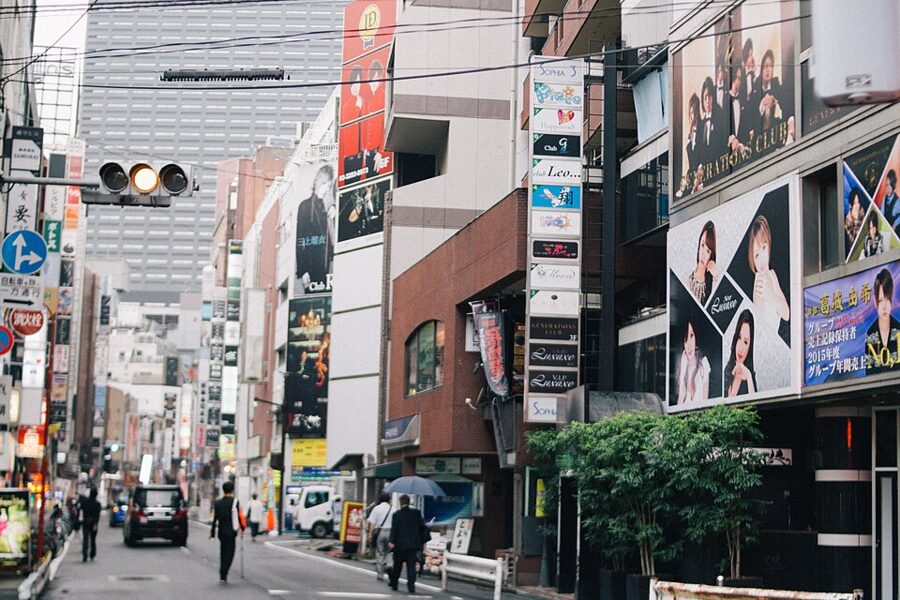

The host clubs were the scandal of 2023. Women ran up debts on credit, the system called urikake, that could reach millions of yen, and some were pushed into sex work to pay; on December 15 and 16, 2023, the Metropolitan Police Department inspected the roughly 300 host clubs in Kabukicho, got into 176 that were open, and found violations at 132 of them. An association of about 220 clubs announced a ban on tabs from April 2024. A revised Entertainment Business Act, passed in May 2025 and fully in force by November 28, 2025, outlawed lying about prices, trading on a customer’s romantic feelings and pressing customers into sex work to settle a debt, and restricted advertising that fuels spending, such as host sales rankings.
None of this is aimed at visitors, and for a visitor the advice is the same as for bars: walk past anyone who offers to take you somewhere, and do not photograph the staff outside the clubs.
The plaza beside the Toho Building
The square between the Toho Building and the tower is Cinecity Plaza (シネシティ広場), the old forecourt of the Koma Theater, and the lane along the Toho Building gave a name to the young people who began meeting there around 2018. On social media they called it “To-yoko”, short for “next to Toho”, and they became the “To-yoko kids”, many of them teenagers with no place at home or at school. Crimes aimed at them, and overdoses among them, drew national attention from about 2021.
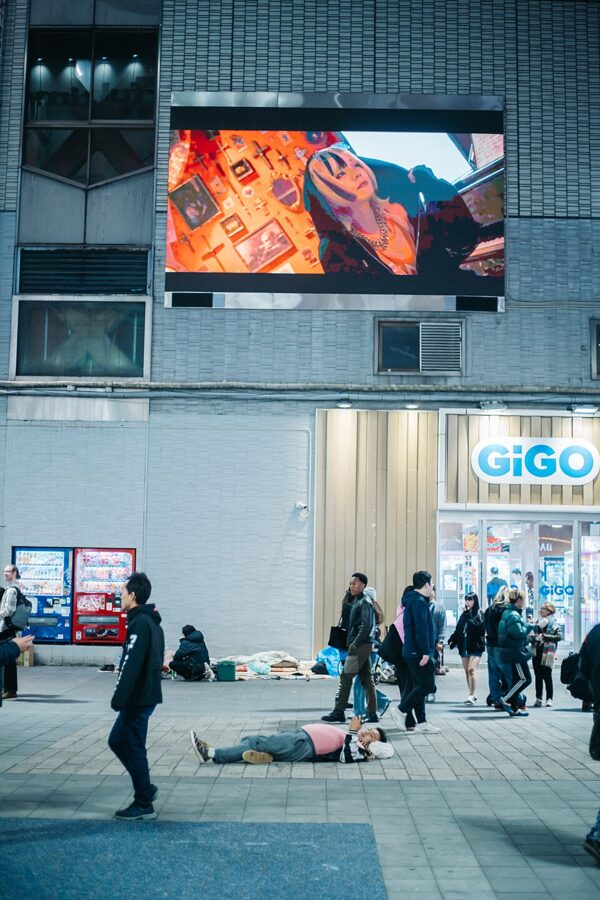

The responses since have been practical. From December 2023, Kabukicho Town Management, the district’s area-management company under the ward’s Kabukicho Renaissance program, fenced the plaza and opened it only for events. From July 11, 2025, on days with nothing booked, food trucks have parked there from 16:00 to 22:30 as Kabukicho Kitchencar Park, with tables and chairs, and part of their takings pays for cleaning the streets around it. The Tokyo Metropolitan Government opened a drop-in counseling center for young people, Kimimamo@Kabukicho, on the 15th floor of the Hygeia building on May 31, 2024, and expanded it on May 27, 2025.
What it means for you is simple. You will see young people around the Toho Building at night, and they are not there for visitors; do not photograph them. If someone looks to be in danger, call 110.
A safe night, in order
- Pick the bar, restaurant or karaoke branch before you arrive, and walk there yourself.
- Walk past anyone who stops you, in any language, with any offer. Do not stop to say no.
- Find the price, including the seat charge, before you sit; at a hostess or host club, get the whole system first.
- Watch your drink being made, and do not leave a glass alone.
- Keep your card in your pocket until you have read the bill.
- Know where Kabukicho Koban is, and that 110 works from any phone.
- Leave for the 00:41 or 00:44 Yamanote train, or know where you are sleeping.
A kabuki theater that was never built
Kabukicho is named for something that never happened. The wartime air raids left the east side of Shinjuku in ashes, and the local neighborhood association’s head, Suzuki Kihei, proposed rebuilding it as a wholesome entertainment quarter for families, with a kabuki theater at its center. Ishikawa Hideaki, the head of Tokyo’s city planning section, backed the plan and gave the new district its name, and Kabukicho was created on April 1, 1948, mostly from the northeastern part of the old Tsunohazu 1-chome.
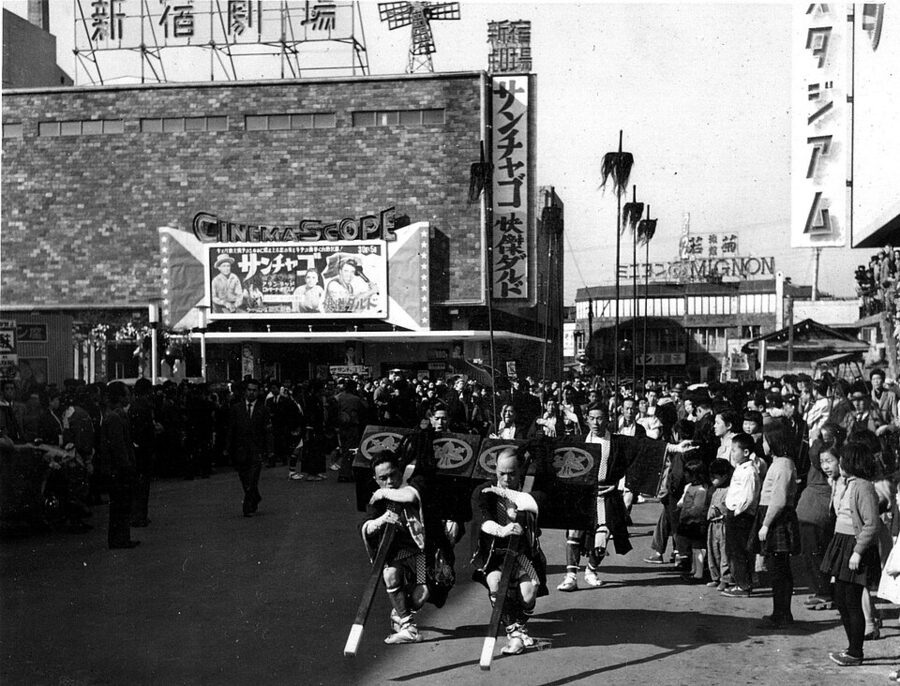
Sudden limits on new building and the freezing of bank deposits after the war killed the kabuki theater before it began, but the street plan stayed, laid out around a square. The district hosted the Tokyo Industry and Culture Exposition in 1950 on that ground, and its pavilions were turned into the first of Tokyu’s entertainment buildings there. Seibu-Shinjuku Station opened on March 25, 1952. The Shinjuku Tokyu Bunka Kaikan, with the 1,500-seat Milano-za cinema, opened on December 1, 1956, and the Shinjuku Koma Theater, with 2,088 seats and a three-ring revolving stage, opened on December 28.

The Koma became the home stage of enka singers and of the first Japanese runs of Broadway musicals, and drew more than a million people a year at its 1970s peak. It never staged a kabuki play. The Milano-za ran “E.T.” for about half a year from December 1982, and around the big houses, bars, cabarets and the late-night trade filled the side streets until the name meant something else entirely.

By the 1990s, Kabukicho had a reputation for gang turf wars, Japanese and foreign. The fire in the Myojo 56 building on September 1, 2001, killed 44 people. The clean-up came in stages: 50 police security cameras in February 2002, a branch of the immigration bureau in the district in 2003, and from late 2004 a sweeping police operation driven by Tokyo’s vice governor for public safety, Takehana Yutaka, which closed many sex shops and illegal businesses.
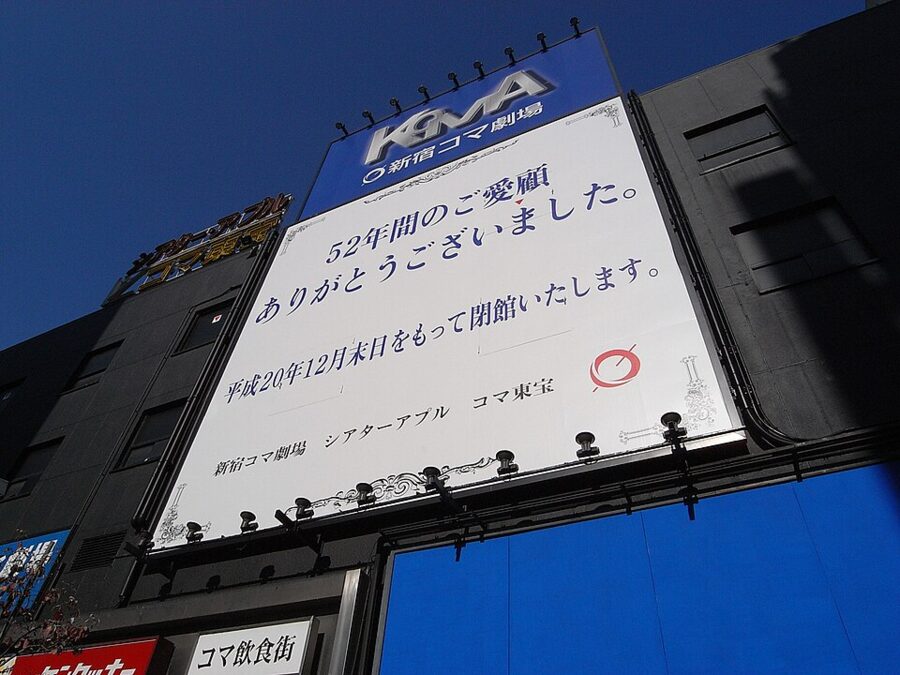
In January 2005 the ward set up the Kabukicho Renaissance council with the shopping street association, the neighborhood associations, experts, the national government and Tokyo, and in April 2005 a revised Tokyo ordinance banned touting for sex businesses. The Koma closed on December 31, 2008, after 52 years; the Milano-za followed on December 31, 2014. The Toho Building rose on the Koma site in 2015 and the tower on the Milano site in 2023, both built around cinemas and stages, which is roughly what Suzuki Kihei had in mind after the war.

Next door: Golden Gai, Omoide Yokocho and a shrine
Kabukicho’s quieter neighbors are a few minutes away. Golden Gai, the grid of tiny bars in wooden row houses beside Hanazono Shrine, is across Kuyakusho-dori on the district’s east edge and has its own rules about seat charges and photos. Omoide Yokocho, the old drinking alley along the tracks, is on the far side of the station by the West Exit, and the guide to Shinjuku covers both sides of the station, along with Shinjuku Gyoen and the government towers.
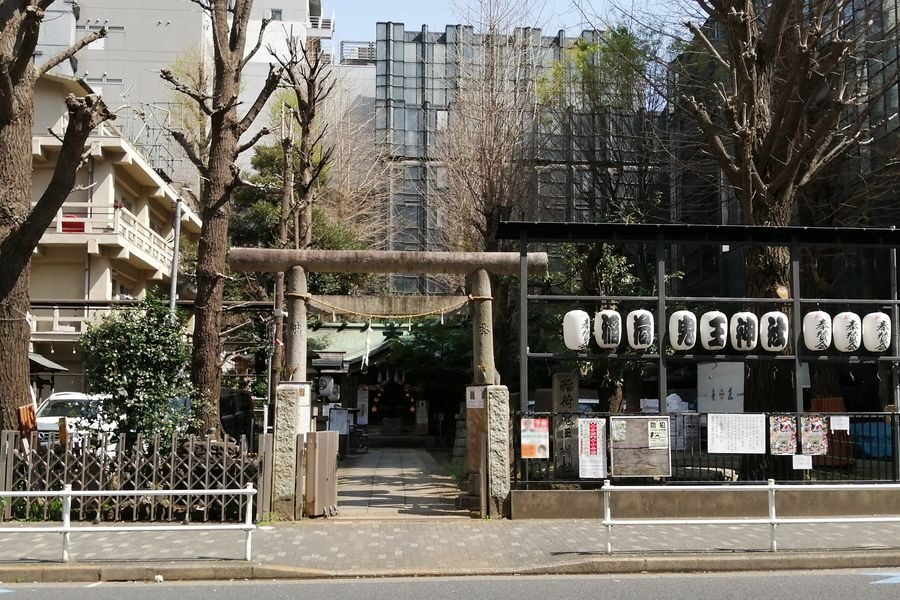

Inside Kabukicho itself, Inari Kio Shrine at 2-17-5 is the oldest institution in the district, and the small shrine to Benzaiten in Kabukicho Park keeps the goddess the tower’s facade was drawn from. Shinjuku’s live houses, the small rock and jazz venues of the east side, are in the guide to Tokyo live music.
The ramen at Ichiran will still be ¥1,180, plus the late-night charge, at 03:00, and the Godzilla head will still be on the eighth floor in the morning. The 00:44 to Ikebukuro will not wait for you. The tout under the Ichiban-gai arch will, every night of the year, so decide where you are going before you walk under it, and let nobody else decide for you.