

Giants tickets for Tokyo Dome (東京ドーム) go on general sale on Saturday mornings at 11:00, a block of games at a time, and for a weekend game against the Hanshin Tigers that is the only morning that matters. The Yomiuri Giants played their 2026 home season there from March 27 to October 3, and the 2027 season opens at the Dome on March 26 against the Chunichi Dragons. The club says 2027 tickets should go on sale around February.
Prices are set per game in three bands. In 2026 an upper-deck reserved seat cost ¥2,000–2,200, a seat in the outfield cheering sections ¥2,300–2,900, and the best regular infield seats ¥6,800–7,700, with Saturdays the dearest. Buy from the club’s English ticket page or one of the sellers it lists, and from no one else: the Giants refuse entry on tickets resold outside their own system.
Walk-up is a weeknight game. On a Tuesday against the Hiroshima Carp or the Chunichi Dragons the counter at the Dome has its best chance of having something left; on a Saturday, or any night the Tigers are in town, assume it does not and buy online the morning sales open.
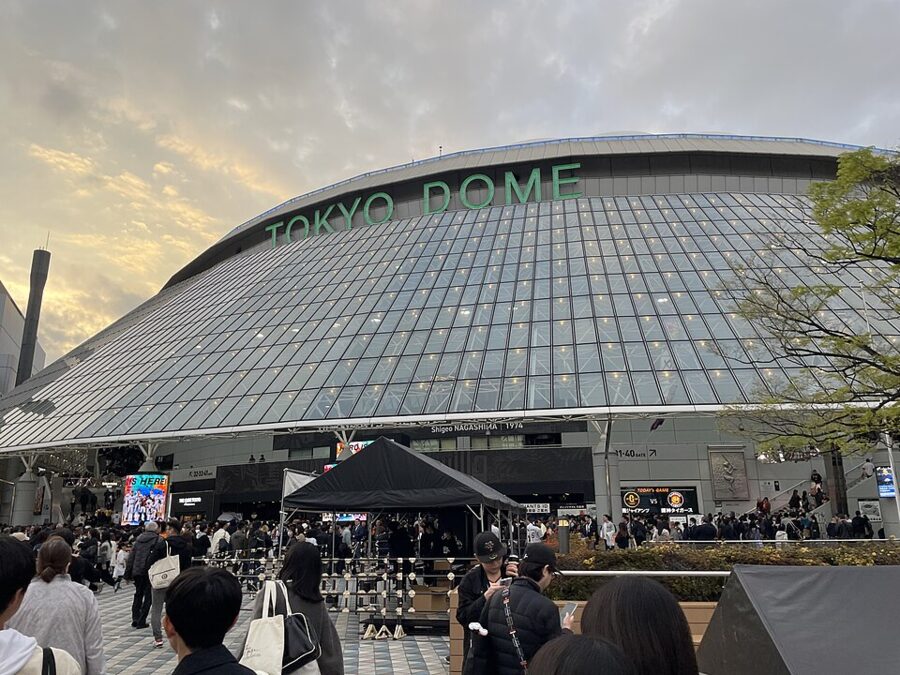

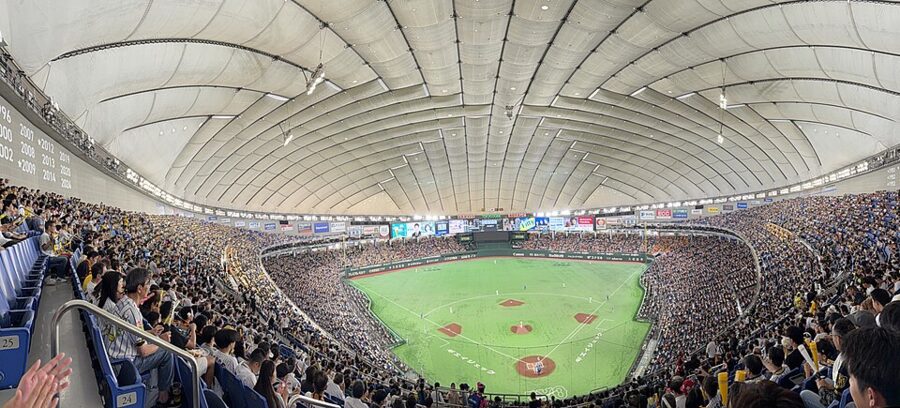

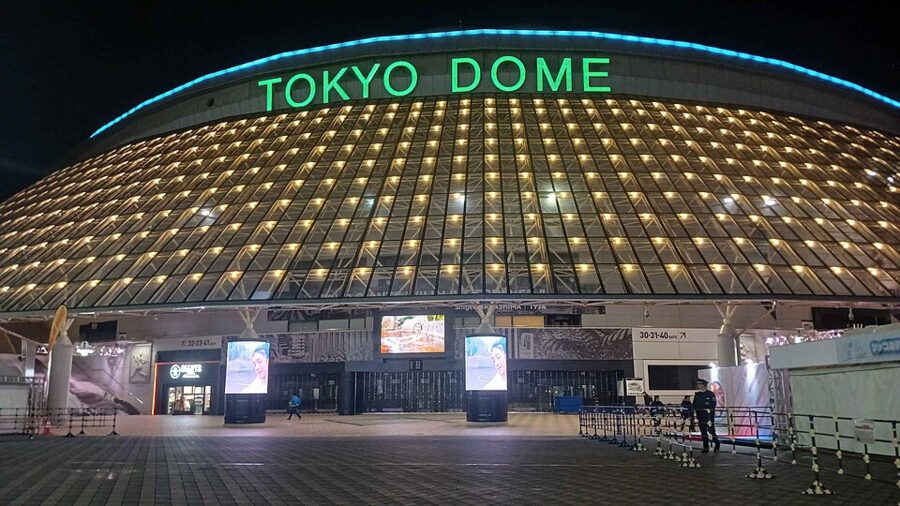
When the Giants play, and how to get a ticket
The regular season runs from late March to late September or early October, and the Giants play 60-odd home games at the Dome a year. In 2026 they finished second in the Central League, drew 2,862,832 to their home games, and hosted the first round of the playoffs (the Climax Series) at the Dome from October 10. On October 23, 2026 the club named Hideki Matsui, its old center fielder and a former New York Yankee, as manager for 2027, which is unlikely to make tickets easier.
Weeknight games start at 18:00. Saturday and Sunday games mostly start at 14:00, though some Saturdays are night games, so check the start time printed on the schedule before you buy. Over the winter the Dome hosts concerts and other events; there is no regular-season baseball from November to March.
The three price bands
From 2026 every home game falls into one of three price categories. Category S (for Saturday) is every Saturday game. Category II covers Sundays, holidays, most Tigers games and much of the summer, and Category I is the ordinary weeknight. The club’s 2026 sales summary gives the band for each date, and the schedule on its site marks it with a I, II or S.
| Seat (2026) | Where | Category I | Category II | Category S |
|---|---|---|---|---|
| Seat S | 1st floor, behind the plate and the dugouts | ¥6,800 | ¥7,300 | ¥7,700 |
| Seat A | 1st floor, along the lines | ¥5,800 | ¥6,200 | ¥6,600 |
| Seat B, Orange Seat, Infield Visiting Team Cheering | 1st floor, toward the outfield | ¥4,500 | ¥4,900 | ¥5,300 |
| Seat FC (Central) | Upper deck, behind the plate | ¥3,200 | ¥3,600 | ¥4,000 |
| Seat FC | Upper deck | ¥2,800 | ¥3,200 | ¥3,600 |
| Seat C | Upper deck | ¥2,200 | ¥2,500 | ¥2,800 |
| Seat D | Upper deck, toward the outfield | ¥2,000 | ¥2,200 | ¥2,200 |
| Outfield reserved (any section) | Right and left field stands | ¥2,300 | ¥2,600 | ¥2,900 |
| Outfield standing | Behind the outfield seats | ¥1,500 | ¥1,500 | ¥1,800 |
| DAZN Excite Seat | Field level, along the lines | ¥15,000 | ¥15,500 | ¥16,500 |
Prices include tax. Seat C costs ¥1,000 for school-age children and teenagers on every date. A child under school age can sit on an adult’s lap for free at Giants games, one per adult, but needs a ticket to have a seat of their own.
Where to buy
Sales open in blocks. In 2026 there were eight, each covering a few weeks of games: club members and season-seat holders get about ten days of pre-sales and lotteries, and then general sale opens on a Saturday at 11:00. The first block of 2026 went on general sale on February 14 for the March 27 opener; the last opened on July 25. The Dome’s own counter does not sell anything on a general-sale day.
From outside Japan, start with the club’s English pages. They list four sellers: Giants Online Ticket (credit card, phone or paper ticket), the Yomiuri Travel Service (paper tickets collected at its counter next to Gate 20) and the two big Japanese agencies, e+ and Pia. The club’s English how-to-buy page warns that the Japanese ticket site may not work for buyers abroad; it also needs a free GIANTS ID.
A sold-out game is not always the end of it. The Giants run their own resale in Japanese, through the club’s official resale service, where ticket holders who cannot use their seats put them back on sale; the buyer pays a 10% fee (at least ¥550) and the ticket lands in the GIANTS APP. Anything else is a risk you take alone. Giants tickets fall under Japan’s ticket-scalping law, and the Dome’s ticket rules cite penalties of up to a year in prison, a ¥1,000,000 fine or both for touts.
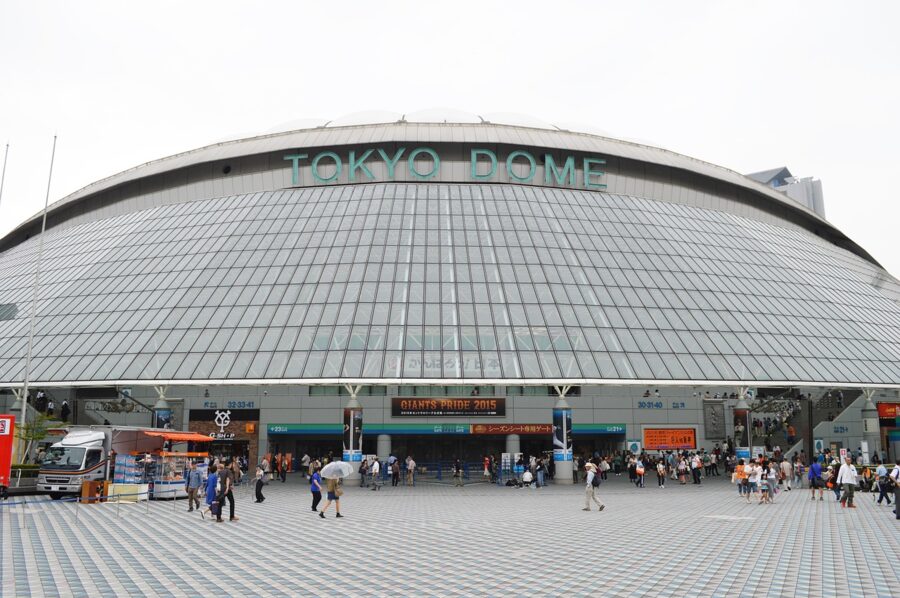
Walk-up chances
The Dome’s counter sells what the agencies have not, up to eight tickets per person per game, and posts a sales-status calendar that updates at 11:00 the day after each general sale. Weeknight games against the Dragons, Carp and Swallows are the likeliest to have seats left on the day. Tigers games, Saturdays and the opening weekend are the least.
The other walk-up is the outfield standing ticket: ¥1,500 (¥1,800 on Saturdays), released online at 10:00 on the day of the game through the club’s Japanese ticket site, for the outfield standing areas on the home or the visiting side. The club warns that if a game sells out in advance there may be no same-day tickets at all, and for a Tigers weekend I would not travel on that hope.
Where to sit
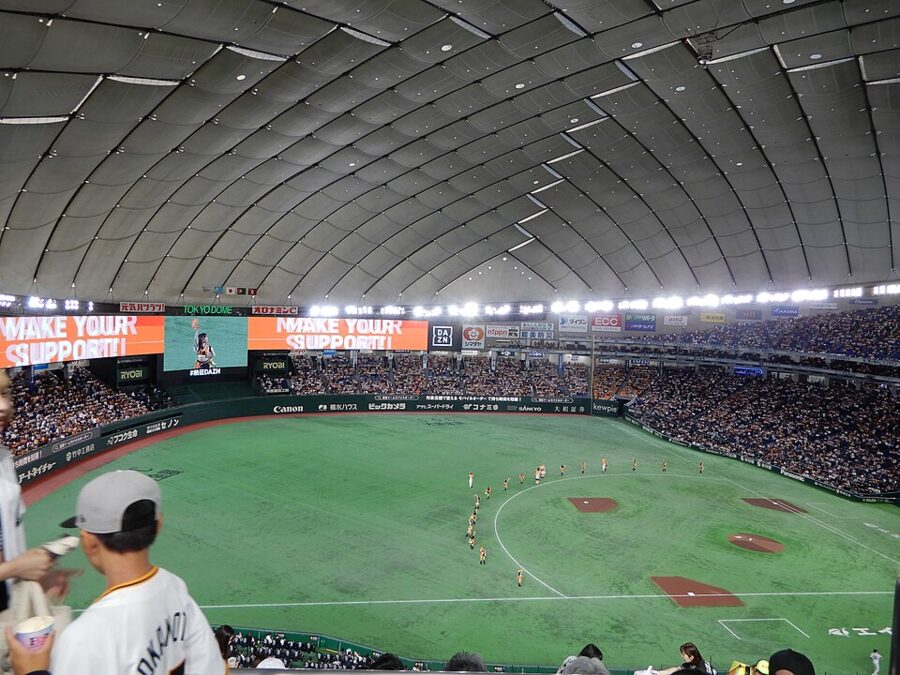
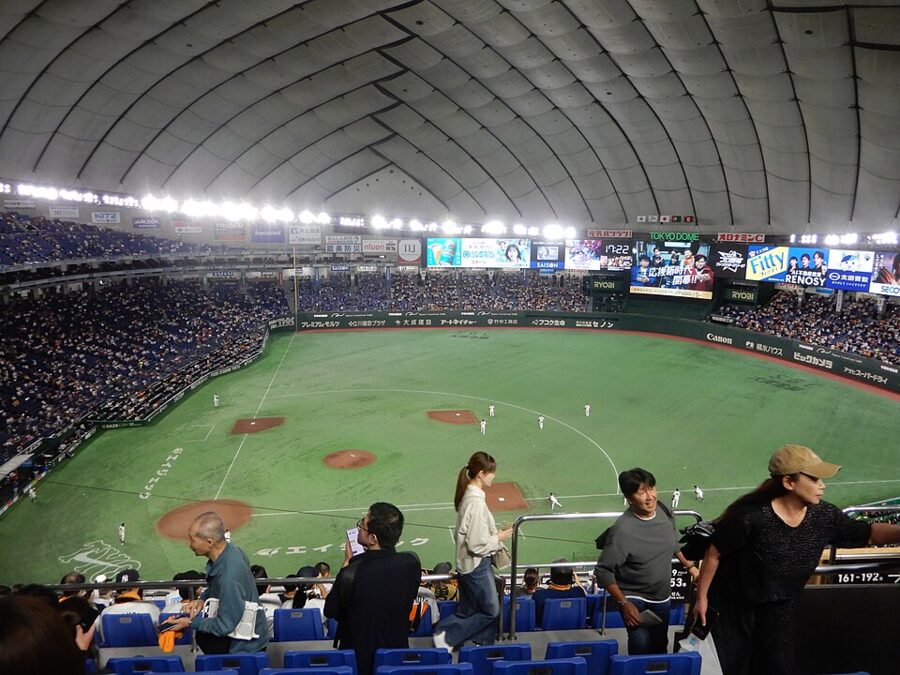
The Dome has two decks. The first floor (1階席) wraps the field from foul pole to foul pole, and the upper deck (2階席) sits above it, entered from the fourth-floor concourse; the floor numbers on your ticket refer to the stands, not the concourse. In the outfield there is one tier, split into the cheering sections.

Infield seats
Seat S is the first floor behind the plate and around the dugouts, Seat A runs down the lines, and Seat B takes the stretch toward the outfield. The Orange Seat block is a Giants-only section at Seat B prices on the first-base side, where away-team colors are not allowed. Some S and B seats are sold as obstructed-view (見切り席) at a lower price.
The upper deck is Seats FC, C and D, cheapest toward the outfield. I would take an upper-deck seat behind the plate (FC Central) over a far-flung Seat B: you see the whole field and the scoreboard and hear the outfield singing without sitting in it. The club warns that seats are sized for the average Japanese adult, so a tall reader should ask for an aisle.
The cheering sections and the visiting side
The Giants’ organized supporters fill the right-field stand. The section closest to the speakers and drums is loud for three hours, and you are expected to stand and sing; it is where to sit if that is what you came for. Left field is split three ways: a Giants cheering block, a mixed block open to either side, and the Outfield Visiting Team Cheering section for the away team’s supporters.
The away team’s fans therefore sit on the third-base side and in left field, and they have a reserved infield block of their own (Infield Visiting Team Cheering, on the third-base side toward left field). The rules are strict: no away-team jersey or goods in right field, the left-field Giants block or the Orange Seats, and no Giants gear in the away sections. A neutral at a Tigers game should sit in the mixed blocks or upstairs.

Excite seats and the boxes
The DAZN Excite Seats are field-level rows out along both foul lines, in front of the regular stands, with no net between you and the ball: ¥15,000–16,500 in 2026, sold mainly to club members and Yomiuri newspaper subscribers, and closed to children under school age. The Excite EASY version (¥11,000–12,500) adds a protective net and admits small children.
Above that are the leather-seat Diamond Box and Champion seats behind the plate, group boxes such as the four-person Platinum Box and the Sky Terrace benches on the upper deck, and the Craft Counter, pairs of bar-style seats on the second-floor concourse toward the outfield (¥5,000–6,000, or ¥3,500–4,500 to stand). The Legends Seat (¥14,500–15,400) comes with commentary from former players, in Japanese.
The roof over your head
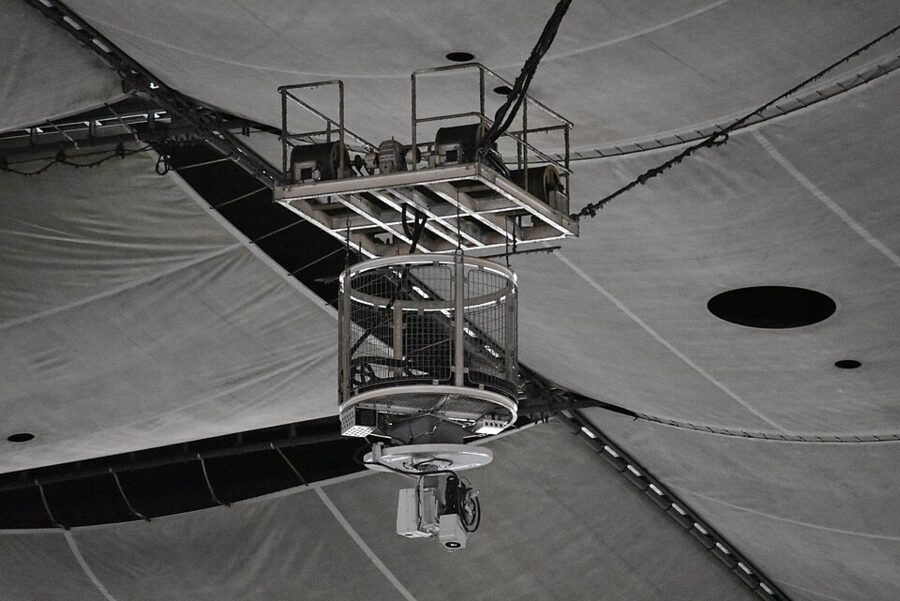
The roof is a double fabric membrane held up by air: the building is kept at about 0.3% (3 hectopascals) above outside pressure by 36 fans, which is why every entrance is a revolving door or an airlock. It was inflated on June 28, 1987 and has not come down since. The ceiling stands 61.69 m above the field, a height worked out from a Sadaharu Oh home run in 1964 so that nothing would hit it; balls have hit it many times since.
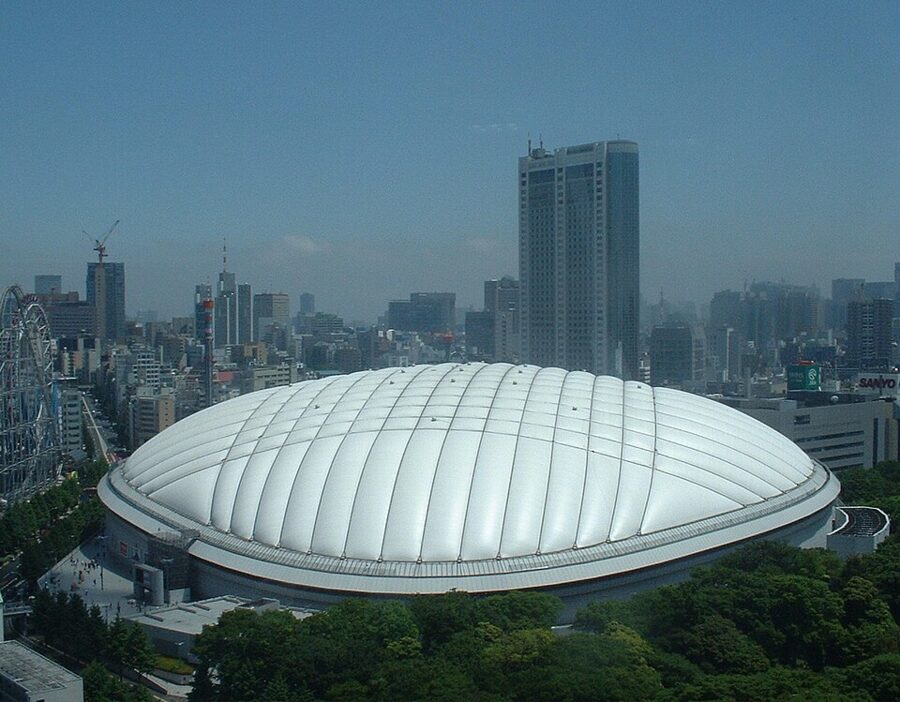

There is no weather inside, no wind and low humidity, and the alleys are only 110 m deep (100 m down the lines, 122 m to center), so it is a home-run park. The air conditioning is aimed at the stands, and the club’s own guide suggests clothes you can add or take off; bring a layer in summer.

A game day at the Dome
Gates open two hours before the first pitch, so 16:00 for an 18:00 start. Pre-game practice runs after the gates open, and that first hour is the calmest time to buy food. Each ticket names a gate near your seat, but you can use any gate that is less crowded.
Bags, bottles and what you can bring
Every bag is checked at the gate. The Dome’s rules for baseball ban glass bottles and cans, plastic bottles over 1,000 ml or frozen, any alcohol, coolers, pets, bags too big for the space at your seat, and noise-makers; strollers are kept at a desk in the Gate 22 plaza. Food from outside is fine, and a convenience-store bento is the cheapest dinner in the building.
Inside, the Dome is fully cashless and has been since the 2022 season: credit cards, transit IC cards and phone payments only, including at the beer sellers. A Suica loaded before you arrive covers it. You can leave and come back in through any gate except 11 and 22 until the end of the seventh inning, which is also the only way to smoke: the smoking area is outside Gate 22.
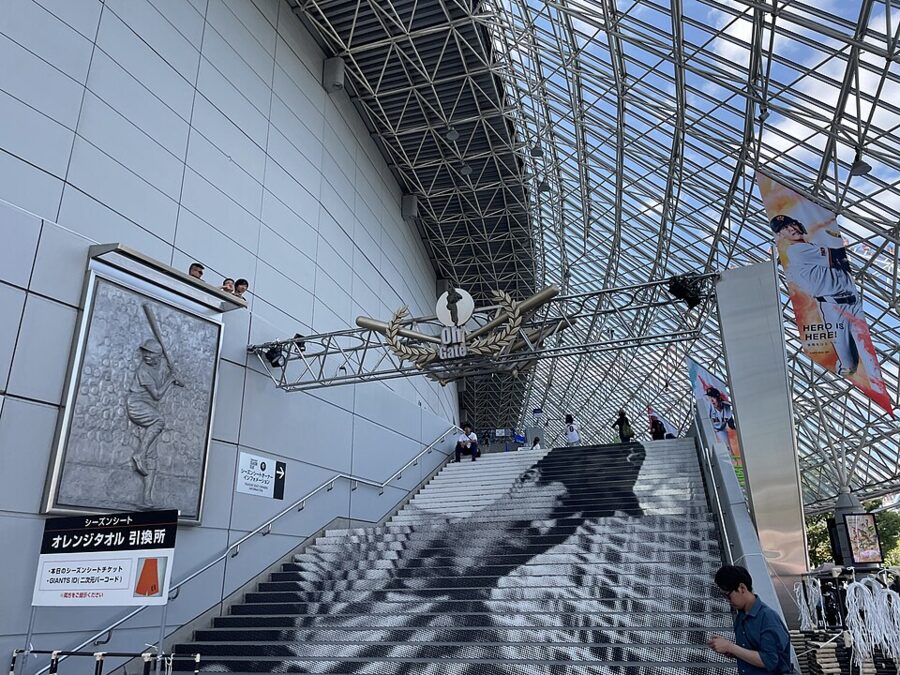

The singing, the towels and the seventh inning
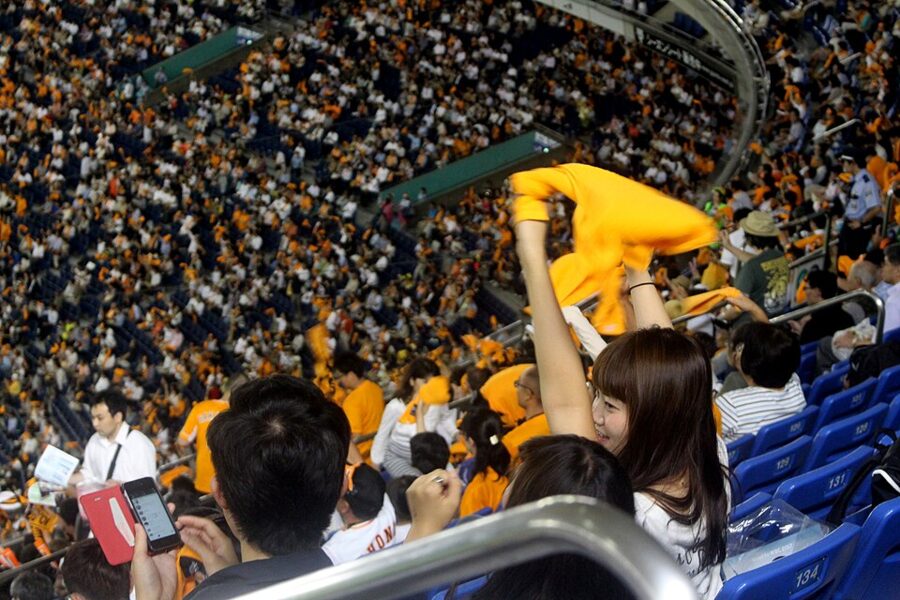
Most Giants batters have a song of their own, led from the right-field stand by a licensed supporters’ group with trumpets and drums, which only those groups may bring. You do not need the words. Clap on the beat, twirl the towel when a runner reaches scoring position, and stand when the stand stands.
After a run the stand sings “VIVA GIANTS,” and when the other side changes pitchers there is a short chant of its own. The big one comes before the Giants bat in the seventh: the club song, “Toukon Komete” (闘魂こめて), sung by the whole building with towels held up, the moment Japanese parks call “Lucky 7.”
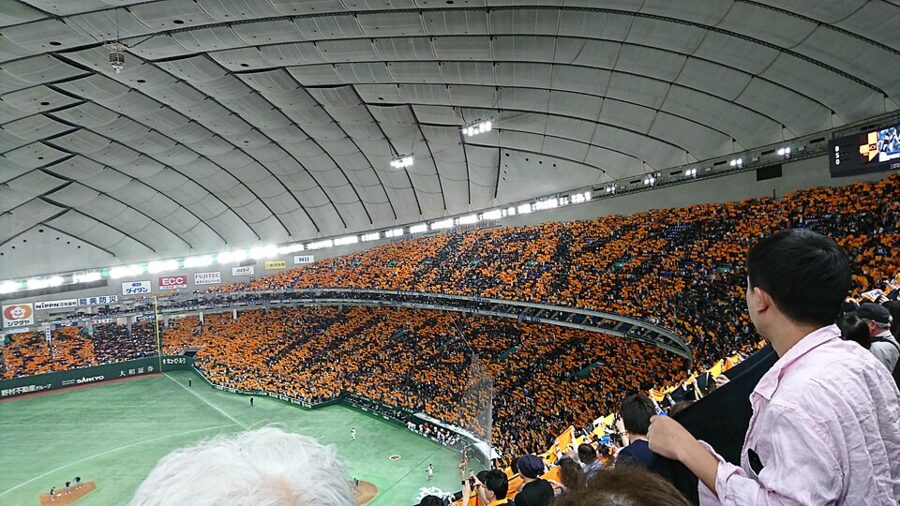

What you will not see is the balloon release. At most Japanese parks the seventh inning ends with fans letting go of long “jet balloons,” a custom suspended everywhere in 2020 and brought back team by team since 2023. Tokyo Dome has never allowed them at baseball, and its 2026 rules still list jet balloons beside paper streamers and confetti: the roof is held up by air pressure, and the operator will not risk it. At the Dome the seventh inning is the song and the towels, nothing more.

Food, bento and the beer sellers
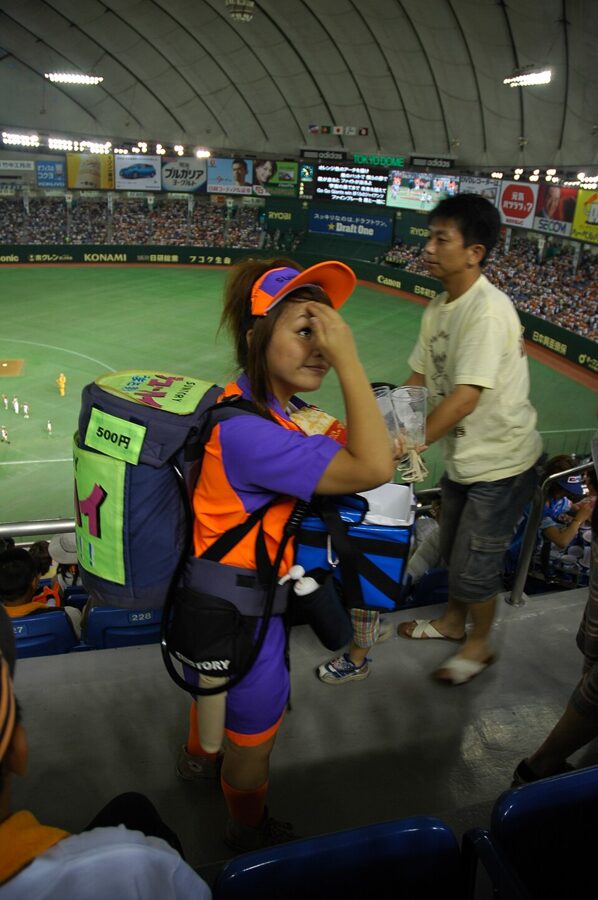
The beer comes to you. Sellers with kegs on their backs work every aisle, and in 2026 a cup of draft beer cost ¥1,000 whatever the brand: Asahi, Kirin, Sapporo, Suntory and a Suntory ale brewed for the Giants. The Dome’s seller menu also lists lemon and grapefruit sours at ¥750, highballs at ¥850, soft drinks at ¥400, and a shot of Yamazaki 12 at ¥2,600, which is more than the outfield seat.

For dinner, the Dome’s food directory lists 69 counters. The Dome’s bento list runs from a ¥960 cutlet sandwich to a Kiyoken fried-rice box at ¥1,400, an Asakusa Imahan sukiyaki box at ¥2,600 and a Jojoen grilled-beef box at ¥3,900, plus a row of ¥1,900 boxes each named for a Giants player. The Giants’ own counters sell fried chicken (¥800), mango and mandarin sours (¥900) and soft-serve ice cream (¥680).
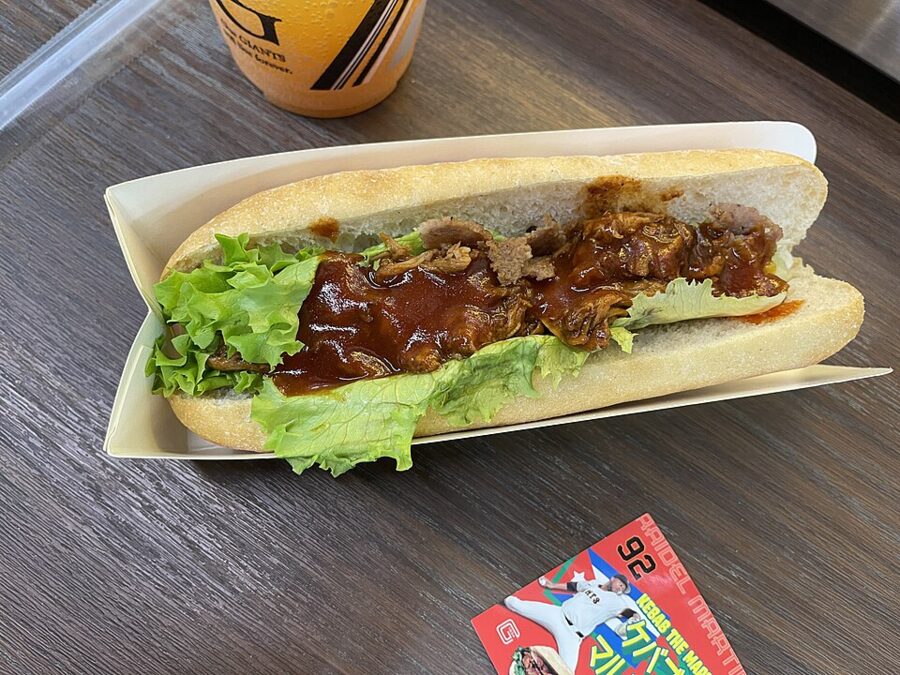

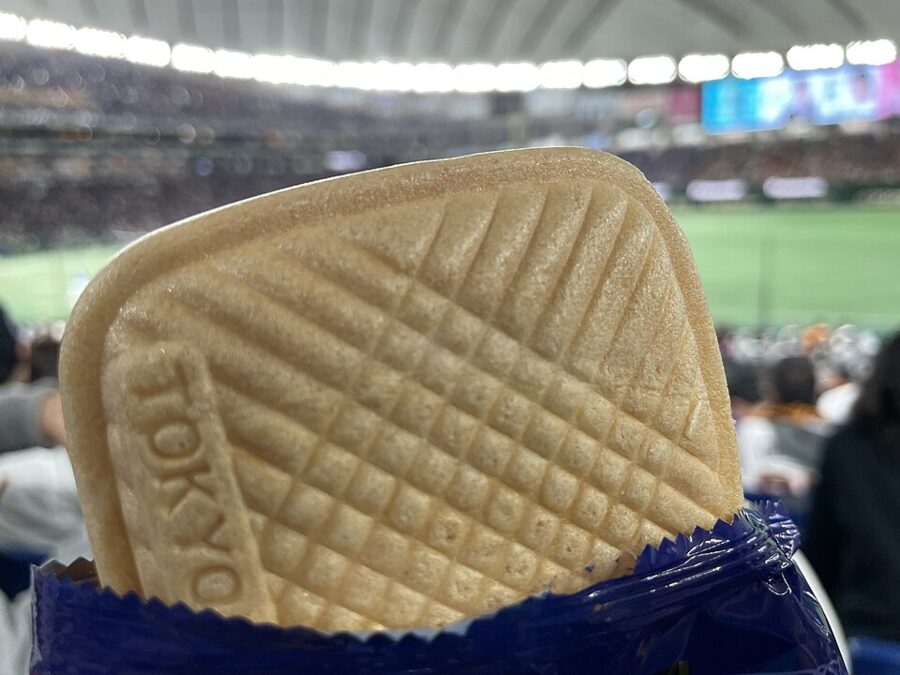
Mobile ordering, linked from the club’s site, lets you pay ahead and collect at the counter. I would eat early, buy beer in the seats, and leave the ¥400 monaka ice cream, a crisp wafer stamped with the Dome’s name, for the eighth.

After the last out
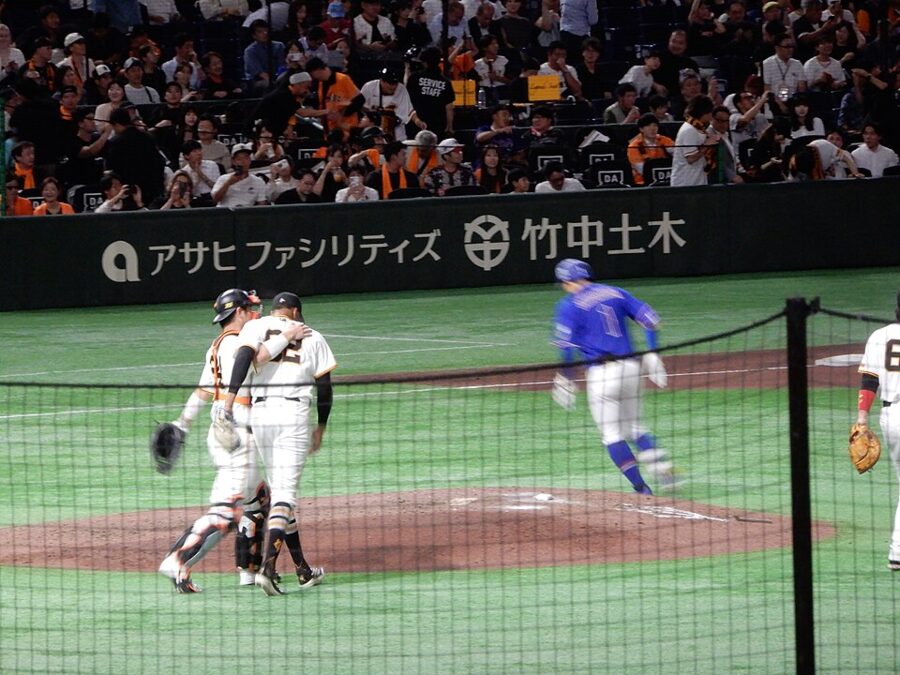
When the Giants win, the hero of the night is interviewed on a platform on the field and the right-field stand sings again. Then the announcements begin: the Dome releases the stands block by block, asking each area to wait its turn, and once your block is called you are outside within minutes.

Hold onto your hat at the doors. With the exits open, the pressurized air inside pushes out hard, and even the revolving doors blow.
Concerts and everything else under the roof
In 2015 the operator counted baseball at about four in ten of the days the Dome was in use; concerts and other events took most of the rest. For a concert the Dome holds about 55,000, against about 43,500 for baseball, and the largest Japanese and Korean acts play two or three nights at a time as part of a tour of the country’s domed stadiums. The pattern on the Dome’s schedule is the same every time: doors open two hours before the start, and start times run from about 16:30 on a Sunday to 19:00 on a weeknight.
Tickets for Japanese acts go first to fan-club members and then to rounds of lotteries, months ahead; most are smartphone tickets tied to the buyer’s name and ID, with the seat shown only shortly before the show. The rules for events match the baseball ones (cashless inside, no glass, cans, alcohol or big bottles) and add that the organizer may film the crowd. For the smaller rooms and how ticketing works at the Budokan and Zepp, see Tokyo live music.
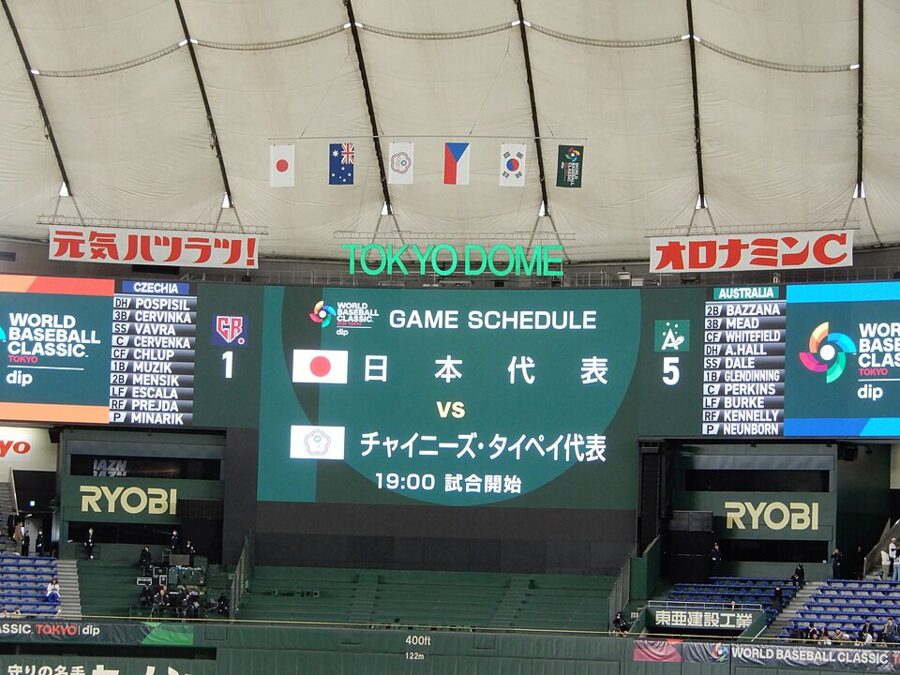

Other baseball comes through too. The Dome hosted the first round of the World Baseball Classic in March 2026, the Asia Professional Baseball Championship in November 2026 and Major League Baseball’s Tokyo Series in March 2025, and every summer it stages the Intercity Baseball Tournament, the company-team championship, with brass bands and cheerleaders in the stands. The Giants’ farm team plays a few games there each season, at farm-team prices.
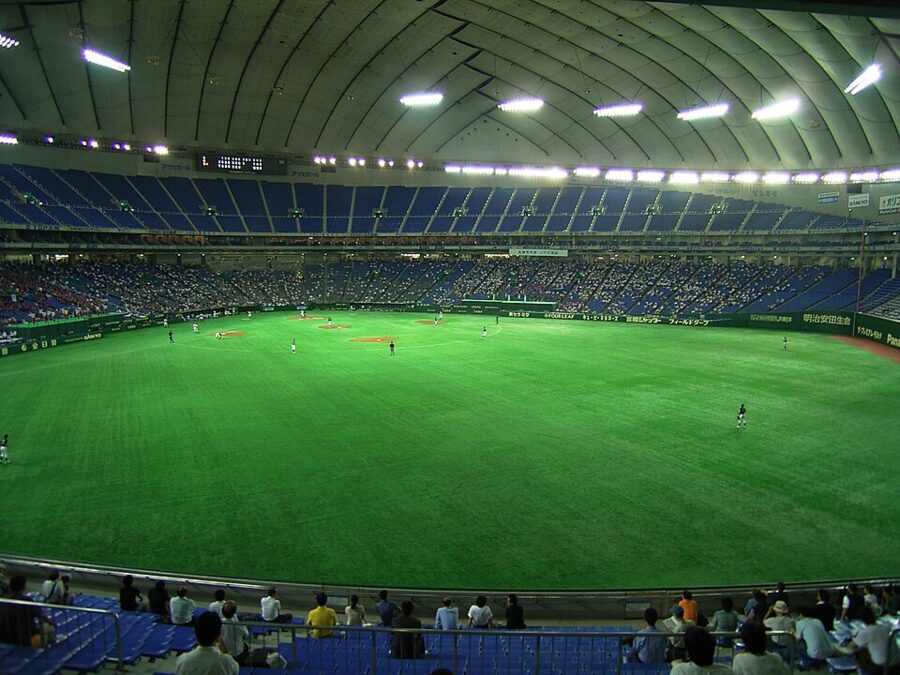

The Tokyo Dome Tour takes you onto the field, into the dugouts and, on one course, backstage. It is seasonal: the 2026 season of tours has finished, and the 2027 dates are due around February. In 2026 a ticket cost ¥3,500 for adults (¥500 more on weekends, holidays and in August), tours ran in the morning on set days, and a ticket with a translation device was sold for those who do not speak Japanese.
Tokyo Dome City around it
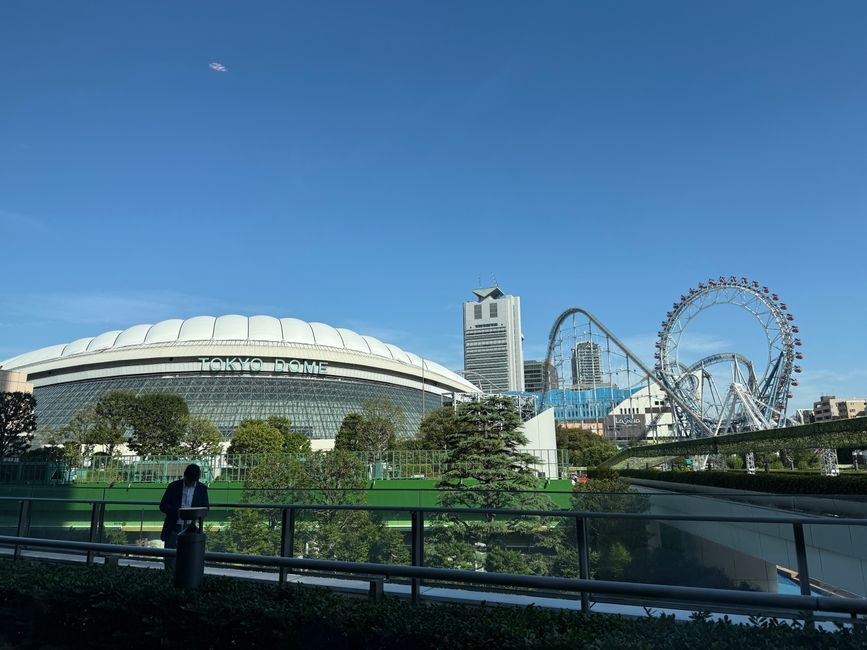
The Dome sits inside Tokyo Dome City, a block of rides, restaurants, a hotel, a boxing and wrestling hall, a spa and a museum. It was built in 1988 on the old Korakuen cycling track, next to the Korakuen Stadium it replaced, and entry to the grounds is free.
LaQua and the rides
LaQua, opened on May 1, 2003, is the building opposite Korakuen Station, with shops (11:00–21:00 on a normal day in November 2026) and restaurants (11:00–22:00) below and the spa on top. The coaster runs through it. Tokyo Dome City Attractions, the amusement park, has a free gate: you pay per ride, or buy a One Day Passport at ¥4,900–5,800 for adults, depending on the day. It opens 10:00–20:00, an hour later on some weekends.
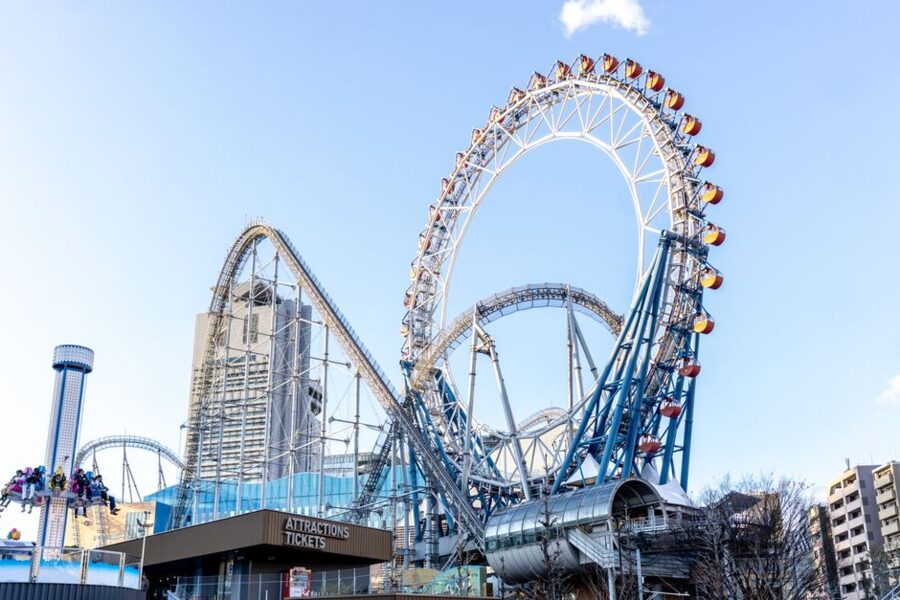
The two rides worth paying for singly are the Thunder Dolphin, a two-minute coaster that weaves between buildings and through the Big O (¥1,800; ages 8 to 64, at least 130 cm), and the Big O itself (¥1,000, 15 minutes), whose 40 gondolas all have karaoke. The wheel is the better buy at dusk before a night game, when you can see the Dome’s roof from above.
Spa LaQua and its rules
Spa LaQua, on the upper floors of LaQua, is a hot-spring bathhouse on water drawn from 1,700 m underground, amber and salty, with outdoor baths at about 38°C and a hotter tub at about 43°C, carbonated pools and several saunas. In November 2026 adult admission was ¥3,500 on most weekdays and up to ¥4,700 on the busiest weekend days, towels and lounge wear included. After 19:00 it drops to ¥2,500–3,700.
It opens 11:00 and runs to 09:00 the next morning, but anyone still inside between 01:00 and 06:00 pays a ¥2,500 late-night charge, so it is not a cheap bed. The house rules are firm: no one with tattoos, including stickers and body paint; no children under six; under-18s only with a parent, and out by 18:00. The Healing Baden sauna lounge is ¥1,100 extra and over-18 only. There is no re-entry, and no reservation is needed.
The Japanese Baseball Hall of Fame and Museum
The Baseball Hall of Fame and Museum (野球殿堂博物館) is built into the Dome, to the right of Gate 21. It opened in 1959 beside the old Korakuen Stadium and moved here with the Dome in 1988; the hall of plaques honors players, executives and umpires, and the 2026 inductees included Hideki Kuriyama, who managed Japan to the 2023 World Baseball Classic title.
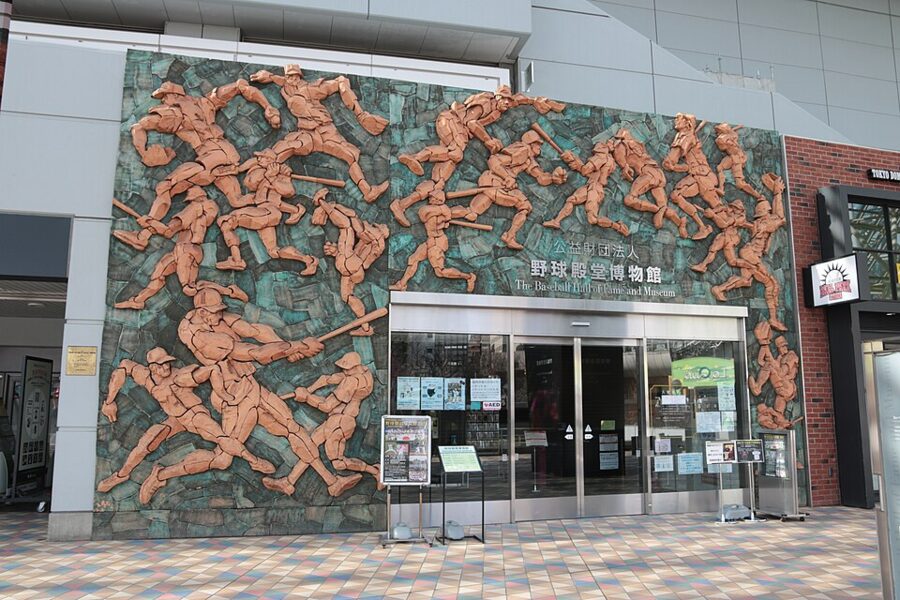

It is open 10:00–17:00, to 18:00 on days the Dome has a professional game, with last entry 30 minutes before closing. It closes on Mondays, except holidays, Dome baseball days and the spring and summer school holidays, and over New Year (December 28 to January 1). Adult entry is ¥800 (raised on March 1, 2025), ¥500 for those over 65 and students, ¥200 for children. Unlike the Dome, it takes cash; it also takes cards and phone QR payments (since February 23, 2026), but not transit IC cards.
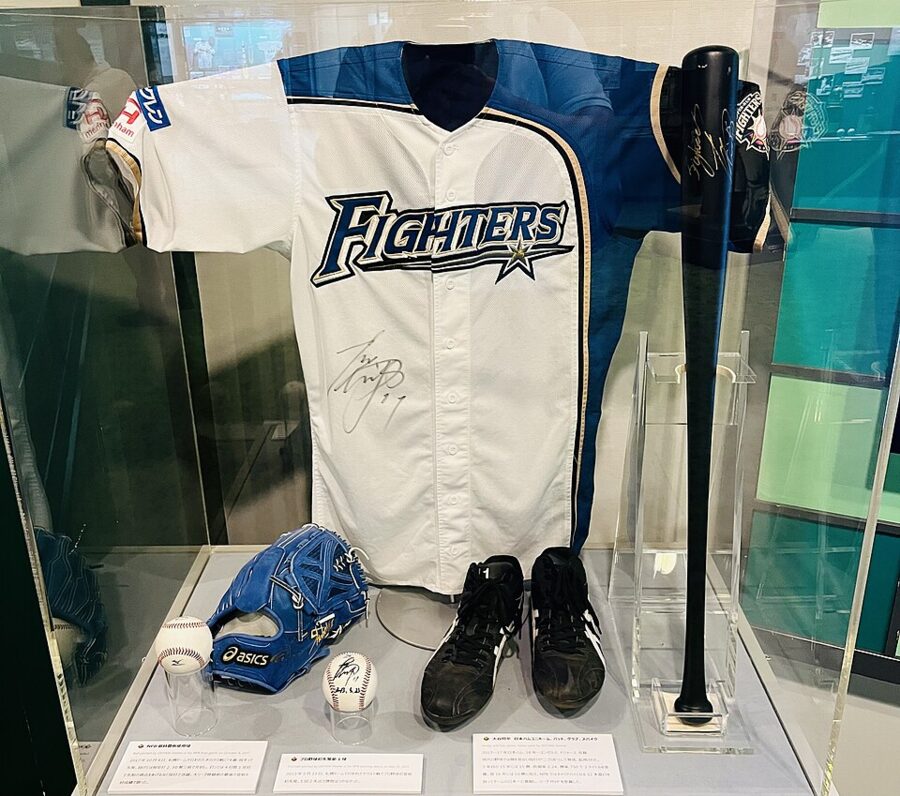
Give it an hour before a weekend day game. Among the oddities it keeps are two balls the roof swallowed, one hit by Hideki Matsui in 2002 that rolled between the layers of the membrane, and one Shohei Ohtani hit into a gap in the ceiling in an exhibition game in November 2016; both were fished out and signed.

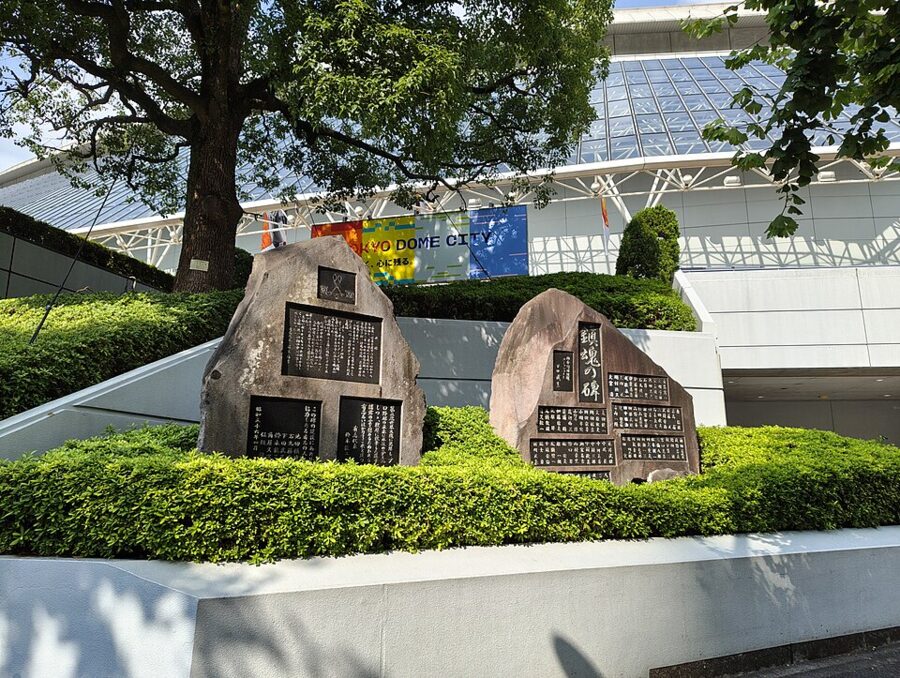

Koishikawa Korakuen, next door
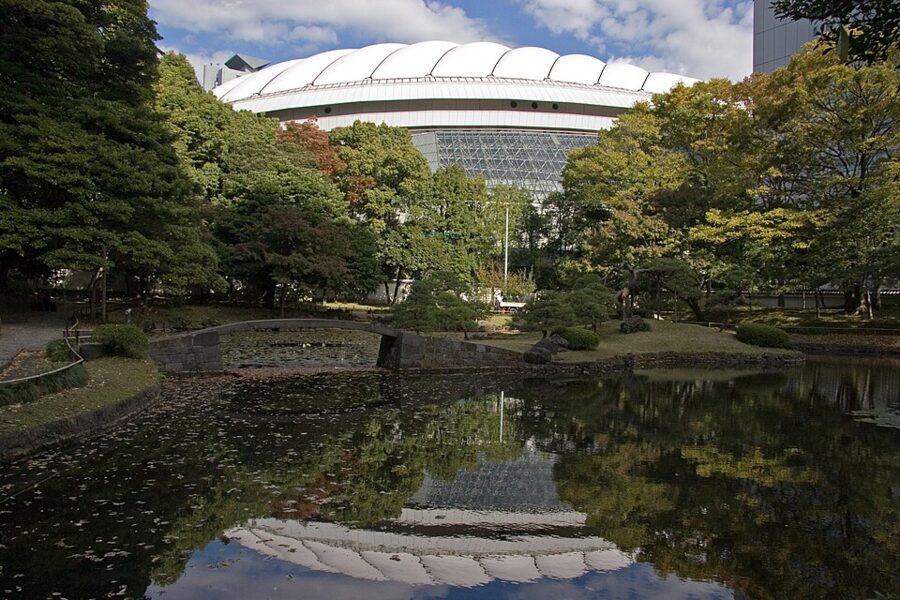
The garden on the Dome’s west side gave the area its name. Koishikawa Korakuen (小石川後楽園) is a 17th-century stroll garden laid out for the Mito branch of the Tokugawa family, open 09:00–17:00 (last entry 16:30) for ¥300, closed only over New Year. With the white roof showing over its pond, it is the quietest hour you can spend within 10 minutes of the Dome; for the rest of the city’s sights, see things to do in Tokyo.

Getting there and getting away
Four stations surround the Dome, and which you use decides your gate. The club’s stadium guide gives the walking times:
- JR Suidobashi (水道橋, JB17), Chuo-Sobu Line local trains: West Exit, 5 minutes to Gate 22.
- Toei Mita Line Suidobashi (I11): Exit A2, 5 minutes.
- Tokyo Metro Korakuen (後楽園, Marunouchi Line M22, Namboku Line N11): Exit 2, 4 minutes.
- Toei Oedo Line Kasuga (E07): Exit 6, 8 minutes.
From the West Exit of JR Suidobashi, turn right out of the gates, cross the Korakubashi footbridge, walk past the yellow building and take the stairs up on the right; Gate 22 is under the “TOKYO DOME” letters. The JR station is served only by the yellow Chuo-Sobu local trains, not the orange Chuo rapid, so from Shinjuku take the local, which runs direct; the same line runs on two stops east to Akihabara. A Japan Rail Pass covers that ride, and for how the other lines connect see getting around Tokyo.
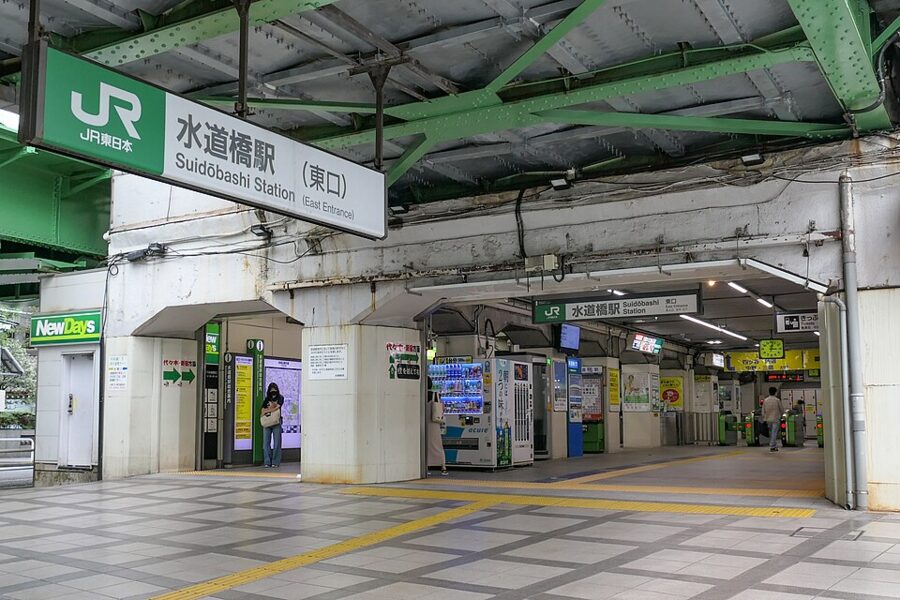

Korakuen is the station for the right-field stand. Take the footbridge across the road toward the Dome and turn right, and you are at Gate 25, the Giants supporters’ gate. The Toei Mita Line exit A2 comes up on the Tokyo Dome City side of the main road and shares the East Exit route through the arcade. Kasuga is connected to Korakuen underground, and its platforms are the ones to aim for after a game.
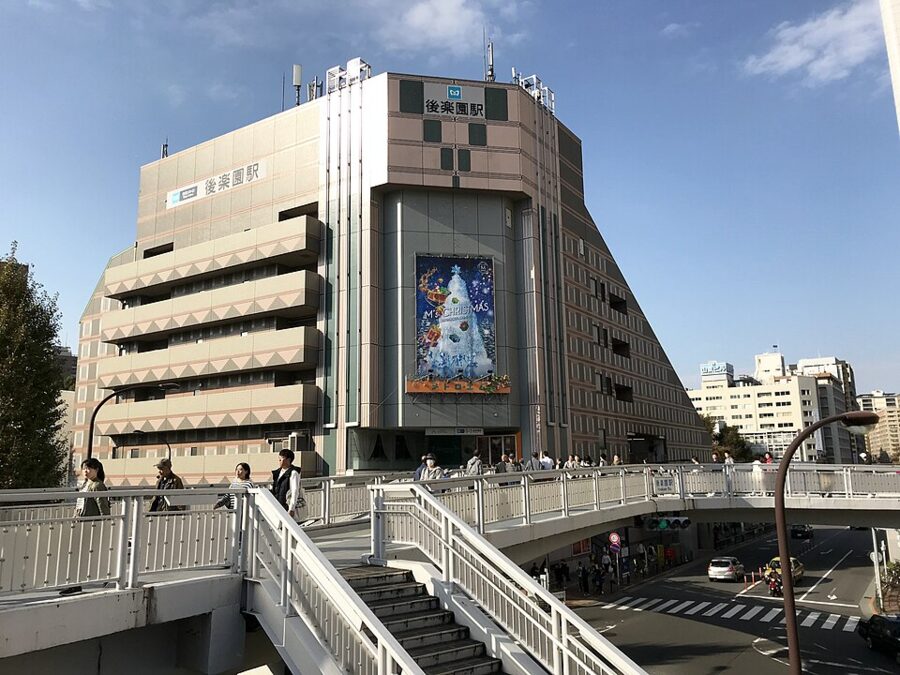

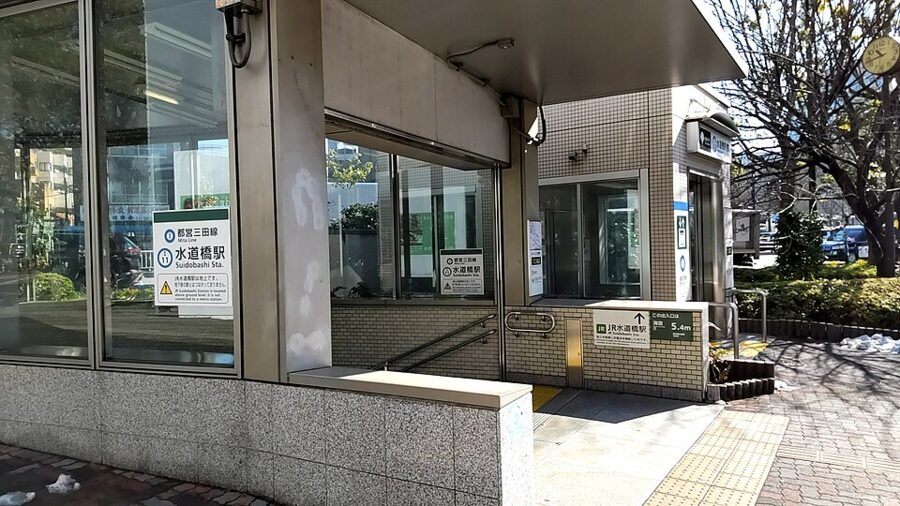
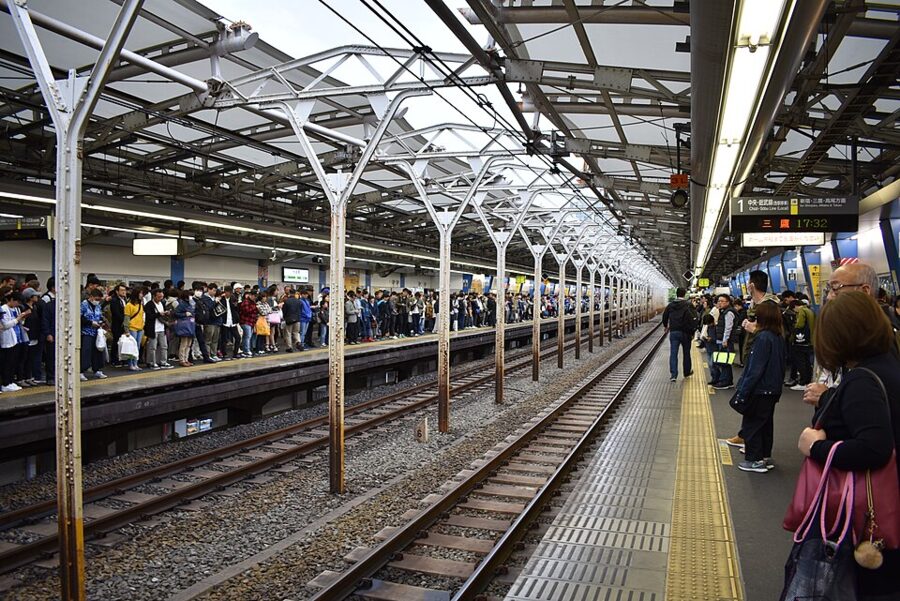
Getting away is the hard part. After a sellout more than 40,000 people head for the same four stations, and JR Suidobashi’s platforms fill first. The Dome asks fans to use stations other than the nearest one; I would walk five minutes to Kasuga or Korakuen and take the Oedo, Mita, Marunouchi or Namboku line, or sit through the hero interview and leave with the second wave.

The other baseball nearby
Three other professional parks are within about an hour of the Dome, all of them open-air. Each in a line:
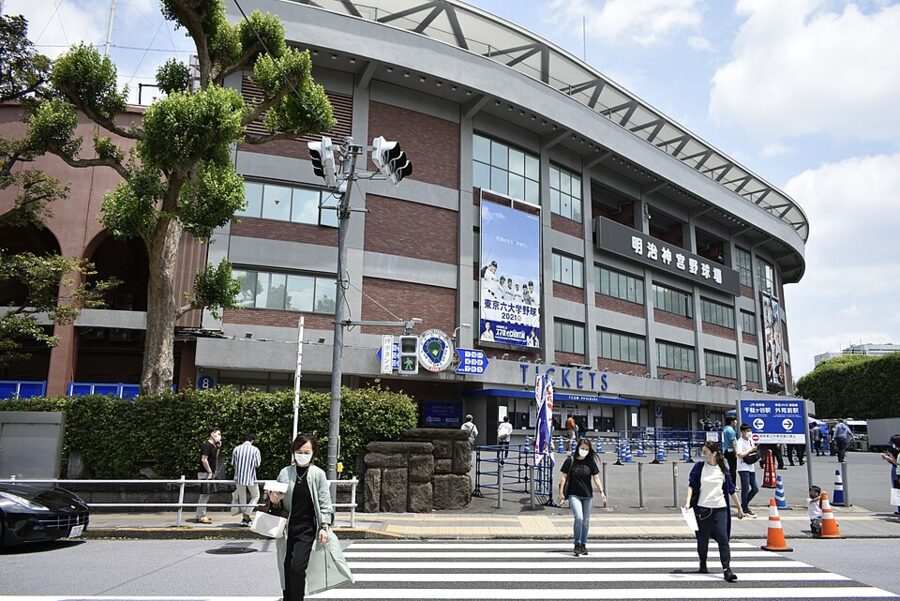
- Jingu Stadium, home of the Tokyo Yakult Swallows: opened in 1926, owned by Meiji Jingu and a short walk from Gaienmae Station on the Ginza Line.
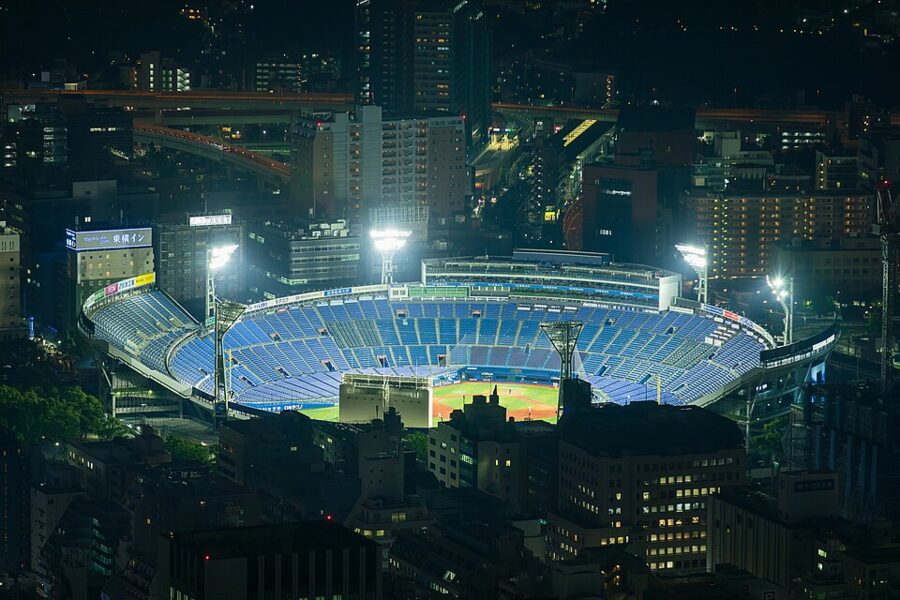
- Yokohama Stadium, home of the DeNA BayStars: next to Kannai Station in Yokohama, about 40 minutes by JR from Tokyo Station.
- ZOZO Marine Stadium, home of the Chiba Lotte Marines: by the sea at Makuhari in Chiba, famously windy, and a Pacific League club, so the Giants visit only in interleague play.



For the opener on March 26, 2027 the sales block will open, by the 2026 pattern, about six weeks earlier, on a Saturday at 11:00. Set the alarm for that Saturday, choose the upper deck behind the plate or the right-field stand, and leave the Tigers weekends to the people who joined the fan club.