

Come up through the JR Hachiko Gate at Shibuya Station and the scramble crossing is about a minute’s walk in front of you. Come out anywhere else and you can spend ten minutes in corridors looking for it. Shibuya (渋谷) has nine lines, four railway companies and a station that has been under reconstruction since 2012, so the first decision of any visit is the exit, and the second is whether to pay to look at the crossing from above.
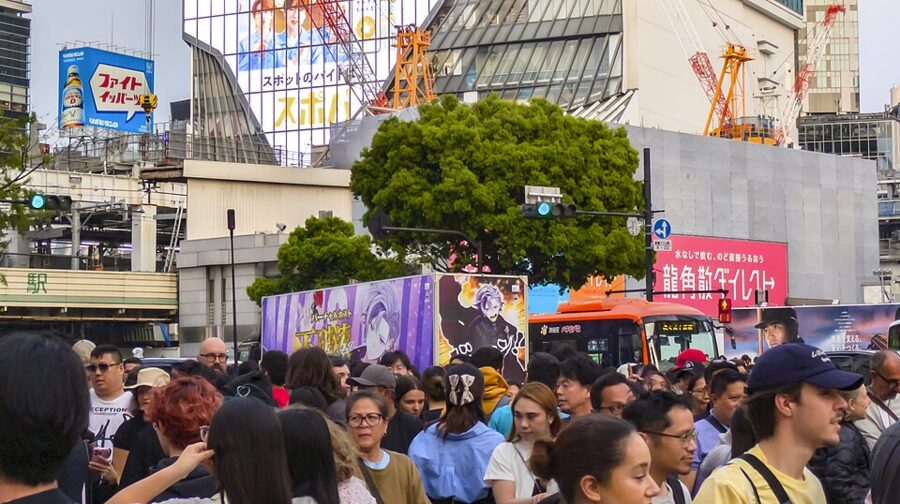

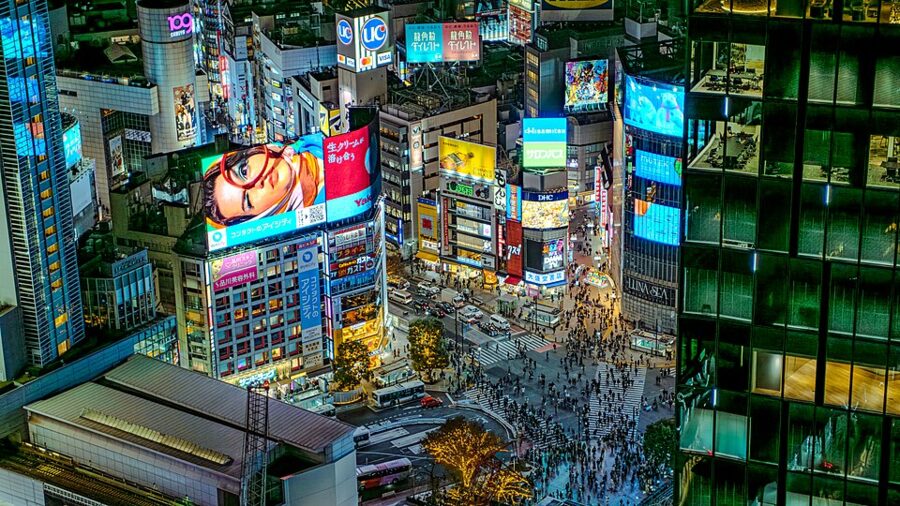
The answer to the second question is usually yes, but not at the famous price. Shibuya Sky’s web ticket costs ¥2,700 for entry before 15:00 and ¥3,400 from 15:00, sold up to two weeks ahead, and on Sunday, November 22, 2026 the whole day was sold out. Directly above the crossing, the rooftop lounge on MAGNET by SHIBUYA109 charges ¥1,800 with a drink included. And a glass passage inside the station looks over the crossing for nothing.
Everything else worth your time is within a 20-minute walk of that crossing: the new towers on the station’s east and south sides, the shopping streets to the north and west, the drinking alleys, and the quieter neighborhoods beyond them. The prices, hours and rules below were checked against the operators’ and Shibuya ward’s own pages in November 2026.

The station: which exit, which line
Shibuya Station is several stations stacked above and below one another, built at different times by different companies in the bottom of a valley, and Japanese commuters call it a labyrinth. The useful rule is simple: come and go by JR or the Ginza Line if you are doing the crossing and the shops, and learn the underground exit letters if you are not.
The lines
JR East runs the Yamanote Line (JY20), the Saikyo Line (JA10) and the Shonan-Shinjuku Line (JS19) through Shibuya, and the Narita Express stops here too. Tokyo Metro has three lines: the Ginza Line (G01), the Hanzomon Line (Z01) and the Fukutoshin Line (F16). Tokyu runs the Toyoko Line (TY01) and the Den-en-toshi Line (DT01), and Keio runs the Inokashira Line (IN01) to Shimokitazawa and Kichijoji.
Several of these are one train under two names. Fukutoshin Line trains continue onto the Tokyu Toyoko Line toward Yokohama, and Hanzomon Line trains become Den-en-toshi Line trains, so the platforms are shared: Den-en-toshi and Hanzomon three floors down, Toyoko and Fukutoshin five floors down in a concrete oval designed by Tadao Ando. By Tokyo Metro’s count, the Hanzomon and Fukutoshin platforms alone handled about 780,000 entries and exits a day in fiscal 2025.
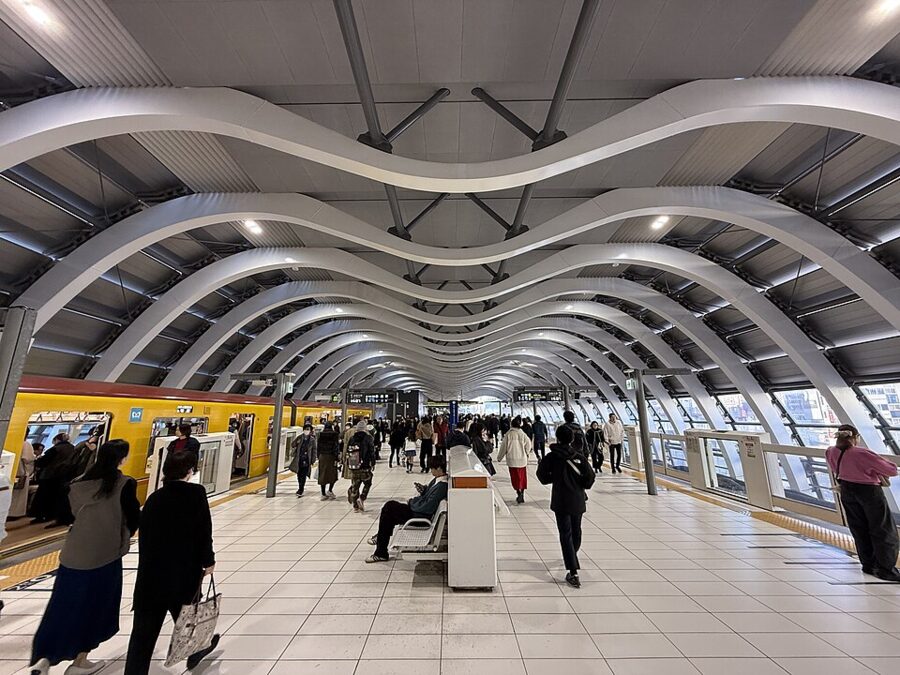
The Ginza Line is the odd one. It is a subway that arrives three floors above the street, and since January 3, 2020 its platform has sat over Meiji-dori on the east side of the station, between Shibuya Scramble Square and Hikarie. Changing between the Ginza Line and the Hanzomon or Fukutoshin lines means leaving one set of gates and entering another, even though Tokyo Metro runs all three. With a paper ticket you use the orange transfer gates and have 60 minutes; Den-en-toshi riders heading for the Ginza Line can avoid the walk by changing across the platform at Omotesando instead.

The Keio Inokashira Line is the one people miss. Its platforms are on the second floor of Shibuya Mark City, on the far west side, reached from JR through a long passage. Allow five minutes from the JR gates, more with luggage.
The exits that matter
Hachiko Exit. The crossing, the Hachiko statue, Center Gai, Shibuya 109, Dogenzaka and Parco are all on this side. The JR Hachiko Gate is not quite where older maps put it: on January 26, 2025 the old gates closed and the new ones opened about 60 meters toward the Miyamasuzaka side, as part of the work on the Yamanote Line platform above. Follow the signs for the Hachiko Exit, not for a particular staircase.
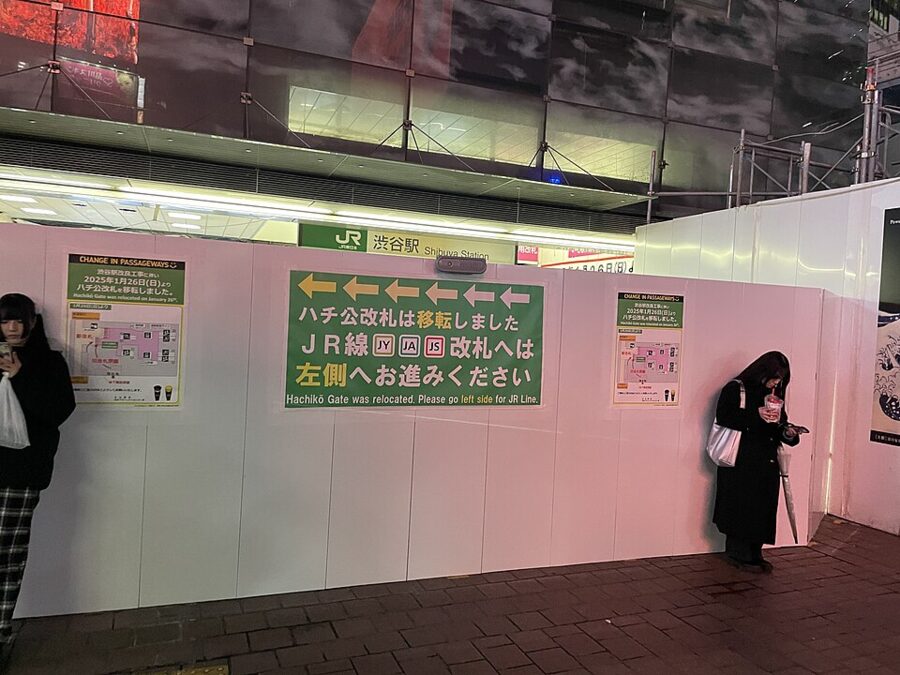

Miyamasuzaka Exit. The northern half of the east side, on the slope called Miyamasuzaka. Use it for Miyashita Park, Nonbei Yokocho, Meiji-dori toward Harajuku, and Aoyama-dori toward Omotesando.
East Exit. Shibuya Hikarie, the east bus terminal and the 1968 Mammoth footbridge over the junction of Meiji-dori and Route 246. Scramble Square sits directly above the station on this side, reached at underground exit B6; Hikarie is exit B5.
South and New South Gates. The South Gate serves the west and east bus terminals. The New South Gate is the one that moved most: on July 21, 2024 it shifted about 200 meters north into a new station building over the tracks, with decks running straight into Shibuya Stream on the east and Shibuya Sakura Stage on the west. Since that move it reaches the Yamanote and Saikyo platforms directly.
Use it for Daikanyama, Ebisu on foot and the Sakuragaoka hotels. JR’s plan is for the new station building to open fully during fiscal 2026, which ends in March 2027.
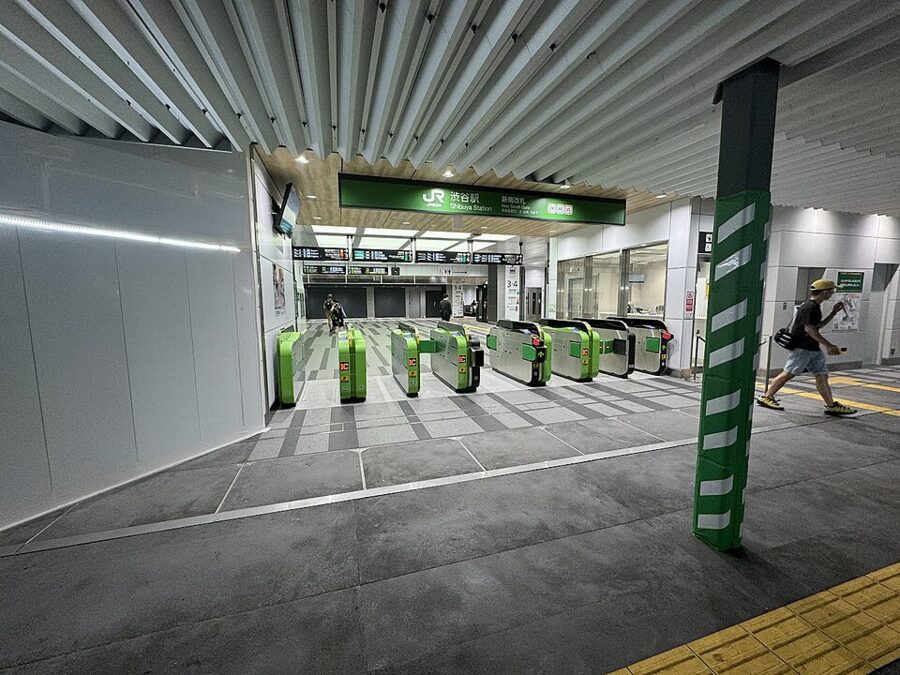

Underground, the exits have used letters by area since November 2019. A is the Dogenzaka side to the northwest, B is Miyamasuzaka to the northeast, C is the southeast toward Shibuya Police Station and D is Sakuragaoka to the southwest. If you are coming up from the Hanzomon, Den-en-toshi, Fukutoshin or Toyoko platforms, choose the letter first and the number second.
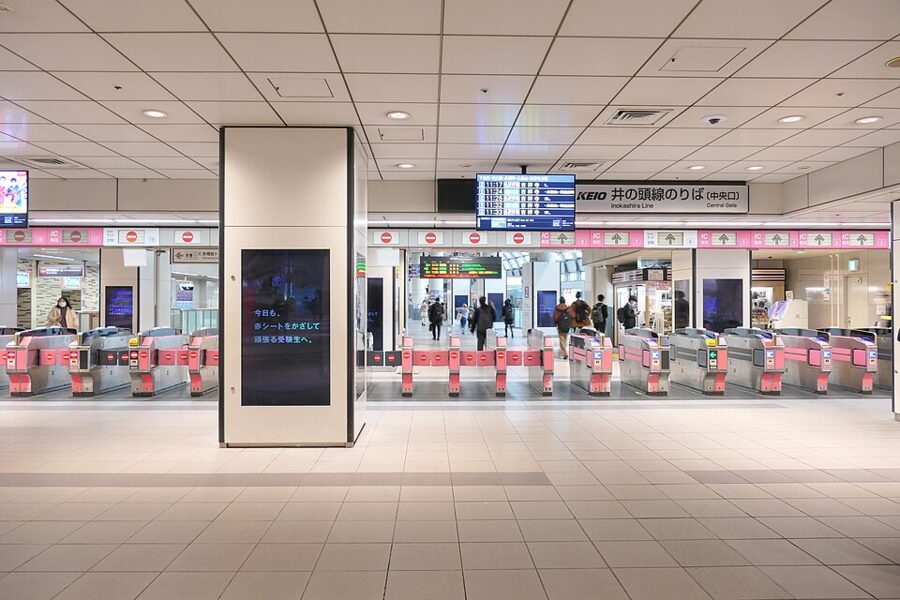

What the rebuild has changed, and what it hasn’t
Some of the long walks have gone. The Saikyo and Shonan-Shinjuku platforms, once so far south that people called them South Shibuya Station, moved about 350 meters north to sit beside the Yamanote Line on June 1, 2020. The two Yamanote Line directions have shared a single island platform since January 2023, ending decades of guessing which side your train used. The old Tamagawa Gate closed in September 2020 when the Tokyu Toyoko department store above it came down.
The rest is a long way off. On May 9, 2025, Tokyu and its partners pushed the completion date for the whole station project from fiscal 2027 to fiscal 2034. The central and west buildings of Shibuya Scramble Square are due in fiscal 2031, the east-west walkways across the station at every level in fiscal 2030, the escalator core facing Hachiko Square in fiscal 2033, and the rebuilt plazas, with the road between Hachiko Square and the west bus terminal closed to cars, in fiscal 2034. Hoardings and temporary corridors will be part of Shibuya for the rest of this decade, and the signs change when they move.
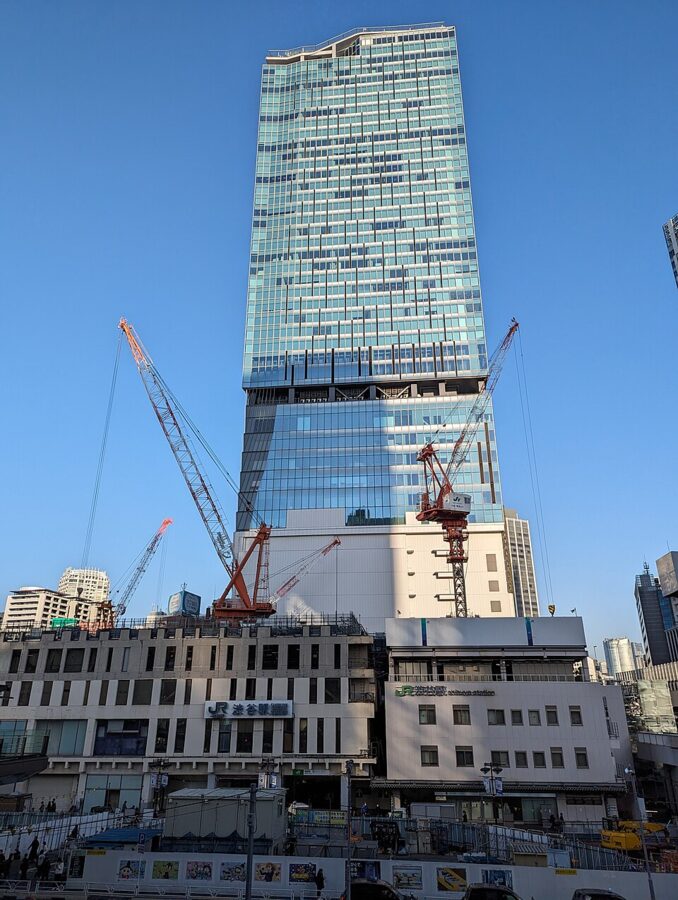
The scramble crossing and Hachiko
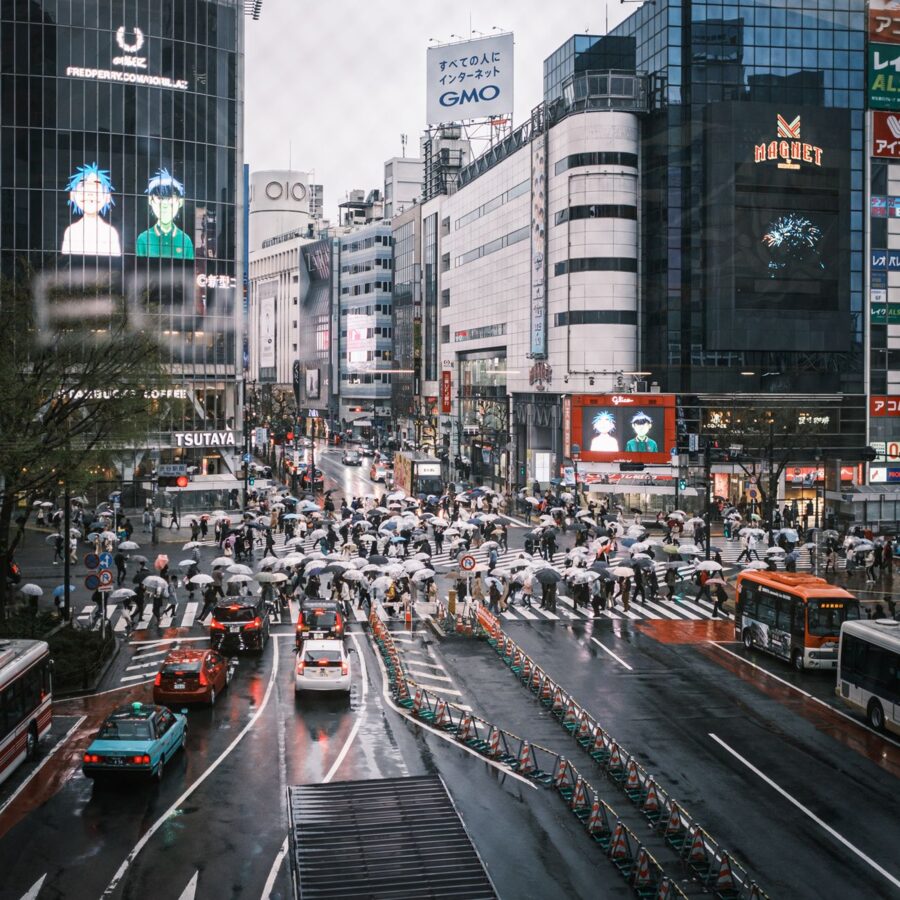
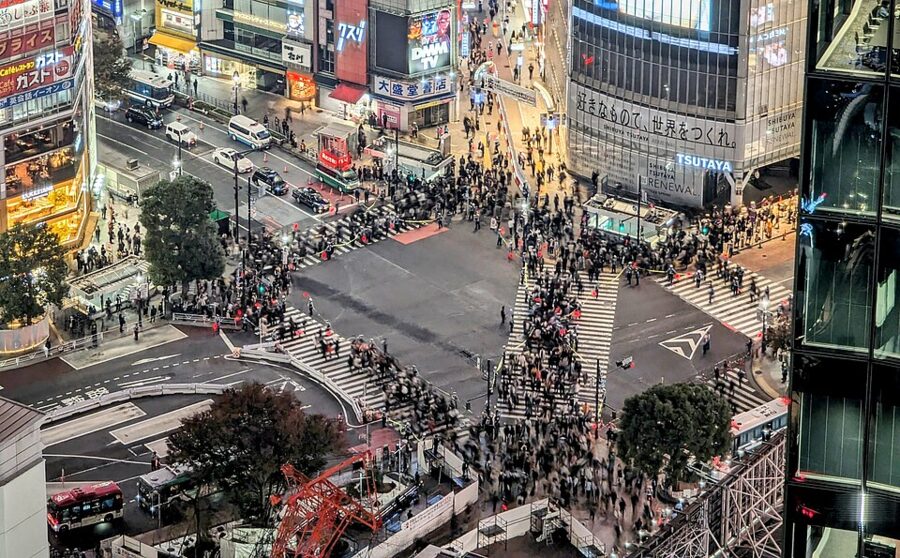
The crossing’s official name is Shibuya Ekimae Kosaten, the intersection in front of Shibuya Station. It has been a scramble since 1973: five crosswalks, ten lanes of traffic, and one diagonal of about 36 meters from Hachiko Square to the QFRONT building on the far corner. Counts of how many people cross vary with whoever did the counting. The Center Gai shopping association put it at up to 3,000 per green light in 2016, and a 2014 flow survey worked out about 260,000 a day on weekdays and 390,000 on holidays.
When it is busiest
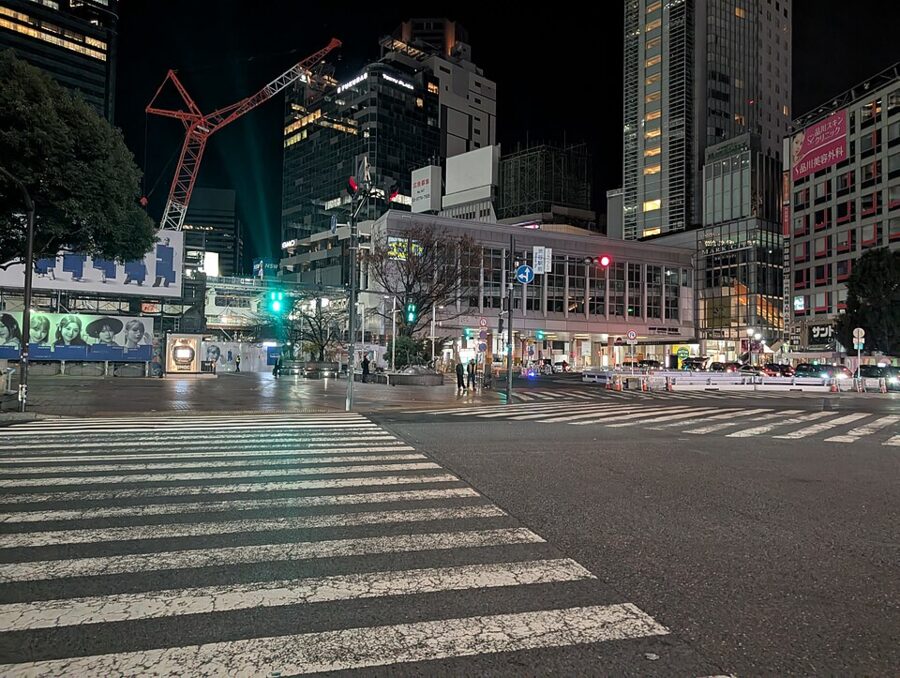
Friday and Saturday evenings from about 18:00 until the last trains, every weekend afternoon, and any night with a big football match, a New Year countdown or Halloween. Weekday mornings are commuters moving fast. For photos with people in them, early evening on a weekday is the best compromise; for photos without people, see the 2:00 picture above.
Where to watch it from
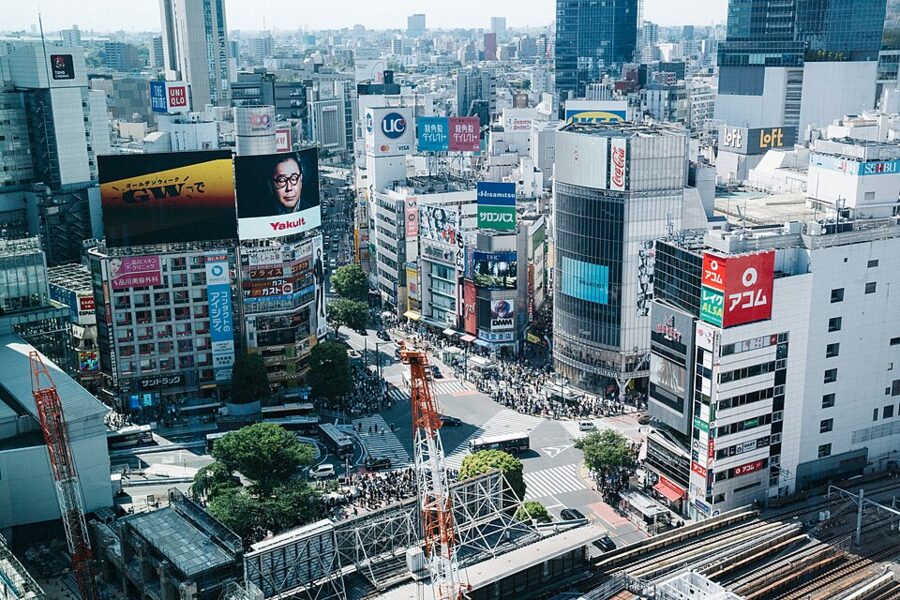
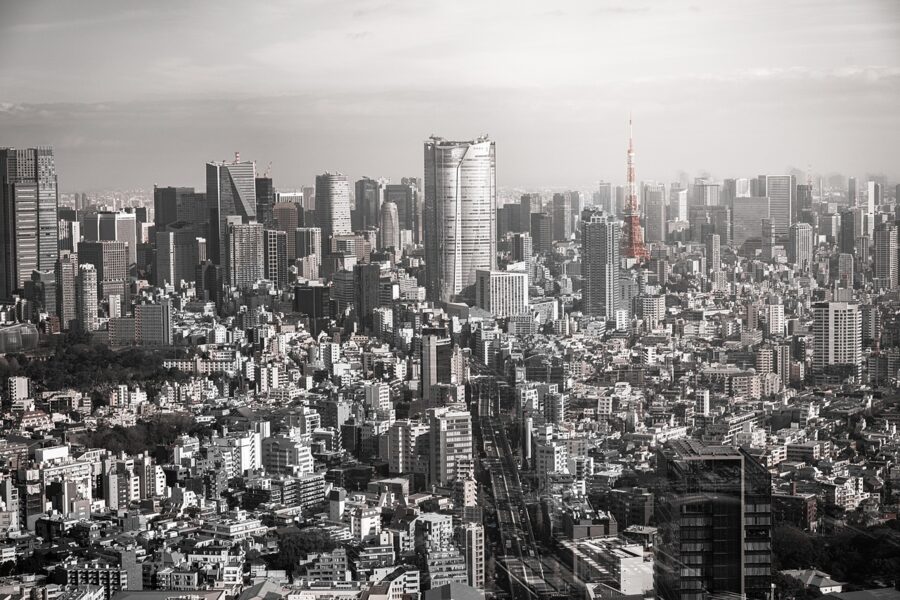
Shibuya Sky (paid, highest). The open-air roof of Shibuya Scramble Square is 229 meters above the crossing. You see the whole scramble as a diagram, plus Tokyo Tower, the Shinjuku towers and, on clear winter mornings, Mount Fuji. The crossing is small from up there, so bring a zoom if you want people rather than patterns; tickets and rules are in the towers section below.

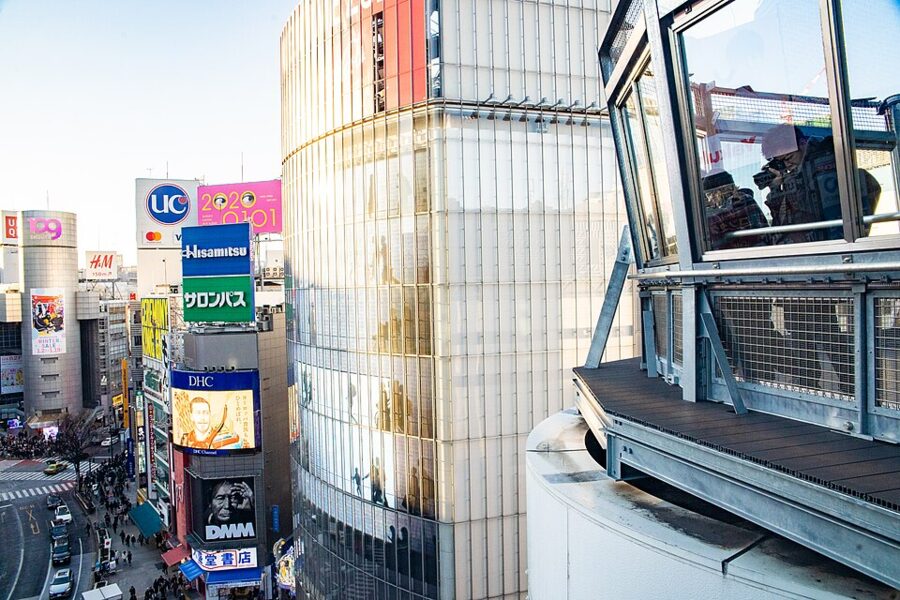
MAG8 on MAGNET by SHIBUYA109 (paid, closest). The building on the northeast corner of the crossing has a rooftop lounge, Crossing View & Rooftop Lounge MAG8, which charges ¥1,800 a person with one drink, alcohol included. It opens 10:00–22:00 with last entry at 21:30, and can close early in bad weather. This is the angle most of the famous overhead photos use: high enough to see the pattern, low enough to see faces.

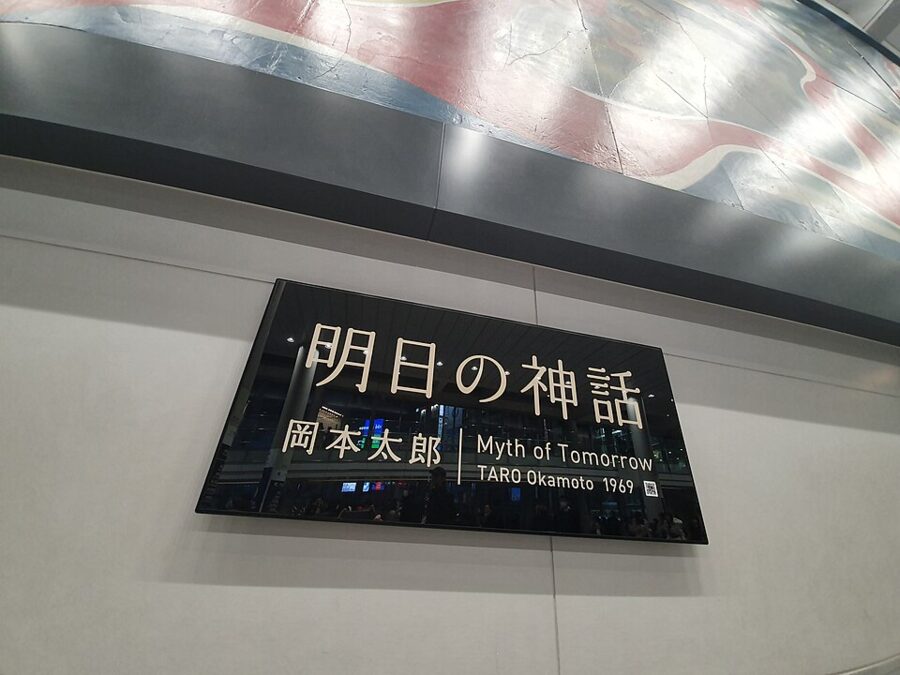
The Mark City passage (free). The glass corridor between the JR station and the Keio Inokashira Line, with Taro Okamoto’s mural on one wall, looks down on the crossing from the other. It is enclosed, it is free, and it is open whenever the station is.
Hikarie’s Sky Lobby (free, different view). The 11th floor of Shibuya Hikarie is the lobby of the Tokyu Theatre Orb, open to anyone, with big windows over the station. It does not look onto the crossing itself, and it is not Shibuya Sky: the Scramble Square operators say on their own access page that people mix the two up so often they print a warning.
How to cross it
Walk. Wait at the curb for the green man, cross at normal speed and keep going; the light phase is short, and the people who stop in the middle to film themselves are the ones the police whistle at. If you want to film, do it from the curb or from Hachiko Square. Diagonal crossing is allowed, which is the whole point of the scramble.
Hachiko
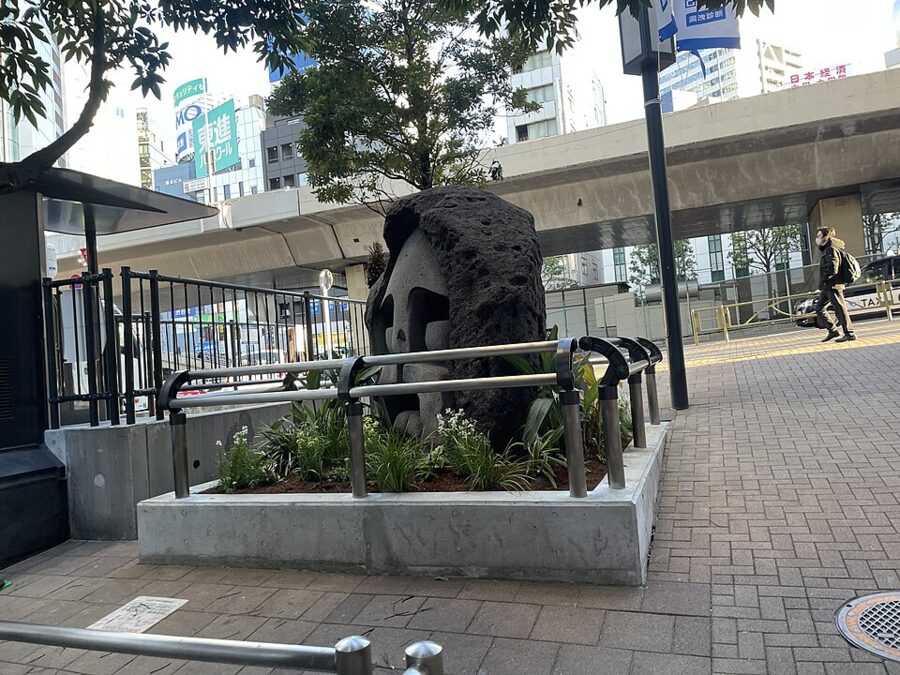
The bronze Akita in Hachiko Square is the second one. The first statue was unveiled on April 21, 1934, with the dog himself at the ceremony; he had walked to the station to meet his owner, the agricultural scientist Hidesaburo Ueno, for years after Ueno died in 1925, and he died in March 1935. That statue was melted down for metal in August 1944. The present one has stood here since August 15, 1948.
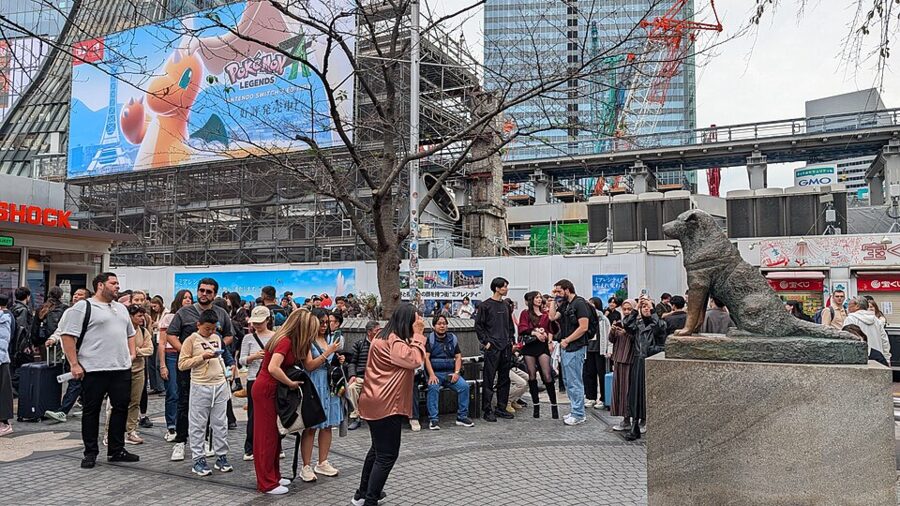

Hachiko is Tokyo’s default meeting point, which is why the square is crowded at 19:00 with people looking at their phones. Arrange to meet somewhere more specific, such as a named shop or an exit letter, and you will find each other faster. During Halloween the ward fences the statue off entirely: in 2026 the hoarding went up at 06:00 on Friday October 30 and stayed until the morning of Sunday November 1.
The new towers, and what each one is for
Shibuya’s skyline has been rebuilt since 2012, mostly on old railway land. Each tower has a job, though all of them also have a mall.
Shibuya Scramble Square and Shibuya Sky
The east building of Shibuya Scramble Square opened on November 1, 2019 directly above the station, 47 floors and about 230 meters, the tallest in Shibuya. The floors from the second basement to the 14th are shops and restaurants, including the Tokyu Food Show Edge food hall at the bottom; above them are offices; on top is Shibuya Sky.
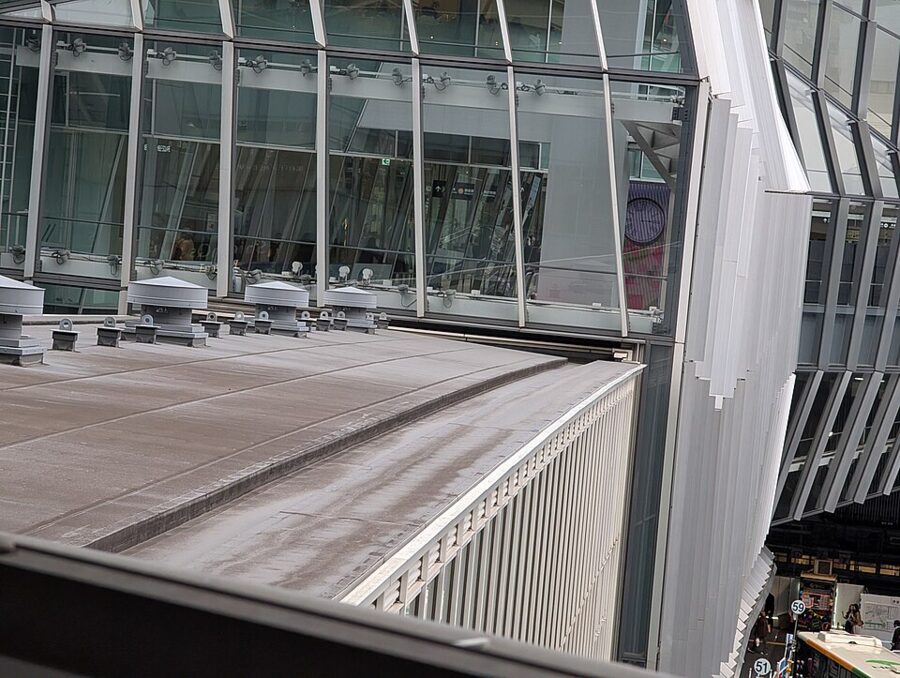
Shibuya Sky is open 10:00–22:30, last entry 21:20. The entrance and ticket counter are on the 14th floor, reached by a dedicated lift from the first floor on the outside of the building. Inside you ride up to an enclosed deck on the 45th and 46th floors, then out onto the roof, called Sky Stage.
The 2026 prices depend on the time you enter. A web ticket costs ¥2,700 for entry up to 14:59 and ¥3,400 from 15:00; at the counter the same ticket is ¥3,000 or ¥3,700. Children’s tickets, ¥1,200, are sold only at the counter on the day, and under-sixes go free. Tickets go on sale two weeks ahead, and when the web allocation sells out, the counter has nothing either.
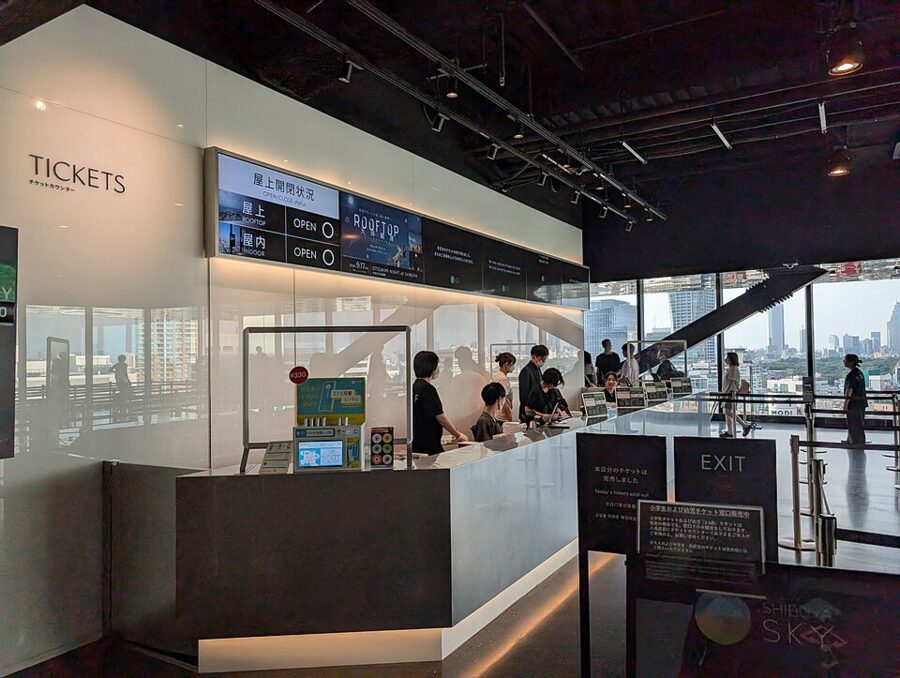
The time surcharge is the thing to plan around. Sunset in Tokyo in late November is about 16:30, which puts the best light squarely in the expensive slot, and those slots go first. My advice: book on the day tickets for your date are released, aim to enter at about 14:30 at the cheaper price, and stay through dusk. Nothing in the rules makes you leave.
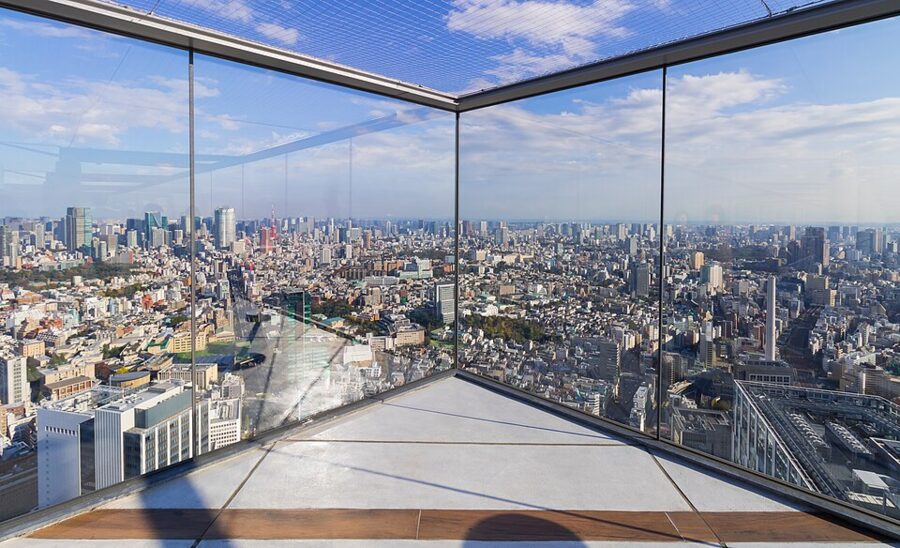

Read the roof rules before you go, because staff enforce them. No bags of any kind, no hats or caps, no tripods, selfie sticks, earphones or headphones, nothing to eat or drink; you can take a phone and a camera on a neck strap or small enough for a pocket. Everything else goes into lockers on the 46th floor. Large suitcases are not allowed in the building at all, and the roof closes for strong wind, rain, lightning or extreme heat.
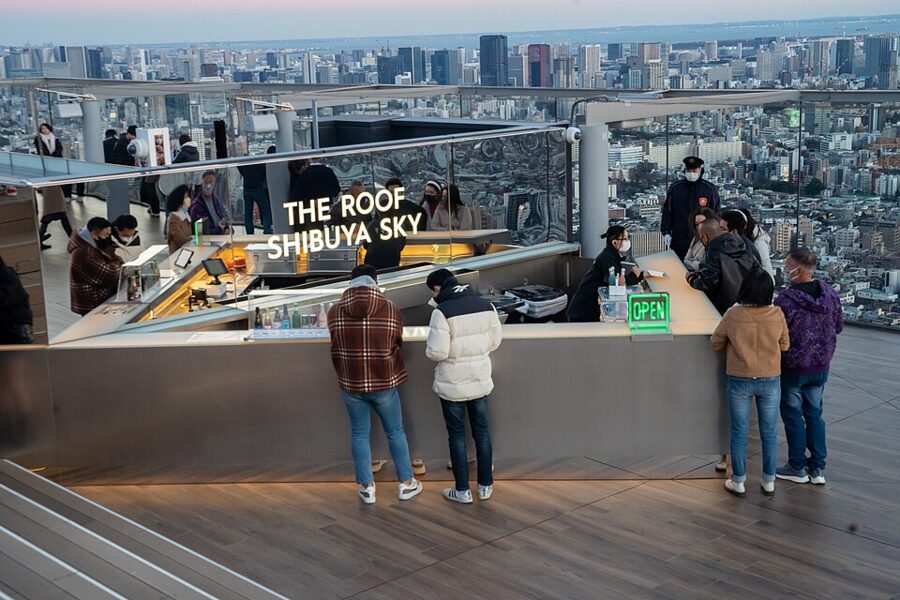
From April 29 to December 25, 2026 the roof also has a seasonal bar, The Roof Shibuya Sky, sold as a sofa seat with entry and drinks: ¥7,000 for the standard set and ¥8,000 with Champagne, for groups of two or more, over-20s only. If you would have bought a drink anyway, it is not a bad deal. On January 1, 2027, Shibuya Sky opens at 05:30 for a New Year sunrise event, last entry 06:30.

Shibuya Hikarie
Hikarie opened on April 26, 2012 on the site of the old Tokyu Bunka Kaikan cinema building, and started the rebuild. It is the east side’s department store and theater: ShinQs on the third basement to fifth floor (11:00–21:00, Sundays and holidays to 20:00), restaurants on the 6th, 7th, 8th and 11th floors (11:00–23:00), and the Tokyu Theatre Orb musical theater above. The Hikarie Deck on the third floor stays open 24 hours as a walkway to Miyamasuzaka.
Shibuya Stream
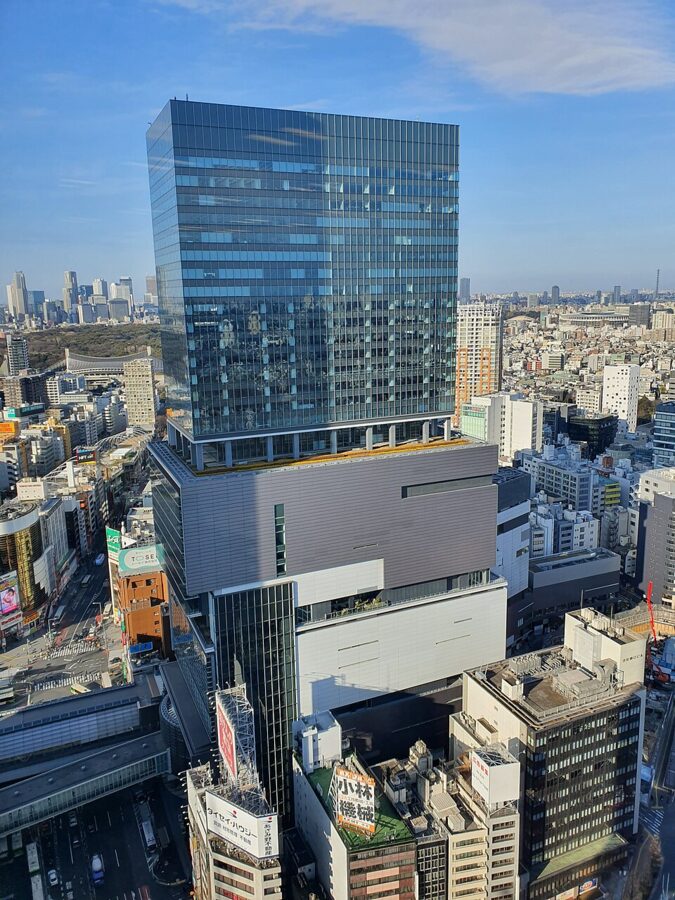
Stream opened on September 13, 2018 on the old overhead tracks of the Tokyu Toyoko Line, which went underground in 2013. It is a 35-floor tower of offices and a hotel with restaurants at its foot, and its best feature is outside: the Shibuya River, cleaned up and lined with a walkway that runs south toward Daikanyama and Ebisu. The second-floor deck across Route 246 reuses the old Toyoko Line viaduct and copies the arched roof of the old station. Hachiko was found dead in March 1935 near what is now the Stream car park entrance, on the opposite side of the station from his statue.
Shibuya Sakura Stage
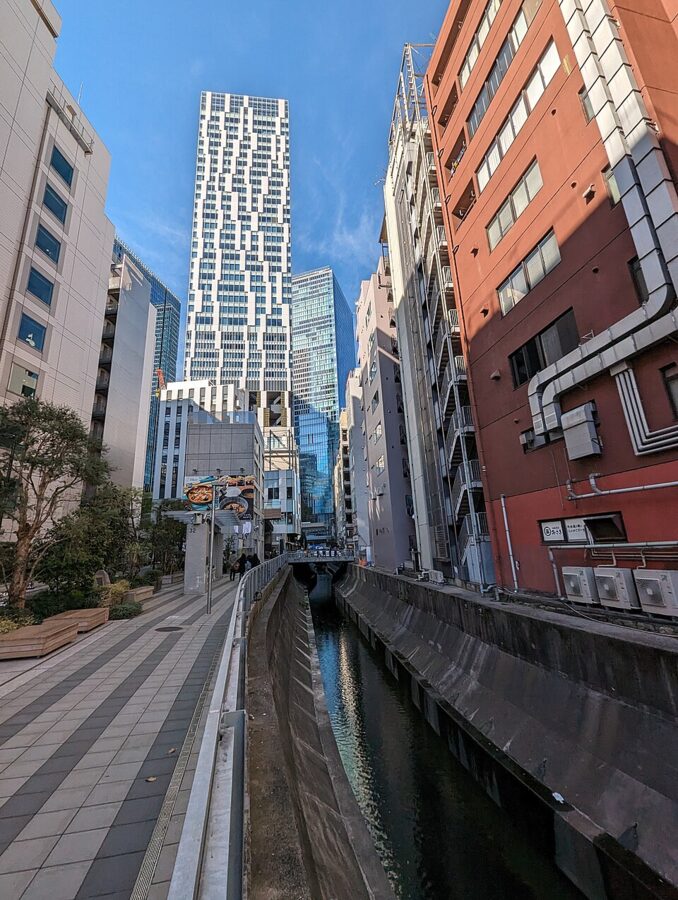
Sakura Stage covers about 2.6 hectares of Sakuragaoka, west of the tracks, where small grocers, instrument shops and bars stood until they all closed on October 31, 2018. The towers were completed on November 30, 2023 and the whole complex opened on July 25, 2024; the tallest, the 39-floor Shibuya Tower, is 179 meters. For most visitors it is the connection: the New South Gate deck runs straight into it, and the shops and restaurants on the lower floors are the quietest in central Shibuya.
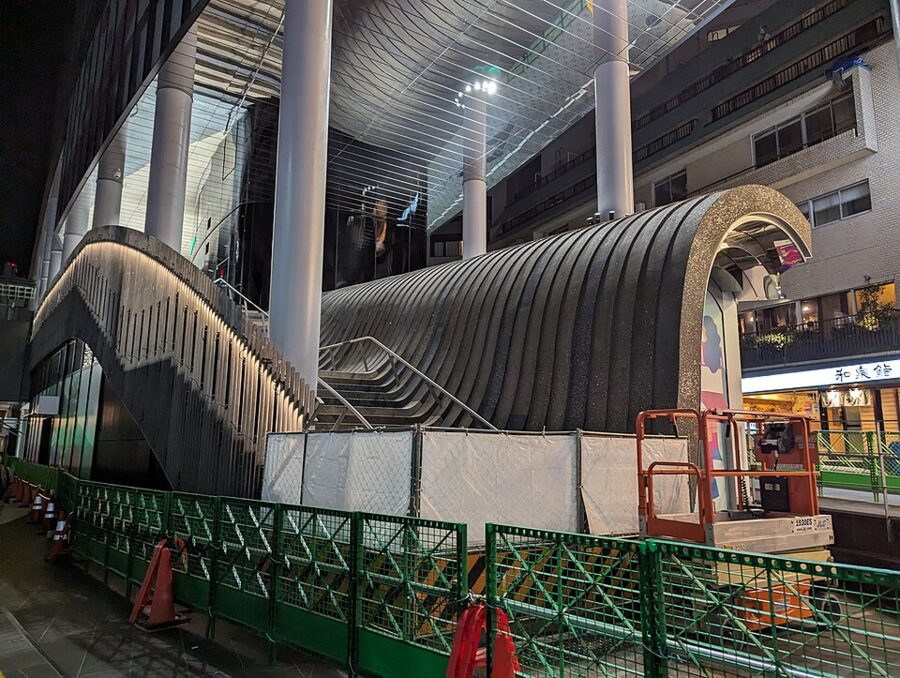
Miyashita Park
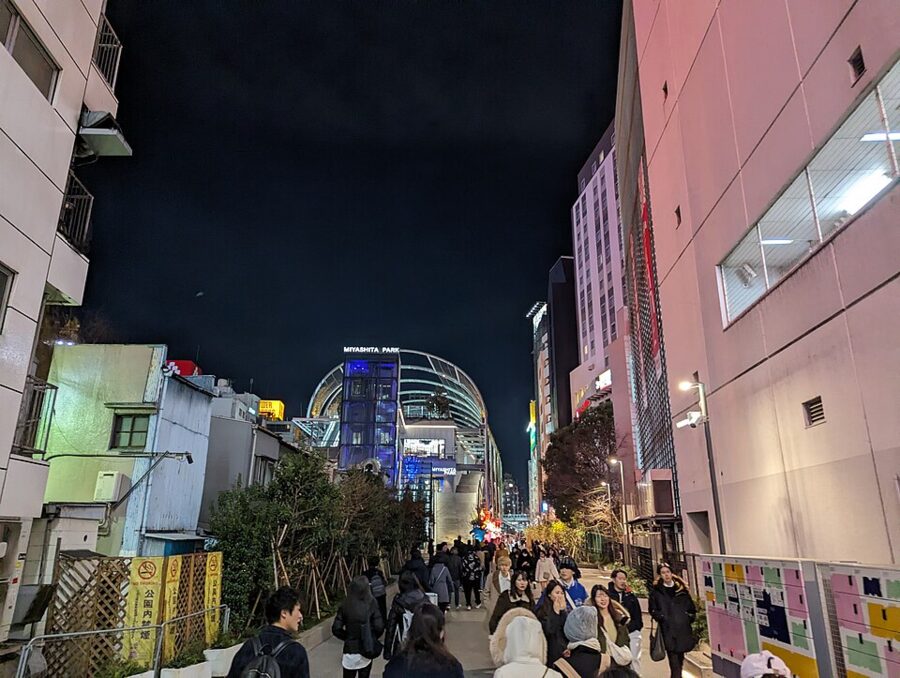
A 330-meter strip along the Yamanote Line between Shibuya and Harajuku, rebuilt and reopened in 2020 with a public park on the roof, about 17 meters above the street. Under the park are about 90 shops and restaurants in RAYARD MIYASHITA PARK, from luxury labels to record shops, and at the Harajuku end is the 18-floor sequence MIYASHITA PARK hotel. On the roof are a lawn of about 1,000 square meters, a skate park, a bouldering wall and sports courts.
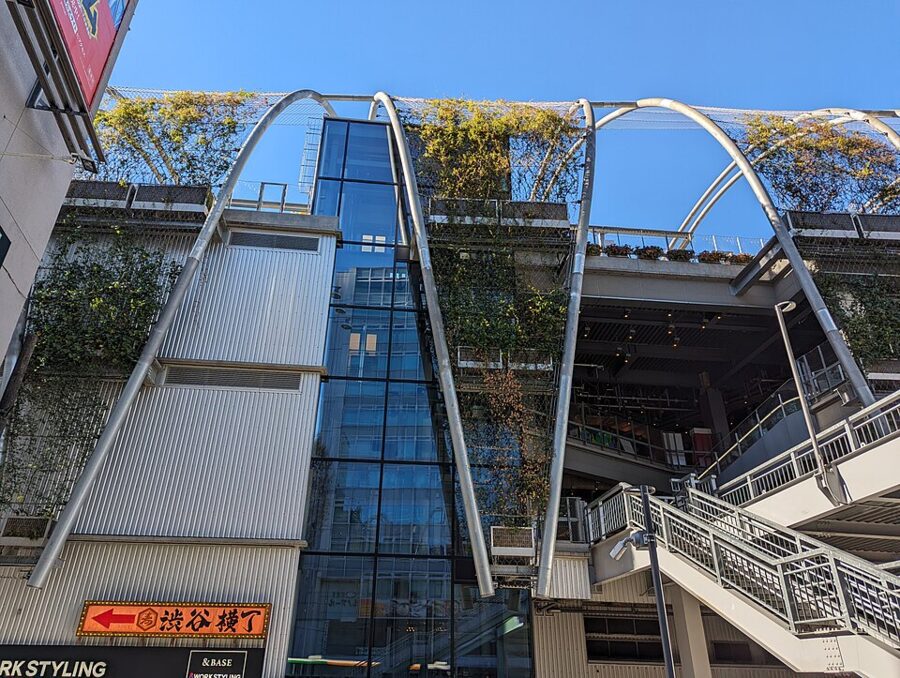
It is the most useful of the new buildings for a visitor who is not shopping: a free place to sit high above the traffic, ten minutes from the crossing, with Shibuya Yokocho on the ground floor when you get hungry.
Shopping
Shibuya shops in layers. The department stores and towers are around the station; the youth and character shops are on the Hachiko side; the record and secondhand shops are up the hill in Udagawacho and Jinnan. Most open at 10:00 or 11:00 and close at 21:00, earlier than visitors expect.
Shibuya 109
The silver cylinder at the fork of Dogenzaka and Bunkamura-dori is still the reference point for young women’s fashion in Tokyo, and still mostly sells to teenagers and students. SHIBUYA109 opens 10:00–21:00 and closes only on January 1. If you are not shopping for that market, look at the building and walk on.
Center Gai
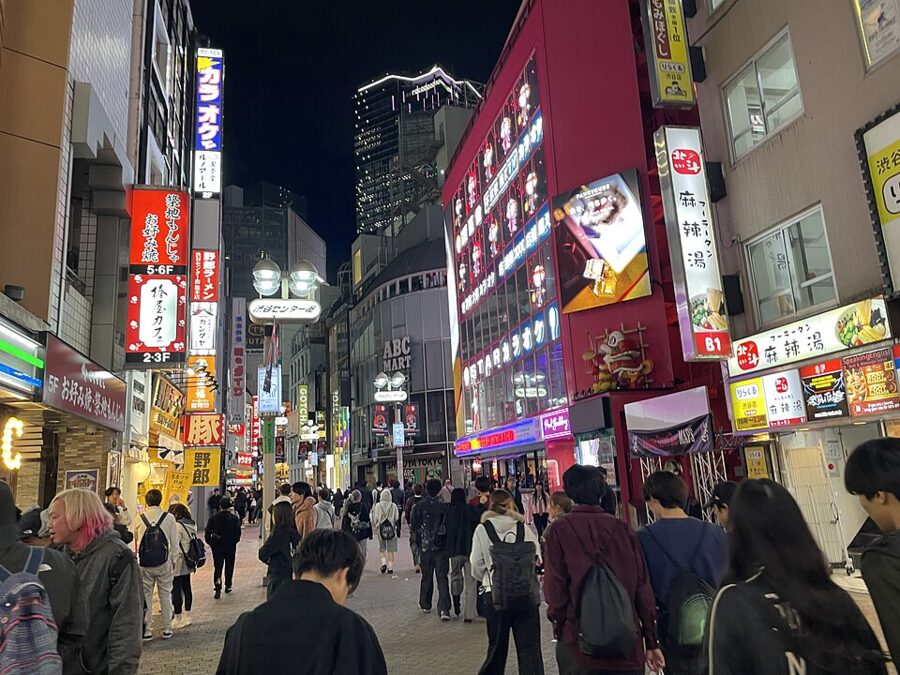
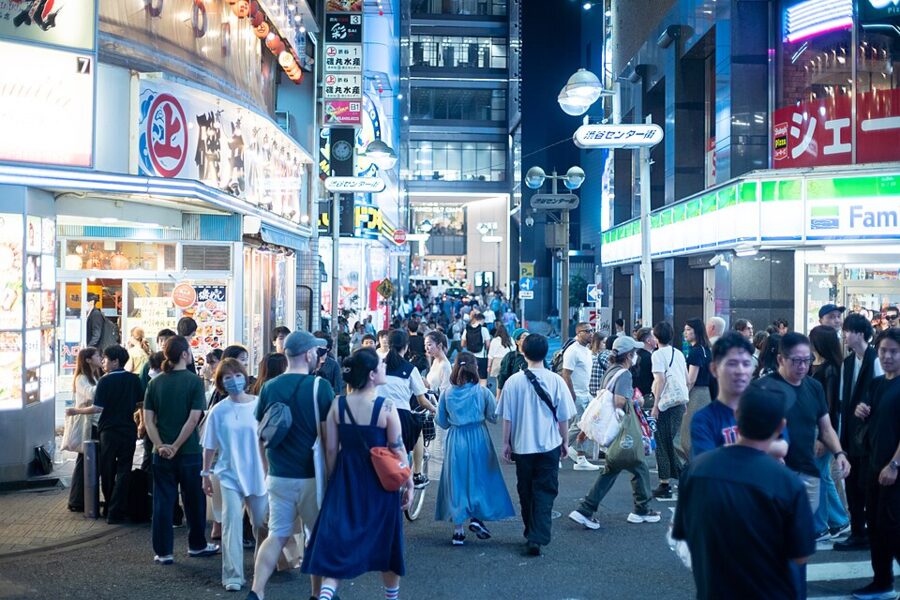
Center Gai (渋谷センター街) is the pedestrian street that starts at QFRONT on the crossing and runs about 350 meters west, built over a buried river, the Udagawa. It is fast food, karaoke, game centers, chain cafés and phone shops, loud from noon until the last trains. In 2011 the shopping association renamed the main street Basketball Street; almost nobody calls it that. It is worth walking once, in the evening, and then using as a shortcut.

Parco and its sixth floor
Shibuya Parco on Koen-dori reopened in November 2019 after a rebuild and marked its seventh anniversary in November 2026. The building’s draw for visitors is the sixth floor, called Cyberspace Shibuya: Nintendo TOKYO, Pokemon Center Shibuya, Capcom Store Tokyo and Jump Shop, side by side. That floor opens at 10:00, an hour before the rest of the building, and closes at 21:00.
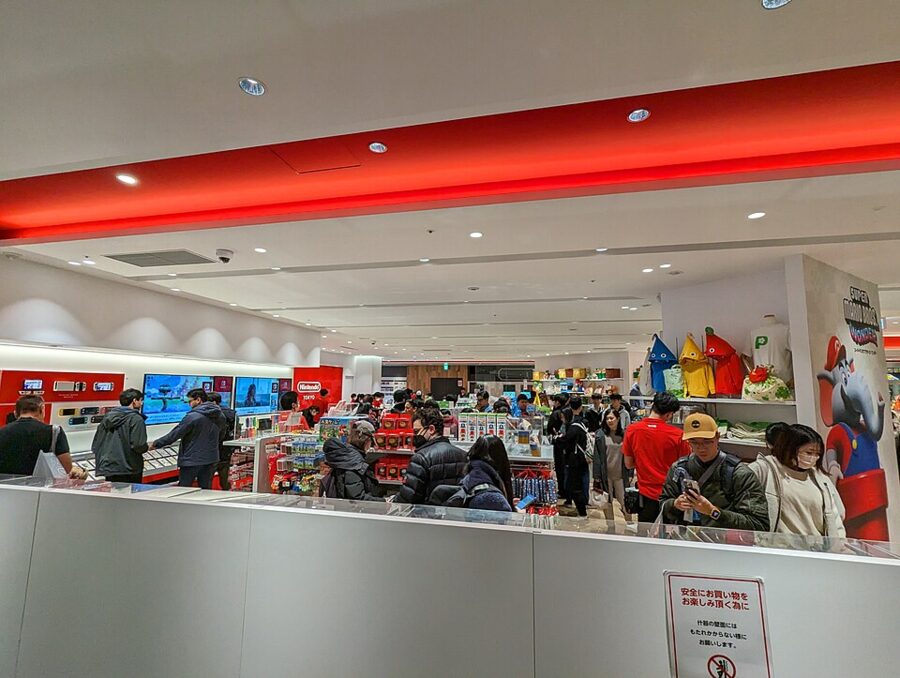

Go on a weekday morning if you can. On weekends and holidays the line forms on a staircase, which opens at 9:30, and Parco publishes a calendar predicting how crowded the floor will be. The rest of Parco is fashion and art, shops 11:00–21:00, with restaurants on the 7th floor to 23:00 and a basement food floor where the posted hours run from a standing tempura counter at 11:30 to Campy!bar, which opens at 19:00 and on most nights pours until 05:00.
Records and books
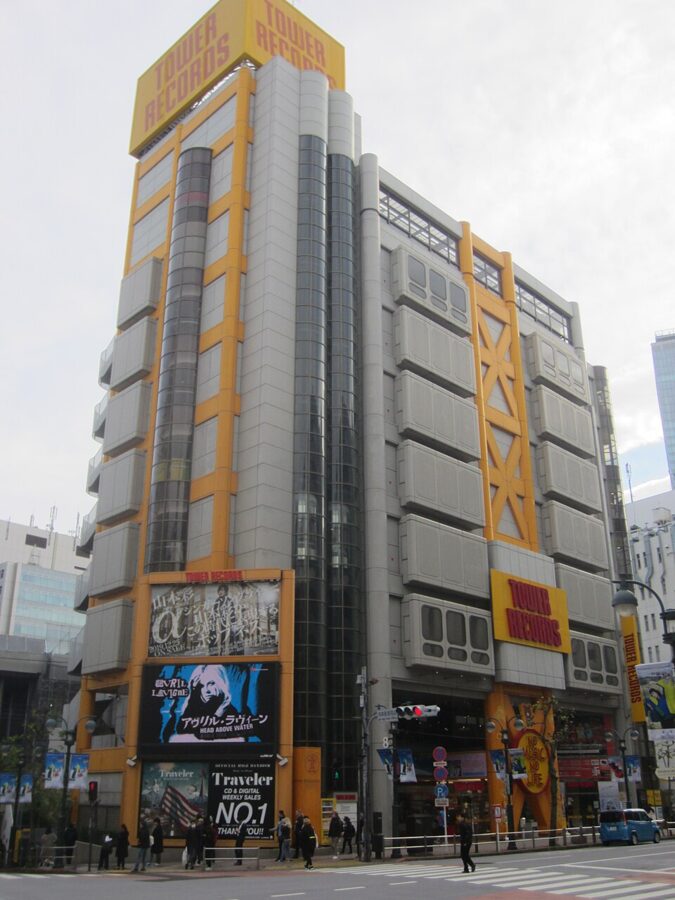
Shibuya was Japan’s record-shop district for decades and still has more than most cities. Tower Records Shibuya in Jinnan, open 11:00–22:00, fills a whole building from the basement to the eighth floor, with a vinyl floor, Tower Vinyl Shibuya, and a café. HMV record shop Shibuya in Udagawacho, 11:00–21:00, is new and used vinyl on two floors, seven minutes from the Hachiko Gate. Disk Union’s Union Records has a shop in Parco, open from 12:00 on weekdays and 11:00 at weekends.

Don Quijote
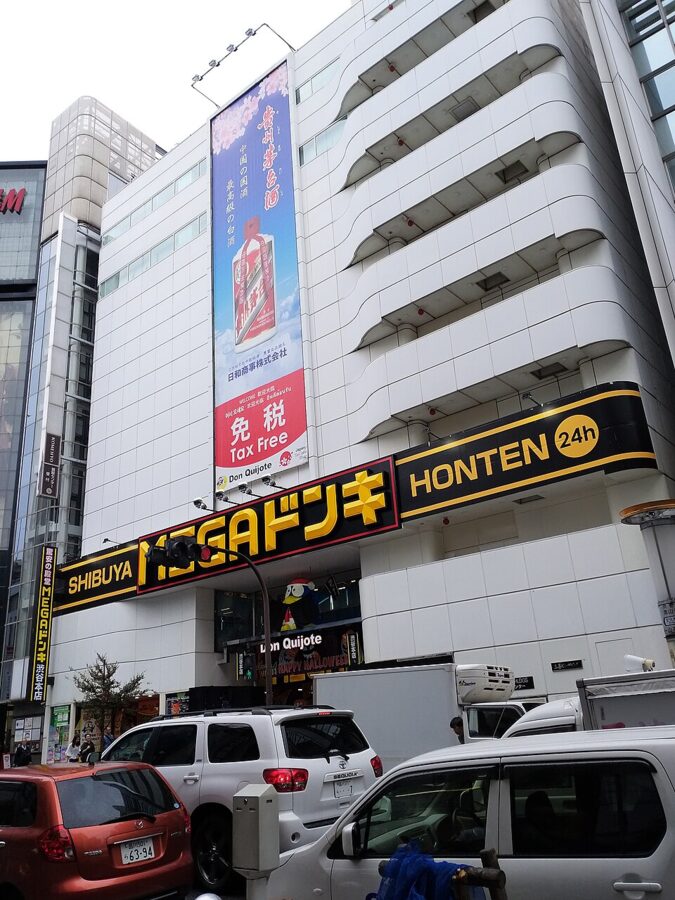
The discount chain’s biggest Shibuya store, MEGA Don Quijote Shibuya Honten in Udagawacho, is open 24 hours. It is the place for snacks, cosmetics, souvenirs and things you did not know you needed, and it is usually calmer late at night than in the early evening. Its annex at the top of Dogenzaka, in the new Dogenzaka-dori building, keeps 10:00–05:00.
Eating and drinking
Shibuya’s food is everywhere and mostly fine; its drinking is the reason locals stay late.
Nonbei Yokocho
Nonbei Yokocho (のんべい横丁), Drunkards’ Alley, is two narrow lanes beside the Yamanote Line tracks on the Miyamasuzaka side, in Shibuya 1-chome, three minutes from the Hachiko Gate. It has outlasted every stage of the rebuild so far, and its residents’ association lists a few dozen bars: yakitori, oden, regional home cooking, sake, whiskey, one with karaoke. Most seat fewer than ten.
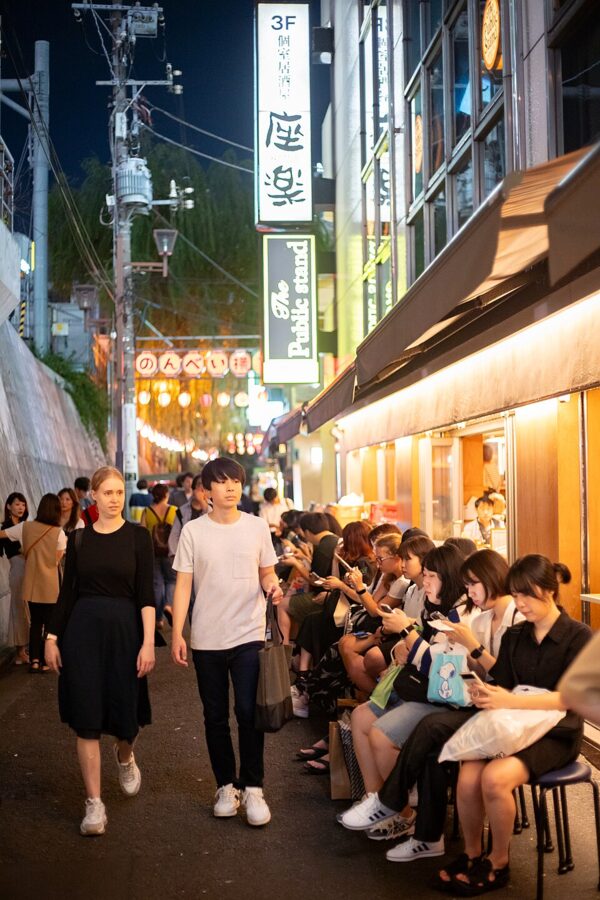

Expect a table charge, often with an otoshi, the small dish that arrives whether you ordered it or not. Prices are posted at some doors and not at others; ask before you sit if it matters. And go early in the evening, because by 21:00 on a Friday a party of four will not fit anywhere.
Shibuya Yokocho
The opposite approach, on the ground floor of Miyashita Park: Shibuya Yokocho is a 100-meter food hall of 19 small restaurants, each cooking one region’s food, Hokkaido at one end of the country and Okinawa at the other, with 1,500 seats in all. It comes from the producer of Ebisu Yokocho. Most counters run 11:00–23:00, and a retro coffee-and-snack bar inside keeps 20:00–05:00. It is loud, cheap by Shibuya standards and easy for groups, and a good place to eat when Nonbei Yokocho is full.
Dogenzaka
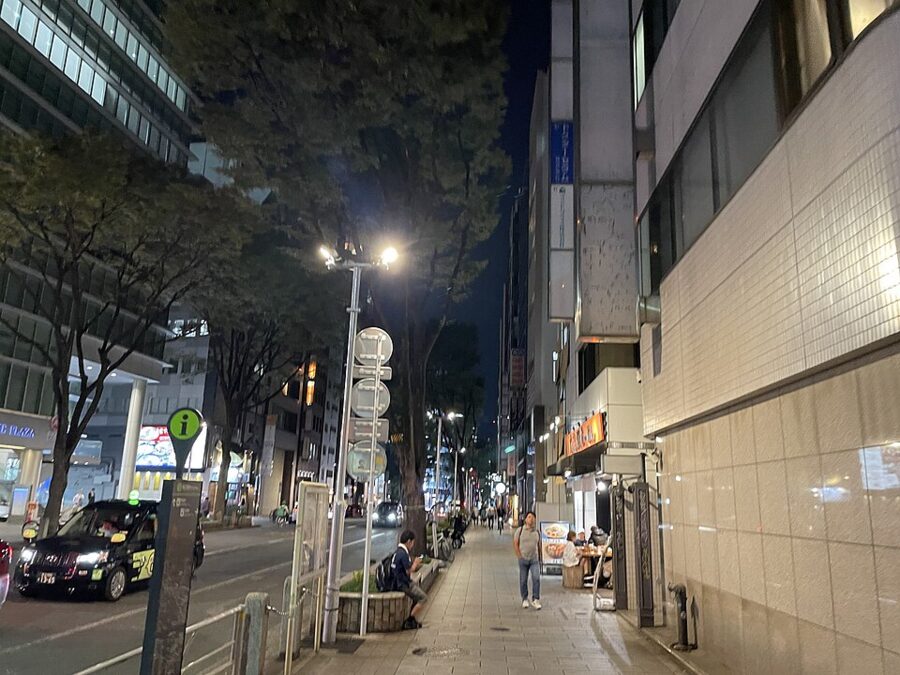
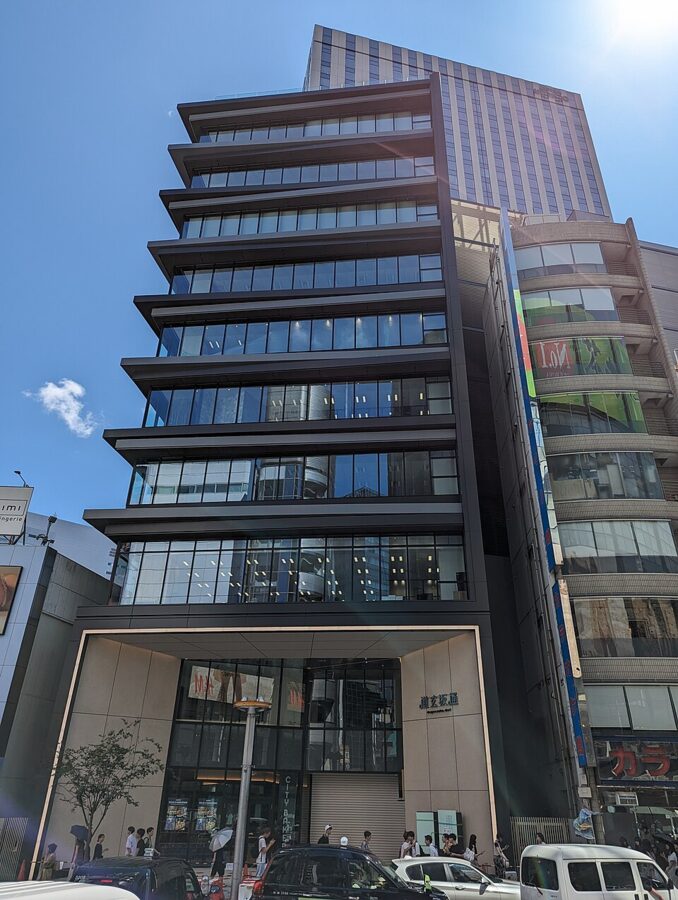
Dogenzaka is the hill that climbs west from Shibuya 109. Its lower end is chain restaurants and izakaya stacked six floors high; halfway up, the lanes of Hyakkendana hold old coffee houses and small bars; the top, around the Dogenzaka 2-chome redevelopment, is clubs, live houses and the love hotels that gave the hill its nickname. It is the busiest part of Shibuya after 22:00 and has the most touts.

Food halls
For a picnic for the train or a bento for the hotel, the department-store basements beat the street. Shibuya Tokyu Food Show fills the first floor and basement of Mark City and the Shibuchika underground arcade, 10:00–21:00 every day; the deli and fresh counters start marking prices down after 20:00. Tokyu Food Show Edge is in the basement of Scramble Square, and Hikarie’s ShinQs has food floors in its basement on the east side. On weekdays the Food Show’s own advice is to come for deli food between 15:00 and 16:00, when it is quietest.
After dark
Shibuya at night is a younger, louder crowd than Shinjuku’s, spread across the clubs and bars of Dogenzaka, Udagawacho and Center Gai, with Nonbei Yokocho as the quiet exception. Plan the night backwards from your last train, and expect cover charges that are rarely posted. The night is covered in full in the Tokyo nightlife guide; the live houses on Dogenzaka and around Udagawacho, from small rock rooms to the halls the big tours play, are in the Tokyo live music guide.

On foot from Shibuya
Shibuya sits in a valley, so every walk out of it starts uphill. Times are from the crossing or the nearest exit, and approximate.
Okushibu (Kamiyamacho and Tomigaya). Inner Shibuya, behind the Bunkamura-dori end of Udagawacho: small coffee roasters, bakeries, bookshops and wine bars on residential streets. About 10–15 minutes northwest from the crossing to Kamiyamacho, and 15–20 to Tomigaya, which is also a short walk from Yoyogi-Hachiman Station on the Odakyu Line.
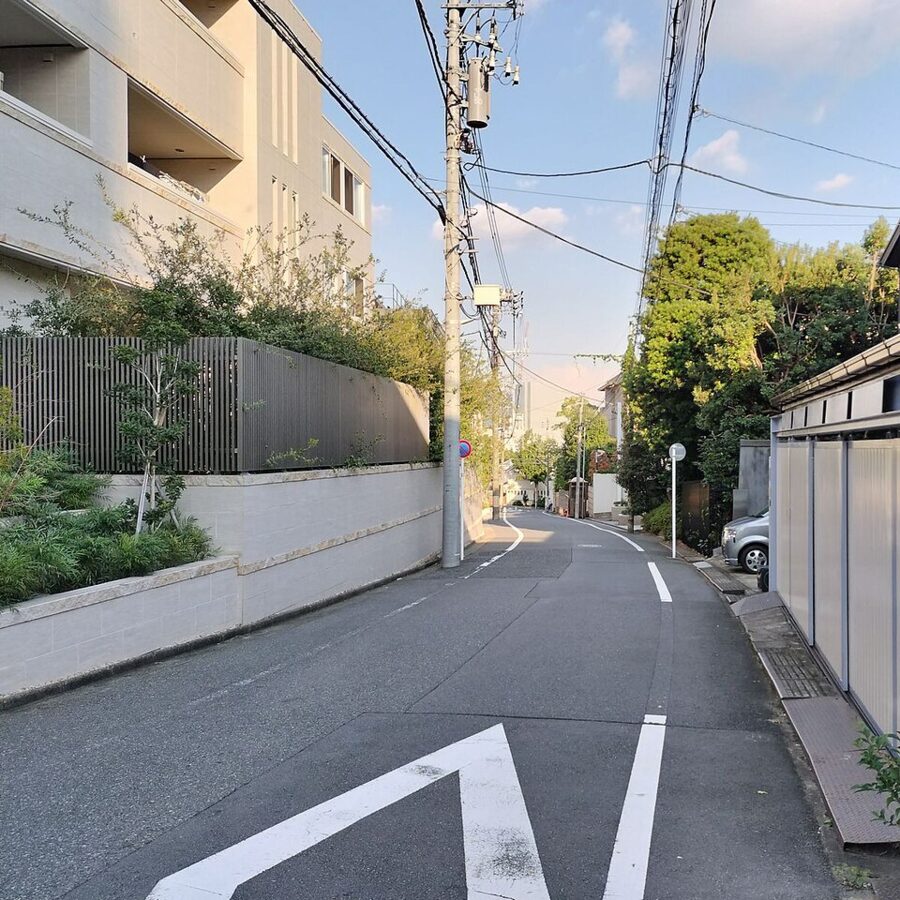
Daikanyama. Low-rise boutiques and cafés on a ridge to the south. About 15 minutes from the New South Gate past Sakura Stage, or one stop on the Tokyu Toyoko Line.
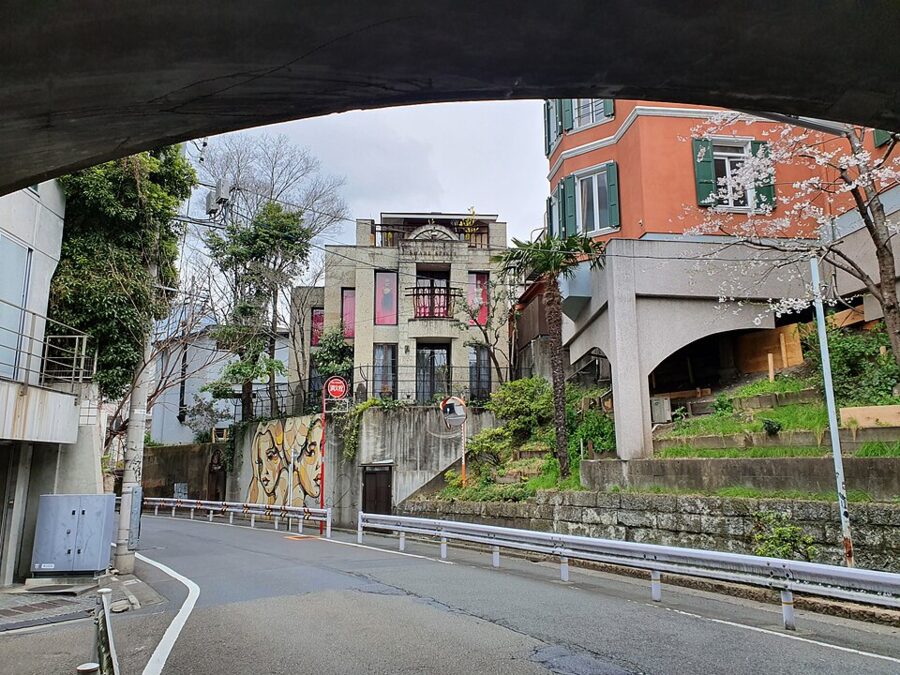
Ebisu. About 15–20 minutes south along the Shibuya River walkway from Shibuya Stream, or one stop on the Yamanote Line. Ebisu’s izakaya are the grown-up alternative to Shibuya’s on a weeknight.
Harajuku and Omotesando. About 15–20 minutes north to Harajuku, either along the roof of Miyashita Park and then Cat Street, the pedestrian lane on another buried river, or straight up Meiji-dori. Omotesando is about 15 minutes up Aoyama-dori from the Miyamasuzaka Exit, uphill all the way.
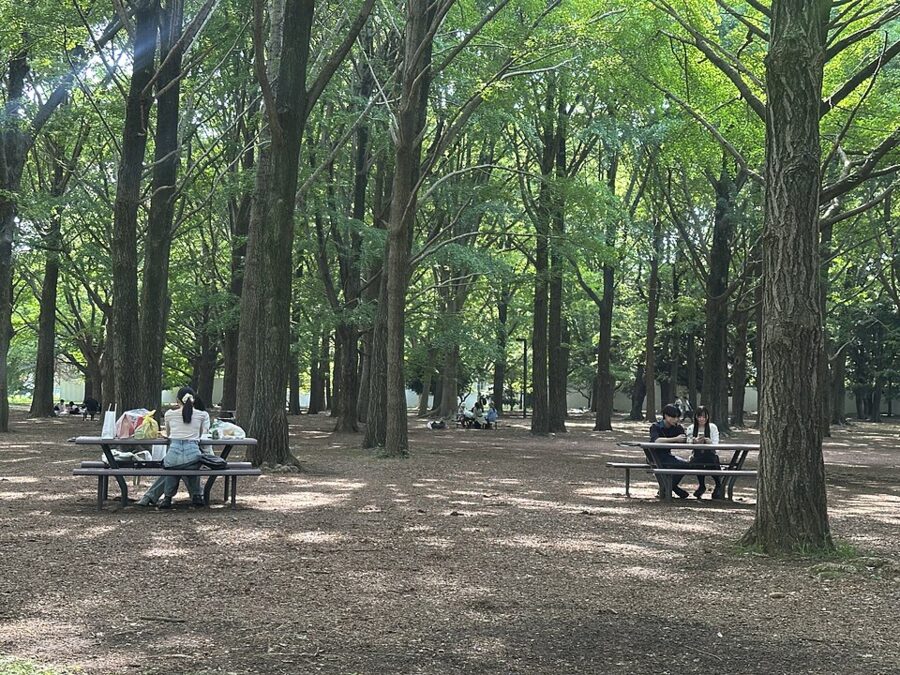
Yoyogi Park. About 15–20 minutes up Koen-dori past Parco. It is the closest big green space to the crossing, with weekend crowds, buskers and food stalls when there is an event on.

The rules: drinking, Halloween and smoking
Shibuya ward has written down what it will not put up with, and visitors break these rules more often than locals, mostly without knowing they exist.
No drinking on the street after 18:00
Since October 1, 2024, the ward’s ordinance has banned drinking alcohol on the street, in parks and in other public places around Shibuya Station from 18:00 to 05:00, every night of the year, over a larger area than before. The 2019 version applied only at Halloween and New Year. A convenience-store beer on the curb by the crossing is exactly what it targets.
Drinking inside bars, restaurants and venues is not affected, and the ward can lift the ban for festivals it approves. Since September 1, 2023 the ward has also run nightly patrols around the station under what it calls a zero-tolerance declaration on nuisance street drinking, which covers the whole ward, not just the station area.
Halloween
Halloween in Shibuya was a crowd with no organizer, and the ward has spent several years asking people not to come. In 2023 it said Shibuya was not a Halloween venue; in 2024 it announced Shibuya was taking Halloween off; for 2026, the mayor launched the slogan “GOODBYE BAD HALLOWEEN” at the end of September, aimed at street drinking, smoking, litter and blocking the streets. In 2026 the Hachiko statue was fenced off from 06:00 on October 30 to the morning of November 1, and the police closed roads around the station from 16:00 on both October 30 and 31 until the early morning.
My view: if you want to dress up, go to an organized event at a club or a venue, where it is allowed and expected. If you want to see Shibuya, pick any other week.
Smoking
Outdoor smoking in public places is banned across Shibuya ward, and wardens patrol; smoke only at the designated smoking areas. Around the station the ward runs four: at the Moyai statue by the west exit (Dogenzaka 1-1), at the scramble crossing (Dogenzaka 2-3-1), at the Miyamasuzaka-shita intersection (Shibuya 1-24), and at the New South Exit (Shibuya 3-26). All four are open around the clock except the first three over New Year. Several buildings, including Shibuya Stream, Miyashita Park, Parco and Sakura Stage, have smoking rooms with their own hours.

Where to stay, and getting in from the airports
Sleep on the side of the station you will use most. The west side, from Mark City up through Dogenzaka and Sakuragaoka, has the most rooms at every price and the airport buses, though Dogenzaka is noisy until late.
Shibuya Excel Hotel Tokyu takes floors 5 to 25 of Mark City, above the Inokashira Line, and the Haneda airport bus stops at its door, as it does at the Cerulean Tower Tokyu Hotel up Route 246. On the north side, sequence MIYASHITA PARK sits at the Harajuku end of the park, closer to Cat Street than to the crossing. Business and capsule hotels cluster around Dogenzaka, and the Tokyo accommodation tax comes on top of every room rate.
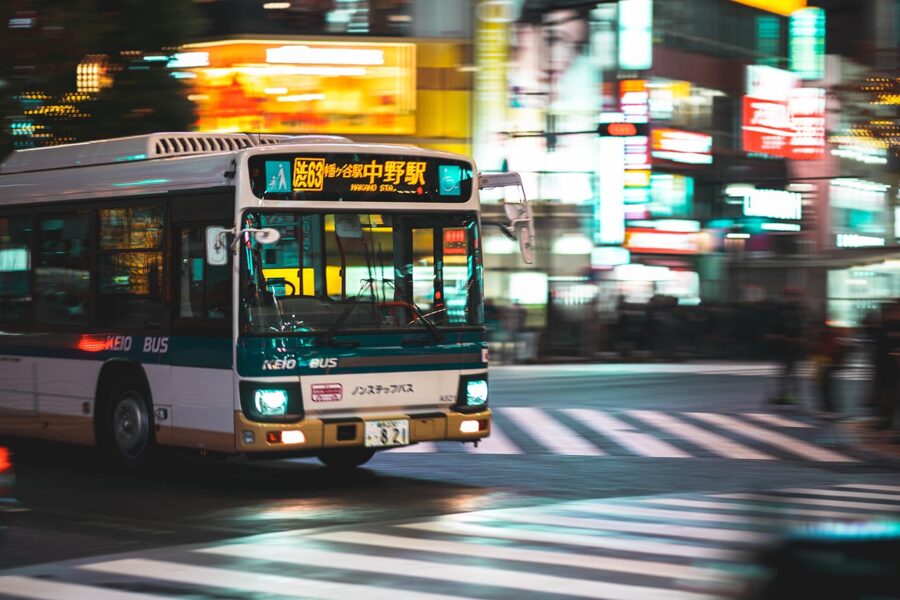
From Haneda. The Airport Limousine bus runs from all three terminals to the Cerulean Tower Tokyu Hotel, Shibuya Station at Shibuya Fukuras, and Shibuya Excel Hotel Tokyu in Mark City, for ¥1,300. Going back to the airport there is no reservation: you pay on board in cash or with an IC card, and if the bus is full you wait for the next. Trains, fares and terminals are compared in the Haneda Airport guide.
From Narita. The Narita Express stops at Shibuya, every seat reserved, and is the simplest way in with luggage. The Narita airport bus, run by Airport Transport Service and Tokyu Bus, costs ¥3,600 and gets a new timetable from December 16, 2026, so check times for later dates on the operator’s site. For the rest of the city, start with the Tokyo travel guide.
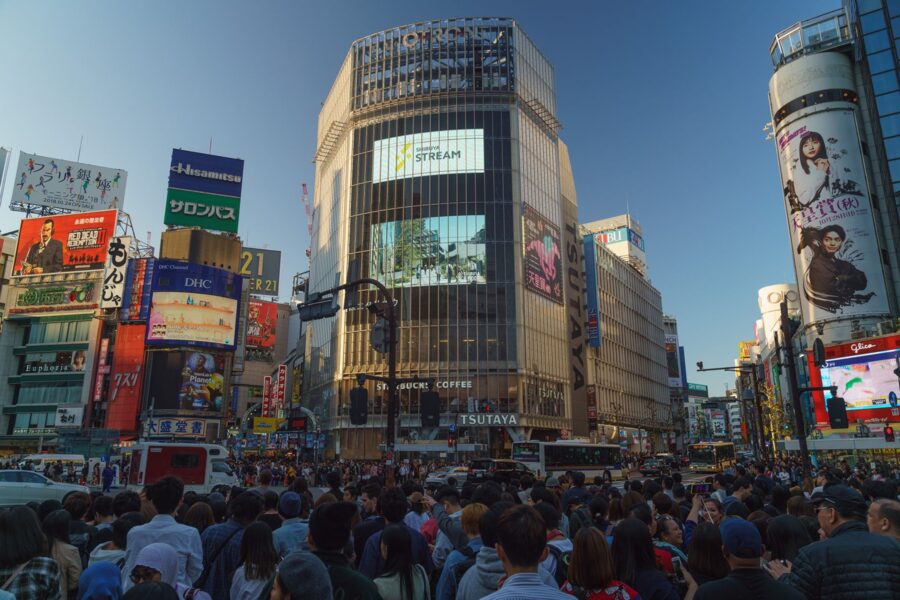
The plaza in front of the Hachiko Gate is due to be finished in fiscal 2034. Until then, the gate is 60 meters nearer Miyamasuzaka than it was before January 2025, the hoardings will keep moving, and the dog is where he has been since 1948.