

Senso-ji (浅草寺) opens its main hall at 06:00, or 06:30 from October to March, and the stalls on Nakamise-dori below it mostly do not open until mid-morning. The hours in between are the temple’s best. A monk strikes the old time bell on Bentenyama at 06:00 every morning, the morning service is under way inside the hall, and the gate everyone photographs has room in front of it.
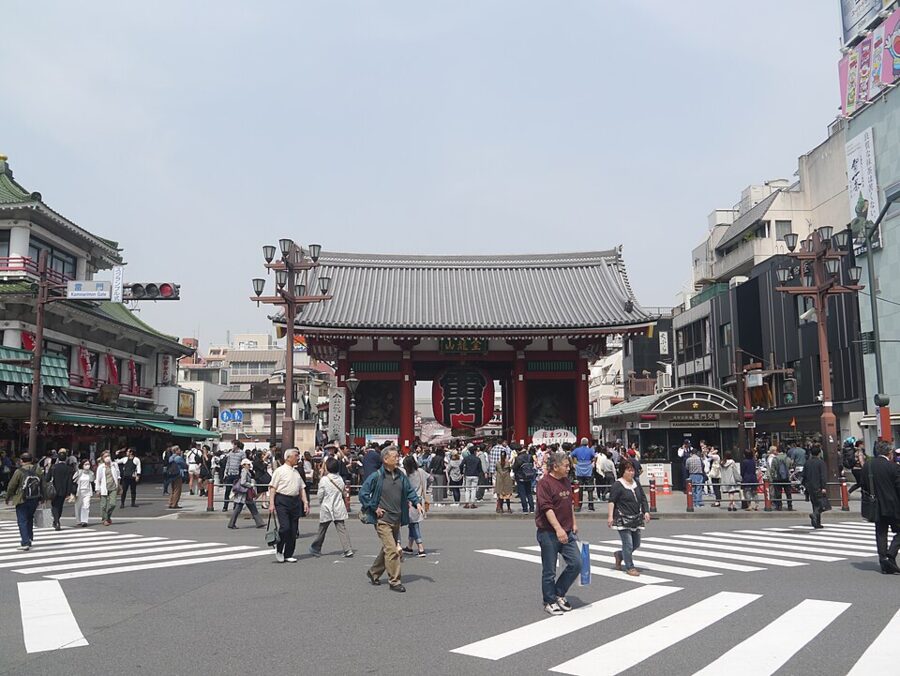

So here is the plan. Arrive between 06:00 and 08:00, or after 19:00 when the buildings are lit and the shops have shut. Walk in through Kaminarimon, up Nakamise-dori to Hozomon, wash your hands at the water pavilion, pass through the incense smoke, and climb the steps into the main hall. Then go right to Asakusa Shrine, left to Yogodo hall if you want a temple stamp, and leave by the Nitenmon gate on the east side or by Denboin-dori on the west.
The grounds never close and cost nothing to enter. Money comes into it only if you want it to: a coin for the offering box, a ¥100 coin for a fortune slip, an offering for a stamp in a book, and from ¥5,000 for a prayer written on a paper talisman at the hall’s own counter. The temple says about 30 million people come every year, which is the reason the hour matters more than the route.

For the rest of the city’s sights, see things to do in Tokyo; for where Asakusa sits on the map, the guide to Tokyo neighborhoods.

Getting there, and the hours that matter
Asakusa Station is a few minutes south of the gate, and the temple gives the walk as five minutes from the Tokyo Metro Ginza Line, the Tobu Skytree Line and the Toei Asakusa Line (it names Exit A4 for the Toei side). The Tsukuba Express has its own Asakusa Station farther west, closer to Denboin-dori and Kappabashi. From Shibuya, Omotesando or Ginza, the Ginza Line runs straight here, and the lines and fares are in the guide to getting around Tokyo. Follow the signs for Kaminarimon once you are underground.
The Ginza Line’s Asakusa Station is itself a small piece of history: it was the first stop of the first subway in Asia, opened between Asakusa and Ueno in 1927, and the temple-style roof over its street entrance near Azuma Bridge is early Showa design. There is no parking at the temple.
The temple publishes the hall’s hours and little else; its other halls keep their own times. These are the hours that shape a visit in late 2026, each from the operator’s own page.
| What | Hours |
|---|---|
| Senso-ji grounds, Kaminarimon, Nakamise-dori (the street) | Always open |
| Main hall | 06:00–17:00 (opens 06:30 October–March) |
| Services in the main hall | 06:00 (06:30 October–March), 10:00 and 14:00 daily |
| Temple stamps (goshuin) at Yogodo | 08:00–16:30 (special hours at New Year and on July 9–10) |
| Light-up of the main hall, pagoda, Hozomon and Kaminarimon | Sunset to about 23:00, every night |
| Asakusa Shrine office | 09:00–16:00 weekdays, 09:00–16:30 weekends and holidays |
| Asakusa Culture Tourist Information Center terrace | 09:00–22:00 |
| Sumida River Walk footbridge to the Skytree side | 07:00–22:00 |
The temple office takes calls 09:00–16:30 except Sundays and holidays, in Japanese. The temple’s English pages carry the history, the halls and the yearly events; the Japanese site has more, including the light-up notice and the hall-by-hall pages linked below.
Kaminarimon (雷門), the Thunder Gate
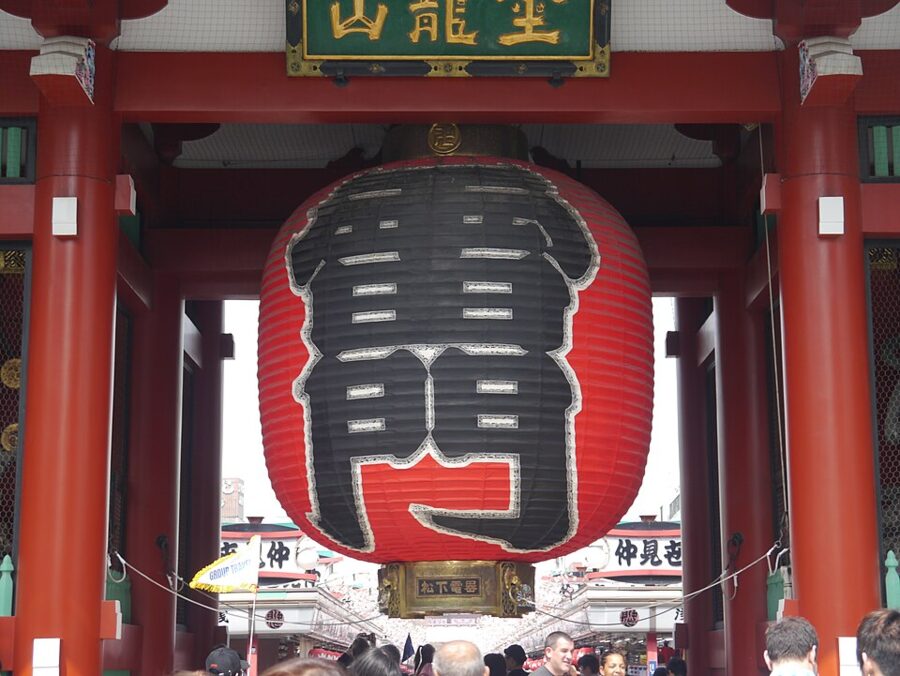

The gate’s formal name is Furaijinmon, the Gate of the Wind and Thunder Gods, after the two statues in its front bays: Fujin on the right, Raijin on the left. Behind them, facing the temple, stand two dragon statues added in 1978, the male Tenryu and the female Kinryu, guardians of water for a gate that kept burning down. The temple’s page on Kaminarimon lists the fires: 1642, 1767 and December 1865, when a blaze that started in neighboring Tawaramachi took it.
Then nothing for 95 years. The gate you see went up in 1960, in reinforced concrete in the Edo style, paid for by Konosuke Matsushita, the founder of the company now called Panasonic. The temple’s account is specific: Matsushita had joint pain, the head priest prayed for him to the Kannon, the bodhisattva of compassion the temple is built around, he recovered, and he gave the gate as thanks. Only the heads of the wind and thunder gods survived 1865; their bodies were recarved in 1874.
The gate is 11.7 m high and stands right on the sidewalk of Kaminarimon-dori, which is why the photo line forms there. For the gate alone, the best hour is before 08:00 or after dark. The lantern is folded up on two kinds of occasion: when a typhoon is forecast, and during the Sanja Matsuri in May, so the shrine’s portable shrines can pass underneath.
Nakamise-dori (仲見世), the street between the gates
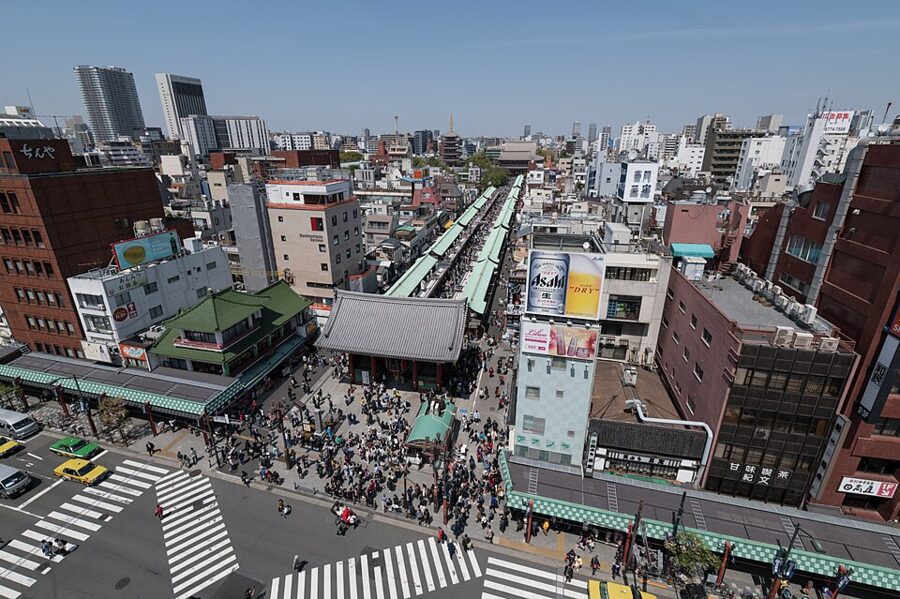
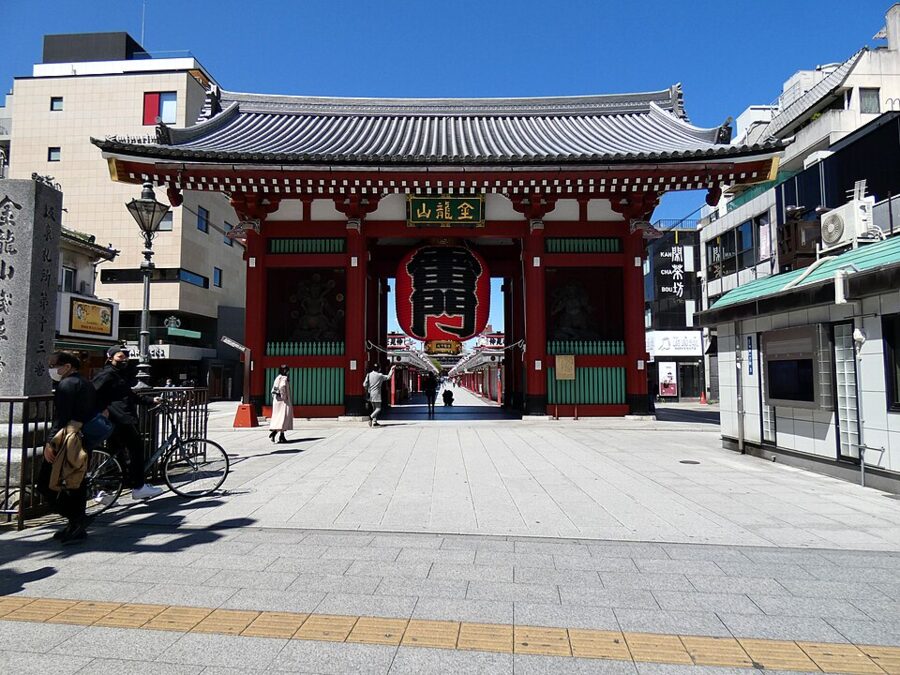
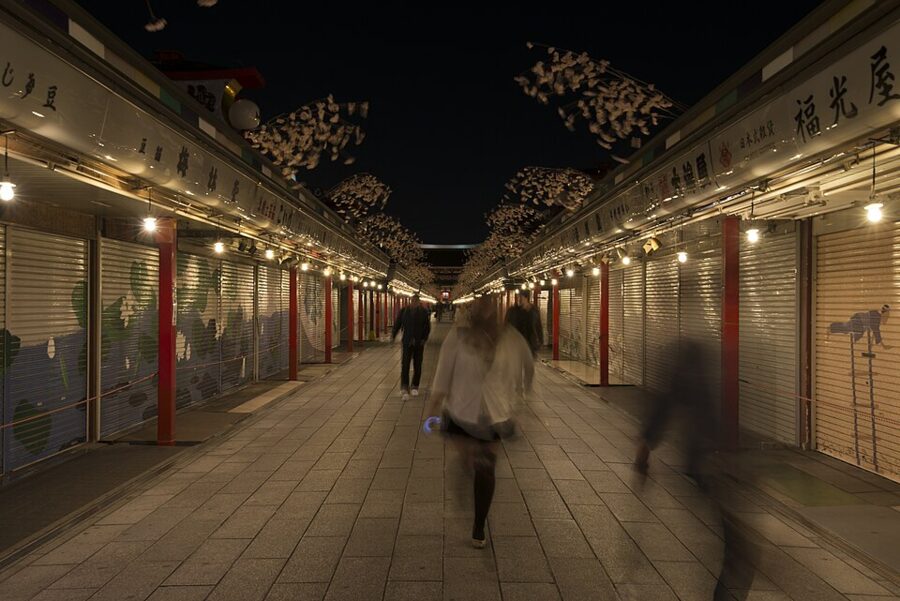
Nakamise-dori runs about 250 m from Kaminarimon to Hozomon, lined on both sides with about 90 shops under one vermilion roofline. The temple traces it to around 1685, when it let local people open stalls along the approach in return for sweeping the grounds. The name means “the middle shops”, the row between the stalls on the main road and the stalls in front of the hall.
The buildings are not old in the way they look. Tokyo replaced the stalls with Western-style brick shops in 1885; the 1923 Great Kanto Earthquake destroyed those; the concrete shops of 1925 lost their insides in the 1945 air raid, and the shells you walk past were patched and refitted after the war. The street’s power lines went underground in 1994.
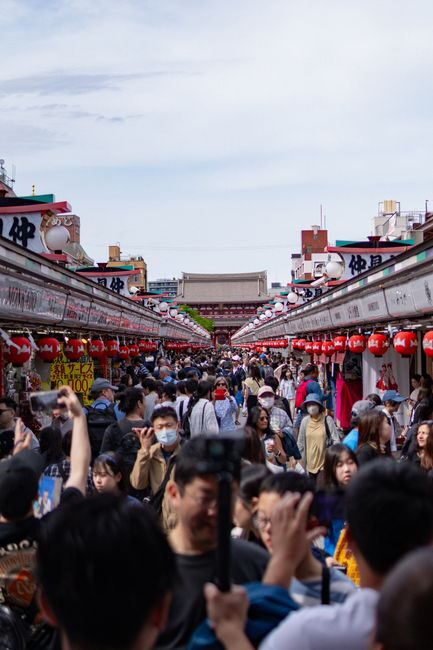
The snacks are better than the souvenirs. The ones made here, in front of you, are ningyo-yaki (small sponge cakes baked in molds, usually filled with sweet bean paste), kaminari okoshi (puffed-rice crackers named after the gate), age-manju (deep-fried buns) and rice crackers grilled by hand. The ward’s tourism office lists the same four, plus folding fans and paper umbrellas among the crafts. Most stalls open mid-morning and close in the early evening, and the shopping association publishes no common hours, so a 07:00 visit means the street with almost nothing for sale.
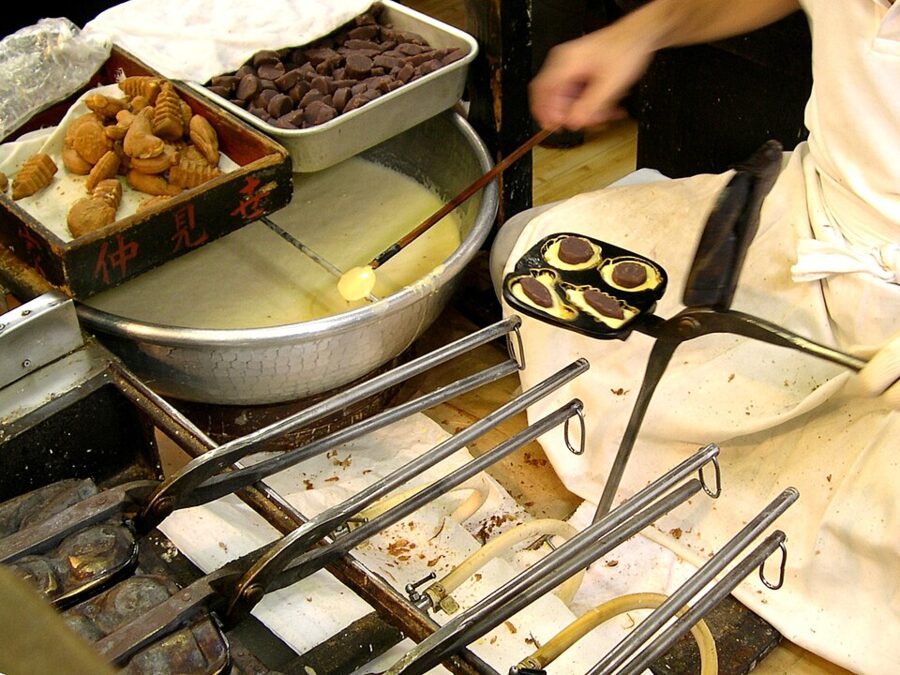
After the stalls close, the street gets its second face. Each shop’s shutter carries a painted panel, and together they form “Asakusa Emaki”, a scroll of the district’s history and festivals finished in 1989 under the direction of the painter Ikuo Hirayama of the Tokyo University of the Arts. The shopping association’s page on the murals says every shutter was replaced in 2006 and the paintings redone exactly as before. It is the best reason to walk Nakamise-dori at 21:00.

Hozomon (宝蔵門), the treasure gate
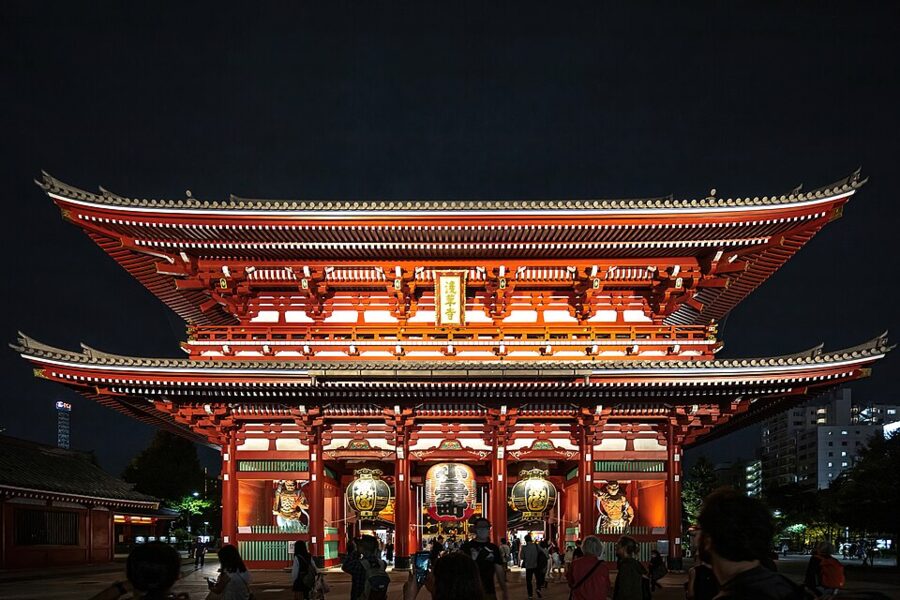

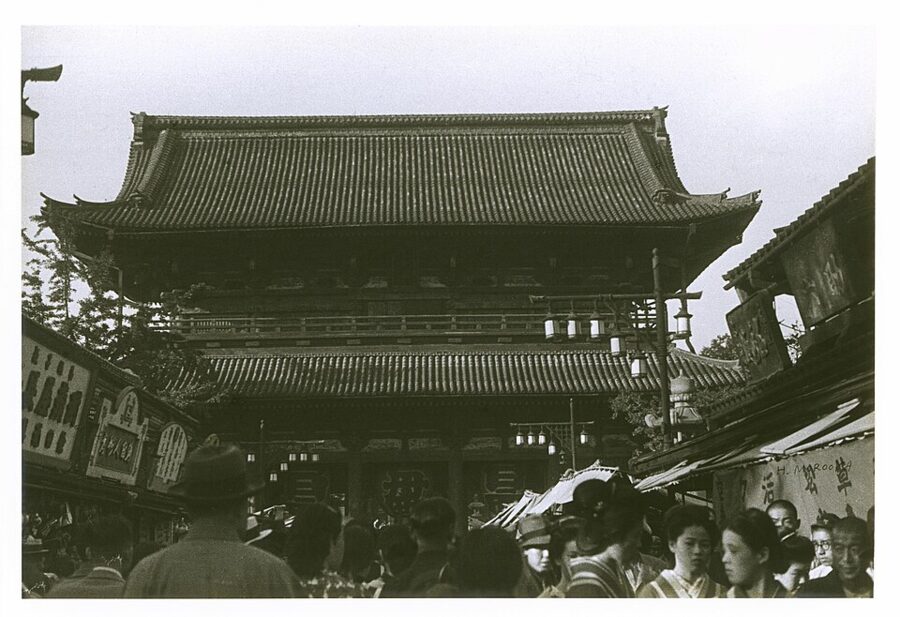
The two-story gate at the end of Nakamise-dori was called Niomon, after the pair of guardian kings in its outer bays, until it was rebuilt in reinforced concrete in 1964. Yonetaro Otani, the industrialist who founded the Hotel New Otani, paid for it with his wife. Because its upper floor now holds the temple’s treasures, including a Yuan dynasty edition of the Buddhist canon listed as an Important Cultural Property, the new gate took the name Hozomon.
Walk through and turn around. On the back of the gate hang two enormous straw sandals, 4.5 m tall and about 500 kg each, made from 2,500 kg of straw. The temple’s Hozomon page says the current pair came in October 2018 from volunteers in Murayama City, Yamagata, the eighth pair since 1941. The idea is that any demon who sees sandals that size will take fright at the size of the guardian who wears them.

The main hall (本堂)
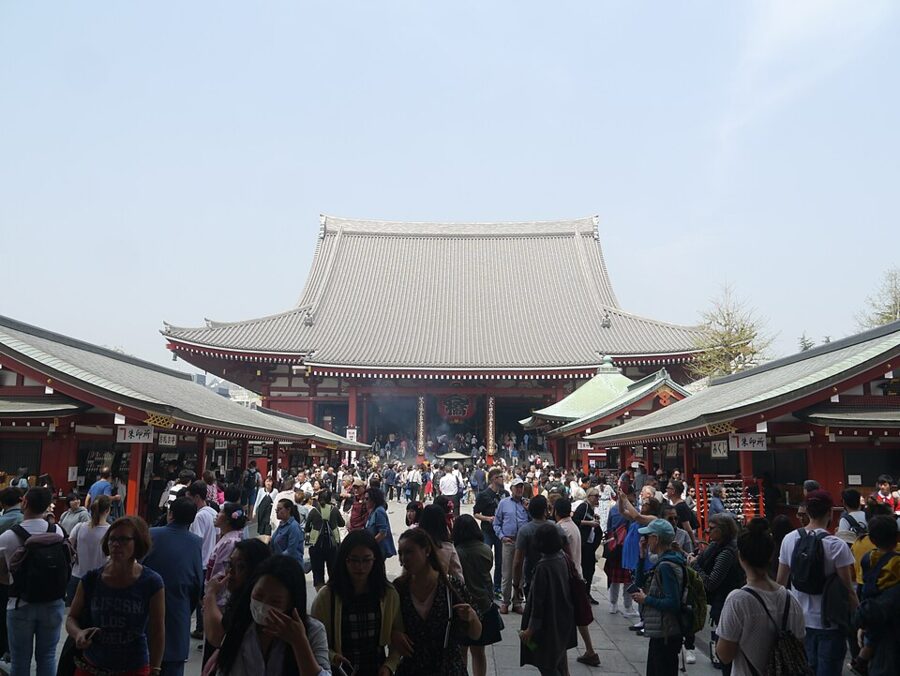
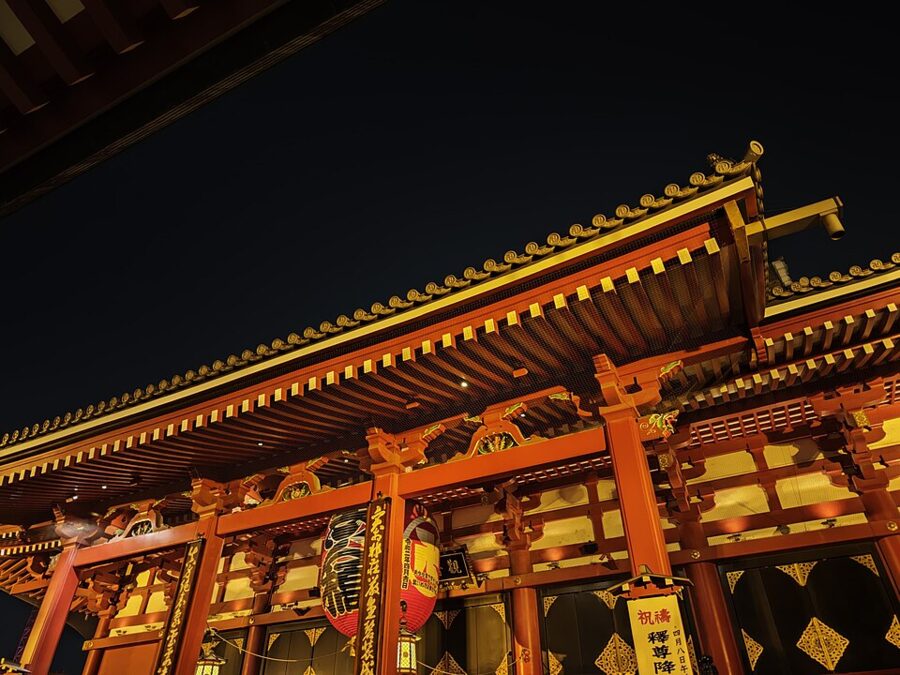
The main hall, also called the Kannon-do, stands on the spot where the temple says the Kannon statue has been kept since 628. The hall Tokugawa Iemitsu built in 1649 lasted almost three centuries, was listed as a National Treasure in 1907 and came through the 1923 earthquake. It burned in the Great Tokyo Air Raid on March 10, 1945. Followers across Japan paid for its replacement, built in reinforced concrete from 1951 and finished in 1958.
The temple’s page on the hall gives its size as 34.5 m across and 29.4 m to the ridge, each about 3 m bigger than the old one. The steep roof was re-covered in 2010 with titanium tiles, a third of the weight of the clay tiles before. The lantern at the top of the steps is the biggest of the three on the approach: 4.5 m tall, about 600 kg, the gift of Shimbashi’s geisha association since 1958, and hung anew in April 2020.
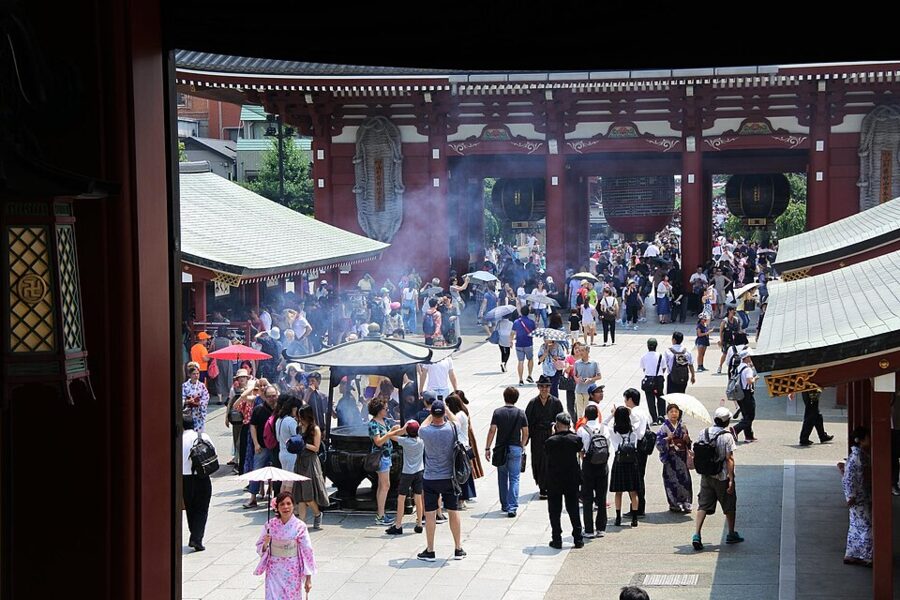

Inside, the outer hall is open to all and keeps its shoes on; the ceiling is about 10 m up. Above the entrance hangs a plaque reading Semui, “giving freedom from fear”, a phrase for what the Kannon does. The original, given in 1727, burned in 1945; the one there since June 2020 is carved from a single slab of zelkova and weighs about 700 kg. The tatami inner sanctum is where people take off their shoes and sit for the services.
The Kannon itself is never shown. The temple’s account is that the monk Shokai, who built the first hall in 645, was told in a dream to hide the statue, and no one has looked at it since, not even the head priests. A stand-in figure, attributed to the monk Ennin in the 9th century, sits in front of it, and even that is shown once a year: at the service at 14:00 on December 13. To pray, the temple’s own FAQ says, put your palms together and say “Namu Kanzeon Bosatsu”, or simply bow.
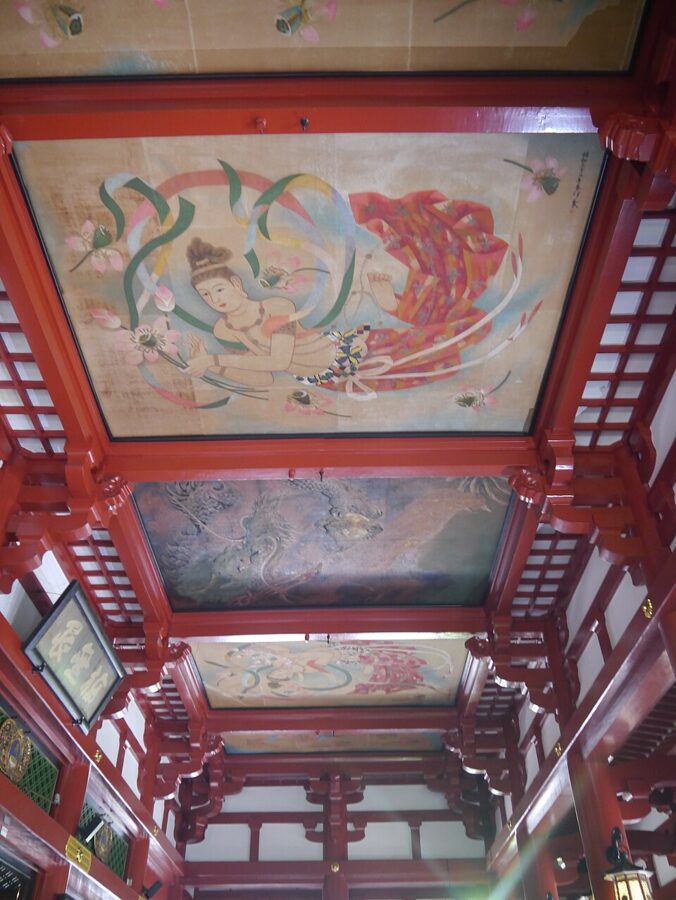

Look up. The three ceiling paintings date from the 1958 rebuild, and the dragon was already due for restoration when part of it peeled loose above the crowd on July 8, 2023; nobody was hurt.
The temple’s hall page still describes all three, and I could not find a dated notice of the dragon’s return, so check the ceiling yourself before planning a visit around it. The hall’s daily services, at 06:00 (06:30 in winter), 10:00 and 14:00, are open to anyone who sits quietly, and the early one is the reason to be here at opening. There is an elevator on the left side of the hall for anyone who cannot manage the steps.
The five-story pagoda
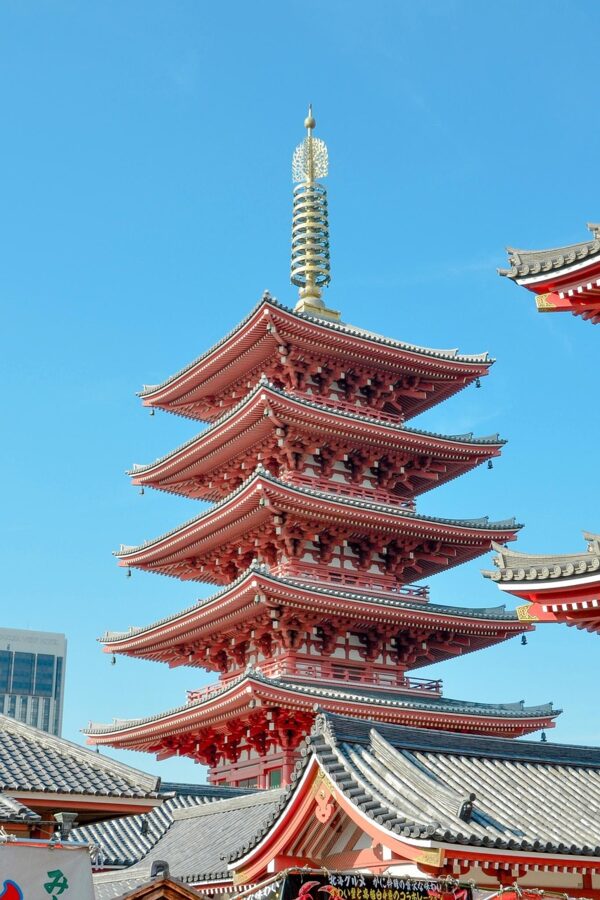
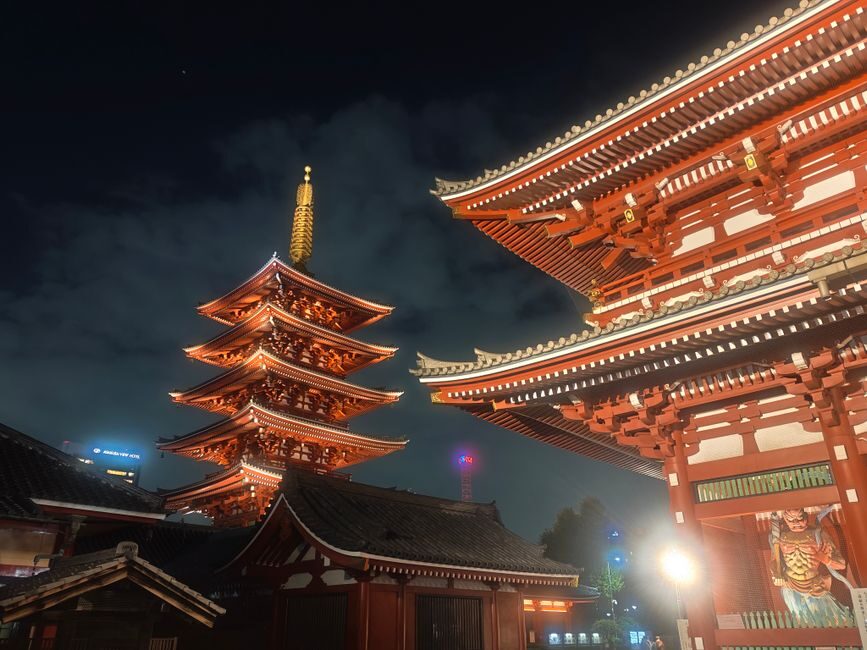
The pagoda to the west of the courtyard is 53.32 m from the ground, and the base it stands on is a building in its own right, with offices and memorial halls inside. It was rebuilt in steel and concrete in 1973. The temple’s pagoda page says the top story holds relics of the Buddha brought in 1966 from the Isurumuniya temple in Sri Lanka. You cannot climb it, and the interior opens only to people holding memorial tablets there.
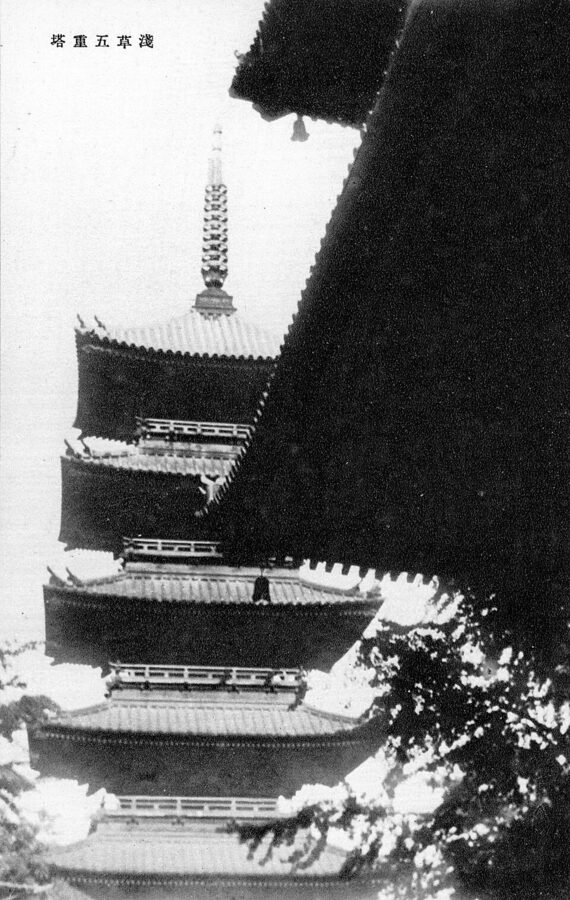
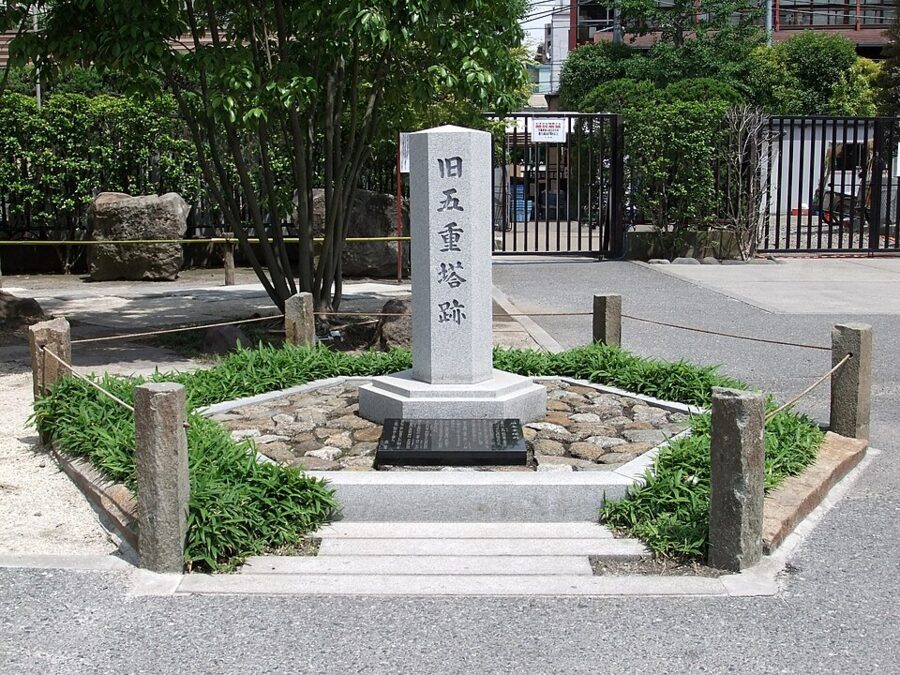
The old pagoda stood on the other side. Iemitsu’s pagoda of 1648 rose east of the main hall, survived the 1855 earthquake with only its spire bent and burned with everything else in 1945. A stone near the police box on the east side, set up in 2009, marks the site. When the new pagoda was built on the west, the excavation of the site in 1970 turned into one of the first digs in Japan to treat Edo-period remains as archaeology.
Yogodo, Bentenyama and the smaller halls
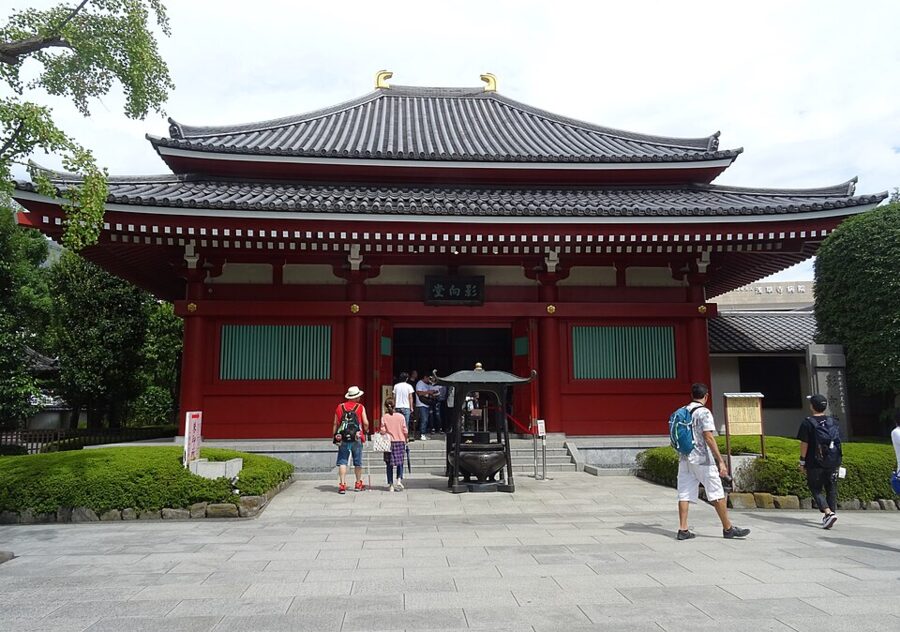
Yogodo, the hall northwest of the main hall, was built in 1994 and is the temple’s stamp office: this is where you collect a goshuin (more on that below). Around it are three of the oldest things on the grounds. The small six-sided Rokkakudo, from around the 16th century, is listed by the temple as the oldest wooden building in Tokyo; the stone bridge beside it dates from 1618; and a bronze Amida Buddha has sat nearby since 1693.

West again is Awashimado, the old wooden hall that served as the temporary main hall after the war, until 1955. On February 8 it holds Hari-kuyo, a memorial service for broken sewing needles, which people push into a block of tofu so they can rest somewhere soft. On the low hill at the southeast corner of the courtyard, Bentenyama, hangs the time bell recast in 1692 by order of the fifth shogun; it rang the hours for Edo, was spared the wartime metal drives and is now struck only at 06:00 every day and on New Year’s Eve.
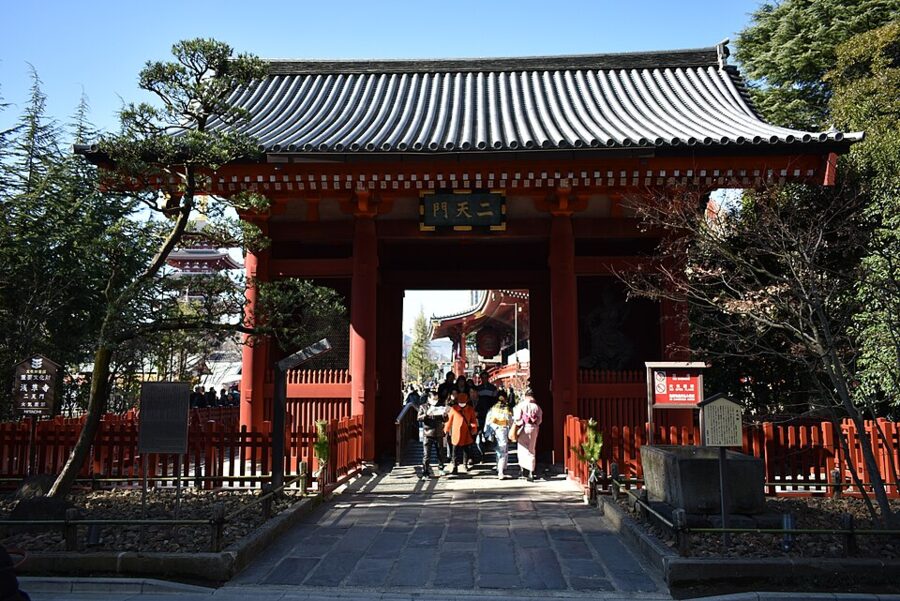
The red gate on the east side of the hall is Nitenmon. Built in 1649 as the east gate, and earlier the gate to a shrine to Tokugawa Ieyasu that stood on the grounds, it came through 1945 and is an Important Cultural Property. It is the quiet way in or out, toward the river.

Denboin and its garden
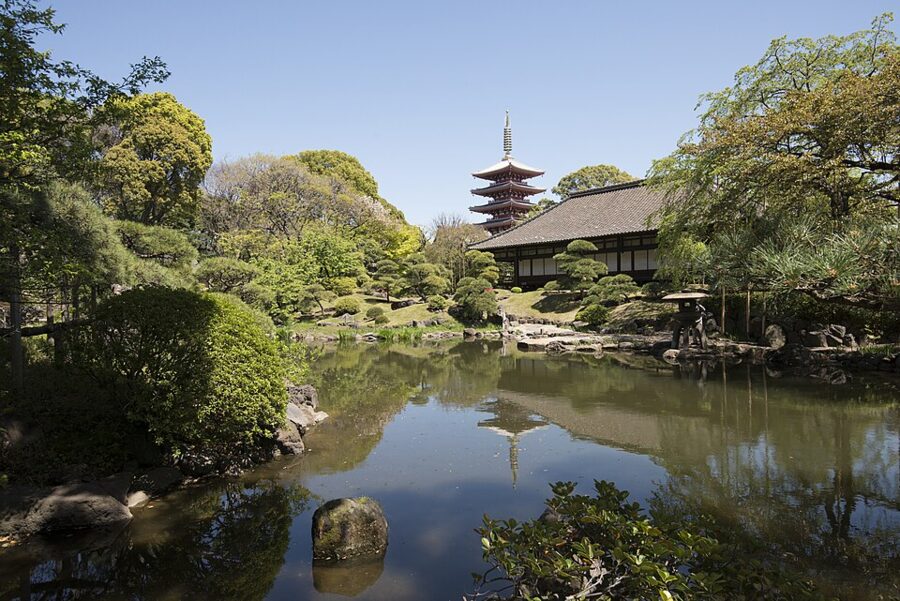
West of Nakamise-dori, behind a wall, is Denboin, the head priest’s residence, with a pond garden attributed to the early Edo garden designer Kobori Enshu. The garden covers about 12,200 square meters, became a National Place of Scenic Beauty in 2011, and is closed to the public. The temple’s page on Denboin says only that it opens irregularly.
The last two openings came with a ticket. The garden opened from December 3 to 7, 2025, for the first time in seven years, alongside a projection-mapping show on the temple buildings, and again from October 30 to November 3, 2026, 09:00–21:00, for the 2026 edition of that event, at ¥2,300 in advance or ¥2,500 on the day. The organizers noted that Denboin was under repair at the time. Any next opening will be announced on the temple’s and the event’s pages.

Asakusa Shrine (浅草神社), next door to the hall
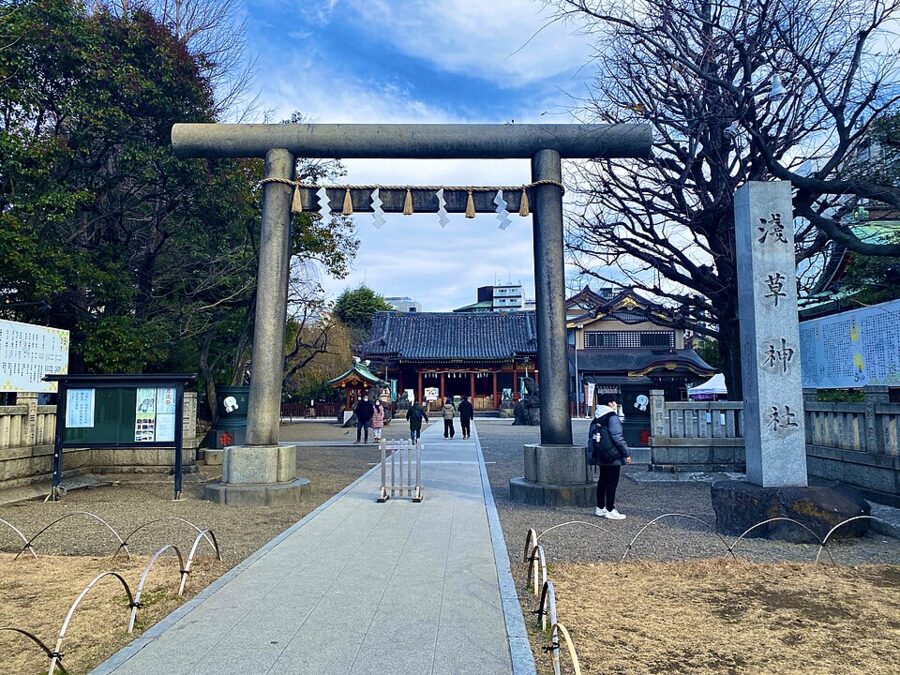

Immediately east of the main hall is a Shinto shrine, and it is a separate institution. Asakusa Shrine enshrines the three men of the founding story: the fishermen Hinokuma Hamanari and Takenari and the headman Haji no Nakatomo, who turned his house into the first temple. Locals call it Sanja-sama, “the three shrines”. It and the temple were one until the government split Buddhism and Shinto apart in 1868, and the shrine took its current name in 1873.
The building is older than anything on the temple side. Iemitsu gave it in 1649, it escaped the fires, the earthquake and the war, and its main hall, offering hall and worship hall are Important Cultural Properties. The shrine’s stamp page sets its goshuin at ¥500 each.
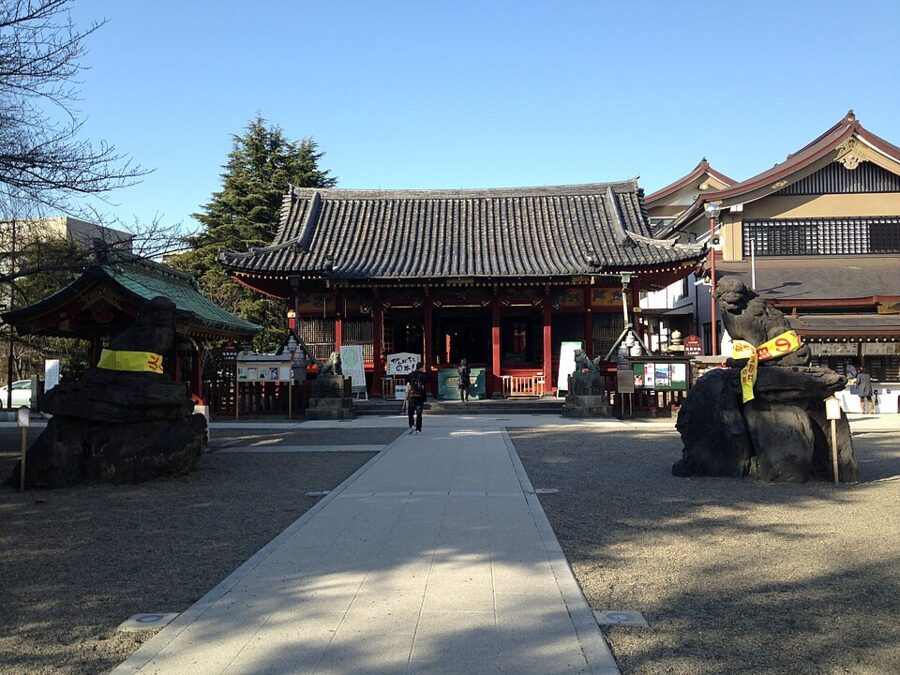

The two places ask for different gestures, and this is where most people get it wrong. At the temple, put a coin in the box, press your palms together and bow; no clapping. At the shrine, the sequence the shrine itself gives is bow at the torii, rinse your hands at its own water basin, then at the hall bow twice, clap twice and bow once more. Clapping in front of the Kannon will not get you thrown out, but it is the shrine’s custom, not the temple’s.
The rituals, in the order you meet them
The water
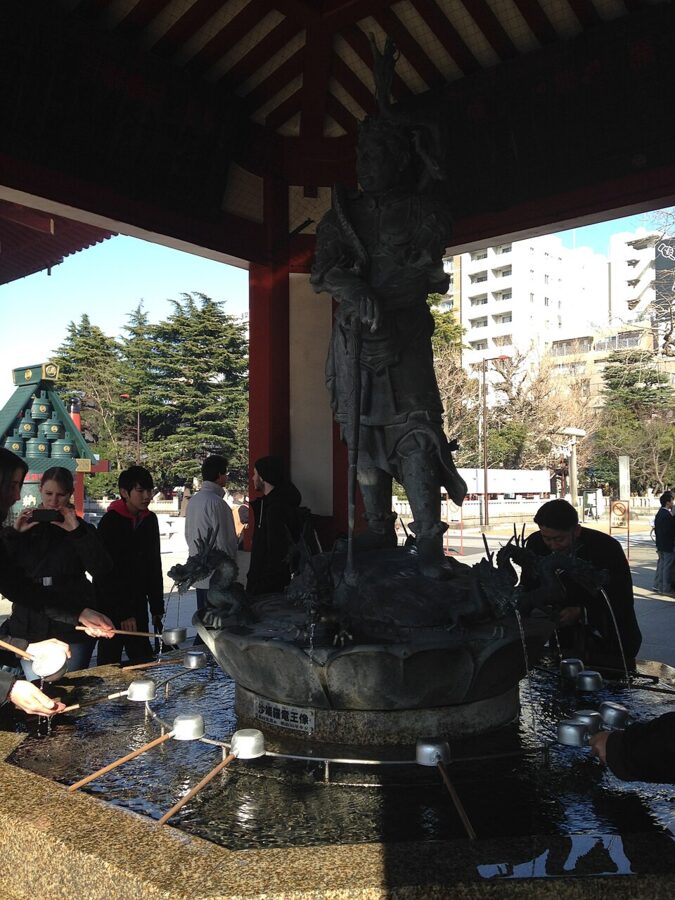
The Omizuya, the water pavilion on the right as you face the hall, came in 1964 as a gift from Asakusa’s restaurant association; the bronze dragon king above the basin is by the sculptor Koun Takamura, from 1903. The temple’s instructions use a single ladle of water for everything: hold the ladle in your right hand and pour over your left, switch and pour over your right, pour a little into your cupped left hand and rinse your mouth, then tip the ladle upright so the last water runs down the handle. The ladle never touches your lips.

The incense
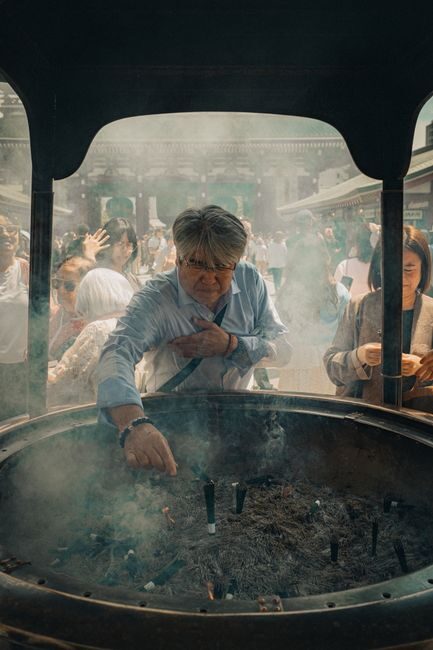
The big bronze burner in the middle of the courtyard is the jokoro. Incense is sold beside it: light a bundle, push it into the ash, then use your hands to draw the smoke onto your head, shoulders or wherever needs help; the belief is that it heals and clears the mind. Let a bundle burn rather than blowing it out, and keep sleeves away from the rim, which is hot.
The offering and the prayer
At the top of the steps, slide a coin into the box rather than throwing it, put your palms together and bow. The amount is up to you; the ¥5 coin is a pun on go-en, a good connection. The temple’s words, “Namu Kanzeon Bosatsu”, are the whole prayer if you want one.
Omikuji, and what a bad one means
The fortune stands are beside the hall. Put a ¥100 coin in the box, shake the hexagonal metal cylinder until a stick slides out of the hole, read its number, and take a slip from the drawer with that number. Then put the stick back in the cylinder.
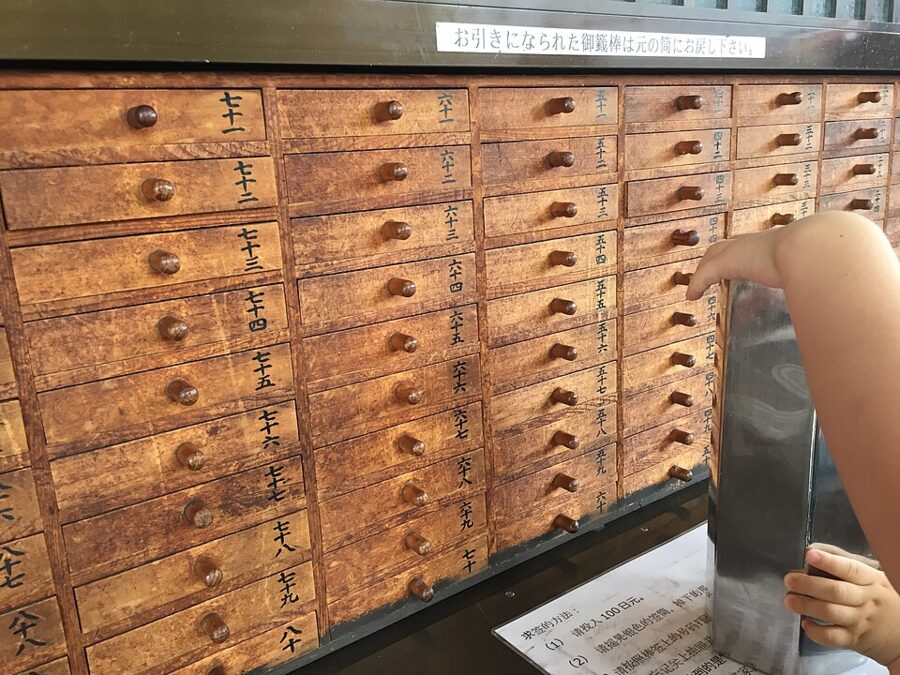

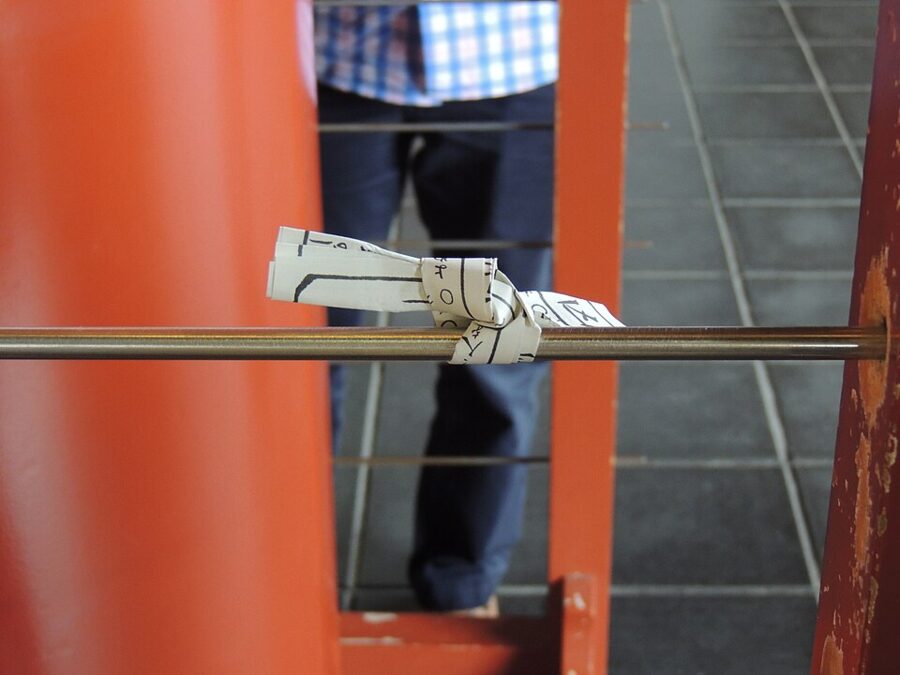
Senso-ji’s set is the Kannon Hyakusen, 100 fortunes in the old form, and about three in ten of them are kyo, bad luck, a far higher share than most temples allow. The temple’s answer, in its FAQ, is that this is how fortunes always were, and that bad luck turns to good if you live patiently and sincerely. If you draw one, tie it to the rack provided, which hands the bad luck to the Kannon’s care; the good ones you keep.

Goshuin, the temple stamp
A goshuin is a brush-written page with red seals, given as proof of a visit. Senso-ji gives two, one for the Kannon and one for Daikokuten, one of the Seven Lucky Gods of Asakusa, at Yogodo from 08:00 to 16:30. The temple’s goshuin page calls it proof of worship, so pray first; the counter also sells stamp books. The temple does not post the offering online, and the shrine next door charges ¥500 for its own.
Etiquette without fuss
Most of it is common sense. Take your hat off in the hall, keep your voice down during the services, and keep phones away from the people at prayer in the inner sanctum. The temple posts no general photo ban for the grounds, so follow the signs where there are any. Eat beside the stall that sold you the snack rather than on the move; the approach is too crowded for it.
The year at Senso-ji
The temple’s calendar runs the same way every year, and the dates below are fixed or follow a fixed rule. The 18th of every month is the Kannon’s day, and the hall is busier than usual. The temple’s event pages carry each one.
- January 1–7, hatsumode. The first prayers of the year. From January 1 to 3 the temple controls entry to parts of the grounds and sets a one-way route to the hall.
- Around February 3, Setsubun. Beans are thrown to drive out evil, but because there are no demons in the Kannon’s presence, the temple skips the usual “demons out” and shouts only for long life and good fortune.
- February 8, Hari-kuyo at Awashimado.
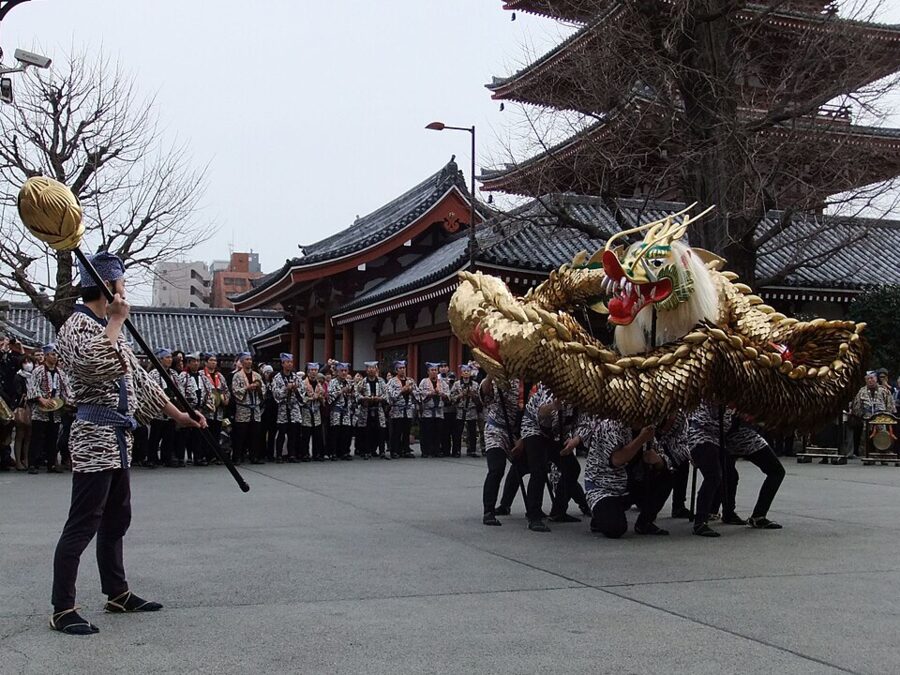
- March 18, the day of the Kannon’s appearance. The anniversary of the catch in the Sumida in 628, with the Kinryu no Mai, a golden dragon dance, which comes out again on October 18.
- April 8, Hana Matsuri, the Buddha’s birthday, when people pour sweet hydrangea tea over a small statue and children parade down Nakamise-dori.
- Third weekend of May, Sanja Matsuri. See below.
- July 9–10, Shiman-rokusen-nichi and the hozuki market. See below.
- December 13, 14:00, the one viewing of the stand-in Kannon.
- December 17–19, the hagoita market. See below.
- December 31, joya no kane. See below.

Sanja Matsuri, in May
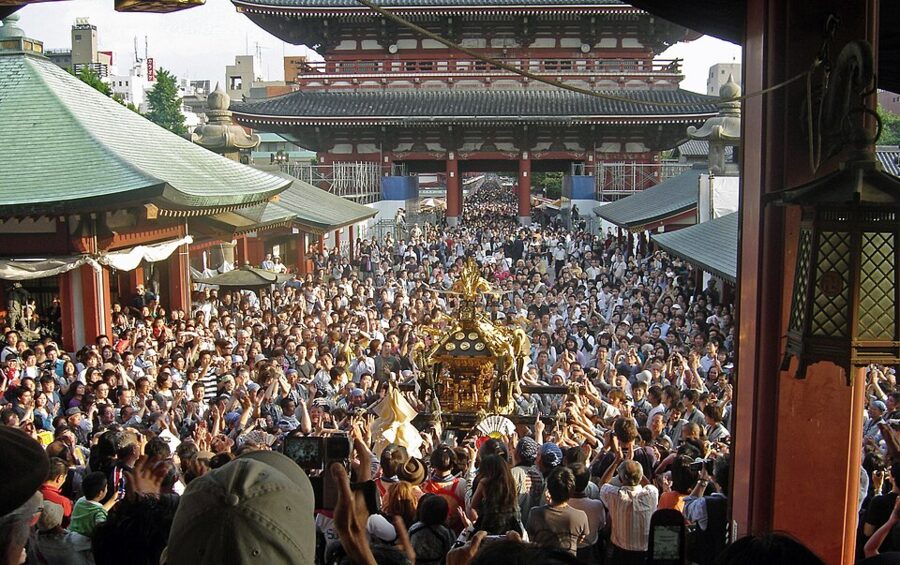
The Sanja Matsuri is Asakusa Shrine’s festival, not the temple’s, and the biggest weekend of the Asakusa year. The shrine’s festival page sets it on the Friday, Saturday and Sunday around the third Saturday of May and counts about 1.8 million people over the three days; the temple’s page gives four days, Thursday to Sunday nearest May 18, because it includes the Thursday evening rite of moving the gods into their portable shrines. In 2026 the three days fell on May 15–17.
Friday brings a costumed procession through the district and the binzasara dance, a rice-planting dance listed as an intangible cultural property of Tokyo. On Saturday about 100 neighborhood portable shrines (mikoshi) gather at the shrine to be blessed one by one, then go back out through their own streets. On Sunday the shrine’s own three mikoshi are carried out at dawn, spend the day touring the 44 parish neighborhoods and come back after dark.

The hozuki market, in July
July 10 is the biggest of the temple’s twelve “merit days”: a prayer offered then counts for 46,000 days, which the temple notes is about 126 years, a lifetime. People started arriving the day before to be first, so July 9 and 10 are now both observed, and about 100 stalls fill the grounds selling potted hozuki, the orange lantern plant, along with wind chimes, from morning until late at night.
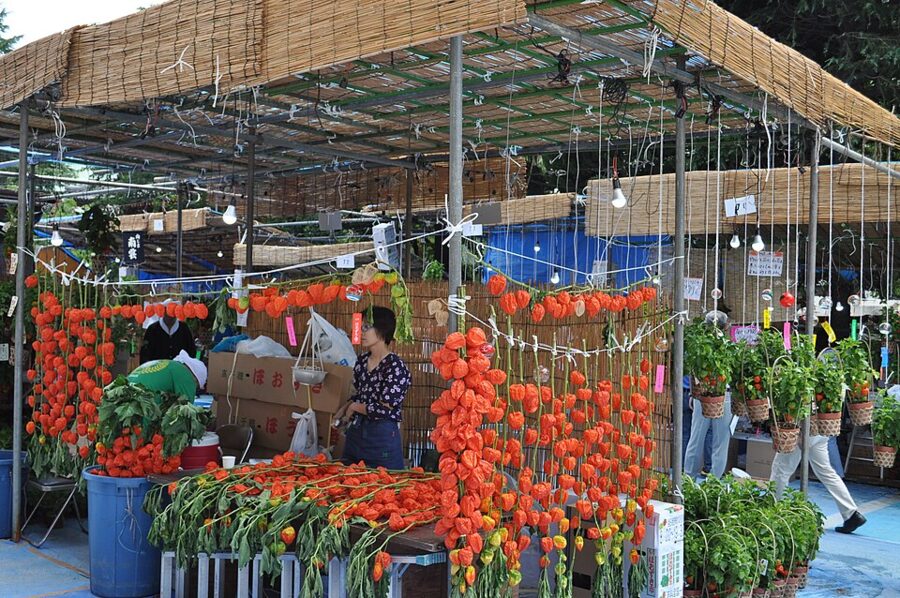

The hagoita market, in December
December 18 is the last Kannon day of the year, and from December 17 to 19 dozens of stalls sell hagoita, the paddles for a New Year battledore game, decorated with kabuki actors and padded silk figures. The temple’s page on the market traces it to the Edo year-end fair, when hagoita became a gift for a family with a new baby girl. Each sale ends with the seller and buyer clapping a rhythm together, which is half the reason to go.
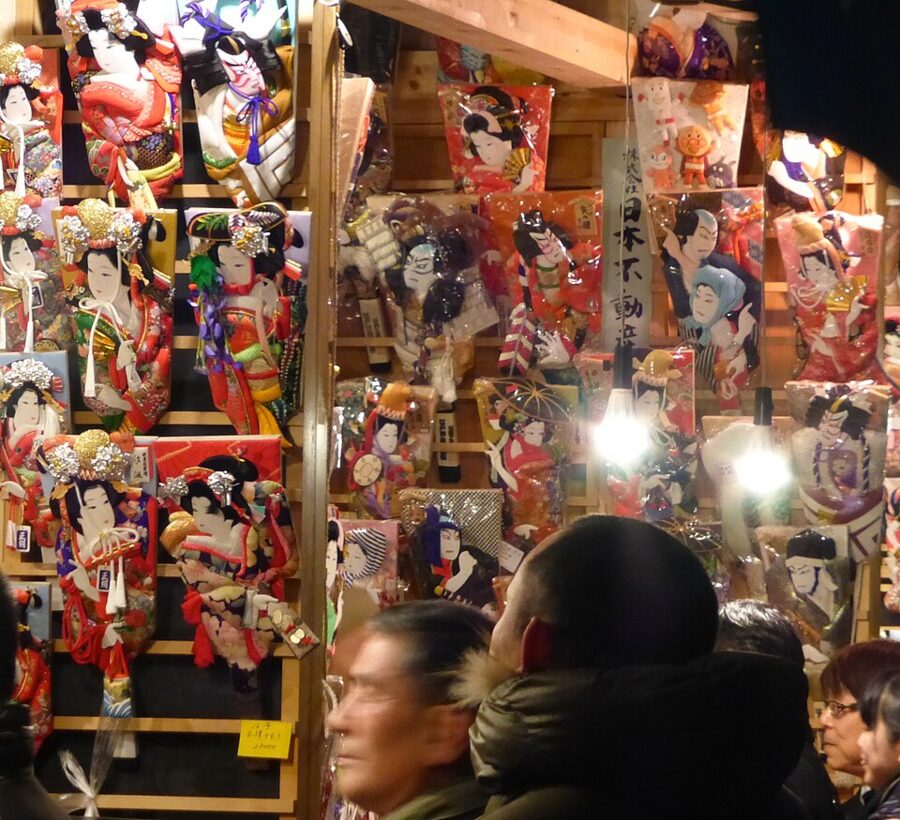

New Year’s Eve
On December 31 the courtyard fills from the evening on. At midnight, after a service at Bentenyama, the old time bell is struck: three uncounted strokes, then 108 by members of the temple’s bell society, which takes about 40 minutes. The temple’s page on the night describes the cheer that goes up at the first stroke. You listen; you do not get to ring it.
The big one: March 2028
March 2028 is the 1,400th year since the statue came out of the river. Asakusa Shrine has announced a boat procession for March 17–19, 2028: the three mikoshi carried up into the main hall, as they were in the Edo period, then down Nakamise-dori and out onto the Sumida River by boat, the way the festival was held before the Meiji era. The shrine notes the schedule may still change.
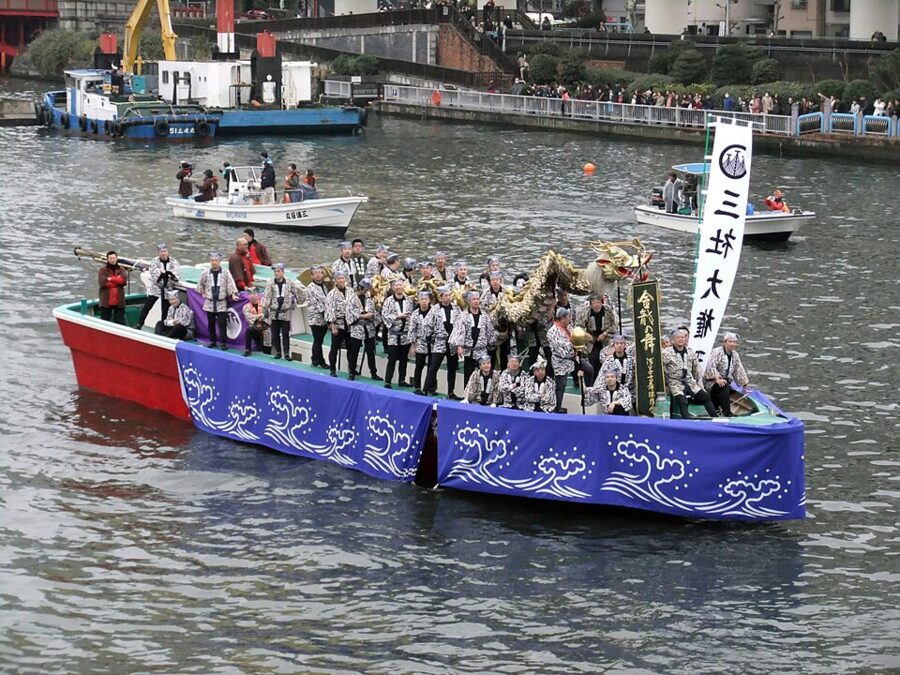

A short history: the net, the shoguns, the fire
The temple’s story starts on the morning of March 18, 628, when the brothers Hinokuma Hamanari and Takenari, fishing in the Sumida, found a small statue of the Kannon in their net. The local headman, Haji no Nakatomo, recognized it, became a monk and made his house into a temple. A monk named Shokai built a proper hall in 645 and hid the statue, and Ennin, a great teacher of the Tendai school, carved the stand-in in the 9th century.
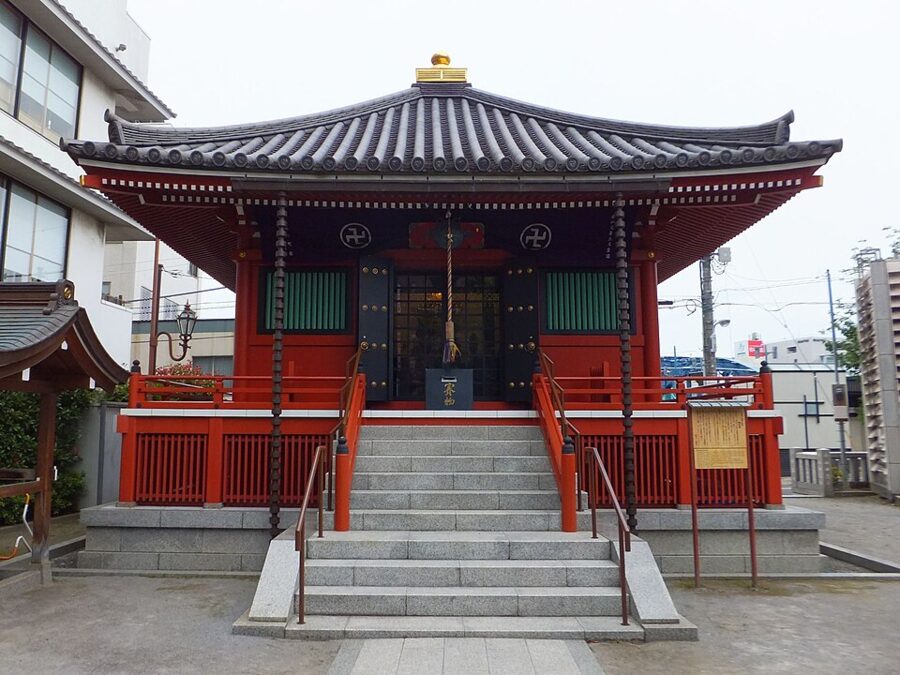

A provincial governor, Taira no Kinmasa, gave the temple its first gates and pagoda in 942. The temple’s fortunes really turned when Tokugawa Ieyasu arrived in Edo in 1590 and made Senso-ji a temple of prayer for his government; his grandson Iemitsu rebuilt the halls after the fires of the 1630s and 1640s. Edo grew around it, and by the 19th century Asakusa was the city’s playground, with theaters, sideshows and teahouses filling the land behind the hall.
The Meiji government took the grounds in 1873 and made them Asakusa Park, one of Japan’s first public parks; the temple got them back only in 1951. The twelve-story Ryounkaku tower stood nearby from 1890 until the 1923 earthquake brought it down, and the temple itself came through that earthquake largely intact, its people passing buckets to hold back the fire. The air raid of March 10, 1945, did not leave it so lightly: the main hall, the pagoda, the Niomon and most of the district burned in a single night.
The rebuild took almost three decades: the main hall in 1958, Kaminarimon in 1960, Hozomon in 1964, the pagoda in 1973. Part of it was paid for by selling the temple’s Hyotan pond, behind the hall, for redevelopment. In 1950 the temple left the Tendai school and became the head temple of its own Sho Kannon sect, which it still is.
Photography and the temple at night
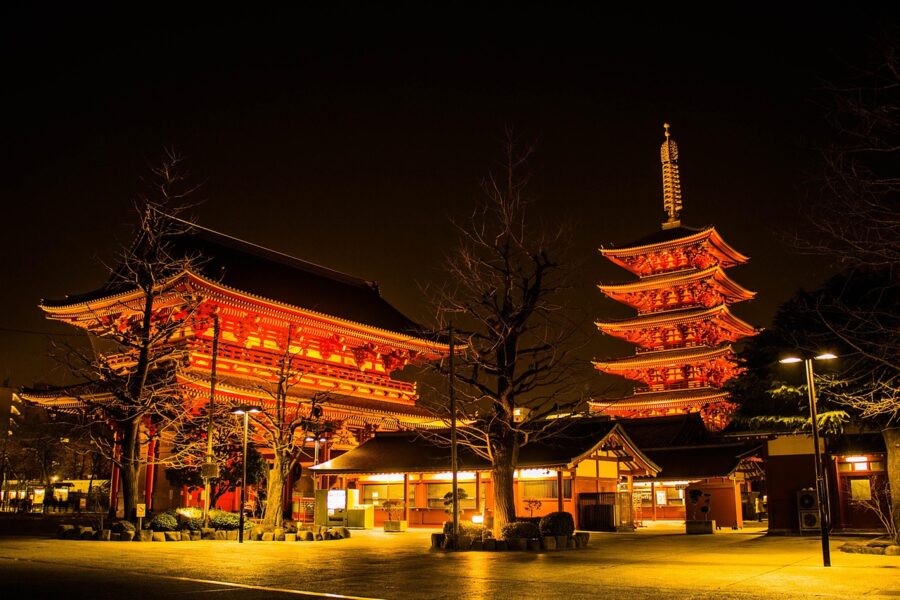
The buildings have been lit every night since October 1, 2003, from sunset until about 23:00. The temple’s light-up notice says it began as a project for the 400th anniversary of Edo, proposed by the local shopkeepers; the lighting design was by Motoko Ishii, who also lit Tokyo Tower. Nitenmon was added in 2010 with color-changing LEDs. The hall doors are shut at night, but you can still pray at the box on the steps.
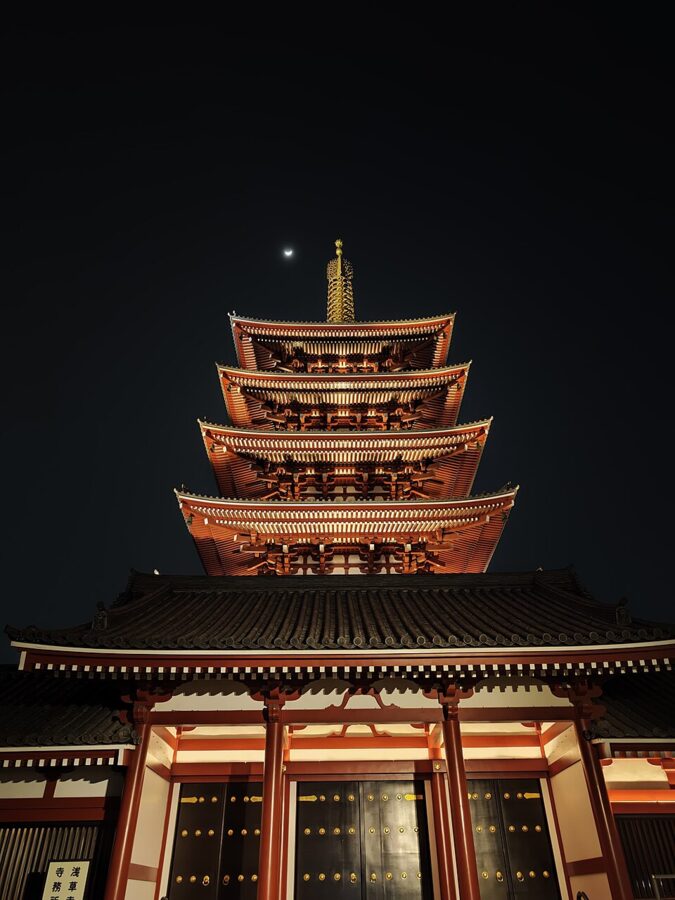

For pictures, the night is the easy win. At 21:00 the courtyard is nearly empty, the shutter murals are out on Nakamise-dori, the lanterns glow under the gates, and nobody is standing in your frame. Tokyo Skytree lines up behind the pagoda from the west side of the grounds; for the tower itself, see the guide to Tokyo Skytree.
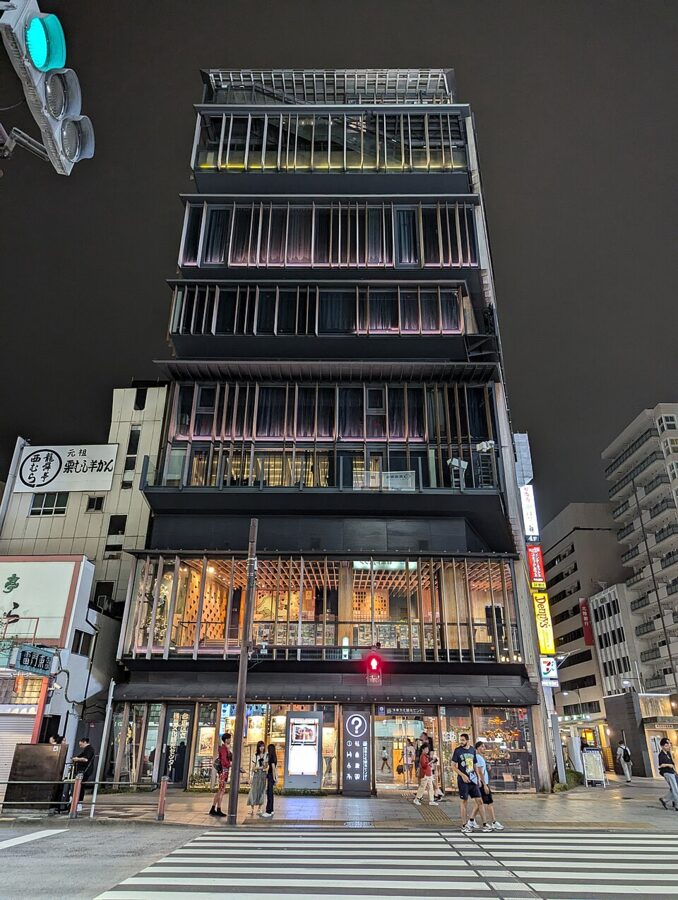
By day, the free view from above is the 8th-floor terrace of the Asakusa Culture Tourist Information Center, the Kengo Kuma building facing Kaminarimon, open 09:00–22:00. It looks straight up Nakamise-dori to the hall and across to Skytree. Early morning gets you the gates with room to stand; at midday the light is flat and the crowds thick, so I would not spend the middle of the day here at all.

The streets around the temple
The temple is the middle of a district, and the Asakusa guide covers it in full: where to eat, the old theaters, the side streets. Four streets in the temple’s immediate orbit are worth the extra half hour.
Denboin-dori
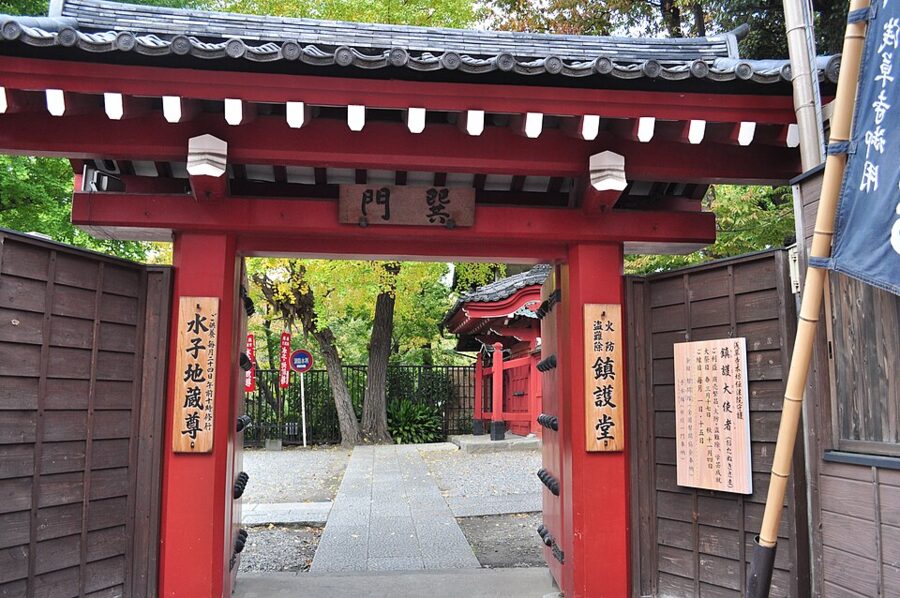
Denboin-dori crosses Nakamise-dori about two-thirds of the way up and runs west toward the old entertainment district of Rokku. The shopfronts were remodeled with Edo-style facades and matching signs when the Tsukuba Express opened, so it looks older than it is, and its shops keep later hours than Nakamise’s.
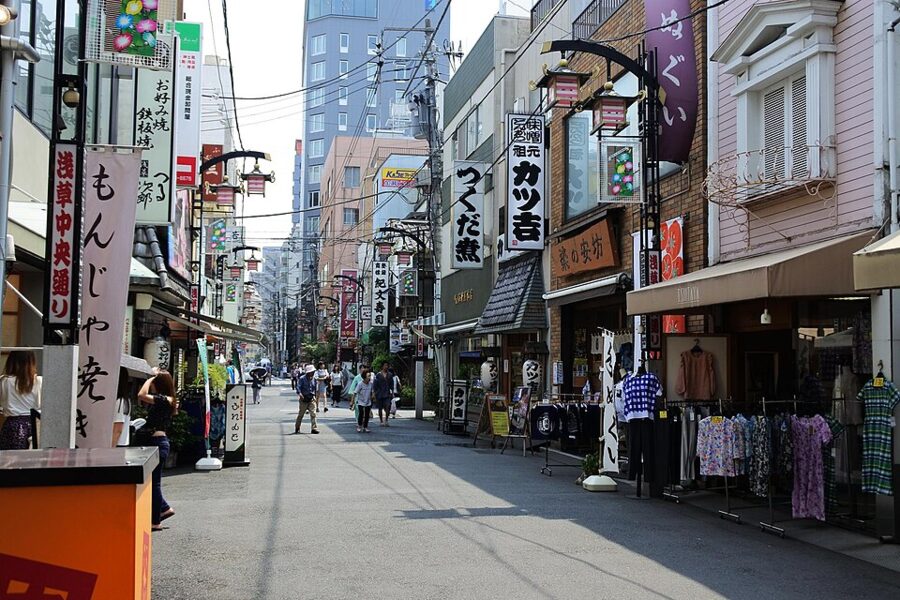

Halfway along, on the right, a small gate leads to Chingodo, the guardian hall of Denboin. Its deity is a tanuki: the temple’s story is that in the early Meiji years tanuki overran the grounds, and when the head priest gave them a shrine, they promised to protect Denboin from fire. It is also the one place you can glimpse the closed garden, over the fence.

Hoppy Street
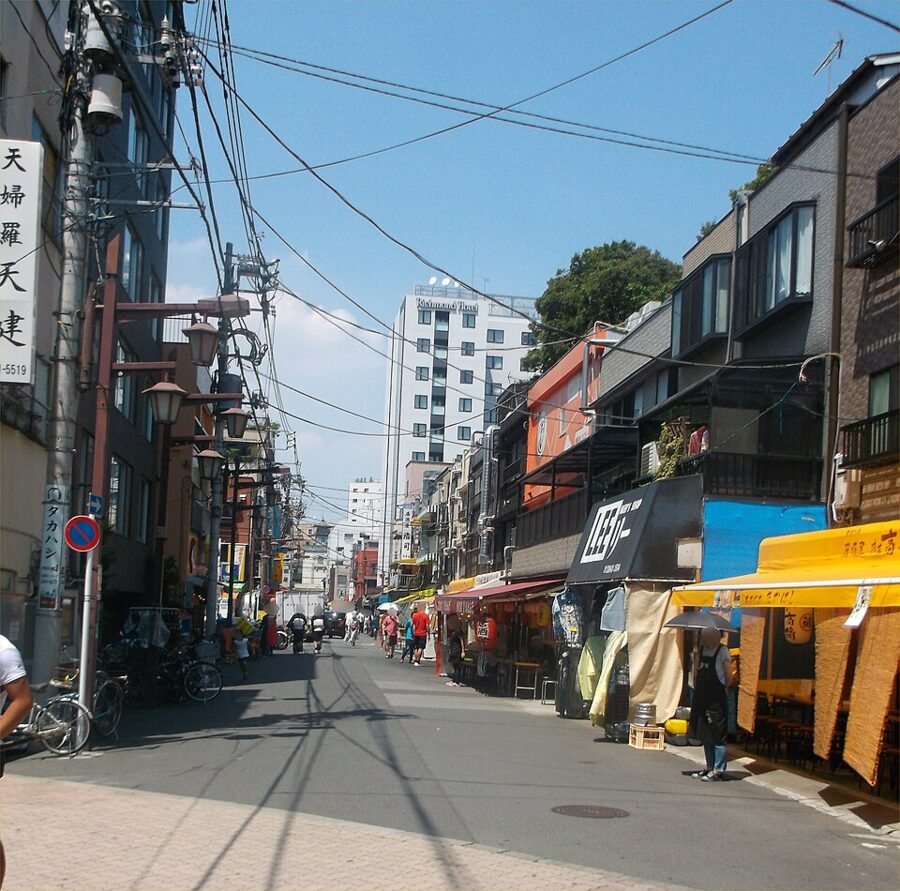
West of the temple grounds, the street officially called Koen-Hondori is known to everyone as Hoppy Street, after the beer-flavored mixer the bars serve with shochu. It is a row of open-fronted bars with plastic stools on the sidewalk, most specializing in nikomi, offal stewed for hours, and the row is the point rather than any one bar, so I name none. For the rest of the neighborhood’s food, see the Tokyo food guide.

Kappabashi
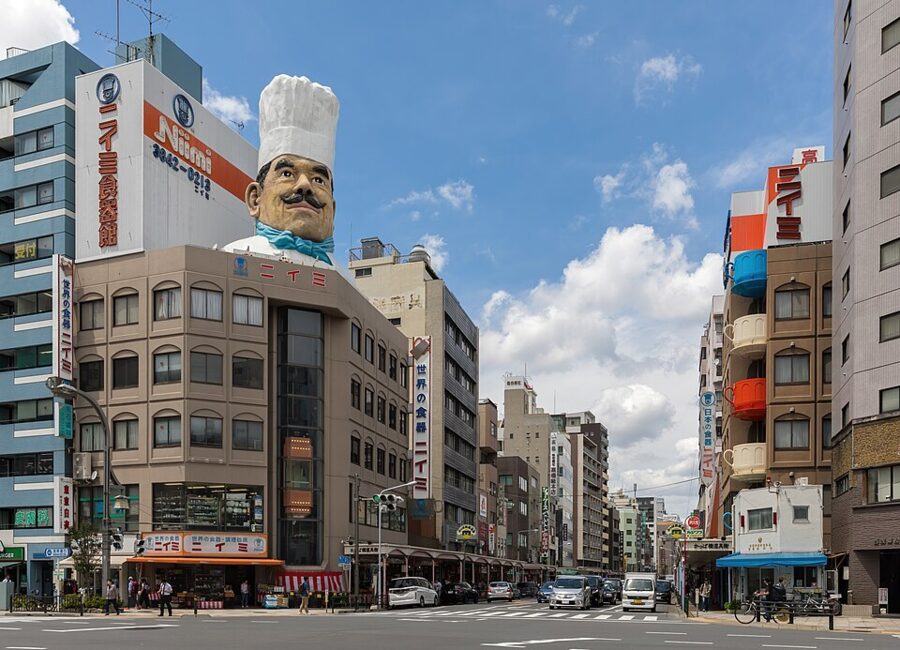
Kappabashi Dougu Street, about 800 m long with more than 170 shops, is Japan’s largest street of kitchen and restaurant supplies: knives, pots, lacquerware, the plastic food models in restaurant windows, signs and shop curtains. Almost every shop sells to the public. It is about 15 minutes’ walk west of the temple, between Asakusa and Ueno. The street’s association says most shops open on Saturdays but only about 30% on Sundays, so make it a weekday or a Saturday.
The street’s yearly sale, the Kappabashi Dougu Matsuri, falls around October 9, which Japan’s kitchenware trade keeps as Tool Day.

The river
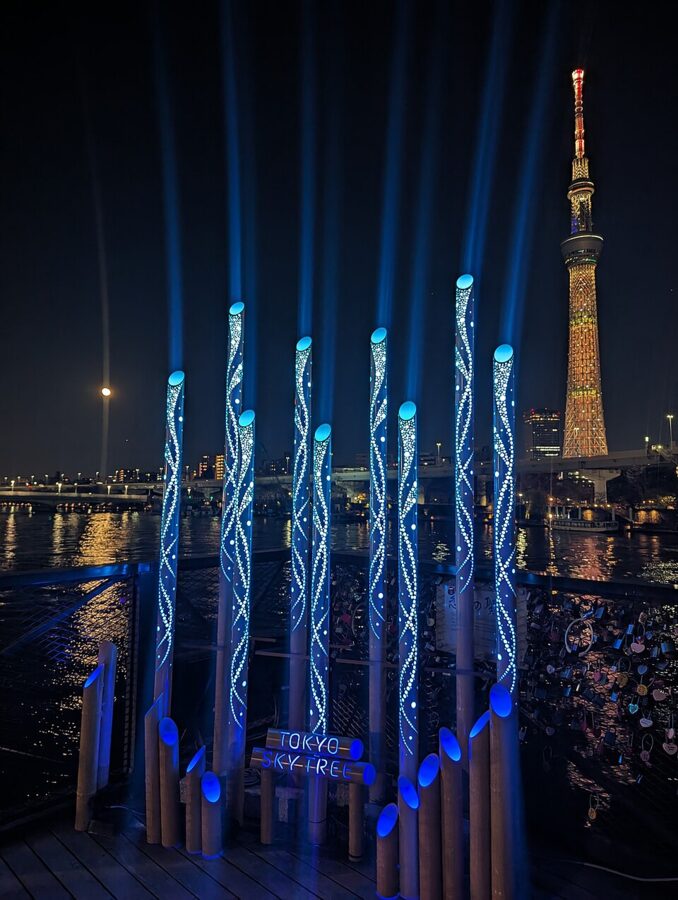
The Sumida is five minutes east of the temple, past Nitenmon. Sumida Park runs along both banks, with cherry trees that bloom in late March and early April. The Sumida River Walk, a footbridge of about 160 m hung on the side of the Tobu railway bridge, crosses to the Skytree side, open 07:00–22:00, and is the shortest walk from the temple to the tower.

If you want to be at Kaminarimon before 06:00, the simplest way is to sleep in Asakusa; the guide to the best hotels in Tokyo includes the area. Then set the alarm for 05:30, walk up Nakamise-dori with the shutters still down, and be in the courtyard when the bell on Bentenyama strikes six.