

teamLab Planets in Toyosu has a closing date, the end of 2027, and teamLab Borderless at Azabudai Hills does not. If you can fit in only one, book Planets while it lasts: it is the one where you take your shoes off and wade knee-deep through rooms of light, and nothing else in the city works the same way. Pick Borderless instead if you hate getting wet, are traveling with a toddler, or want two hours of wandering in the dark after dinner in Roppongi.
Both sell timed tickets online at prices that move with the date. On November 24, 2026, adult entry at teamLab Planets (チームラボプラネッツ) started at ¥3,600 to ¥4,600 depending on the day, for dates through January 2027, and adult entry at teamLab Borderless (チームラボボーダレス) started at ¥3,400. Borderless releases each month’s tickets around the 1st, two months ahead. Weekends, school holidays and the New Year week go first, so book as soon as your dates are fixed.
The one hard difference at the door: Borderless sells leftover tickets on site for ¥200 more, while Planets sells nothing on site at all. Everything else is detail, and the detail follows: what is inside each, what to wear, how long they take, the rules for strollers and wheelchairs, and the trains.

teamLab is one of a short list of Tokyo sights that need booking ahead, along with the Ghibli Museum and the sunset slots at Shibuya Sky; the rest of that list, and the free sights around it, are in things to do in Tokyo.

Planets or Borderless: which one, for whom
teamLab describes the two in its own words as opposites. Planets is “a museum where you walk through water”: a set route, barefoot for the first half, and every room built to be felt with your legs and back as much as seen. Borderless is “a museum without a map”: about 70 works that wander between rooms, with no route and no labels, and the main activity is getting lost.
The museum itself says both price ranges are about the same, and that about 30 percent of Japanese visitors have been to both (from an exit survey at Borderless in late 2025). Roughly 70 percent of visitors to each come from overseas. The table below is the late-2026 picture from the two official pages.
| teamLab Planets | teamLab Borderless | |
|---|---|---|
| Where | 6-1-16 Toyosu, Koto ward | Azabudai Hills Garden Plaza B, B1, Minato ward |
| Nearest station | Shin-toyosu (Yurikamome), Exit 1A, 3 min | Kamiyacho (Hibiya Line), Exit 5, 2 min |
| Usual hours | 08:00–22:00, last entry 21:00 | 08:30–21:00, last entry 20:00 |
| Adult ticket | From ¥3,800 (dynamic) | From ¥3,400 online (dynamic) |
| Tickets at the door | None | If any remain, ¥200 more |
| Shoes | Off for the water area | On throughout |
| Time inside | Allow about two hours | About 90 minutes to two hours |
| Children per adult | Up to 3 under-13s | Up to 5 of elementary age or younger |
| Runs until | End of 2027 | Permanent |
My verdict, in order. First trip, one slot free: Planets. Second trip, or Planets already done: Borderless.
A child under about four, or anyone who cannot be on their feet barefoot in water: Borderless. An evening after a day of walking: Borderless, which is connected to a subway station underground, with several restaurants in Azabudai Hills open until 23:00. Both on one trip works, on different days; they are on different lines on opposite sides of central Tokyo.
teamLab Planets in Toyosu

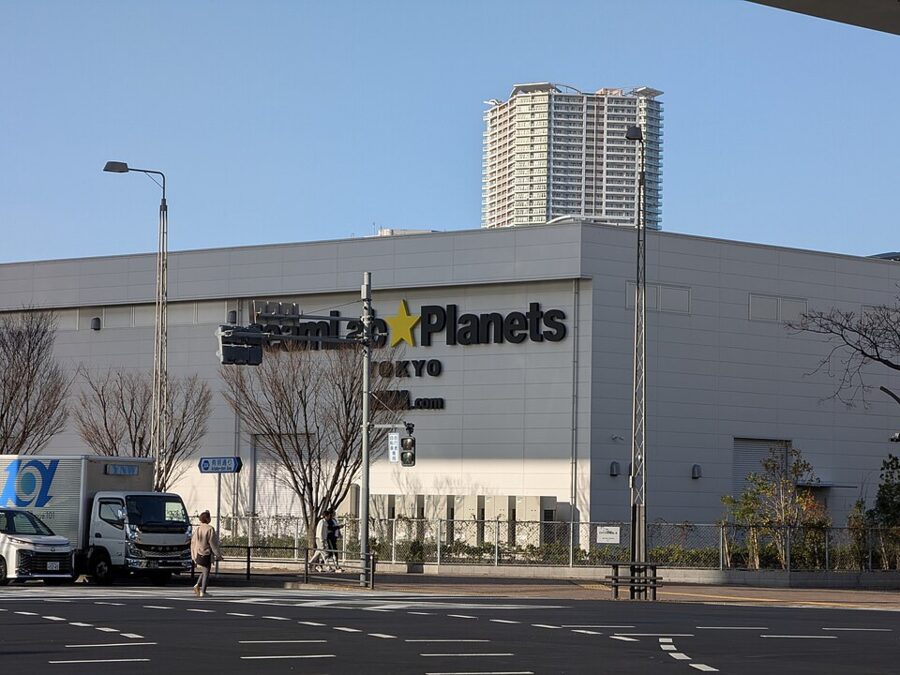
Planets opened on July 7, 2018 as a temporary museum on an empty plot in Toyosu, in Koto ward, with a run planned until autumn 2020. It has been extended three times since: to the end of 2022 (announced in July 2020), to the end of 2023 (September 2022), and to the end of 2027 (August 2023). It holds a Guinness record as the most-visited museum dedicated to a single art group, set with 2,504,264 visitors between April 2023 and March 2024, and it passed 10 million visitors in total in October 2025.
The site grew by half in January 2025, when a children’s area and an open-air section opened. It is laid out in four parts: Water, Garden, Forest and Open-Air. Only Water is barefoot; you put your shoes back on for the other three.
The water rooms
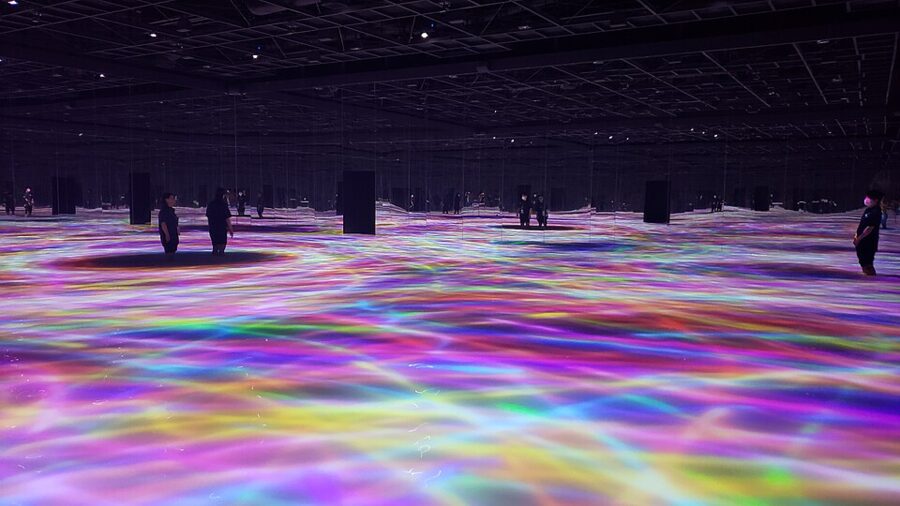
You leave your shoes and socks in a free locker after the gate and walk the Water area in a fixed order. One work has you walking up a slope with water and light running down it; another is a soft floor that sinks under your feet and pushes back on everyone else standing on it. The koi room is the one in every photo: a wide, dark pool, knee-deep on an adult, where the projected fish change course around you and burst into flowers when they collide with a leg. The flowers change with the seasons.
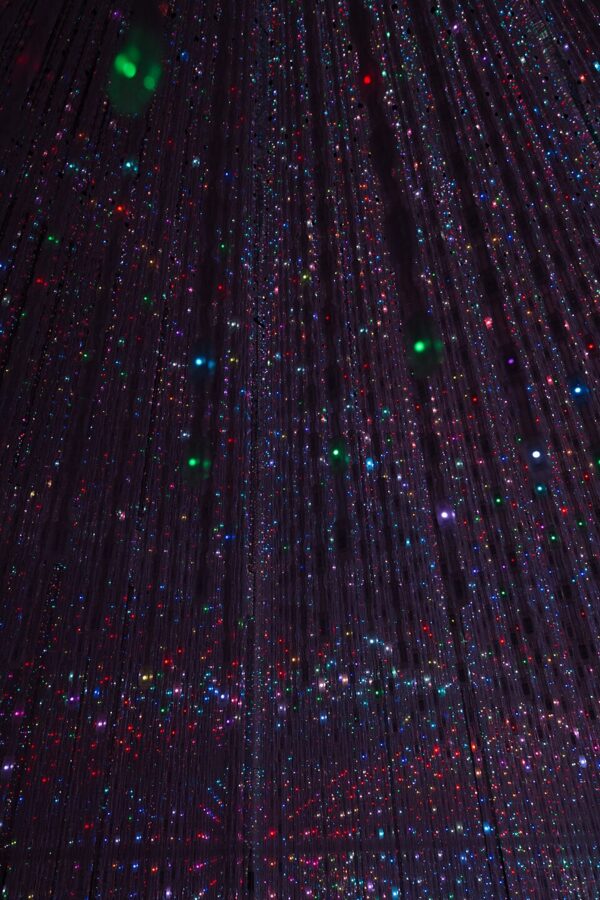

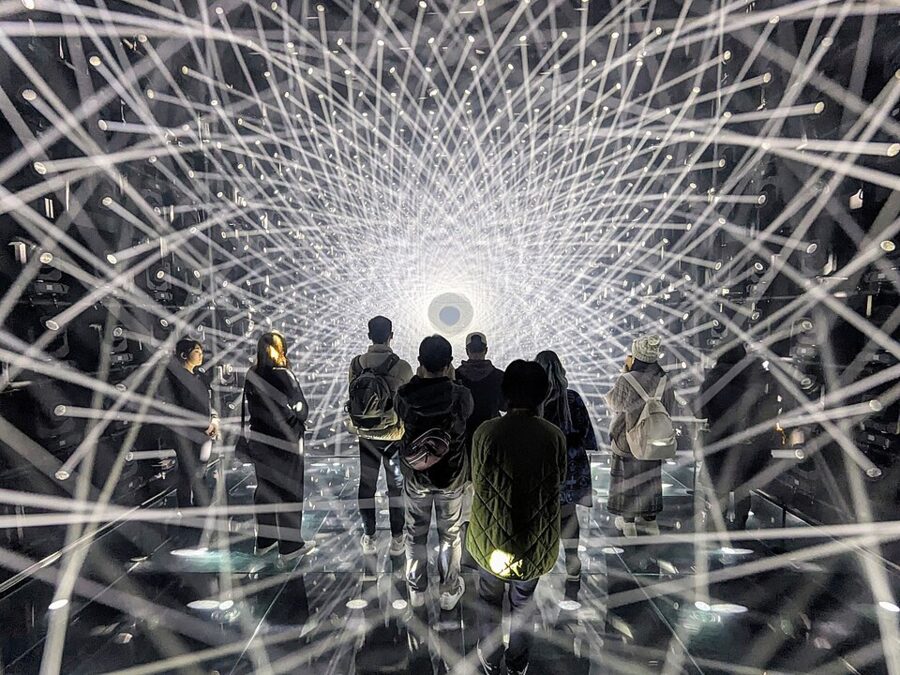
The Infinite Crystal Universe is a mirrored room hung with strings of LEDs. Floating in the Falling Universe of Flowers is a room where you lie down or sit still while flowers bloom, wither and fall around you. Another room is filled with large, soft balloon-like spheres that change color and ring a tone when you push through them.


The garden, the forest and the open-air works
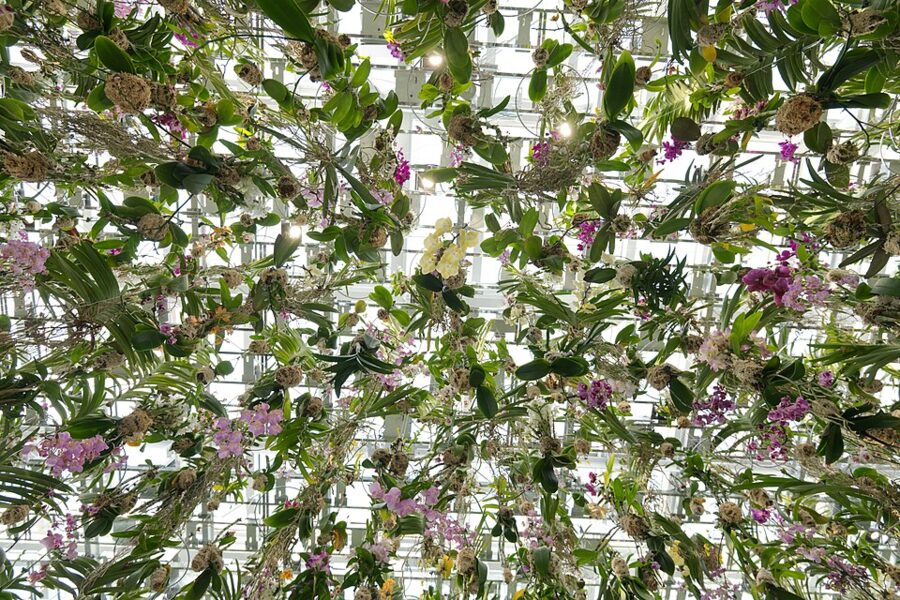
The Floating Flower Garden is a room packed with real orchids hanging from the ceiling on lines that lift as you walk in, so a pocket of space opens around you and closes behind. The scent changes through the day, and teamLab says it is strongest at night, because many of the orchids are paired with night-flying insects. The orchids are grown again after they finish flowering and sold at the museum’s flower shop.

Outside, the Moss Garden of Resonating Microcosms is a field of egg-shaped forms in real moss. They reflect the surroundings by day and glow by themselves after sunset; the museum posts the day’s sunset time on its page, and that is the hour to aim for if you want both versions. The moss garden stays open in light rain and shuts in heavy rain or typhoon winds.
The Forest area, opened on January 22, 2025, is the children’s half: Athletics Forest, with climbing frames, bouncing spheres and stepping stones in a dark room, plus a hall where children color in an animal on paper and watch it walk into the projection. Sandals without a heel strap and high heels are not allowed on some of these works, and the museum lends shoes for free.
What to wear and what to leave in the locker
Trousers that roll up above the knee, or shorts. The water can reach knee height on an adult; it is chlorinated and is not for swimming. If your trousers will not roll, staff lend shorts for free in sizes XS to 6L, which you hand back on the way out. If your clothes get wet anyway, staff will ask you to change before the next room, and towels are for rent; for small children, bring a spare set.
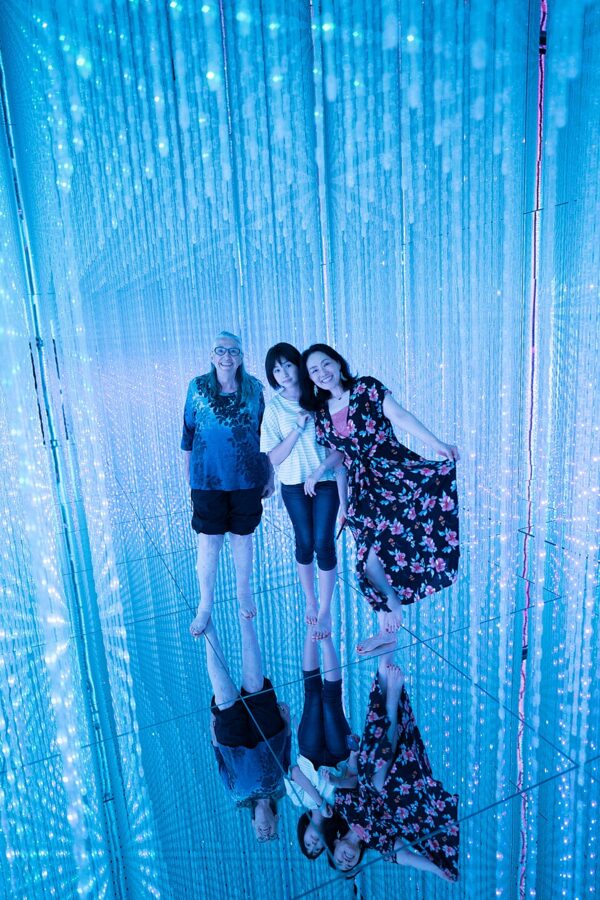

Long skirts are the other question. Several rooms have mirrored floors, so a skirt shows more than you meant it to; wraps and shorts are lent for free. A loose pair of shorts under a dress solves it before you arrive.
Bags stay in the locker. The free lockers measure 23 cm wide, 34 cm deep and 37 cm high, enough for a day bag and a folded coat; a suitcase larger than that is kept in the stroller area with a wire lock. Nothing can be carried into the works except your phone, and there is no food, no drink and no re-entry once you pass the exit.
Food inside Planets
Vegan Ramen UZU, a vegan ramen shop from Kyoto, runs a counter inside the museum, 10:30–21:30 with last order 15 minutes before closing. You can reach it only after you enter, and not before the time on your ticket. A tea room called Glass House pours tea and sake among orchid lamps (one order per person, and no children aged 12 or under), and a cafe near the entrance sells ice cream, muffins and tea to take away.
How long Planets takes
teamLab gives no visit length for Planets. I would allow two hours inside plus up to an hour in line at busy times, since the timed ticket controls the start of the line, not its length. The first slot of the morning at 08:00 is the calmest, and staff do ask people who stay a long time in one room to move on when it is crowded.

The closing date for Planets
The official page lists the run as “July 7, 2018 – End of 2027”, with no exact day, and that was still the entry on November 24, 2026. On September 9, 2026, teamLab announced a much larger museum for the bay, tentatively called teamLab Tokyo, in Ariake beside Odaiba, planned to open in 2032. Nothing has been said about Planets beyond 2027. If it is on your list, 2027 is your final chance, and I would expect the final months to sell out early.
teamLab Borderless at Azabudai Hills
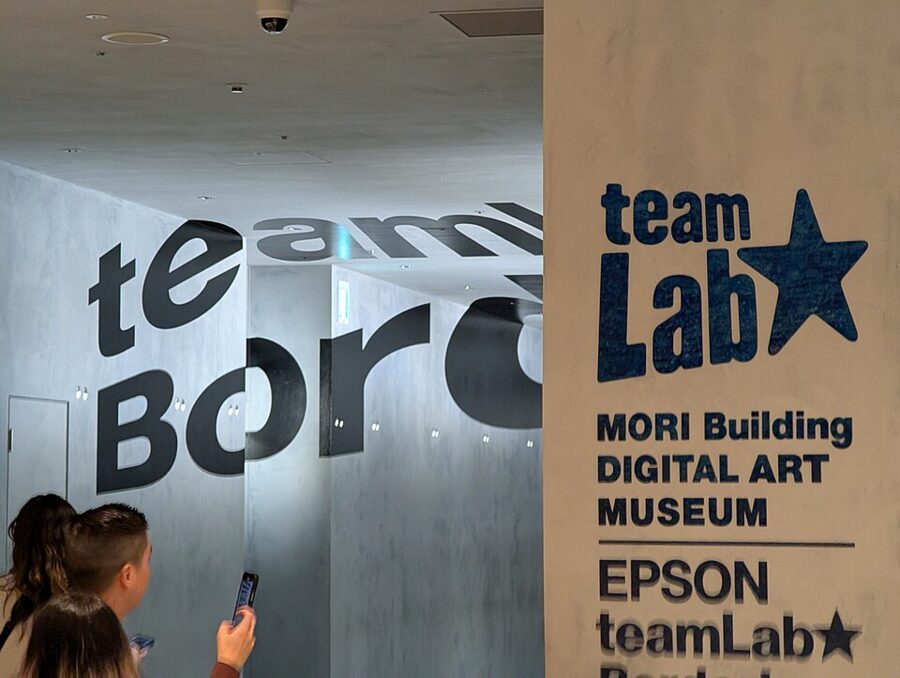
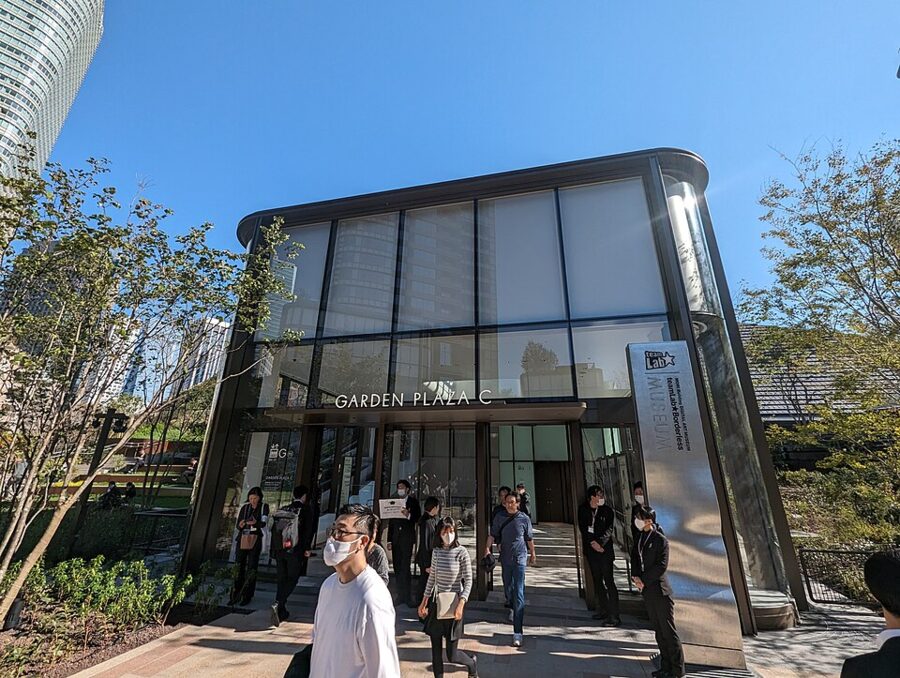
teamLab Borderless sits in the basement of Garden Plaza B at Azabudai Hills (麻布台ヒルズ), the Mori Building complex between Roppongi and Toranomon in Minato ward that opened on November 24, 2023. Its full name, teamLab Borderless: MORI Building DIGITAL ART MUSEUM, is on the signs. Unlike Planets it is permanent, and it passed 4 million visitors on July 31, 2026, about two and a half years after opening.
From Odaiba to Azabudai Hills
The first Borderless opened on June 21, 2018 inside Palette Town in Odaiba and closed on August 31, 2022, when Palette Town shut for redevelopment. In 2019 it drew 2,198,284 visitors, which earned it the Guinness record that Planets later took over. It reopened at Azabudai Hills on February 9, 2024, smaller and with new works; teamLab lists the Light Sculpture series and Bubble Universe among those that can be seen only here in Japan.
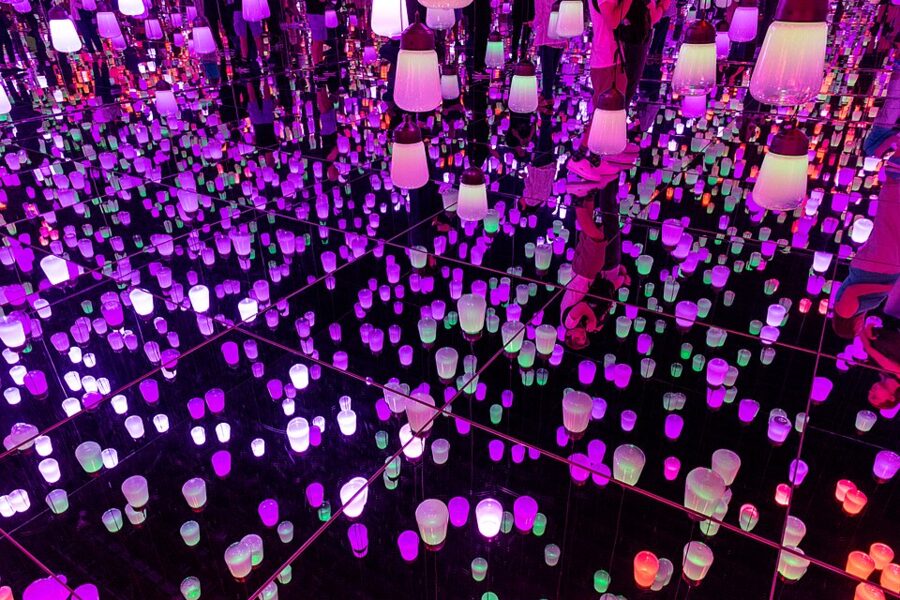

The rooms that drift
The idea behind the name is that the works do not stay in their rooms. Flocks of crows, butterflies and flowers leave one space, cross a corridor and turn up in the next, mixing with whatever is showing there. There are no captions on the walls, because the work on a wall may be different by the time you read it. The teamLab app reads you the concept of the work nearest to you.
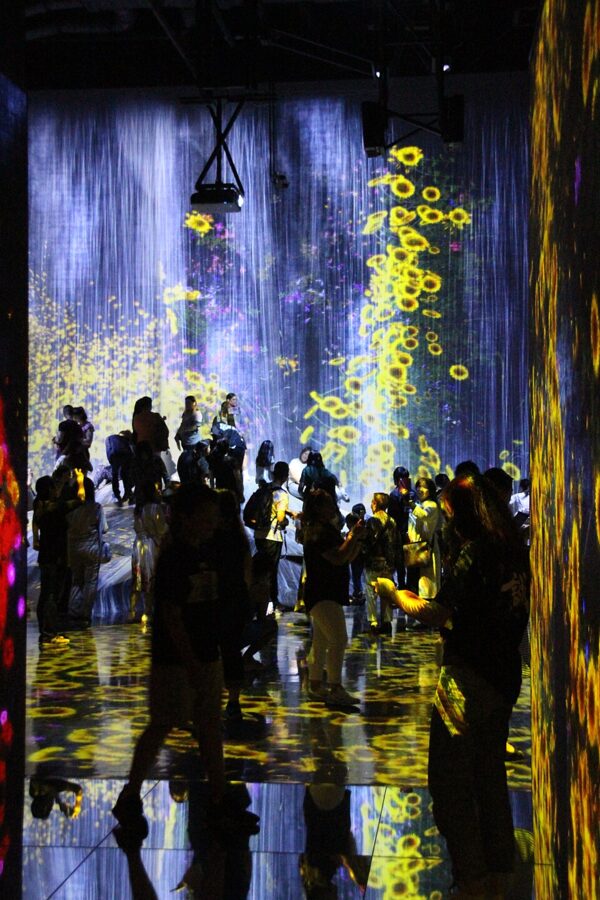

There is no printed map either, and staff will not hand you one: the museum’s FAQ says so in as many words. You will walk through the same room more than once, and it will look different each time. Getting lost on purpose is the point, and the way to do it is to take every doorway you have not tried yet.
The Light Sculpture – Flow room reopened in summer 2026 with a set of new works built around mirrors and color, and some of the flower works change with the real seasons. Sketch Ocean, part of a children’s area called Future Park, lets you color in a fish on paper and watch it swim into a wall-sized sea with everyone else’s.
EN TEA HOUSE and the shop
EN TEA HOUSE is a small tea room inside the museum where flowers bloom in your bowl for as long as there is tea in it. It opens 30 minutes after the museum opens and takes last orders 30 minutes before closing, and everyone who sits down has to order at least one drink. You can buy a set ticket with tea on the official ticket site. Apart from the tea house there is no restaurant or cafe inside, only vending machines, so eat in Azabudai Hills before or after.
The rules on bags are looser than at Planets. Lockers are free; food, alcohol, drinks without a cap and anything over 50 cm stay outside, strollers go in the luggage room, and a capped drink is allowed in.
The Sketch Factory, outside the museum gate, turns the fish you drew into a badge, T-shirt, towel or sticker for a fee.
How long Borderless takes
The museum’s own FAQ gives two answers: “about 2 hours” in one place and “about an hour and a half” on average in another. There is no time limit once you are in. Because there is no route, the visit ends when you decide it does, and it is easy to miss a room; if you have been round for an hour and not found the tea house, keep going.

Tickets and dynamic prices
Both museums price adult tickets by the date and the hour, which teamLab calls dynamic pricing. Children’s and teenagers’ prices are fixed. Prices include tax, and the official ticket stores add no booking fee.
| Ticket (late 2026) | teamLab Planets | teamLab Borderless |
|---|---|---|
| Adult, 18 and over | From ¥3,800 | From ¥3,400 |
| Ages 13–17 | ¥2,800 | ¥2,800 |
| Ages 4–12 | ¥1,500 | ¥1,500 |
| Age 3 and under | Free | Free |
| Disability certificate holder | From ¥1,900 | From ¥1,700 |
| Ticket with no set time | Premium Pass, ¥12,000, priority entry | Flexible Pass, ¥12,000 |
| Bought at the door | Not sold | ¥200 more, if any remain |
What the dynamic price looks like
The Planets ticket store shows a starting price for each day on its calendar. In late 2026 those starting prices ran from ¥3,600 on the quietest dates to ¥4,600 over the New Year, with ¥3,800 to ¥4,200 on most other days; some time slots on the same day may cost more. The Borderless ticket site color-codes its calendar by price band instead, and its dearer bands fall on the same weeks.
The pattern holds at both museums: the New Year week is the dearest and the weeks after it the cheapest. School holidays and long weekends are the dates most likely to sell out, at either museum.
When tickets go on sale
Borderless puts each month on sale around the 1st of the month two months before, so tickets for March go on sale around January 1. Its ticket site’s calendar ran to the end of January 2027 on November 24, 2026. Planets publishes no fixed release rule, but on the same day the Planets ticket store was selling dates through January 31, 2027, which is the same two-month window in practice.
The Planets QR ticket arrives by email two days before your visit, and the code appears on screen from midnight on the day. The Borderless ticket is a link in the confirmation email, and you can print it from 24 hours before. Both accept major credit cards and PayPay; Planets also takes UnionPay when you check out as a guest.
Same-day tickets
Borderless sells same-day tickets online if any are left, and at the museum for ¥200 more. Planets sells same-day tickets online only, and there is no box office or ticket machine at the building. On a weekday outside the holidays I would not expect trouble getting either a day ahead; on a Saturday in spring I would not risk it.
Changing a date, and the no-refund rule
Neither museum refunds a ticket once bought. Borderless makes an exception for an unscheduled closure, and Planets says it may refund when an emergency closes the building. Tickets bought on the official sites can be moved to another date or time up to three times, until two hours before the slot; for a 10:00 Planets slot the deadline is 08:00. If the new date costs more you pay the new price and the old one is refunded.
Tickets bought through a travel agency, a convenience store or a resale site follow that seller’s rules, and both museums refuse resold tickets at the gate.
Arriving late is allowed at both, as long as you come the same day and before last entry. At Planets, tell the staff at the entrance.
Accessibility, children and photos
Strollers, babies and children
Neither museum allows strollers inside. Planets has a stroller area at the entrance; Borderless has a luggage room. At Planets a baby worn in a front carrier is fine, and there are changing tables in the toilets and a first-aid room for feeding or a rest. Borderless has no nursing room inside, but Azabudai Hills has one, and the museum asks parents not to use child harnesses.
Children under 13 cannot enter Planets without an adult aged 18 or over, and one adult can bring no more than three children, free under-fours included. At Borderless the rule is one adult for every five children of elementary-school age or younger, and teenagers can go in on their own. Child tickets at both cost ¥1,500 for ages 4 to 12.
At Planets, anyone with an inside leg under 40 cm cannot walk into the koi room unless an adult carries them or wears them in a carrier. Staff can show you detour routes around any work you would rather skip, which is the answer for a child who balks at the water.
Wheelchairs
Planets asks wheelchair users to move into one of the museum’s standard wheelchairs at the entrance, or to fit tire covers to their own, and the number of museum chairs is limited. Some works are seen by detour or from a viewing point only, and guests who need help moving around are asked to come with a companion. Assistance dogs wait in a provided cage.
Borderless is reached by elevator, and its lift takes a wheelchair or a stretcher up to 1,600 mm by 1,350 mm inside. Some works there cannot be entered in a wheelchair either, and the number of wheelchair users admitted at once is capped, so there may be a wait. At both museums, mobility scooters and electric chairs that cannot be held to 2 km/h are swapped for a museum wheelchair.
Discounted tickets cover the holder of a disability certificate and one companion, who must enter together. Borderless says a certificate issued by any country is accepted.
Mirror floors, light and other warnings
Both museums have mirrored floors. At both, anyone with a total weight above 250 kg, including a wheelchair, may be asked not to step on them, and staff decide room by room. Both are dark, with uneven floors and strong flashing light in places, and both bar pregnant visitors from some areas. Borderless adds low ceilings to that list, and loud sounds and smells in some works.
Photo rules
Photos and video are allowed at both, and Borderless says outright that posting them on social media is fine. Flash is not allowed, and neither are tripods, monopods or selfie sticks of 30 cm or more; Borderless also bans lighting equipment. Filming for commercial use needs permission at both, and either museum may film visitors for its own use, so tell the staff if you would rather not appear.
Getting there
Both museums are a few minutes from a station. The guide to getting around Tokyo covers IC cards and passes; both routes below take a Suica or PASMO.
Planets: Shin-toyosu or Toyosu
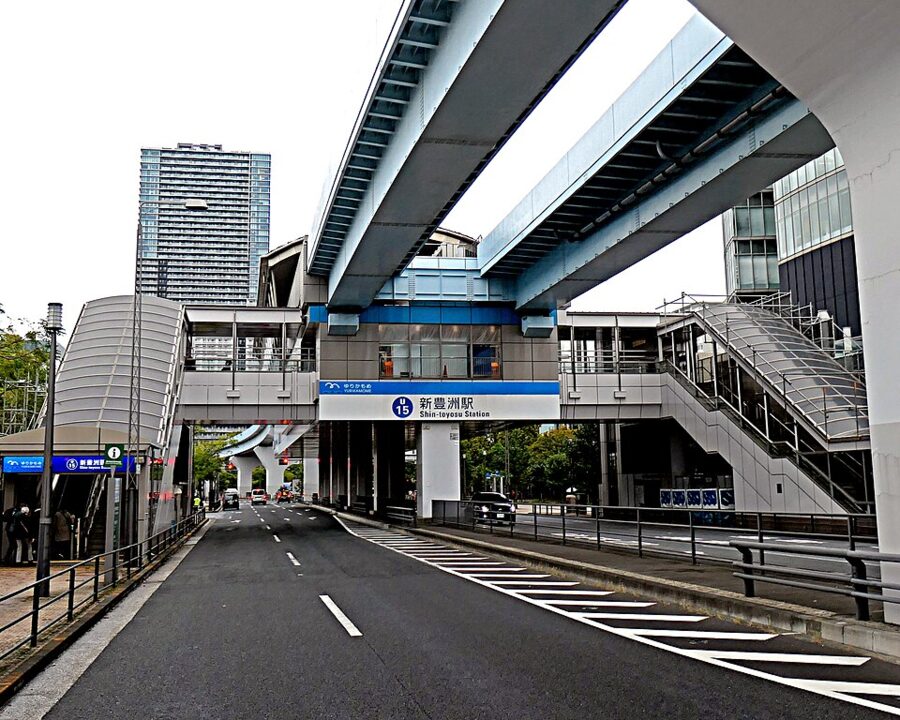

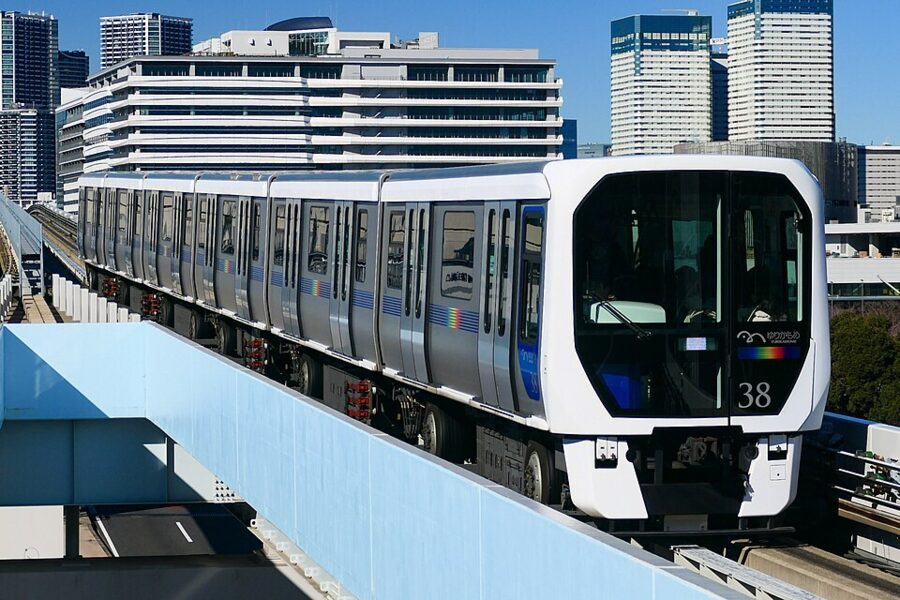
The closest station is Shin-toyosu (新豊洲, U15) on the Yurikamome, the driverless line from Shimbashi over the Rainbow Bridge and through Odaiba. Planets is three minutes from Exit 1A. Shijo-mae, the next stop toward Shimbashi and the station for Toyosu Market, is five minutes away on foot.
The other way in is Toyosu Station (Y22) on the Tokyo Metro Yurakucho Line, ten minutes from Exit 7, which suits anyone holding a subway pass, since the Yurikamome is a separate company. From Ginza, teamLab puts the whole trip at about 10 minutes. A paid shuttle bus also runs to Planets from GINZA SIX, and teamLab warns that the Toei bus to Shin-toyosu from Tokyo Station, Ginza and Tsukiji is badly crowded.
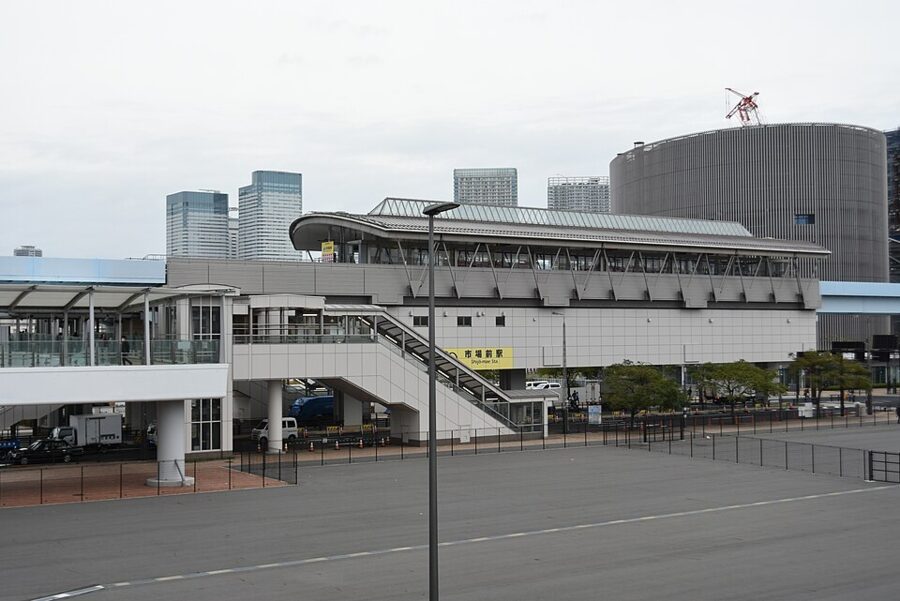

From Tokyo Station, teamLab’s own route is the JR Yamanote Line to Yurakucho, the Yurakucho Line to Toyosu, then one stop on the Yurikamome; a taxi takes about 15 minutes. From Shinjuku or Shibuya, allow about 30 minutes. From Haneda Airport it is the Tokyo Monorail to Hamamatsucho, the Yamanote Line one stop to Shimbashi, then the Yurikamome; airport limousine buses from Haneda and Narita also stop at Michi no Terrace Toyosu beside the market. There is no visitor parking at Planets; on weekdays, a same-day ticket gets you an hour free at the LaLaport Toyosu car park.
Borderless: Kamiyacho or Roppongi-itchome
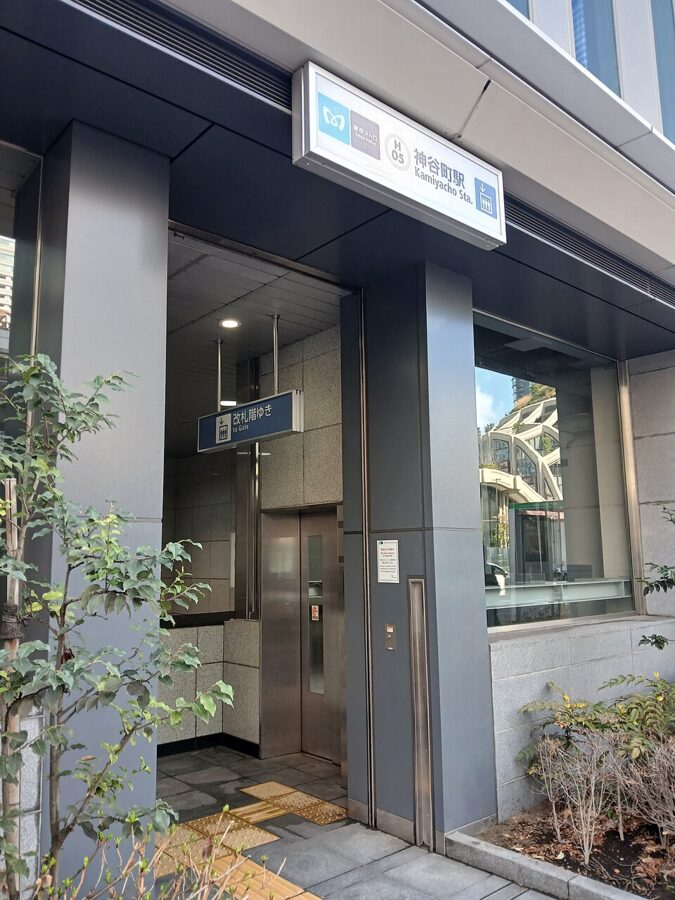

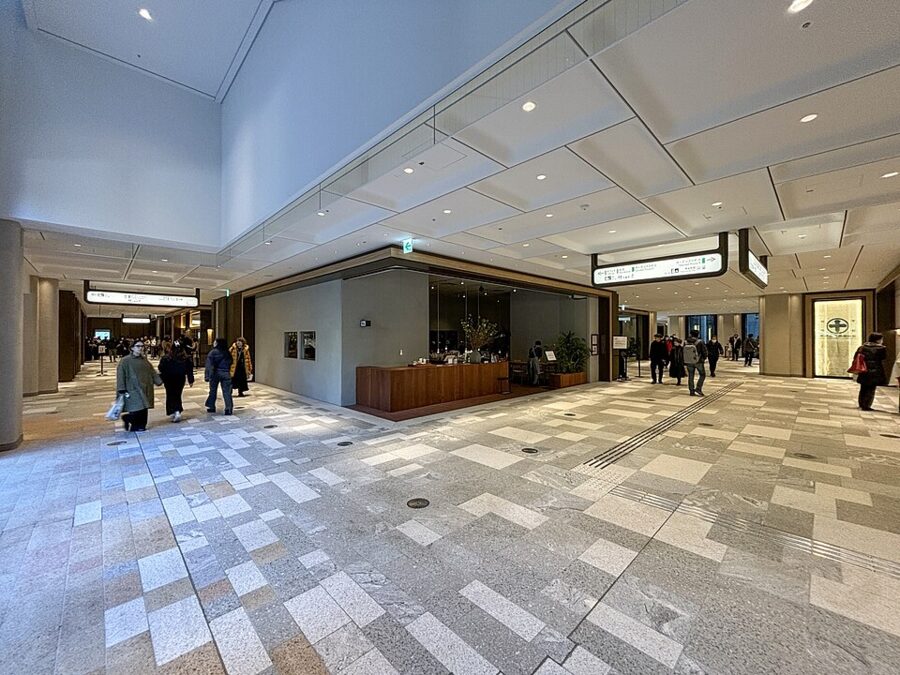
Kamiyacho (神谷町, H05) on the Tokyo Metro Hibiya Line is the station: Exit 5 is two minutes from the museum. Roppongi-itchome (N05) on the Namboku Line is six minutes from Exit 4. Both connect to the museum through an underground passage, so you can follow the signs without going up to street level.
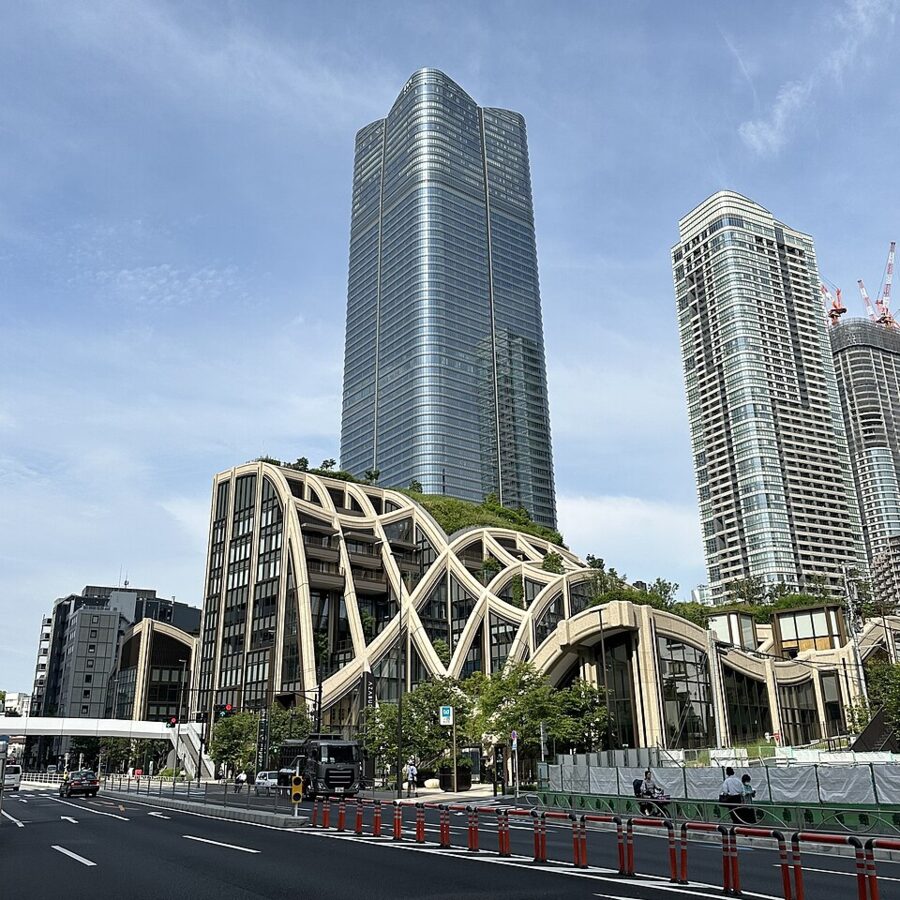
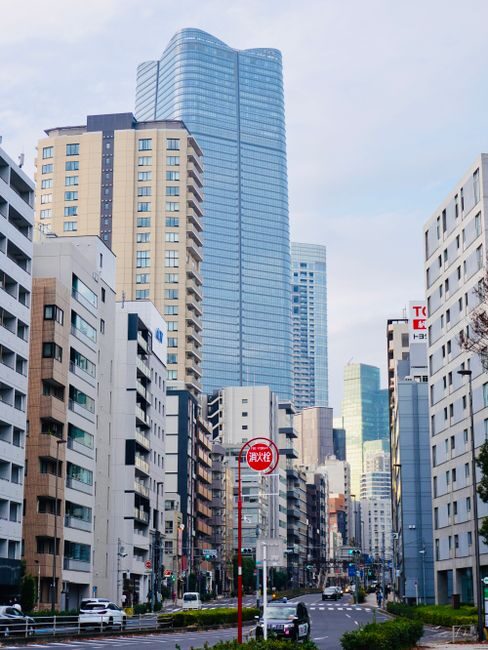
From Ginza, the Hibiya Line runs straight to Kamiyacho in about ten minutes. From Tokyo Station, take the Marunouchi Line to Kasumigaseki and change to the Hibiya Line, two stops.
From Shinjuku Station the same Marunouchi and Hibiya change works; from Shibuya, the JR line to Ebisu and then the Hibiya Line. From Asakusa, the Toei Asakusa Line to Higashi-ginza connects with the Hibiya Line. From Haneda, the Keikyu Line to Higashi-ginza and the Hibiya Line takes about 40 minutes; from Narita Airport, the Keisei Line to Ueno and the Hibiya Line, 70 to 90 minutes.
Planets with Toyosu Market
Planets opens at 08:00, which makes it an easy second stop after Toyosu Market (豊洲市場), one Yurikamome stop or five minutes on foot away. The tuna auction runs from about 05:30 on market days, and the market’s restaurants serve sushi breakfasts from early morning; the market closes on Sundays, national holidays and some Wednesdays. The Tokyo sushi guide has the restaurant floors and how to see the auction.
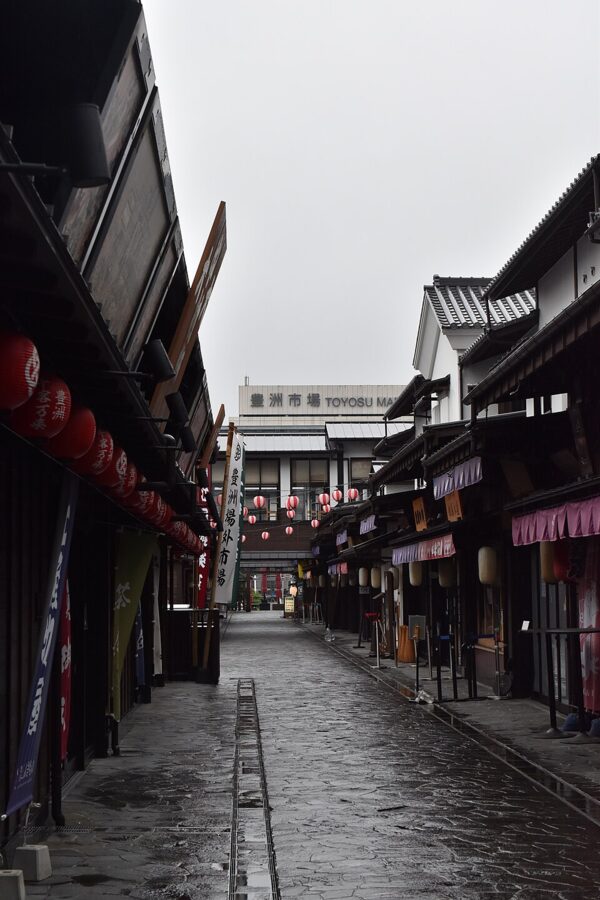

Next to the market, Toyosu Senkyaku Banrai is an Edo-style complex of food stalls, shops and a hot-spring building, with a foot bath on the roof. It suits the evening version of the day: a late Planets slot, then dinner here.
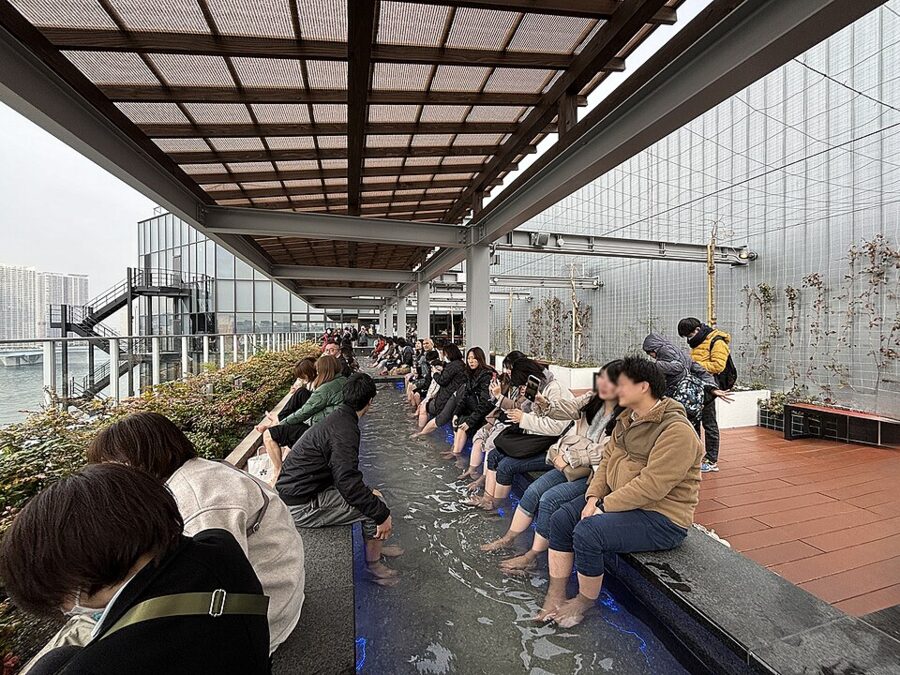

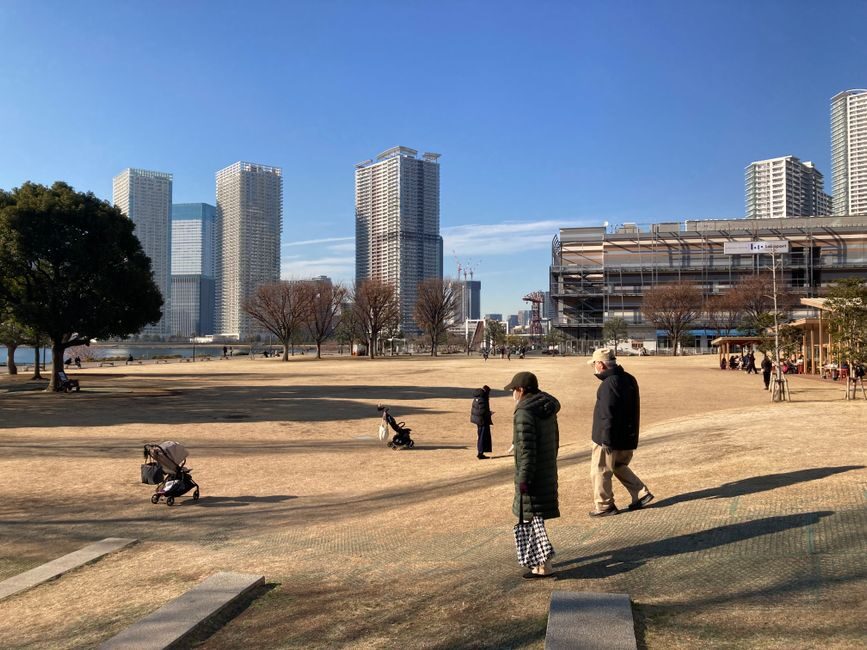
The day I would plan: the auction at 05:30, sushi at the market, the 08:00 or 08:30 Planets slot, then the Yurikamome on to Odaiba for the waterfront. Or the reverse, with an afternoon slot and the moss garden after dark.
Borderless with Tokyo Tower
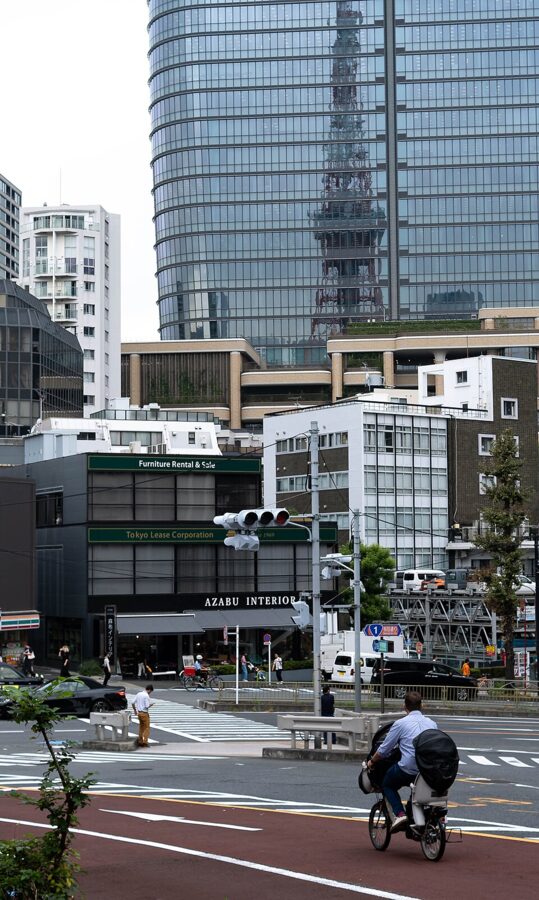

Tokyo Tower is the obvious pairing: it is a short walk away, and last entry to its Main Deck is 22:30, so a Borderless slot in the late afternoon and the tower lit up afterward fit together. Roppongi Station is about 10 minutes on foot the other way, and Roppongi’s restaurants and bars carry the evening on from there.
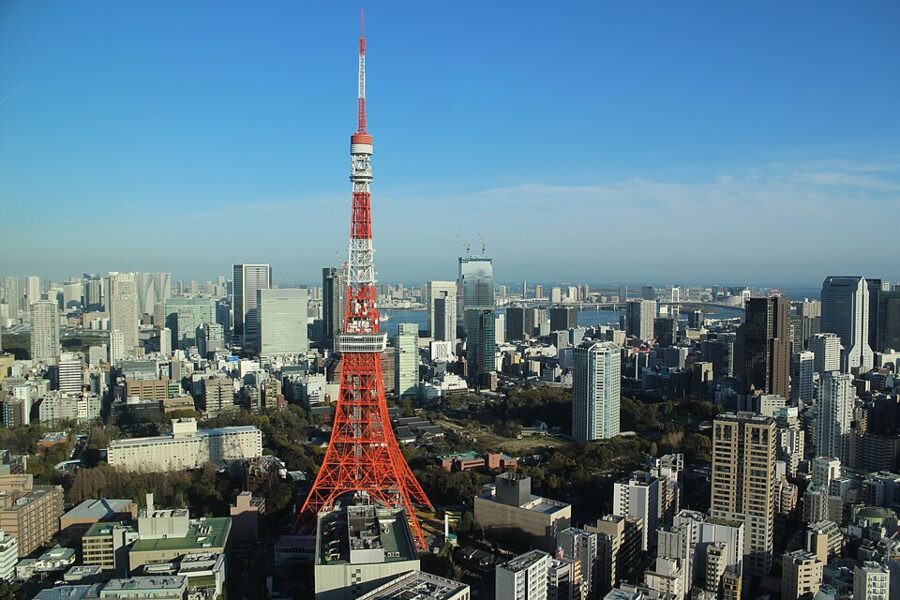
For the districts around both museums, and where Toyosu and Azabudai sit on the map, see the guide to Tokyo neighborhoods.
Other teamLab works in and near Tokyo
Two permanent teamLab works are in Ginza, one of them in the building the Planets shuttle leaves from, and a third museum is on the way.
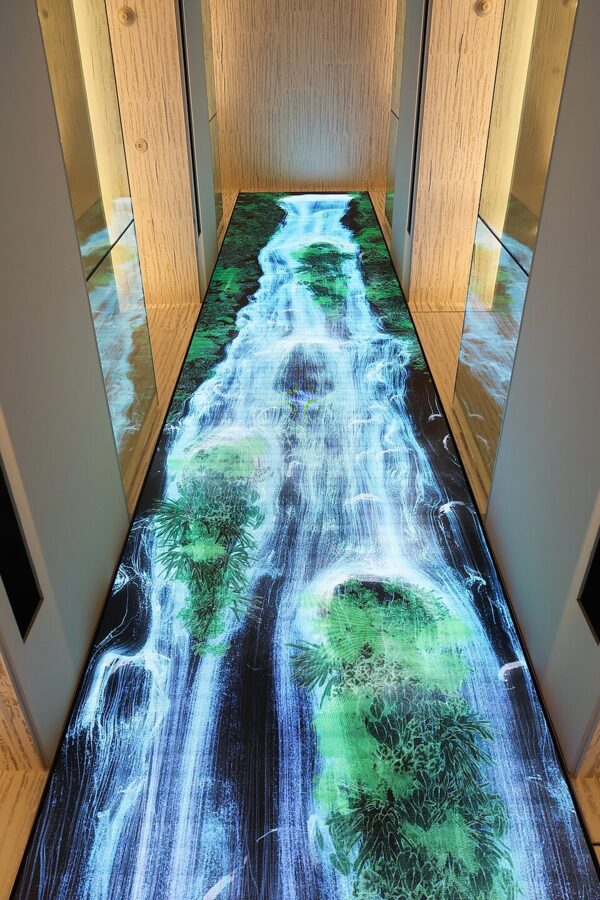

- Universe of Water Particles on the Living Wall, GINZA SIX. A free projected waterfall facing a plant wall by Patrick Blanc, permanent since April 20, 2017; it opens and closes with the building.
- MoonFlower Sagaya Ginza. A restaurant where seasonal trees and flowers spread off the Arita porcelain and across the table while you eat. One nine-course dinner at ¥39,600, eight guests a day, closed Sundays; it is on the sixth floor of a building connected to Exit 5 of Ginza-itchome Station.
- teamLab Tokyo (tentative name), Ariake. Announced on September 9, 2026 for two plots near Ariake-tennis-no-mori Station on the Yurikamome, about 33,000 square meters, planned for 2032. It will be teamLab’s largest.
- teamLab Biovortex Kyoto. The nearest other permanent teamLab museum, opened on October 7, 2025 near Kyoto Station, a Shinkansen ride away.
teamLab also stages temporary shows around Tokyo, in gardens and parks among other places, each for a few weeks. They come and go; the two museums do not, at least not until Planets reaches the end of 2027.
Planets first, then, for as long as it has a date on it: set an alarm for the 1st of the month two months before your trip, pack shorts, and leave the long skirt at the hotel. Borderless will still be under Azabudai Hills on the next trip.