

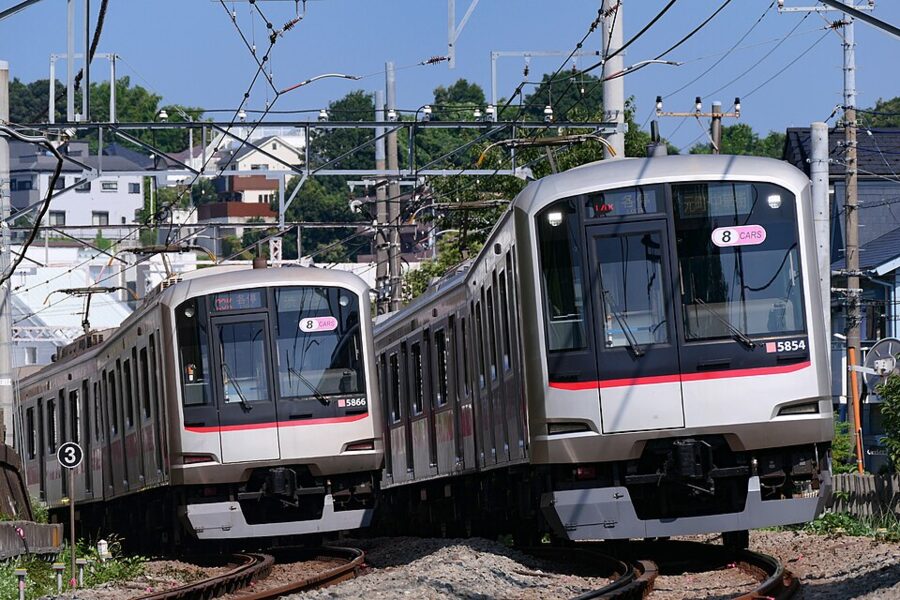
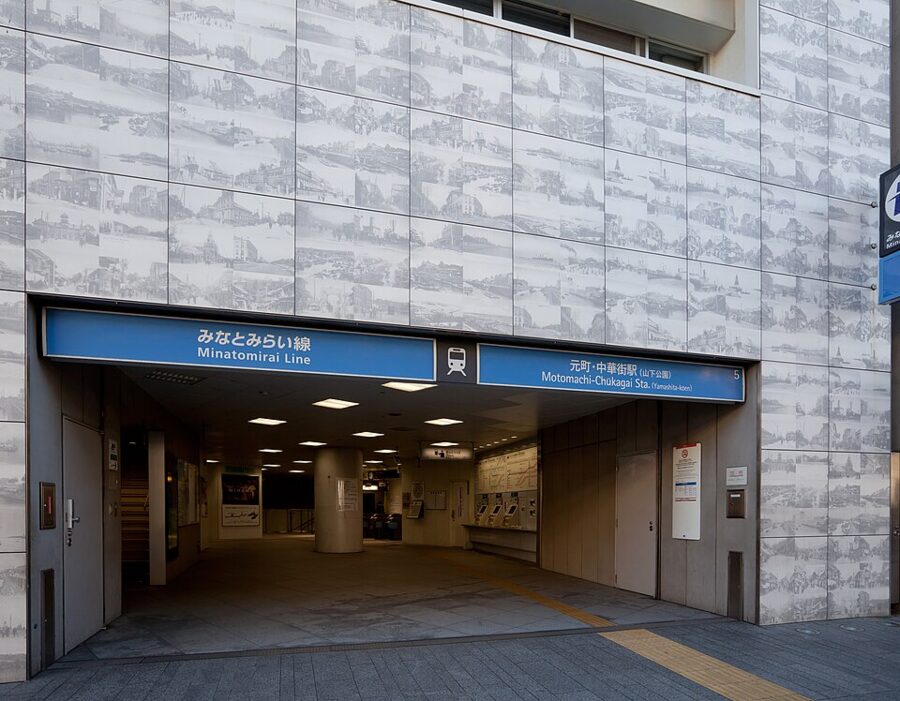
From Shibuya, a Tokyu Toyoko Line train runs straight onto the Minatomirai Line and reaches Motomachi-Chukagai, at the gates of Chinatown, in about 40 minutes for ¥533 on an IC card. That one train is the plan. Ride it to the far end of the bay, walk back north through the Bluff, Chinatown and the waterfront, and finish at Minato Mirai after dark, a short ride from a train home.
From Tokyo Station, the JR Tokaido Line reaches Yokohama in 25 minutes for ¥528 by IC card, and the Minatomirai Line takes you on to the sights. The slower JR Keihin-Tohoku Line runs to Sakuragicho with no change in about 43 minutes for ¥616. From Shinagawa, Keikyu is the cheap train (¥313, 22 minutes) and JR the quick one (¥341, 16 minutes).
One change matters for 2026. The 69th-floor Sky Garden deck in Yokohama Landmark Tower closed after its New Year’s Eve opening on December 31, 2025, for repairs to the whole building, and the tower’s notice gives 2028 or later for reopening. Until then, the high views come from the Marine Tower, the Ferris wheel, the ropeway and the free roof of Osanbashi Pier.
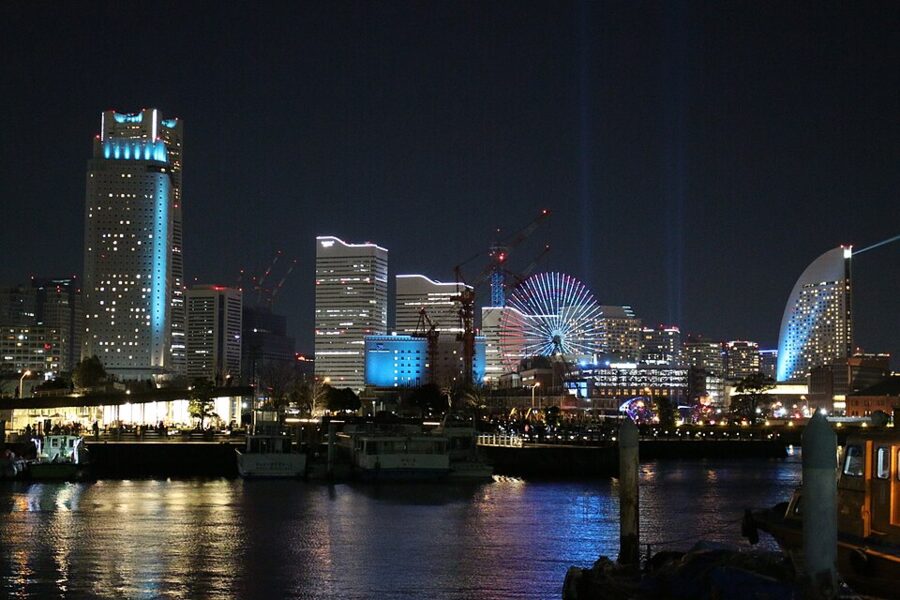

Among the day trips from Tokyo, Yokohama is the closest and the only one that gets better after dark. It needs no reservations and no pass to start, though one pass from Shibuya does save money (below). What it does need is the right day of the week, because the museums and the old ship each close on a different one.


Getting there: trains and fares from Tokyo, Shibuya and Shinagawa
Three railways run from central Tokyo to Yokohama, and all of them take an IC card. The fares below are the IC fares in force in November 2026; paper tickets cost a few yen more. JR East’s fares were last raised on March 14, 2026.
| From | Train | To | Time | IC fare |
|---|---|---|---|---|
| Shibuya | Tokyu Toyoko Line, through onto the Minatomirai Line | Motomachi-Chukagai | about 40 min | ¥533 |
| Shibuya | Tokyu Toyoko Line | Yokohama | about 31 min | ¥309 |
| Shibuya | JR Shonan-Shinjuku Line | Yokohama | about 25 min | ¥440 |
| Tokyo | JR Tokaido Line | Yokohama | about 25 min | ¥528 |
| Tokyo | JR Keihin-Tohoku Line, no change | Sakuragicho | about 43 min | ¥616 |
| Shinagawa | Keikyu Line | Yokohama | about 22 min | ¥313 |
| Shinagawa | JR Tokaido Line | Yokohama | about 16 min | ¥341 |
The Tokyu route is the one I would take from anywhere on the west side of the city. Tokyu’s fare table puts Shibuya to Yokohama, 24.2 km, at ¥309 by IC card, and the Minatomirai Line adds ¥193 to Minatomirai Station or ¥224 to Motomachi-Chukagai on its own fare table. The trains are one service under two names, the same through-running that links most of Tokyo’s subways to the suburban lines, so you stay in your seat at Yokohama and the IC card works out the split.
From Tokyo Station, take whatever leaves first. The Tokaido Line is quicker to Yokohama Station, but Yokohama Station is a transfer point rather than a sight, and you will change there for the Minatomirai Line or walk a long way. The Keihin-Tohoku Line is the slow local that keeps going to Sakuragicho, Kannai and Ishikawacho, the three JR stops along the old port, so it saves a change at the cost of about ten minutes.
From Shinagawa, Keikyu’s fare table gives Yokohama at ¥320 on a ticket and ¥313 by IC card, and Hinodecho, the station for the Noge bars, at ¥347. From Haneda Airport, Keikyu runs to Yokohama in about half an hour, so Yokohama works as a first or last afternoon on a trip that flies through Haneda.
One warning. Shin-Yokohama, where the Shinkansen stops, is a separate station in the north of the city, several stops up the Blue Line subway from Yokohama Station, with nothing of the old port near it. It matters for the Ramen Museum and for nothing else on this route.

The pass worth buying from Shibuya
Tokyu sells a Minatomirai Pass (東急線みなとみらいパス) from the ticket machines at its stations: a round trip from your Tokyu station to Yokohama plus unlimited rides on the Minatomirai Line for the day. From Shibuya it costs ¥920. The plain IC fares for the day laid out below, in at Motomachi-Chukagai and back from Minatomirai, come to ¥1,035, so the pass saves ¥115 even if you ride the Minatomirai Line only at the start and the end. Every extra hop along the bay makes the saving bigger.
Two catches. It is a paper magnetic ticket sold until 22:30, not a load on your IC card, and you cannot break the journey on the Tokyu section, so no stop at Nakameguro on the way home. Coming from Tokyo Station or Shinagawa, skip it: the pass only starts from Tokyu stations.
The order of the day
The sights run in a rough line along a few kilometers of waterfront, with the Bluff on a hill at the south end and Minato Mirai’s towers at the north. Walk it south to north and the day ends where the night views and the trains home are. Here is the order that fits the opening hours:
- 09:30 Motomachi-Chukagai Station, Exit 6, up to the Bluff for the Western houses (open from 09:30, free) and the Harbor View Park lookout.
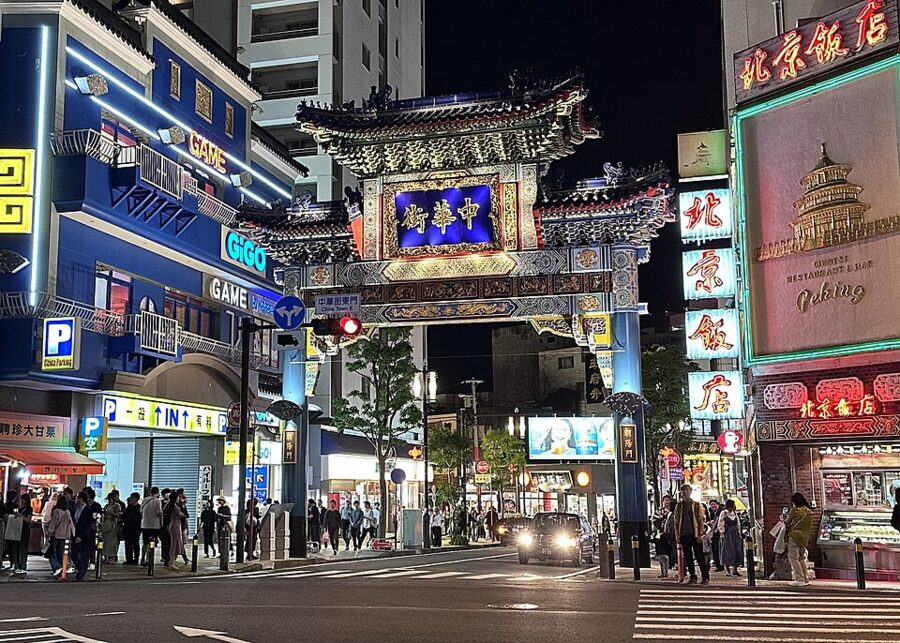
- 11:00 Down the steps to Motomachi’s shopping street, then through the Suzakumon gate into Chinatown before the lunch lines form.
- 13:30 Yamashita Park and the Hikawa Maru (last entry 16:30), the Marine Tower if you want the view in daylight.
- 15:00 Osanbashi Pier, then along the water to the Red Brick Warehouse and the Cup Noodles Museum (last entry 17:00).
- Dusk The Kishamichi promenade or the Yokohama Air Cabin to Sakuragicho as the towers light up; the Ferris wheel if you want one more view.
- Evening Noge’s small bars behind Sakuragicho Station, or a drink by the water, and a train home before the last ones (times below).
If gardens matter more to you than houses, swap the Bluff for Sankeien, which opens at 09:00 and is a bus ride south of Chinatown; it costs you about two hours and the Motomachi stretch. Its maples turn in the second half of November.
Check the day before you pick it. Each sight closes on a different weekday, and the Yokohama week is mined with them:
| Day | Closed |
|---|---|
| Monday | Hikawa Maru, Silk Museum (both open on a holiday Monday and close the next weekday) |
| Tuesday | Cup Noodles Museum (the next day when Tuesday is a holiday), Hara Model Railway Museum |
| Wednesday | Hara Model Railway Museum; four of the seven Western houses on the second Wednesday, the other three on the fourth |
| Thursday | Yokohama Museum of Art; Cosmo World on most Thursdays |
Friday through Sunday everything is open, and so is everyone else. Chinatown on a Saturday afternoon moves at the speed of the slowest steamed-bun line. A Friday gets you the full set of opening hours with weekday crowds until about 17:00.
Motomachi and the Bluff (Yamate)
Yokohama opened as a treaty port on June 2, 1859, and the foreign merchants who came lived in two places: the flat settlement by the water, where Chinatown and the Yamashita Park hotels are, and the Bluff (山手, Yamate), the hill to the south, where they built houses with a view of the ships. Motomachi, the street at the foot of the hill, grew up selling to both.
Motomachi
Motomachi (元町) is one long shopping street running from Exit 5 of Motomachi-Chukagai Station toward Ishikawacho Station on JR. It is pleasant, low-rise and mostly fashion and homeware, with old bakeries and cafes among the boutiques. I would walk it once, end to end, and not plan time for it; it is the corridor between the hill and Chinatown rather than a sight.
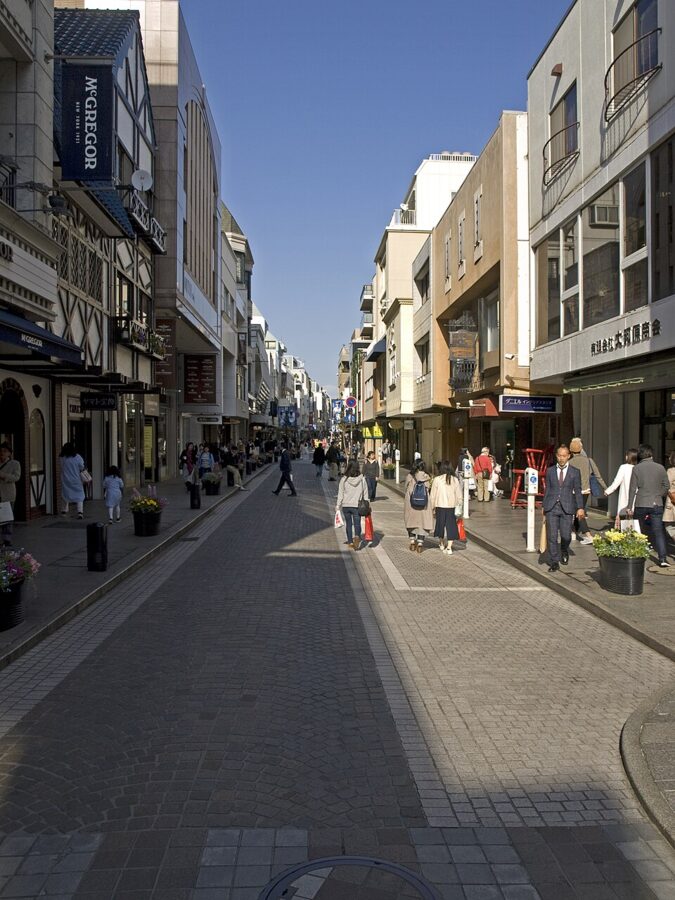

The Western houses
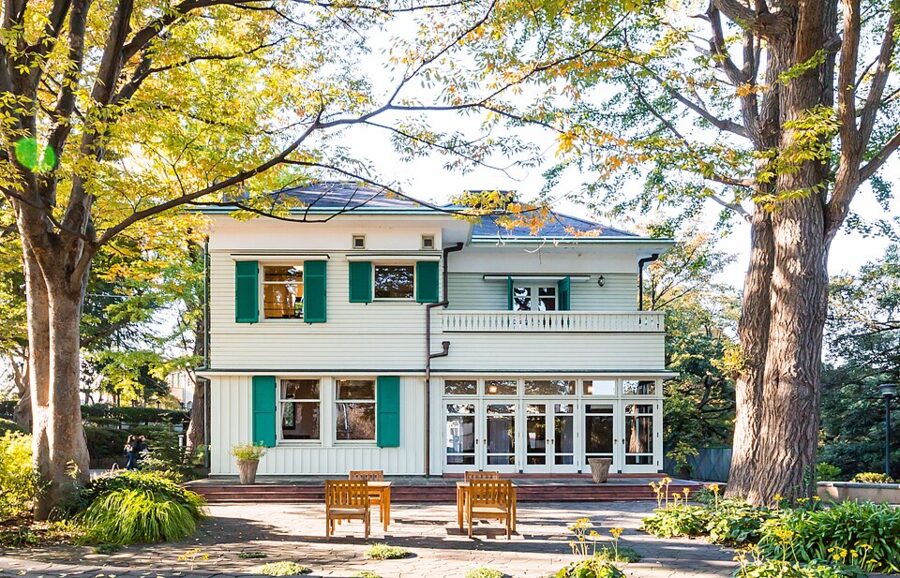
Seven early 20th-century houses on the Bluff are run by the city as the Yamate Western Houses (山手西洋館), and all seven are free. The finest are the Diplomat’s House, built in 1910 to designs by James McDonald Gardiner for the Meiji diplomat Uchida Sadatsuchi and listed as an Important Cultural Property; Berrick Hall, a British merchant’s house of 1930 by Jay Hill Morgan; and the Ehrismann Residence, built in 1926 for a Swiss silk trader to designs by Antonin Raymond. The British House, the consul’s residence from 1937, has a rose garden in front.
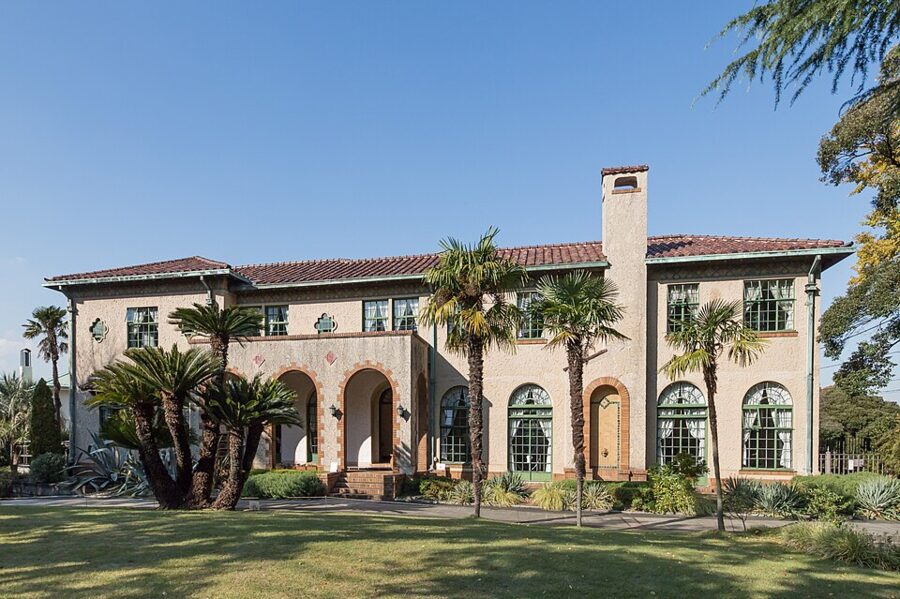

The houses’ own guidance is that all seven take two to three hours and two or three take 30 minutes to an hour. Three is the right number: Berrick Hall, the Ehrismann Residence across the road, and either the Diplomat’s House or the British House, depending on whether you walk south or toward the harbor. You change into slippers at the door in every house except the British House.
Mind the Wednesdays. Yamate 111, the Ehrismann Residence, Berrick Hall and Bluff 18 close on the second Wednesday of the month; the British House, Yamate 234 and the Diplomat’s House on the fourth. All seven close from December 29 to January 3.

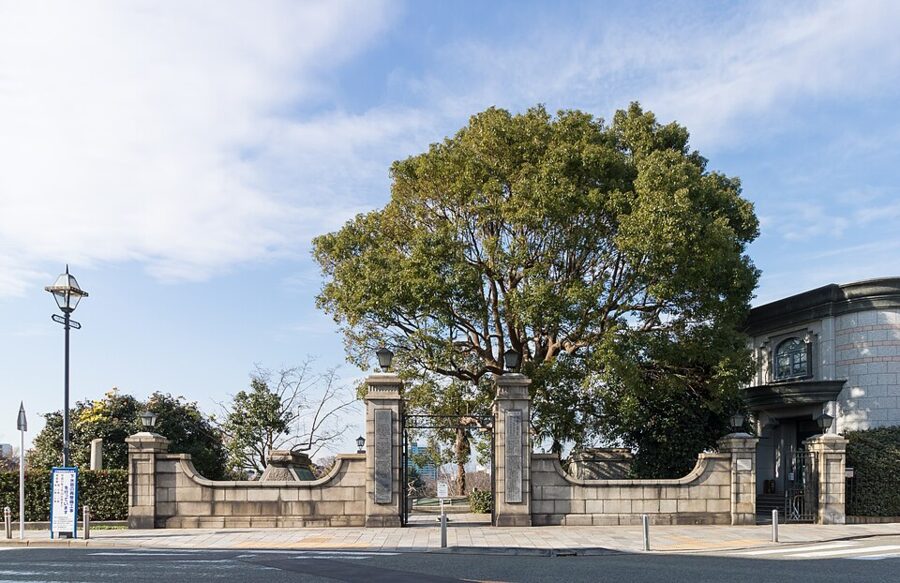
The Foreign General Cemetery and Harbor View Park
The Yokohama Foreign General Cemetery (横浜外国人墓地) holds more than 4,400 people from over 40 countries, and it began with one sailor. In 1854, on Commodore Perry’s second visit, Robert Williams, 24, fell from the mast of the USS Mississippi; Perry asked for a grave with a view of the sea, and Williams was buried in the grounds of a local temple. Other foreigners followed, and the ground was set aside as a foreign cemetery in 1861.
It is closed to visitors except for its open days. The cemetery’s schedule opens it 12:00–16:00 on Saturdays, Sundays and holidays from February to July and September to December, rain excepted, in return for a donation of about ¥500 toward its upkeep. A marked route takes about ten minutes. On a weekday, the fence along the road gives you most of the view.

Harbor View Park (港の見える丘公園) is the lookout at the north end of the Bluff, opened in 1962 and named for a 1948 song. The view is of the port and the Bay Bridge, with a raised expressway in the foreground since the bridge roads went in. It is worth five minutes by day and more after dark, when the bridge is lit.
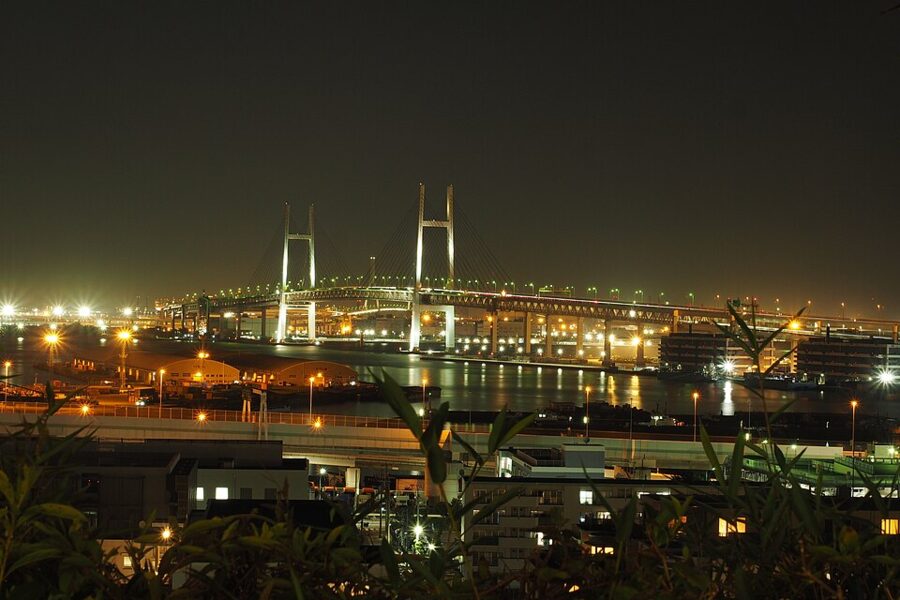

Chinatown
Yokohama Chinatown (横浜中華街, Chukagai) is about 0.2 square kilometers of restaurants, food stalls, temples and souvenir shops on a grid set 45 degrees to the streets around it. Its development association lists more than 400 businesses, which is why the main street, Chukagai Odori, feels like one long menu board. The side lanes, named for the places their first residents came from (Shanghai-ro, Fukken-ro), are calmer and often better.
How it got there
The land was rice paddy reclaimed in 1796 and swampy enough that the first foreign merchants chose the waterfront instead. The Chinese who came with them after 1859, many as interpreters, compradors and craftsmen for the Western trading houses, settled in this cheaper ground and built a temple, a school and their own businesses. The area was known as Nankin-machi until 1955, when the first Zenrinmon gate went up with the characters for “Chinatown” (中華街) on it, and the name stuck.
Kanteibyo, the temple at its center, has had to be rebuilt three times since the 1923 earthquake. Restaurants come and go faster still. Heichinro (聘珍樓), founded in 1884 and for over a century one of its grandest names, closed its Chinatown main restaurant on May 15, 2022.
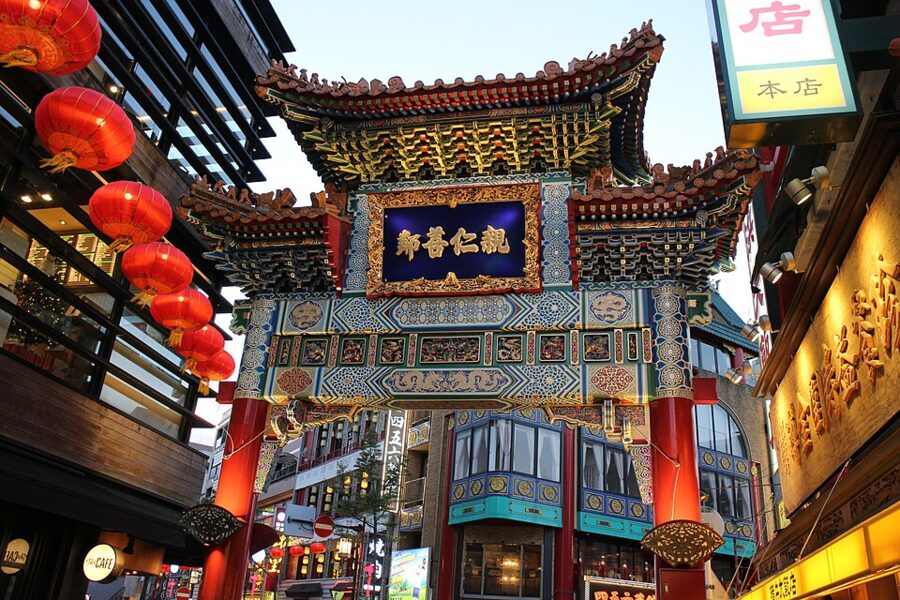

The gates and the temples
Ten gates stand around and inside the district. The four that matter for finding your way mark the corners and follow feng shui colors: Choyomon (blue, east, by Yamashita Park and the station), Suzakumon (red, south, the Motomachi side), Enpeimon (white, west, toward Ishikawacho Station) and Genbumon (black, north, toward Yokohama Stadium). If you lose your bearings in the diagonal grid, find a gate.
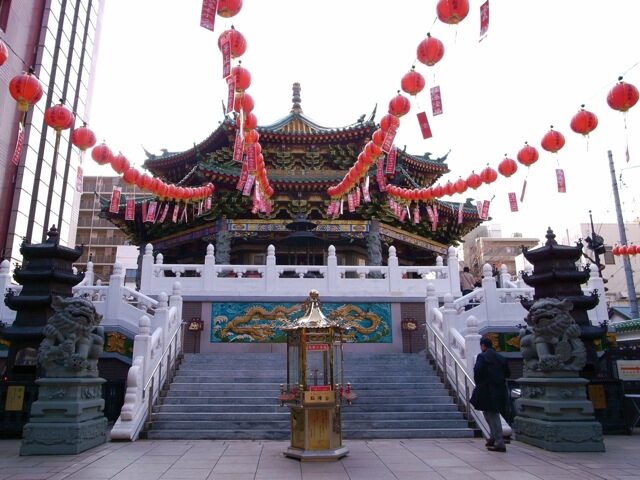
Kanteibyo (関帝廟), the temple to the deified general Guan Yu, is the building on the postcards. A small shrine stood here from 1862; the present hall, the fourth, opened on August 14, 1990, after a fire destroyed the third in 1986, and most of its stone and tile came from mainland China and Taiwan. The temple opens 08:00–18:00 every day. You can look from the courtyard for free; to go in and pray, the temple asks you to buy five incense sticks for ¥500 and place one in each of the five burners outside first.
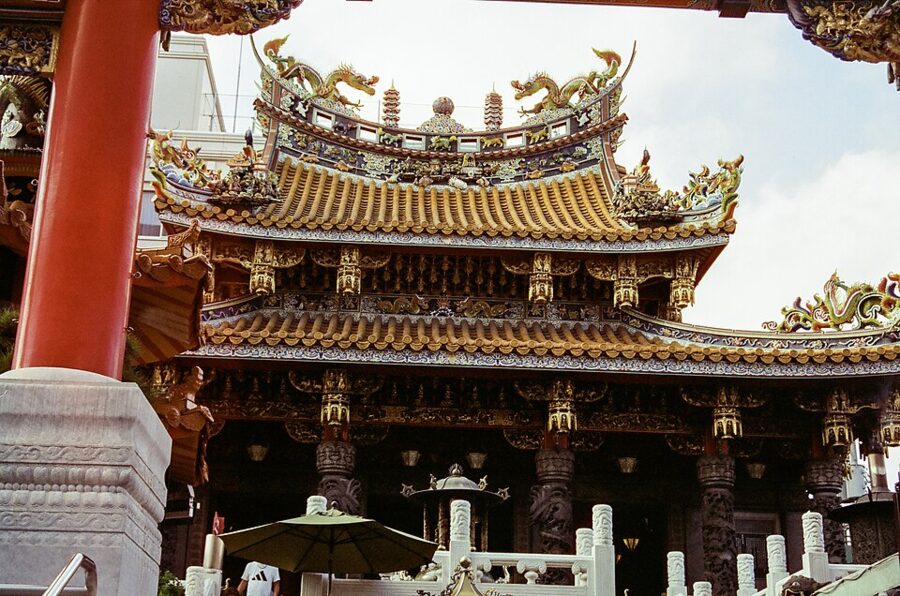

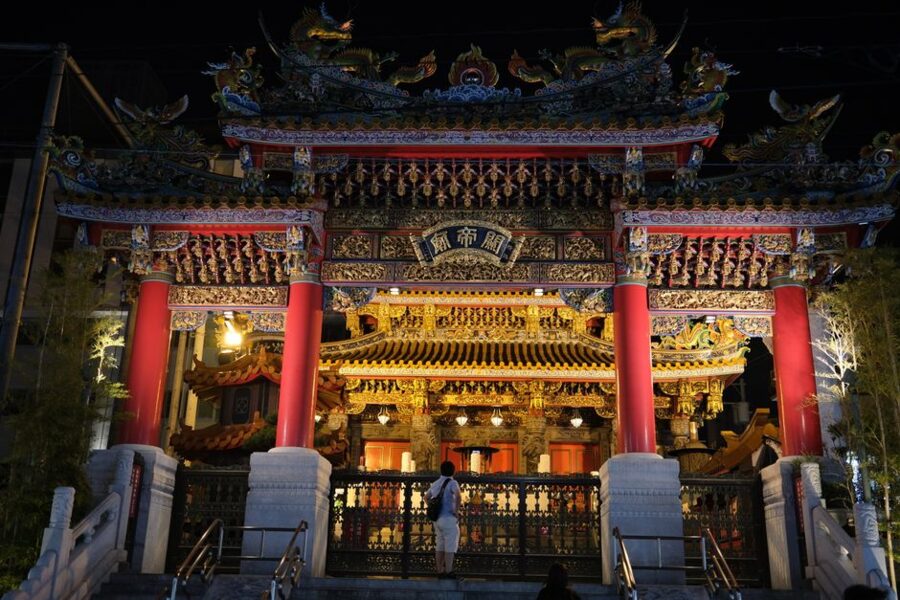
Masobyo (媽祖廟), a few minutes east, is the newer of the two. It opened on March 17, 2006, dedicated to the sea goddess Mazu, beside the site of the Qing consulate of the Meiji era, with its deity divided from the Grand Matsu Temple in Tainan. It is less crowded than Kanteibyo and, to my eye, the prettier of the two, with carved wooden panels at the entrance.

What to eat, and what to skip
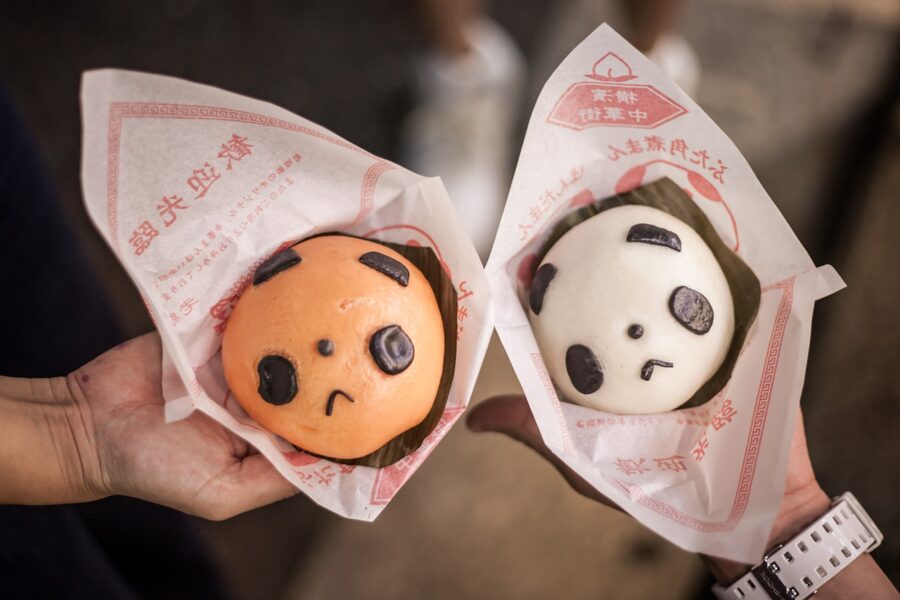
Eat on the move for the first hour and sit down once. The street food here is steamed pork buns (butaman or nikuman), pan-fried soup dumplings and Taiwanese fried chicken, and most of it costs a few hundred yen a piece. For a seated meal, the main street’s banquet houses are good and expensive; the side-lane places with a handwritten menu are cheaper and often better at one or two dishes.
- Edosei (江戸清), the main shop on Chukagai Odori. Founded in 1894 as a butcher, it sells the oversized pork buns that most people mean when they say Chinatown nikuman, hot from the window. Open 10:00–19:30 on weekdays, to 21:00 on Saturdays and 20:30 on Sundays and holidays (Edosei).
- Shatenki second shop (謝甜記 貮号店), Shanghai-ro. Rice porridge (okayu, Cantonese congee) from 08:30 on weekdays and 08:00 on weekends to 21:00, last order 20:30, closed Wednesdays, cash only. The best breakfast in the district and a good cure for a bun-heavy afternoon.
- Houtenkaku annex (鵬天閣 新館). Pan-fried soup dumplings (yaki shoronpo) from a street counter, 10:00–22:00, open daily. Bite a small hole and let them cool, or wear the soup.
- Manchinro (萬珍樓), the main restaurant. Cantonese cooking in a house founded in 1892, rebuilt after a fire in 2002, for a proper sit-down lunch or dinner: 11:00–15:00 and 17:00–22:00 on weekdays, 11:00–22:00 on weekends and holidays (Manchinro).
What I would skip: the all-you-can-eat “order buffet” menus advertised up and down the main street. They suit a group that wants volume. For two people who want to taste the place, two dishes in a side lane and a bun on the way out beat a long laminated list. I would also leave the fortune-teller booths; they are not what the district does best.
Tokyu sells a Chinatown gourmet ticket (横濱中華街 旅グルメきっぷ) for ¥3,300 with a day of Tokyu and Minatomirai Line travel and a meal voucher for one of a list of restaurants. Whether it pays depends on the restaurant you pick, and you cannot change your mind once the voucher is used; the plain Minatomirai Pass and a meal of your own choosing is the simpler deal. For how the food here sits against the rest of the region, the Tokyo food guide covers the city side.
Yamashita Park, the Hikawa Maru and Osanbashi
Walk out of Chinatown through Choyomon and you are at Yamashita Park (山下公園), about 750 meters of lawn and promenade along the water. It opened on March 15, 1930, built on rubble from the 1923 earthquake that was dumped into the bay, and Hotel New Grand, which opened across the road on December 1, 1927, has faced it ever since.

The Hikawa Maru
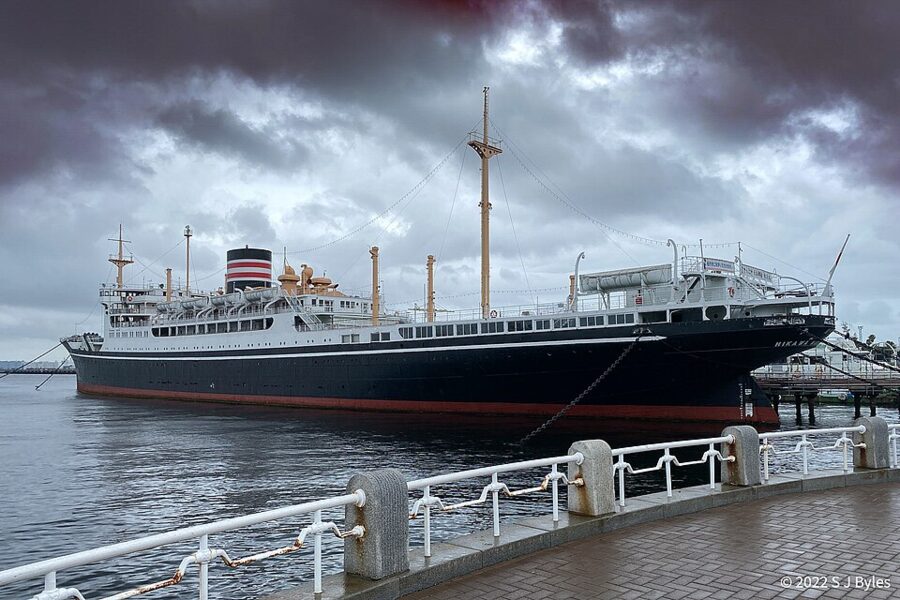
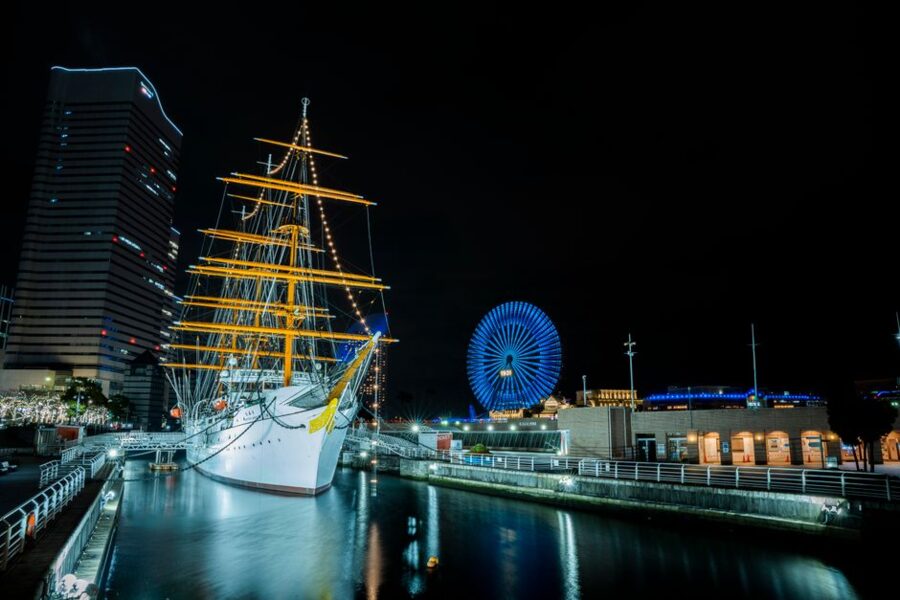
The Hikawa Maru (氷川丸) is a passenger-cargo liner built by NYK in 1930 for the Seattle run, and the only prewar Japanese-built passenger-cargo ship that survives. It served as a navy hospital ship in the war, hit mines three times without sinking, went back to Seattle in 1953 and made 254 Pacific crossings in all before retiring in 1960. It became an Important Cultural Property in 2016.
Inside you walk from the first-class dining saloon and cabins down through the crew quarters to the engine room. Entry is ¥300, cash only, 10:00–17:00 with last entry at 16:30, closed Mondays (open on a holiday Monday and closed the next weekday). A combined ticket with the Marine Tower costs ¥900. There is no elevator on board, and the deck chairs on the open deck are the cheapest harbor view in Yokohama after the free ones.
The Marine Tower
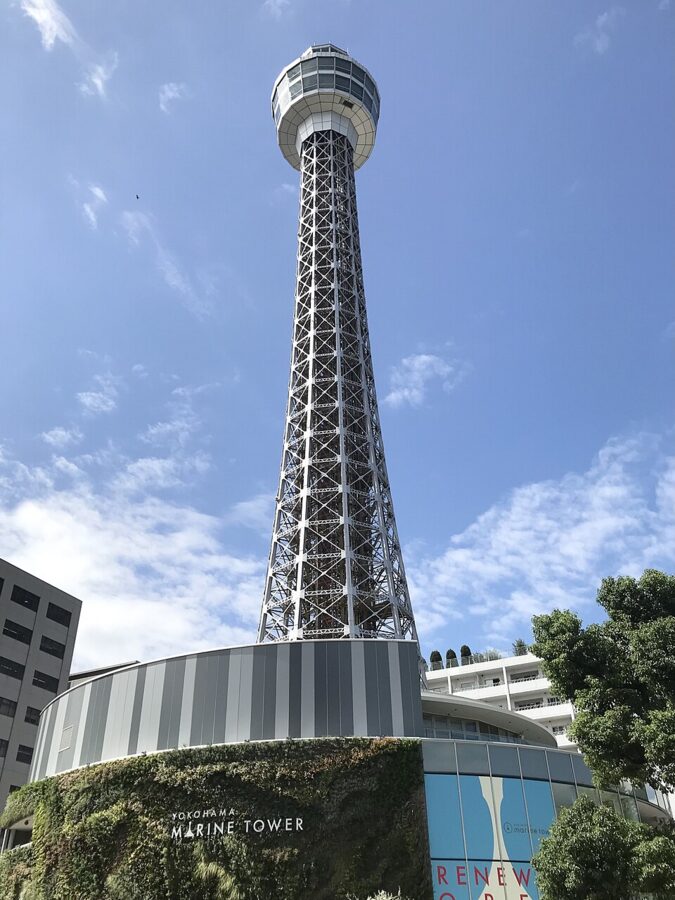
The Yokohama Marine Tower (横浜マリンタワー) opened in 1961, closed for a renovation from 2019 and reopened in 2022 with planted walls at its base. At 106 meters it is under a third of the height of Tokyo Tower, but it stands at the water’s edge, and from the deck the harbor, the Bay Bridge and Minato Mirai sit in one sweep.
The tower’s price list has a day ticket for 10:00–18:00 (¥1,000 on weekdays, ¥1,200 on weekends and holidays, ¥100 less online) and a night ticket for 18:00–22:00 (¥1,200 or ¥1,400). With the Landmark deck shut, this is the paid view to pick; I would pay the night price rather than the day one, because the lit bridge and towers are the point.

Osanbashi Pier
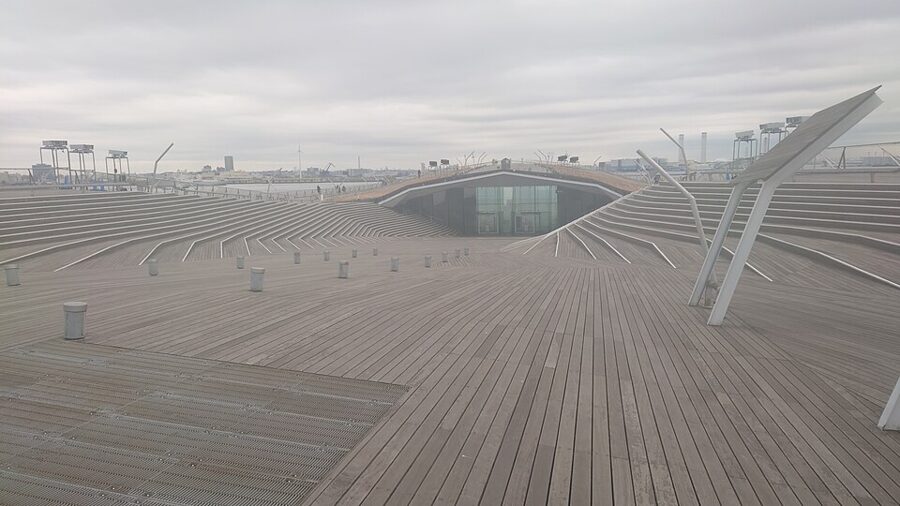
Osanbashi (大さん橋), the cruise terminal, sticks out into the harbor between Yamashita Park and the Red Brick Warehouse. Its roof is a rolling deck of Brazilian ipe wood and lawn, nicknamed the whale’s back, and the terminal keeps it open 24 hours as a public park. From the end you see Minato Mirai on one side and the Bay Bridge on the other, and on clear winter days Mount Fuji can show over the city to the west.
The Sea Bass
The Sea Bass (シーバス) water bus runs between Yokohama Station’s east exit, Hammerhead, Pier Akarenga by the Red Brick Warehouse, and Yamashita Park. Its fare table charges ¥1,500 from Yokohama Station to Yamashita Park, ¥1,300 for most other legs and ¥1,000 for the short hop between Hammerhead and Pier Akarenga. On weekdays the first boat leaves Yokohama Station at 10:30 and the last leaves Yamashita Park at 18:00.
It is a pleasant boat and a poor bargain: ¥1,500 is more than six times the ¥224 Minatomirai Line fare between the same two ends. Take it once, one way, if you want the skyline from the water, and walk the rest.
Minato Mirai
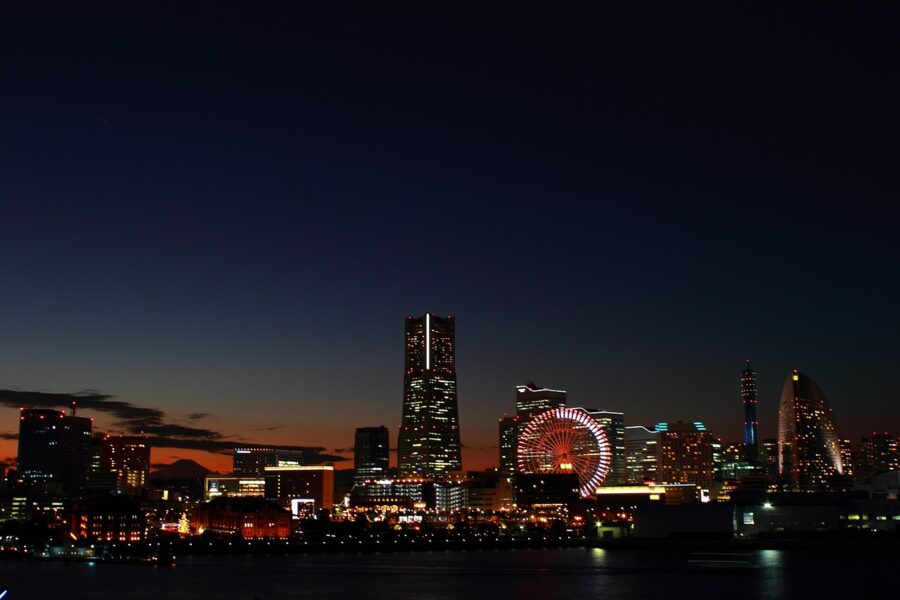
Minato Mirai 21 (みなとみらい21) is the district of towers, malls, hotels and convention halls built on former shipyards and rail yards north of the old port from 1983 onward. By day it is offices and shopping; the reasons to come are the restored warehouses, two museums, the waterfront paths and the skyline after dark.
The Red Brick Warehouses
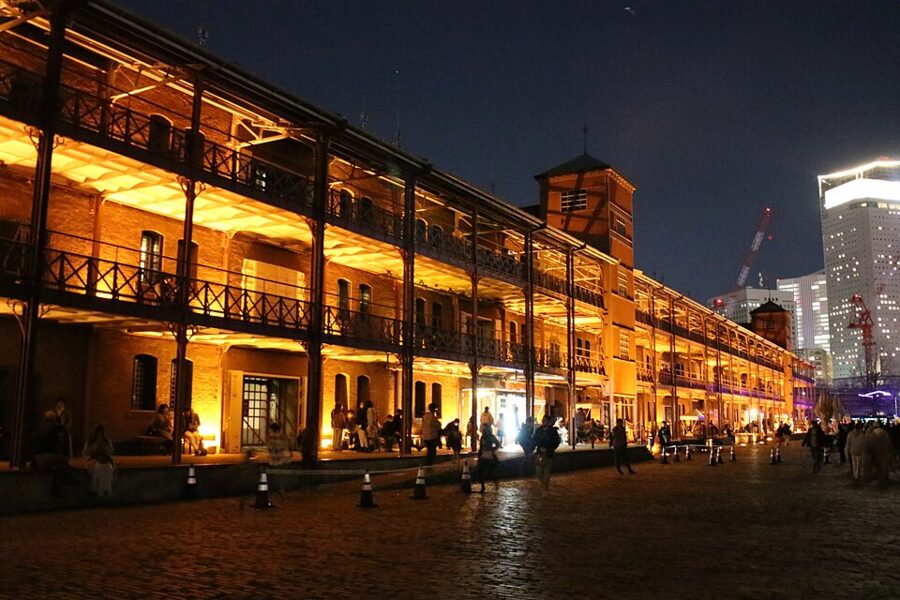
The two Red Brick Warehouses (横浜赤レンガ倉庫) were built as government bonded warehouses, Building 2 in 1911 and Building 1 in 1913, with Japan’s first freight elevators and sprinklers. Building 1 was half destroyed in the 1923 earthquake and rebuilt at about half its size, and the American military used the pair as a port headquarters after 1945. The city bought them in 1992, and they reopened on April 12, 2002, as shops, restaurants and an event hall.
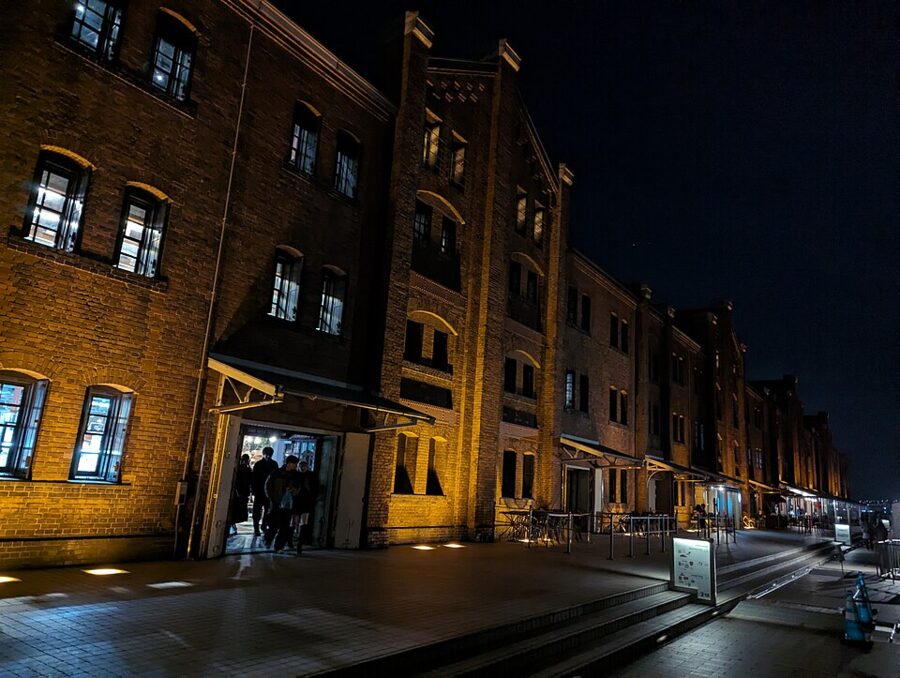
The shops are souvenirs and Yokohama-made goods, worth half an hour. The building is the attraction: walk the length of it outside, climb to the balcony for the harbor, and come back after dark, when both are floodlit.

The Cup Noodles Museum
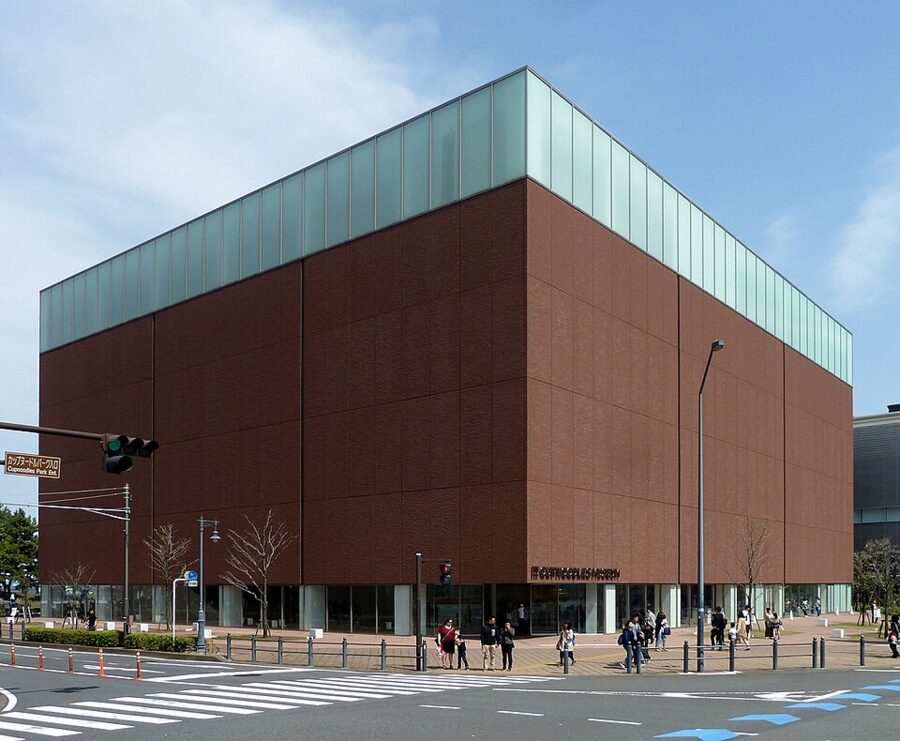
The Cup Noodles Museum, Yokohama (カップヌードルミュージアム 横浜) tells the story of Momofuku Ando, who invented instant ramen in 1958 and the cup noodle in 1971. Entry is ¥500 for adults and free for high-school students and younger, 10:00–18:00 with last entry at 17:00, closed Tuesdays (the next day when Tuesday is a holiday) and over the New Year holidays.
The reason to go is the My Cup Noodles Factory: you decorate a cup, choose one of four soups and four of 12 toppings, and watch it sealed, for ¥500 a cup, about 45 minutes in all. Slots go to a numbered ticket handed out at the museum on the day, first come, first served, or to an advance online ticket that bundles entry and the factory. On a weekend, buy the advance ticket or arrive at opening.

Cosmo World and the Air Cabin
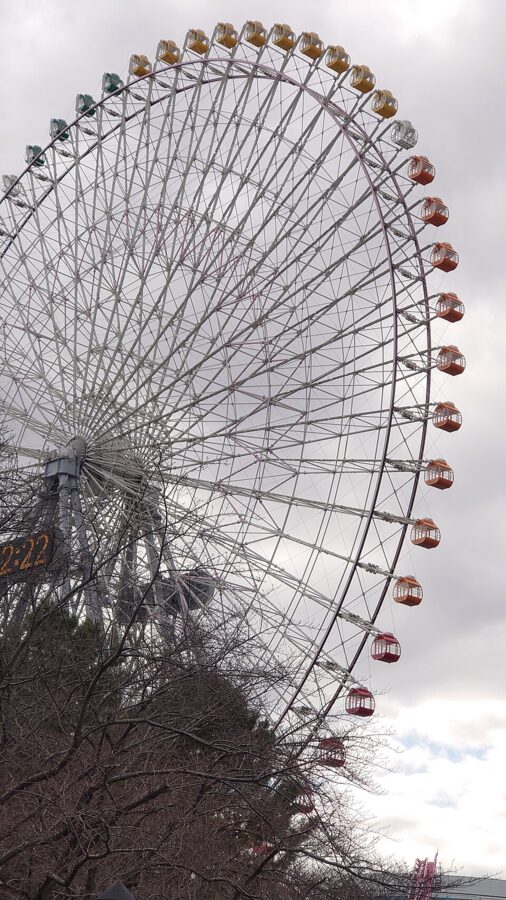
Yokohama Cosmo World is a small amusement park split by a canal, free to enter, with pay-per-ride tickets bought in cash. Its one essential ride is the Cosmo Clock 21 Ferris wheel, 112.5 meters tall with a clock in its hub, about 15 minutes a turn for ¥1,000, with four see-through gondolas at the same price. The park is closed on most Thursdays; its calendar lists 11:00–20:00 on most weekdays and 11:00–22:00 on weekends, and the wheel stops taking riders 15 minutes before closing.
The Yokohama Air Cabin (ヨコハマエアキャビン), Japan’s first urban ropeway, opened on April 22, 2021, and runs along the Kishamichi from Sakuragicho Station to Unga Park, beside Cosmo World, in about five minutes. A ride costs ¥1,000 one way or ¥1,800 return, and a one-way ride plus a turn on the Ferris wheel costs ¥1,700 as a set from the staffed counter. It stops in strong wind.
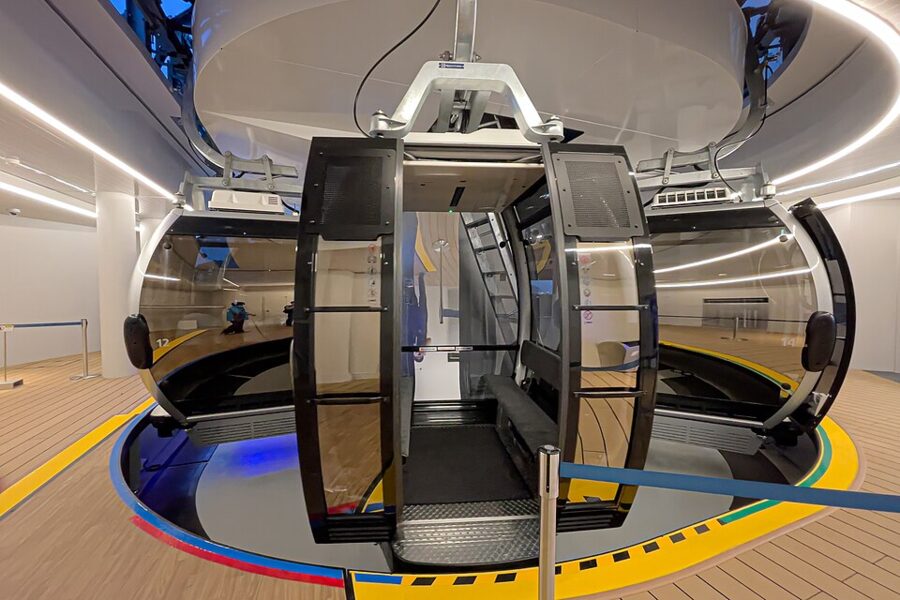

Is it worth ¥1,000 for five minutes? Once, at dusk, one way toward Sakuragicho, so you finish by the station. In daylight the walk on the Kishamichi below covers the same route for nothing.
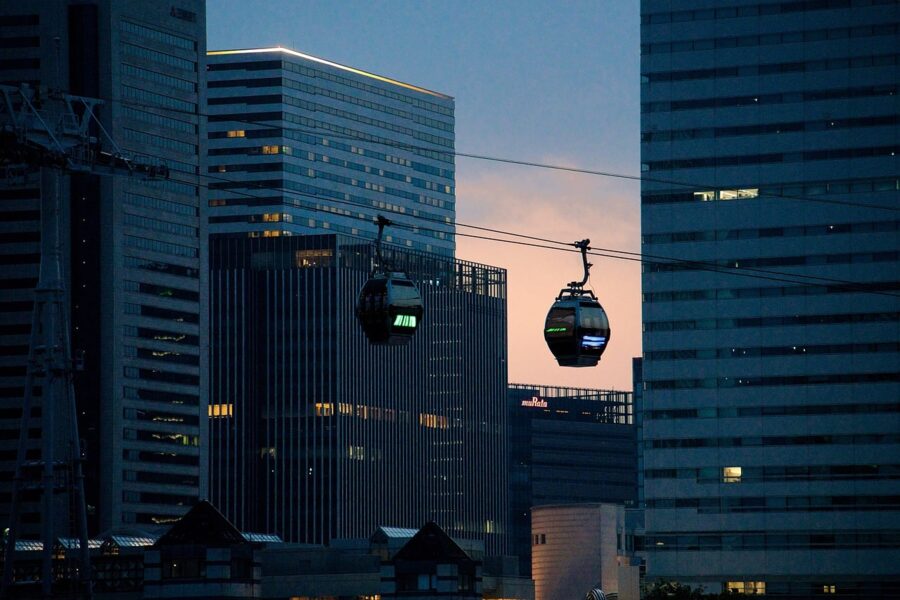
The Kishamichi (汽車道) is a promenade opened in 1997 on the line of a harbor railway that once ran to the Shinko piers, with the original truss bridges, one American-built and one British, still carrying the path over the water. It is the walk between the Red Brick Warehouse and Sakuragicho, and the best one in the city at blue hour.
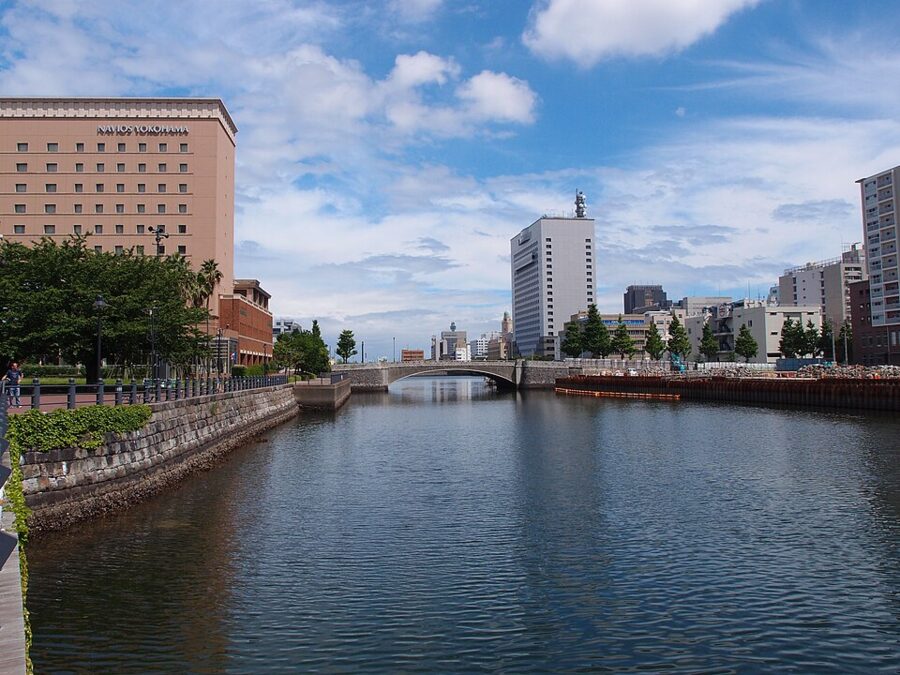

Landmark Tower
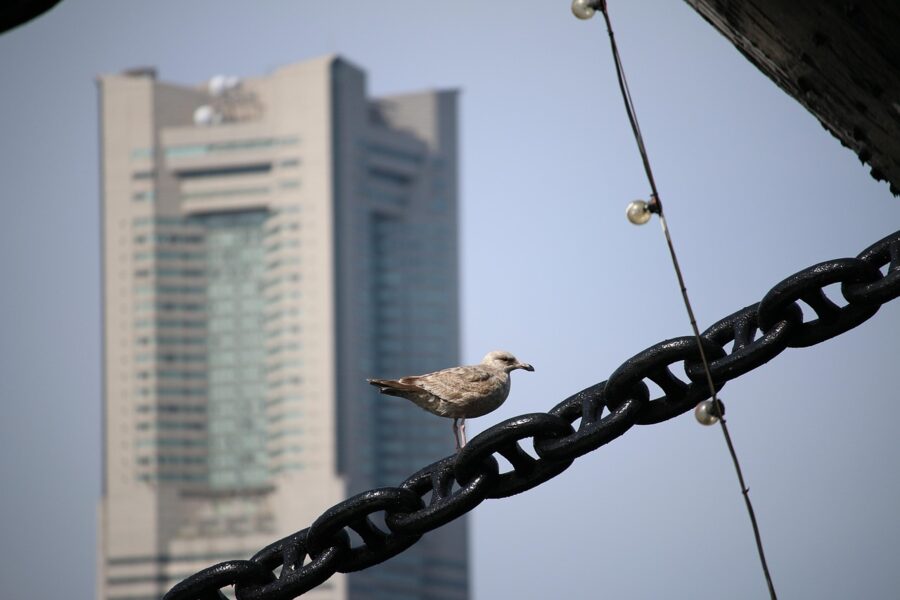
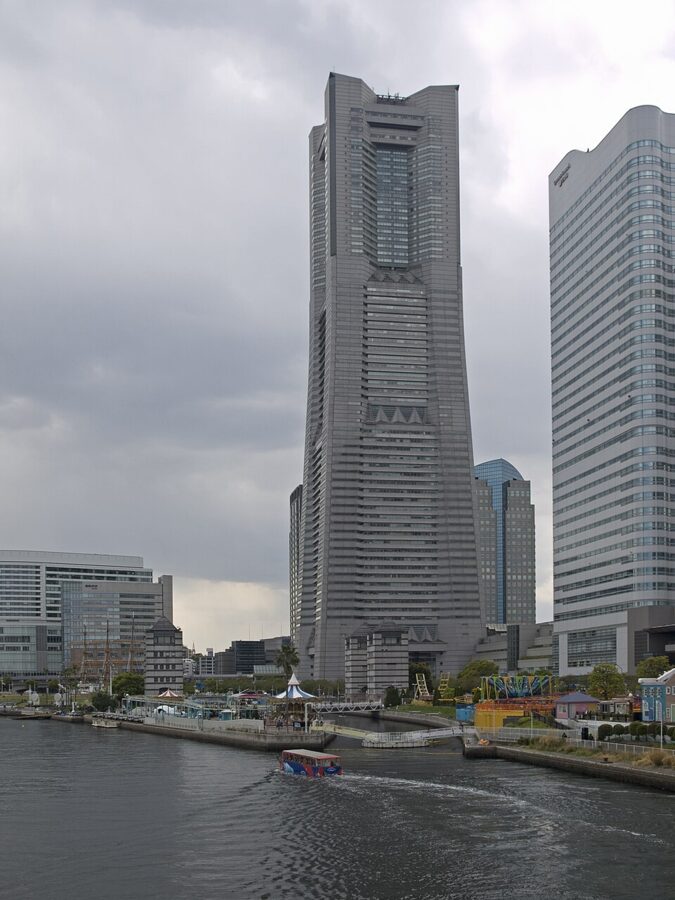
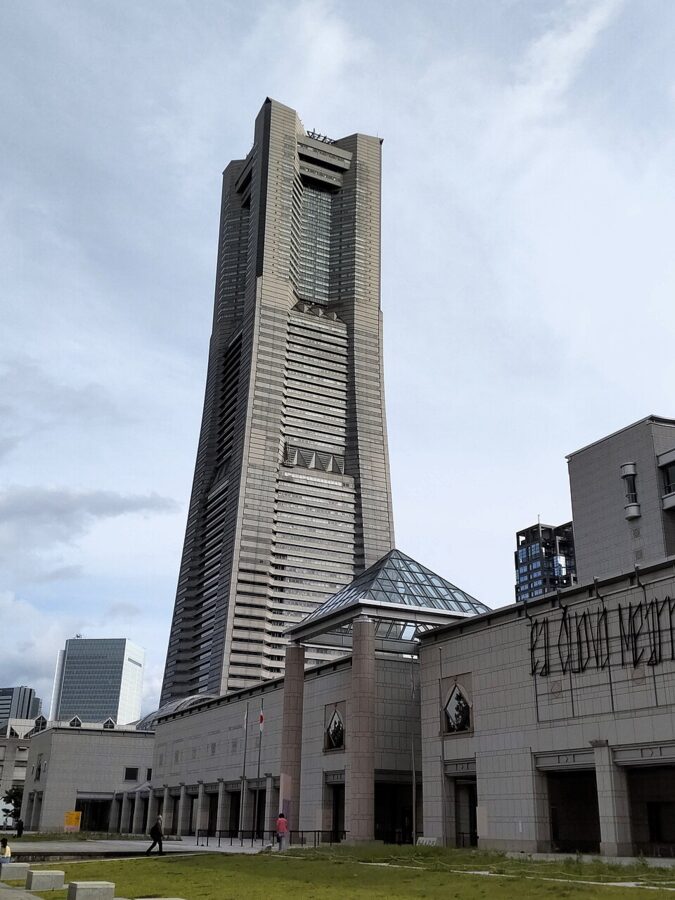
Yokohama Landmark Tower, 296 meters and opened in 1993, was the tallest building in Japan until 2014. Its 69th-floor Sky Garden, reached by an elevator that climbs at up to about 750 meters a minute, is the deck closed since the end of 2025 for repairs until 2028 or later. The shopping mall at its base, Landmark Plaza, stays open, and the tower is still the best thing in the skyline to look at from somewhere else.

Sankeien
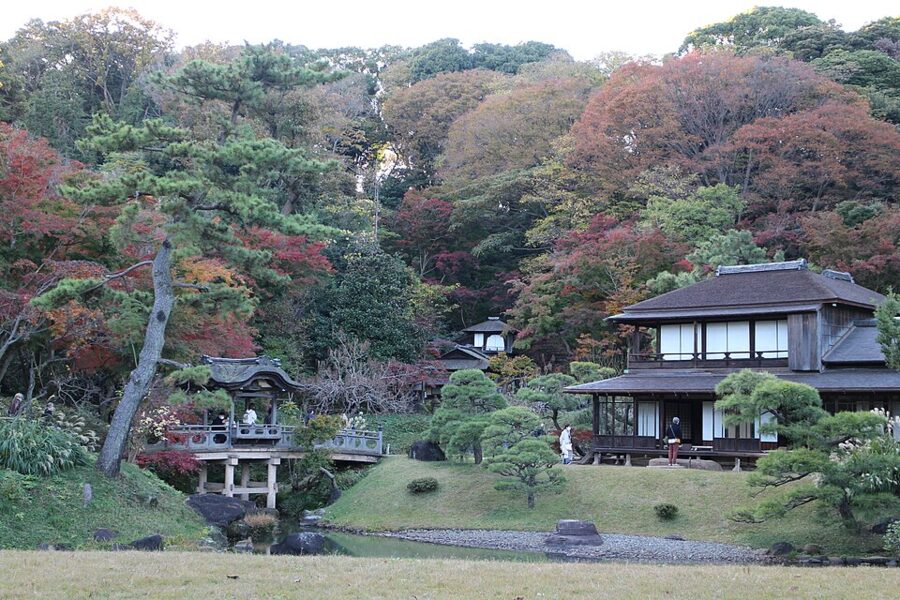
Sankeien (三溪園) is the garden I would give a morning to if the Bluff does not appeal. Hara Tomitaro, a silk merchant who signed himself Sankei, laid it out on his family’s land at Honmoku and opened it to the public on May 1, 1906. He bought old buildings across Japan and moved them here, and 17 stand in its 17.5 hectares, among them 12 structures listed as Important Cultural Properties, from Kyoto, Wakayama, Kamakura and elsewhere, including a Muromachi-era three-story pagoda on the hill.
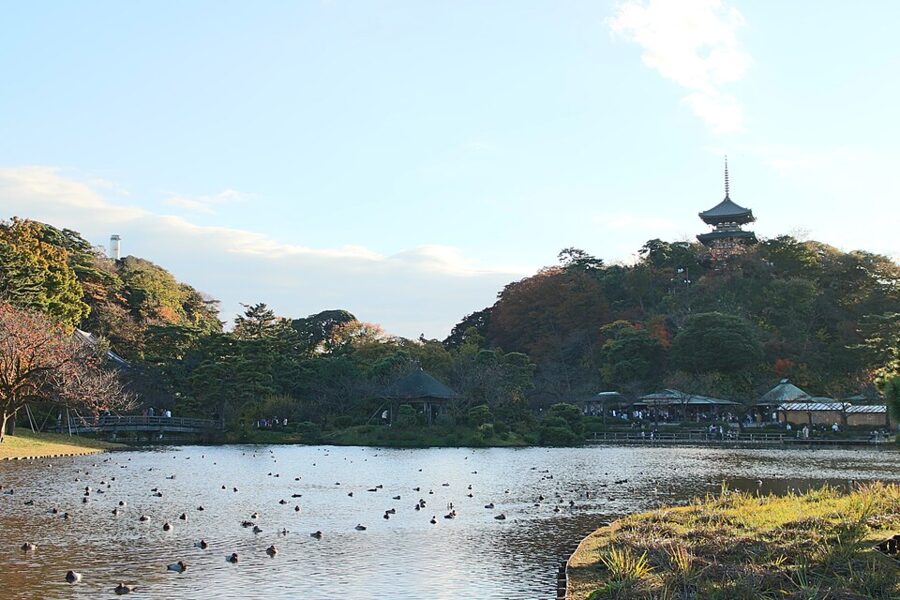

The garden’s price list gives ¥900 for adults, the price since October 1, 2023, and ¥800 with a Minato Burari ticket. It opens 09:00–17:00 with last entry at 16:30 and closes December 26–31. Two notices on that page matter: the gassho-style Yanohara farmhouse closed to visitors from January 2026, and a major repair of the old Tomyoji pagoda starts in April 2027.
Getting there means a city bus, ¥220 a ride. Buses 8 and 168 run from Yokohama Station by way of Sakuragicho and Yamashitacho, near Motomachi-Chukagai Station, to the Sankeien-iriguchi stop, a few minutes’ walk from the main gate, and the Burari Sankeien Bus runs from Yokohama Station through Chinatown to the gate itself. Allow two hours inside and the morning is gone.

The museums, in a line each
- Yokohama Museum of Art. Closed for renovation in February 2021 and fully reopened on February 8, 2025; 10:00–18:00, closed Thursdays, with admission priced per exhibition. Its collection shows run between temporary exhibitions, and the building is closed to visitors between shows, so check the schedule.
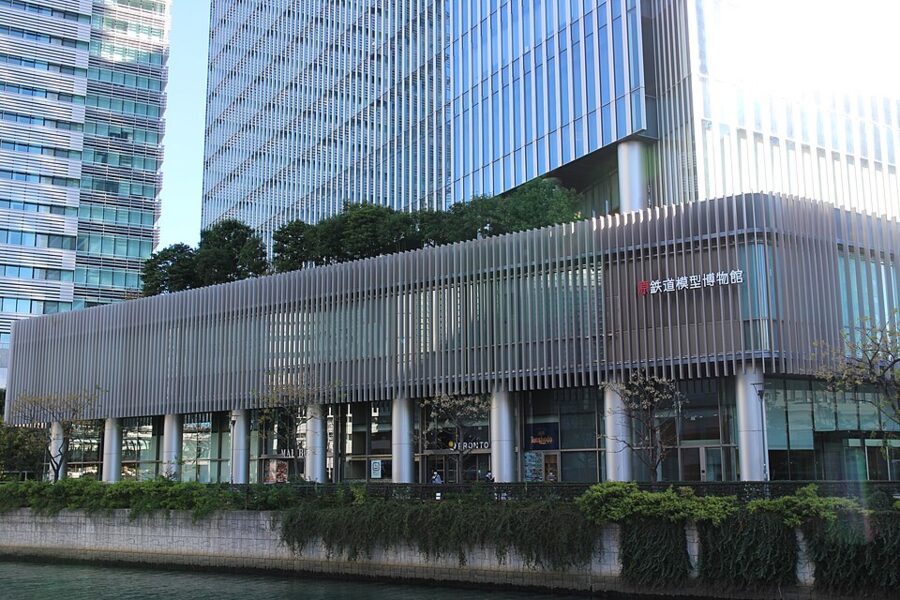
- Hara Model Railway Museum. One collector’s enormous set of model trains and a vast layout, near Yokohama Station; ¥1,500 for adults on a timed ticket bought in advance through e+ or a FamilyMart machine (no sales at the door), 10:00–17:00, closed Tuesdays and Wednesdays.
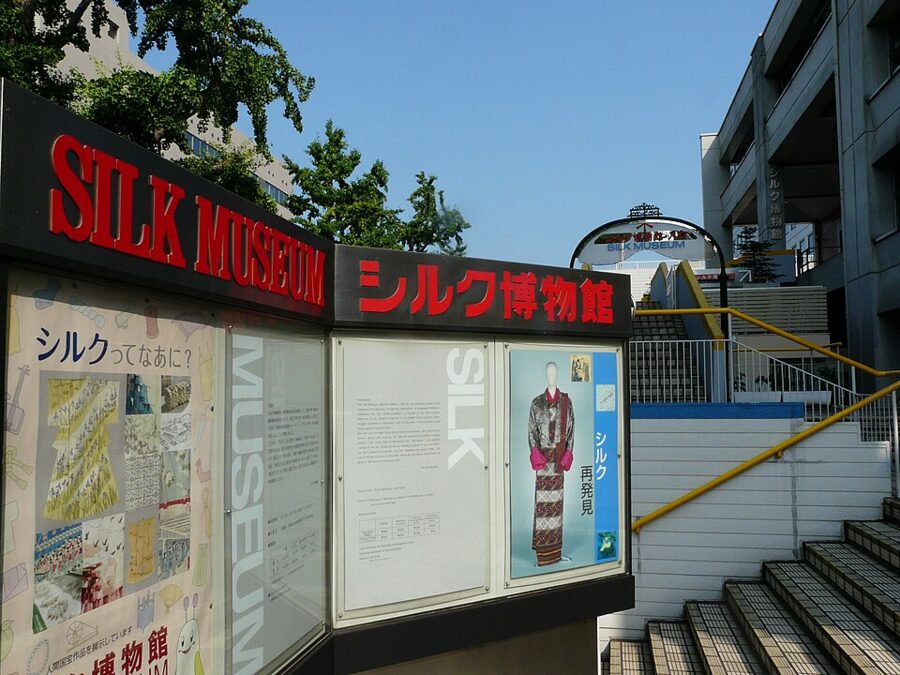
- Silk Museum. The silk trade that built the port, with live silkworms and looms; ¥500, 09:30–17:00, closed Mondays, three minutes from Exit 4 of Nihon-odori Station.
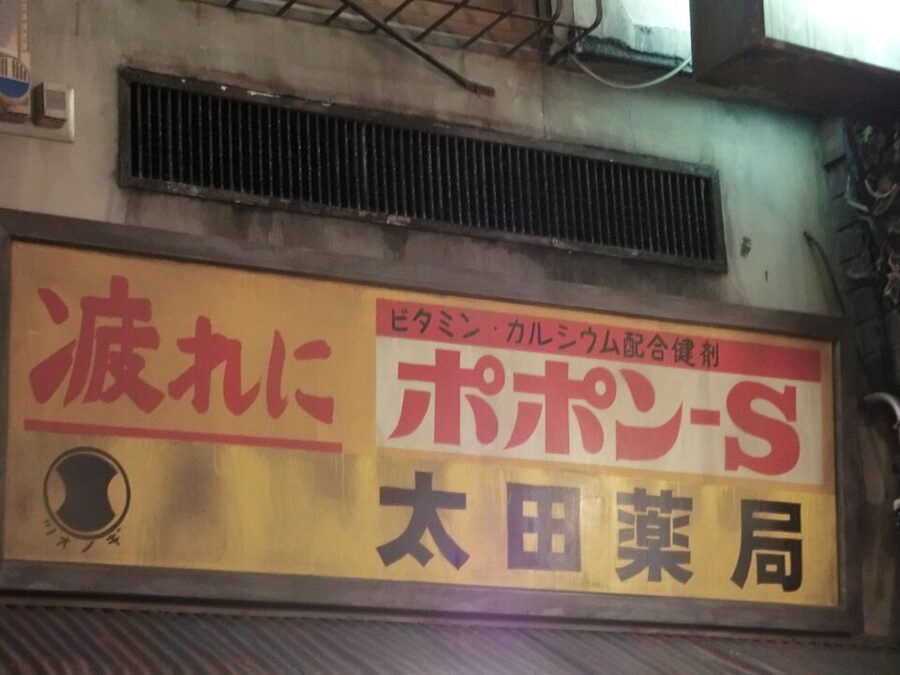
- Shin-Yokohama Ramen Museum. A recreated street of 1958, the year instant ramen went on sale, with branches of ramen shops from around Japan; ¥450 to enter, ramen on top, five minutes from Shin-Yokohama Station and best kept for a separate trip.




Eating and drinking
Chinatown handles lunch (above). For the rest of the day, the two places that taste of Yokohama in particular are the old hotel on the waterfront and the bars of Noge.
Hotel New Grand
Hotel New Grand opened on December 1, 1927, facing the new Yamashita Park, and its kitchens claim three dishes that spread across Japan. The hotel’s account credits Sally Weil, its first head chef, brought from Paris, with inventing doria, a rice gratin, for a guest who was unwell; spaghetti Napolitan to his successor during the postwar occupation, when the officers billeted here brought spaghetti and ketchup; and pudding a la mode to the same years. All three are on the menu at The Cafe, the coffee house on the ground floor of the main building, where the seafood doria costs ¥3,289 with tax and service.
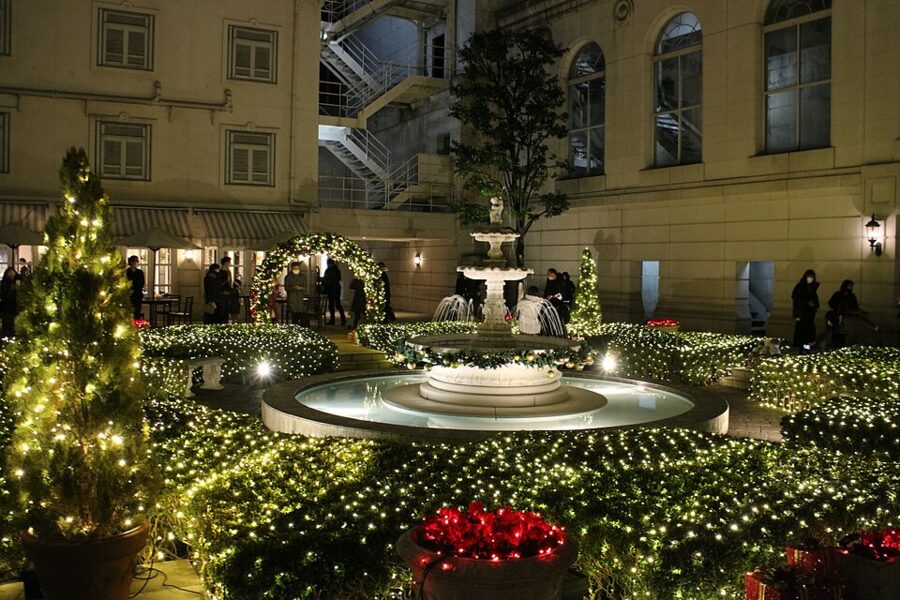

The hotel’s history runs from the earthquake rubble that became the park across the road to General MacArthur, who drove straight here on landing at Atsugi on August 30, 1945. The novelist Osaragi Jiro wrote in its rooms and drank in its bar, Sea Guardian, whose successor, Bar Sea Guardian II, is on the ground floor of the main building.
Noge
Noge (野毛) is the opposite of Minato Mirai and five minutes from it: a few blocks of small bars, standing counters and izakaya on the far side of Sakuragicho Station from the towers, running back to Hinodecho on the Keikyu line. It is cheaper, older and louder than the waterfront, and it is where Yokohama drinks after work.

- Fukuda Fry (福田フライ). A standing counter for fried snacks with a spicy sauce and a cheap drink. Open 16:30–21:45 Tuesday to Saturday and 15:00–20:00 on Sundays, closed Mondays and holidays, cash only.
- Daiichitei (第一亭). A Taiwanese restaurant near Hinodecho Station that draws a line at opening. Open 11:00–13:30 and 16:30–21:00 Wednesday to Sunday, closed Mondays and Tuesdays, cash only.
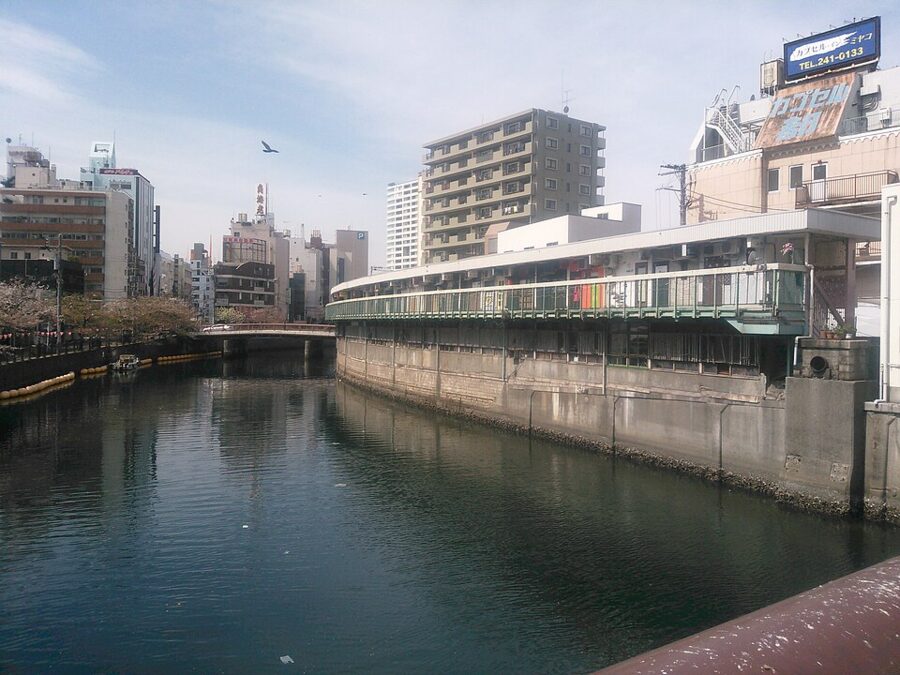
- The Miyakobashi Shotengai (都橋商店街). A curved two-story strip of bars on the Ooka River; pick one with a free seat and a price list on the door.
Take cash. Most Noge places take nothing else, and many charge a small table fee or serve an otoshi, the small dish that comes with the seat and goes on the bill.
The evening: night views, last trains and passes
Plan the evening backward from the train home, the same way you would in Tokyo. The night views are all within a 20-minute walk of either Sakuragicho or Minatomirai Station, which makes it easy.
Night views
- Osanbashi roof, open 24 hours and free: the best all-round view of the lit skyline.
- The Kishamichi and the Red Brick Warehouse, free, on the walk to Sakuragicho.
- Marine Tower, night ticket to 22:00 (last entry 21:30), for the view from above.
- Cosmo Clock 21, ¥1,000, for a 15-minute view from the wheel, until 15 minutes before the park closes.
- Harbor View Park, free, for the Bay Bridge; a climb, so better for an early evening than a late one.
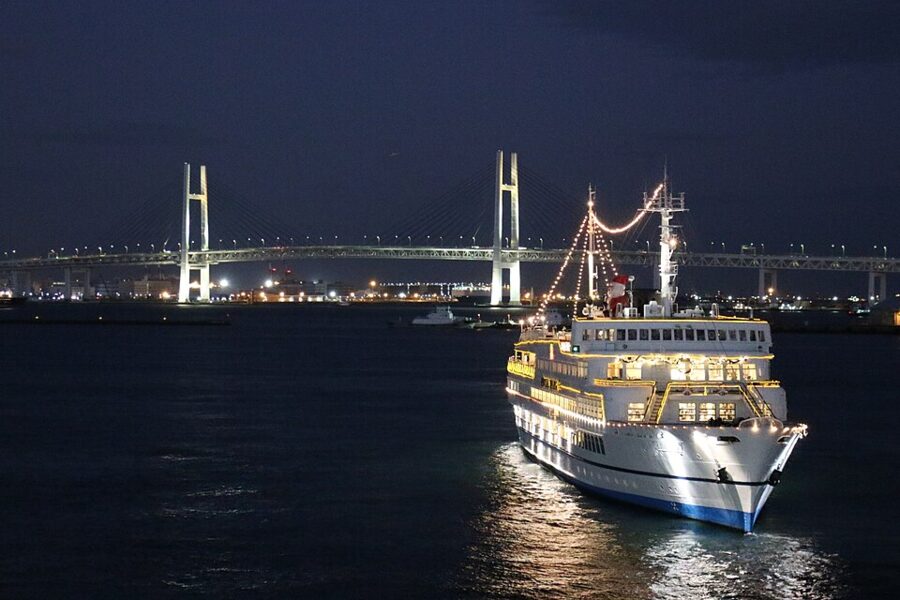

Summer evenings on the open promenade are hot and humid, and winter ones colder than you expect off the water, so dress for the weather you see in the Tokyo weather guide plus the wind. October, November and the clear days of December and January give the sharpest skylines.
Last trains
These are weekday times on the timetables in force in November 2026; weekend times differ by a few minutes.
- To Shibuya, the last train that runs right through leaves Minatomirai at 23:43 and Motomachi-Chukagai at 23:38; from Yokohama Station on the Toyoko Line, 23:47. Later trains stop short at Musashi-Kosugi, Hiyoshi or Kikuna.
- To Tokyo Station, the last JR Tokaido Line train leaves Yokohama at 23:22; after that, Tokaido trains run only as far as Shinagawa, the last at 00:07.
- From Sakuragicho, Keihin-Tohoku Line trains run north until 23:57; the 00:15 goes only as far as Kamata.
The two Noge places above both close by 22:00, so the train is rarely the problem. The problem is the third bar.
Do the passes pay?
- Tokyu Minatomirai Pass, ¥920 from Shibuya. Yes, if you start from a Tokyu station: it beats the ¥1,035 IC fare for the simplest version of the day. Bought from ticket machines until 22:30.
- Minatomirai Line one-day ticket, ¥460. Only if you arrive at Yokohama Station by JR or Keikyu and ride the line three times or more. Yokohama to Minatomirai and on to Motomachi-Chukagai and back is ¥610 by IC card; two rides are not enough.
- Minato Burari ticket (みなとぶらりチケット), ¥700. A day of city buses, including the Akaikutsu sightseeing loop, and the Blue Line subway between Yokohama and Yoshinocho; not valid on the Minatomirai Line. Buses cost ¥220 a ride, so it pays on a Sankeien day: two buses there and back plus ¥100 off the garden is ¥540, and one more bus puts you ahead.
- Chinatown gourmet ticket, ¥3,300. Only if one of its listed restaurants is where you wanted to eat anyway.
Back at Minatomirai with the wheel lit across the water, the arithmetic from the morning holds. The through train that brought you down from Shibuya in 40 minutes runs you back the same way, and the last one that goes all the way leaves at 23:43.