

The cheapest plate at Kura Sushi’s branch in Asakusa ROX costs ¥145, and a dinner seat at Ginza Kyubey’s counter costs ¥16,500 before a 10% service charge. Almost every sushi meal in Tokyo sits somewhere between those two numbers, and the price tells you more about how the meal works than about how good the fish is.
Here is the short version, priced for late 2026.
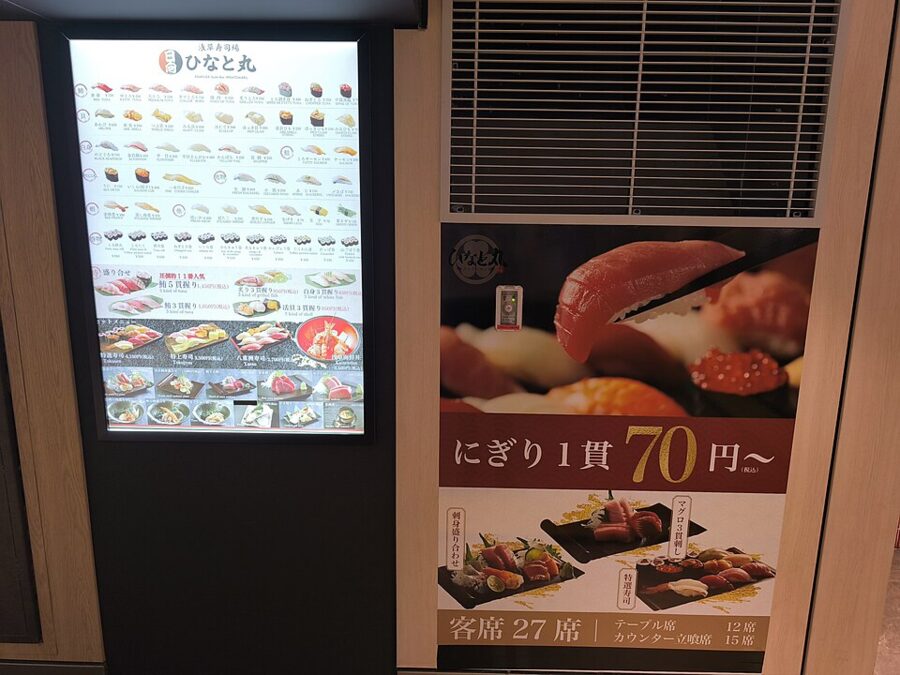
Under ¥2,000, eat at a conveyor-belt chain such as Kura Sushi and reserve a time slot on its website or app; no account is needed. For ¥2,000–4,000, stand at a counter such as Hinatomaru at Tokyo Station, which sells nigiri from ¥70 a piece and takes no bookings, or take a numbered ticket for Sushi no Midori in Shibuya.
For about ¥8,000–11,000, book lunch at Kyubey in Ginza, where the 10-piece set is ¥8,250 and the only bookable lunch slot is 11:30. Above ¥18,000 a head, book a dinner counter the moment your dates are fixed, and read the cancellation rules before you pay anything.
One rule runs through all of it: the cheaper the place, the less you need to plan, and the more expensive it gets, the more the booking matters. A conveyor-belt chain takes a reservation the same afternoon. A ten-seat counter in Ginza may want a card number weeks ahead and will charge you if you do not turn up.
Ramen, tempura and the rest of the city’s eating are in the Tokyo food guide. Sushi has more moving parts than any of them: five kinds of room, prices that run from tens of yen a piece to tens of thousands a meal, booking rules with fees attached, and a local style with two centuries of history behind it.

The kinds of sushi place, and how each one works
Tokyo sorts its sushi into five rough kinds of room. They overlap at the edges, but each has its own way of seating you, taking your order and handing you the bill, and knowing which one you are walking into saves most of the confusion.
Conveyor-belt chains (kaitenzushi)
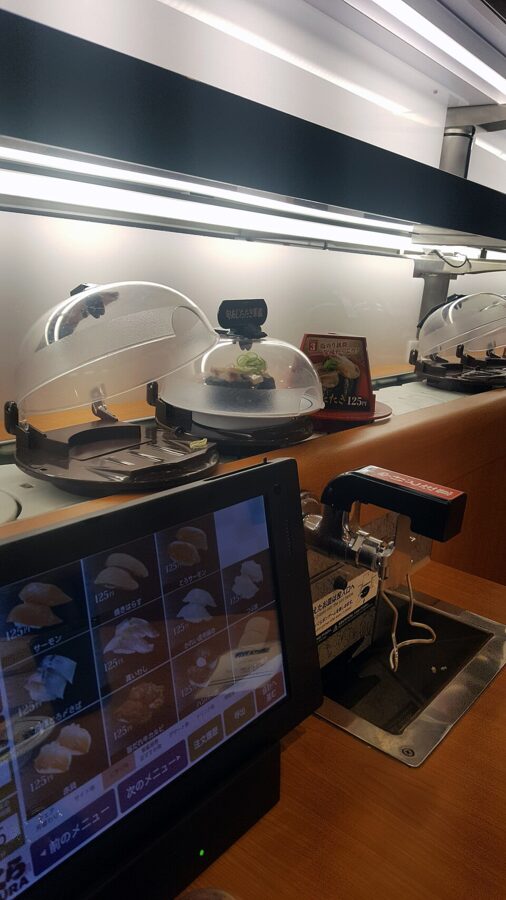
Kaitenzushi, conveyor-belt sushi, is the cheapest seat in the city and the easiest for a first meal. The big three national chains are Sushiro, Kura Sushi and Hama Sushi, and all of them price by the plate, show the menu in English on a touch screen, and send what you order to your seat on a separate express lane.
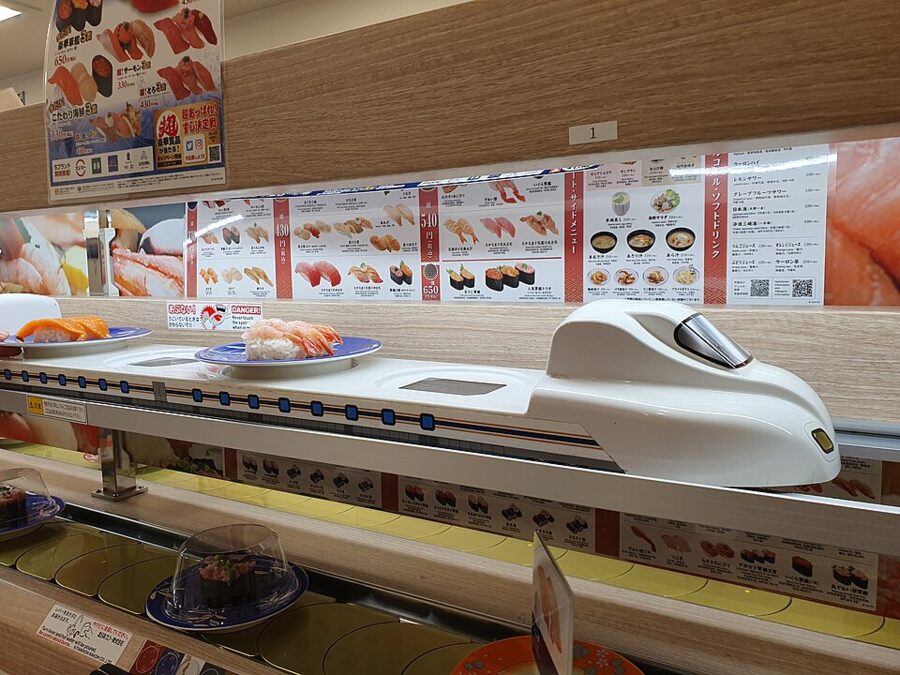
The belt itself has become less important than the screen. Plates still circulate, but the chains steer you toward ordering on the tablet, and a plate you ordered is fresher than one that has been round the room twice. Wasabi and ginger sit at the table; at many chain branches the sushi comes without wasabi, so you add your own.
Prices depend on the branch. Kura Sushi runs four price tiers, with the cheapest plate at ¥110, ¥115, ¥125 or ¥145 depending on the store, and its tourist-area flagships in Asakusa, Harajuku and Oshiage sit in the ¥145 tier, as its menu page and branch pages show. Sushiro starts from ¥120 a plate, with prices that vary by store. Hama Sushi’s standard plate is ¥110, but its own menu lists ten Tokyo branches, among them Ginza Inz and Akihabara, where prices differ.

Standing sushi bars (tachiguizushi)
Tachiguizushi, standing sushi, is the oldest format in the city and among the cheapest ways to eat fish cut and shaped by a chef in front of you. You stand at a narrow counter, order a piece or two at a time from a printed list or a tablet, eat, and leave. Fifteen minutes is a normal visit, and nobody minds.
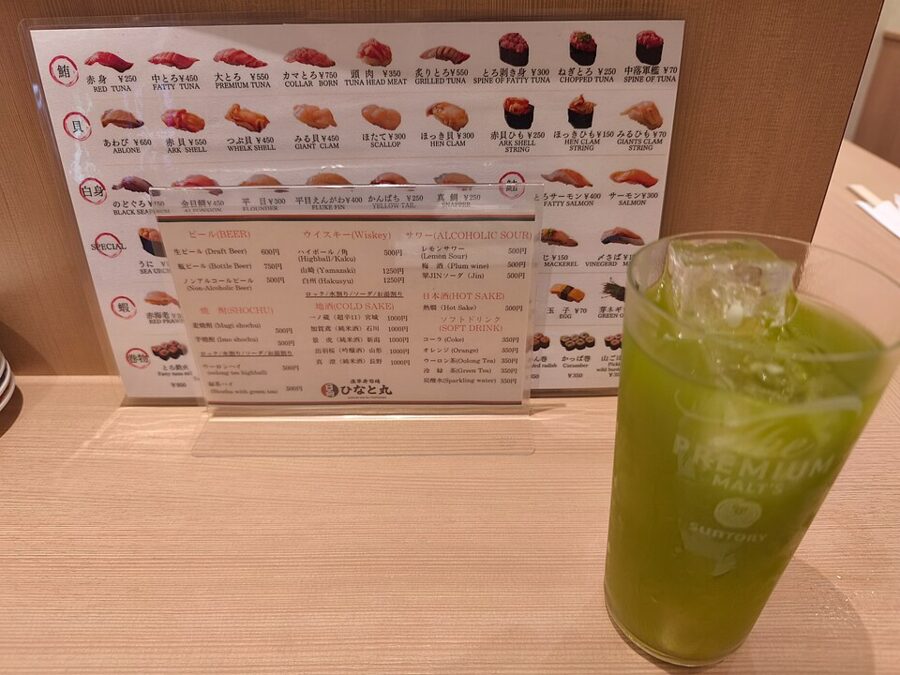
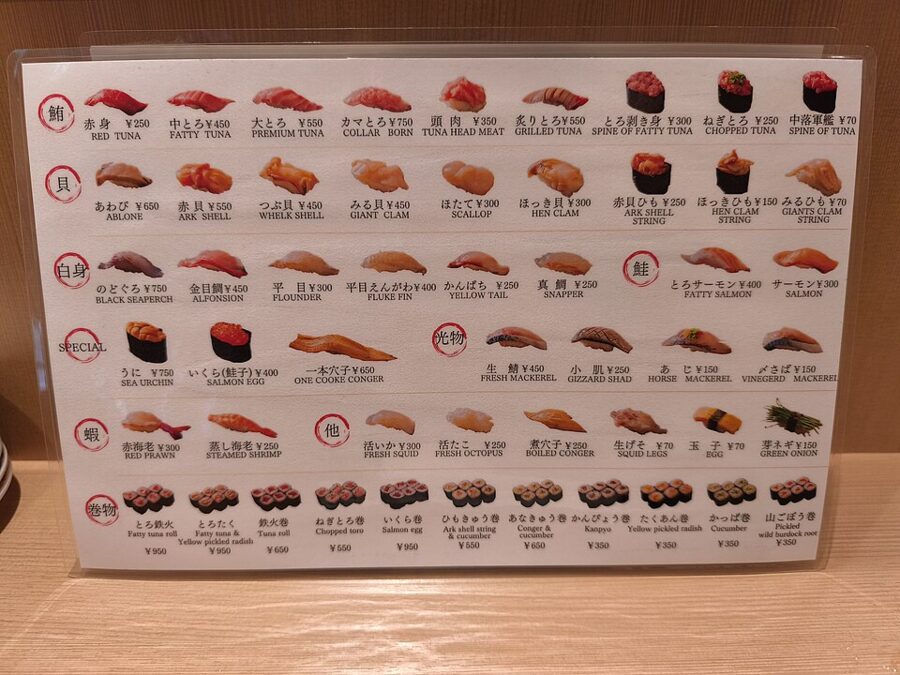
Hinatomaru, a small chain founded by a seafood wholesaler, with its main store in Asakusa, is the clearest example. Its Gransta Yaesu Kita Shokudo branch at Tokyo Station opens 11:00–22:00 with no closing day, and its Asakusa main store opens 11:30–22:00 daily. Nigiri start from ¥70 a piece; the board prices the rest piece by piece, so you can stop whenever you like.
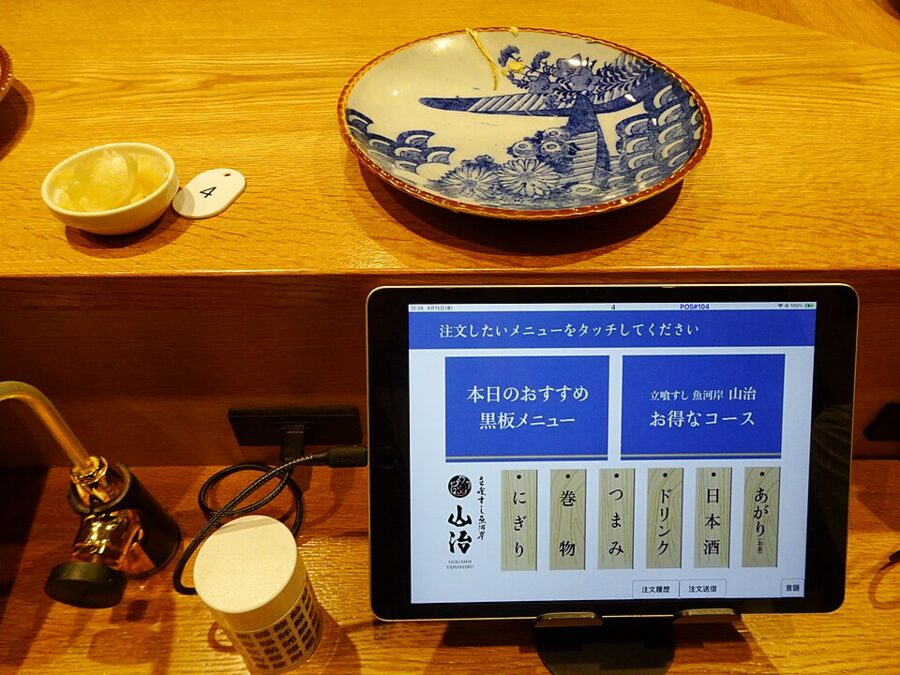
Standing counters are also turning up in office-tower food halls. The basement of Toranomon Hills Station Tower has one, with a tablet for orders and the chef working a meter away. These places do not take bookings, and the line moves fast because nobody lingers.

Department-store, hotel and station counters
The third kind sits inside something else: a station concourse, a department-store restaurant floor, a hotel lobby. These counters keep long, predictable hours, rarely close for a day, and are easy to find with luggage. Hinatomaru’s Tokyo Station branch is one; Kyubey runs branches in three Tokyo hotels, the Okura Tokyo, the Hotel New Otani and the Keio Plaza in Nishi-Shinjuku, as well as its Ginza main store.
Hotel branches are a useful back door to a famous name. Kyubey’s reservations page gives the Keio Plaza branch hours of 11:30–14:30 and 17:00–22:00, and the Okura branch runs straight through from 11:30 to 21:30 but takes bookings only by phone. A hotel concierge in the same building can usually book them in a single call.
Mid-range counters and halls
Between the standing bar and the omakase counter sits the big, busy, sit-down sushi hall: a long counter, some tables, a printed menu with photographs, sets at lunch and a la carte all day. Two names do most of the work in central Tokyo.
Sushi no Midori, properly Umegaoka Sushi no Midori, began in Setagaya and runs large branches in Ginza and Shibuya. Both run mainly on numbered tickets rather than bookings, and the wait at peak times is the price of the low bill. Its grand menu lists the standard nigiri set at ¥2,200, the top set at ¥4,180 and a tuna set at ¥3,630, with a note that some branches charge differently.
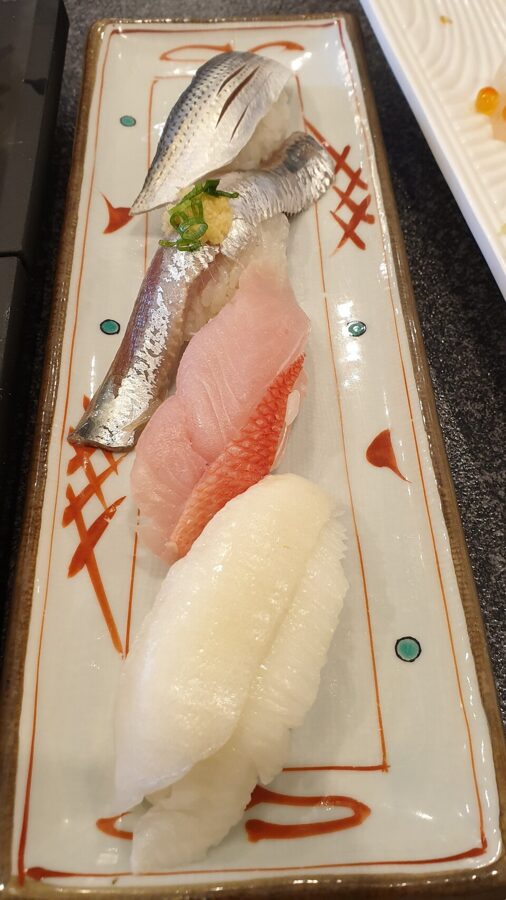

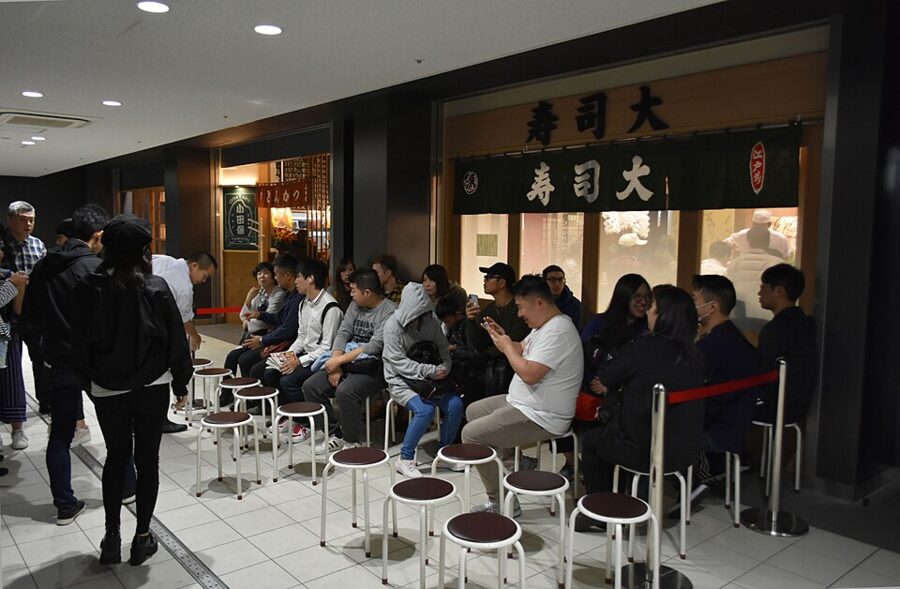
Sushizanmai, the Tsukiji chain of the Kiyomura company, is the other. Its main store in Tsukiji is open 24 hours with no closing day, seats 144 across three floors and takes no reservations, according to its store page. The menu runs from ¥140 a piece for bigeye or yellowfin tuna, egg or squid to ¥1,408 for a piece of sea urchin.
Omakase counters
At the top are the counters where the chef decides. Omakase means “I leave it to you”: you sit, the chef serves one piece at a time in the order he chooses, and the bill is a fixed course price plus drinks. Kyubey’s main-store counters seat 11 to 14; many independent counters are smaller, and nearly all of them want a booking.
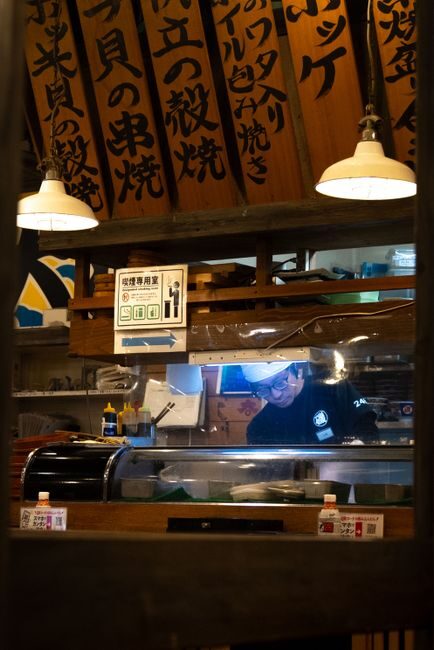
The formats are not always pure. Many omakase counters also take orders piece by piece, called okonomi, especially at lunch, and many also serve tsumami, small dishes of cooked or sliced fish, before the nigiri. A course called sushi kaiseki mixes several cooked dishes with fewer pieces of sushi. Kyubey’s menu shows all three.
What sushi costs in Tokyo in late 2026
Japanese restaurants post prices with consumption tax included, so the figures below are what you pay, unless a service charge is added on top. The table puts the five kinds side by side with one example of each, using each operator’s own published prices.
| Kind of place | Example | Price (tax included) | Booking |
|---|---|---|---|
| Conveyor-belt chain | Kura Sushi, Asakusa ROX | From ¥145 a plate | Web or app time slot, no account needed |
| Conveyor-belt chain | Sushiro | From ¥120 a plate, varies by store | App only, no phone bookings |
| Standing bar | Hinatomaru, Tokyo Station | From ¥70 a piece | None |
| Mid-range hall | Sushi no Midori, Ginza or Shibuya | Sets ¥2,200–4,180 | Numbered ticket from 10:00 |
| Mid-range hall | Sushizanmai main store, Tsukiji | ¥140–1,408 a piece | None; open 24 hours |
| Top counter, lunch | Ginza Kyubey main store | ¥8,250 for 10 pieces, a roll and soup | Phone from 10:00, or online; 11:30 slot only |
| Top counter, dinner | Ginza Kyubey main store | ¥16,500 plus 10% service, so ¥18,150 | Phone or online; same-day cancellation ¥10,000 a head |
Per plate and per piece
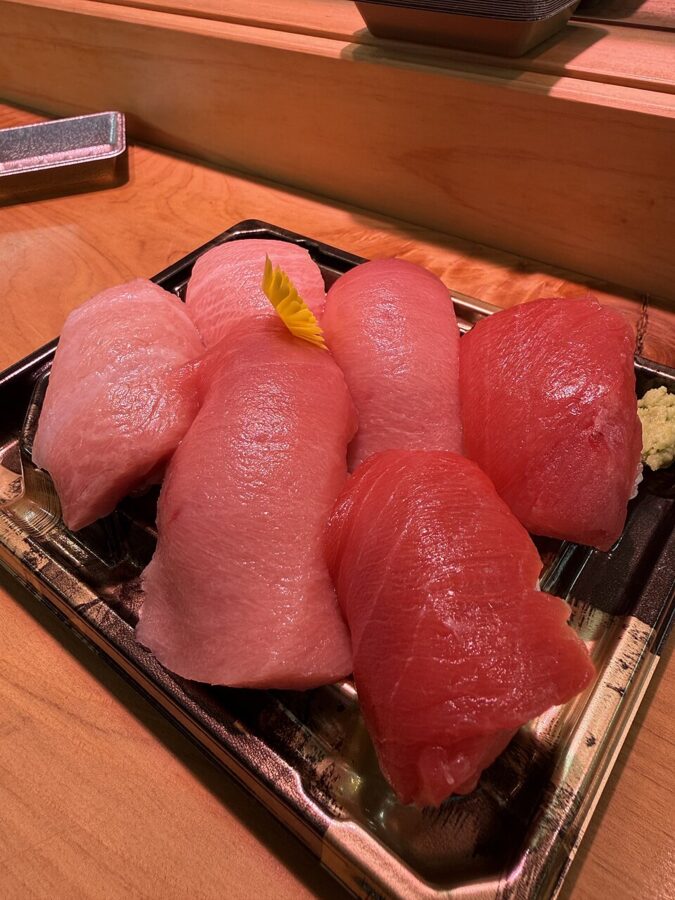
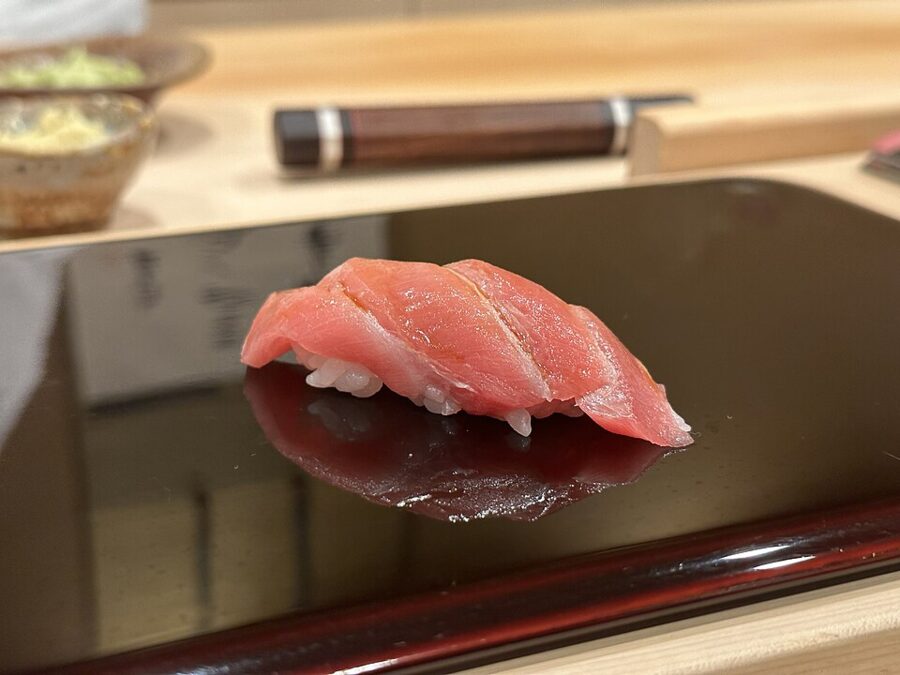
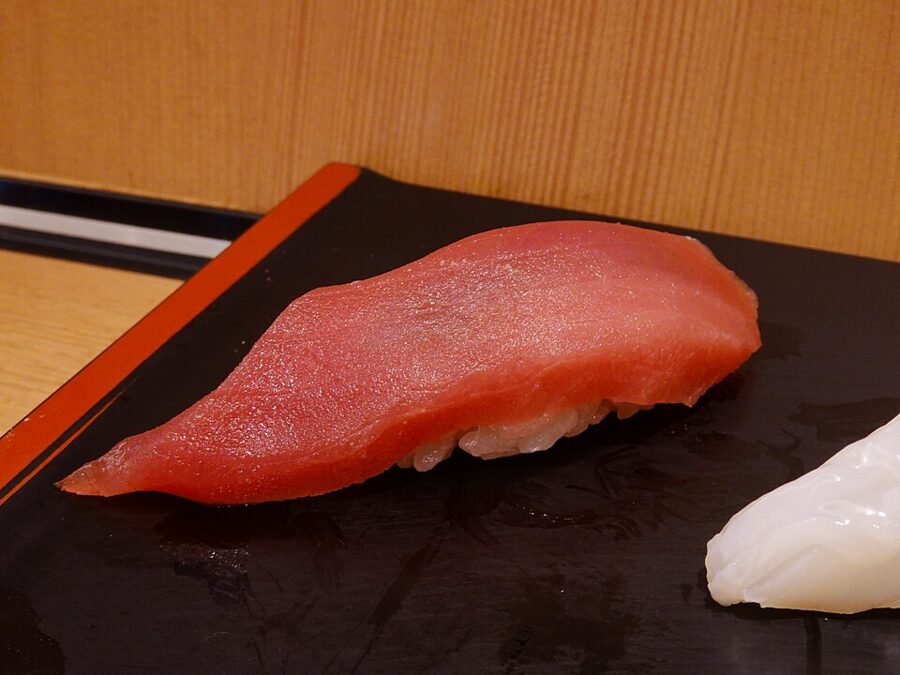
At the chains the plate is the unit, usually two pieces of nigiri or one gunkan, and the color or pattern of the plate shows the price. At standing bars and halls the piece is the unit, and the list goes from egg and squid at the bottom to sea urchin and fatty tuna at the top. Sushizanmai’s list is a good map of that range: ¥140 for bigeye or yellowfin, ¥382 for lean bluefin, ¥547 for medium-fatty bluefin, ¥657 for the fatty belly and ¥767 for the cheek cut, kama toro.

Lunch sets
Lunch is where Tokyo sushi gets cheap. The same counter that charges for a long dinner course will often serve a shorter set at midday for half or less. Kyubey’s main store in Ginza is the clearest case, according to its own price list: the lunch set called Oribe, ten pieces with a roll and soup, is ¥8,250; Karatsu, eleven pieces with fruit, is ¥11,000; and the full Kyubey set, sixteen pieces with a starter, is ¥16,500 at either lunch or dinner.
Dinner omakase
Dinner costs more for three reasons: the course is longer, drinks are part of it, and a service charge often applies. Kyubey adds 10% to every bill in the dinner hours, so its ¥16,500 nigiri course comes to ¥18,150. Its sushi kaiseki courses run ¥25,300, ¥30,800 and ¥44,000 before that charge.
Service charges, room charges and cancellation fees
Read three lines before you book anything above a lunch set. The service charge: Kyubey’s is 10% at dinner, and at lunch only in private rooms. The room charge: private rooms there start from the ¥11,000 lunch course or the ¥25,300 dinner course, with a room fee on top that depends on the room. And the cancellation fee: Kyubey charges ¥5,000 a head for a lunch cancelled on the day and ¥10,000 a head for dinner, and for private rooms, whole-counter bookings and groups of ten or more the fees start a week before.
Those are a famous restaurant’s rules, published in full. Smaller counters set their own, and booking services collect those fees on the restaurant’s behalf from the card you registered. Do the arithmetic before you click.
Booking the counters
The chains and the halls are easy. Sushiro takes bookings only through its app and the LINE mini app, not by phone, and its FAQ warns that the booking system goes down every night from about 2:00 to 6:00 for updates. Kura Sushi takes web bookings without registration, and its branch page shows the earliest slot open that day. Hama Sushi does not reserve seats, but its app holds your place in line or books a time.
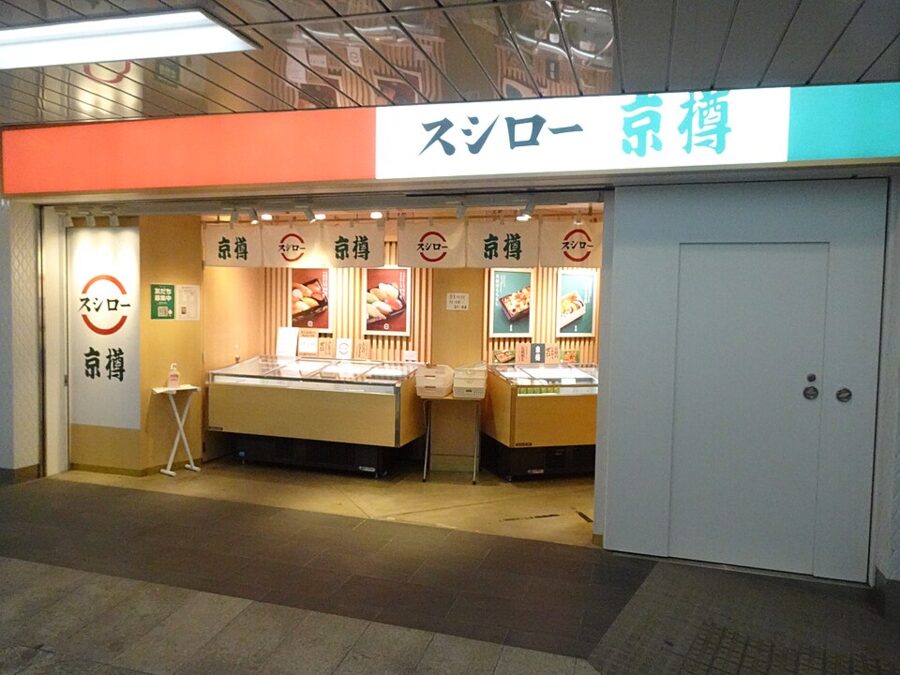

Sushi no Midori runs mainly on tickets. Both central branches start handing out numbers at 10:00, an hour before opening, and may stop early if the line already reaches last order. In Shibuya you can take a ticket on your phone from 10:00 to 19:30 on weekdays, as long as you are within about a kilometer of the shop, according to the Shibuya branch page.
How far ahead for a top counter
For a well-known dinner counter with ten or so seats, I’d book as soon as your flights are booked. Lunch is easier on every count: shorter, cheaper, and less contested. Kyubey takes phone bookings from 10:00 each day, but at lunch it books only the 11:30 start; after that it seats people as places free up, so a later lunch means waiting.
The reservation systems
There are four ways in, and most visitors use the last three. The first is the restaurant’s own phone line, usually in Japanese and often opening at a set hour.
The second is the restaurant’s online booking partner, linked from its own site: Kyubey links two, one of them in English, and Sushi no Midori takes bookings for its main store through an online booking system. The third is an English-language booking service, which takes a credit card at signup, collects each restaurant’s cancellation fee on its behalf, may hold that amount on your card or take a deposit, and can end your membership after a no-show. The fourth is a hotel concierge.
The concierge route works because many small counters will not take a booking from a foreign number they cannot call back. The concierge calls, gives the hotel as the contact, and passes on the house rules: arrival time, allergies, the cancellation fee. It is worth asking for when you book a hotel if a particular counter matters to you.
Deposits, no-shows and being on time
Counter sushi runs on a fixed number of seats and fish bought that morning for exactly that many people. A no-show cannot be resold at 19:00, which is why the fees exist and why booking services can bar repeat offenders. Arrive on time or a few minutes early; at counters with two seatings, a late start eats into your own course rather than the next sitting’s.
Tell the restaurant about allergies and anything you do not eat when you book, not when you sit down. The chef has already cut and portioned the evening’s fish by then.
How to eat and order
The rules are fewer than people fear. Most of them come down to eating each piece the way the chef made it, soon after it lands.
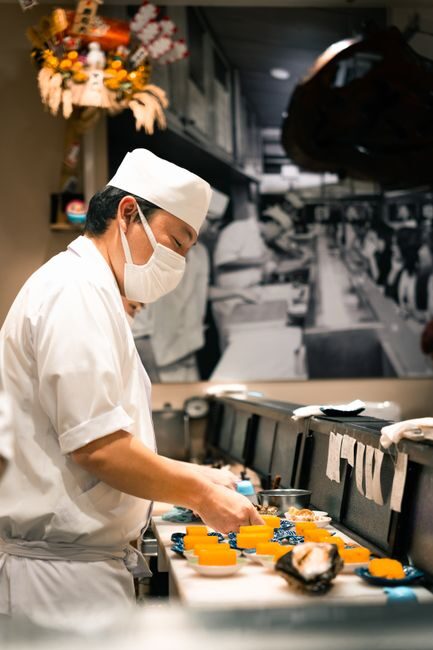
Omakase or pointing
Say “omakase de onegaishimasu” and the chef takes it from there. If you prefer to choose, order piece by piece, naming the fish or pointing at the case. At a standing bar or a chain, ordering two or three pieces at a time is normal. At a counter it is fine to ask for a second piece of something you liked at the end, and to say when you have had enough.
Soy and wasabi
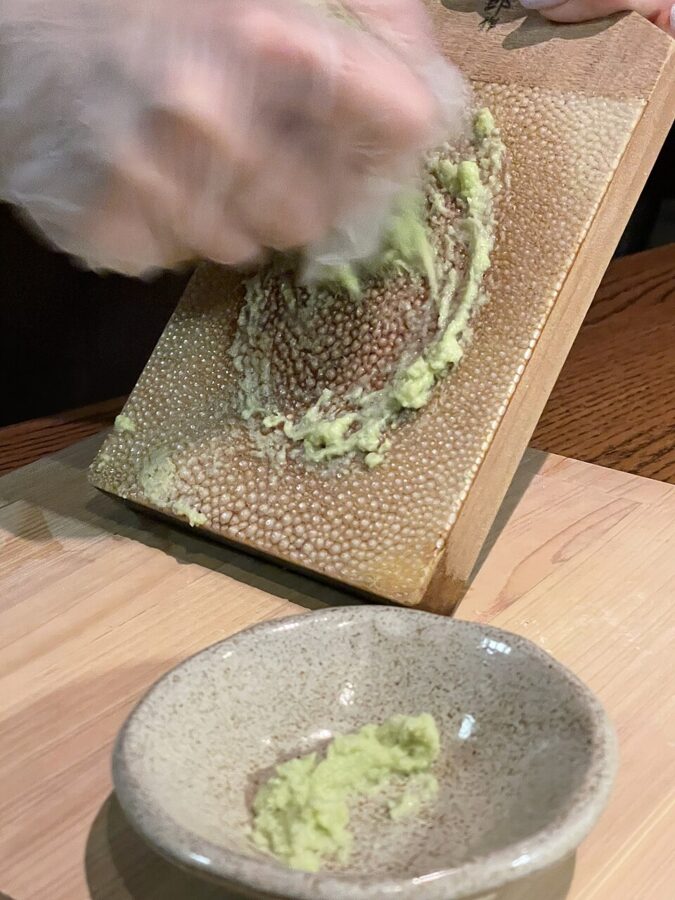
The chef has usually put wasabi between the fish and the rice already, so you do not need more. At many counters he also brushes each piece with nikiri, a thin soy glaze, or tops it with salt or citrus: eat those as they come, without dipping. When you do dip, turn the piece over and touch the fish side to the soy, not the rice, which soaks it up and falls apart. Mixing wasabi into the soy dish is a chain-restaurant habit; at a counter it reads as a comment on the chef’s seasoning.

Hands or chopsticks
Either. Nigiri was street food eaten with the fingers, and fingers are still correct at any counter; a wet towel is there for that. Use chopsticks for sashimi and the small cooked dishes.
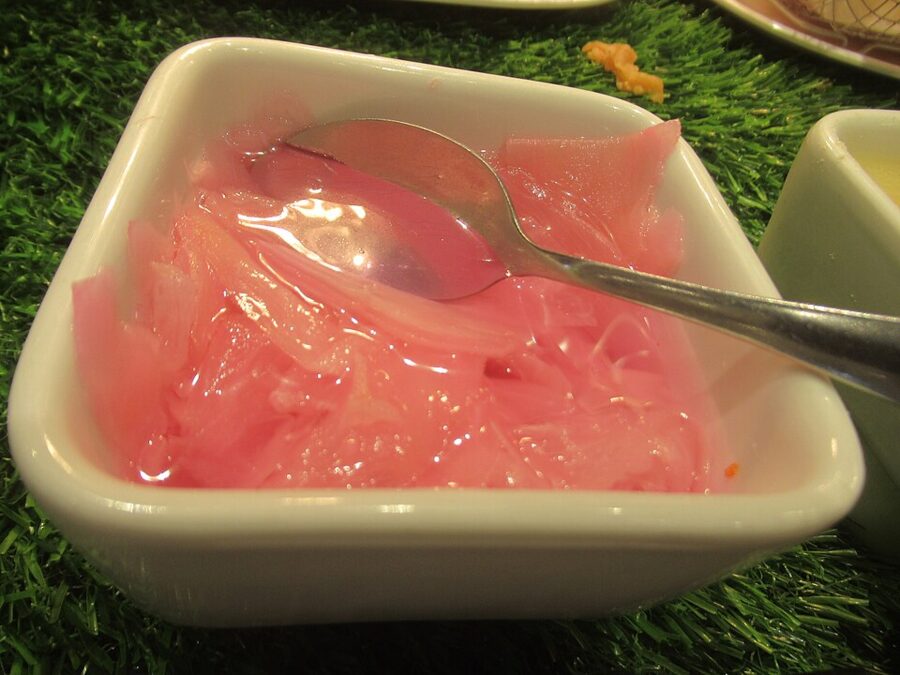
Eat each piece in one bite if you can, and if you cannot, ask the chef to make the rice smaller next time. Pickled ginger, gari, is a palate cleanser between pieces, not a topping.

The order of fish
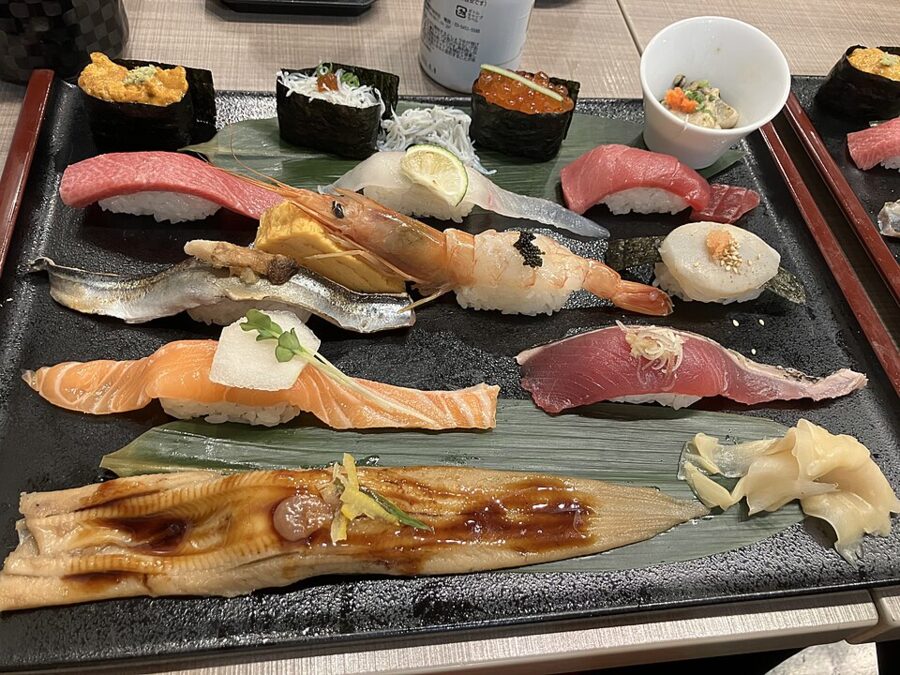
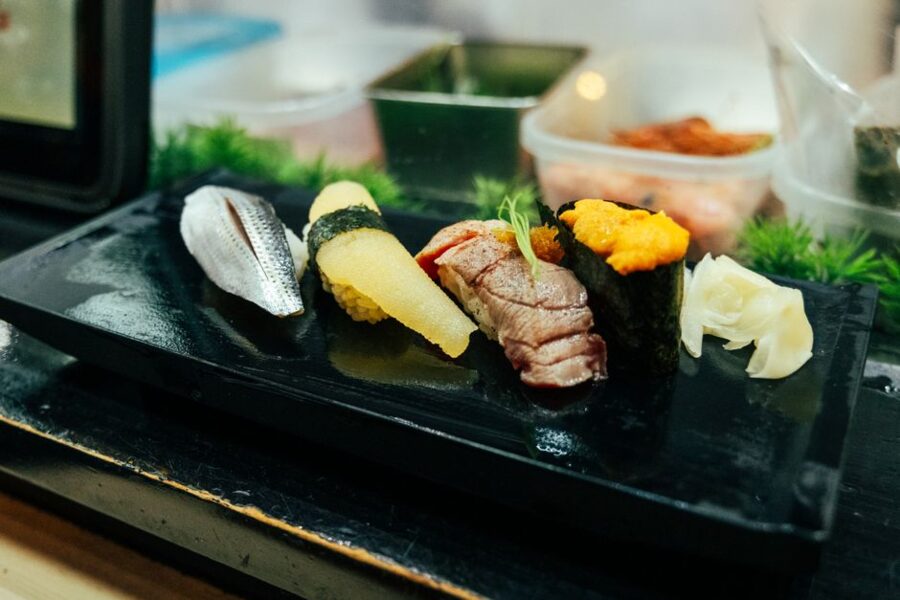
When you order for yourself, a rough sequence keeps the flavors from trampling each other: lighter white fish and squid first, then the silver-skinned “shiny” fish such as kohada and mackerel, then tuna from lean to fatty, then the rich and sweet things such as sea urchin, salmon roe and simmered eel, with egg or a roll to finish. It is a habit, not a law. An omakase chef will set his own order and it will roughly follow this one.
What to say, and what not to
Four phrases cover most of a meal: “omakase de onegaishimasu” to hand over the order, “sabi-nuki” for a piece without wasabi, “ocha onegaishimasu” for tea, and “okaikei onegaishimasu” for the bill. Sushi shops have their own slang, such as agari for tea and murasaki for soy, but those words belong to the staff; a customer using them sounds like someone trying too hard. Plain words are correct.
Skip strong perfume, which competes with the fish at close range. Ask before photographing the chef. Do not pass food from chopsticks to chopsticks, and do not rub disposable chopsticks together. There is no tipping at any level: the service charge, where there is one, is already on the bill.
Edomae sushi: what makes Tokyo’s style its own
Edomae means “in front of Edo”, the shallow bay that lay in front of the old city and supplied its fish. In the narrow sense, Edomae sushi is sushi made with Tokyo Bay seafood, or by the techniques in use up to the start of the Meiji era. In everyday use it means the nigiri-centered sushi of a Tokyo sushi shop, wherever the fish comes from. Shop signs write the word three ways, 寿司, 鮨 and 鮓, and all three are read sushi.

The work: curing, marinating, simmering
Edomae sushi was born before refrigeration, so its toppings were treated before they reached the rice. Sushi chefs call this preparation shigoto, the work, and it is what separates a Tokyo counter from a plate of raw fish on rice.
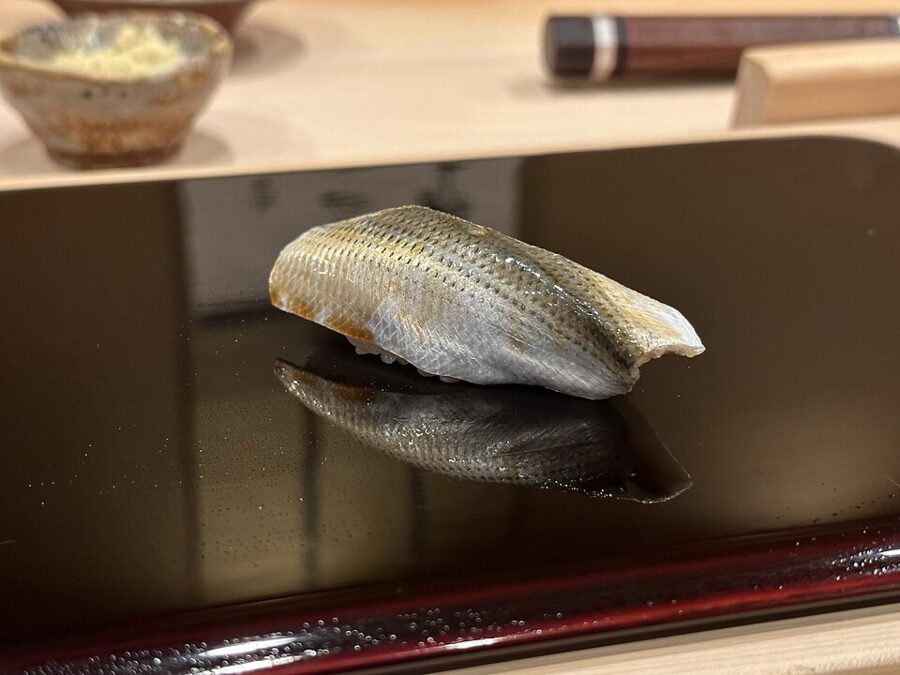
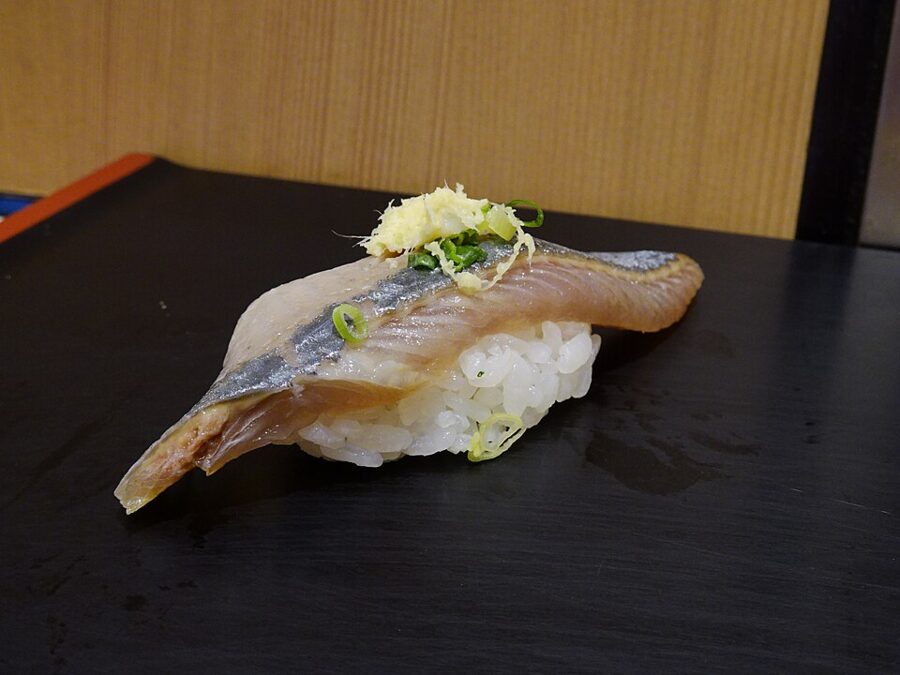
Shiny fish such as kohada, kisu and mackerel are salted, rested, then dipped in vinegar. Lean tuna is marinated in a soy-based liquid for anything from a few minutes to much longer and sold as zuke. Conger eel and clams are simmered, then glazed with tsume, a reduction of their own cooking liquid; octopus is first beaten, often with a daikon radish, then boiled.
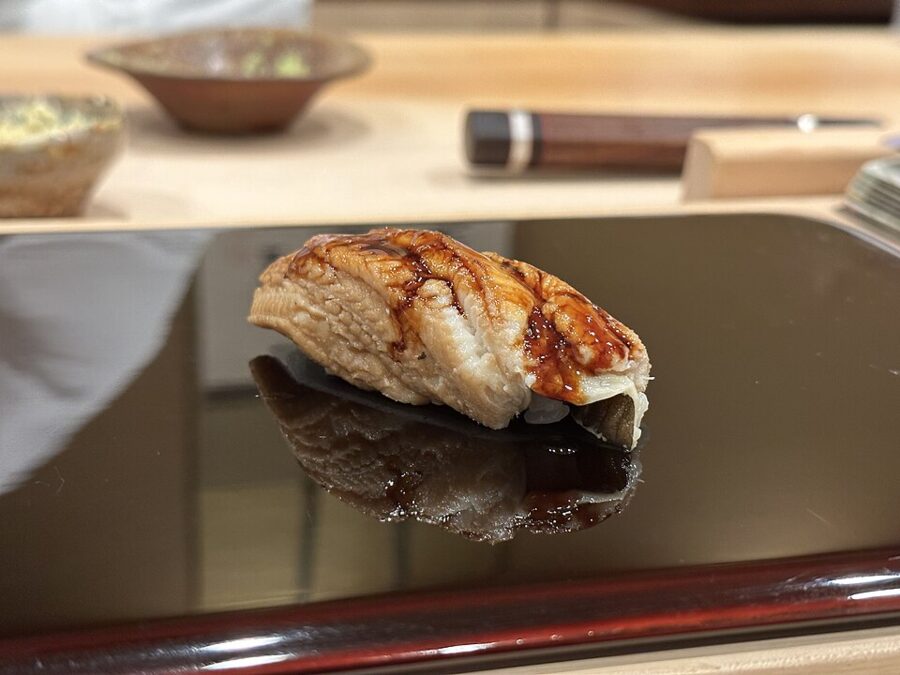

The rice is part of the style too. Nineteenth-century Edomae sushi was seasoned with red vinegar made from sake lees and salt, with no sugar, and a number of counters still use that vinegar, which gives their rice a light brown color and a rounder taste. The rice is meant to be served at about body temperature, and good chefs press it just enough that it holds together on the way to your mouth and falls apart once it is there.
The seasons of fish
Tuna, squid, octopus, shrimp, sea urchin and egg are available all year, but the rest of the case follows the calendar, and the calendar is the reason to go back to the same counter at different times of year.
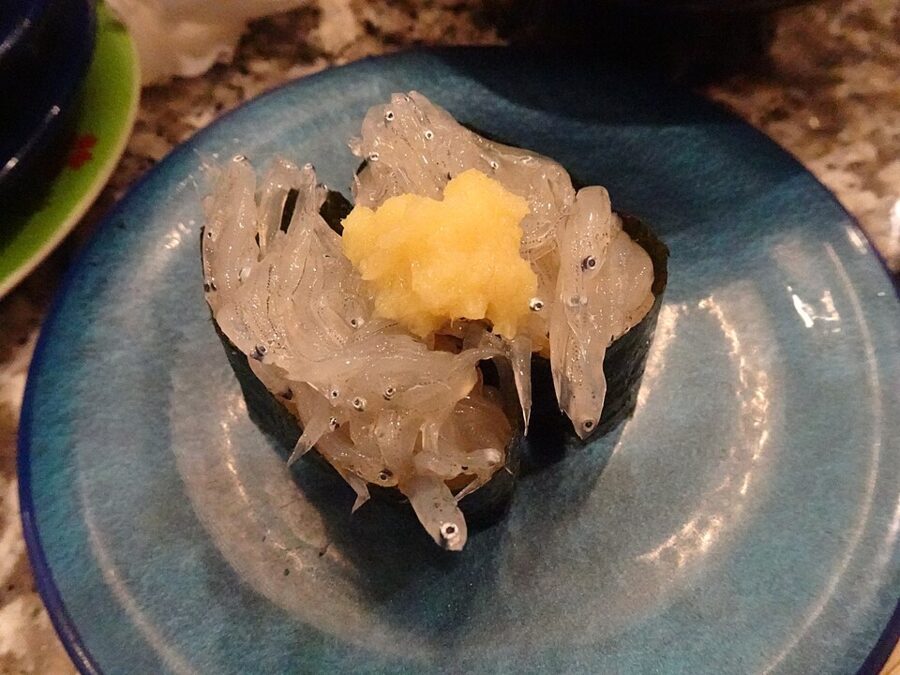
- Spring: sillago (kisu), icefish (shirauo), halfbeak (sayori), young sea bream, cockles (torigai), clams, firefly squid, mantis shrimp.
- Summer: horse mackerel (aji), striped jack (shima-aji), shinko, sea bass, skipjack (katsuo), conger eel.
- Autumn: mackerel, kohada, sardines, the returning fattier skipjack, amberjack, salmon roe.
- Winter: yellowtail (buri), flounder (hirame), sea bream, ark shell (akagai), scallop, crab, sweet shrimp.

From street stall to counter
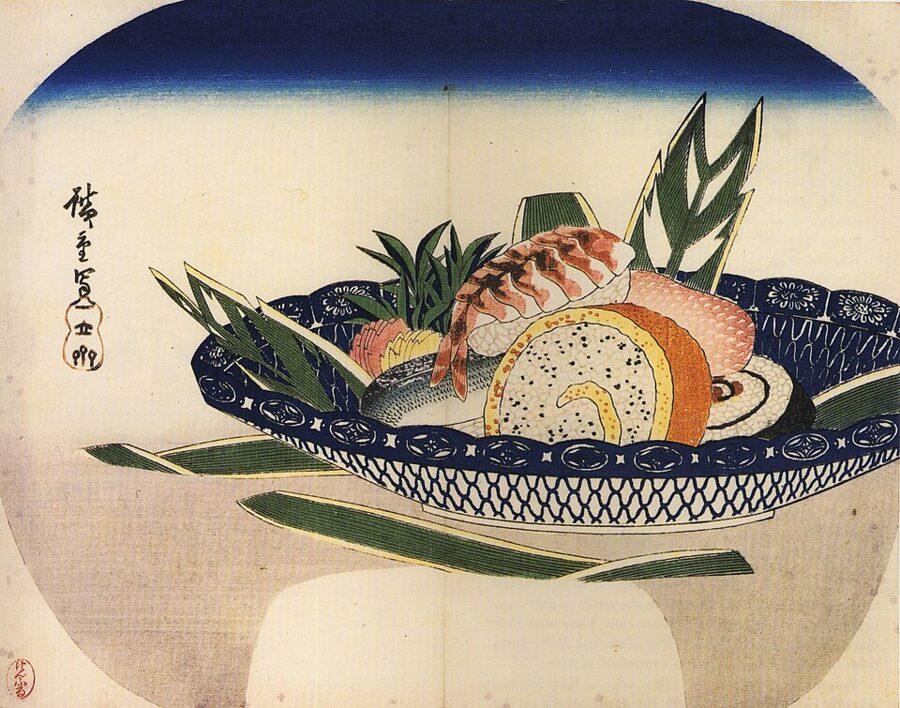
Before Edo, sushi in Japan mostly meant fermented or pressed fish and rice, made to keep. The fast, hand-pressed kind took shape in Edo in the Bunsei era of the 1820s, when two shops are credited with it: Yohei-zushi in Ryogoku, whose founder Hanaya Yohei is said to have started selling it around 1824, and Matsunosushi in Fukagawa. The first certain written reference is a comic verse published in 1829.
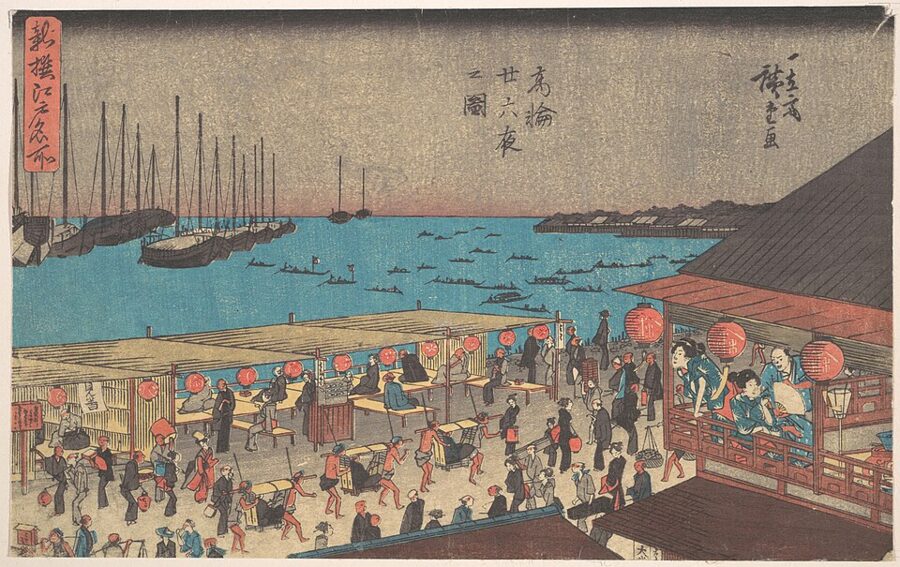
Nigiri spread as stall food, eaten standing and paid for on the spot by people in a hurry. The pieces were two or three times the size of today’s. Fixed shops sold more expensive sushi for takeaway and delivery, and the luxury of the best of them drew satirical verse; during the Tenpo Reforms of the 1840s, more than 200 sushi makers were punished for extravagance. Tuna, a low-grade fish that good shops would not serve, became a staple after a glut in the Tenpo years, when a stall marinated it in soy and sold it as zuke.
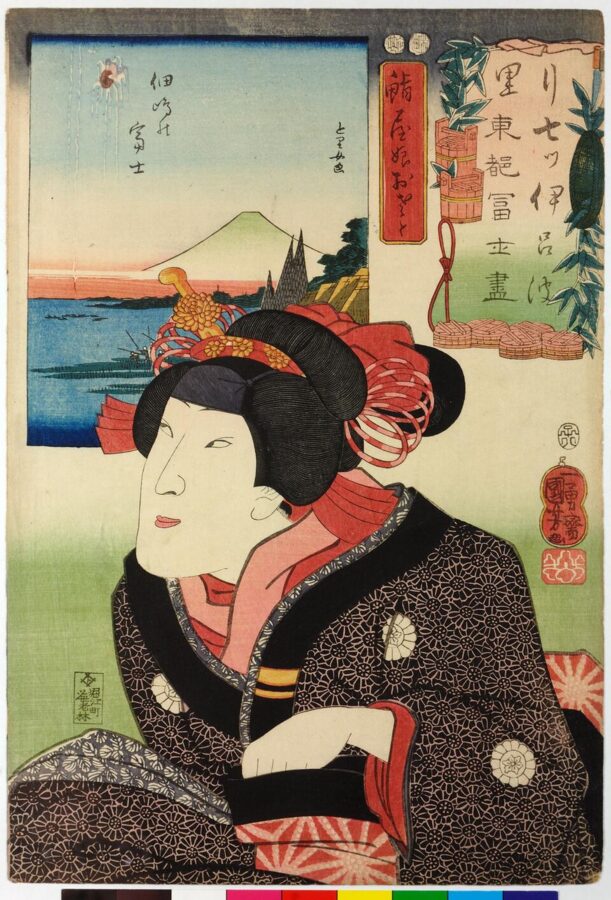
Ice and then electric refrigerators from the late Meiji era let chefs serve more fish raw, and the pieces shrank toward their modern size. The 1923 Great Kanto Earthquake scattered Tokyo’s sushi chefs across the country and took the style with them. After the Second World War, when restaurants were barred from normal trading between 1947 and 1949, Tokyo’s sushi makers won permission to work on commission: a customer brought one go of rice, the standard household measure, and received ten pieces of nigiri. Street stalls were later cleared for hygiene reasons, and sushi moved indoors, onto stools, and up in price.
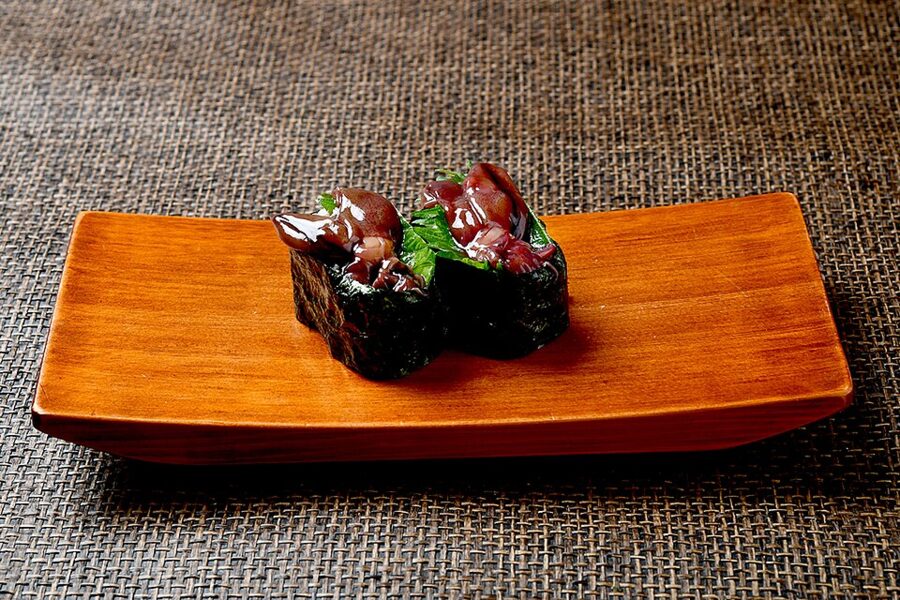
Gunkan, the battleship roll
Gunkan-maki, the “battleship roll”, is a ball of rice wrapped in a band of nori with a soft topping piled on top, and it is a Tokyo invention. The usual account dates it to 1941 at Kyubey in Ginza, where the founder wrapped rice in nori so that he could serve salmon roe and sea urchin, which would not sit on nigiri. Kyubey’s own history puts it simply in the 1940s and names sea urchin. The shape looked like a warship, the timing was the year of Pearl Harbor, and the name stuck, although some in the trade at the time dismissed it as freak food.
Kaitenzushi is younger still. The first conveyor-belt shop opened in 1958 near Kintetsu Fuse Station in what is now Higashiosaka, after its owner, an Osaka standing-sushi operator named Shiraishi Yoshiaki, borrowed the idea from a beer-bottling conveyor. Conveyor sushi reached eastern Japan in 1968.

The markets: Tsukiji and Toyosu
The wholesale fish market moved from Tsukiji to Toyosu in October 2018. What remains at Tsukiji is the outer market of shops and small restaurants; Toyosu is a working wholesale market with its own restaurant rows. Both are worth a sushi breakfast, for different reasons.
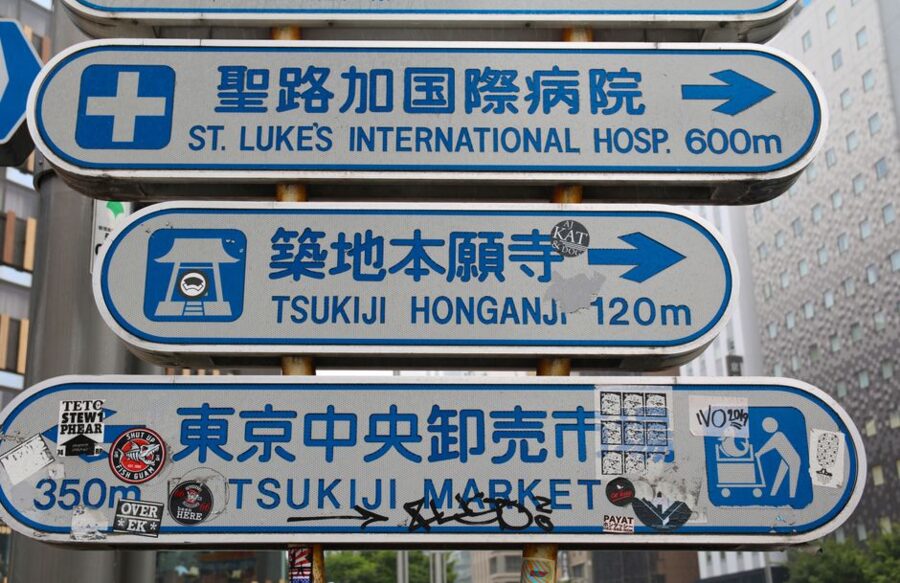
Tsukiji Outer Market
The Tsukiji Outer Market (築地場外市場) has more than twenty sushi counters packed into its lanes, from Sushizanmai’s 24-hour main store, three minutes from Exit 1 of Tsukiji Station on the Tokyo Metro Hibiya Line, to tiny counters with a handful of seats. The market’s own calendar sets the rhythm: 6:00–9:00 belongs to professional buyers, 9:00–14:00 is the main trading time for everyone, and after 14:00 shops close as they please. Many shops follow the wholesale market’s closing days. For the rest of the market, the stalls, the knife shops and the market manners, see the food guide; for how Tsukiji fits with the districts around it, see Tokyo neighborhoods.
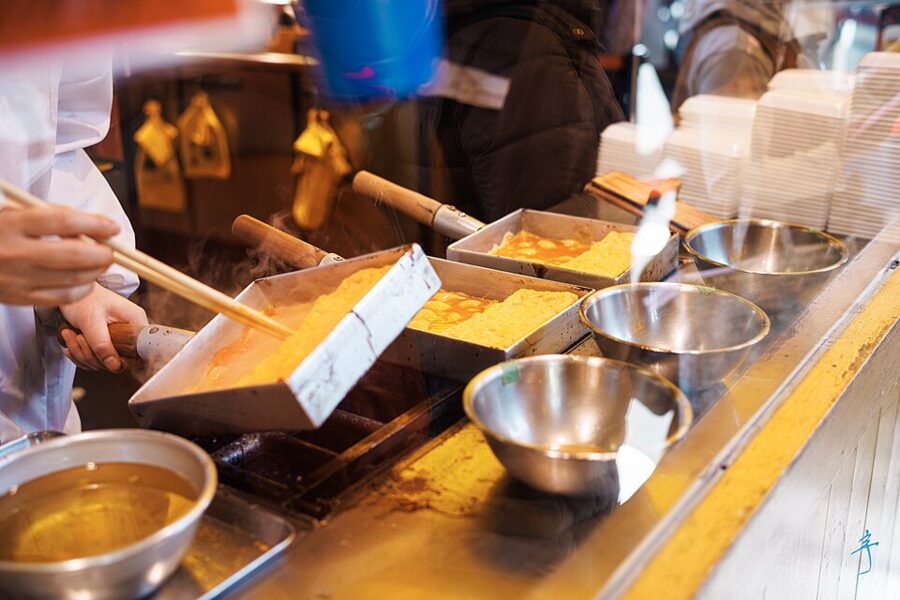

Toyosu Market’s restaurants
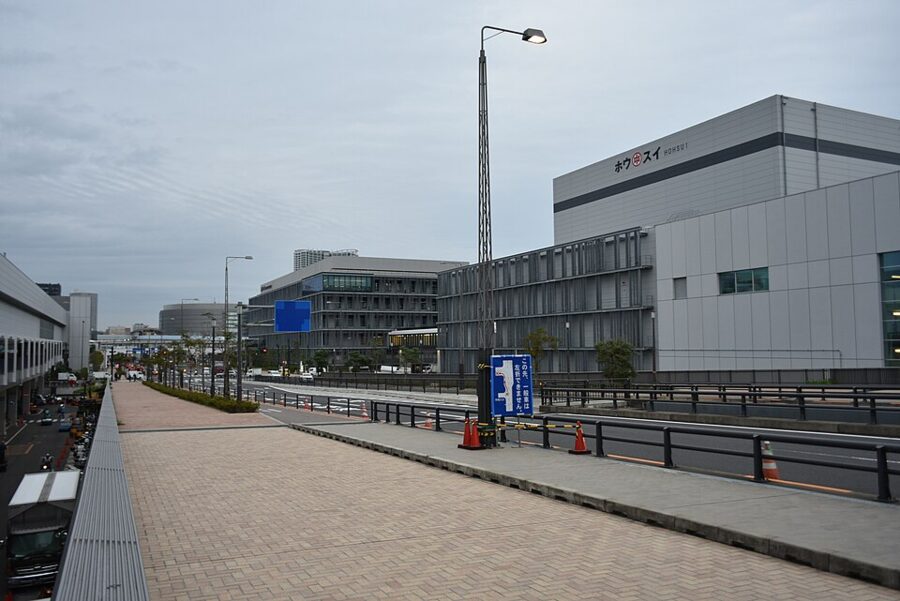
Toyosu Market (豊洲市場) has 39 restaurants across three buildings, according to the Toyosu Market Association: 13 in the administration building of Block 7, 22 in the fisheries intermediate wholesale building of Block 6, and 4 in the produce building of Block 5. The sushi bars include Sushi Dai in Block 6 and two branches of Daiwa Sushi in Block 5, and some of the restaurants serve market workers only. The market buildings open to visitors from 5:00 to 17:00 on market days, but many restaurants close by early afternoon, and all of them close on market holidays, mostly Wednesdays, Sundays and public holidays.

The tuna auction runs from about 5:30 to 6:30, and the visitor corridor, which needs no booking, looks down mostly on the frozen tuna; the closer observation deck needs an application in advance. A sushi breakfast after the auction is the classic plan. The auction and how to see it are covered under things to do in Tokyo, and the food guide covers the rest of the market.
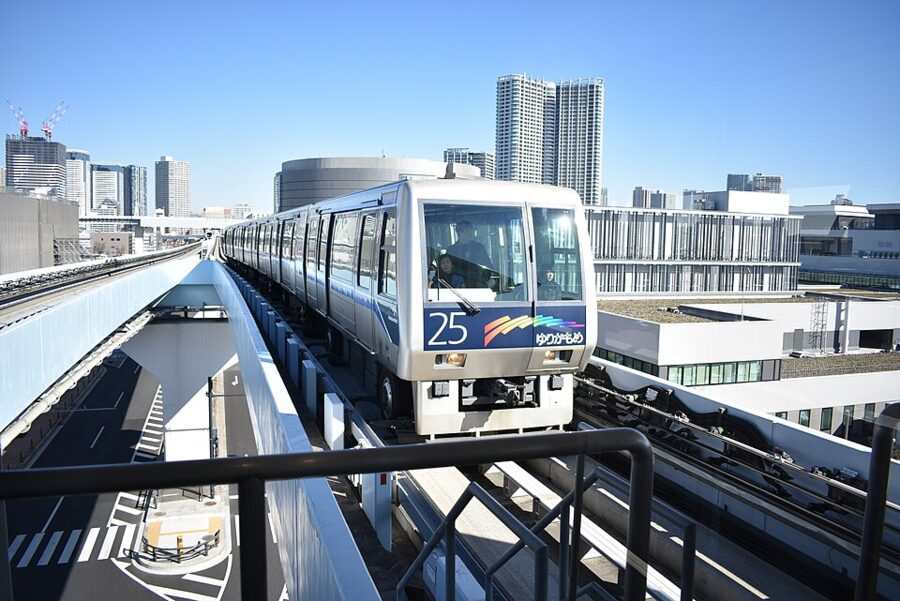

The quickest way in is the Yurikamome to Shijo-mae Station; the Toei bus from Shimbashi and the Tokyo BRT also run to the market, and a direct bus to Narita Airport leaves from Michi no Terrace Toyosu, taking about 70 minutes, which makes a market breakfast on the last morning of a trip possible. For the rest of the network, see getting around Tokyo.

Where to eat sushi by area
Hours below are the operators’ own, as posted in November 2026. Holiday hours change, so check the day before.
Ginza
Ginza has the densest concentration of top counters in the city, mostly in 6-, 7- and 8-chome toward Shimbashi. Kyubey’s main store at Ginza 8-7-6 opens 11:30–14:00 and 17:00–22:00 and closes Sundays and Mondays, including holiday Mondays; it is five minutes from Exit 3 of Shimbashi Station on the Ginza Line and from the JR Ginza Exit. It closes for the New Year holidays while its hotel branches stay open, according to its holiday notice.
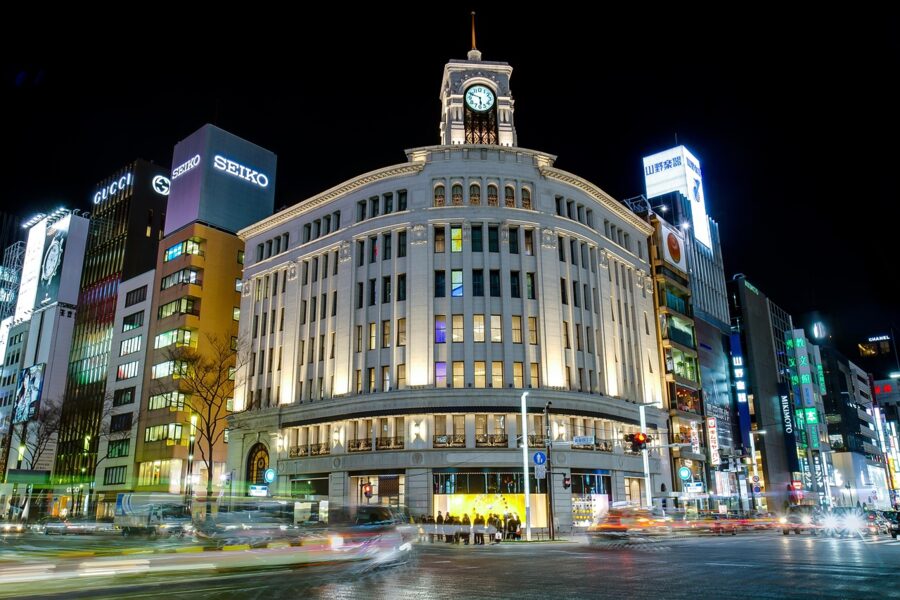
For less money, Sushi no Midori’s Ginza branch sits under the expressway at Ginza 8-3, five minutes from Exit 5 of Shimbashi Station on the Ginza Line. On weekdays it opens 11:00–15:00 (last order 14:00) and 17:00–21:00 (last order 20:30); at weekends and on holidays it runs 11:00–21:00 straight through. It has 82 seats and closes only on January 1. Sushizanmai’s Takumi branch at Ginza 6-4-6, two minutes from Exit C3 of Ginza Station, stays open until 5:00 on most nights.
Tsukiji and Tokyo Station
Tsukiji is for breakfast or an early lunch in the outer market, between 9:00 and 14:00; Sushizanmai’s main store covers every other hour. Tokyo Station, a short subway ride away, has Hinatomaru’s standing counter in Gransta Yaesu, open 11:00–22:00 every day, which makes it the obvious stop before a late train.

Shinjuku
Shinjuku is better for value than for the top end. On the west side, Kyubey’s branch in the Keio Plaza Hotel opens 11:30–14:30 and 17:00–22:00, the easiest way to eat at that name without crossing town. On the east side, Kura Sushi’s sister brand, Muten Kura (無添蔵), has a branch on the sixth floor of the Shinjuku Takano Building at Shinjuku 3-26-11, open until 23:00.
Shibuya and Harajuku
In Shibuya, Sushi no Midori’s branch is on the fourth floor of Shibuya Mark City East, reached from the station’s terminal buildings. Since October 1, 2026, it has been open 11:00–21:00 straight through, with last order at 20:30, 62 seats and a request that you finish within two hours. A short walk away in Harajuku, Kura Sushi’s global flagship is on the fourth floor of YM Square at Jingumae 4-31-10, open until 23:00, with plates from ¥145.
Asakusa
Asakusa has the clearest spread of budgets in one walk. Kura Sushi’s global flagship is on the fourth floor of Asakusa ROX at Asakusa 1-25-15, open 11:00–23:00 on weekdays and from 10:20 at weekends, with last entry 30 minutes before closing, according to its branch page. Hinatomaru’s main store at Asakusa 1-20-10, two minutes from the Ginza Line’s Asakusa Station, opens 11:30–22:00 daily. Sushizanmai’s Kaminarimon branch, a minute from Exit 1 of Asakusa Station, opens until 22:00 and takes bookings on weekdays only.
Kura Sushi’s third flagship in this part of the city, a two-floor branch at Oshiage 1-8-23 in front of Oshiage Station, is the one to know if you are going up the Tokyo Skytree; it is also in the ¥145 tier.
Toyosu
Toyosu is for an early start on a market day: the auction from 5:30, then sushi in the Block 6 fish building or the Block 5 produce building. Check the market calendar before you set the alarm, because the restaurants close with the market.

Dietary notes: pregnancy, allergies and vegetarian sushi
Raw fish and pregnancy
Japan’s Ministry of Health, Labour and Welfare publishes advice on fish and mercury for pregnant women, and tuna is the part that matters at a sushi counter. Bluefin (hon-maguro or kuro-maguro), bigeye (mebachi), swordfish and splendid alfonsino (kinmedai) are listed at one serving of about 80 grams a week; southern bluefin (minami-maguro) at two. Yellowfin, albacore and canned tuna carry no special limit. Raw fish carries other risks, so a pregnant reader should follow her own doctor’s advice; the cooked and vegetable pieces below make a full meal.
The Ministry’s anisakis warning applies to everyone. The parasite lives in raw fish such as mackerel, horse mackerel and squid; freezing at −20°C for 24 hours or cooking kills it, but vinegar, salt, soy sauce and wasabi do not. Counter chefs check for it as they cut, which is one of the things you pay for.
Allergies
Packaged food in Japan carries mandatory allergen labels; restaurant food does not. The chains publish allergen charts for every item, Sushiro, Kura Sushi and Hama Sushi among them, which makes them the easiest places to eat with a shellfish, egg or wheat allergy. Soy sauce, nikiri and the tsume on eel all contain wheat, and the traditional Edomae omelet is made with shrimp or fish paste. At a counter, say it when you book.
Vegetarian sushi
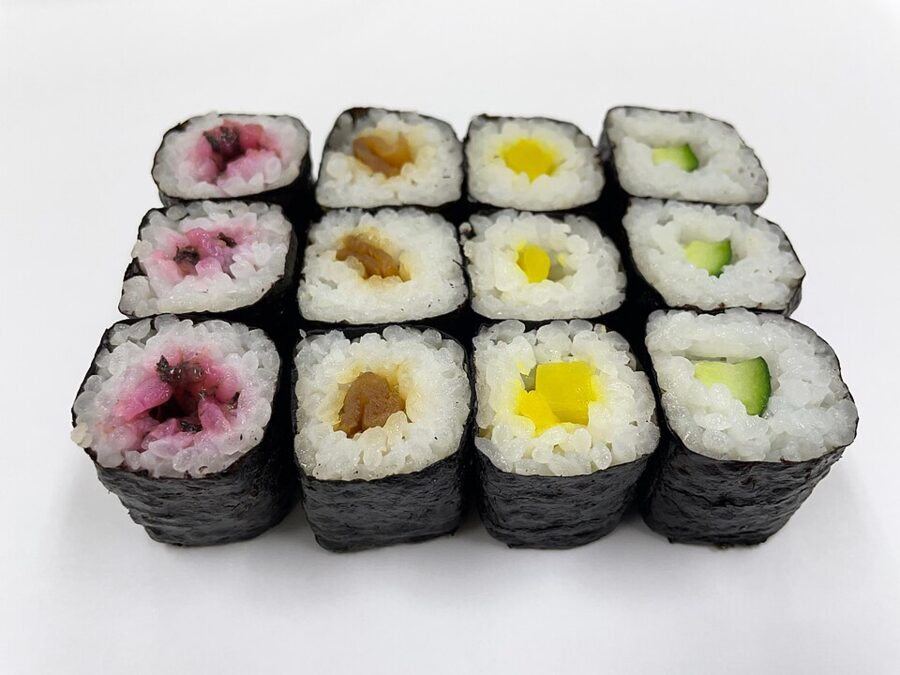
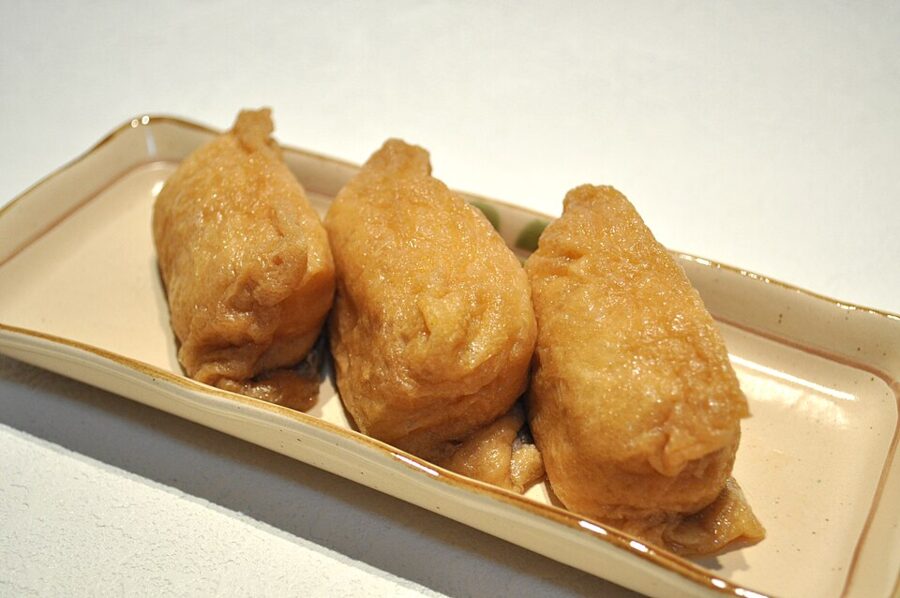
A vegetarian meal at a sushi counter is possible, but not a long one. The standard vegetable rolls are cucumber (kappa-maki), simmered dried gourd (kanpyo-maki), fermented soybeans (natto-maki) and pickled radish (oshinko-maki), and inarizushi is rice packed into a sweet fried-tofu pouch. Egg is vegetarian in principle but often seasoned with fish stock, and the miso soup almost always is.
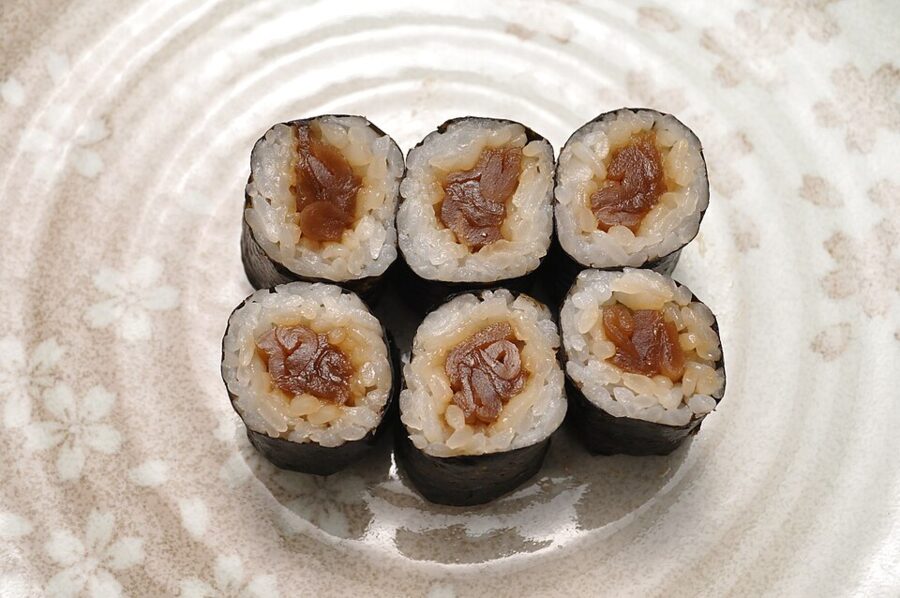
The chains do best here, with corn, cucumber and natto gunkan, and avocado or fried-tofu pieces on the touch screen. At a counter, say it at booking and many chefs will build a course around vegetables, tofu and pickles.


That ¥145 plate in Asakusa and the ¥18,150 dinner in Ginza are both proper Tokyo sushi; the difference is mostly the chair, the booking and the fish the chef went to Toyosu for. Book the Ginza counter when your flights are fixed, keep the cancellation fee in mind, and save the conveyor belt for the night the plans fall through: it will have a seat by the time you get there.