

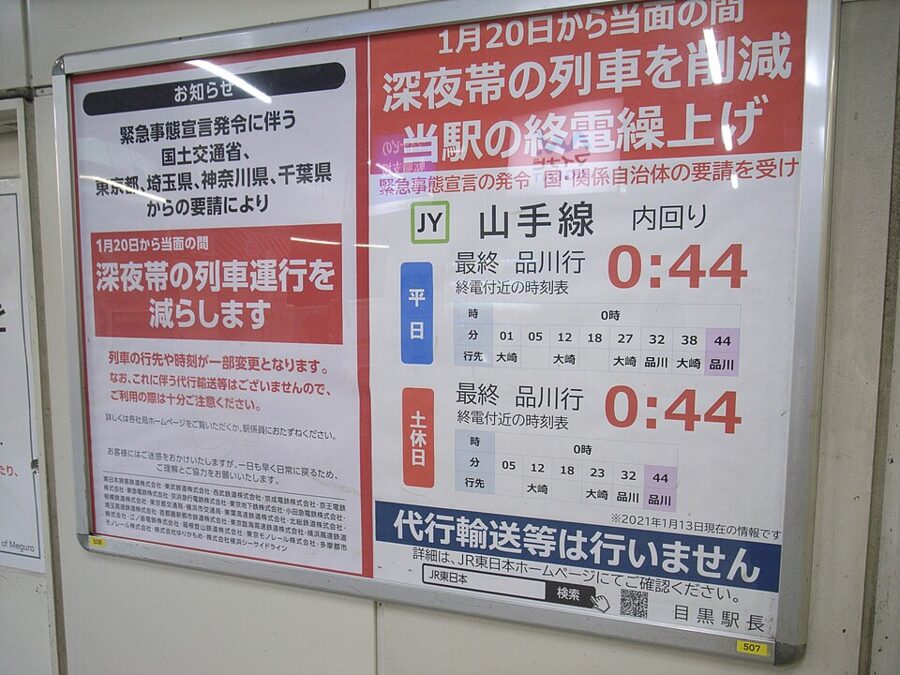
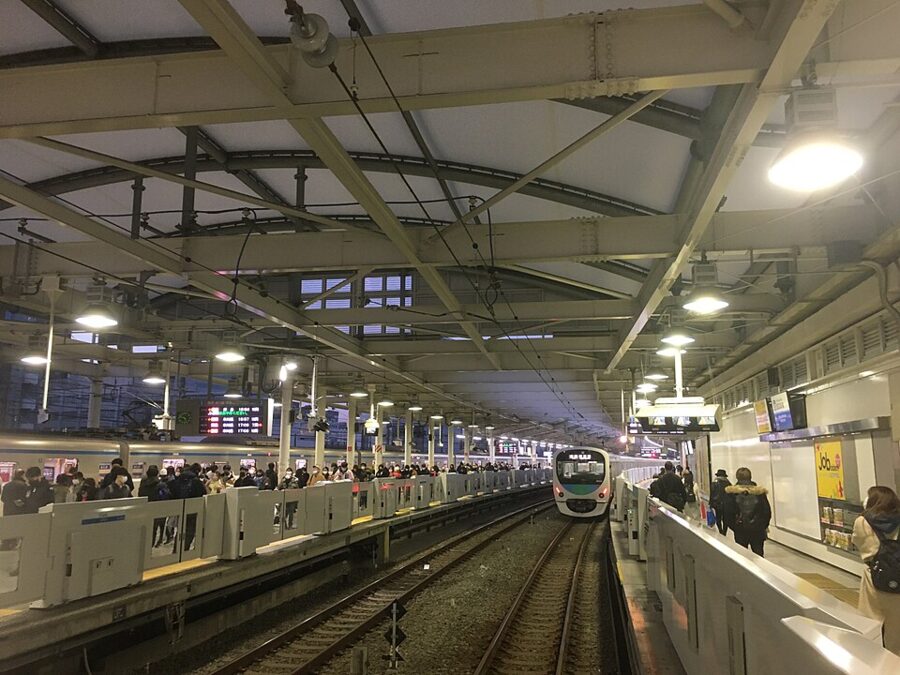
The last JR Yamanote Line train from Shinjuku toward Shibuya leaves at 00:41, and the last one the other way, toward Ikebukuro, at 00:44. Those two times, from JR East’s late-2026 timetable, decide more about a night out in Tokyo than any bar list does. Miss them and the choice is a taxi with a 20 percent surcharge, a karaoke room until the first train at 04:43, or a seat in a bar that has no intention of closing.
So plan the night backwards. Pick the district, find the station you will leave from, write down its last train, and work out what the evening costs before a tout works it out for you. The districts below run from the obvious (Shinjuku, Shibuya, Roppongi) to the ones locals use on a weeknight, and the times, prices and rules are the late-2026 ones.
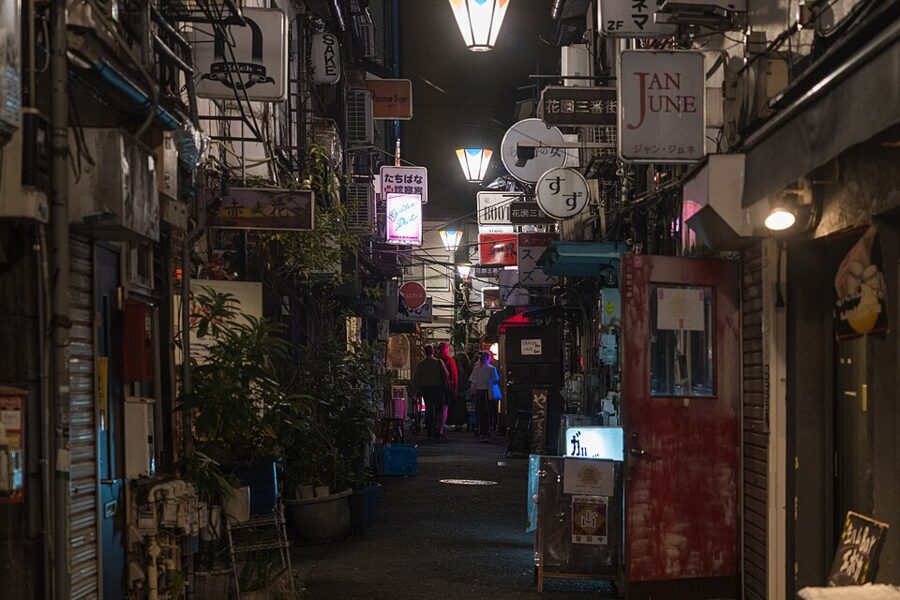

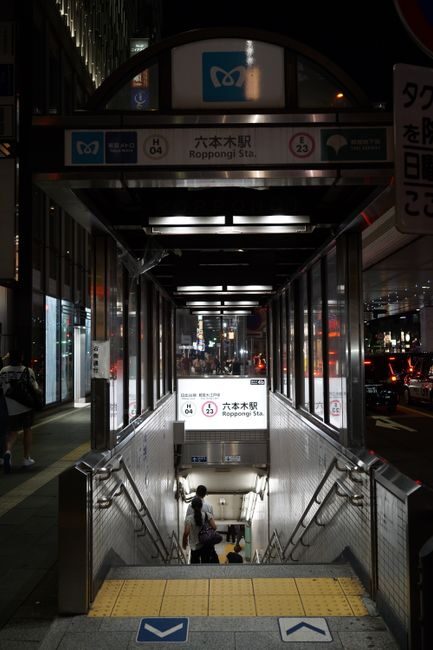
Three rules cover most of what goes wrong. Never follow a street tout anywhere. Ask what the seat charge is before you sit down. And know that the subway lines stop earlier than JR does: the Hibiya Line’s last train from Roppongi toward Ginza goes at 23:55.


The night by the clock
Tokyo does not run trains all night, not even on Saturdays. JR, Tokyo Metro and Toei all stop between about 23:50 and 01:00, depending on the line, the station and the direction, then start again a little before 05:00. The gap between those two times is the whole story of a late night here.
Last trains, late 2026
The times below come from the operators’ own station timetables: JR East’s Shinjuku Station timetable, Tokyo Metro’s station timetables in the revision of September 19, 2026, and the Toei timetable for Roppongi, revised on March 17, 2025 and still in force. They are weekday departures; at Shinjuku the late Yamanote times are the same on Saturdays and holidays, but check the weekend board for anything else.
| Station | Line and direction | Last departure |
|---|---|---|
| Shinjuku | JR Yamanote Line toward Shibuya and Osaki | 00:41 |
| Shinjuku | JR Yamanote Line toward Ikebukuro | 00:44 |
| Shibuya | JR Yamanote Line toward Ebisu and Osaki | 00:48 |
| Shibuya | JR Yamanote Line toward Shinjuku and Ikebukuro | 00:33 |
| Ebisu | JR Yamanote Line toward Shibuya and Shinjuku | 00:30 |
| Shinjuku | Tokyo Metro Marunouchi Line toward Ogikubo | 00:22 |
| Shinjuku | Tokyo Metro Marunouchi Line toward Ginza and Tokyo | 23:54 |
| Shibuya | Tokyo Metro Ginza Line toward Ginza and Ueno | 00:02 |
| Ginza | Tokyo Metro Ginza Line toward Shibuya | 00:13 |
| Roppongi | Tokyo Metro Hibiya Line toward Naka-meguro | 00:28 |
| Roppongi | Tokyo Metro Hibiya Line toward Ginza and Ueno | 23:55 |
| Roppongi | Toei Oedo Line toward Shinjuku (terminates at Tochomae) | 00:37 |
| Roppongi | Toei Oedo Line toward Daimon (terminates at Shiodome) | 00:39 |
Two traps hide in that table. The latest trains often stop short: the 00:41 from Shinjuku ends at Osaki, the 00:44 ends at Ikebukuro, and the 00:37 Oedo Line train from Roppongi stops at Tochomae with no connection onward. If you are going all the way around the loop, the last Yamanote train that runs from Shibuya through Shinjuku, Ueno and Yurakucho to Shinagawa leaves Shibuya at 00:05.
The second trap is direction. From Roppongi the Hibiya Line toward Naka-meguro runs until 00:28, but toward Ginza and Ueno it stops at 23:55, half an hour earlier. If your hotel is in Ueno or Asakusa, Roppongi is the district where you watch the clock hardest.

If your night starts or ends at Haneda Airport, look up its last trains the same way before you go out. A hotel you cannot reach after midnight without a taxi costs more than its room rate.
First trains, and the hours in between
The first Yamanote trains leave Shinjuku at 04:43 toward Shibuya and 04:44 toward Ikebukuro; the next ones are not until 05:03. On the subway, the Hibiya Line’s first train from Roppongi toward Naka-meguro is at 05:16, and the Oedo Line’s first toward Shinjuku at 05:08. Between 01:00 and 05:00, you have four options.
Stay in the bar. Plenty of counter bars in Golden Gai, Shibuya and Roppongi keep going well past the last train, because their regulars are people who missed it on purpose. This is the cheapest choice if you have already paid the seat charge.
Karaoke. The big chains run late-night “free time” packages, a flat rate for staying until morning. At Karaoke Kan, the chain’s own customer FAQ says whether a branch offers it, its hours and whether it includes all-you-can-drink all vary by shop, so ask at the front desk before you take the room.
A net cafe. Private booths with a reclining chair or a flat mat, some of them lockable rooms, and a drinks bar. Kaikatsu Club, one of the big chains, is membership-only: you register at a machine in the shop with photo ID, and the bill switches automatically to whichever time pack is cheapest for how long you stayed. Bring your passport.
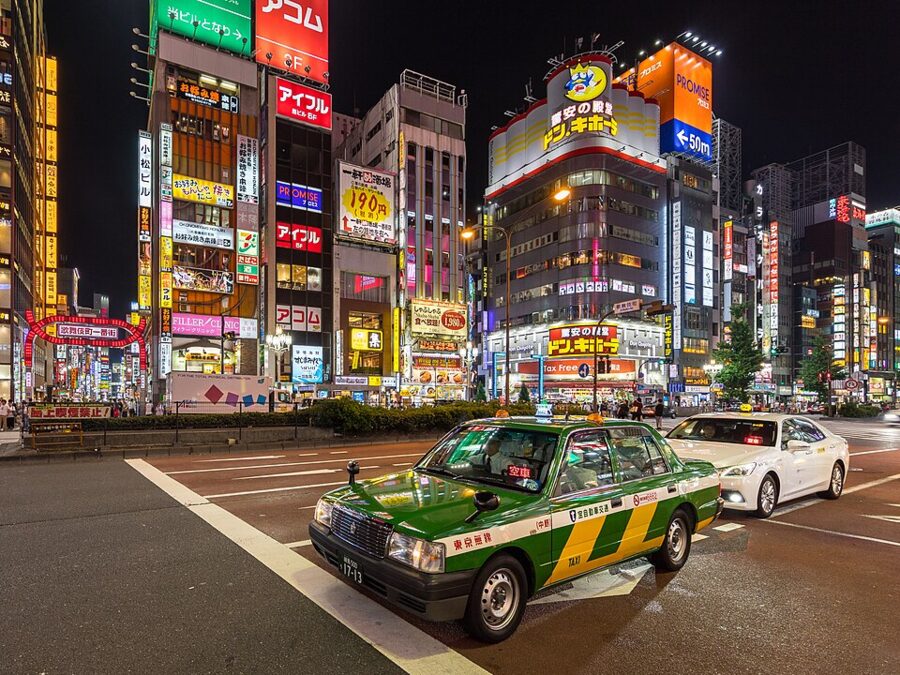
A taxi. Under the fare table of the Tokyo Hire-Taxi Association for the 23 wards, the meter starts at ¥500 for the first 1.0 km and adds ¥100 every 232 m, plus ¥100 for each 1 minute 25 seconds spent below 10 km/h. From 22:00 to 05:00 the whole fare is 20 percent higher, and anything over ¥9,000 is discounted by 10 percent. By that table, a 4 km ride after midnight works out at a little over ¥2,000 before any time charge in traffic, which makes a shared cab between three people cheaper than three karaoke packages.

Winter changes the math. The Japan Meteorological Agency’s 1991–2020 normals for Tokyo put the average daily low at 1.2°C in January and 23.5°C in August. Waiting outside for a 04:43 train is fine in August. In January, it is the argument for the net cafe.
Friday is not Tuesday
Friday night is when office Tokyo goes out, and it shows: izakaya fill by 19:00, the last trains are packed, and taxi lines at Shinjuku and Shibuya run long after 01:00. Saturday is busier in the club districts and quieter in the business ones; Shimbashi, which runs on office workers, is half shut by Saturday night. Sunday is the early night of the week, and many small bars take Sunday or Monday off.
Clubs work the other way. Most of their big events fall on Fridays and Saturdays and on nights before holidays, and on a Tuesday a large club may be dark or running a smaller room. If you want a quiet Golden Gai bar with a seat at the counter, go Tuesday or Wednesday. If you want a full dance floor, check the club’s event calendar and go when it says.
What a night costs
The drink is the smallest part of the bill in many Tokyo bars. What catches people out is the charge for sitting down, which most small bars add and few explain in English.
Seat charges and the otoshi
Two names cover the same idea. A chaaji (table or seat charge) is a fixed fee per person for the seat; an otoshi (the small dish that arrives unordered) is the izakaya version, a plate of something you did not ask for that comes with a price. Neither is a scam. Both are normal, and both are listed on the menu or the door if you look.
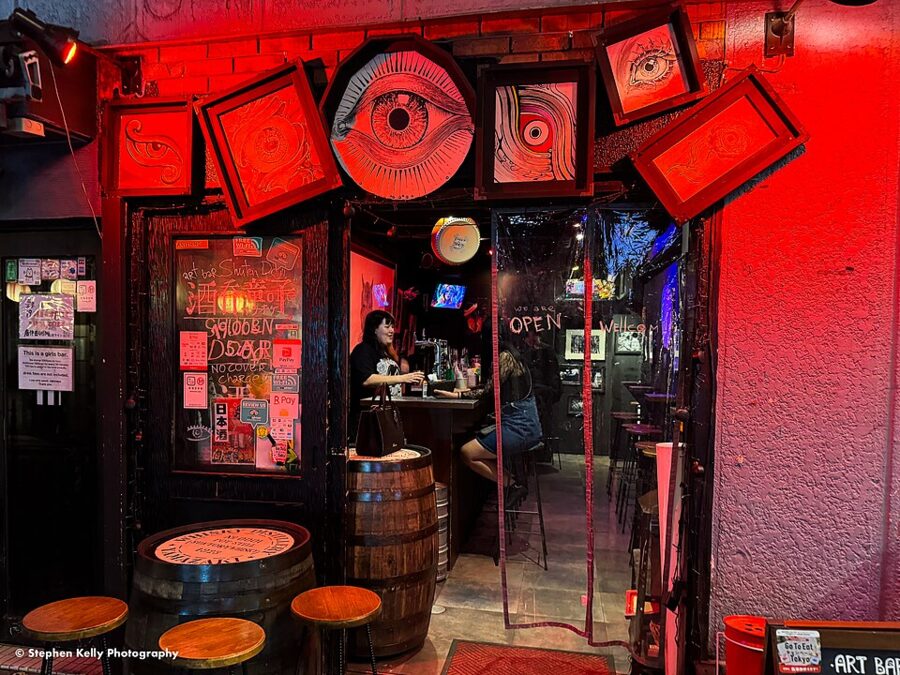
In Golden Gai, the bar association’s guide to drinking in the district says most bars charge an otoshi or a seat charge on top of drinks, and puts the usual range at ¥500–1,500. Some bars have dropped it for visitors from abroad, and those usually say so in English on the door. Three bars in a night at ¥1,000 a seat is ¥3,000 before you have had a drink, which is why the bar crawl below sticks to three.


Nomihodai and drink prices
Nomihodai means all-you-can-drink for a fixed time, sold as a set price per person, usually with a minimum group size and a food course attached. It pays if you are four people settling in for two hours of beer and highballs. It does not pay if you want to move on after forty minutes, and the clock usually starts when you sit down, not when the first drink arrives.
Drink prices follow rent more than anything else. The cheapest rounds in the city are in the standing bars and chain izakaya around Shimbashi, Ueno and Koenji; Ginza and Roppongi charge for the address. A useful benchmark from Golden Gai itself: at the district’s spring festival on April 20, 2025, participating bars dropped the seat charge and sold drinks at ¥500, which tells you roughly what a drink costs there without the seat. On an ordinary night, budget the charge on top.
Cash, cards and the counter bar
The Ministry of Economy, Trade and Industry put cashless payments at 58.0 percent of consumer spending in 2025, in figures released on March 31, 2026. Read that the other way: more than four yen in ten are still paid in cash, and the small counter bar is where much of that cash goes. Carry ¥10,000 in notes for a night of small bars.
Big venues have moved further than the alleys. ZEROTOKYO, the club in Tokyu Kabukicho Tower, says in its visitor FAQ that it takes no cash at all inside, only cards, electronic money and QR payments, with coin lockers the one exception. A tiny bar with six stools may be the opposite. Ask before you order, not when the bill comes.
Shinjuku
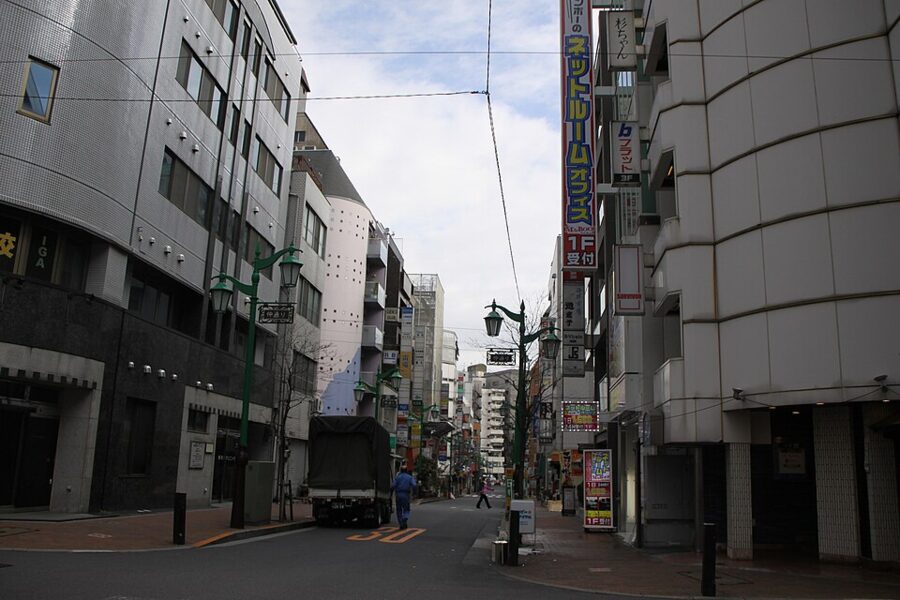
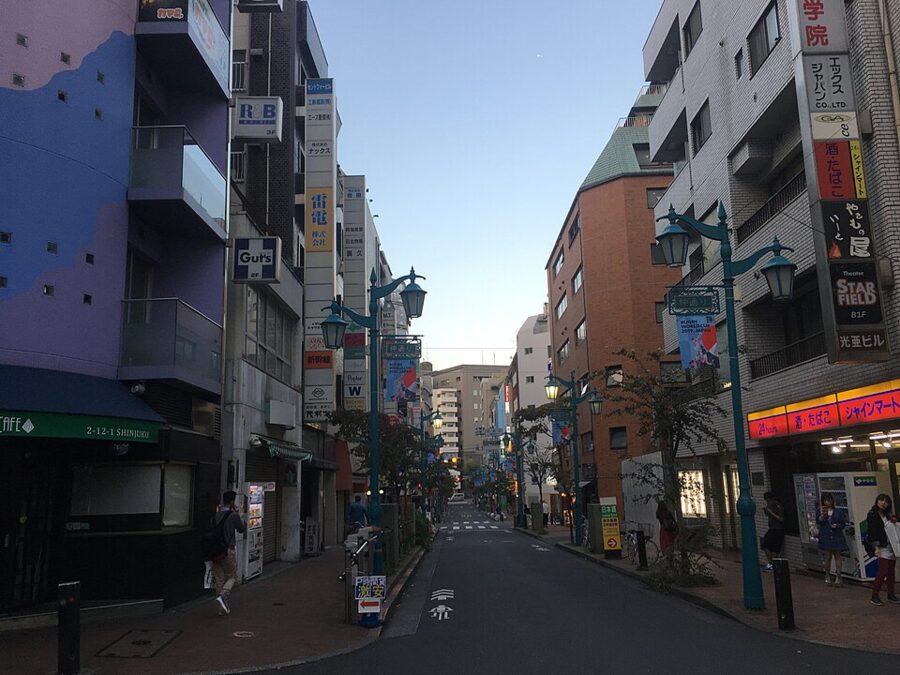
Shinjuku has more nightlife packed around one station than any other part of the city, and it splits cleanly by exit. The West Exit leads to Omoide Yokocho. The East Exit leads to Kabukicho and, two blocks east of it, Golden Gai. Shinjuku Ni-chome is a ten-minute walk farther east, nearest to Shinjuku-sanchome Station.

Golden Gai (ゴールデン街)
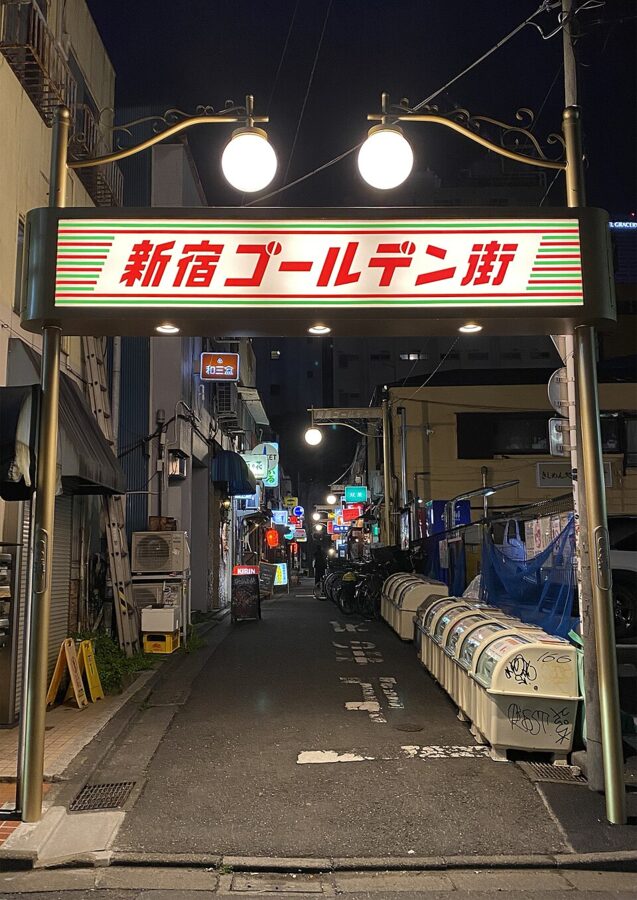
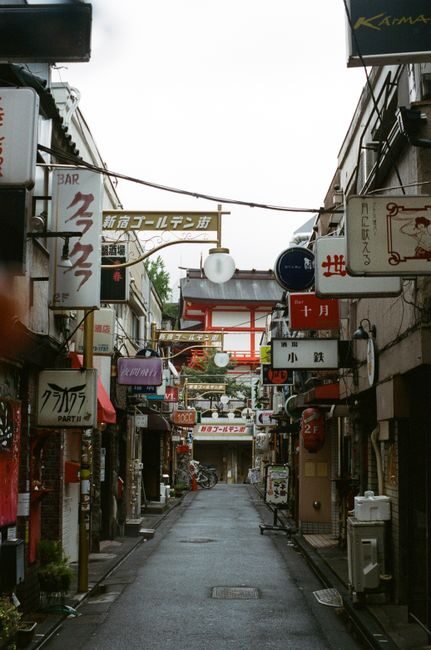
About 280 bars on six narrow lanes, most with room for five to ten people. The bar association dates the block to 1947, when it began as a postwar black market, and some bars have been open for 45 or 50 years; others opened a year or two ago. GO TOKYO’s page on Golden Gai notes that most open around 20:00, so an early start here means standing in an empty lane.
The lanes are private land, managed by two shopkeepers’ associations and the land cooperative, and they have house rules. No smoking in the street (the buildings are old wooden row houses). No walking around with a drink or taking glasses outside. No groups sitting in the lane making noise.
Photography needs permission too. Under the association’s filming rules, even a close-up of the street or a sign counts, and commercial shoots pay by the hour.
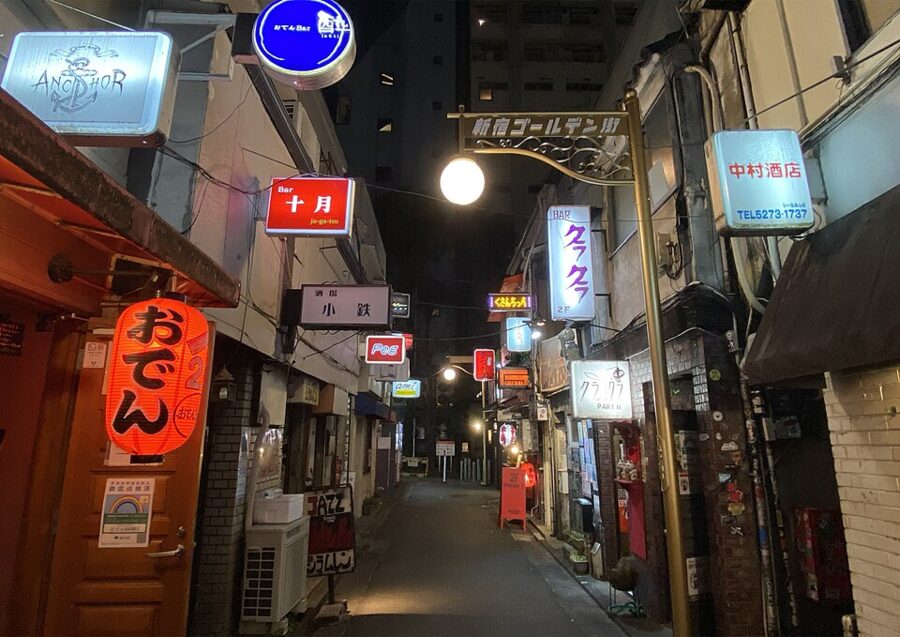

The other shopkeepers’ association, Shinjuku Sanko, posts the same warning on its own site: the whole area is private road and shooting it needs permission. That rule is the most broken one in the district. Breaking it is the quickest way to lose a seat at the counter.
How to choose a bar: look for a posted price, a door you can see into, and a sign that does not say members only. Many bars are themed (film, punk, horror, a particular band) and the theme is the conversation. Go in twos or threes; the association asks visitors to avoid big groups, because a party of six fills the bar and the regulars leave. It is a district that rewards staying for one drink, paying, and moving on.

Omoide Yokocho (思い出横丁)
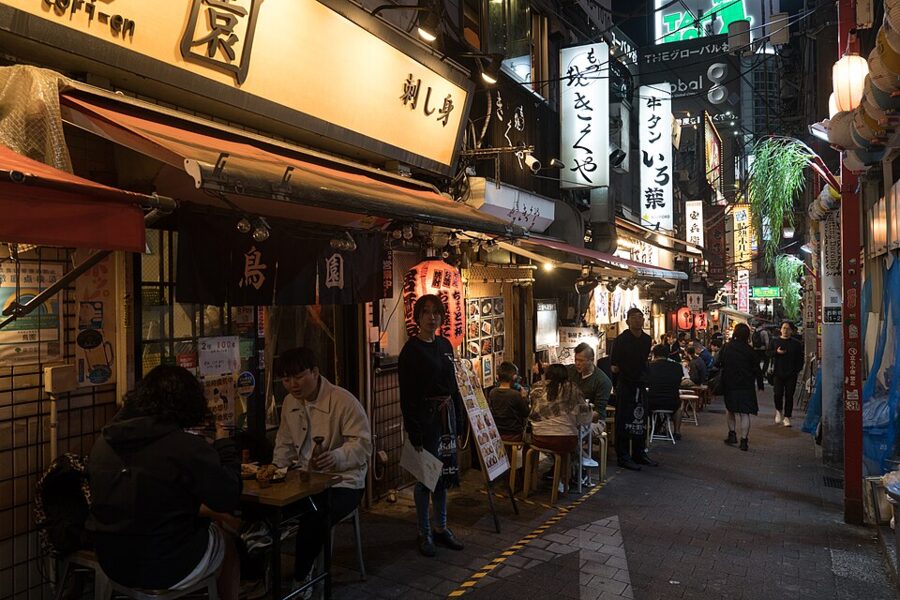
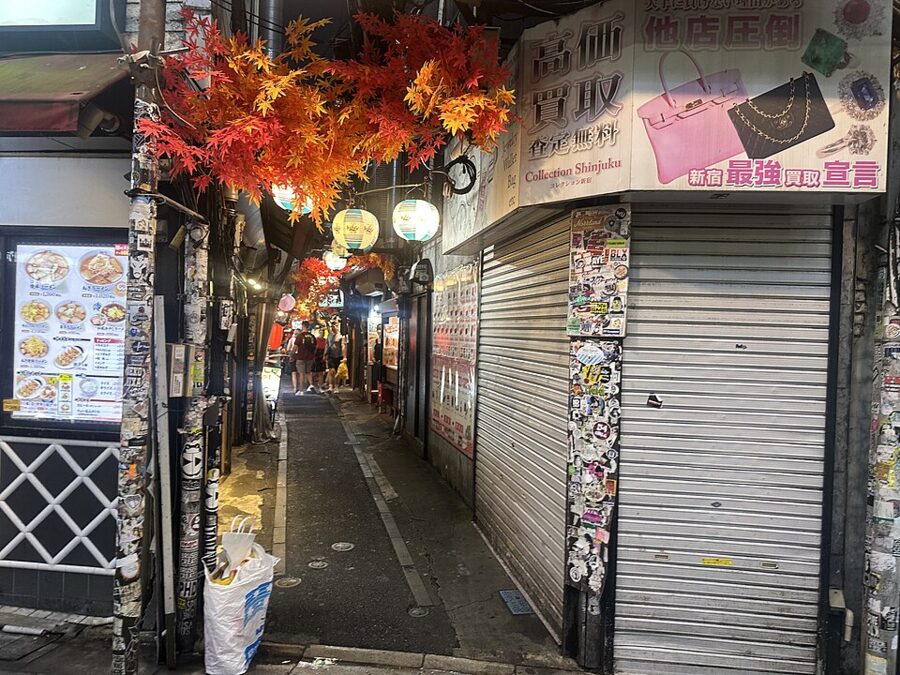
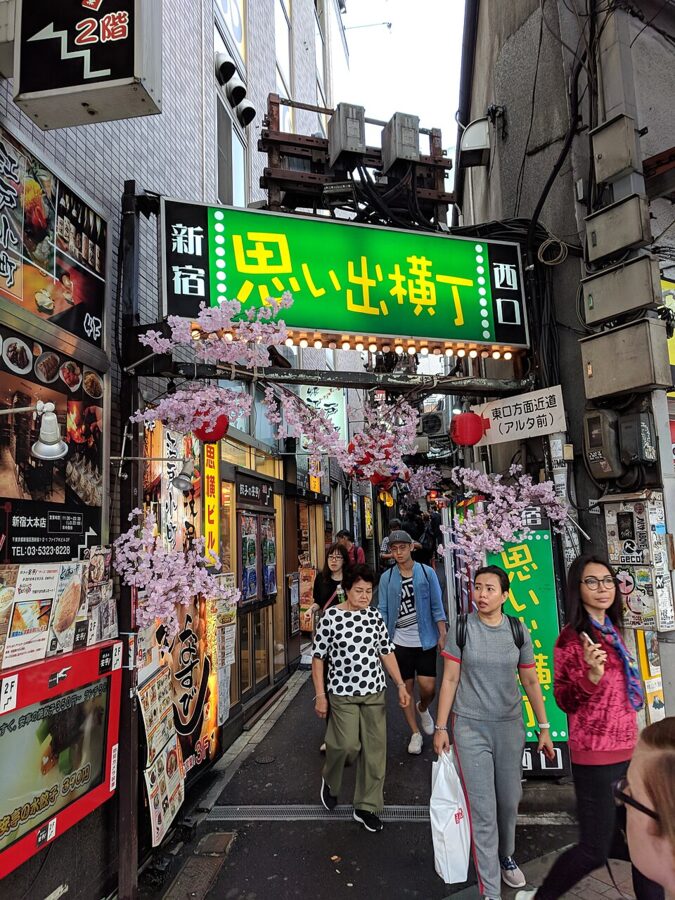
On the other side of the tracks, two minutes from the West Exit, Omoide Yokocho is the smoke and the skewers. The street’s own association counts about 60 eateries, mostly motsuyaki (grilled offal) and yakitori counters, among some 80 businesses on roughly 630 tsubo of land, about 2,100 square meters. It grew out of the open-air stalls that sprang up on burned ground after the war.
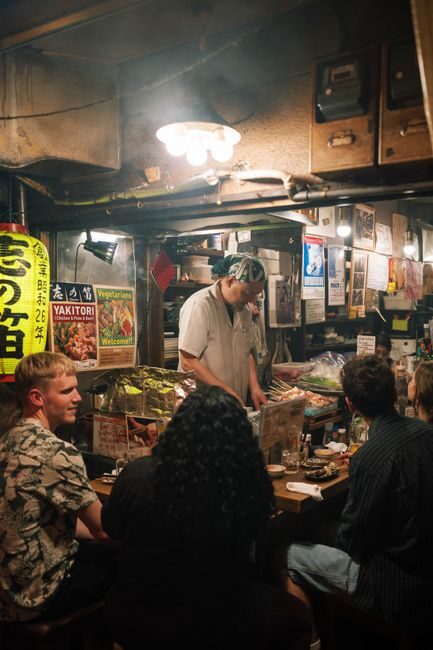
Seats here are counter stools facing the grill, the walls are close, and you will smell of charcoal afterward. Food is the point. It is the best place in Shinjuku to start an evening with dinner and two beers for not much money, and a poor place to linger: people are waiting for your stool.


Kabukicho (歌舞伎町)
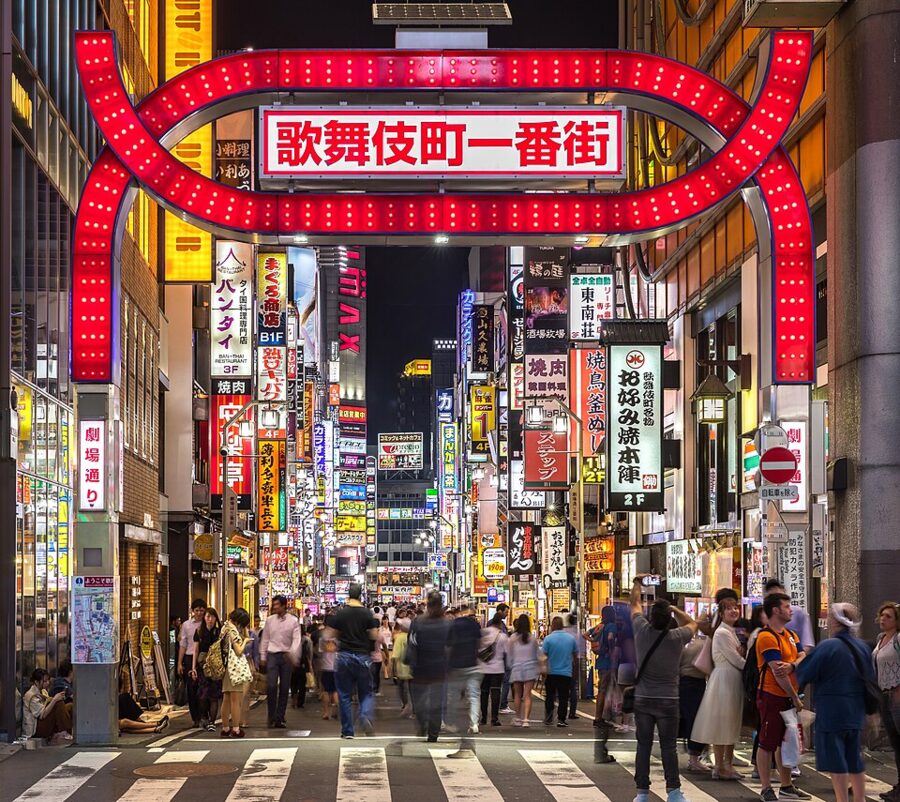
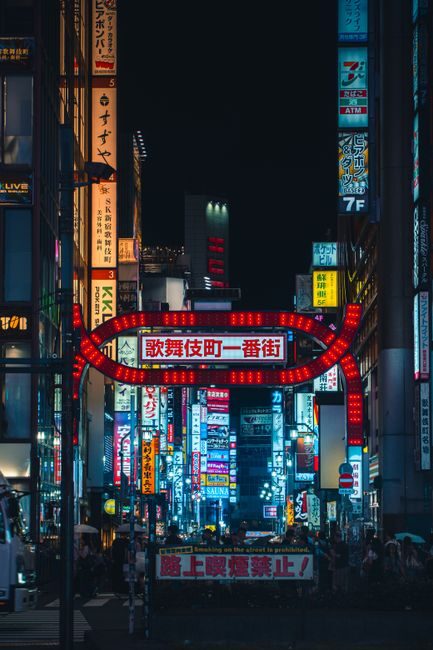
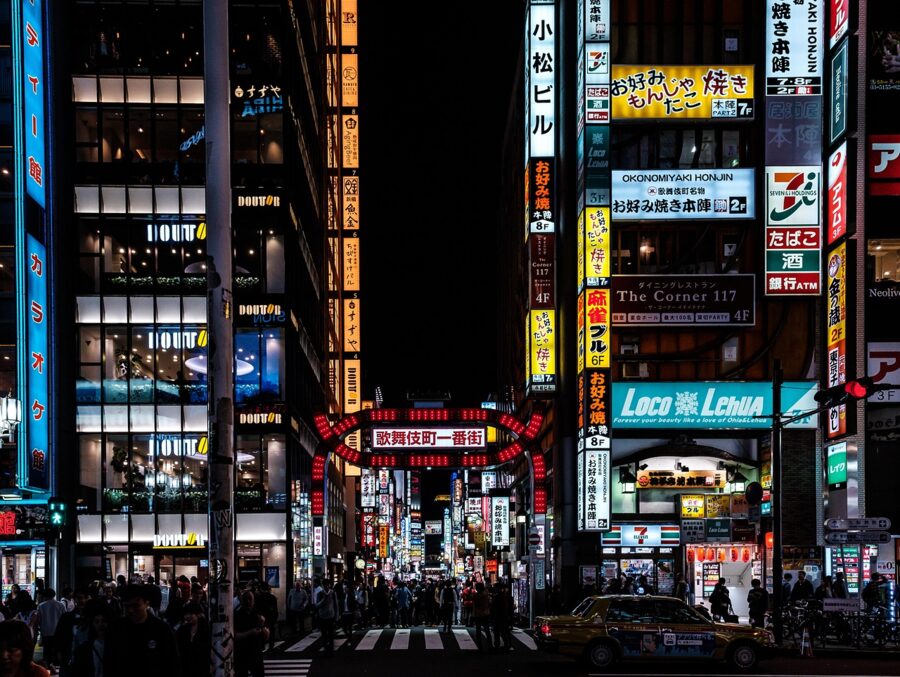
Kabukicho is Shinjuku’s entertainment district: cinemas, the Tokyu Kabukicho Tower, karaoke, ramen, and alongside them host and hostess clubs, girls’ bars and the sex industry. It is also the area the Metropolitan Police Department names first on its list of what makes nightlife districts unsafe: aggressive touts who lead customers to overpriced bars, illegal casinos and unlicensed sex businesses.
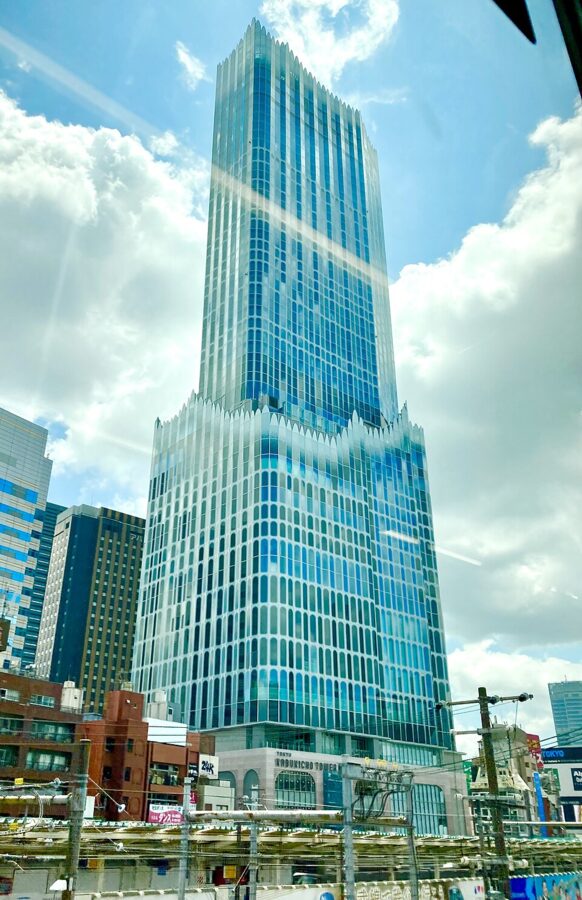
The tower is the useful part for a night out. Tokyu Kabukicho Tower opened on April 14, 2023, 48 stories above the old Milano-za cinema site, with Zepp Shinjuku in its basement floors (a live hall for up to about 1,500 standing) and ZEROTOKYO, a club of three floors and five areas, sharing those basement levels late at night. The tower’s own event listings show ZEROTOKYO nights running through late November 2026.

Walking through Kabukicho at night is fine. The risk starts when you let someone walk you somewhere.
Shinjuku City’s ordinance against touting, in force since September 2013 and toughened in April 2016, bans touting for izakaya and karaoke as well as for sex businesses, and since June 2016 the ward can publish names and fine those who ignore its warnings. Touts still work the main streets. Anyone who approaches you in English with a menu, a free drink or a cheap all-you-can-drink deal is the problem, not the solution.
Shinjuku Ni-chome (新宿二丁目)
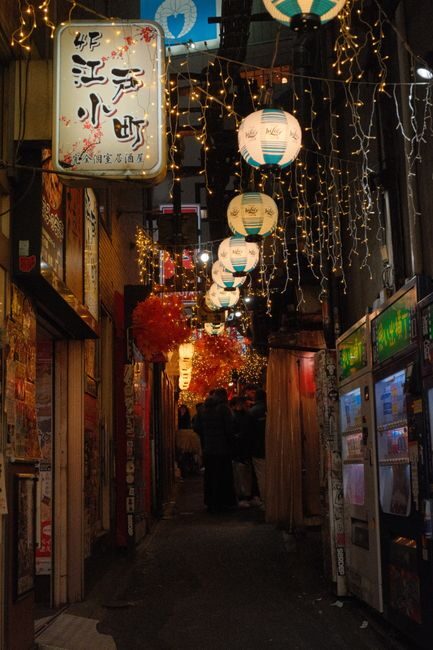
Ni-chome is one of the world’s best-known gay districts, a few blocks of small bars clustered around Naka-dori, the street that runs between Yasukuni-dori and Shinjuku-dori. Gay bars began gathering here in the 1960s, and the district is a dense cluster of them, most tiny, many with a narrow crowd (by age, by type, by language). The UK government’s travel advice for Japan names it as Tokyo’s best-known LGBT+ area.
Some bars welcome everyone, some are men only, and some are for regulars. Bars that welcome foreign customers usually say so in English at the door. As in Golden Gai, expect a seat charge, keep the phone camera away, and treat the street itself as a place people live: there are apartments above the bars.


Shibuya and Ebisu
Shibuya’s night is younger and louder than Shinjuku’s, and Shibuya is the ward that has gone furthest in writing drinking rules into law. Under Shibuya City’s ordinance on the area around Shibuya Station, amended from October 1, 2024, drinking on the street, in parks or in any public place around the station is banned every night of the year from 18:00 to 05:00, over a wider area than before. (The wards call themselves “City” in English; the ward office is Shibuya City Office.)
The rule is aimed squarely at the convenience-store-beer crowd on the Hachiko side. Drink inside: the ban covers the street, not the bars. The ward added a touting ordinance from April 1, 2025, covering roughly 700 m around Shibuya Station and 400 m around Ebisu Station, with a ¥50,000 fine for touts who ignore a warning, and for the business that employs them.
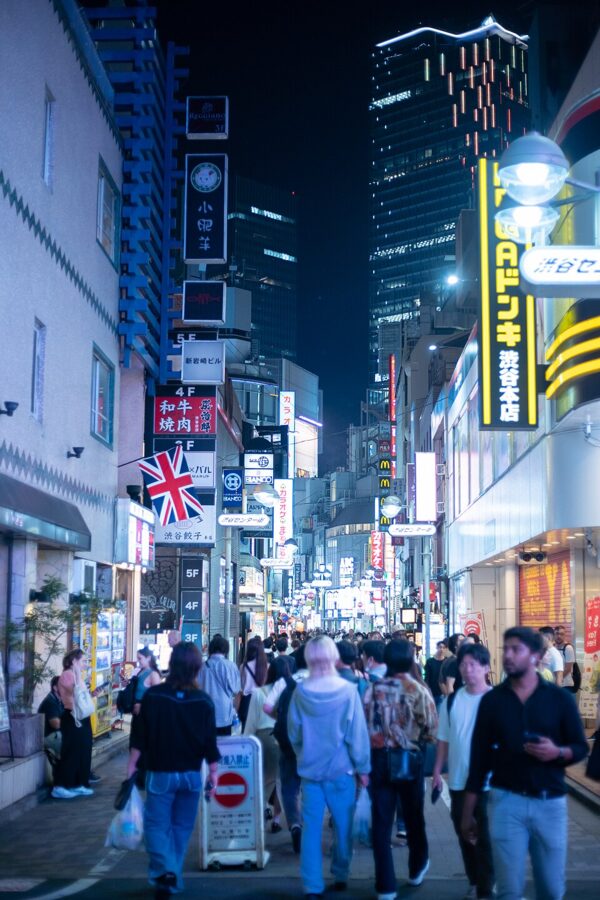

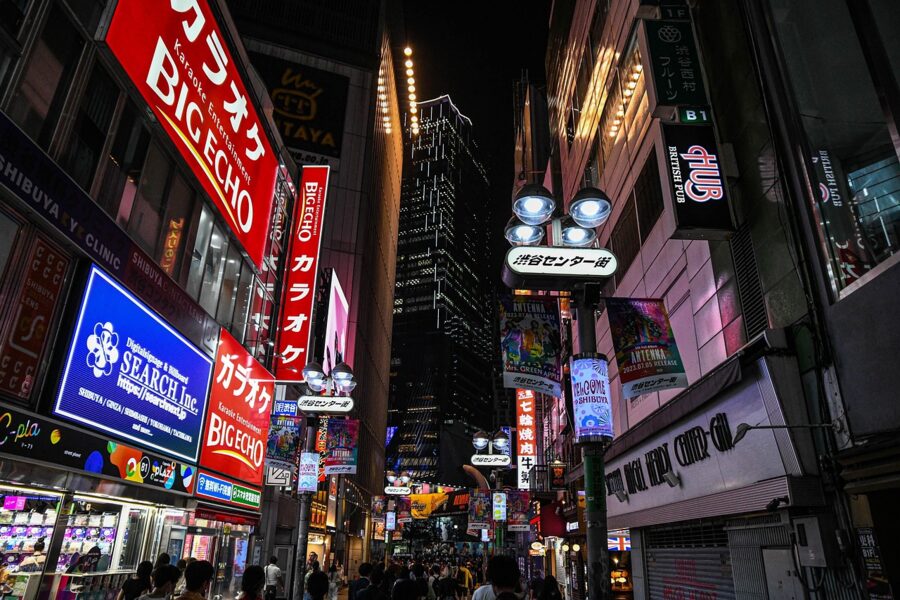
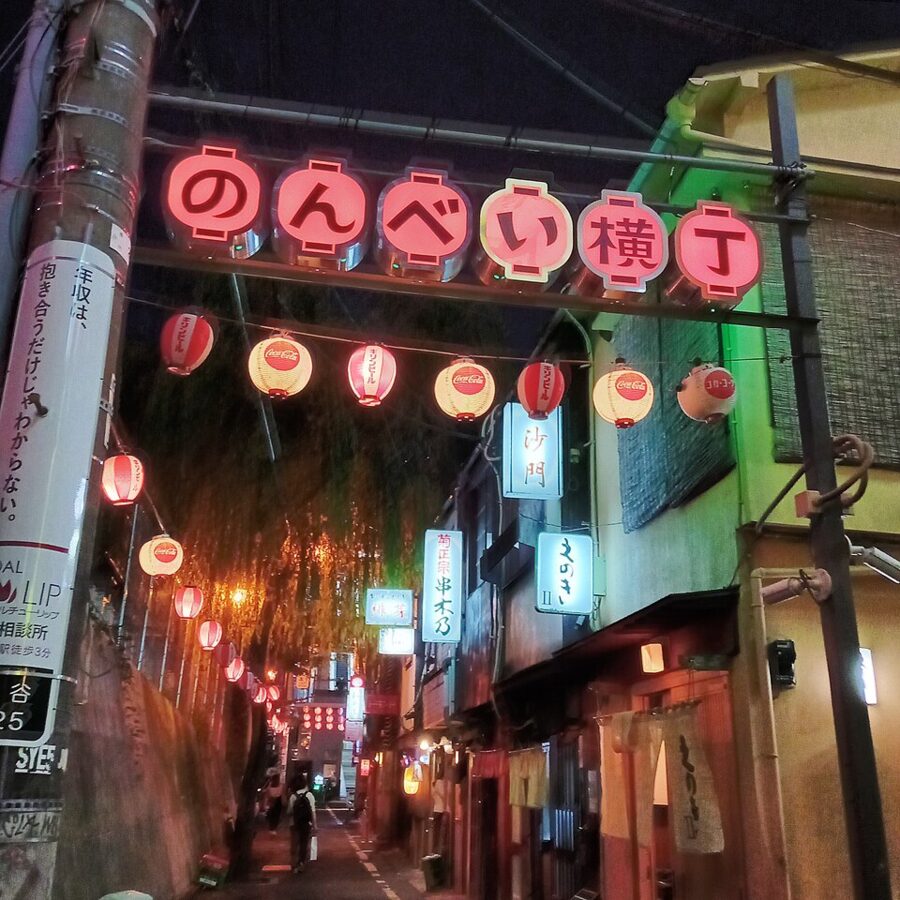
Center Gai is the crowd: chain izakaya, karaoke towers, fast food and teenagers until the last train. Nonbei Yokocho (のんべい横丁), the drinkers’ alley along the JR tracks a few minutes north of the Hachiko Exit, is the opposite, a short alley of bars so small that a party of four is a crowd. Dogenzaka climbs from the station toward Maruyamacho, where the clubs are, among them WOMB, whose event nights run from about 21:00 to 04:30. Shibuya Yokocho, the food-stall hall at Miyashita Park, is the easy option if your group cannot agree on anything.
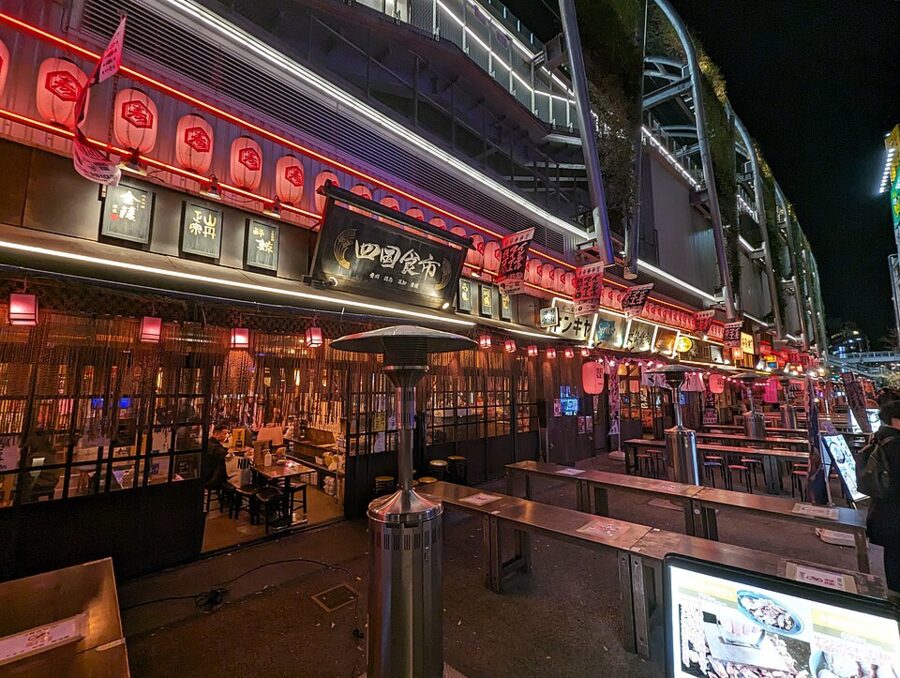
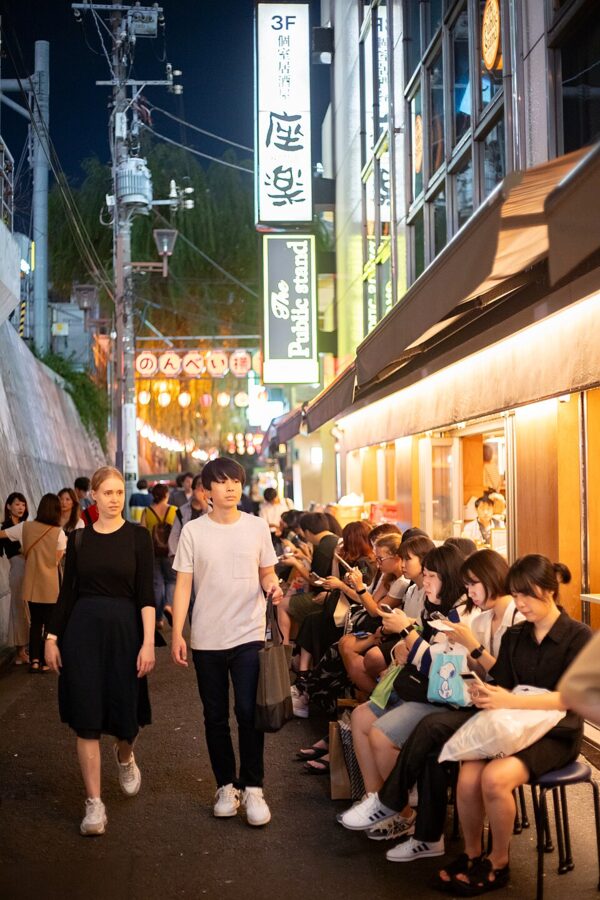

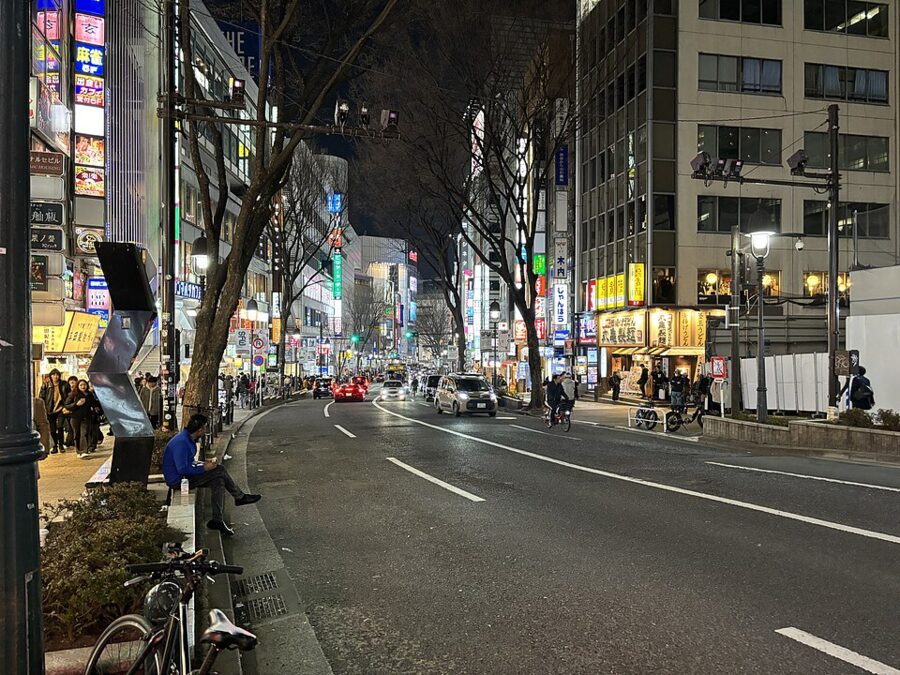

Ebisu, one stop south on the Yamanote Line, is the grown-up version. Ebisu Yokocho, a covered alley of small counters in a former shopping arcade two minutes from Ebisu Station’s East Exit, is dozens of small counters under one roof. Around it are wine bars, standing bars and quiet cocktail counters that suit a Friday better than a club. The Hibiya Line runs from Ebisu toward Naka-meguro until 00:34.
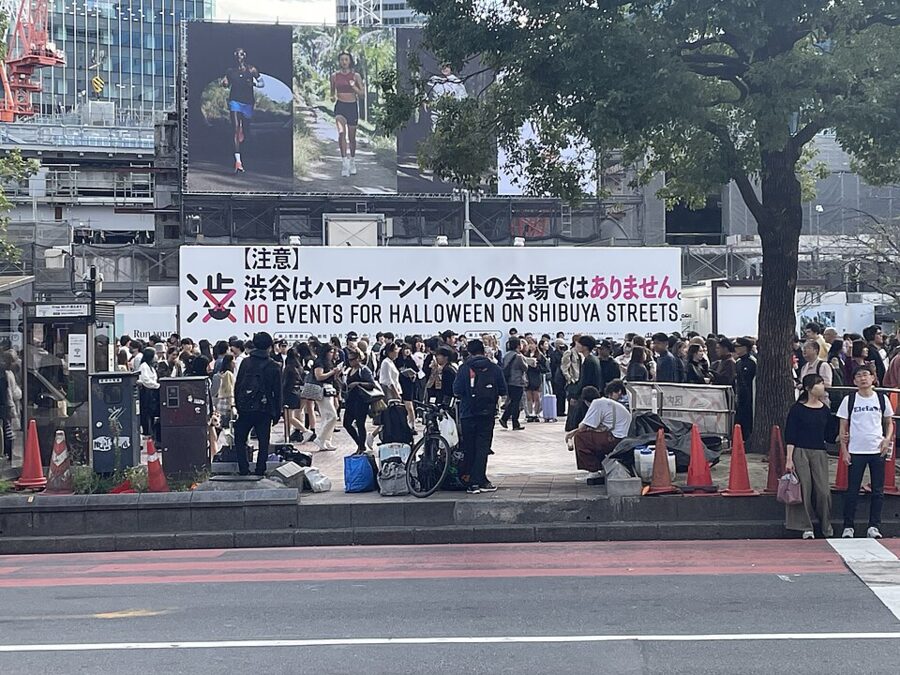
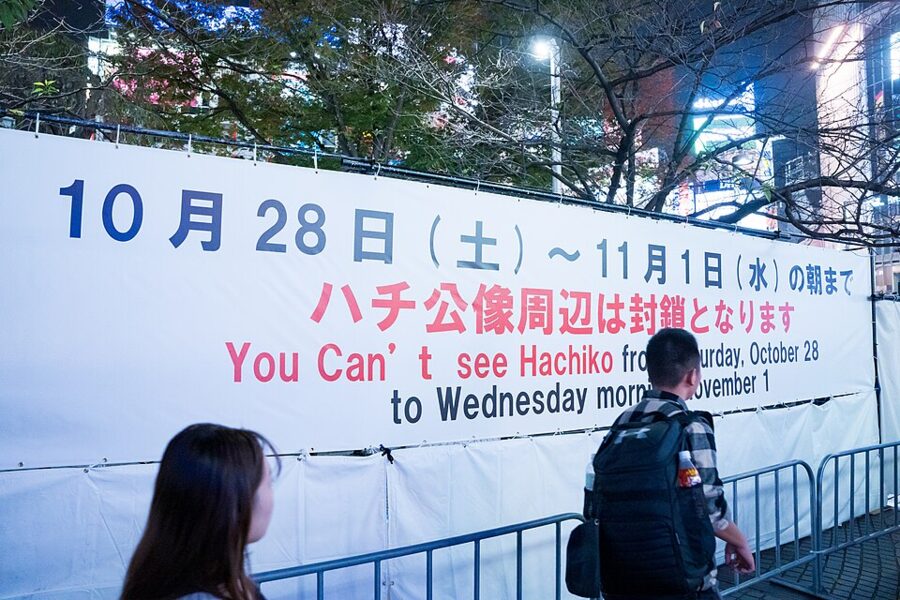
Halloween is when Shibuya closes its doors. For 2026, the ward fenced off the Hachiko statue from 06:00 on October 30 until the morning of November 1 and set up press zones on Halloween night, according to its press release of October 21, 2026, and the year-round drinking ban covered the rest. Do not plan a Halloween night around the scramble crossing. More on the district itself, day and night, is in the Shibuya guide.


Roppongi and Nishi-Azabu
GO TOKYO describes Roppongi as two places: the museums, the expensive restaurants and the towers on one side, and one of the city’s rowdiest party districts on the other. The second Roppongi lives around the crossing of Gaien-higashi-dori and Roppongi-dori, and it is where most of the big clubs and late bars are. V2 TOKYO, one of the large clubs, posts event nights that run from 21:00 to 05:00, with door policies (women free, men given a drink ticket that night) that change by event, so check its schedule for the night you go.
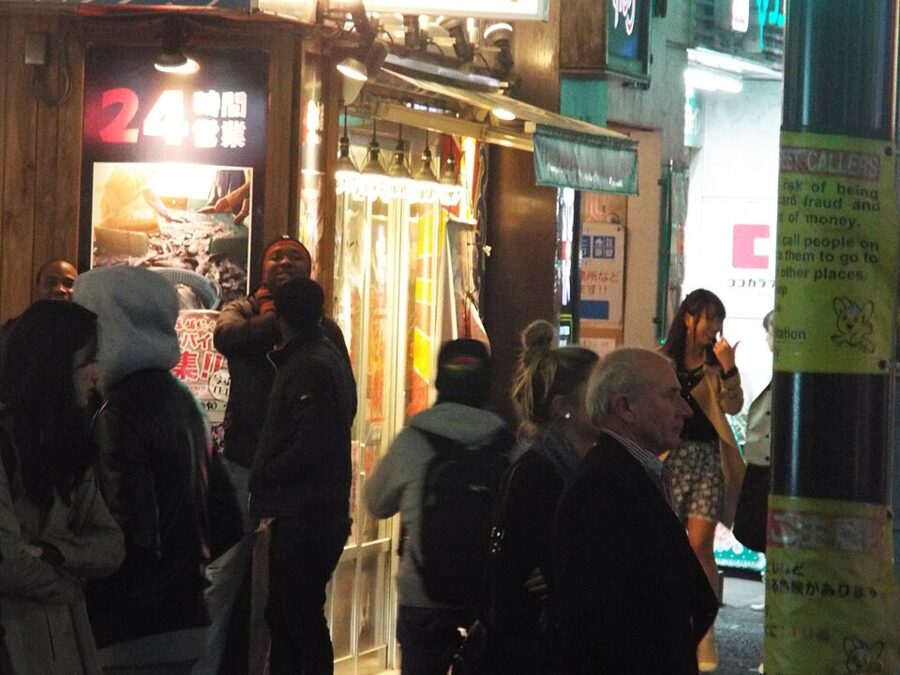

It is also the district with the most warnings. The UK Foreign Office reports increased cases of drink spiking and credit card fraud, with victims waking with no memory and large bills charged to their cards, and lists Kabukicho, Roppongi, Shibuya and Ikebukuro as the areas Japanese police consider high risk. Its advice is to see a menu with prices before entering a bar, keep track of what you order, and confirm a club’s admission price at the door.
The Metropolitan Police Department describes the same pattern in Japanese: a tout who catches you in a good mood, a first drink that is far stronger than it should be, and a card charged while you sleep. The fixes are dull and they work.
Choose your own bars. Never follow someone who approaches you on the street. Do not leave a drink unattended, and do not accept one from a stranger.
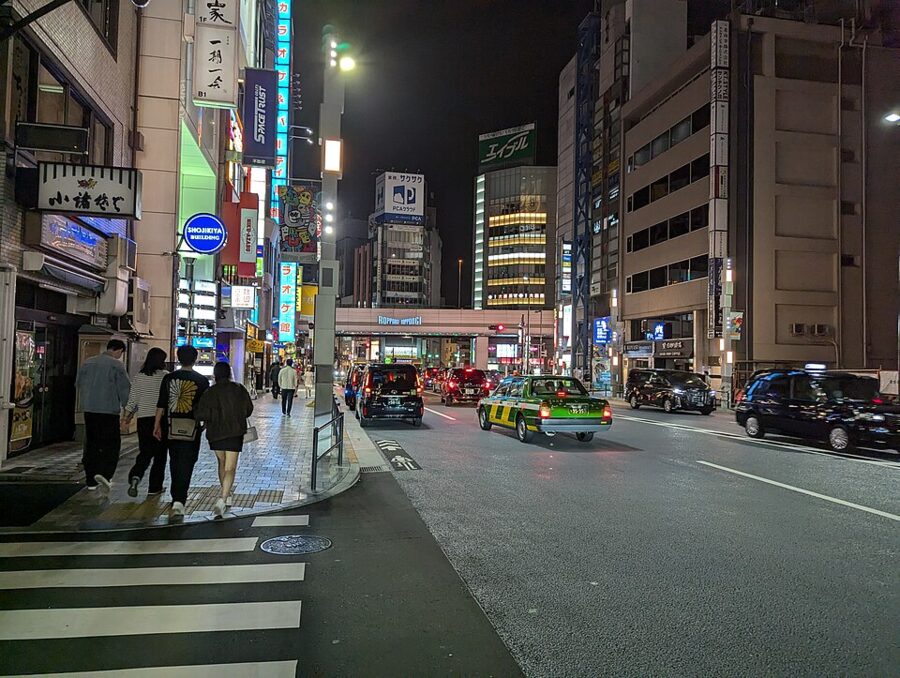
Nishi-Azabu, about ten minutes’ walk down Roppongi-dori toward Shibuya, is where the quieter bars are: basement counters, wine bars, late kitchens, and none of the street touting of the crossing. It has no station of its own, which keeps it calm and means a walk back to Roppongi or a short taxi ride at the end. Pick by what is posted at the door: a price list, a seat charge, a view inside.

The other nights out
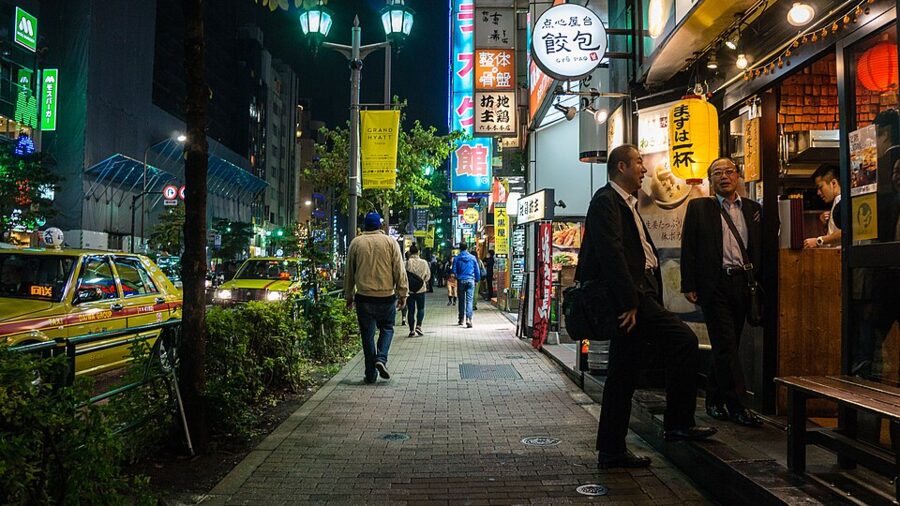
Most of Tokyo drinks somewhere other than the three famous districts. These are the places people go after work, and they are cheaper, calmer and closer to the trains.
Shimbashi and Yurakucho, under the tracks
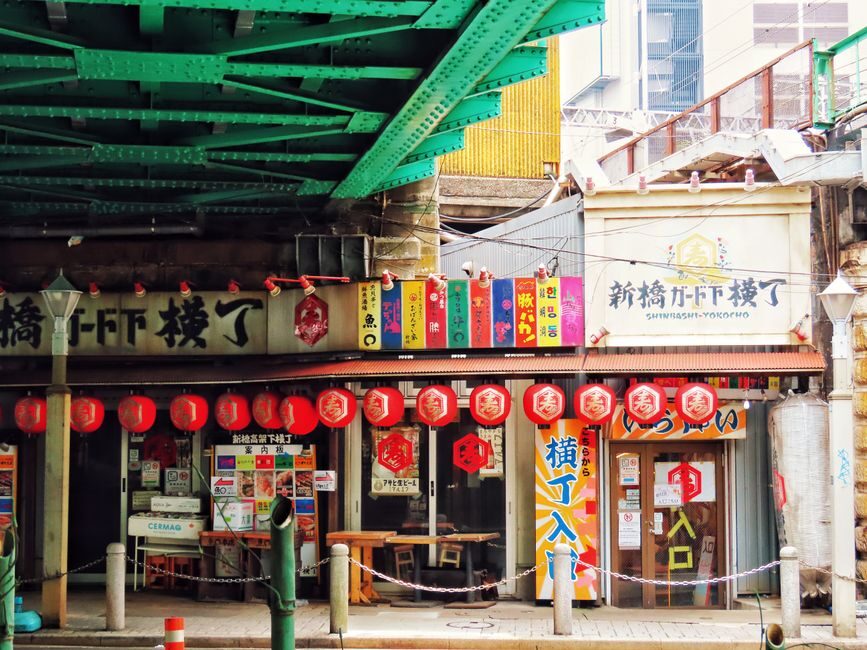
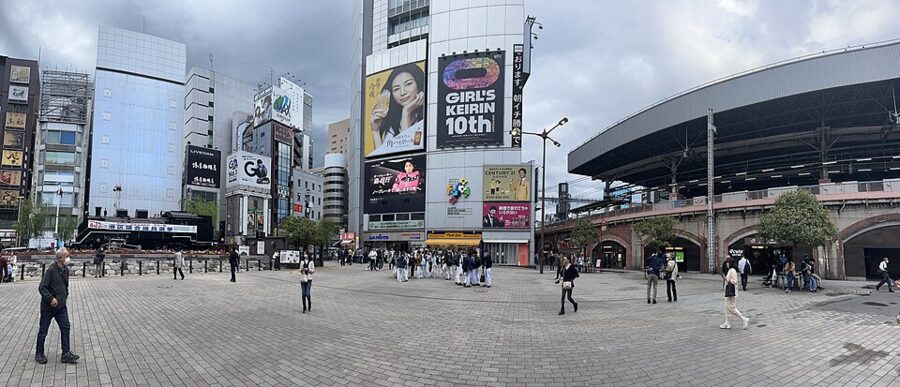
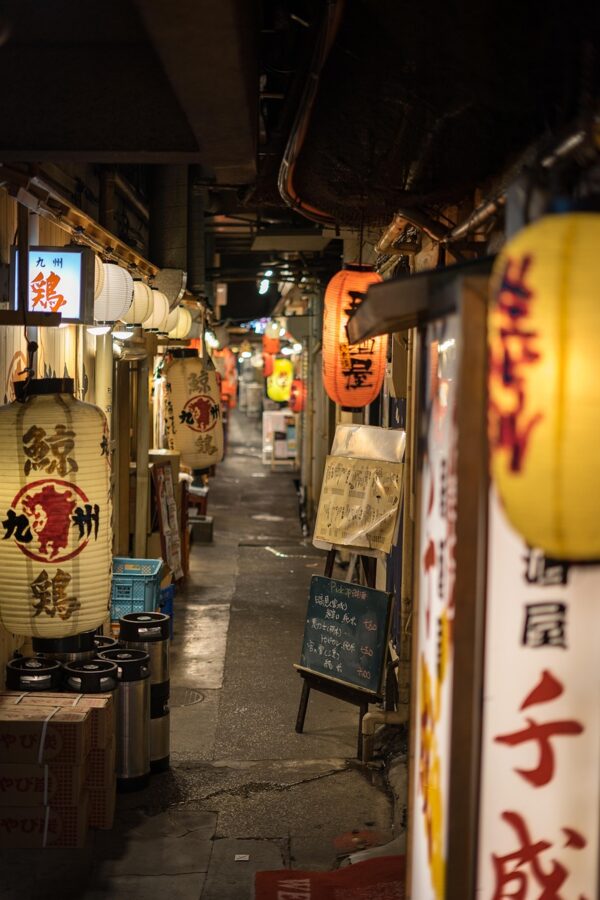
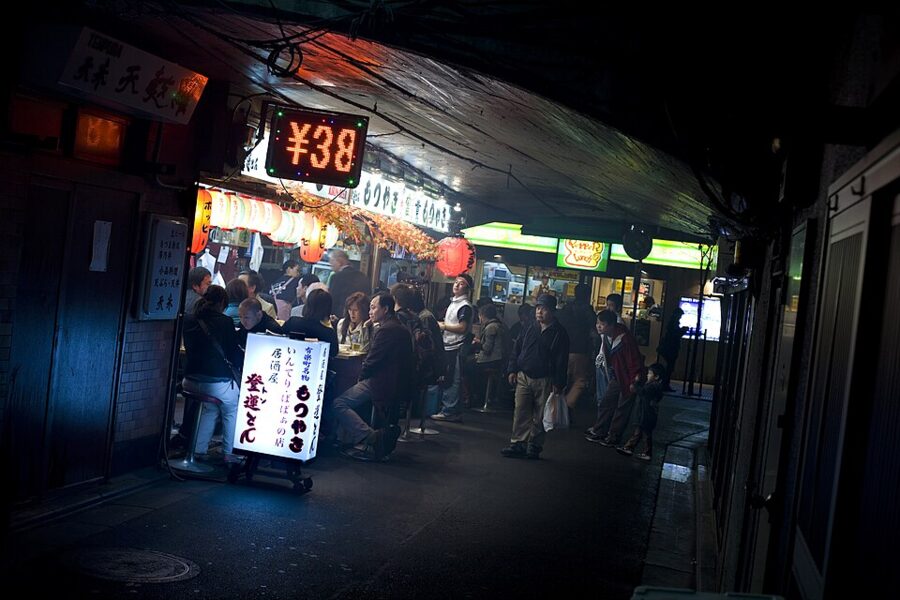
The brick viaduct that carries JR trains between Yurakucho and Shimbashi has izakaya tucked into its arches, and Shimbashi itself, outside the station’s SL Square, is the office-worker drinking district: standing bars, yakitori, cheap highballs, and loud groups in suits until the last train. It is a weeknight place, and noticeably quieter at the weekend.
Shimbashi has touts too. The Metropolitan Police Department recorded 338 arrests for touting and street scouting in Tokyo in 2025, in figures updated on October 27, 2026, and its examples include touts who stand outside a well-known restaurant pretending to be staff, tell people with a reservation the place is full, and lead them to an unrelated padded-bill bar instead. Walk past.


Ueno and Ameyoko
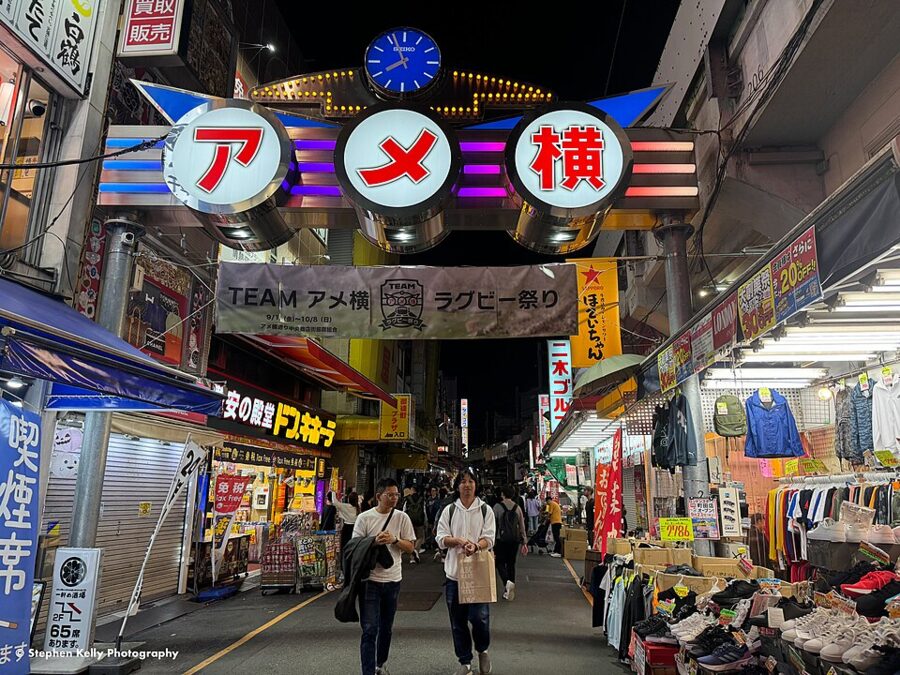
Ameyoko is a market street of about 500 shops and stalls running roughly 500 m along the tracks between Ueno and Okachimachi, according to GO TOKYO’s page on Ameyoko. By evening the dried-fish and sweets stalls give way to open-front izakaya with tables on the pavement, plastic stools and beer from early afternoon. It is the cheapest outdoor-feeling night in central Tokyo, a short walk from Ueno Station’s Shinobazu Exit.
Ueno is an early night. The inner-loop Yamanote train that gets to Shinjuku at 00:41 leaves Ueno at 00:14, so treat Ameyoko as dinner and a few drinks, not the late night.

Koenji
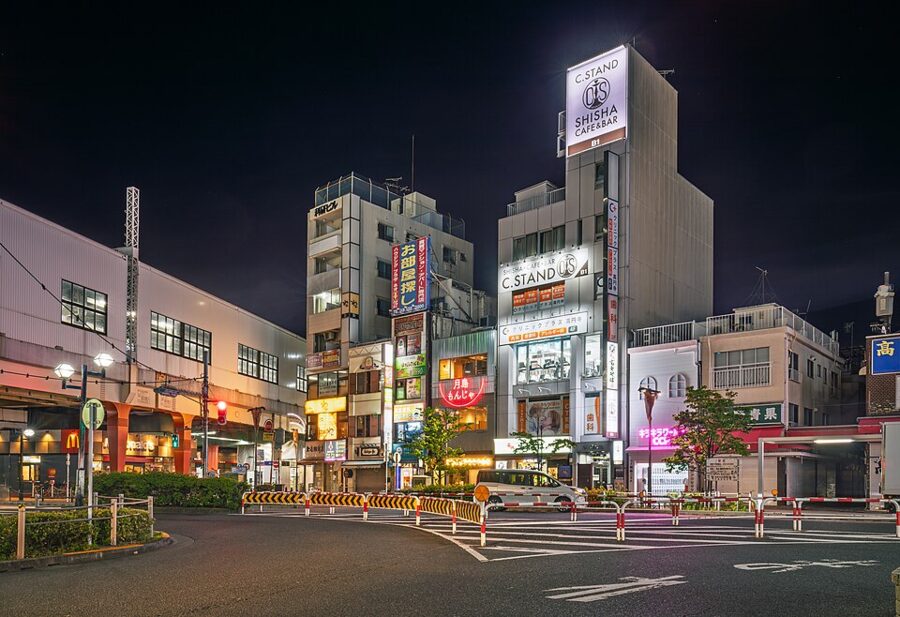
Koenji is west Tokyo’s bar town: small izakaya, record-shop bars, punk and rock live houses, and used-clothing stores that stay open into the evening. GO TOKYO’s Koenji page puts it about 15 minutes from Shinjuku on the JR Chuo Line express, and Shin-Koenji on the Marunouchi Line is 15 minutes’ walk from the center. It is the place to go if you want a night that costs half what Shibuya does and nobody is trying to sell you anything.

Ginza
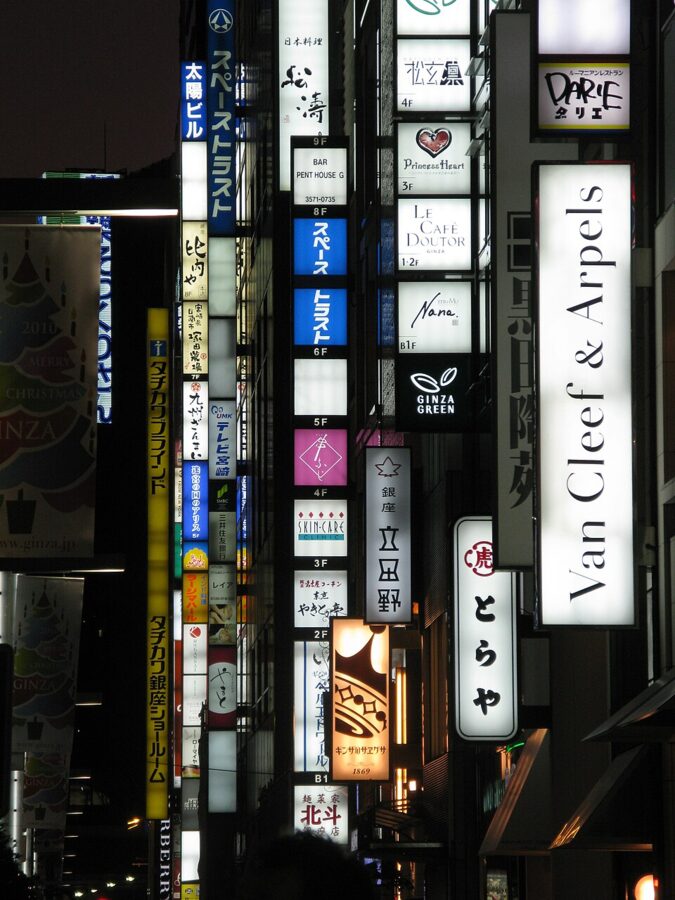
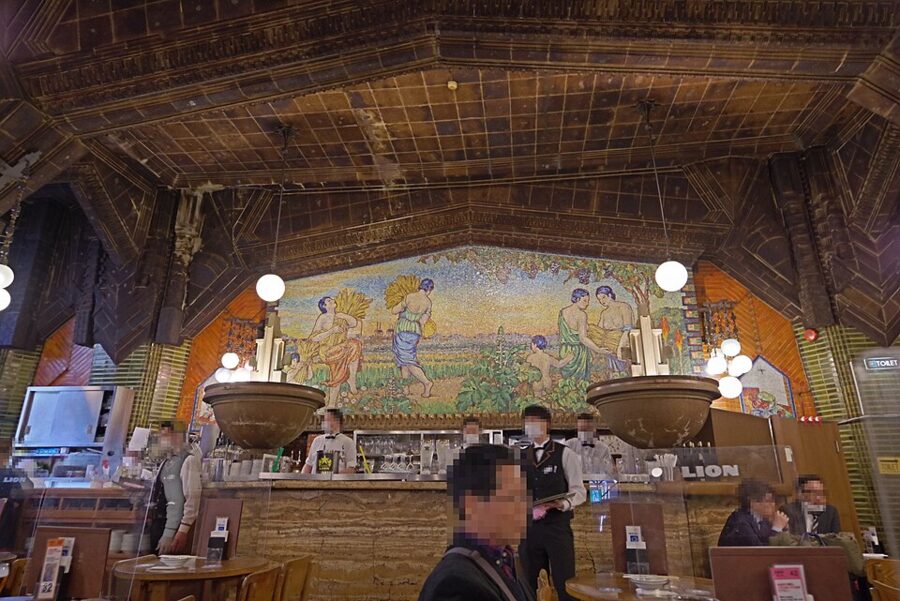
Ginza is the expensive end: hotel bars, cocktail counters with famous bartenders, and members-only clubs that are not for walk-ins. The way in for most people is the classic bar with a posted cover charge, or a beer hall. Beer Hall Lion Ginza 7-chome opened on April 8, 1934 on the ground floor of the old Dai Nippon Beer headquarters and is the oldest surviving beer hall in Japan, three minutes from Ginza Station and seven from JR Yurakucho or Shimbashi.
For Ginza’s cocktail bars, expect a cover charge, a small snack and prices that reflect the bartender’s reputation. The rule is the same as anywhere else in Tokyo: the posted price on the door decides it, and a door with no price is a door to walk past. The Ginza Line runs from Ginza toward Shibuya until 00:13.


Live music
Tokyo’s live houses, from basement rooms in Shimokitazawa and Koenji to halls like Zepp Shinjuku, add a compulsory drink order at the door on top of the ticket. Jazz bars and the big clubs have their own systems. That whole night out, with venues, tickets and the drink charge, is in the guide to live music in Tokyo.
Clubs and karaoke
Dancing in a club after midnight has been legal across Japan only since June 23, 2016, when the Entertainment Business Act was amended to take dance out of the definition of a regulated adult business. Clubs that serve alcohol late now hold a license as late-night entertainment venues. That history explains the paperwork at the door.
Getting in
The drinking age is 20, and clubs check. ZEROTOKYO’s FAQ says anyone under 20 is refused at regular club nights and that photo ID is mandatory at the entrance: a driver’s license or a passport, which for most visitors means the passport. Carry the document itself.
Dress codes are usually loose. ZEROTOKYO says it has none, but staff can refuse anyone dressed in a way they think unsuitable; the Roppongi clubs with bottle-service tables are stricter than the Shibuya ones. Cameras and recording equipment go into coin lockers outside at ZEROTOKYO. Entry prices vary by event and are posted on each club’s event page, sometimes with a drink ticket included.
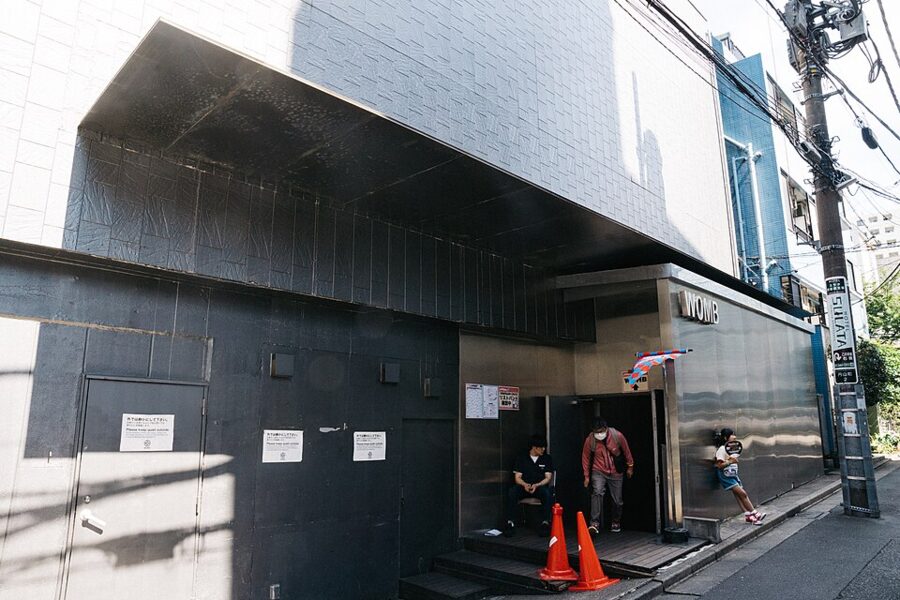

The big clubs in late 2026 with event schedules on their own sites: WOMB in Maruyamacho, Shibuya; ZEROTOKYO in Tokyu Kabukicho Tower, Shinjuku; V2 TOKYO in Roppongi. Clubs close and change names often. If a club has no events posted for this month on its own site, assume it is not open.
Karaoke
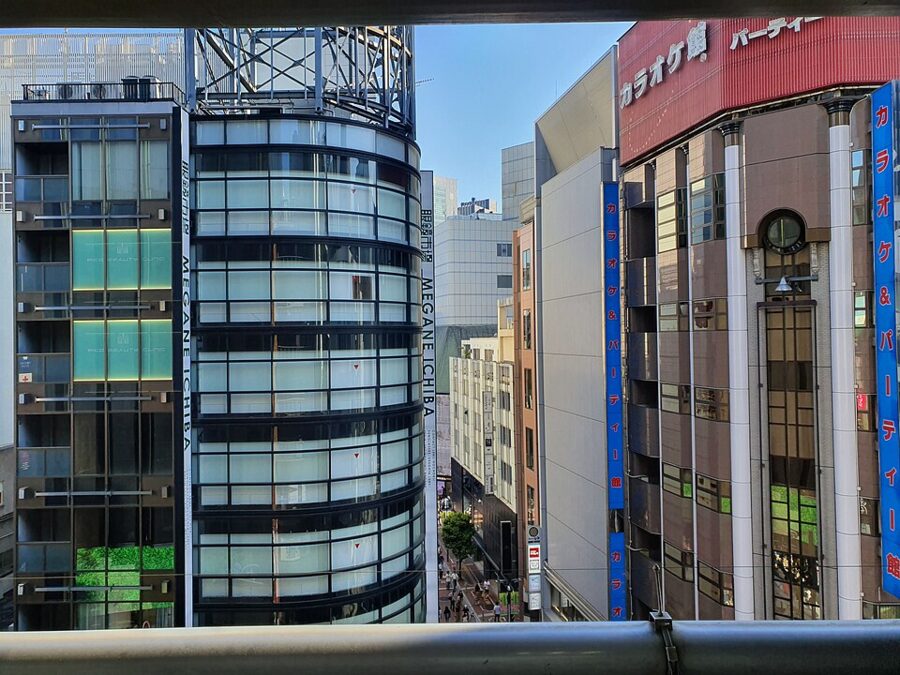
Karaoke in Tokyo means a private room, not a stage. The chains, such as Karaoke Kan and Big Echo, price per person by the half hour, with “free time” packages for staying until morning at some branches. Karaoke Kan’s FAQ explains its one-drink rule: at branches and times where it applies, each person orders at least one drink per visit, charged separately, not one per half hour.
Age rules apply after dark. Karaoke Kan’s general rule, set under the prefectures’ youth-protection ordinances, admits under-16s only until 18:00 and under-18s until 22:00, or 23:00 with a guardian. Big Echo’s house rules say it may ask anyone under 20 for student ID or other identification, and refuses to serve them alcohol. Karaoke Kan turns away outside food and drink, except by arrangement for something like a birthday cake.
Rules and safety
Tokyo is safe at night by the standards of most big cities, and the rules that catch visitors are mostly about smoking, drinking outside and bills. Learn these four and you have covered most of it.
Smoking
Under the national Health Promotion Act and the Tokyo Metropolitan Government’s ordinance on secondhand smoke, any place used by two or more people is non-smoking indoors in principle, and that includes heated tobacco. The Tokyo Metropolitan Government’s English summary of the rules says smoking rooms must meet technical standards and carry signs, and that no one under 20, staff included, may enter them.
Some bars still allow smoking at the seats where they meet the legal conditions. They must say so at the entrance and in their advertising, and every restaurant and bar must post its smoking rules at the door. If you do not want to drink in smoke, read the sticker before you go in; small old bars are the likeliest to allow it.
On the street it is ward by ward.
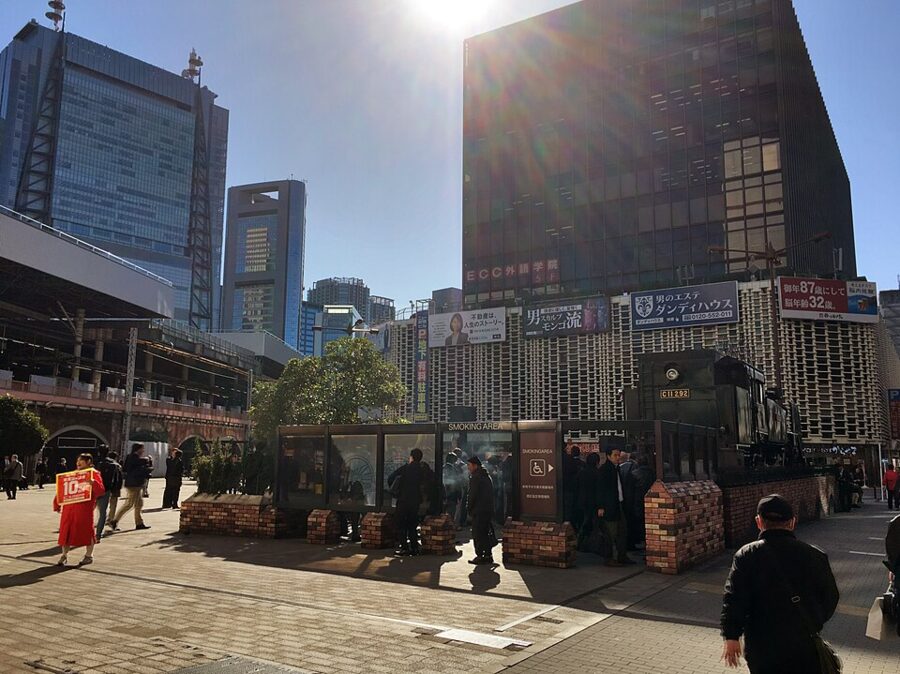
Shinjuku City bans smoking on the street across the whole ward, cigarettes and heated tobacco alike, under its ordinance on litter and street smoking. The ward runs public smoking areas at the East Exit plaza, the West Exit rotary, beside the Yasukuni-dori railway bridge in front of Seibu-Shinjuku Station, and under the overpass by the Southeast Exit. Other wards have similar rules. Smoke only where you see a marked area.


Drinking in the street
Drinking outside is not illegal in Japan in general. The exceptions are local and specific: Shibuya’s nightly 18:00–05:00 ban around the station, temporary bans on particular nights such as New Year’s Eve, and private areas like Golden Gai, where the associations ban taking glasses into the lane. Where no rule applies, take your can and your trash home with you; public bins are rare.
Touts and padded bills
A kyakuhiki (street tout) is the start of almost every padded-bill story, which is what Japanese calls bottakuri. The Metropolitan Police Department’s advice for foreign visitors, updated on May 22, 2026, warns that touts targeting foreigners are increasing, and that some lead customers to bars in league with them that demand huge bills or charge cards while the customer is drunk.
The police have published one seized price list from such a bar: a ¥400,000 “registration fee” and a 40 percent service charge, both in small print. That is why the posted price matters, and why you choose the bar yourself. If a bill is padded anyway, do not argue at the door with staff around you. Pay only what you agreed to if you can, and call the police on 110, or go to the nearest koban (police box) with the staff and settle it there.
Emergency numbers
Police: 110. Fire and ambulance: 119. For anything that is not an emergency, the Metropolitan Police Department’s consultation line is #9110, and both 110 and #9110 can handle calls in English. Lost things, lost bearings and theft all go to the koban, the small police boxes outside most big stations.
Three ways to spend a night
First trip: Shinjuku, both sides of the tracks
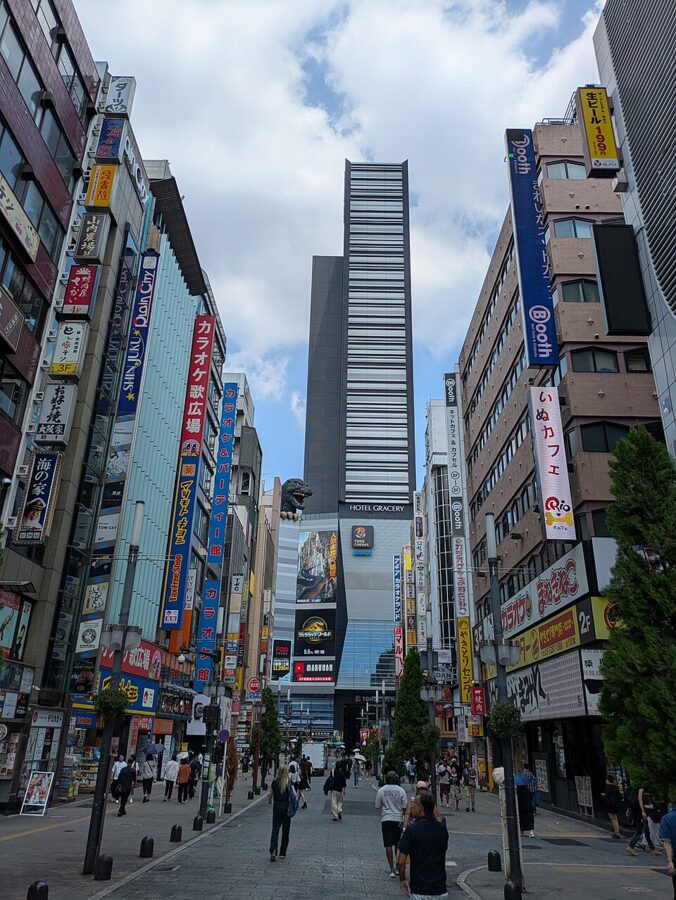
Start at Omoide Yokocho around 18:30 for skewers and a beer, two minutes from the West Exit. Walk through the station to the East Exit and up Kabukicho Central Road toward the Godzilla head, saying no to everyone who speaks to you. Cross to Golden Gai after 20:00, pick one bar with a posted charge, then a second. Leave by 00:20, and the 00:41 Yamanote train toward Shibuya or the 00:44 toward Ikebukuro is waiting.
Bar crawl: Shibuya to Ebisu
Begin at Nonbei Yokocho by the JR tracks, one drink, then a second bar in the same alley if the first had room. Walk down to the Center Gai side for food. Take the Yamanote Line one stop to Ebisu before 23:00 and finish in Ebisu Yokocho or a cocktail bar near the East Exit. From Ebisu, the last Yamanote train toward Shibuya and Shinjuku leaves at 00:30, and the Hibiya Line toward Naka-meguro at 00:34.

Club night: Shibuya or Roppongi, out at dawn
Eat late, around 22:00, then line up at the club after 23:00 with your passport in your pocket and cash or a card for the entry. Stay until the lights come up, around 04:30 at WOMB or 05:00 in Roppongi. The first Hibiya Line train from Roppongi toward Naka-meguro goes at 05:16, and the first Yamanote trains leave Shinjuku at 04:43 and 04:44.
Whichever night you pick, the last train from the first paragraph still rules it: 00:41 toward Shibuya, 00:44 toward Ikebukuro, both from Shinjuku. Catch it, or plan on the 04:43.