

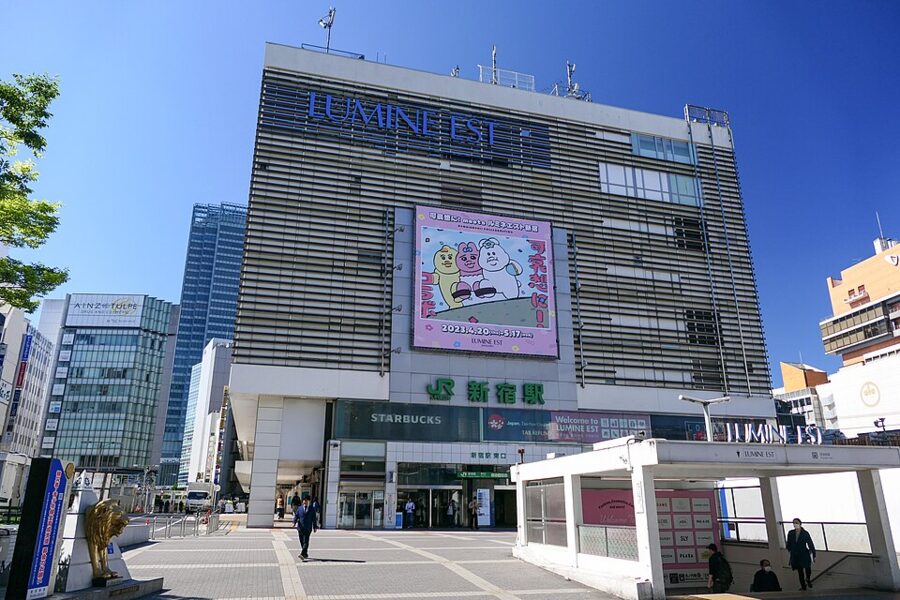
Pick your exit before the train stops at Shinjuku (新宿), because the station is wide enough that coming up on the wrong side costs a long walk underground. West Exit is for the government towers, the free observation decks and Omoide Yokocho. East Exit is for Kabukicho, the department stores, Golden Gai and the giant cat on the screen. The South and New South exits are for Shinjuku Gyoen, the highway bus terminal and the shops that sit over the tracks.
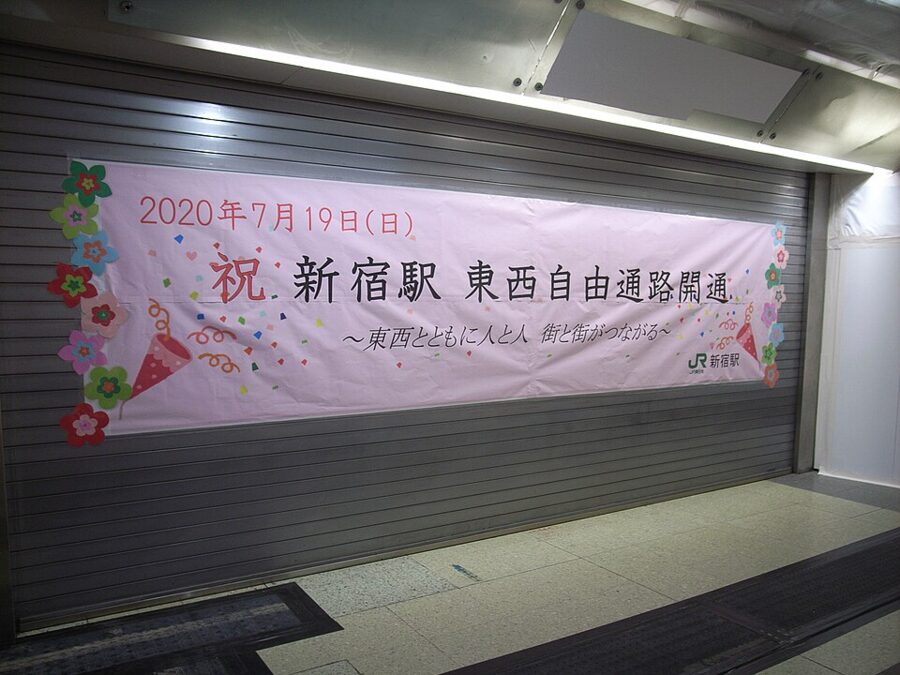
If you do come up on the wrong side, the fix is cheaper than it used to be. Since July 19, 2020 the East-West Free Passage has run under the north end of the JR platforms, so you can cross from one side to the other without a ticket and without the old detour through the Omoide Yokocho underpass. It is a short, level walk, slowest at the morning rush.

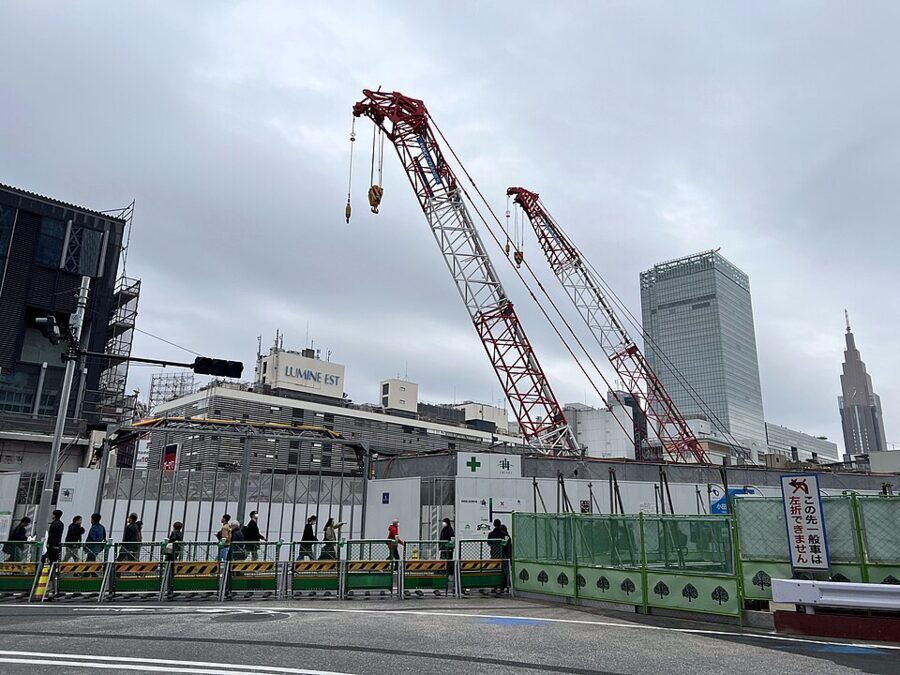
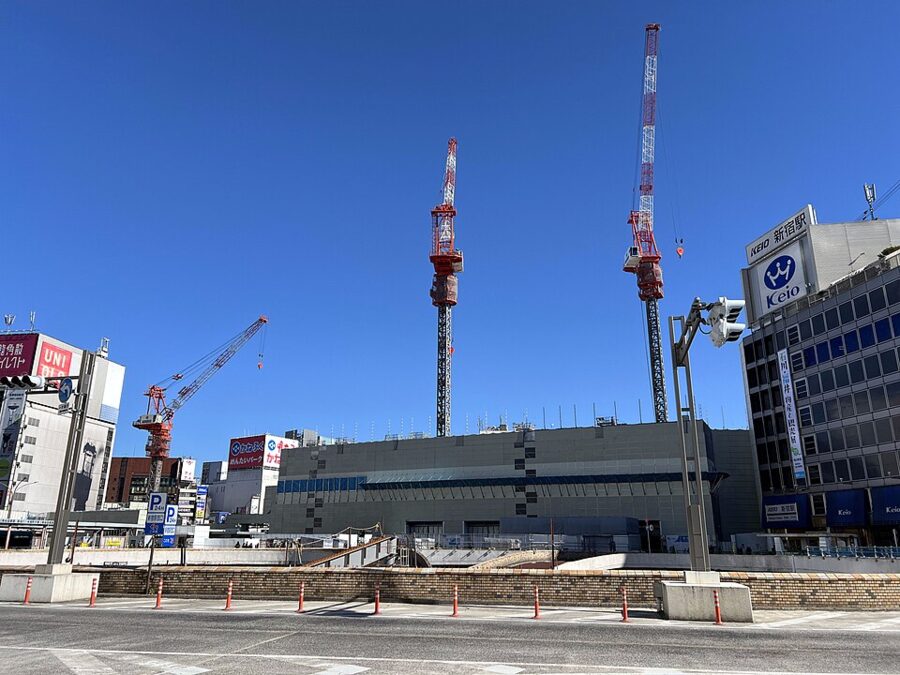
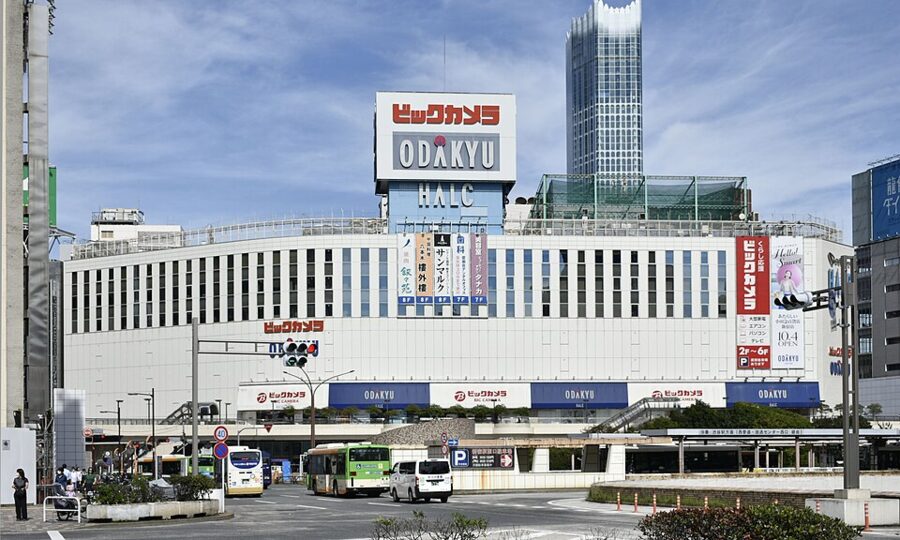
The west side is a building site, and will be for years. The Odakyu department store main building closed on October 2, 2022 and has been knocked down for a 48-story tower of about 260 meters, due in fiscal 2029, and the bus and taxi stops in the West Exit plaza have been moved several times since 2025. The rest of this guide goes side by side: the station first, then west, Shinjuku Gyoen, east, Kabukicho and Golden Gai, food, and what is one stop away.

The station: lines, exits and the way across
Shinjuku is the busiest station in the world by the count that matters to you: about 3.06 million people a day used its combined gates in fiscal 2024. Five operators share it. JR East runs the JR Yamanote Line (JY17), the orange JR Chuo Line Rapid, the yellow Chuo-Sobu local trains, the JR Saikyo Line, the Shonan-Shinjuku Line and the Narita Express. Odakyu and Keio run their own terminals on the west side, Tokyo Metro has the Marunouchi Line (M08), and Toei has the Shinjuku Line (S01, shared with the Keio New Line) and the Oedo Line.
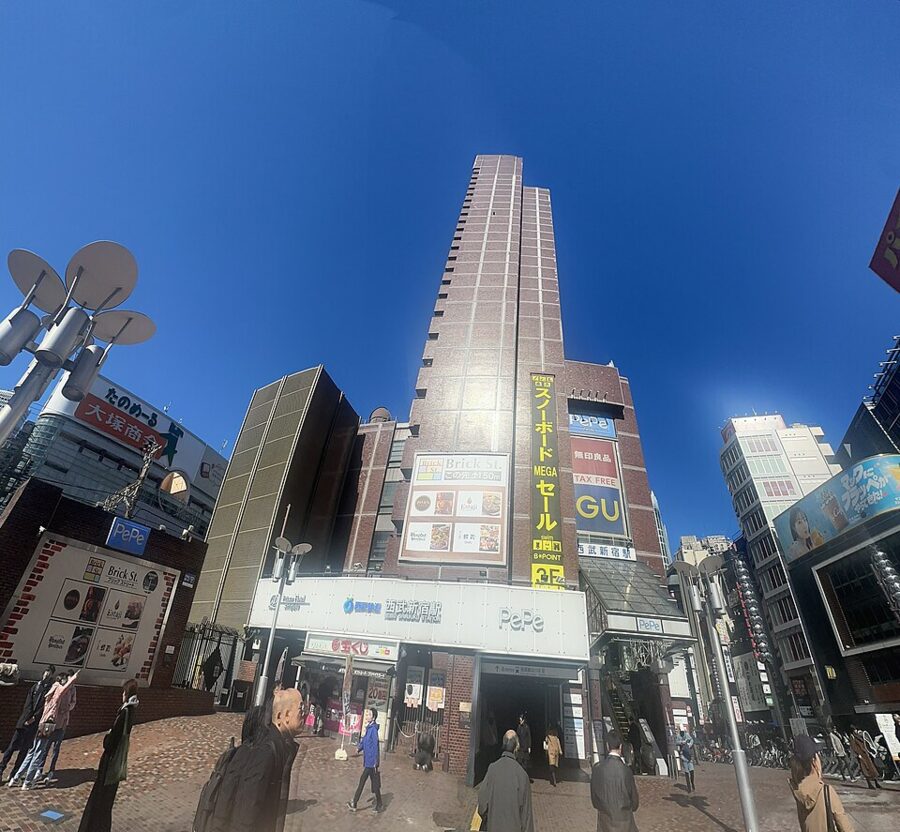
Three nearby stations carry the same name and are worth knowing. Shinjuku-nishiguchi (E01) is a separate Oedo Line stop under the West Exit side. Shinjuku-sanchome, under the east end of Shinjuku-dori, is where the Marunouchi, Fukutoshin and Toei Shinjuku lines meet, and it is the closest station to Isetan and one of the two closest to the Shinjuku Gate of Shinjuku Gyoen. Seibu-Shinjuku, terminus of the Seibu Shinjuku Line, sits on the north edge of Kabukicho and is a separate building a five-minute walk from the JR East Exit.

From Tokyo Station the JR Chuo Line Rapid takes about 14 minutes. The fare went to ¥260 by paper ticket when JR East raised fares on March 14, 2026, and an IC card never pays more than the ticket under the new rules. The full picture of passes and cards is in getting around Tokyo.
Which exit, for what
The names on the signs are what you follow, so here they are as JR and the private lines sign them, with what is on the other side.
| Exit | Operator | Comes out at |
|---|---|---|
| East Exit | JR | Lumine Est, the East Exit plaza, the cat screen, Kabukicho (5 minutes north) |
| West Exit | JR, Odakyu, Keio | The West Exit plaza and bus stops, Odakyu HALC, Keio department store, the underground walk to the Tokyo Metropolitan Government Building, Omoide Yokocho |
| South Exit | JR, Odakyu | The Koshu-kaido overpass, Lumine 1 and 2, the fastest street route to Shinjuku Gyoen |
| Southeast Exit | JR | Steps down toward Shinjuku Sanchome and the east side shopping streets |
| New South Exit and Koshu-kaido Exit | JR | Busta Shinjuku, NEWoMan, Takashimaya Times Square and Southern Terrace |
| Miraina Tower Exit | JR | The JR Shinjuku Miraina Tower and the south end of NEWoMan |
The ticket gates at the two ends of the free passage were renamed East Gate and West Gate in 2020, but the streets beyond them are still signed East Exit and West Exit, so either name gets you there. The Central West Gate in the middle of the station is the one to use if you are changing between JR and the Odakyu or Keio lines.
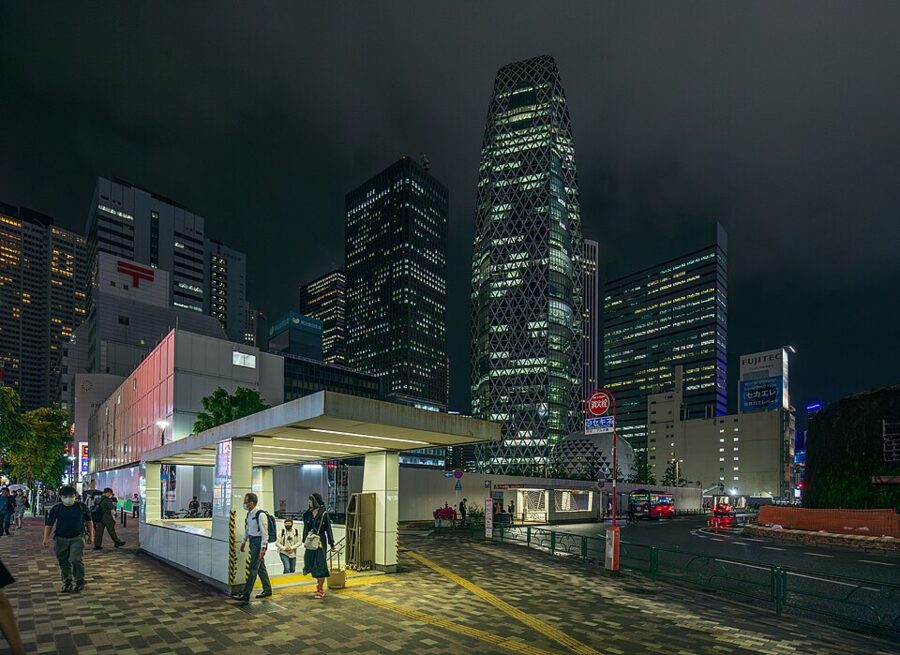

Crossing from west to east
Use the free passage. It is the only crossing that stays level, lit and out of the rain, and it opens on the east side into the basement of Lumine Est and on the west into the underground plaza by the bus terminal. The older routes still work: north through the low railway bridge on Yasukuni-dori, south over the tracks on the Koshu-kaido overpass at the South Exit, or underground through the Metro Promenade along the Marunouchi Line. All three add five to ten minutes and the Yasukuni-dori bridge is the one to avoid with a suitcase.
What the rebuild has closed, moved and still promises
The Tokyo Metropolitan Government calls the whole program the Shinjuku Grand Terminal, and it is a long one: station plazas and decks that tie the two sides together, with the land readjustment scheduled to finish in fiscal 2046. What has already happened is easier to plan around.
- The Odakyu department store main building closed on October 2, 2022. The store moved into the Shinjuku Nishiguchi HALC building next door two days later and still trades there, and the West Exit tower on its site started construction in March 2024 for completion in fiscal 2029.
- The West Exit plaza switched its traffic and walking routes on September 27, 2025 and moved its bus and taxi stops through that year. Road works began there in October 2026, and the underground walkways change again from December 19, 2026, all posted on the metropolitan government’s construction notices for the station.
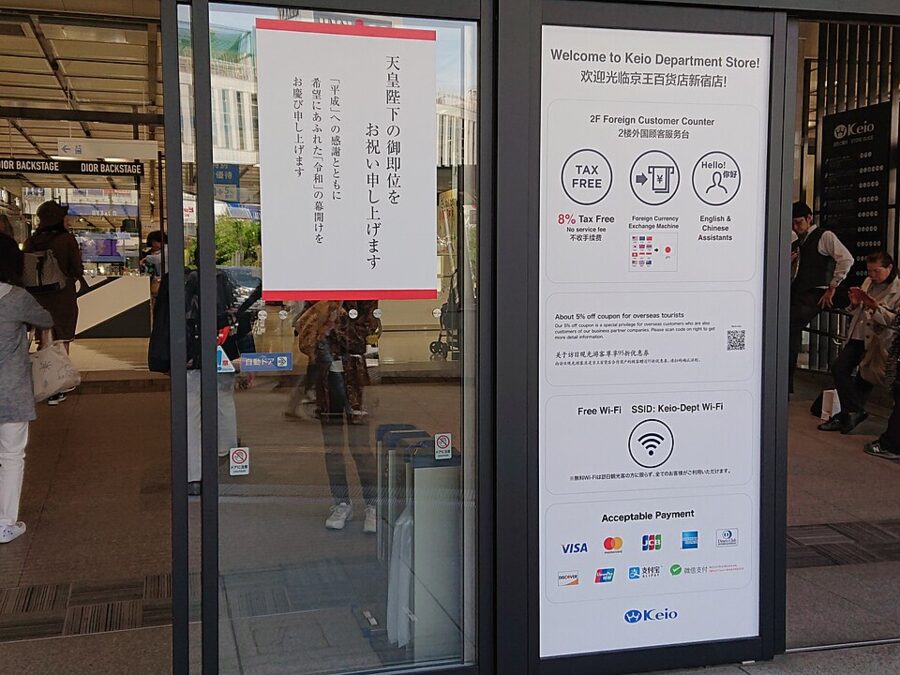
- South of the Koshu-kaido overpass, Keio and JR East plan a 225-meter tower on the JR Shinjuku Building site, after which the Keio department store and Lumine 1 will be rebuilt as a 110-meter building. The first tower had no completion date as of April 2025, so both stores are open for now and on borrowed time.
- On the east side, the Studio Alta building closed on February 28, 2025 and its demolition is expected to run to about 2027.
- JR East is fitting platform doors at the Chuo-Sobu local platforms (tracks 13 and 16), scheduled to go into use from late November 2026.


Long-distance buses leave from Busta Shinjuku (バスタ新宿) on top of the New South Exit: departures on the fourth floor, arrivals on the third. It is the stop for Fuji Five Lakes and many night buses, and boarding opens about ten minutes before departure, so be on the floor by then.
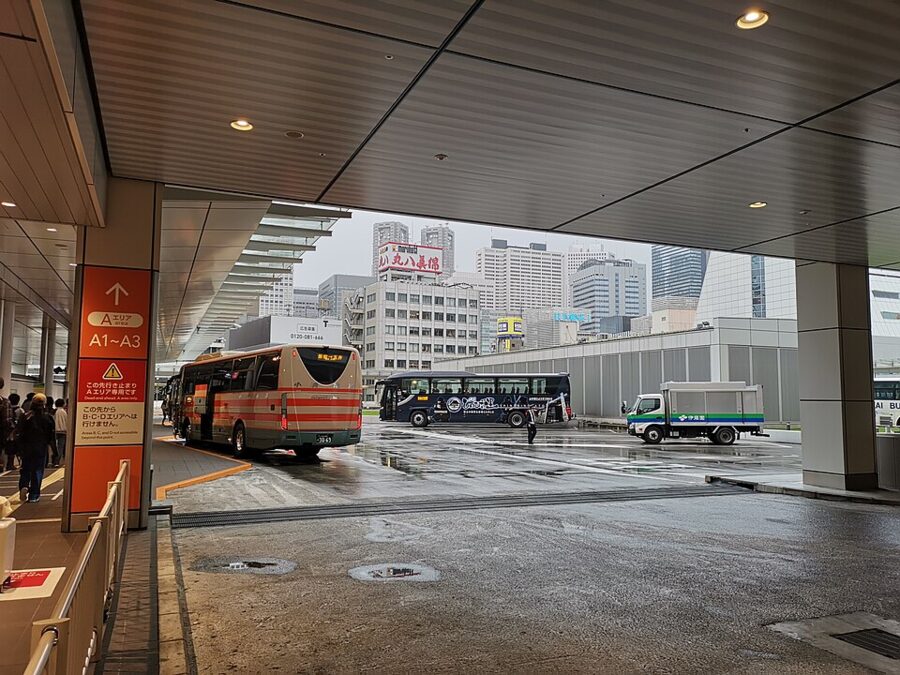

West side: the towers, the free deck and Omoide Yokocho
The skyscraper district grew on the site of the old Yodobashi water purification plant from the 1970s, which is why the streets are wide, straight and empty after 21:00. You come here for one free view, a projection show and an alley of grill bars, and the three fit into one evening if you start before dark.
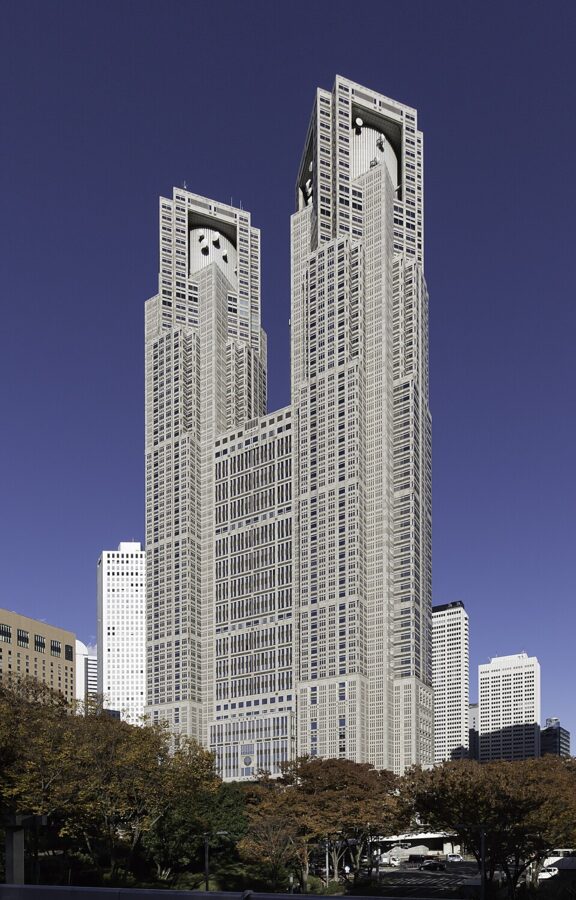

The Tokyo Metropolitan Government Building and its free decks
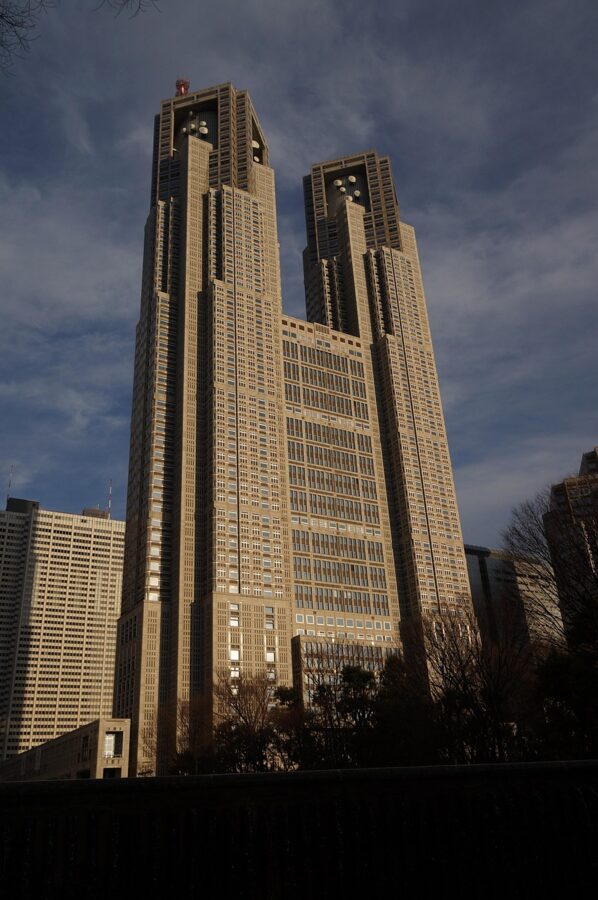
Kenzo Tange’s twin towers of 1991 stand 243 meters, and each one has an observation deck on the 45th floor. Both are free. The metropolitan government’s deck page gives the late 2026 rules: the South Observatory opens 09:30–22:00 with last entry at 21:30 and closes on the first and third Tuesday of each month, and the North Observatory opens 09:30–17:30 with last entry at 17:00 and closes on the second and fourth Monday. When a closing day falls on a public holiday the deck opens and closes the next day instead, and on the South deck’s closing days the North deck stays open until 22:00.
Both decks close for the New Year from December 29 to 31 and on January 2 and 3, and on building inspection days. The line to the elevator runs 20 to 30 minutes on a normal day.
The elevators leave from the first floor of the No.1 Building. On weekends and holidays the second-floor entrance is shut, so walk round to the front door on the ground. From the JR West Exit it is about ten minutes on foot through the underground passage, and the Toei Oedo Line’s Tochomae Station (E28) connects directly.
The view costs nothing and holds its own against the paid decks across town. I’d go to the South deck at dusk on a weekday, watch the city lights come on, and be back on the plaza for the next projection show. On clear days, most often in winter, Mount Fuji shows to the west. The South deck also has the Tocho Omoide Piano, open to anyone to play from 10:00 to 12:00, 14:00 to 16:00 and 19:00 to 21:00.

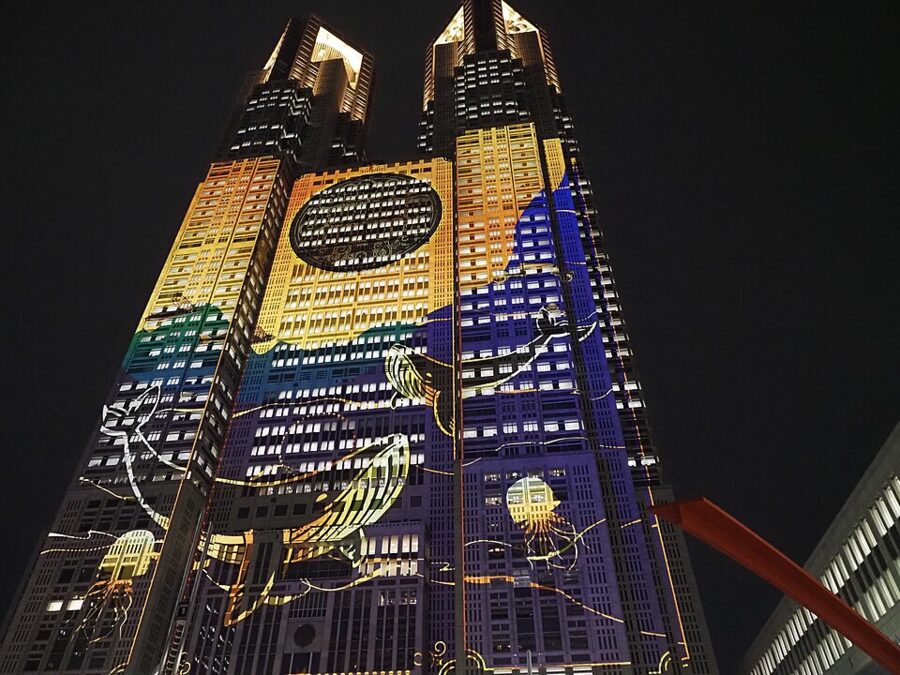
The projection show, TOKYO Night & Light, runs every evening except in bad weather on the east face of the No.1 Building. You watch it from the Citizens’ Plaza at the foot of the towers. The shows start every half hour through the evening, on a timetable that changes with the season, so check it on the day. The display has run since February 2024 and holds the Guinness record for the largest permanent projection on a building, at 13,904.956 square meters.

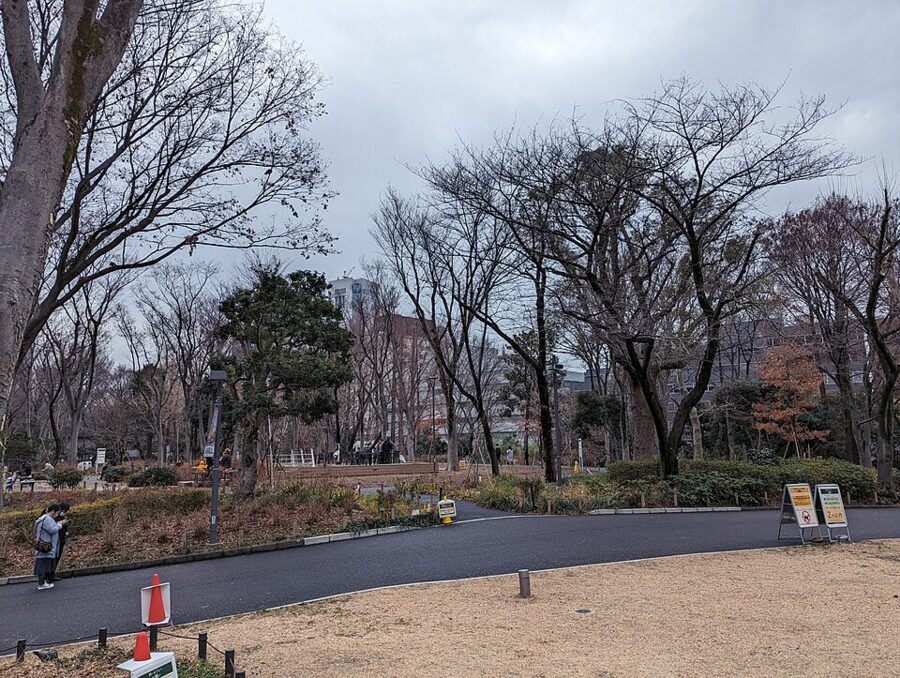
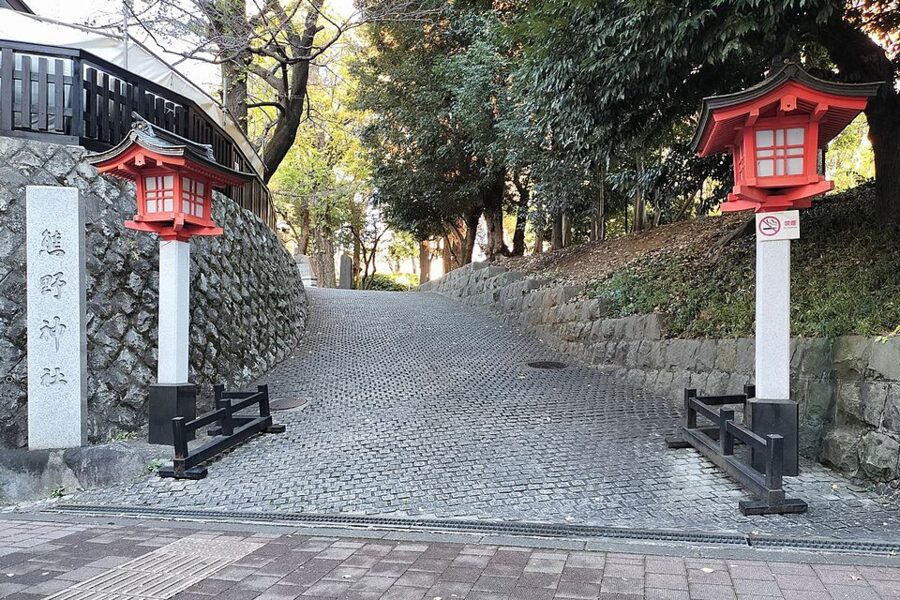
Behind the towers, Shinjuku Central Park covers 8.8 hectares, is always open and charges nothing. Its north end has a lawn and a cafe building opened in July 2020, Kumano Shrine sits on its northwest corner, and an Oedo Line exit (Tochomae A5) opens inside it. It is the best place on the west side to sit down for free.
Omoide Yokocho
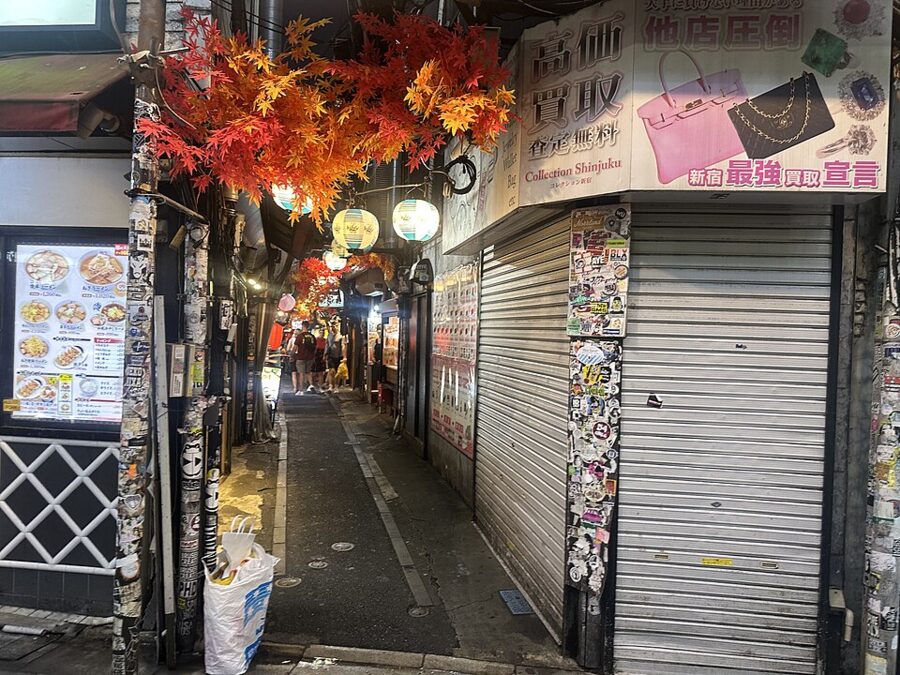
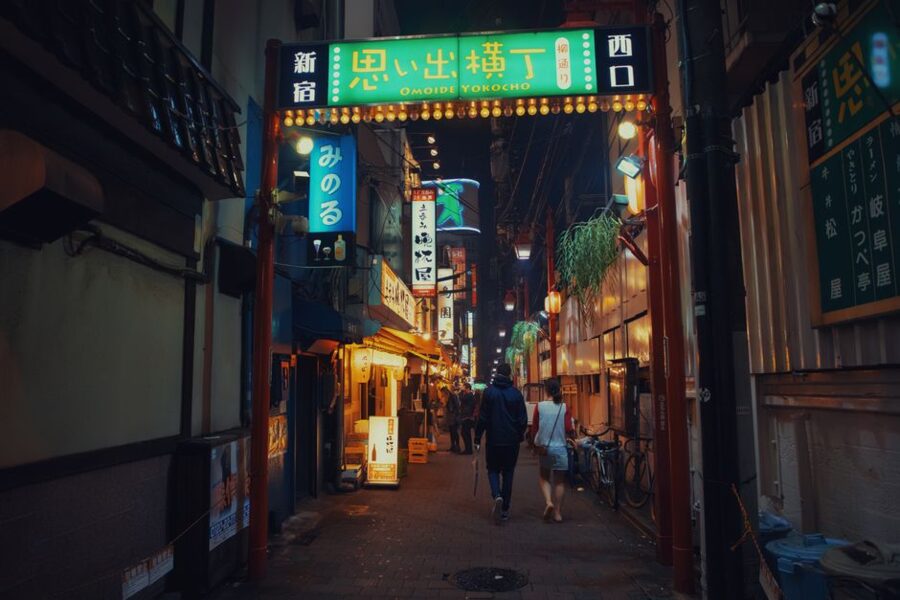
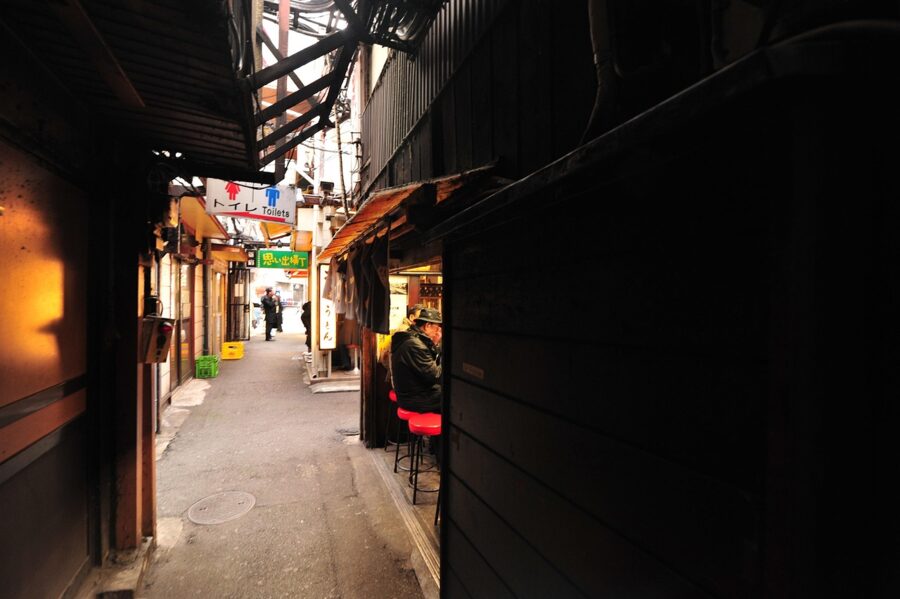
Omoide Yokocho (思い出横丁) is the strip of narrow lanes beside the tracks just north of the West Exit, and the reason most people come to this side after dark. It began as a postwar street market selling offal from the occupation forces’ supplies, because offal was not rationed, and the grills never left. The street’s own association counts about 80 businesses on roughly 630 tsubo (about 2,080 square meters), about 60 of them places to eat and drink, mostly motsuyaki (grilled offal skewers) and yakitori counters.
Go early, soon after the counters open around 17:00, if you want a stool without a wait. Most places are a counter and a grill, smoke included, and you squeeze in where the cook points. The association’s 2026 listing names, among others, Kabuto for eel, Gifuya for noodles and gyoza, and Tajimaya Coffee for a cup before or after.
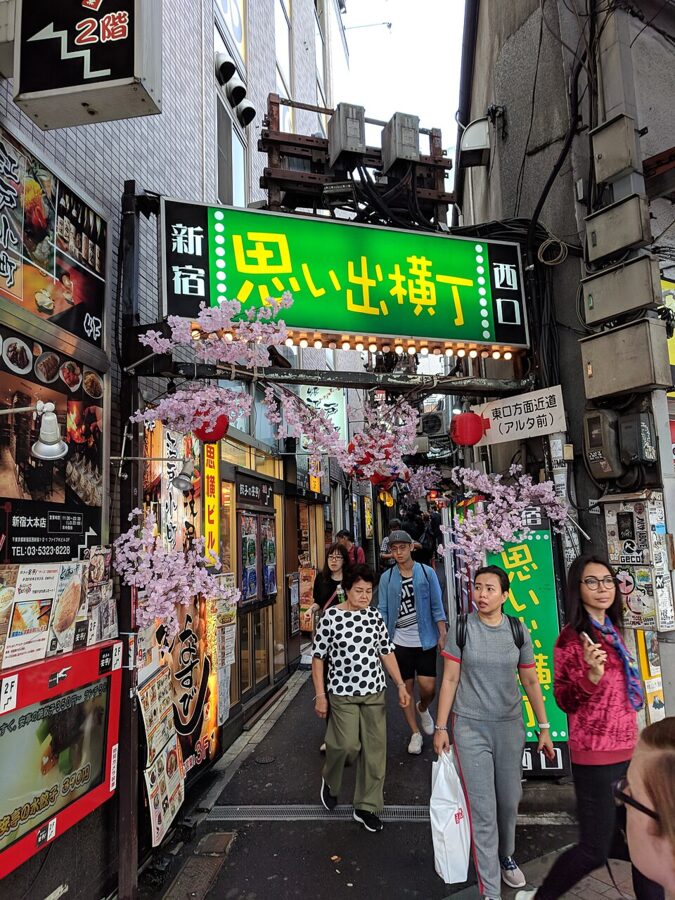

Every November 24 is Omoide Yokocho Day, set by the association to remember the fire that burned through the lanes on November 24, 1999. The street sold a commemorative T-shirt from November 20 to 22, 2026 with a free drink ticket attached, which says something about how the place recovered.

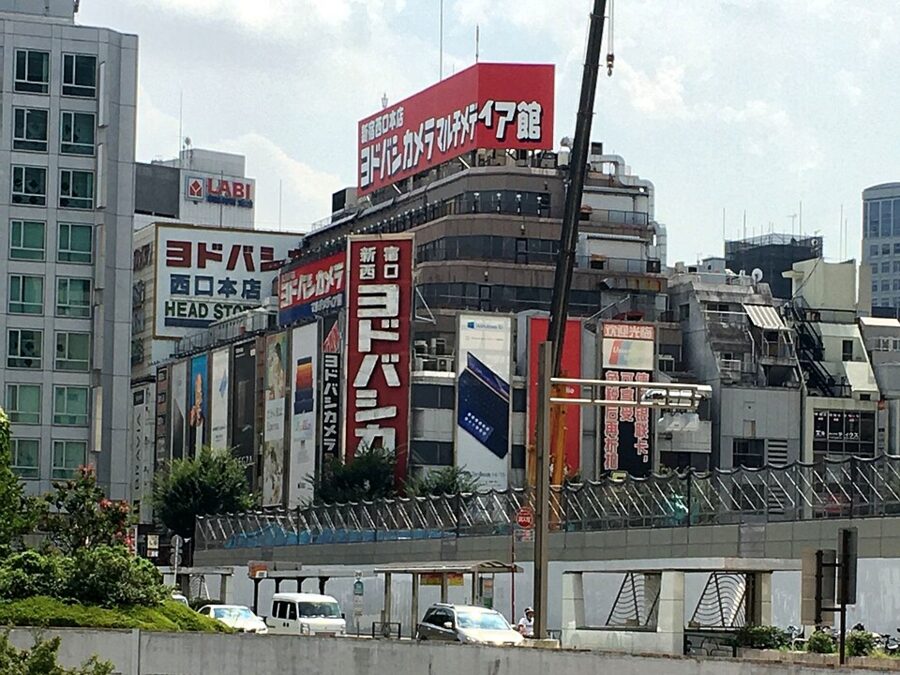
The electronics stores that made the West Exit a camera district are still here. Yodobashi Camera’s Shinjuku West Exit main store is on the West Exit side, and the chain runs a second multimedia store by the East Exit. If you only want a cable or a SIM, either will do; for a camera body, the west store has the range.
Shinjuku Gyoen: gates, hours and the season
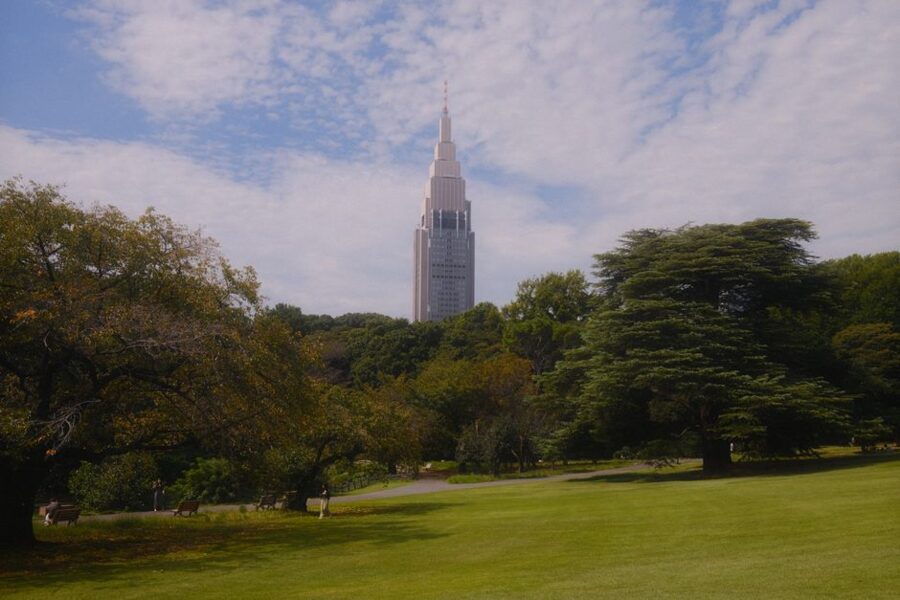
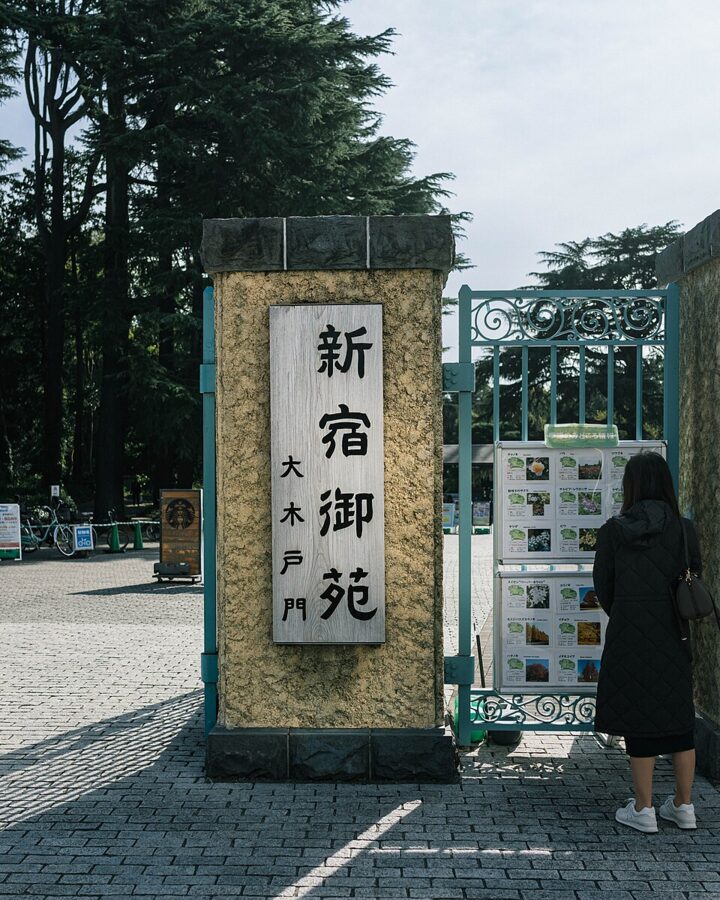
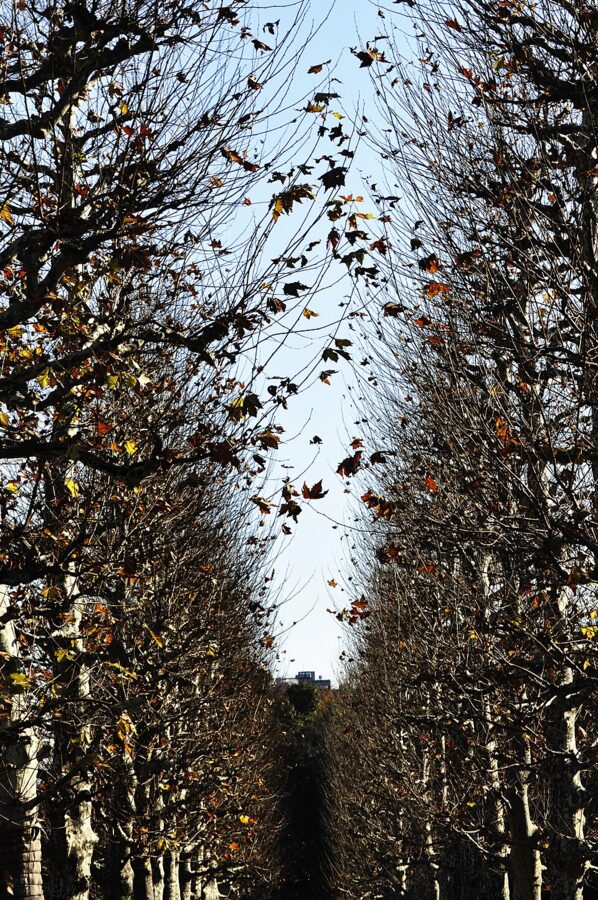
Shinjuku Gyoen (新宿御苑) is a former imperial garden of about 58 hectares with three styles in one fence: a Japanese garden with ponds, an English-style lawn garden and a French formal garden with an avenue of plane trees. It has more than 10,000 trees, about 900 of them cherries of some 70 varieties, and it is the one Shinjuku sight I would rearrange a day around.
Admission on the Ministry of the Environment’s admission page for late 2026 is ¥500 for adults, ¥250 for people 65 and over and for high school and university students, and free for junior high school age and under. Since September 2025 you can tap an IC card on the gate instead of buying a ticket, and a web ticket with a QR code skips the ticket window too. A year pass is ¥2,000.
| Season | Open | Last entry |
|---|---|---|
| March 15 to September 30 (except below) | 09:00–18:00 | 17:30 |
| June 11 to July 31 | 09:00–19:00 | 18:30 |
| October 1 to March 14 | 09:00–16:30 | 16:00 |
The garden closes on Mondays, or the next weekday when Monday is a holiday, and from December 29 to January 3. It stays open every day from March 25 to April 24 for the cherries and from November 1 to 15 for the chrysanthemum show. The ministry warns that at cherry time it may switch to advance booking, mainly on weekends and holidays, so check before you go in late March.
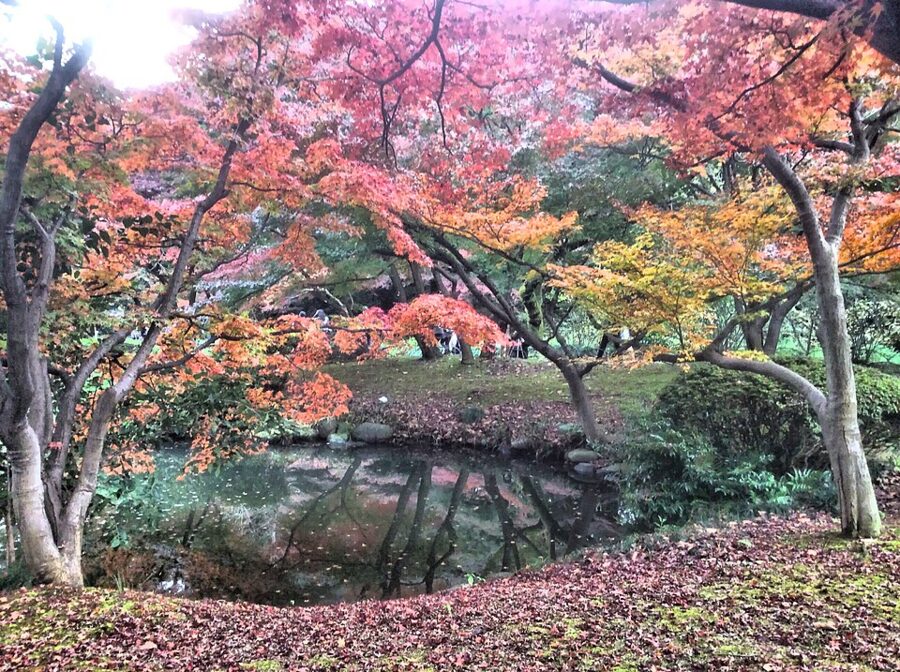

The garden rules ban bringing in alcohol, along with ball games, drones and bicycles. That keeps the cherry season calmer than the parks that allow drinking, and it means a picnic here is tea and sandwiches.
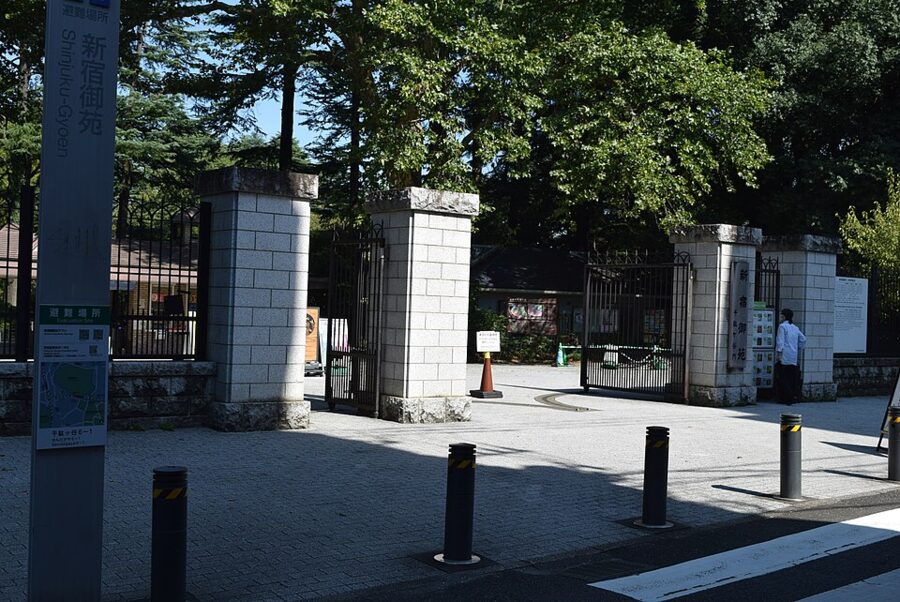
There are three gates, and which one you use depends on where you are coming from, per the ministry’s access page:
- Shinjuku Gate: 10 minutes on foot from the JR South Exit, 5 minutes from Shinjuku-sanchome Exit E5 or Shinjuku-gyoemmae Exit 1. The gate most people use.
- Okido Gate: 5 minutes from Shinjuku-gyoemmae Exit 2 on the Marunouchi Line, at the Yotsuya end, next to the car park.
- Sendagaya Gate: 5 minutes from JR Sendagaya Station on the Chuo-Sobu local line, or from Kokuritsu-Kyogijo Exit A5 on the Oedo Line. The closest gate to the Taiwan Pavilion.



East side: Shinjuku-dori, the stores and the screens
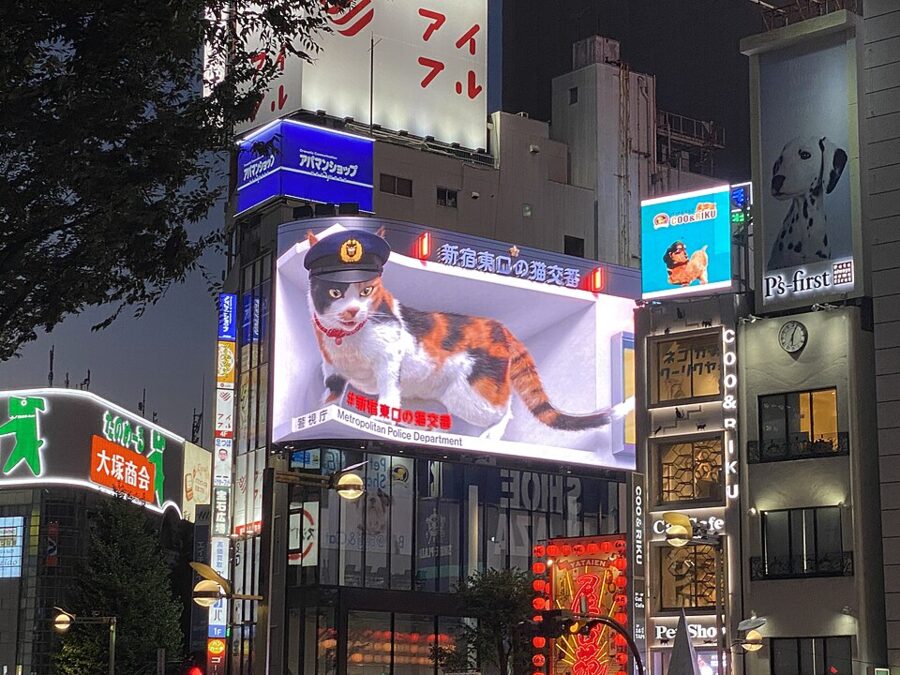
The East Exit plaza is where Shinjuku looks like the photos. The screen to watch is Cross Shinjuku Vision, a curved display about 19 meters wide on the fourth floor of the Cross Shinjuku Building at the plaza’s north corner. Since July 2021 it has shown a giant calico cat in 3D, and the operator Cross Space runs it as an advertising screen, so the cat appears in a program of about two minutes, roughly every 15 minutes, between the ads.
The screen runs from 07:00 to 01:00 and drops its sound after 23:00. The 3D effect only works from the opposite side of the crossing, on the walk from the East Exit toward Seibu-Shinjuku; up close it is a bent television. The big screen next to it on Studio Alta went dark when that building closed in February 2025.

Department stores and their food floors
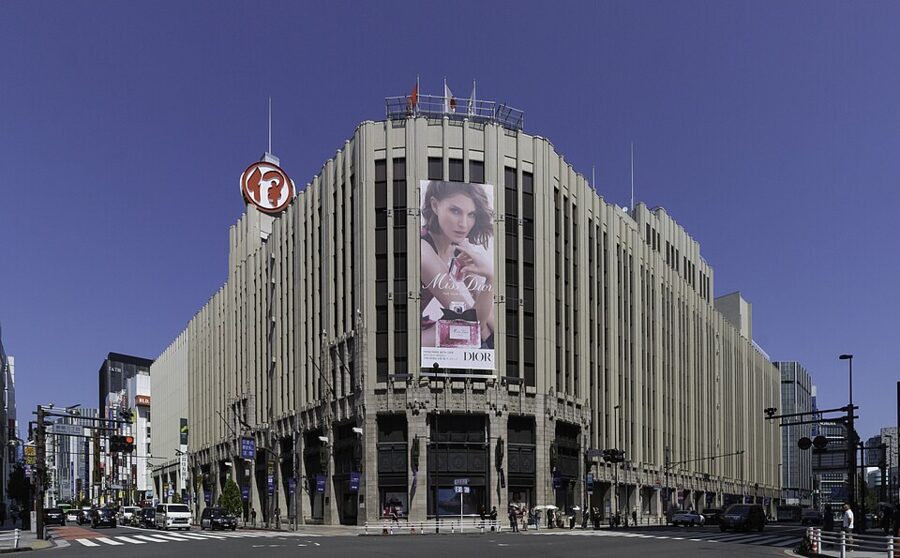
Shinjuku-dori runs east from the station to Shinjuku Sanchome, and the stores line up along it. Isetan Shinjuku, open 10:00–20:00 with some floors on other hours, is the one to see even if you buy nothing: the main building of 1933 is a listed Tokyo historic building, and its basement food hall is the best argument for a department store you will find. Takashimaya Times Square sits south of the station by the New South Exit, and the Keio department store and the Odakyu store in HALC stand on the west side.
The basement food halls, depachika, are where the stores compete hardest: lunch boxes, sweets wrapped for gifts and prepared food marked down in the last hour before closing. If you are comparing Shinjuku’s stores with the older ones in Ginza, Isetan’s basement is the match for anything there.

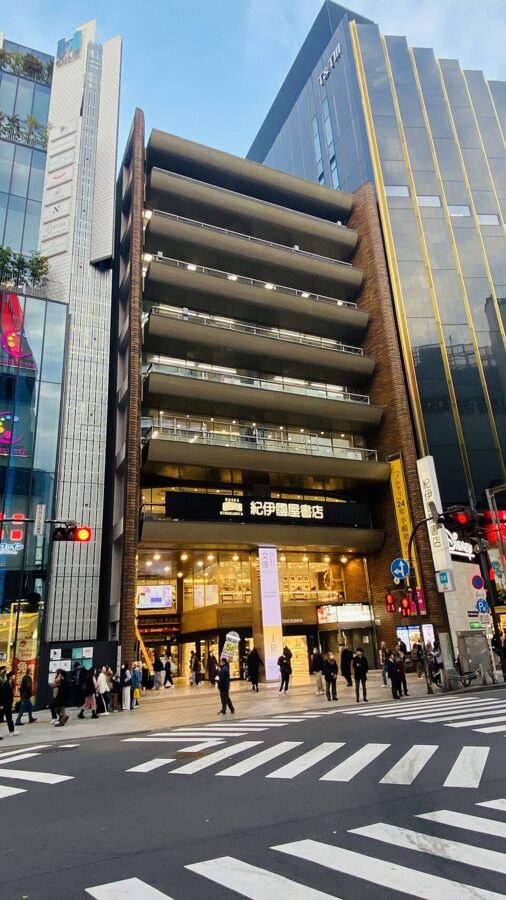
Kinokuniya’s Shinjuku main store, a short walk east of the East Exit, fills eight floors with books, open 10:00–21:00, and keeps a foreign-language section. For electronics the east side has Yodobashi’s multimedia store close to the station, but it covers the same ground as Akihabara, and you would not cross town for them.

Shinjuku Sanchome
The blocks east of Isetan around Shinjuku Sanchome are the side of the east side that people who live in Tokyo drink in: small bars and izakaya stacked up narrow buildings, and far fewer touts. It is where I would send anyone who finds Kabukicho too much and Golden Gai too small.
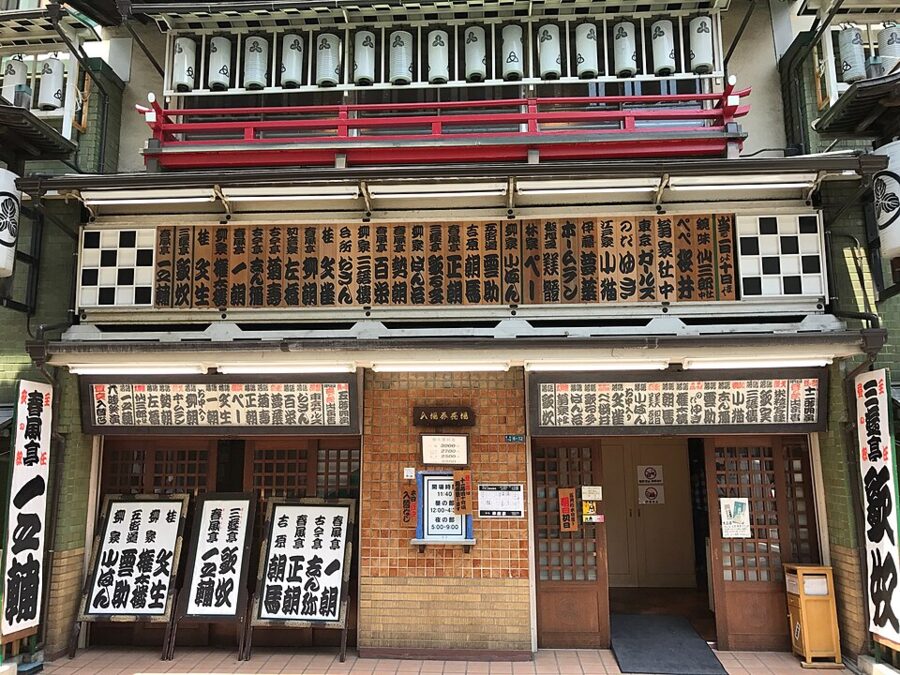
It also has Shinjuku Suehirotei, a wooden rakugo theater that runs comic storytelling every day. The day show runs 12:00–16:15 and the evening show 16:45–20:30, and the late 2026 price is ¥3,500 for adults, ¥3,200 for seniors and ¥3,000 for students. After about 18:00 the door price drops to ¥3,000, and after the interval to ¥2,000, except on special bills. It is in Japanese, and the magicians and acrobats between the storytellers need no translation.

Kabukicho and Golden Gai, by day and by night
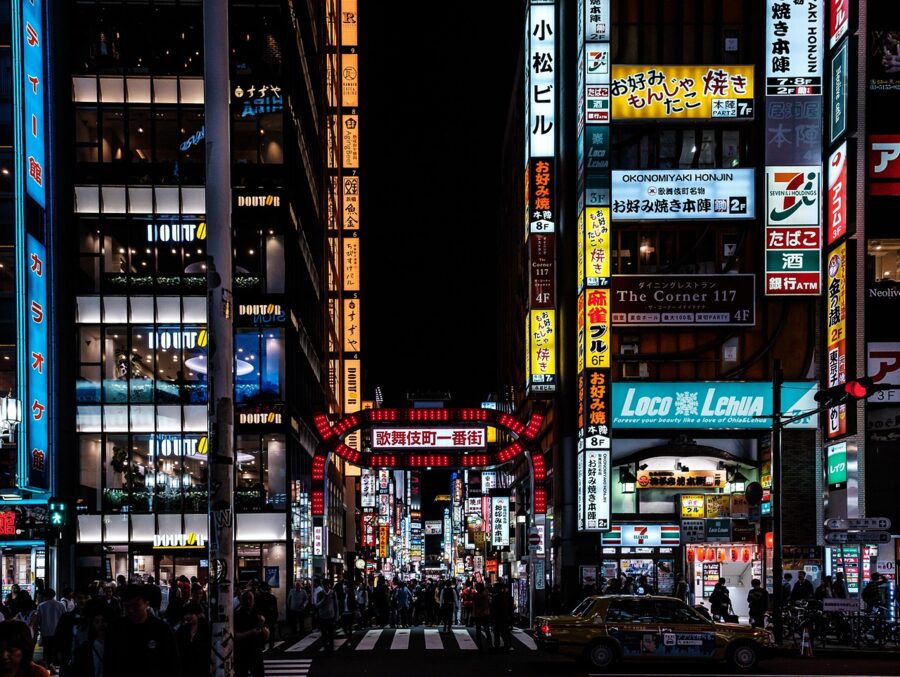
Kabukicho (歌舞伎町) is the block of streets north of Yasukuni-dori, between the JR tracks and Meiji-dori, and the name comes from a kabuki theater that was planned after the war and never built. By day it is cinemas, karaoke and lunch sets. After dark it is the largest nightlife district in Japan, and the bars, host clubs and touts take over.
Walk in from the East Exit along Godzilla Road, as Kabukicho’s Central Road is signed, and the street ends at the Shinjuku Toho Building. Since it opened on April 17, 2015, a life-size Godzilla head has looked down from its eighth-floor terrace, where the lobby of Hotel Gracery Shinjuku sits. The cinema below it is TOHO Cinemas Shinjuku, on the site of the old Koma Theater.
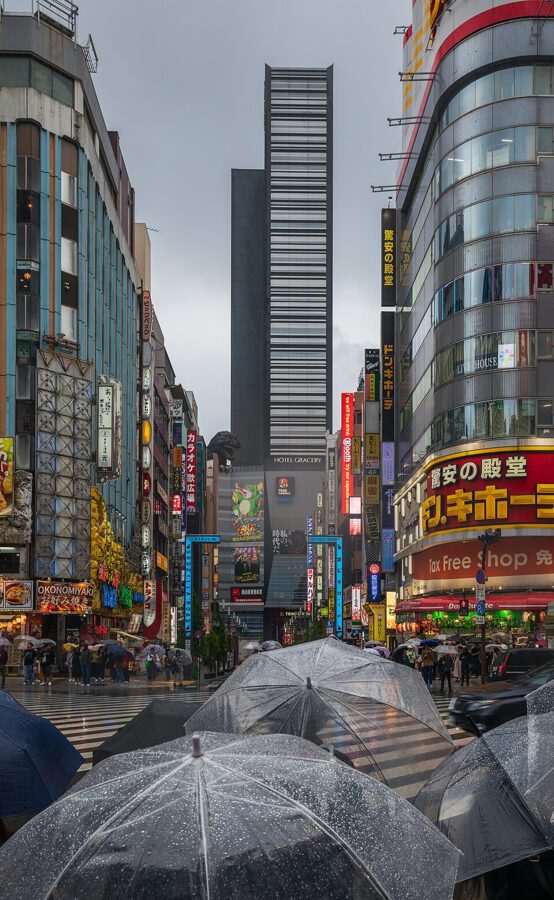

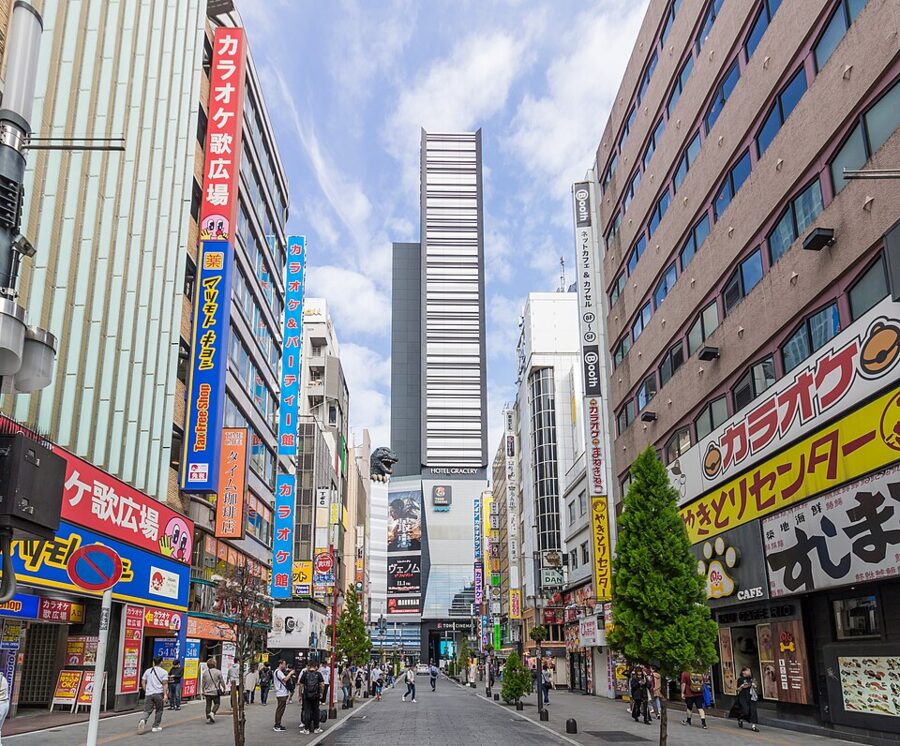

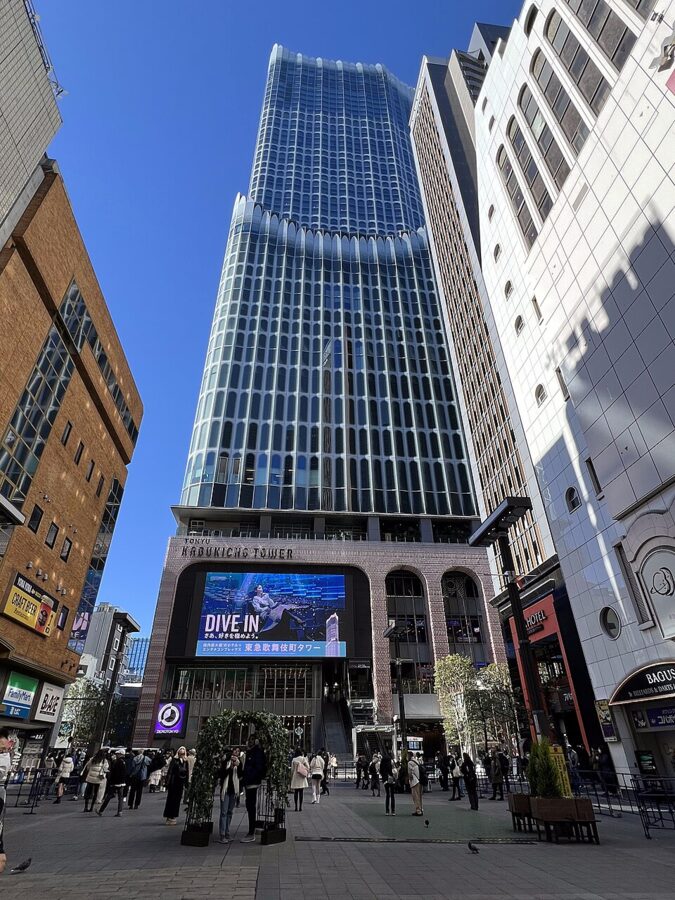
One block west, Tokyu Kabukicho Tower opened in April 2023 at about 225 meters, with 48 floors above ground. It holds the 109 Cinemas Premium Shinjuku, the Theater Milano-Za, Zepp Shinjuku and the ZEROTOKYO club below two hotels, BELLUSTAR TOKYO and Hotel Groove Shinjuku, and its lower floors have a food hall. The square in front, Cinecity Plaza, has been fenced off by the ward after it became a gathering point for teenagers and a problem for the police, and opens for events.
Touts, bills and the police warnings
Never follow anyone who stops you on the street with a menu, a cheap drinks offer or a club flyer. Touting is illegal under Tokyo’s nuisance-prevention ordinance, and the bars that use touts are the ones that overcharge. In November 2026 the Metropolitan Police Department said overcharging complaints from foreign visitors to the Shinjuku police station had roughly tripled over January to October, and raided restaurants and bars in Kabukicho that worked with street touts.
Choose a place yourself, look for a posted price, and ask what the seating charge is before you sit. Keep your card in your pocket until you see the bill, and if a bill is wrong, call 110 or walk to the nearest police box (koban). Reported crime in Kabukicho 1-chome rose from 756 cases in 2023 to 962 in 2025, by the police’s own count.
Golden Gai
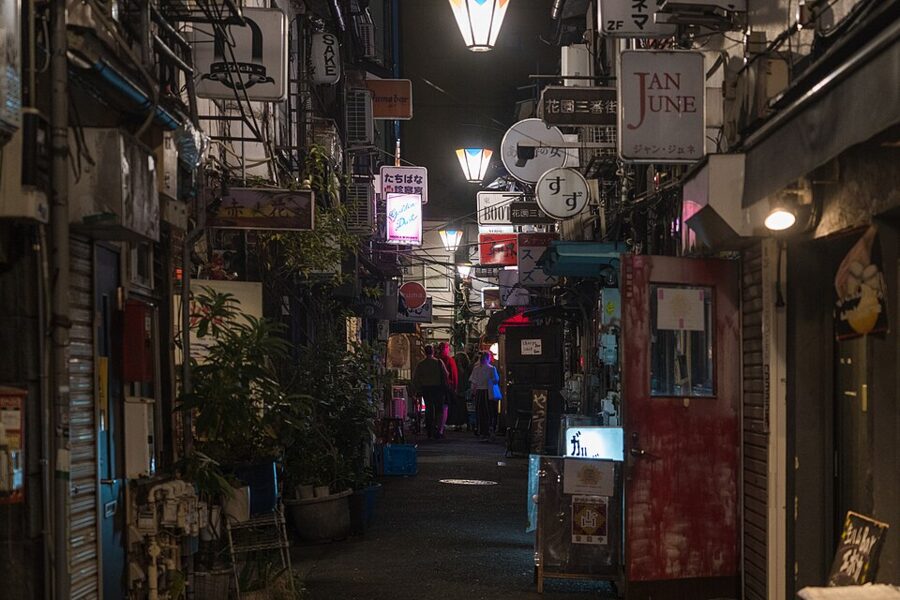
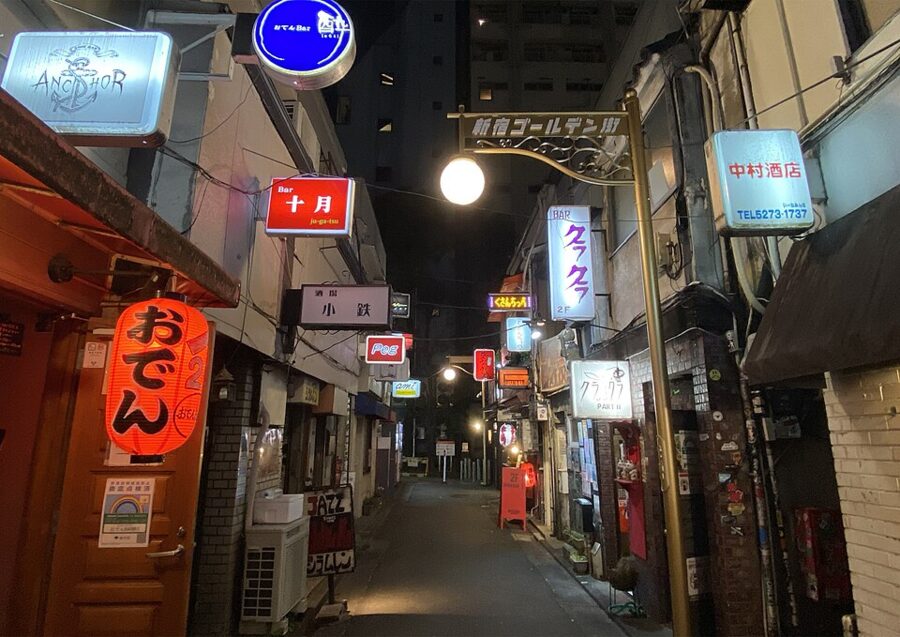
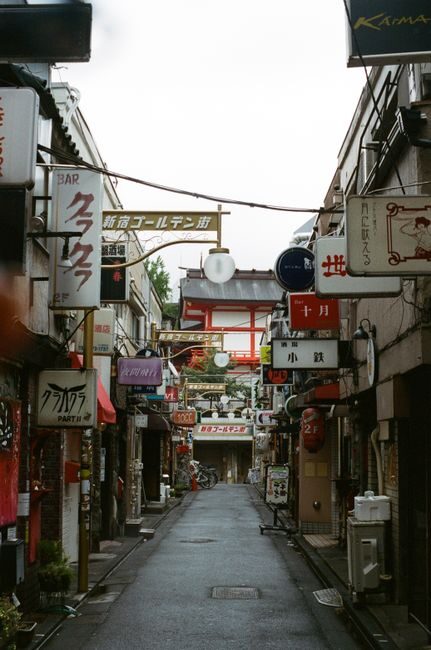
Golden Gai (ゴールデン街) is a grid of narrow lanes on the east edge of Kabukicho, beside Hanazono Shrine, packed with more than 200 bars in postwar two-story wooden row houses. Many seat fewer than ten people, some are on the second floor up a ladder of a staircase, and many have a regular crowd: film people, writers, whoever the owner knows. The streets are managed by two associations, and the Shinjuku Sanko association posts the bar map, last updated on April 4, 2026.
Two rules first. Nearly every bar charges a seating fee on top of the drinks, and it is usually written on a board by the door; at the association’s cherry festival on April 20, 2025, the fact that participating bars waived the charge and poured drinks from ¥500 was itself the selling point. And the lanes are private roads, so photographing or filming in the street needs the associations’ permission; pictures inside a bar are up to the bar.


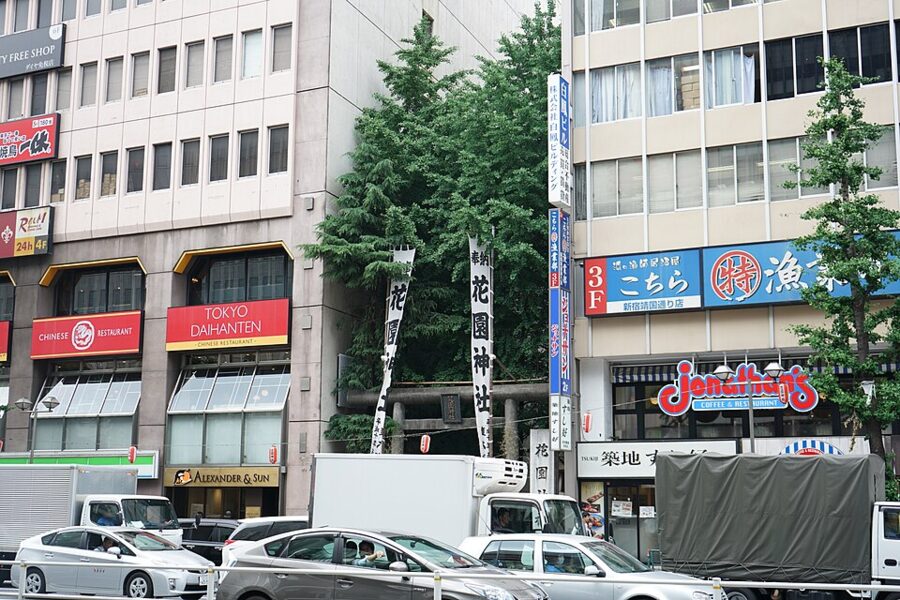
Hanazono Shrine, across the street on the east side, is the guardian shrine of Golden Gai, and many bars keep its talismans behind the counter. It is a calm ten minutes in daylight and the easiest landmark for finding the lanes at night.

The night itself, which bars, which clubs and how late the trains run, is in the Tokyo nightlife guide, and the live houses around the east side have their own guide to Tokyo live music. The short version for Shinjuku: the last JR trains leave a little after midnight, most Golden Gai bars open from about 19:00 or 20:00, and Kabukicho never quite stops, which is a reason to plan the train home first.
Eating in Shinjuku
Shinjuku has more restaurants than you could eat at in a year, so start with the places that only Shinjuku does well. Omoide Yokocho, above, is the grill-bar version. For the rest of the city’s food, from sushi counters to standing soba, the Tokyo food guide goes wider.
The department-store food halls are the other easy win, and the restaurant floors above them. Isetan’s basement is the deepest. Takashimaya Times Square has restaurant floors near the top that are good when everywhere else has a line, and the Keio and Odakyu stores on the west side have food floors that matter mainly because they are directly over the station.
Ramen lovers head for the streets of Nishi-Shinjuku 7-chome, north of the West Exit, where the shops sit close enough together that locals call it a ramen battleground. I would walk the block and join the shortest line that has a ticket machine; the shops there open and close faster than anywhere else in Shinjuku.
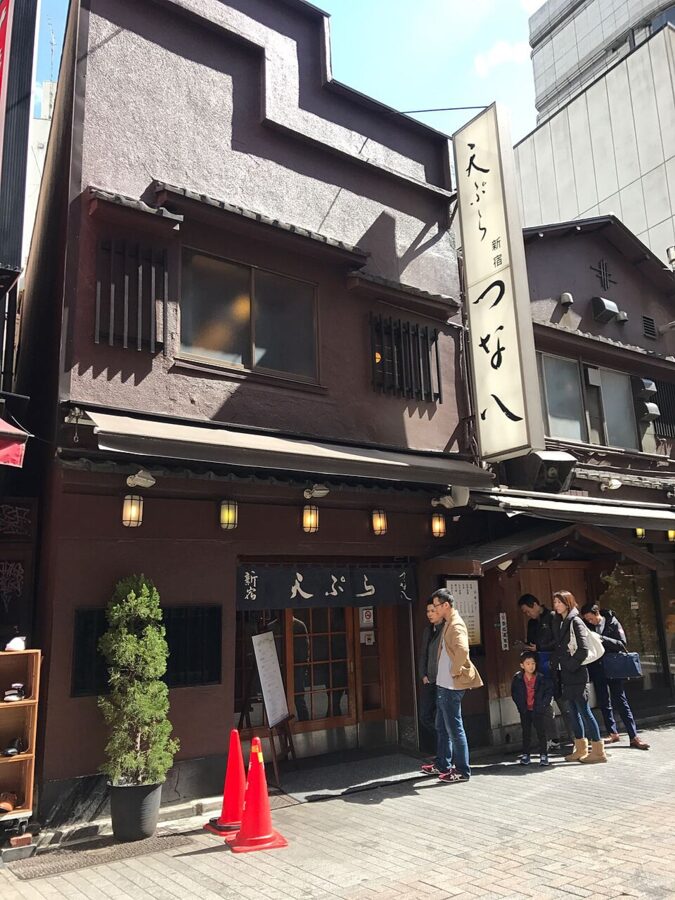
Tempura Shinjuku Tsunahachi has fried tempura in Shinjuku since 1924, with its main store on a lane behind Shinjuku-dori, and its lunch sets are the safest bet for a sit-down meal on the east side. Shinjuku Nakamuraya, the bakery and confectioner by the East Exit, serves what it calls its “love and revolution” Indian curry at the Manna restaurant in its building, a name taken from the shop’s link to an Indian independence activist.

Ni-chome, the south side and Nishi-Shinjuku’s parks
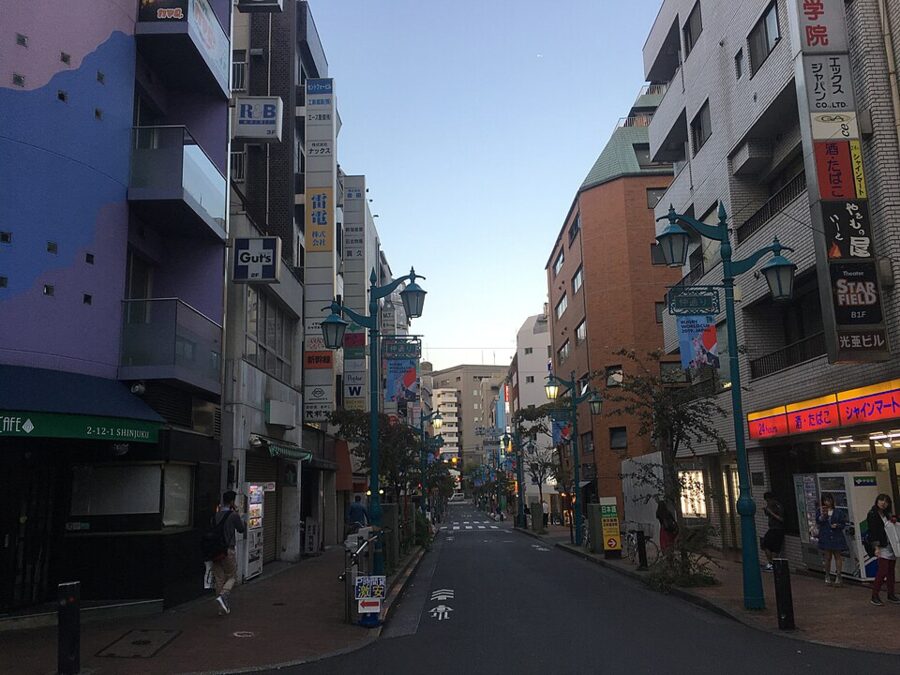
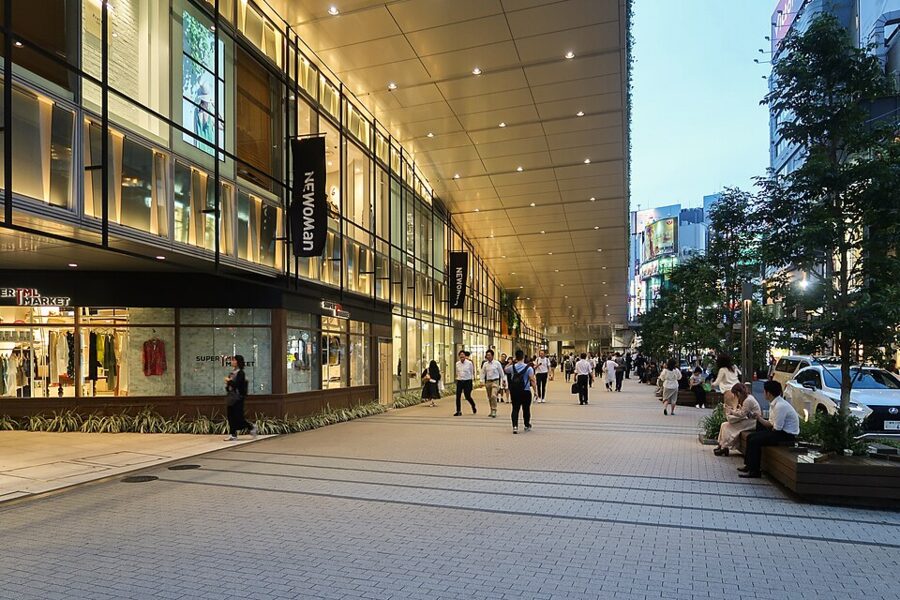
Shinjuku Ni-chome, east of Shinjuku Sanchome, is Tokyo’s main gay neighborhood, dense with small bars on a handful of streets; some admit men only, and many welcome everyone, so read the door. The south side is the new Shinjuku: the Southern Terrace promenade, NEWoMan over the New South Exit, Takashimaya Times Square and Busta Shinjuku. It is cleaner and calmer than the east side and lacks most of what makes Shinjuku Shinjuku.


For green space on the west side, Shinjuku Central Park is the large one; on the east, the Shiki no Michi walkway runs a shaded line from Golden Gai south toward Shinjuku Sanchome.
On foot and one stop away
Shinjuku is the middle of the west side of the JR Yamanote Line, so the next districts are close.
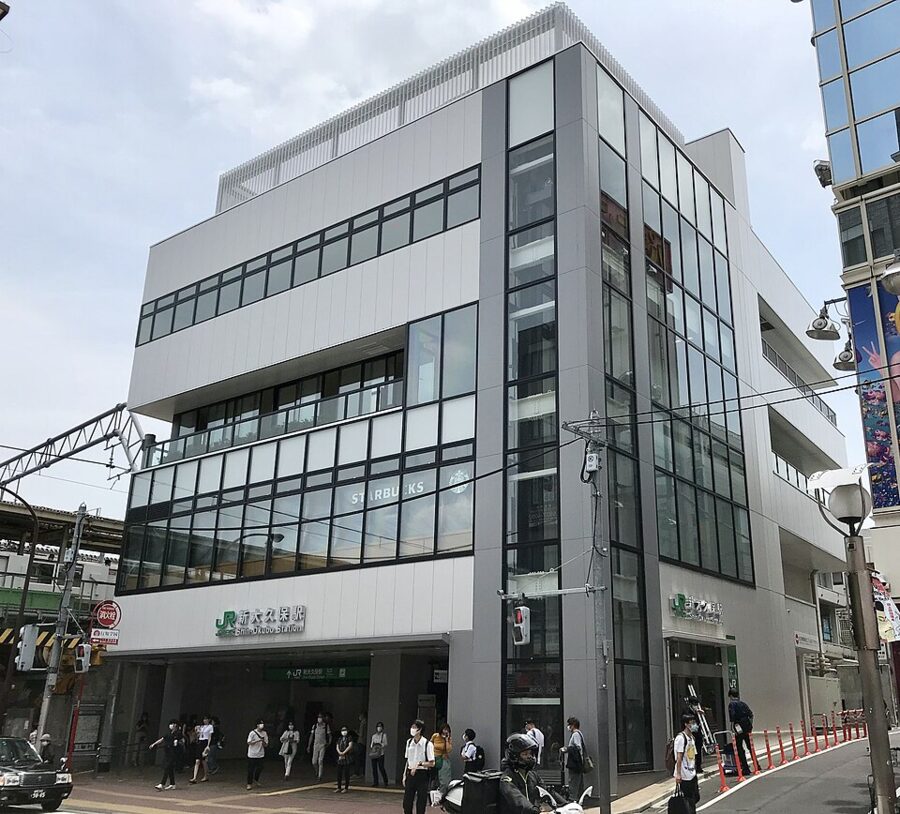
- Shin-Okubo: one stop north on the Yamanote Line, or a 15-minute walk from Kabukicho; Tokyo’s Koreatown, with Korean food, cosmetics and K-pop shops on Okubo-dori. The neighborhood posts its own “Shin-Okubo rules” for visitors, and they are worth reading.
- Yoyogi: one stop south on the Yamanote and Chuo-Sobu lines, a short walk from the New South Exit; offices, schools and cheap lunches, and little reason to stop.
- Harajuku: two stops south on the Yamanote Line, for Meiji Shrine and Takeshita-dori; see the Harajuku guide. Keep going one more stop for Shibuya.
- Nakano: about five minutes west on the JR Chuo Line Rapid, for Nakano Broadway, a 1960s shopping arcade of secondhand manga, figures and watches.

Shinjuku is also the start of the Odakyu line to Hakone and the Keio line to Mount Takao, and Busta Shinjuku runs buses to the Fuji Five Lakes; the routes are in day trips from Tokyo. For how Shinjuku fits with the rest of the city’s districts, see Tokyo’s neighborhoods and the list of things to do in Tokyo.
Where to stay, and getting in from the airports
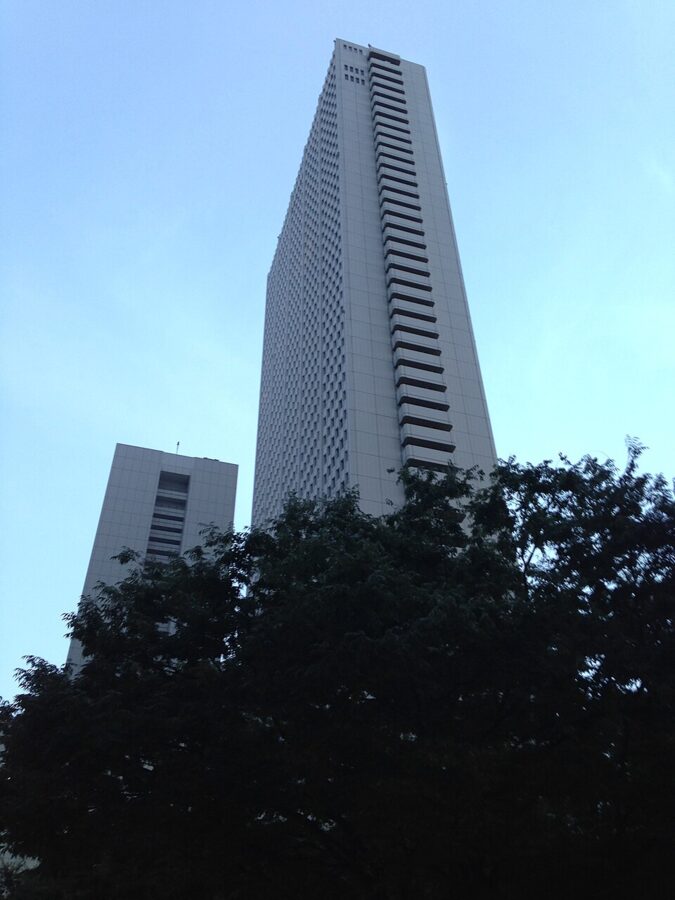
Stay west of the station for quiet nights and the big hotels, east for the late ones. Nishi-Shinjuku has the towers with views and room to breathe, such as the Keio Plaza Hotel a few minutes from the West Exit, and it empties after the offices close, which is the point. Kabukicho has Hotel Gracery under the Godzilla head and the two hotels in Kabukicho Tower; you will be five minutes from Golden Gai, and you will hear Kabukicho at 02:00.

Whichever side, choose a hotel within a ten-minute walk of the exit you will use most. The district-by-district case is in where to stay in Tokyo.
From Haneda the train or the airport bus takes just under an hour; the options, fares and late-night choices are all in the Haneda Airport guide. From Narita the Narita Express runs straight to Shinjuku in about an hour and a half, and the airport limousine bus takes about two hours to Busta Shinjuku and the West Exit hotels, the better choice with heavy bags because it drops you at the door. For the wider trip plan, start with the Tokyo travel guide.
So, the decision from the start: West Exit for the free deck by daylight and the projection show at dusk, east through the free passage for Golden Gai after 21:00, and the South Exit in the morning for the garden, which opens at 09:00 and closes, from October to mid-March, at 16:30.