

The JR Yokosuka Line runs from Tokyo Station to Kamakura in about an hour for ¥1,034 on an IC card, with no reservation and no change of trains. The last train back that runs through Tokyo Station leaves Kamakura at 23:07. Nearly everything worth seeing closes between 16:00 and 17:30, so the day is short at one end and long at the other.
The order that works on a weekday: get off one stop early at Kita-Kamakura, walk the Zen temples down the valley to Tsurugaoka Hachimangu, eat in town, then take the Enoden four minutes to Hase for Hase-dera and the Great Buddha before last entry. On Saturdays, Sundays and holidays, turn it around. Be at Hase when Kotoku-in opens its gate at 08:00, and do the Kita-Kamakura temples after lunch.
Weekday or weekend is the decision that matters most. Kamakura (鎌倉) counted about 16.06 million visits in 2025, and on May 5, 2026 the crowd around Kamakura Station peaked at 14:00 at roughly 130% of the same day a year earlier, by the city’s own count. If you can pick the day, pick a Tuesday.

Kamakura is the easiest of the classic day trips from Tokyo and the one most often done badly: Great Buddha at noon, Komachi-dori at its slowest, a standing train home at 17:00.


The trains from Tokyo and Shinjuku, and what they cost
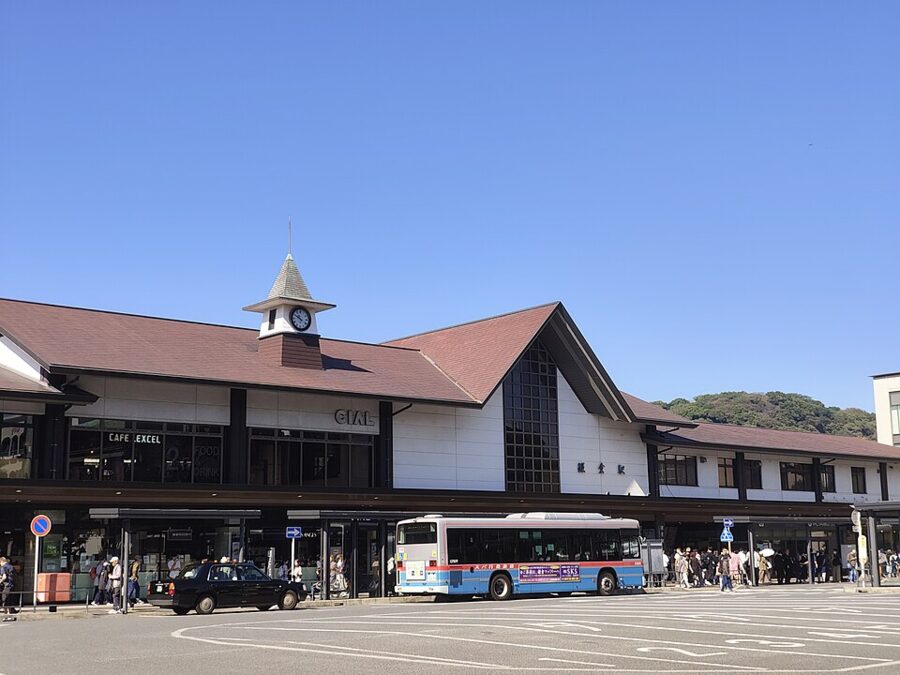
Two JR services run straight to Kamakura. The Yokosuka Line comes through Tokyo Station, Shinbashi and Shinagawa; the Shonan-Shinjuku Line comes through Shinjuku and Shibuya on the same tracks south of Osaki. Both stop at Kita-Kamakura and Kamakura, and both take an ordinary IC card, so there is nothing to book. If you do not have one yet, the Tokyo trains and IC cards guide covers which card to get.
JR East revised its fares on March 14, 2026, and the Tokyo to Kamakura ride falls in the 51–60 km band: ¥1,034 by IC card or ¥1,040 for a paper ticket, the same from Shinjuku. A round trip is ¥2,068 before you spend anything in Kamakura. The tourist association’s journey times are about 60 minutes from Tokyo, about 50 from Shinagawa and about 25 from Yokohama.
| From | Line | Time to Kamakura | Fare |
|---|---|---|---|
| Tokyo | JR Yokosuka Line | about 60 min | ¥1,034 IC / ¥1,040 ticket |
| Shinjuku | JR Shonan-Shinjuku Line | about 60 min | ¥1,034 IC / ¥1,040 ticket |
| Shinagawa | JR Yokosuka Line | about 50 min | by IC card |
| Yokohama | JR Yokosuka Line | about 25 min | by IC card |
| Shinjuku | Odakyu to Fujisawa, then Enoden | longer; arrives at the Enoshima end | ¥1,640 Freepass, round trip |
From Tokyo Station, the Yokosuka Line leaves from the underground Sobu-Yokosuka platforms on the Marunouchi side, a long walk and several escalators from the Yamanote Line. Many Kamakura trains come through from Chiba, so they are not empty when they reach Tokyo.
The Green Car, and when it is worth ¥1,000
Yokosuka and Shonan-Shinjuku trains carry two double-deck Green Cars with unreserved seats. The ride to Kamakura is over 50 km, so the JR East Green fare is ¥1,000 if you load it onto your IC card before boarding, and ¥1,260 if you buy it from the attendant on the train. The surcharge is on top of the ¥1,034.
On a weekday morning it is a luxury. On a Saturday at 08:00, when the alternative is an hour standing in a carriage of day-trippers, it is the best ¥1,000 in the trip. Tap the card on the reader above your seat and the light turns green.
From Shinjuku: JR or the Odakyu Freepass
From Shinjuku Station, direct Shonan-Shinjuku trains run through the day, fewer of them than on the Yokosuka Line. The other way is Odakyu. Its Enoshima-Kamakura Freepass costs ¥1,640 from Shinjuku and covers the Odakyu round trip to Fujisawa, unlimited Odakyu trains between Fujisawa and Katase-Enoshima, and unlimited Enoden rides for the day. A Romancecar seat to Katase-Enoshima is ¥750 extra each way.
The arithmetic is simple. The JR round trip from Shinjuku is ¥2,068 with no Enoden rides; the Freepass is ¥1,640 with all of them.
The catch is geography: Odakyu delivers you to the Enoshima end, 37 minutes of Enoden from Kamakura, and the pass does not cover JR to Kita-Kamakura. If the Zen temples are the point, take JR. If the day is Enoshima, the coast and the Great Buddha, the Freepass wins.


The order of the day, and the closing times that set it
Kamakura’s temples keep office hours. Hase-dera stops admitting at 16:30, Meigetsu-in and Tokei-ji close at 16:00, and Engaku-ji closes at 16:00 from December to February. A day that starts at 10:30 loses one of them. Here is the posted schedule for late 2026, from each temple’s own page or, for Meigetsu-in, which has no site of its own, the tourist association’s.
| Place | Hours | Adult fee |
|---|---|---|
| Engaku-ji | 08:30–16:30 (December–February 08:30–16:00) | ¥500 |
| Tokei-ji | 09:00–16:00 | free |
| Meigetsu-in | 09:00–16:00 (may change in June) | ¥500, rear garden ¥500 more |
| Kencho-ji | 08:30–16:30 | ¥500, cash only |
| Hokoku-ji | 09:00–16:00 | ¥400, matcha ¥600 |
| Kotoku-in (Great Buddha) | April–September 08:00–17:30, October–March 08:00–17:00 | ¥300, inside the statue ¥50 |
| Hase-dera | 08:00–16:30 entry (April–June to 17:00) | ¥400 |
The weekday plan, then:
- 08:30 Engaku-ji, from Kita-Kamakura Station. Allow an hour.
- 09:45 Tokei-ji across the tracks, then Meigetsu-in up its side valley.
- 11:00 Kencho-ji, 15 minutes’ walk down the road toward Kamakura.
- 12:00 Tsurugaoka Hachimangu, then lunch near Komachi-dori.
- 14:00 Enoden from Kamakura to Hase: Hase-dera first, because it stops admitting earlier, then the Great Buddha.
- 16:30 The beach at Yuigahama, or the Enoden on to Enoshima for sunset.
On a weekend, flip the halves. Take a train that reaches Kamakura by 07:40, cross to the Enoden, and be at Kotoku-in at 08:00 and Hase-dera by 08:45. By 10:30, as the day-trippers reach Hase, you are heading the other way. Walk the Daibutsu trail north to Kita-Kamakura, or ride back and take the bus, and see the Zen temples in the afternoon.
Bags: coin lockers around Kamakura Station are few and fill early. The tourist association runs a luggage counter on the 4th floor of the Enoden Building outside the West Exit, 09:00–17:00 with no reservation, at ¥300 a piece up to 40 cm on every side and ¥700 for anything bigger. It closes for the New Year holidays.

Kita-Kamakura and the Zen temples
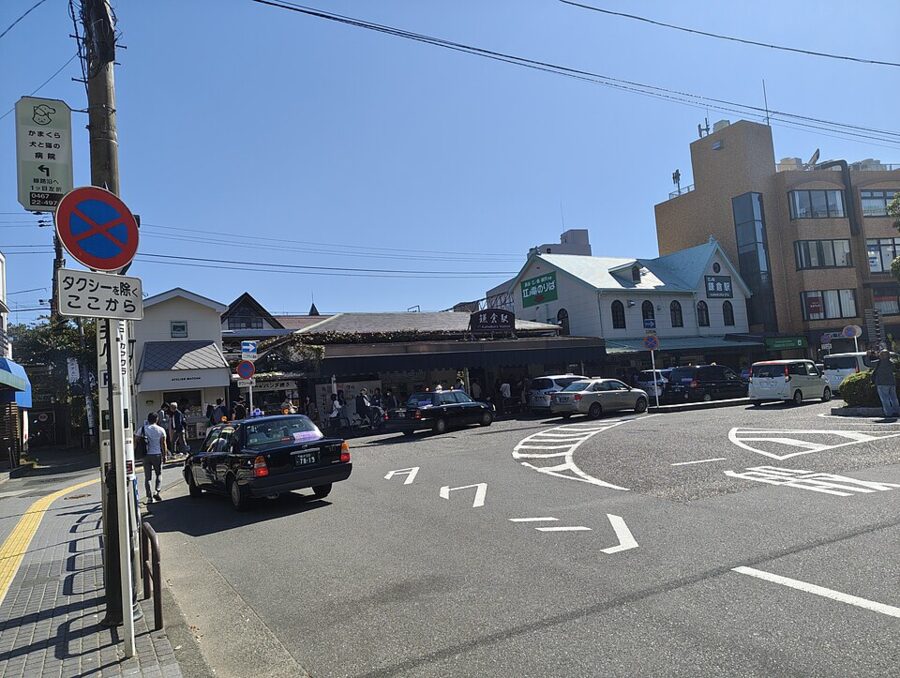
Kita-Kamakura (北鎌倉) is a station in a wooded valley with four of the city’s best temples within a 15-minute walk. Two of them, Kencho-ji and Engaku-ji, rank first and second among the Kamakura Gozan, the five great Zen monasteries the shoguns ranked in the Middle Ages.
Engaku-ji
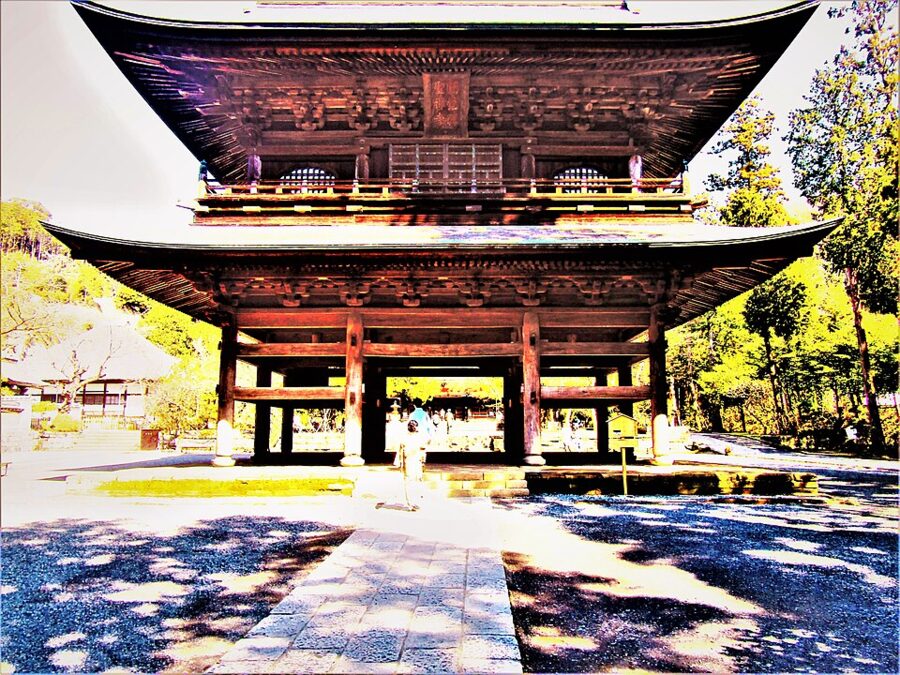
Engaku-ji (円覚寺) was founded in 1282 by the regent Hojo Tokimune, who invited the Chinese monk Wuxue Zuyuan (Mugaku Sogen in Japanese) to pray for the dead of the two Mongol invasions. The temple remembers the samurai and the invaders together. Monks still train here, and Natsume Soseki sat zazen in its halls.
The gate is a minute from Kita-Kamakura Station. Hours are 08:30–16:30 in March–November and 08:30–16:00 in December–February, with half an hour after that to leave the grounds; admission is ¥500, ¥200 for children. The buildings climb up the valley in a line from the Sanmon gate to the Butsuden and the abbot’s quarters. Eating is not allowed anywhere in the grounds; drinks only in the rest area.
The temple’s own guidance on seasons: cherries from late March to mid-April, hydrangeas from early to late June, maples from mid-November to mid-December.

Tokei-ji
Tokei-ji (東慶寺) is four minutes from the station on the other side of the tracks, and it asks two things of you. The first is nothing: the temple abolished its admission fee in July 2020, after it had closed its gate during the April 2020 state of emergency and the priest decided that everyone should be able to pray there on equal terms. It asks instead that you pray at the main hall and leave an offering. Hours are 09:00–16:00.
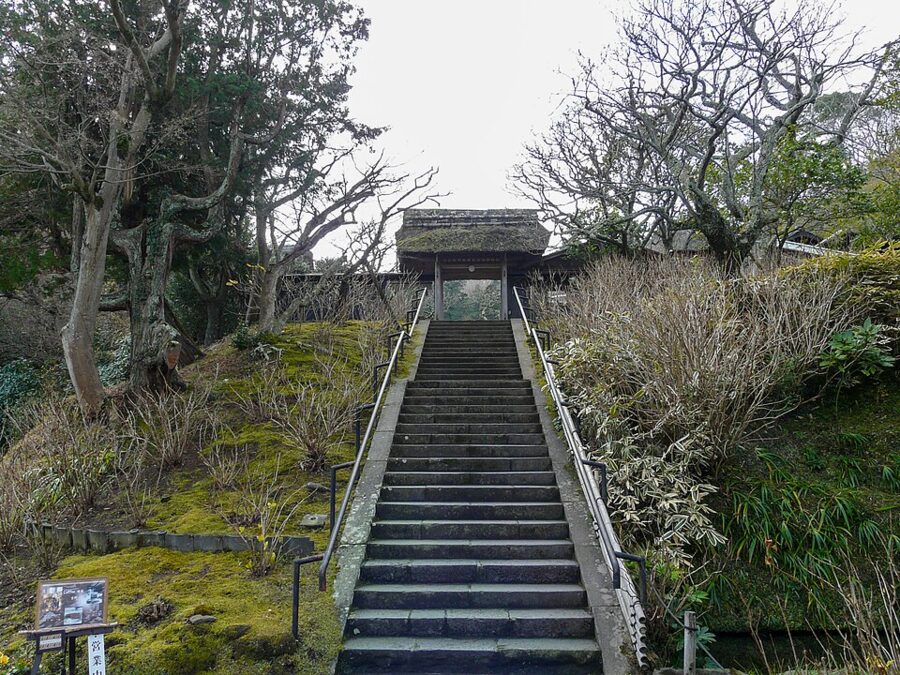

The second is your camera. Since June 7, 2022, Tokei-ji has banned all photography by visitors, phones included, after people trampled the moss and walked into closed areas for pictures.
In the Edo period this was one of the two shogunate-recognized “divorce temples,” where a woman could escape a marriage by taking refuge. It remains a place where you are asked to look. Its treasure house closes on the first and third Tuesdays of the month.
Meigetsu-in
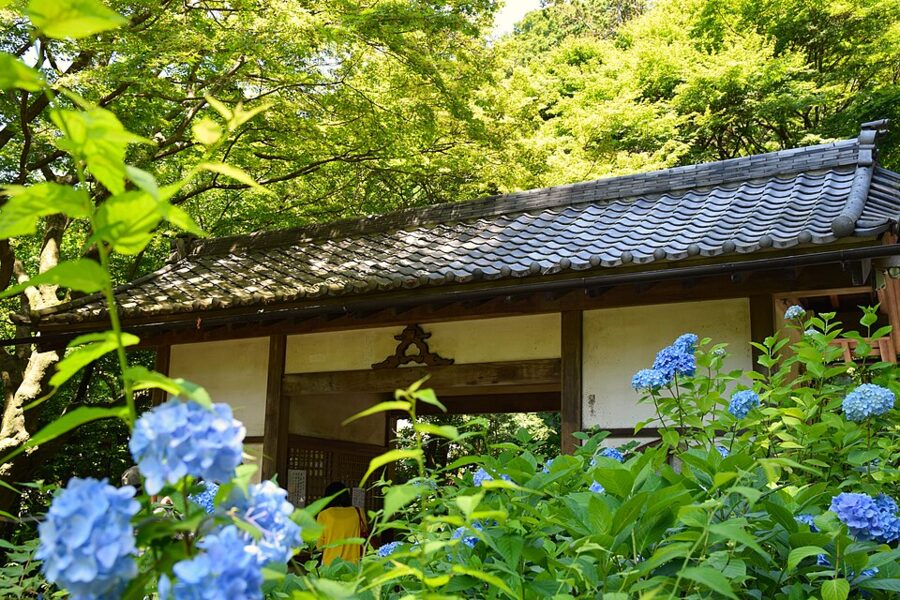
Meigetsu-in (明月院) is ten minutes up a side valley from the station and has no website of its own; the tourist association’s listing gives admission as ¥500 (¥300 for children) and hours as 09:00–16:00, which may change in June. The garden behind the main hall opens only in June, for the irises, and in November, for the maples, for another ¥500.
It is the hydrangea temple, and the blue of its flowers has its own name in Japanese, Meigetsu-in blue. The hydrangeas are not old. After the Second World War there were not enough stakes to edge the approach, so the temple planted hydrangeas because they were easy to keep, and the substitute became the reason people come. Inside the main hall, a round window frames the rear garden, one of the best-known views in Kamakura.
In June the approach is one slow line. Any other month it is a quiet half hour, and in late November the rear garden is the reason to pay twice.

Kencho-ji
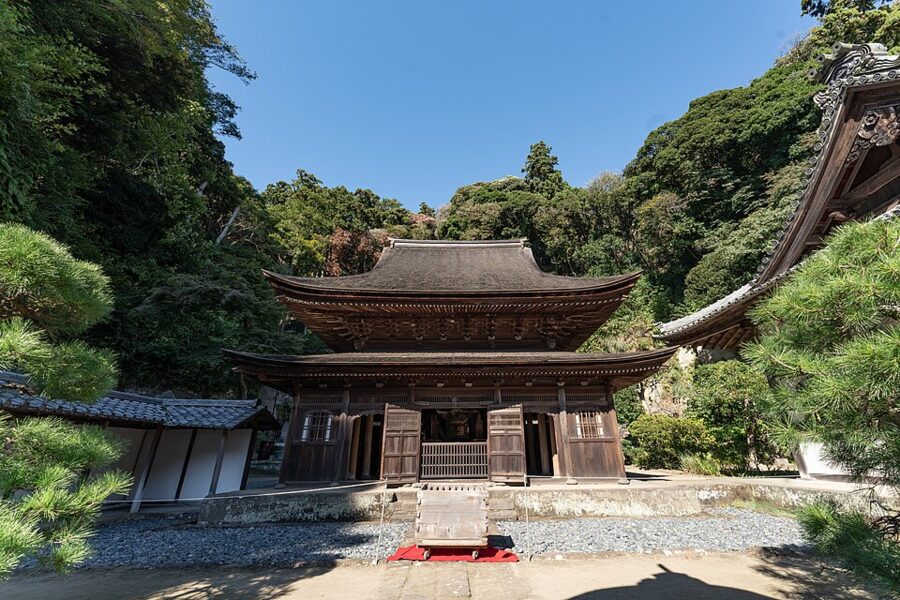
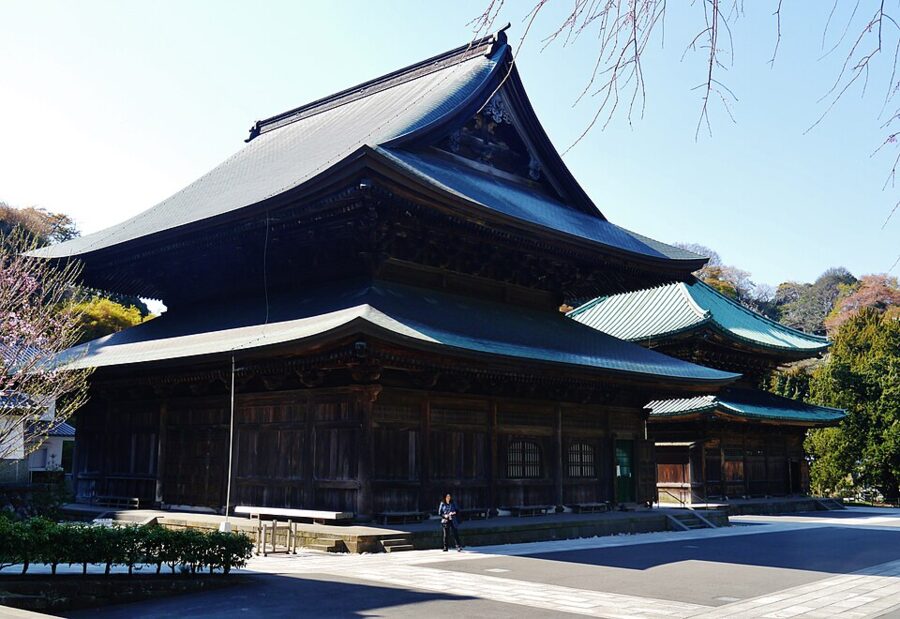
Kencho-ji (建長寺) is about 15 minutes’ walk from Kita-Kamakura toward Kamakura, or 30 minutes from Kamakura Station, and a short bus ride from either: five minutes from Kita-Kamakura, ten from Kamakura. It was completed in 1253 for the regent Hojo Tokiyori under the Chinese monk Lanxi Daolong, and it is the first of the Kamakura Gozan. Its gate, Sanmon, Butsuden and Hatto stand in a straight line in the Chinese manner, which you see best from the gate.
The hours are 08:30–16:30 and admission is ¥500 (¥200 for children), cash only. The fee applies to hikers too: the Ten-en trail starts behind the temple, past the Hansobo shrine on the hill behind the halls, and anyone who walks in that way is asked to pay. In 2028 the temple marks 750 years since the founder’s death.
Between Kencho-ji and Engaku-ji is Jochi-ji, the fourth of the Gozan and the start of the Daibutsu trail. If you are hiking to the Great Buddha, that is where you turn off.

Tsurugaoka Hachimangu, Wakamiya-oji and Komachi-dori
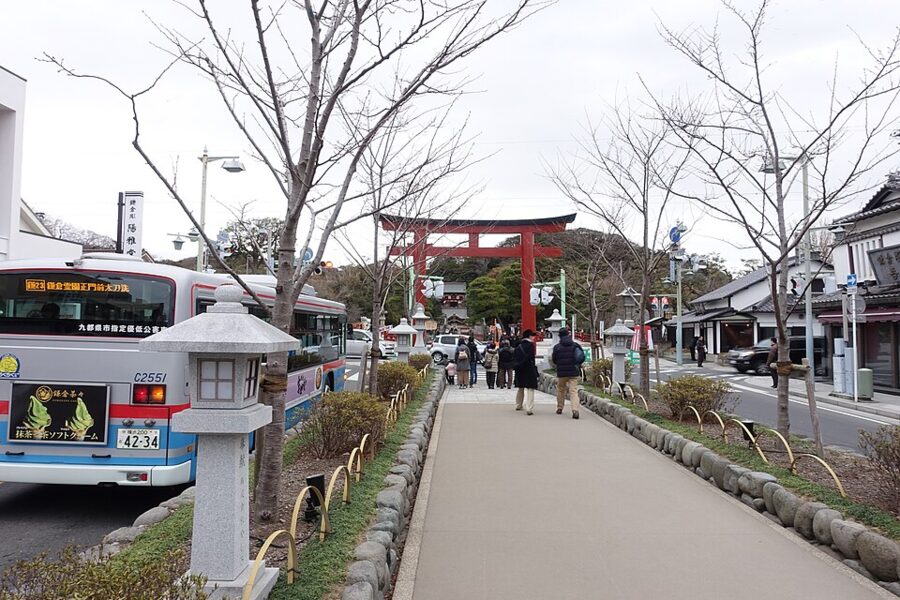
From Kencho-ji the road drops through a cutting and comes out at the back of Tsurugaoka Hachimangu (鶴岡八幡宮), the shrine the whole town is laid out around. Minamoto no Yoriyoshi founded it near the beach in 1063; Minamoto no Yoritomo moved it to the foot of the hill when he made Kamakura his capital, and it became the guardian shrine of the samurai. From Kamakura Station’s East Exit it is ten minutes on foot.
The grounds cost nothing to walk into. Climb the great stone steps to the main hall for the view straight down Wakamiya-oji to the sea; on a clear day you can see Izu Oshima. Beside the steps stood the great ginkgo, which fell in strong wind before dawn on March 10, 2010. Its shoots are growing beside it, and a section of the trunk is shown in the cafe of the shrine’s museum.
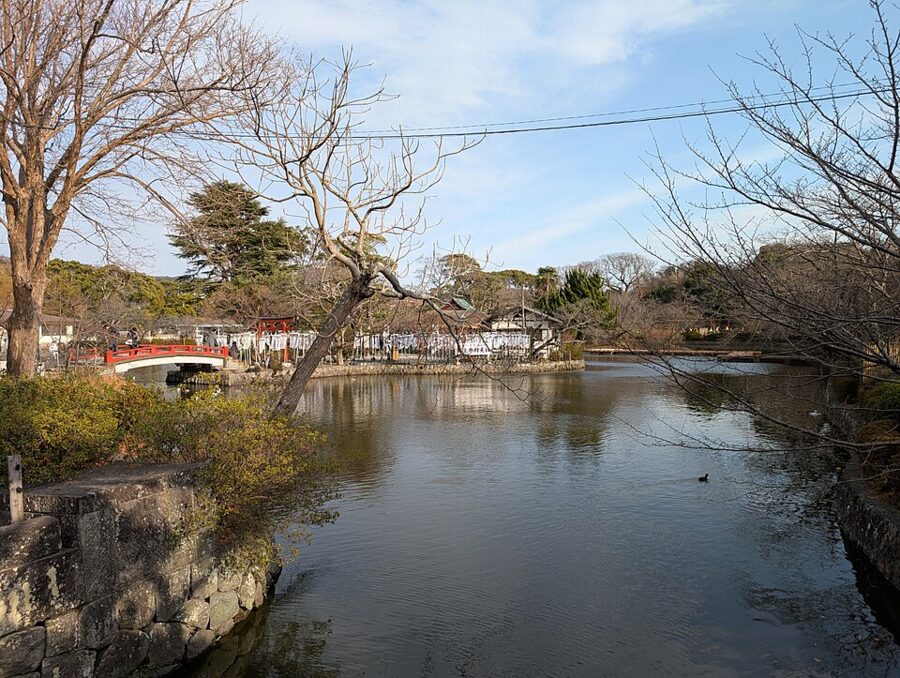
Below, the two ponds are a lesson in Kamakura politics. The Genji pond, for Yoritomo’s side, has three islands, a number read as birth; the Heike pond, for the defeated enemy, has four, read as death. Every September 16, the shrine holds yabusame, mounted archery at full gallop, on the riding ground that crosses the precinct.
Wakamiya-oji and the Dankazura
Wakamiya-oji (若宮大路) runs about 1.8 km dead straight from the beach to the shrine, under three torii. Yoritomo laid it out in 1182, modeled on the grand avenue of Kyoto, as a prayer for his wife Masako’s safe childbirth. Between the second and third torii, the middle of the road is raised into a walkway lined with cherry trees, the Dankazura. It narrows as it nears the shrine so that it looks longer than its 480 m.
The Dankazura once ran the full length to the first torii; earthquakes, tsunamis and the railway cut it back to the stretch you can walk. On a crowded Saturday it is also the fastest way to the shrine, because Komachi-dori next to it is not.

Komachi-dori and the rules on eating as you walk
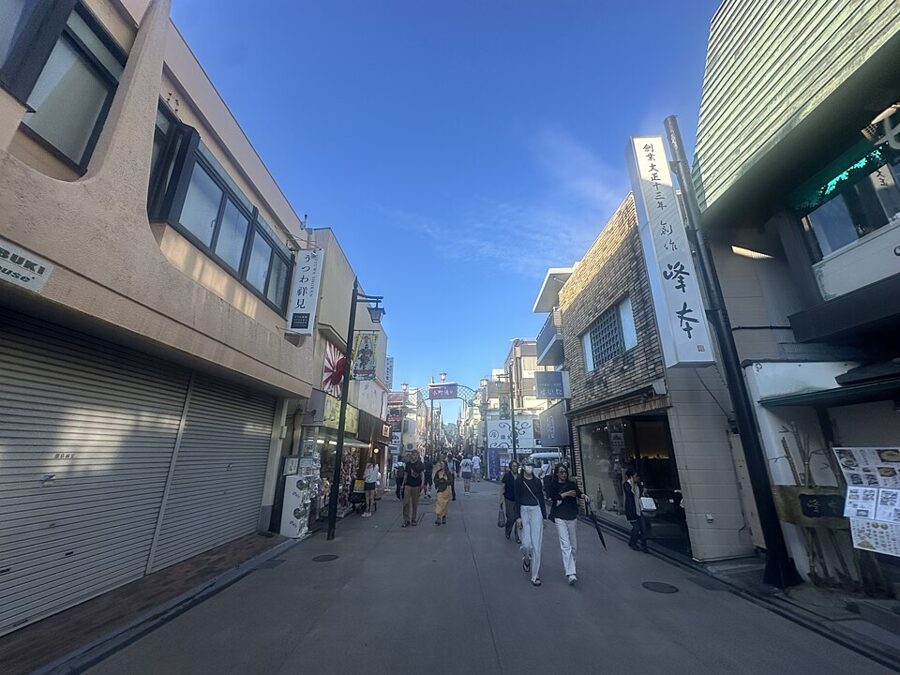
Komachi-dori (小町通り) is a one-way street about 360 m long that leaves the East Exit and runs parallel to Wakamiya-oji up to the shrine’s southwest corner. It was farmland until the station opened in 1889 and is a solid strip of snack stands, sweet shops, souvenir counters and cafes. On a weekend afternoon it moves at the speed of the slowest group.
Eating as you walk is the issue, and the rules are not what people think. Kamakura’s public manners ordinance, in force since April 1, 2019, lists eating while walking in narrow or crowded places among its nuisances, along with stopping in the road for photos, but it carries no penalty. The city says plainly that it bans nothing and asks for cooperation. In April 2026 the city published a draft of a wider tourism manners ordinance.
The temples are stricter. Engaku-ji allows no food anywhere in its grounds, and since a notice of September 17, 2026, Kotoku-in refuses entry to anyone carrying street food or a drink in a cup; sealed bottles are fine. Eat at the stall, then walk.
Two more things the tourist association’s guidelines spell out. Smoking on the street is banned in designated zones, including the stretch from the station to the shrine, and a smoker who ignores an order to stop pays ¥2,000. And the black kites circling over the beach and the shopping streets take food out of hands, so eat with your back to a wall. Bins are scarce; take your trash with you.

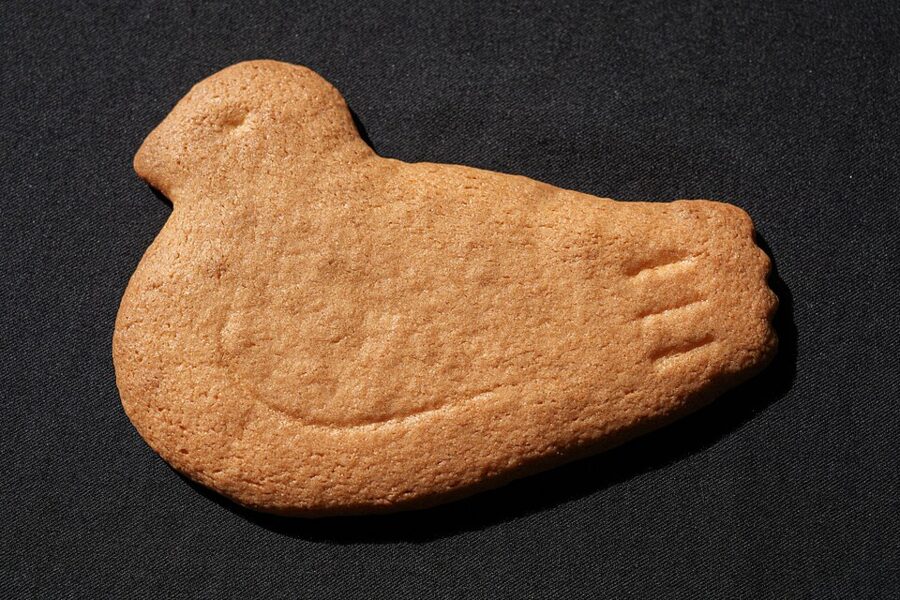
The souvenir everyone carries home is Hato Sablé, the dove-shaped butter biscuit Toshimaya has made since the Meiji era. Its main store is on Wakamiya-oji at 2-11-19 Komachi, open 09:00–19:00 and closed on some Wednesdays (open on holidays). It is also sold at Daimaru Tokyo and in shops inside Tokyo Station, so there is no need to carry a tin around the temples all day.

Hase: the Great Buddha and Hase-dera
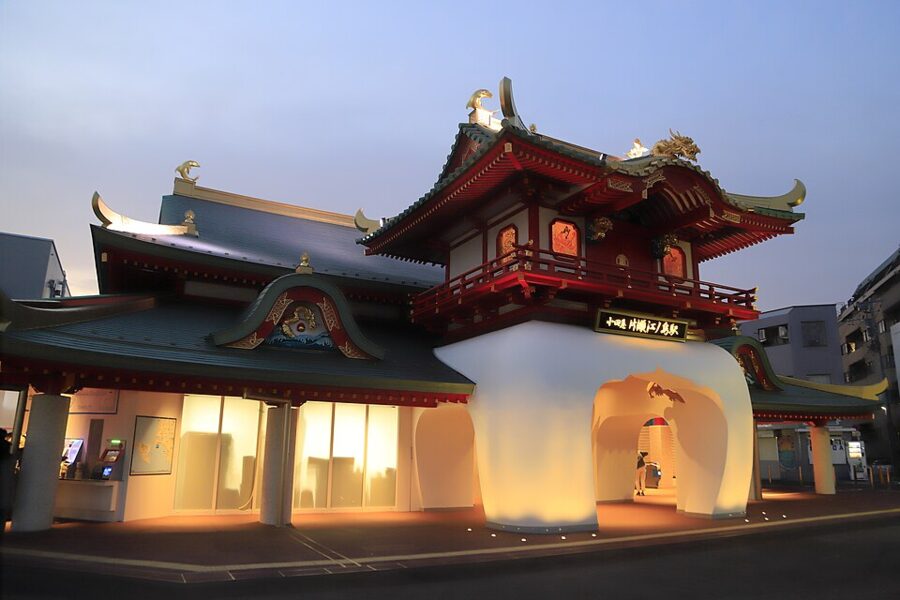
Hase is four minutes and ¥200 from Kamakura on the Enoden. From Hase Station, Hase-dera and Kotoku-in are both a short walk inland, five minutes apart.
Kotoku-in and the Great Buddha
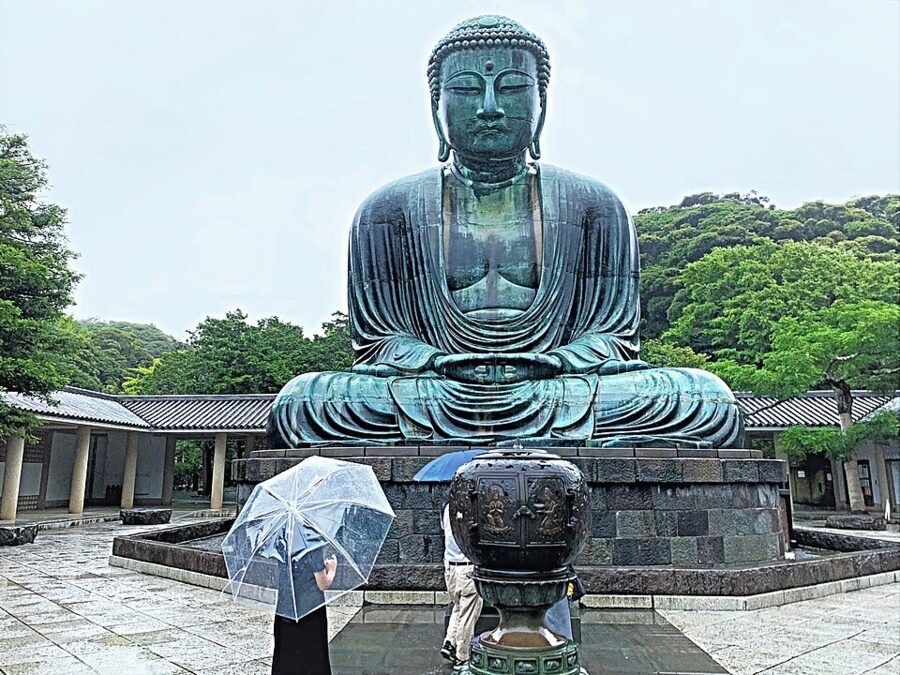
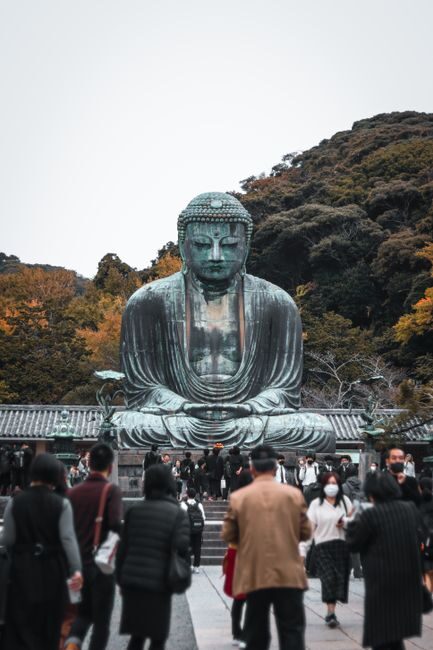
The Great Buddha of Kamakura (鎌倉大仏) is a bronze Amida, about 11.3 m tall and 13.35 m on its pedestal, weighing about 121 tonnes. The shogunate’s chronicle records casting starting in August 1252; who designed it is unknown. It was cast in horizontal sections, seven for the body, and you can see the seams from inside.
It was once housed in a hall, which records say storms and earthquakes wrecked in 1334, 1369 and 1498. The Buddha has sat in the open since, and was designated a National Treasure on February 8, 1958.
Kotoku-in opens 08:00–17:30 in April–September and 08:00–17:00 in October–March, with last entry 15 minutes before closing. Admission is ¥300 for adults and ¥150 for children aged 6–12. Going inside the statue costs ¥50 more, 08:00–16:30 all year. The temple has no parking; drones are banned in the grounds and selfie sticks inside the statue.
Pay the ¥50. The inside of the Buddha takes three minutes, and the joins of the casting are the clearest explanation of how a 13th-century foundry made something this size.
Hase-dera
Hase-dera (長谷寺) climbs the hill above Hase in terraces, and its main hall holds a wooden eleven-headed Kannon 9.18 m tall, one of the largest wooden statues in Japan. Temple legend says a monk carved two Kannon from one camphor tree in 721; one went to Hase-dera in Nara, the other was set adrift and came ashore on the Miura Peninsula 15 years later. The temple lists its founding as 736.
Admission is ¥400, ¥200 for children. The gate admits 08:00–16:30 and closes at 17:00 for most of the year; from April to June it admits until 17:00 and closes at 17:30. Pets go only in closed carriers and not into the halls.
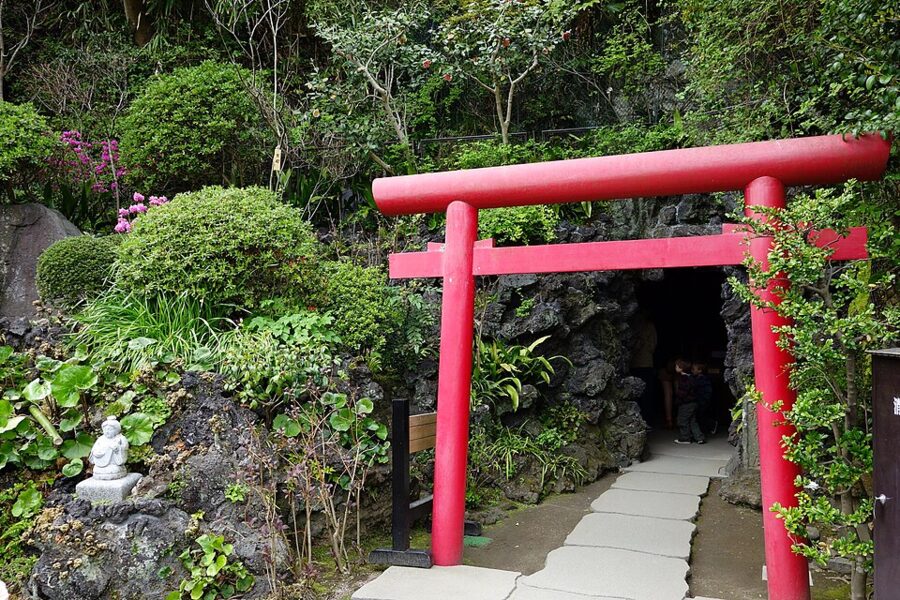
The lookout terrace in front of the Kannon hall faces south over the roofs of Hase to Yuigahama and the bay, and it is worth the climb in any season. Lower down, by the pond in front of the Benten hall, the Benten-kutsu cave has the goddess Benzaiten and her sixteen child attendants carved into its walls. The halls themselves were rebuilt after the 1923 earthquake.
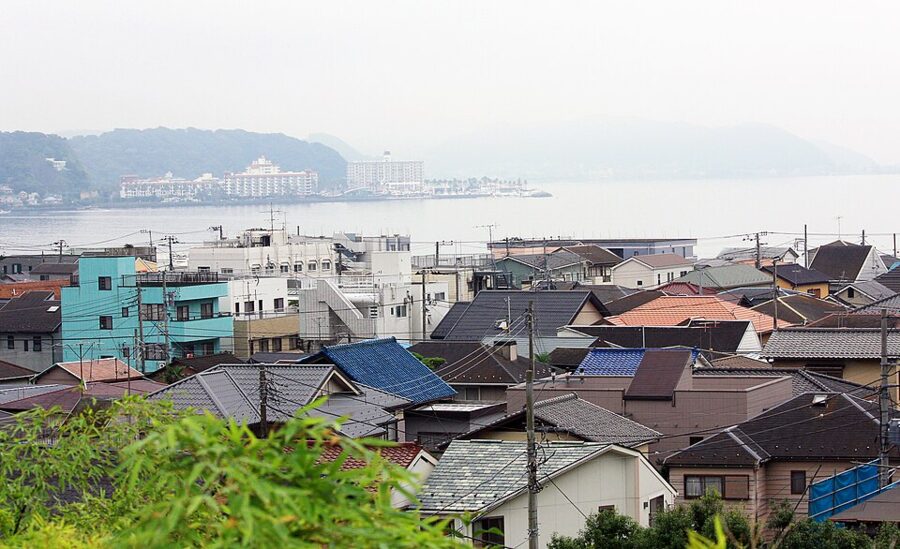

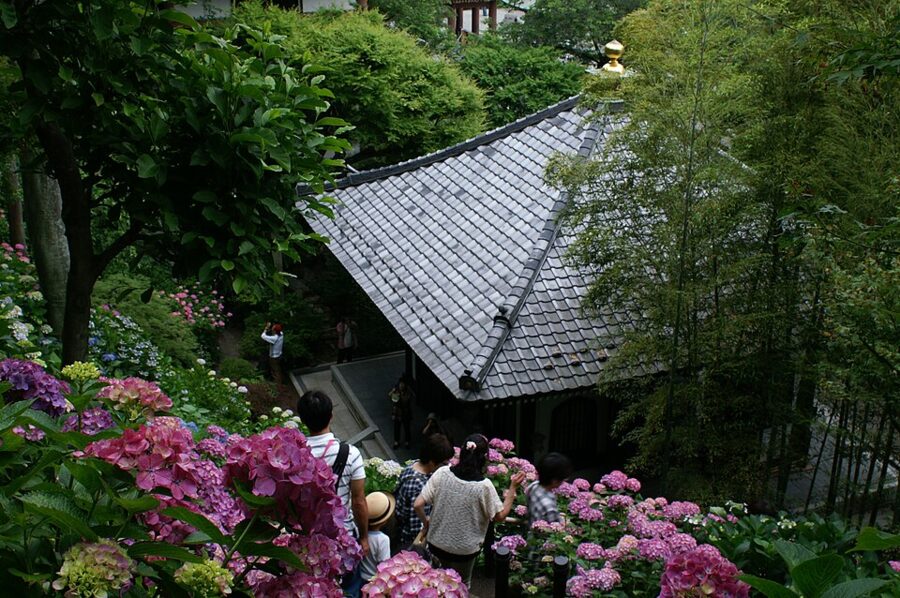
June is the hard month. Hase-dera’s hillside path carries about 2,500 hydrangea plants of 40 varieties, and the temple posts the bloom like a weather report. In 2026 the first flowers opened on May 28, the slope was 40–50% out on June 4, at its peak on June 11, late varieties were still opening on June 19, and the season was over by June 26. In season the temple sells tickets for the hydrangea path through its online ticket page; outside June the page has nothing for sale.


The hiking trails between the temples
Kamakura is ringed by low wooded hills on three sides, with the sea on the fourth, and the ridges carry trails that link the temple districts. They are short and easy by any mountain standard, but they are real dirt paths with roots, steps and mud, and the city treats them as hiking courses. Wear shoes with grip, carry water and expect hornets from summer into autumn.
The Kuzuharaoka-Daibutsu trail
The Kuzuharaoka-Daibutsu trail joins Kita-Kamakura to the Great Buddha. It starts at Jochi-ji, climbs a short flight of steps, then runs along the ridge past Kuzuharaoka Shrine and Genjiyama before dropping down the Daibutsu-zaka to the main road at Hase. The tourist association rates it easy, with only the first steps near Jochi-ji as any climb.
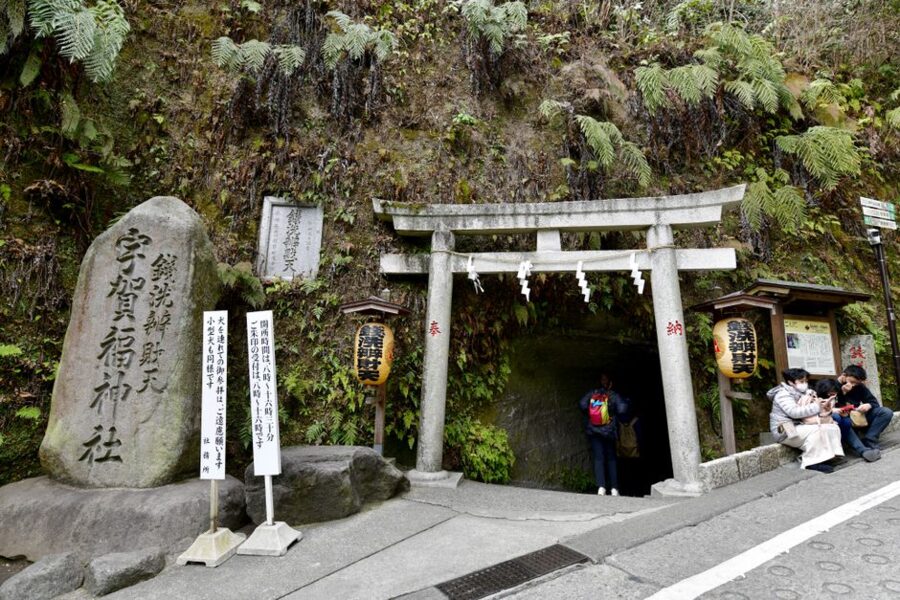
Kotoku-in gives the two ends from its side: the Daibutsu-zaka entrance is about ten minutes’ walk from the temple, and the Oyato entrance about 15. A short detour off the ridge drops to Zeniarai Benten, the cave shrine where people wash coins in spring water in the hope they will multiply; the legend has Yoritomo told of the spring in a dream. Bikes and motorbikes are banned on the trail.
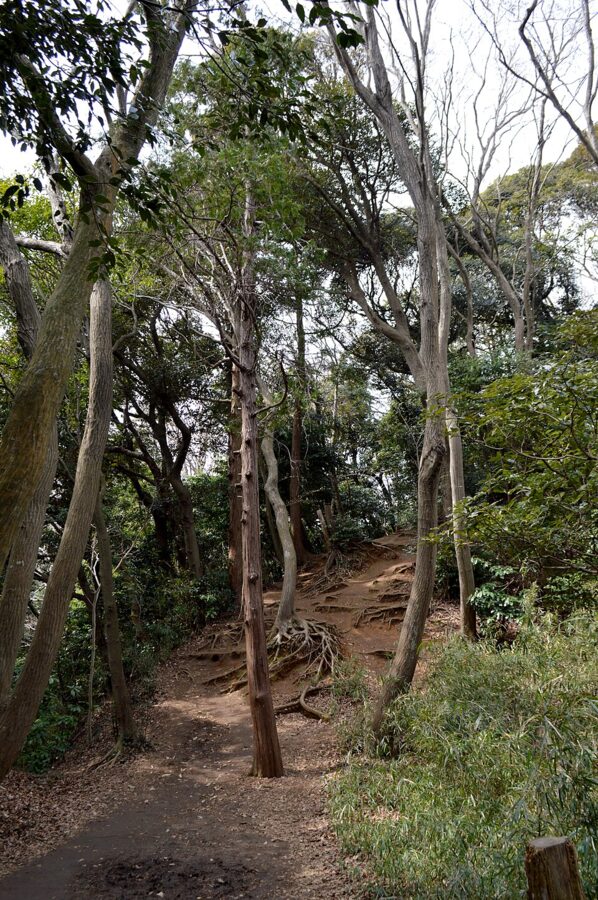
The Ten-en trail
The Ten-en trail is the longer ridge walk, from behind Kencho-ji over the hills on the city’s northeast edge to Zuisen-ji, about 1 hour 50 minutes on the city’s map. It was once a path for monks in training. The city lists the view near Juo-iwa, a carved rock on the ridge, among Kamakura’s signature viewpoints: the town, the ring of hills and Sagami Bay at once.
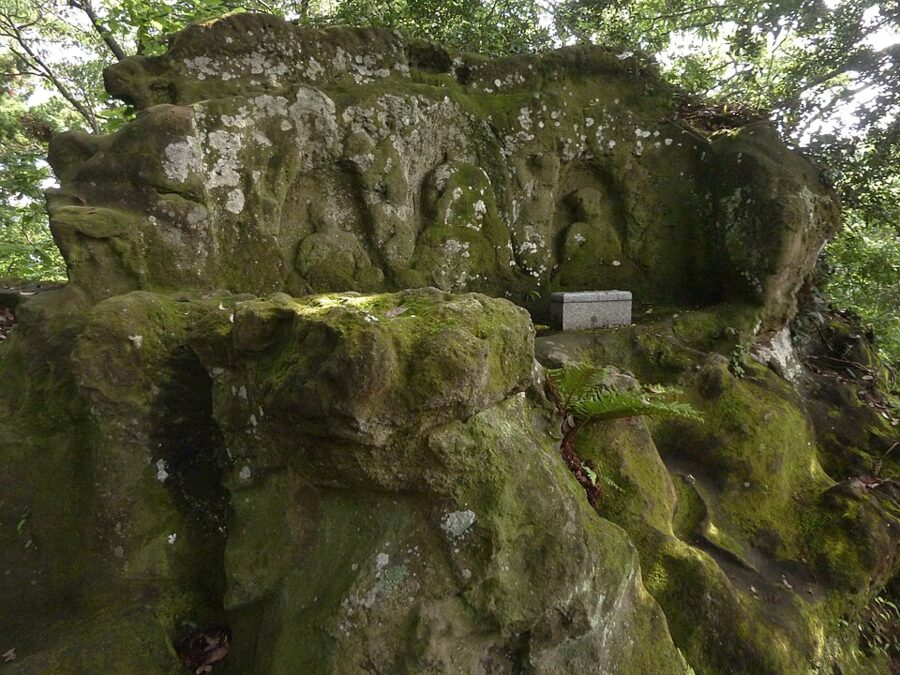

The trails close when trees come down, and the city posts each closure as a press notice. On March 3, 2026, a fallen tree shut the Ten-en trail between the Kakuon-ji entrance and the Ryokuendai entrance; it reopened at 16:00 on March 10. After a typhoon, assume the trails are shut until the city says otherwise: after the September 2019 storm, the city closed every course in principle.
One old route stays closed. The Shakado Kiridoshi, the tunnel-like cutting between Omachi and Jomyo-ji, has been off limits since rock falls; the city has scheduled paving work in fiscal 2026 and plans to reopen it by the end of that fiscal year, March 2027. Until then the historic site is open only from the Omachi side, with no way through.
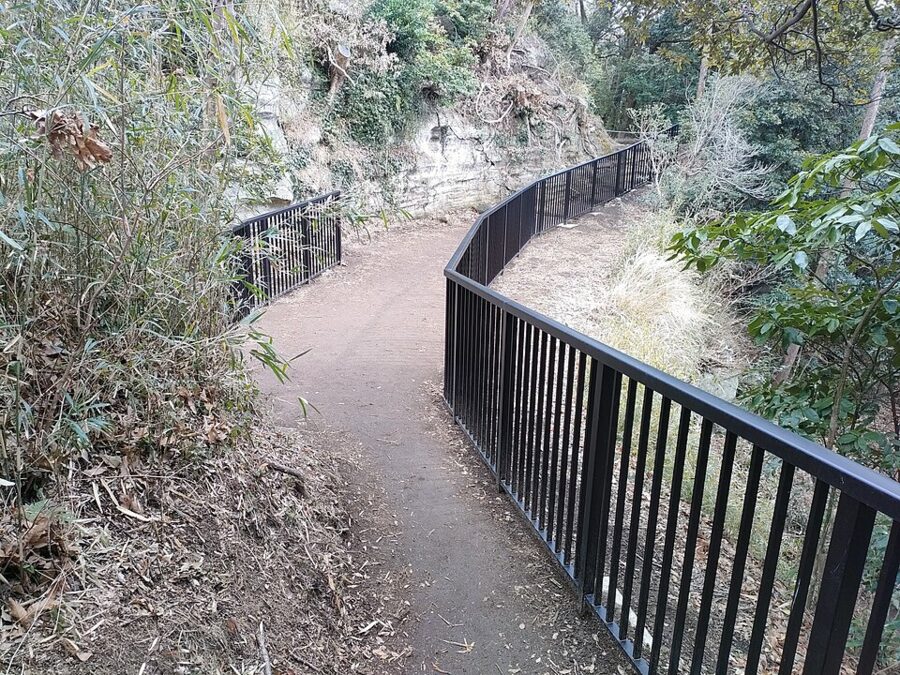

The Enoden, Enoshima and the beaches
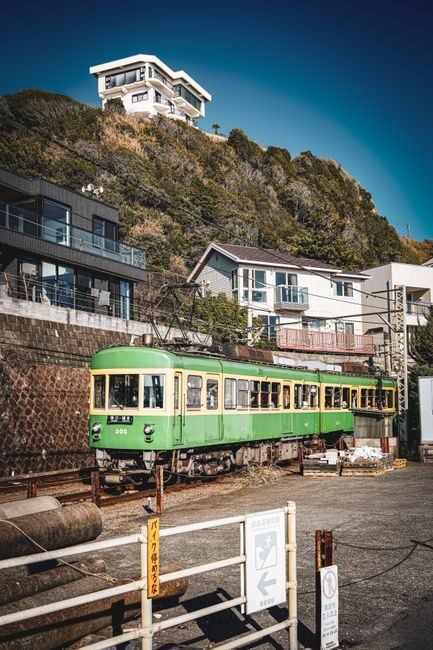
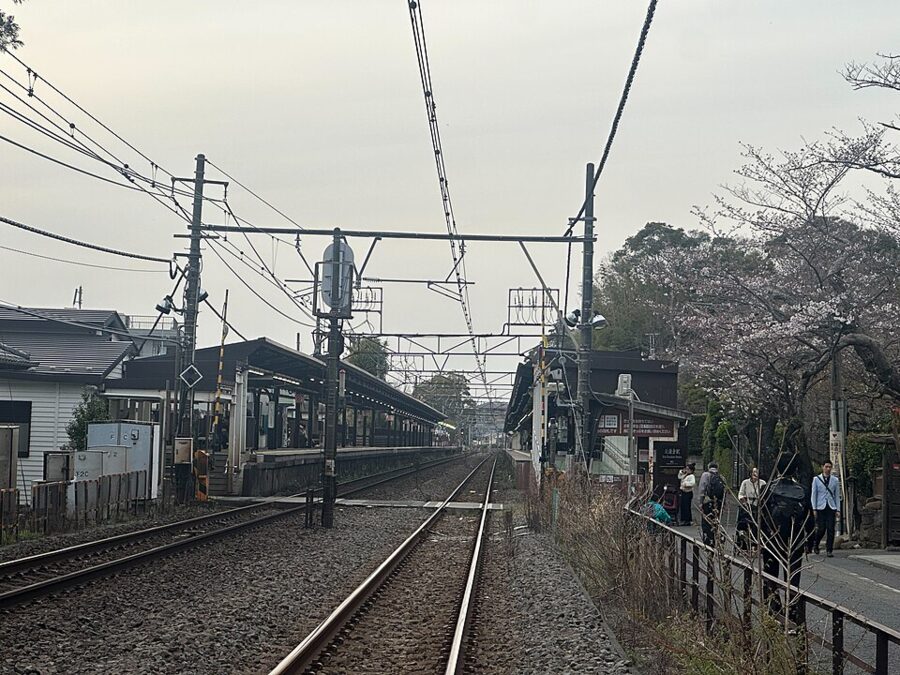
The Enoden (江ノ電), the Enoshima Electric Railway, links Kamakura and Fujisawa through 15 stations, single track all the way. Its fares run from ¥200 to ¥310: ¥200 and four minutes to Hase, ¥220 to Gokurakuji, ¥260 and 19 minutes to Kamakurakokomae, ¥260 and 24 minutes to Enoshima, ¥310 and 37 minutes to Fujisawa. IC cards work at every station.
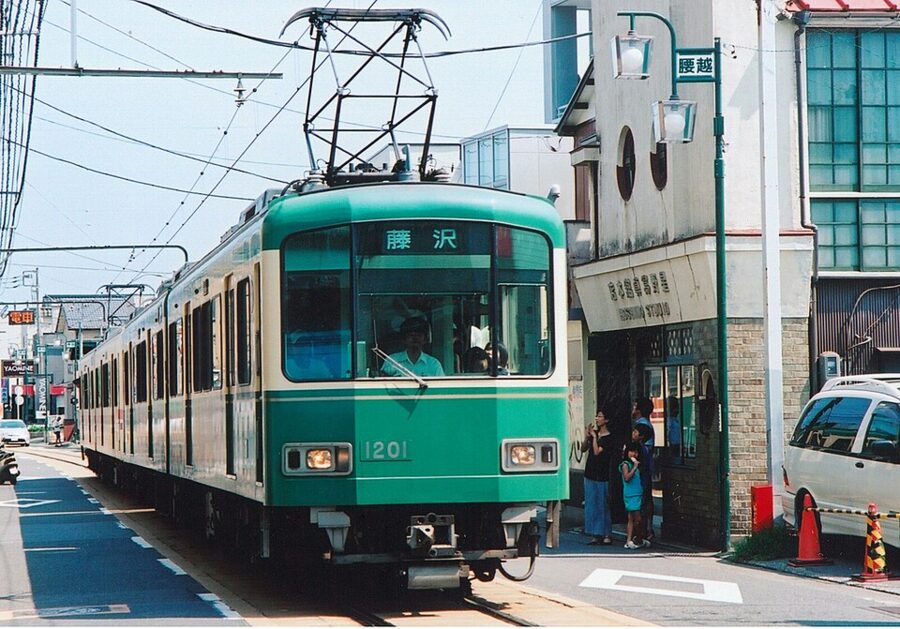

Which pass pays
The Enoden’s one-day ticket, Noriorikun, is ¥800 (¥400 for children), valid on the day of issue from any station’s machine or as a phone ticket. It pays less often than it looks. Kamakura to Hase, Hase to Enoshima and Enoshima back to Kamakura come to ¥720 at single fares; the pass only wins on a fourth ride.
The local passes are listed on the tourist association’s transit page. The one worth knowing is the Kamakura Free Kankyo Tegata, ¥900: the Enoden between Kamakura and Hase plus the Keikyu and Enoden buses from Kamakura Station’s East Exit to Kita-Kamakura, Jomyo-ji (for Hokoku-ji) and the Daibutsu. It is sold at the Enoden’s Kamakura and Hase stations, 06:50–17:00. It suits a day built on buses between the temple districts; if you walk everywhere, the ¥200 Enoden fare to Hase is all you need.
The crowd measures
The Enoden is the one place in Kamakura where crowds become a transport problem. During Golden Week the city runs a scheme, with the railway, that lets residents along the line enter Kamakura Station first if the line for the Enoden spills outside the gates. In 2026 it ran May 3–5, and the city issued 519 resident certificates; the line never left the station, so it was never used.
Kamakurakokomae is the other pressure point. The level crossing by the sea there is famous from a basketball anime, and people stand in the road to photograph trains against the water. From October 1, 2025 to March 31, 2026, the city paid security guards, three to five a day from 10:00 to 18:00, to keep people moving. An AI camera trial ran from December 19, 2025 to March 31, 2026, and the live camera feed of the area has continued since.
The crossing is on a residential road where cars and the Enoden both run. Take the picture from the pavement, give the people who live there the road, and move on. The station has no shops to speak of; its toilet, after repeated damage, opens only 10:00–18:00.
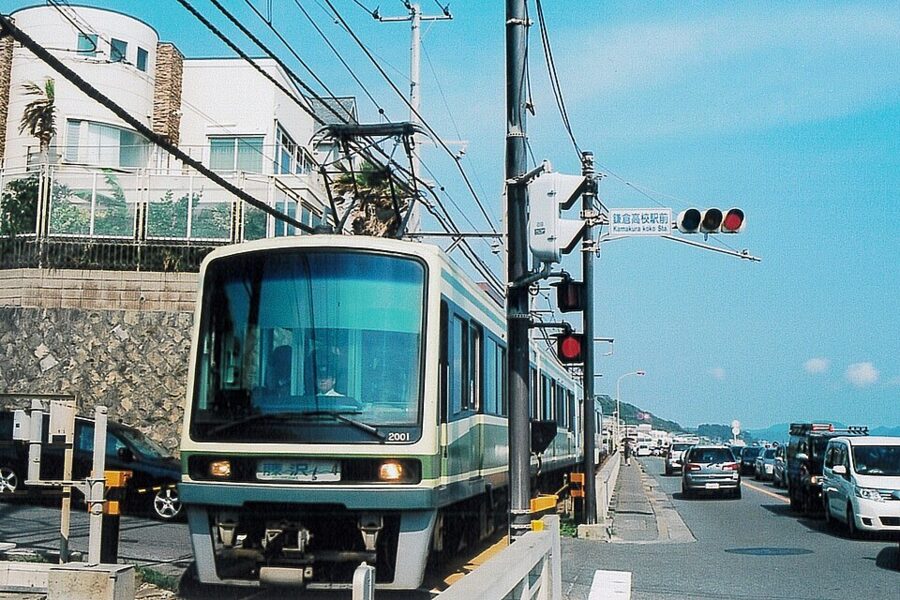

Enoshima
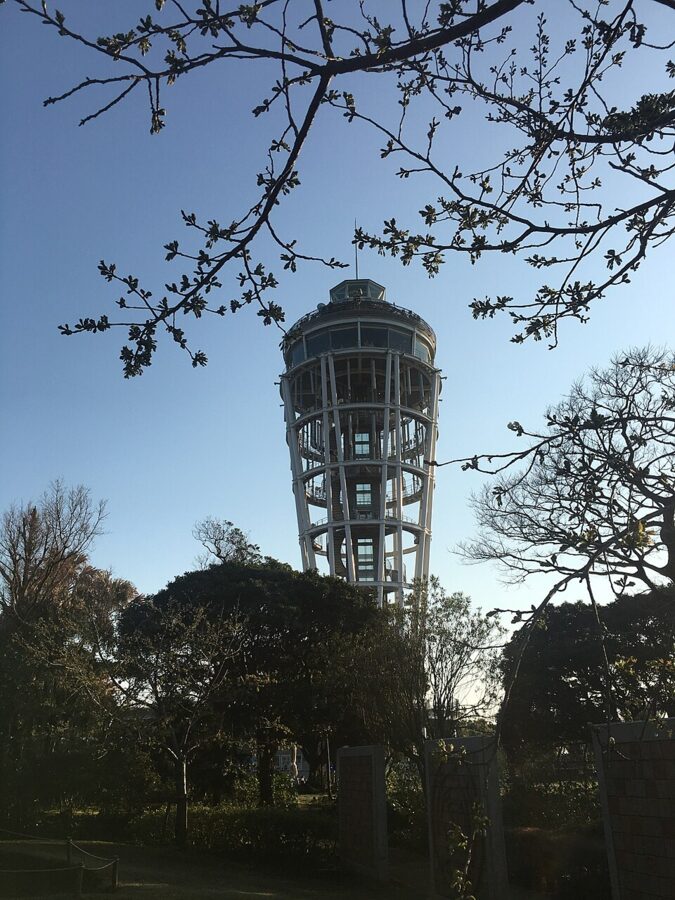
Enoshima (江の島) is the island at the west end of the line, 24 minutes and ¥260 from Kamakura, across a long bridge from Enoshima Station or Odakyu’s Katase-Enoshima. The shrine to Benzaiten sits halfway up, a shopping street climbs to it, and the top of the island is the Samuel Cocking Garden with the Sea Candle observation tower.
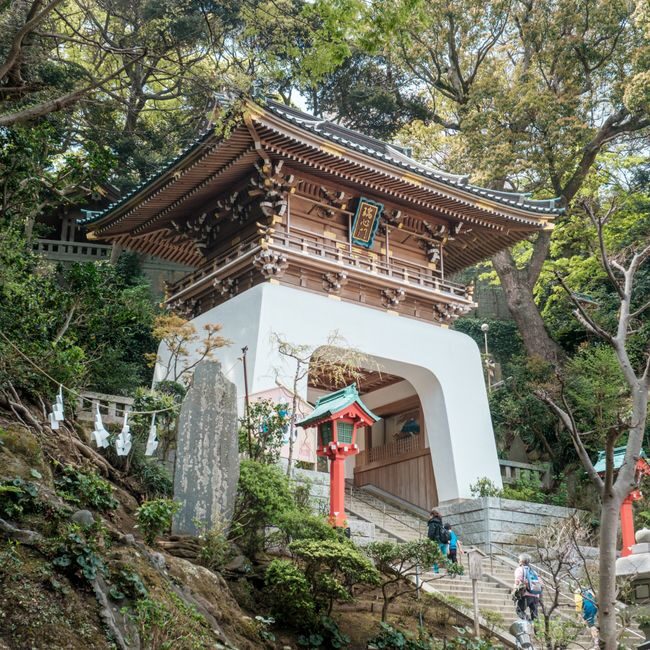
The prices changed in October 2025. The garden is free 09:00–17:00 and ¥500 after 17:00 on event nights; the Sea Candle is ¥800; the Escar, a chain of escalators up the island in three sections, is ¥500.
A set ticket for all three is ¥1,100, and an Enoshima one-day ticket that adds the Iwaya caves at the far end of the island is ¥1,550. The garden is open 09:00–20:00. Every winter, from early December to the end of February, it holds an illumination, and evening entry is charged.
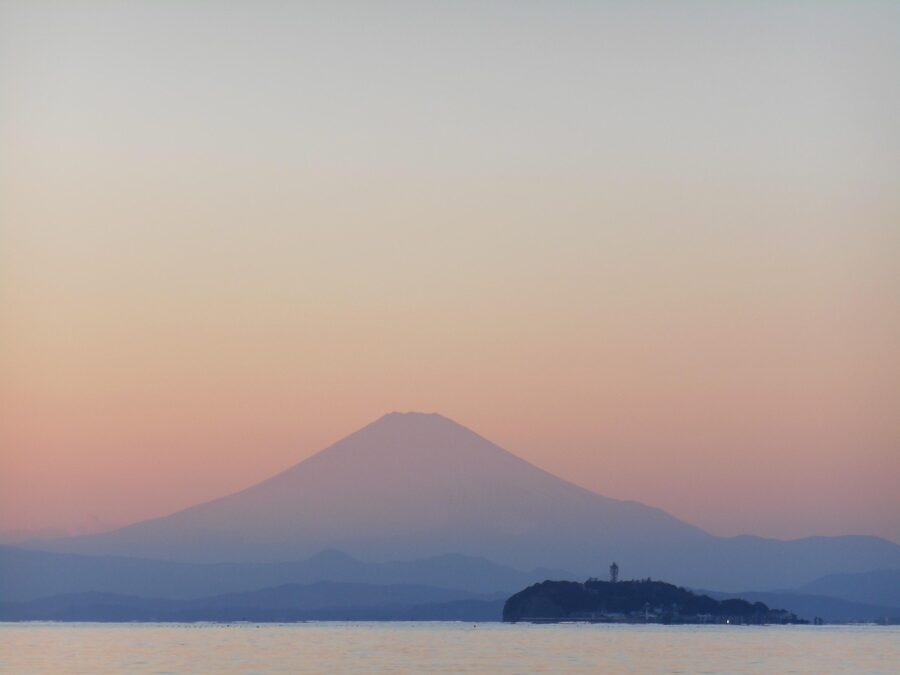
The Escar saves a climb, and the stairs beside it are free. Pay for the Sea Candle only on a clear day, when Mount Fuji can stand over the sea to the west.

The beaches
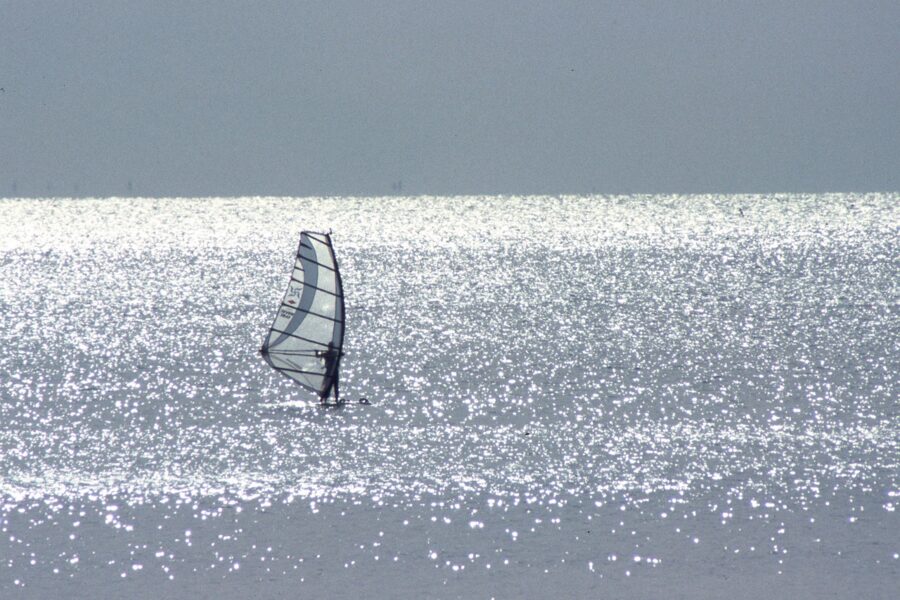
Kamakura has three swimming beaches: Zaimokuza and Yuigahama, either side of the river at the foot of Wakamiya-oji, and Koshigoe toward Enoshima. The city opens them for swimming for two months each summer; in 2026 the season ran July 1–August 31, with lifeguards, drones and an AI camera watching for rip currents. Yuigahama has held the international Blue Flag every year since 2016, the first beach in Asia to get one.
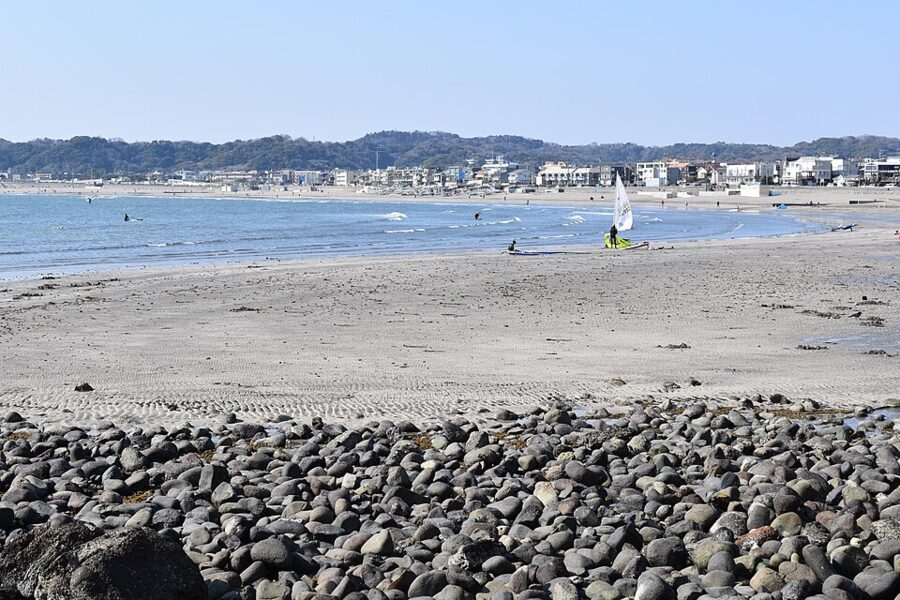

The 2026 season drew 656,020 beachgoers, the most since 2019 and 47% more than in 2025. Outside July and August the beaches are open sand with no lifeguards and plenty of surfers, and Yuigahama is one Enoden stop from Hase. It is the right place to end a weekday plan: sit on the sea wall, and the kites will try for your snack.
Eating: shirasu, Kamakura vegetables and a few teahouses
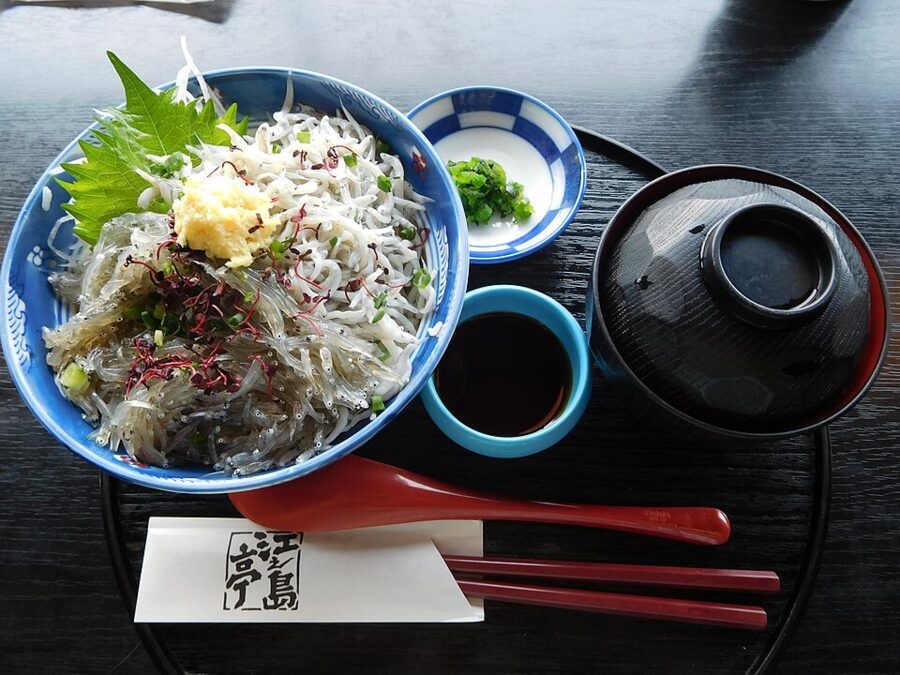
The dish of this coast is shirasu, the tiny translucent young of sardines caught in Sagami Bay. It comes on rice as shirasu-don, either kamaage (boiled, soft and salty) or nama (raw, slippery and slightly bitter), and sometimes both in one bowl. Shops along the Enoshima approach street and around Koshigoe put it at the top of the menu. Raw shirasu depends on that day’s catch, so it is the bowl that runs out.

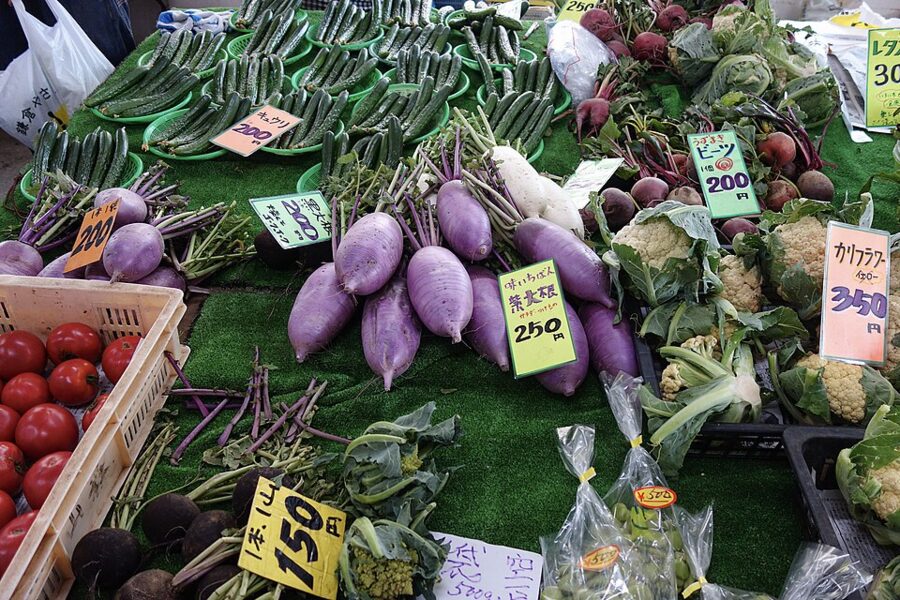
Kamakura vegetables are the other local food, and the one Tokyo chefs come for. The farms are small, in the north and west of the city, and grow many crops on one plot, a pattern locals call “seven-color fields.” The mild, rarely frozen winter makes the winter roots sweet, and the stalls carry fennel, zucchini, colored carrots and herbs next to the daikon. At the farmers’ market a few minutes from the East Exit, set up by local growers in the late 1920s on the model of European markets, the farmers themselves take turns at the stalls.

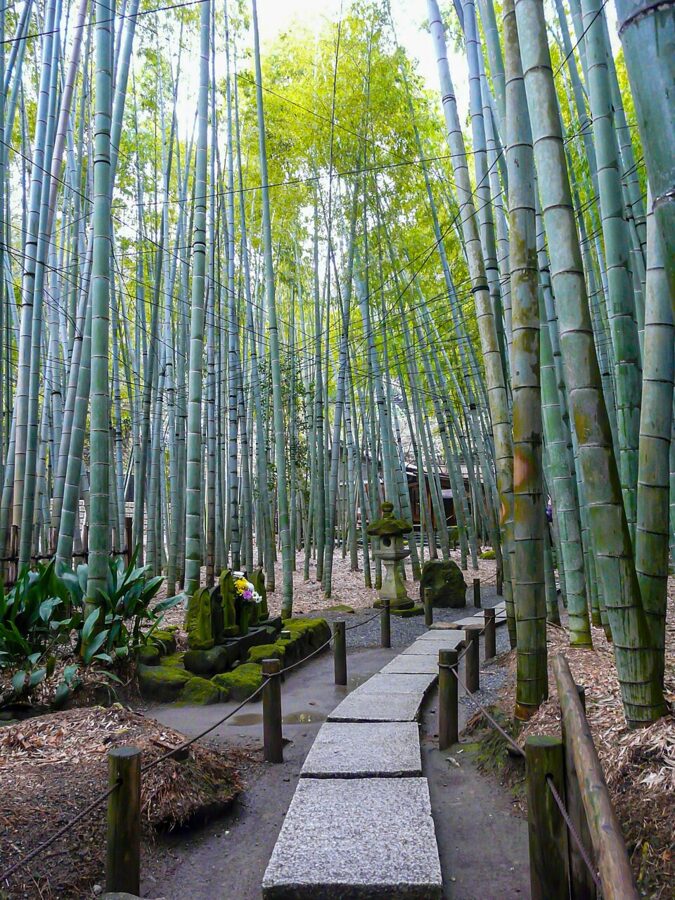
For tea, go to a temple. Hokoku-ji, the bamboo temple out at Jomyo-ji, serves matcha with a dry sweet on benches in its grove of moso bamboo for ¥600, on top of the ¥400 entry, 09:00–16:00 with the last tea order at 15:30. Tripods and selfie sticks are banned.

Engaku-ji’s Benten teahouse, up the steps by the great bell, opens at 09:00 and closes an hour before the temple, with summer and winter breaks. Tsurugaoka Hachimangu has a tearoom supervised by the Hikage Chaya kitchen in its grounds, serving sea-bream rice with tea.
Lunch on Komachi-dori is easy and forgettable; lunch near Hase or on Enoshima, with a bowl of shirasu, is the meal of the day. For where to eat once you are back in the city, the Tokyo food guide picks up the evening.
Crowds, seasons and the day to go
Kamakura’s own figures explain the crowds. The city counted about 16.06 million visits in 2025, up 0.74% on 2024; it first announced 16.2 million and corrected it on September 11, 2026 after miscounting beachgoers. In the same release the city says its aim is not more visitors but spreading them out.
The worst days are predictable. In Golden Week 2026, the crowd around Kamakura Station peaked at about 14:00 on May 5, at about 130% of the same day in 2025, with most days of the holiday at 110–130% of the year before. The city put volunteer guides at both exits and at Hase, signs pointing to Hase on the west side, and traffic marshals on Komachi-dori and at the Hachimangu crossing.
The seasons stack on top. Plum blossom peaks in mid-February, cherry blossom from late March to mid-April, hydrangeas through June and the maples from mid-November to mid-December, by the temples’ and the tourist association’s reckoning. June is also the rainy season; the Tokyo weather guide covers what that means for a day out. New Year is its own category: Tsurugaoka Hachimangu draws about two million people for the first shrine visit of the year.
Before you pick the order, look at the tourist association’s congestion map, which shows the usual crowding at each sight by day of the week and hour. Whichever district shows quieter at your hour goes first.
Getting back, and when to stay the night
On the timetable JR East posts for Kamakura Station in late 2026, the last up train through Tokyo Station leaves at 23:07, every day of the week. Two later trains, at 23:20 and 23:39, run only as far as Shinagawa, where you change. The last direct Shonan-Shinjuku Line train to Shinjuku leaves much earlier: 21:16 on weekdays and 21:39 on Saturdays, Sundays and holidays. After that, ride the Yokosuka Line to Shinagawa and change to the Yamanote.
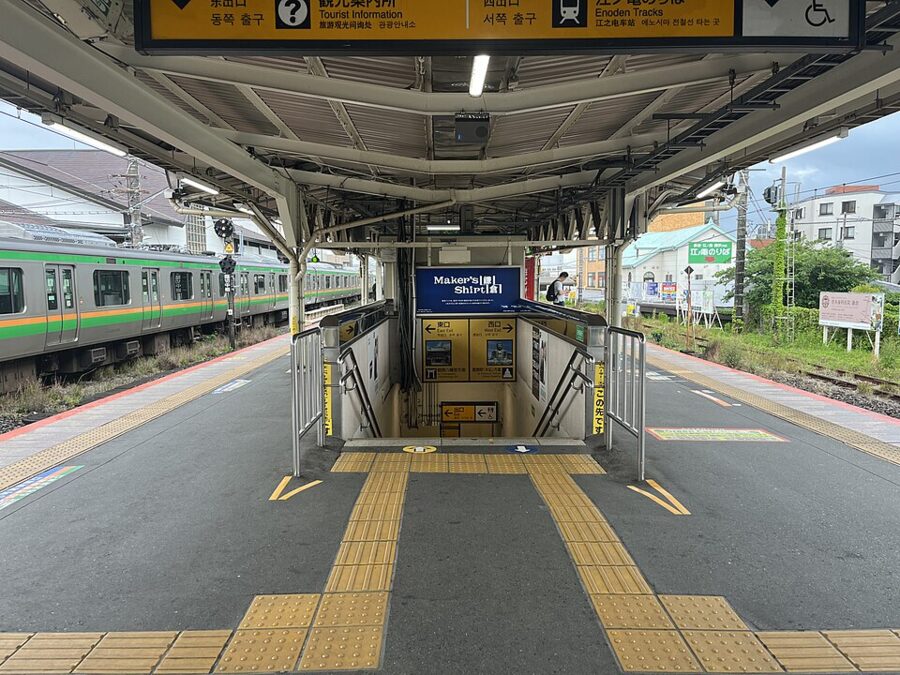

The temples all close within the same hour or so, and the station then takes most of the town at once. Either leave by 15:30, or stay for dinner and take a later train. If you go on to Yokohama for the evening, it is 25 minutes up the same line and a far better place to spend one.
Staying over makes the plan easy, because the best hours in Kamakura are the first ones. A night in town puts you at Engaku-ji or Kotoku-in at opening without a 07:00 train. The tourist association suggests Ofuna, the junction one stop past Kita-Kamakura, as a base, with direct trains to Yokohama, Shinagawa and Tokyo.
Kamakura City is studying an accommodation tax of its own and has put the plan out for public comment; as of November 2026 none is charged. For a room back in the city, see the best hotels in Tokyo; the Tokyo travel guide covers the rest of the trip.
Whichever way you run it, plan backwards from the same two times. The Great Buddha’s gate opens at 08:00, and the last train through Tokyo Station leaves Kamakura at 23:07. Everything else fits in between.