

From Narita’s Terminal 2, the Keisei Skyliner reaches Nippori in 36 minutes for ¥2,580. A ¥1,500 bus to Tokyo Station takes about twice as long and costs a little over half as much. Nearly every arrival at Narita International Airport (成田国際空港) ends up choosing between those two, the JR Narita Express or a cab at a fixed fare, and where you are sleeping decides it more than anything else.
The short version, with fares as of November 2026, starts with where you sleep. For Ueno, Asakusa, Ikebukuro and the east and north of the city, take the Skyliner. For Tokyo Station, Shinagawa, Shibuya or Shinjuku without a change of train, take the Narita Express, which costs ¥3,140 to Tokyo Station and ¥3,330 beyond it.
For the cheapest ride to Tokyo Station or Ginza, take the ¥1,500 bus. For Asakusa, Higashi-Ginza or Shimbashi on a budget, take the Keisei Access Express, which runs straight onto the Toei Asakusa Line for ¥1,380 to Asakusa.
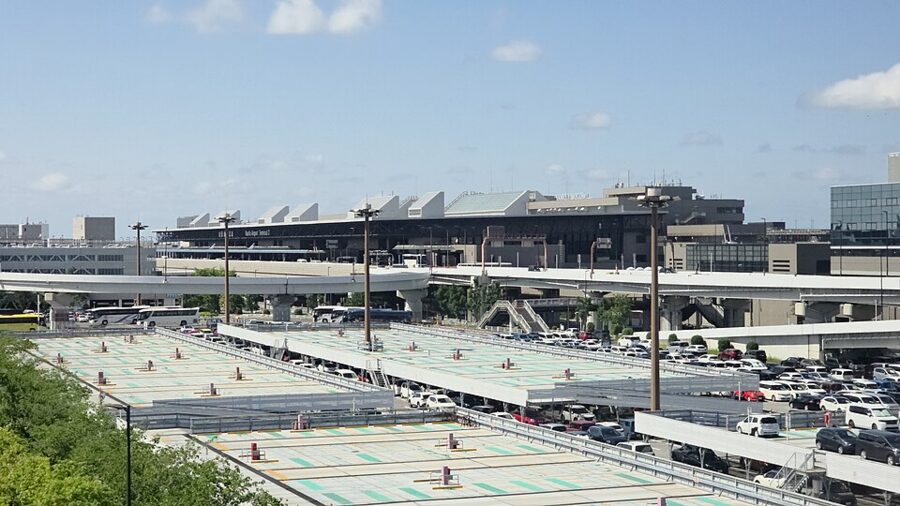

Narita sits more than 60 km east of central Tokyo, in Chiba, and that distance shapes everything below. The fast trains still take the best part of an hour, the cheapest fixed taxi fare is ¥23,500 before tolls, and the last fast train into town leaves at 23:00. Land later than that and the choice shrinks to a late-night bus at double fare or a taxi on the fixed-fare table.

Every fare, time and opening hour here comes from the airport’s or the operators’ own pages and is stated for late 2026. Two of them moved in 2026: JR East raised its fares on March 14, which lifted the Narita Express prices, and Keisei started a new Skyliner timetable on November 21. A third change sits at the end of the trip: from November 1, 2026, tax-free shopping became a refund you collect at the airport on the way out.


Narita to the city at a glance
One-way adult fares, for the trip from either airport station or the bus stops outside the terminals. Times are the operators’ own figures for the fastest regular service or the scheduled bus time, and buses run slower in traffic.
| Route | Fare | Time | Best for |
|---|---|---|---|
| Keisei Skyliner to Nippori or Keisei Ueno | ¥2,580 (¥2,310 bought online in advance) | 36 min to Nippori, 41 min to Ueno, from Terminal 2 | Ueno, Asakusa, Ikebukuro, Akihabara, east Tokyo |
| JR Narita Express to Tokyo Station | ¥3,140 | From 53 min | Tokyo Station, Marunouchi, Nihonbashi |
| JR Narita Express to Shinagawa, Shibuya or Shinjuku | ¥3,330 | About 75–80 min | The west side with no change of train |
| Keisei Access Express to Asakusa | ¥1,380 | About 1 hr | Asakusa, Nihonbashi, Higashi-Ginza, Shimbashi |
| Keisei Main Line to Keisei Ueno | ¥1,060 | About 80 min | The cheapest rail fare to Ueno |
| JR rapid train to Tokyo Station | ¥1,410 | About 90 min | A Japan Rail Pass without a seat booking |
| Airport Bus Tokyo-Narita to Tokyo Station or Ginza | ¥1,500 (¥3,000 late night) | About 68 min to Tokyo Station | Cheap, with one suitcase each |
| Airport Limousine to Shinjuku hotels | ¥3,600 | About 85–105 min | Big bags, a hotel on the route |
| Fixed-fare taxi to Shinjuku, Shibuya, Minato wards | ¥31,500–32,500 plus tolls | Traffic decides | Groups, small children, late arrivals |
The terminals: where you land and how you get out
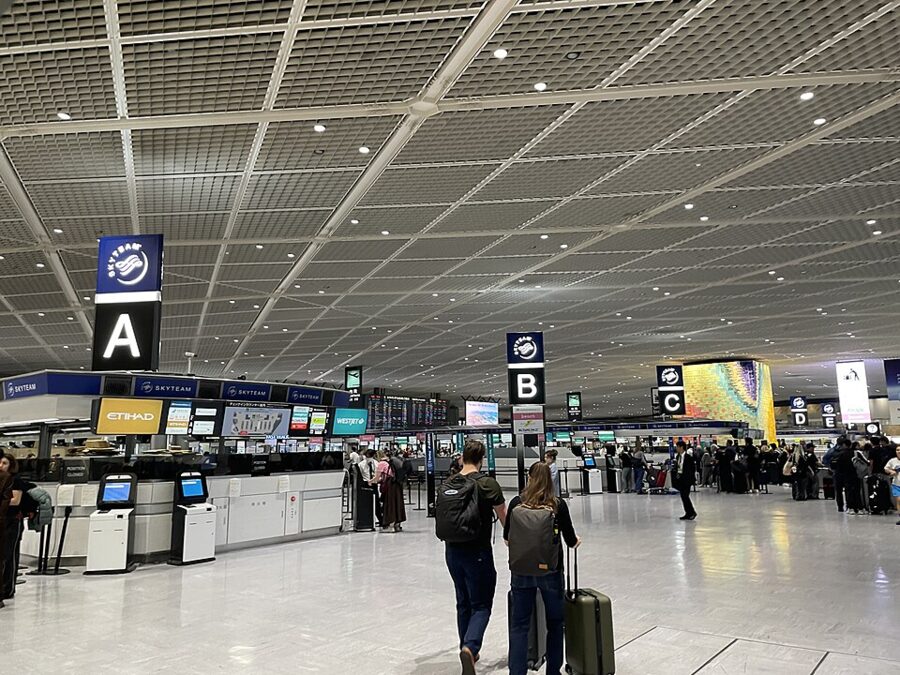
Narita has three passenger terminals, and the airline decides which one you use. Terminal 1 is split in two: the north wing is mainly SkyTeam airlines, and the south wing is ANA and the rest of Star Alliance. Terminal 1 also handles Peach’s domestic flights.
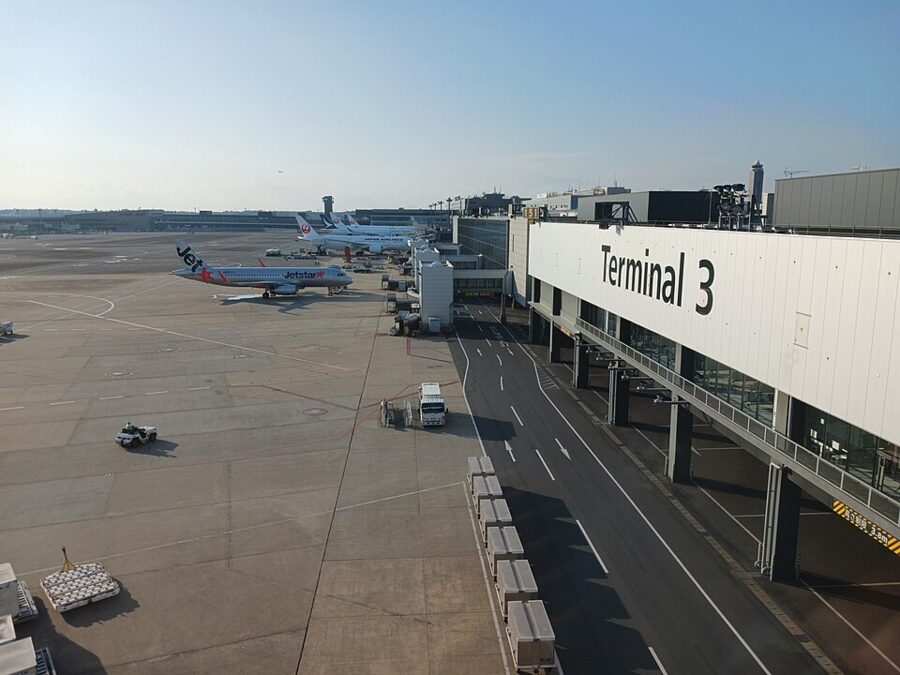
Terminal 2 is Japan Airlines and the oneworld airlines, with a few exceptions such as China Eastern and China Airlines. Terminal 3 is the low-cost terminal, home to Jetstar Japan and Spring Japan, though not every low-cost airline flies from it. The terminal is printed on the boarding pass; trust that over any list.
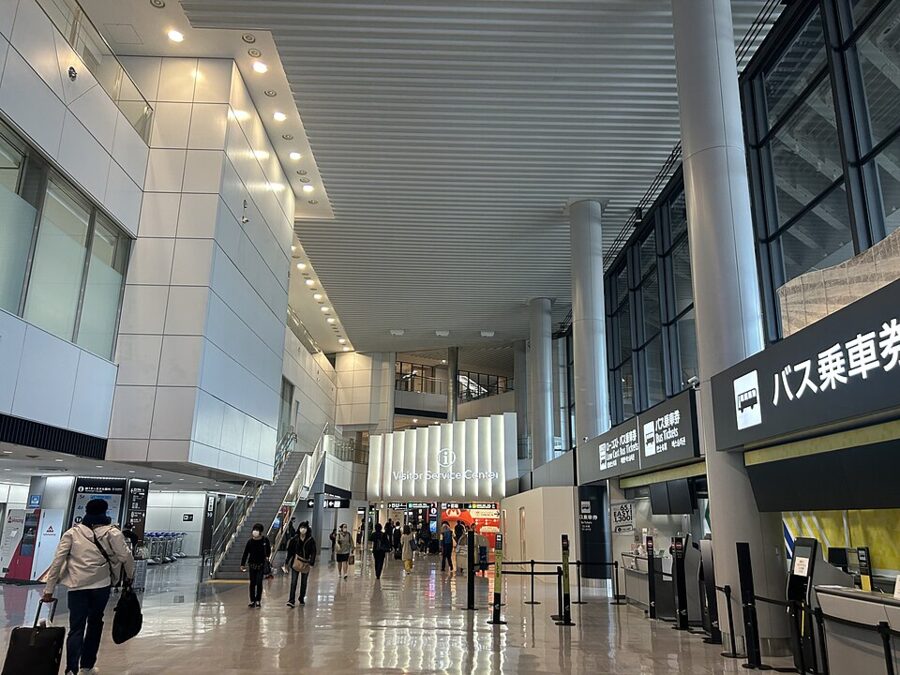

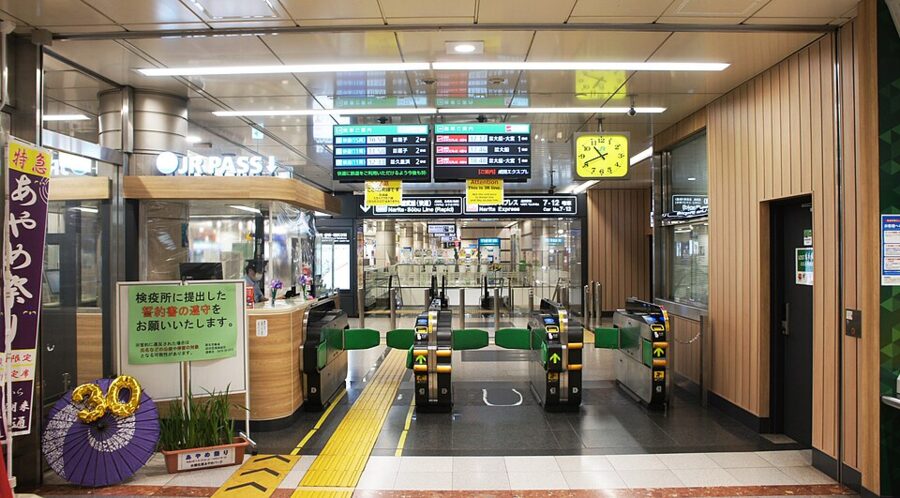
Both rail lines serve two stations under the terminals, and the names trip people up. Narita Airport Station is under Terminal 1, a five-minute walk from the arrivals floor. Airport Terminal 2·3 Station (signed in English as Narita Airport Terminal 2·3) is under Terminal 2, five minutes from Terminal 2 and ten minutes on foot from Terminal 3, according to the airport’s rail access page. Every Skyliner, Narita Express and Access Express calls at both, so you board at whichever is under your feet.
Terminal 3 is the only terminal without its own station. From its arrivals floor, a covered walkway of about 300 meters leads to the north end of Terminal 2, with no moving walkway. With two heavy cases, budget the full ten minutes. Buses and taxis, on the other hand, stop right outside Terminal 3.

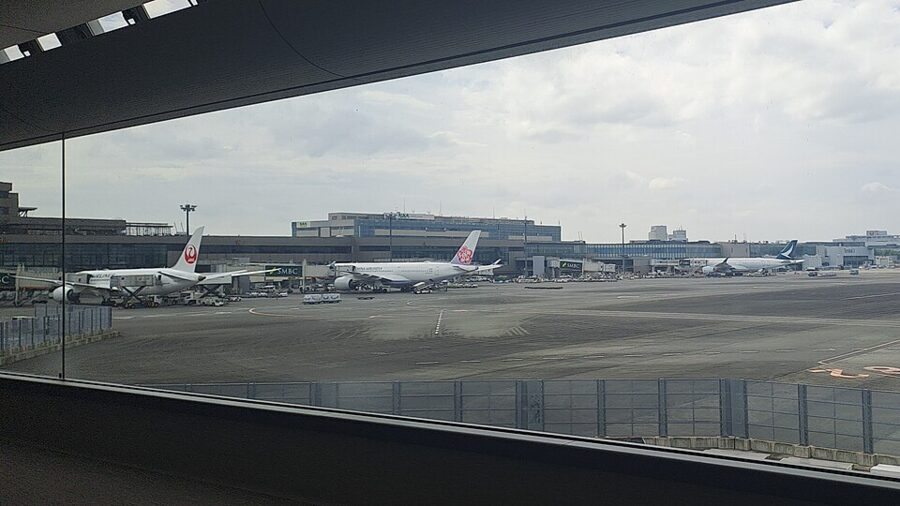

Moving between terminals before security is free on the airport’s terminal shuttle buses, which run three loops. The all-terminal loop goes Terminal 1, Terminal 3, Terminal 2: about 14 minutes from Terminal 1 to Terminal 3, then about three minutes on to Terminal 2, and about ten back to Terminal 1. A second loop shuttles between Terminals 1 and 2 in about ten minutes, and a third between Terminals 2 and 3. If you arrive at Terminal 1 and your hotel bus or onward flight leaves from Terminal 2, that is the bus to take; the train between the two airport stations also works, but you pay a fare for it.
The arrival steps are the same in every terminal, in the order the airport lists them in its international arrivals guide: quarantine, immigration, baggage claim, plant and animal quarantine if you carry food, then customs. Immigration has facial-recognition and automated gates, which leave no stamp in the passport unless you ask the staff for one. At customs, everyone hands over the personal effects declaration, either on paper or electronically: fill it in on your phone while you wait at the carousel and walk through the electronic declaration gate instead of queueing at a desk. Visit Japan Web is where you register for it before the flight.

Once you are through, the order of business in the arrivals hall is cash, a working phone and an IC card. The paperwork side of the first day, and what to do once you reach the city, is in the Tokyo travel guide. For getting into town, follow the train signs down to the basement or the bus signs out to the curb; the ticket counters for both sit in the arrivals hall.
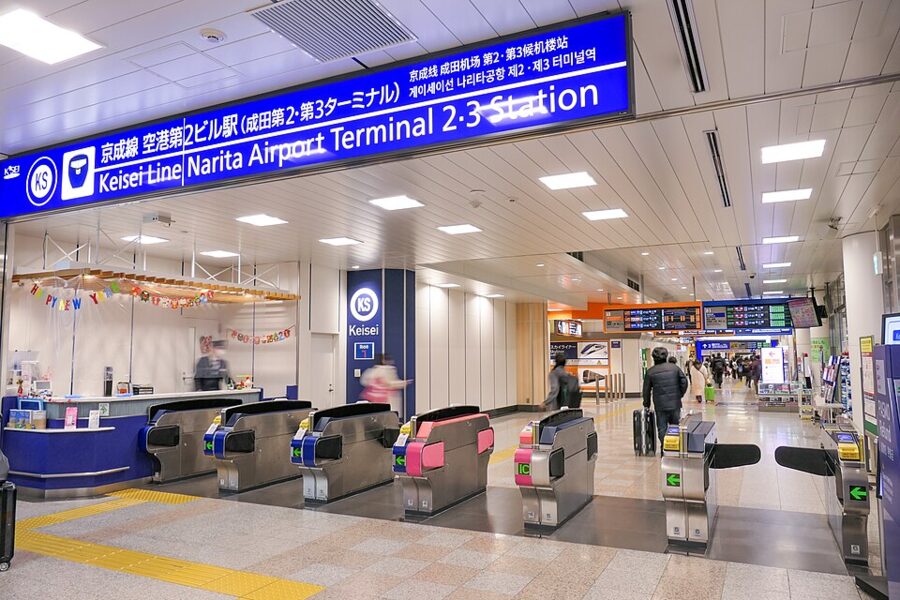

Keisei Skyliner: the fast way to Ueno and Nippori
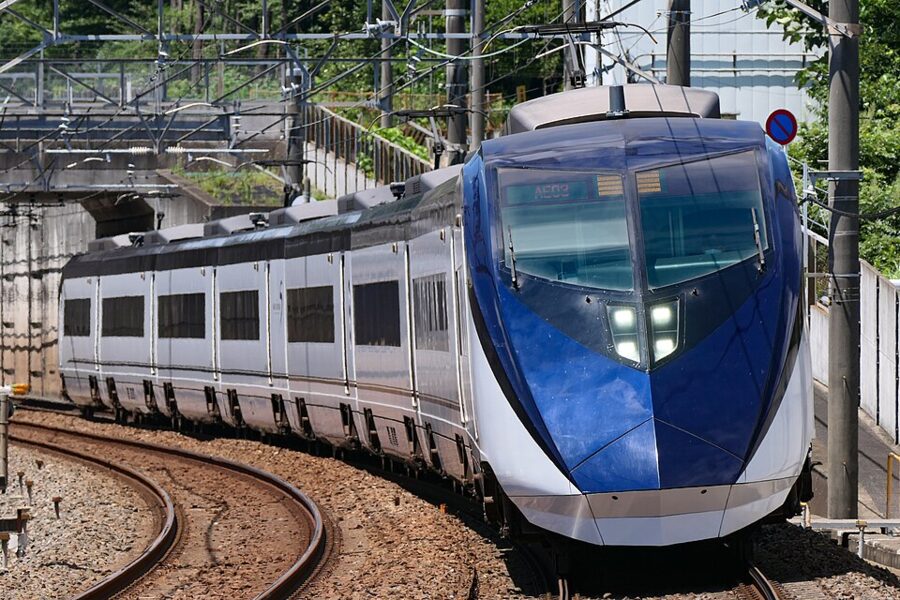
The Skyliner is Keisei’s airport express, and it is the quickest train into the city. It runs nonstop from the airport to Nippori, where you can change to the JR Yamanote Line, and ends at Keisei Ueno beside Ueno Park. The fastest run from Airport Terminal 2·3 to Nippori takes 36 minutes and to Keisei Ueno 41; from Terminal 1, add about four minutes. The trains top out at 160 km/h on the Narita Sky Access line, every seat is reserved, and every car has a luggage space by the doors.
The fare is two charges added together. The base fare from the airport to Nippori or Keisei Ueno is ¥1,280 on a paper ticket (¥1,267 by IC card) and the Skyliner seat charge is ¥1,300, so a one-way adult ticket costs ¥2,580, according to Keisei’s Skyliner ticket page. Children aged 6 to 11 pay half. If you board without a seat ticket, Keisei adds ¥300 to the seat charge on board, so buy before you go down to the platform.
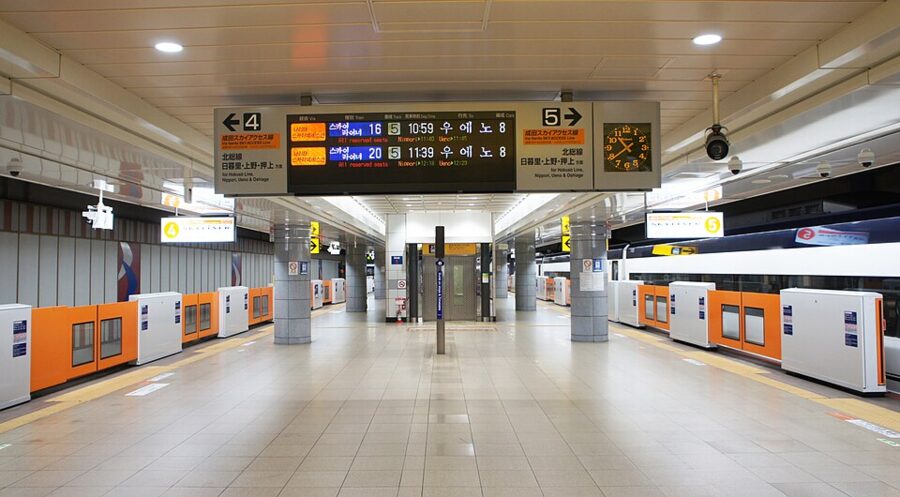

The cheaper way in is the Skyliner discount ticket, bought online or through a travel agency before you fly: ¥2,310 one way, and ¥4,500 for a round trip, against ¥5,160 at the full price. The round trip has to be exchanged for paper tickets at one of the two airport stations, not at Ueno or Nippori, so pick it up on arrival. Keisei also sells the Keisei Skyliner & Tokyo Subway Ticket, a one-way or round-trip Skyliner ride bundled with a Tokyo Subway Ticket for all Tokyo Metro and Toei lines. With a one-way ride it costs ¥3,100, ¥3,600 or ¥4,100 for the 24-, 48- or 72-hour subway pass, and with a round trip ¥5,100, ¥5,600 or ¥6,100.
That bundle pays for itself only if you would have bought the subway pass anyway, and it has one catch the brochure puts in small type: with it, you cannot change to JR at Nippori and must ride to Keisei Ueno. The subway clock starts at your first subway gate, not when you land, so a late arrival does not waste a day of it.
The Skyliner runs roughly every 20 minutes through the day. Under the timetable that started on November 21, 2026, the first train from Terminal 1 leaves at 07:23 on weekdays and 07:30 on weekends and holidays, and the last leaves at 23:00, reaching Nippori at 23:43 and Keisei Ueno at 23:48, according to Keisei’s Skyliner timetable. About one departure an hour also stops at Shin-Kamagaya and Aoto, and those take about ten minutes longer.
Going back out, the timetable runs the other way. The first Skyliner from Keisei Ueno leaves at 05:20 and reaches Terminal 2 at 06:01, and the last leaves at 20:20 on weekdays (20:17 on weekends), which matters for anyone hoping to ride it to an evening flight.
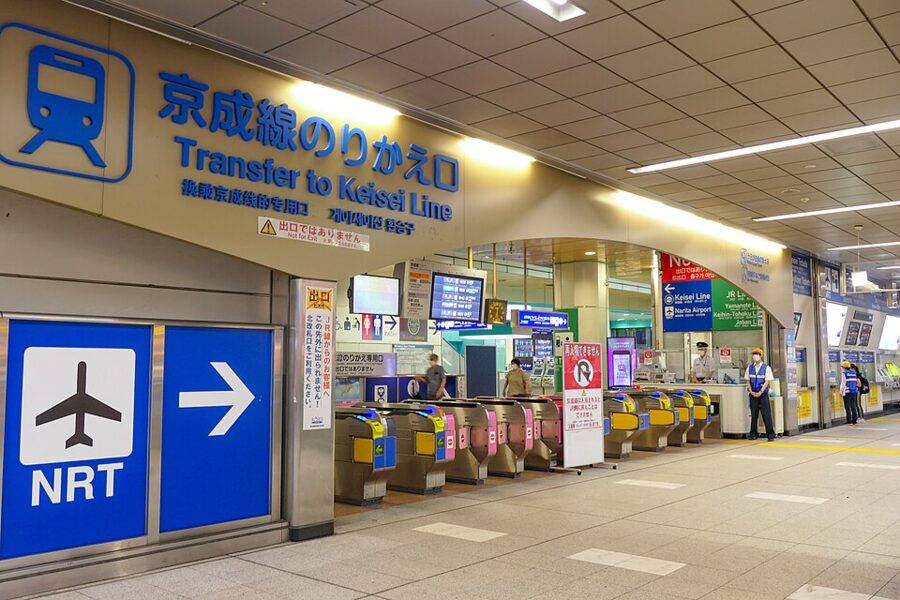

Nippori is where most Skyliner riders leave it, and the change is easier than its reputation. Go up to the transfer floor and use ticket gate B, the Keisei-to-JR transfer gate: with an IC card, one tap takes you through, and with a paper ticket you need a JR ticket for the onward ride, according to Keisei’s Nippori transfer guide. The JR Yamanote Line platforms are a few steps beyond. Change here for Ikebukuro, Shinjuku and Shibuya clockwise or counterclockwise, and for Tokyo Station and Akihabara.
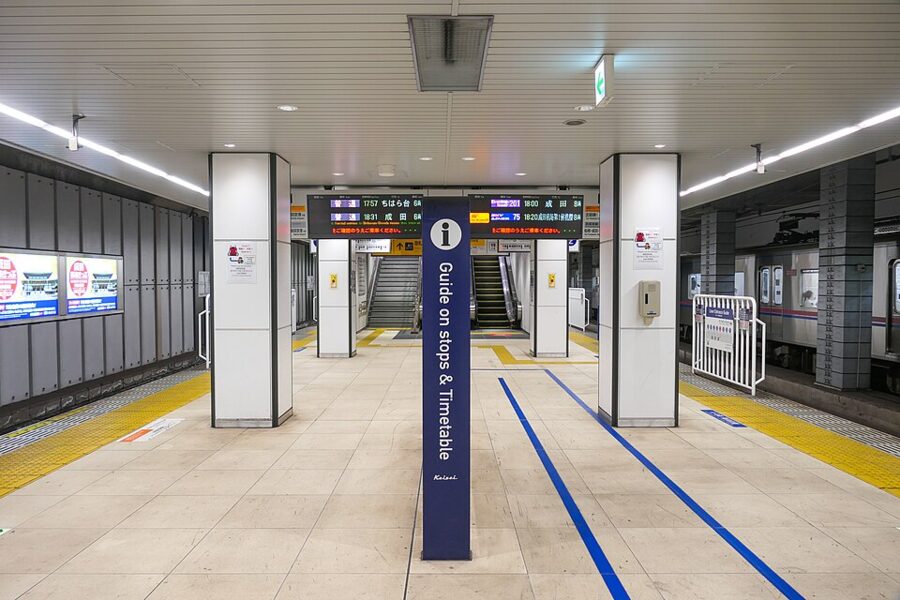

Keisei Ueno is the end of the line, underground at the edge of Ueno Park, and it is not the same building as JR Ueno Station. The walk across the road to the JR and Tokyo Metro gates takes about five to eight minutes. For anywhere on the Yamanote Line, change at Nippori instead; for the Tokyo Metro Ginza and Hibiya lines, ride to the end.
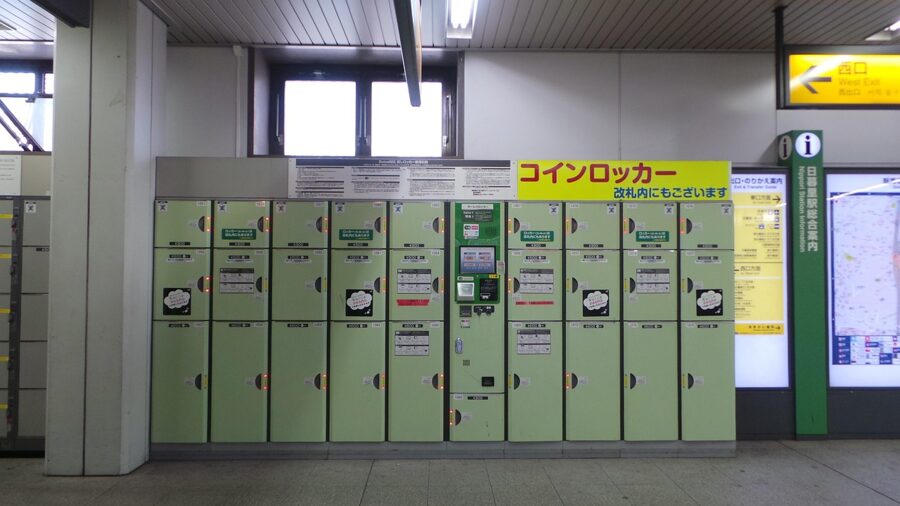
Tickets are sold at the Skyliner counters and machines in both airport stations, and seats can be booked up to a month ahead. Keisei’s facial-recognition ticket, sold online as Skyliner e-ticket Face Check in Go, lets you walk through the gate at Keisei Ueno, Nippori and the two airport stations without a paper ticket. Credit cards are accepted only for the Skyliner ticket itself; most other Keisei tickets are cash, says the operator’s FAQ.
JR Narita Express: one seat to Tokyo, Shinjuku and Yokohama
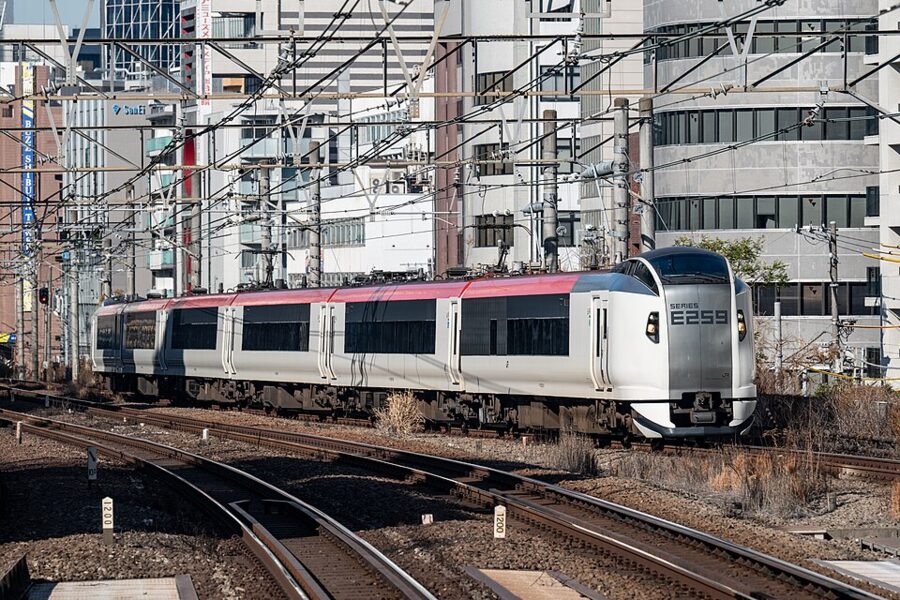
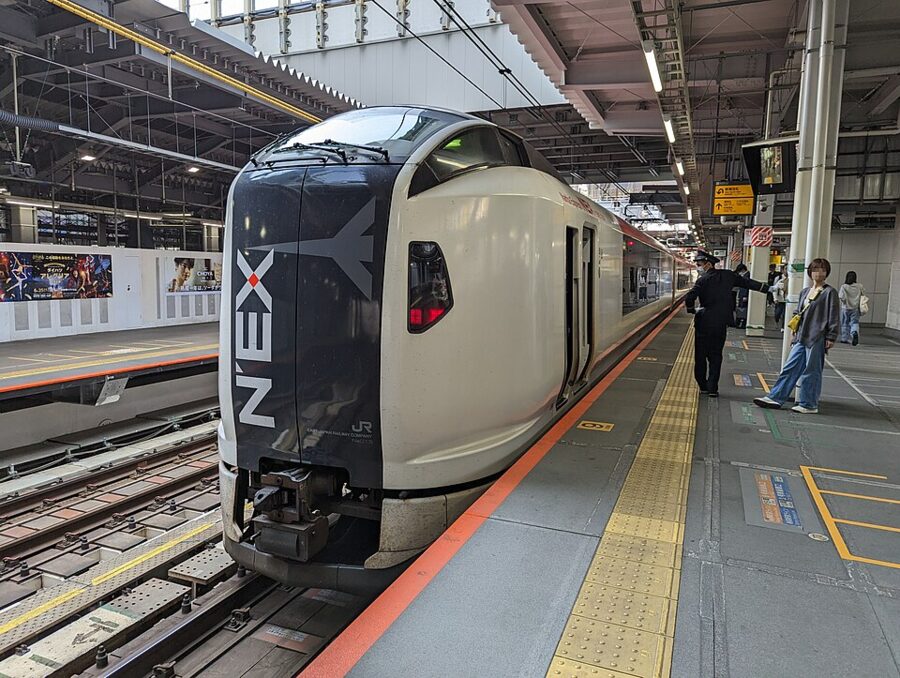
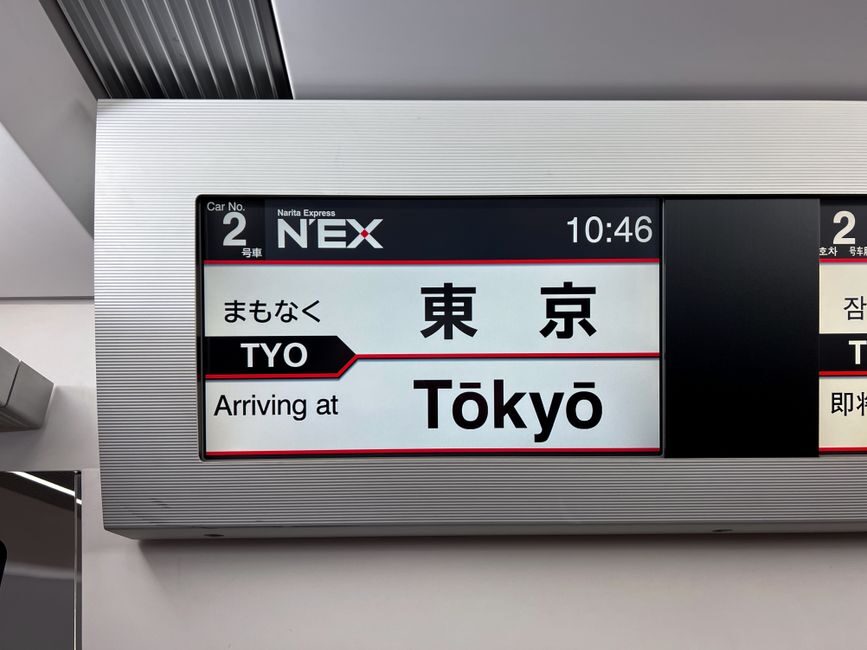
The Narita Express, signed N’EX, is JR East’s airport limited express, and its selling point is the one seat. It runs from both airport stations to Tokyo Station with no change, and many trains continue to Shinagawa, Shibuya, Shinjuku, Yokohama and Ofuna. The fastest run to Tokyo Station takes 53 minutes; Shibuya and Shinjuku take about 75 to 80 minutes, which is slower than the Skyliner and a Yamanote Line change, but you never stand up.
JR East’s March 14, 2026 fare rise set the current prices, listed on its N’EX tickets page. The price is the same all year.
| From either Narita station to | Ordinary car | Green Car |
|---|---|---|
| Tokyo | ¥3,140 | ¥3,910 |
| Shinagawa, Shibuya, Shinjuku | ¥3,330 | ¥4,100 |
| Yokohama | ¥4,480 | ¥6,750 |
| Ofuna | ¥4,810 | ¥7,080 |
Each fare is the basic JR fare plus a limited express seat charge of ¥1,730 in an ordinary car. You can pay the basic fare with a Suica or PASMO and buy only the seat ticket, or buy both on paper at a machine. JR also sells an unreserved limited express ticket at the same price, for a chosen day and route with no seat assigned: you sit in any empty ordinary seat and move if its owner turns up. On a full train that means the vestibule, and there is no refund for standing.
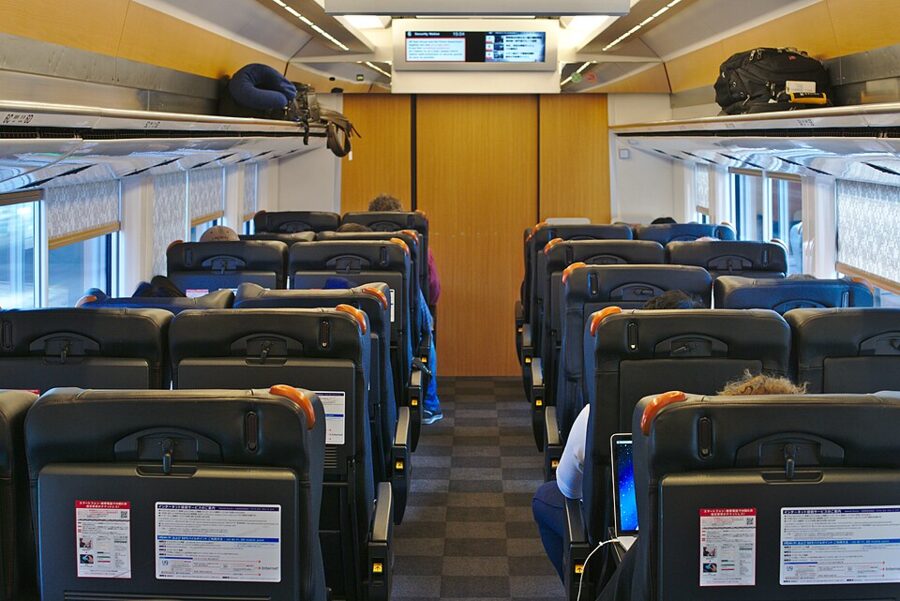

The deal worth knowing is the N’EX TOKYO Round Trip Ticket, sold only to holders of non-Japanese passports: ¥5,200 for one ride from Narita into the Tokyo area and one ride back within 14 days, ¥2,600 for children aged 6 to 11. A round trip to Shinjuku at full fare costs ¥6,660 and to Tokyo Station ¥6,280, so it saves ¥1,080 to ¥1,460, and more if you go on to Yokohama. The two rides do not have to use the same stations, and after the Narita Express you can transfer to other JR East trains in the covered area for nothing, as long as you stay inside the gates. Once you leave the gates, that leg is used up.
The round-trip ticket has to be picked up at one of the two Narita airport JR stations, with your passport. The JR travel service centers there open 08:30–19:00 at Terminal 1 and 08:30–20:00 at Terminal 2·3, and the ticket office and the passport-reading seat machines run 06:30–21:45. Land after about 21:00 and you may not make it, and the last Narita Express leaves the airport at 21:44 in any case. Seat reservations on the ticket are free, except in the Green Car, and can be made the same day at the airport.
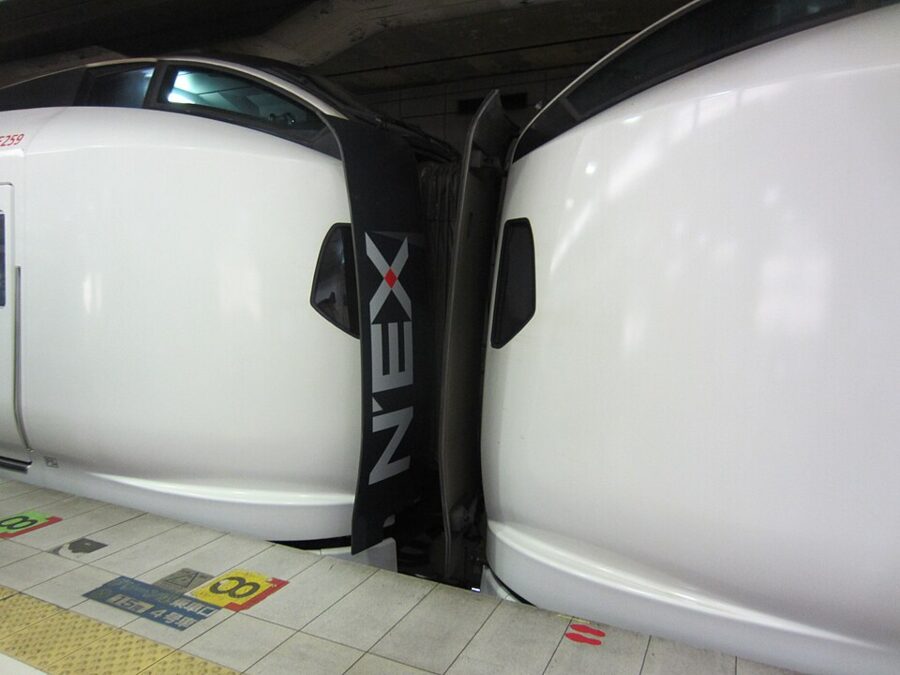

Many Narita Express trains split in two at Tokyo Station, and this is the detail that sends people to Yokohama by accident. Two six-car sets run coupled from the airport; at Tokyo, one half heads west to Shinagawa, Shibuya and Shinjuku and the other south to Yokohama and Ofuna.
Some trains run to only one of the two. Your seat ticket gives a car number that already matches your destination, so sit where it says. With an unreserved ticket, check the car’s destination board before you settle in.
On weekdays, the first Narita Express leaves Narita Airport Station (Terminal 1) at 07:37 and the last at 21:44, with departures roughly every 30 minutes in between, according to JR East’s Narita Airport Station timetable. Weekend times are almost the same. Heading out, the first train to the airport leaves Shinjuku at 05:55 and Tokyo Station at 06:18; the last leaves Shinjuku at 19:39 and Tokyo Station at 20:03.
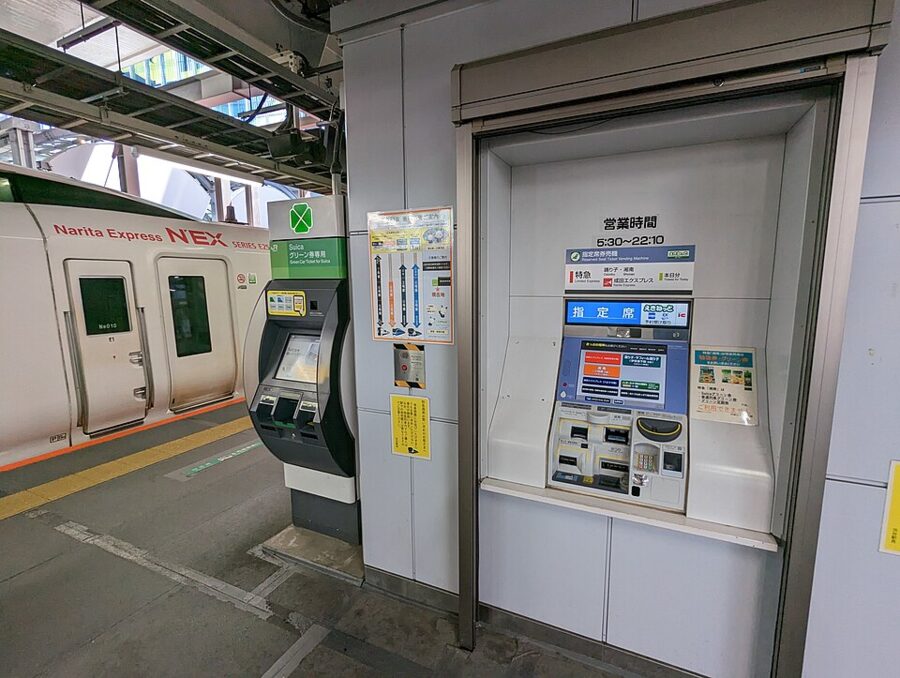
A Japan Rail Pass or JR East’s own regional passes cover the Narita Express, seat reservation included. JR East sells its JR EAST PASS at ¥35,000 for five days and the JR TOKYO Wide Pass at ¥16,000 for three. If you only need the airport run, the round-trip ticket is the better buy.
The verdict: take the Narita Express if your hotel is near Tokyo Station, or on the west side and you have luggage you would rather not drag through Nippori. For Shinjuku with light bags, the Skyliner and the Yamanote Line beat it by about ten minutes and ¥490; for Shibuya, the time is a wash and only the ¥490 remains.
The cheap trains: Access Express, Keisei Main Line and JR rapid
Three ordinary commuter services run from the same airport stations for well under half the price of the expresses. None takes reservations, and none has luggage racks built for suitcases; at rush hour, they fill with commuters from Chiba. With one carry-on, they are fine. With two large cases, they are hard work.
Keisei Access Express: through onto the subway
The Access Express uses the same fast Narita Sky Access line as the Skyliner but stops more often, needs no seat ticket and, on most runs, goes straight through onto the Toei Asakusa Line. That makes it the cheapest one-seat ride to Asakusa, Nihonbashi, Higashi-Ginza and Shimbashi, and some trains continue on the Keikyu Line to Haneda Airport. The fare to Asakusa is ¥1,380 (¥1,200 for the Keisei section and ¥180 for Toei), to Higashi-Ginza ¥1,420, and the ride takes about an hour.
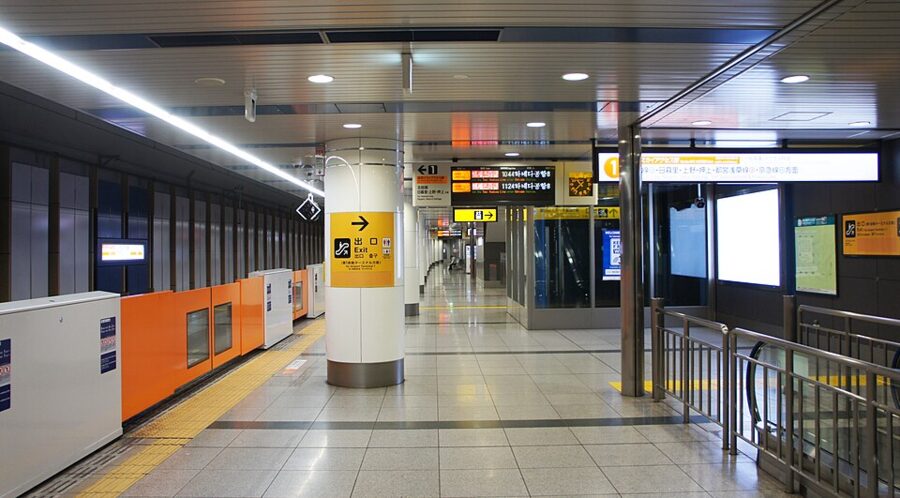

It departs from track 1 at both airport stations, about every 40 minutes, according to Keisei’s Access Express timetable. The first leaves Terminal 1 at 05:41 on weekdays and the last at 23:00. Read the destination before you board: trains marked for Ueno go to Keisei Ueno instead of onto the subway, and trains for Nishimagome divide at Sengakuji, so for Shinagawa and beyond, change there. Late in the afternoon on weekdays, most Access Express trains run to Ueno.
Keisei Main Line: the cheapest rail fare to Ueno
The older Keisei Main Line wanders through Narita town, Sakura and Funabashi before reaching Nippori and Keisei Ueno. It runs more often than the Access Express but takes longer: about 80 minutes to Keisei Ueno for ¥1,060 (¥1,052 by IC card), sometimes with a change at Keisei-Sakura. Keisei’s own comparison puts it at slightly cheaper and somewhat slower than the Sky Access route. It suits a backpack and a spare hour.
JR rapid trains: for rail passes and the Sobu Line
JR rapid trains run from the airport stations along the Narita and Sobu lines to Tokyo Station, and many continue to Shinagawa and on to Yokosuka and Zushi. The fare to Tokyo Station is ¥1,410 (¥1,408 by IC card) and the trip takes about 90 minutes. A Green Car with reclining seats costs ¥1,000 extra when bought with a Suica, or ¥1,260 on paper. The last rapid train toward Tokyo leaves Narita Airport Station at 22:57 on weekdays; a later one at 23:42 goes only as far as Chiba.
IC cards at the airport
Both airport stations sell IC cards. The ticket machines at both Keisei stations issue PASMO cards, according to Keisei’s FAQ, and JR East’s ticket offices in the same stations handle Suica. One card pays the basic fare on all the trains above and the bus to Tokyo Station, but not the Skyliner or Narita Express seat charge, which needs its own ticket. The card types, the tourist versions and how much to load are in the guide to getting around Tokyo.
Airport buses: Tokyo-Narita and the Limousine
Two bus operations matter for the trip into town, and they work differently. One is the cheap shuttle to Tokyo Station and Ginza; the other is a door-to-hotel service across the city. Both load bags into the hold, which is the real reason to choose a bus over a train. Both also sit in the same traffic as everyone else on the expressway, so the times below are scheduled, not promised.
Airport Bus Tokyo-Narita (TYO-NRT)
Two low-cost buses, THE Access Narita and Tokyo Shuttle, merged into one service, Airport Bus Tokyo-Narita, signed TYO-NRT, run jointly by JR Bus Kanto, Keisei Bus and several Chiba operators. The fare is ¥1,500 for adults and ¥750 for children, and ¥3,000 on the late-night and early-morning runs, according to its fare page. From Narita, buses run to Tokyo Station (the Yaesu side, by the Nihonbashi Exit) in about 68 minutes and to Ginza Station in about 81, with some continuing to Shinonome in Koto ward.
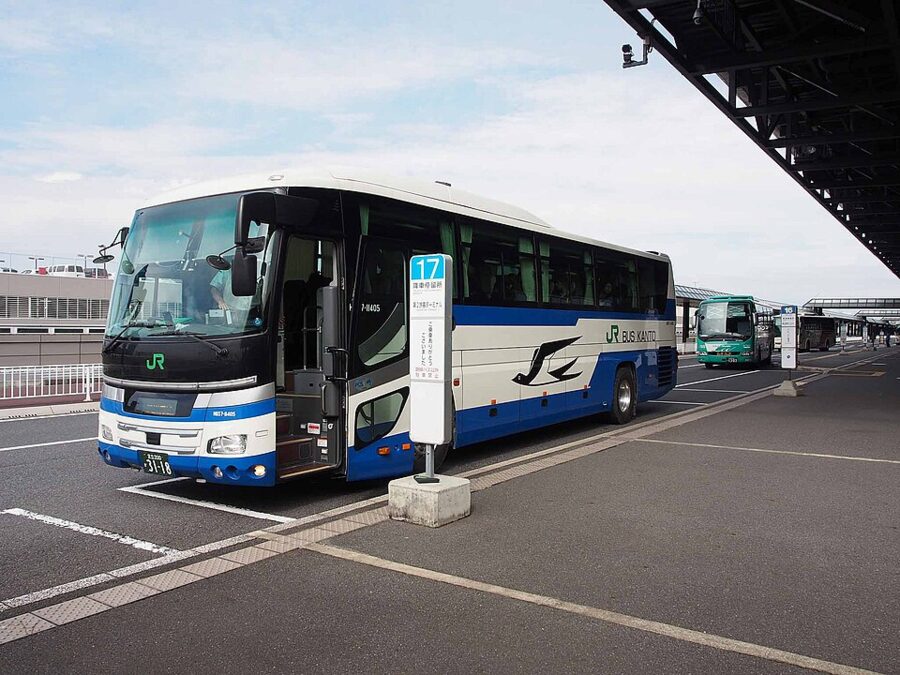

Reservations have been suspended since the pandemic, and every bus runs unreserved. From the airport, you buy a ticket for a set departure at the bus ticket counter in the arrivals hall, then stand at the stop five minutes before it leaves: stop 7 at Terminal 1, stops 6 and 2 at Terminal 2, and the bus stop outside Terminal 3. The last bus of the night is the exception: you board directly and pay on board in cash or by IC card, and credit cards are not accepted. Toward the airport, an IC card pays on board at Tokyo Station; cash or credit card means buying at the JR highway bus ticket office first.
The timetable from Terminal 1 shows buses about every ten minutes from 06:55 until after 22:00, then late-night departures past midnight, the last at 01:45, most of them at the ¥3,000 fare. Toward the airport, the first buses leave Tokyo Station at 05:20. The luggage rule is strict: one suitcase per person, up to 158 cm in total dimensions, in the hold. No golf bags, skis, bicycles or extra cases.
Airport Limousine
The Airport Limousine, run by Airport Transport Service, is the orange-striped coach that stops at the big hotels. From Narita, its routes cover Shinjuku, Shibuya, Ikebukuro, Tokyo Station and the Tokyo City Air Terminal, Ginza, Akasaka and Roppongi, Shinagawa, Asakusa, Yokohama and Tokyo Disney Resort, among others. On November 24, 2026, the fare to Shinjuku was ¥3,600, to the Tokyo City Air Terminal and Tokyo Station Yaesu North Gate ¥3,100, to Yokohama City Air Terminal ¥4,000 and to Tokyo Disney Resort ¥2,900.
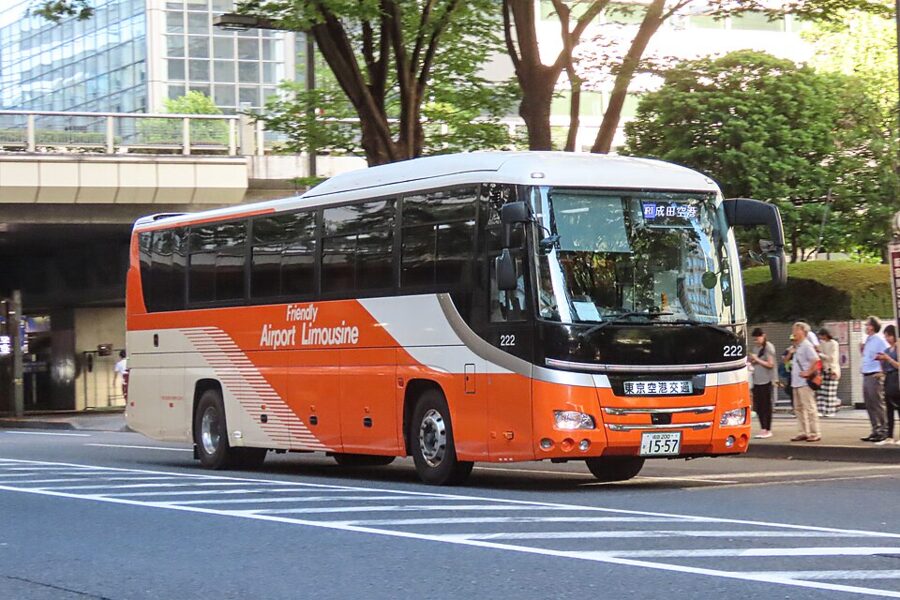

Two routes run cheaper buses that skip the hotels: the low-cost services to Ikebukuro Station West Exit at ¥2,300 and to Shibuya Station at ¥2,500. The Shibuya low-cost bus ran once a day on November 24, 2026, against six regular Shibuya buses, so check it before you plan around it.
The Shinjuku route is the busiest. Its timetable from Narita showed 54 buses on November 24, 2026, from 07:05 at Terminal 3 to a last departure from Terminal 1 at 23:05. Daytime buses take about 105 minutes from Terminal 1 to Shinjuku Station and stop at hotels including the Keio Plaza, Hilton Tokyo and Park Hyatt; the late buses run via the Tokyo City Air Terminal and reach Shinjuku Station in about 80 minutes.
Seats can be reserved online until five minutes before departure, and the counters in the arrivals hall sell tickets for the next bus. The Limousine is the generous one on luggage: two checked pieces per person, each up to 50 x 60 x 120 cm and 30 kg, under its baggage rules. With a family, two large cases each and a hotel on the route, it beats the train even though it is slower.
Taxis, fixed fares and ride-hailing
A taxi from Narita costs more than the flight from some Asian cities, and the airport is open about it. The cabs at the rank charge a fixed fare by zone of Tokyo, set by the airport’s taxi council and published on the airport’s taxi page. Expressway tolls come on top, so does a late-night and early-morning surcharge from 22:00 to 05:00, and routing via the Aqua-Line costs extra.
| Zone | Wards | Via Keiyo Road | Via Bayshore route |
|---|---|---|---|
| A | Edogawa, Katsushika, Adachi | ¥23,500 | ¥26,500 |
| B | Koto, Sumida, Daiba (Minato), Higashi-Yashio (Shinagawa) | ¥28,000 | ¥28,000 |
| C | Chuo, Chiyoda, Taito, Bunkyo, Arakawa | ¥29,000 | ¥31,000 |
| D | Shinjuku, Toshima, Nakano, Shibuya, Meguro, Minato, Shinagawa, Ota | ¥31,500 | ¥32,500 |
| E | Itabashi, Kita, Nerima | ¥34,000 | ¥36,000 |
| F | Setagaya, Suginami, Mitaka, Musashino | ¥35,500 | ¥38,500 |
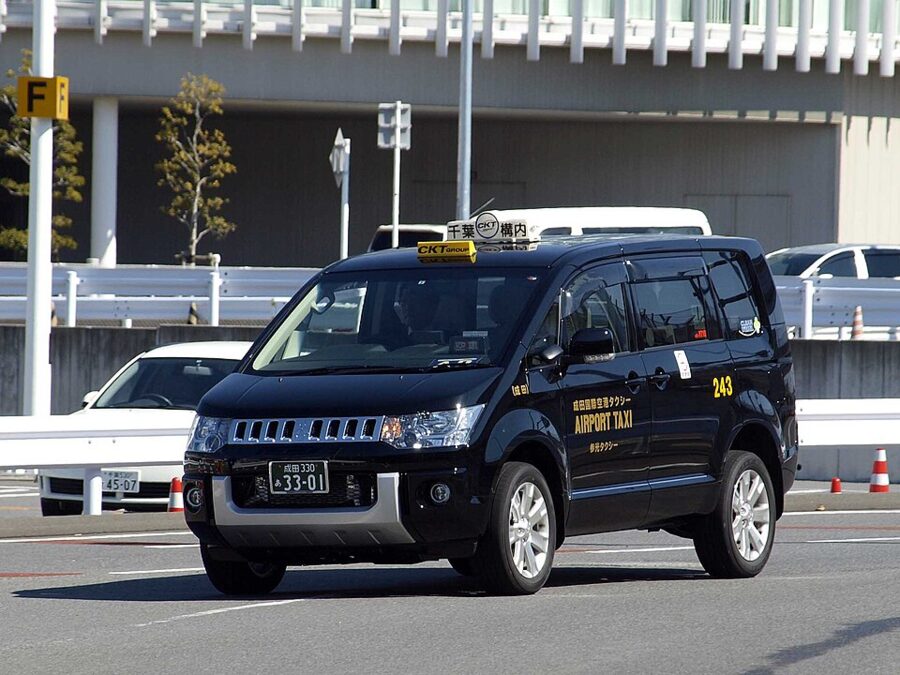

No booking is needed: tell the driver at the rank that you want the fixed fare before you set off, and you can choose which cab to take. The fixed fares assume the expressway; if you ask for local roads, the meter runs instead. Zone C covers Ginza, Tokyo Station, Ueno and Asakusa, and zone D covers Shinjuku, Shibuya, Roppongi and Shinagawa, so a party of four heading to Shibuya pays about ¥8,000 each before tolls. That is still more than double the Narita Express, and it saves time only when the expressway is clear.
Ride-hailing apps work at Narita, Uber among them, but they do not use the fixed-fare table. The app sets the price from the type of car, distance, time, tolls and demand when you book, so compare it with the zone fare before you accept. The taxi is worth it in three cases: small children asleep in your arms, more luggage than one person can push, or a landing after the last train when the night bus does not go near your hotel.
Route by destination
The fares below are one-way adult fares from either airport station, and the times are door-to-platform for the fastest regular connection, not counting the walk from the arrivals hall. For help deciding which district to sleep in, see where to stay in Tokyo.
Shinjuku
Three good choices, depending on bags. The Skyliner to Nippori and the JR Yamanote Line round to Shinjuku costs ¥2,840 and takes about 70 minutes. The Narita Express costs ¥3,330 and takes about 80 minutes with no change, on the Narita Express platforms 5 and 6, nearest the South and New South exits.
The Airport Limousine at ¥3,600 stops at Shinjuku Station West Exit, the Busta Shinjuku expressway bus terminal and the West Shinjuku hotels. On a budget, the Keisei Main Line and a subway change brings the fare down to about ¥1,270, at the cost of nearly two hours.

Shibuya
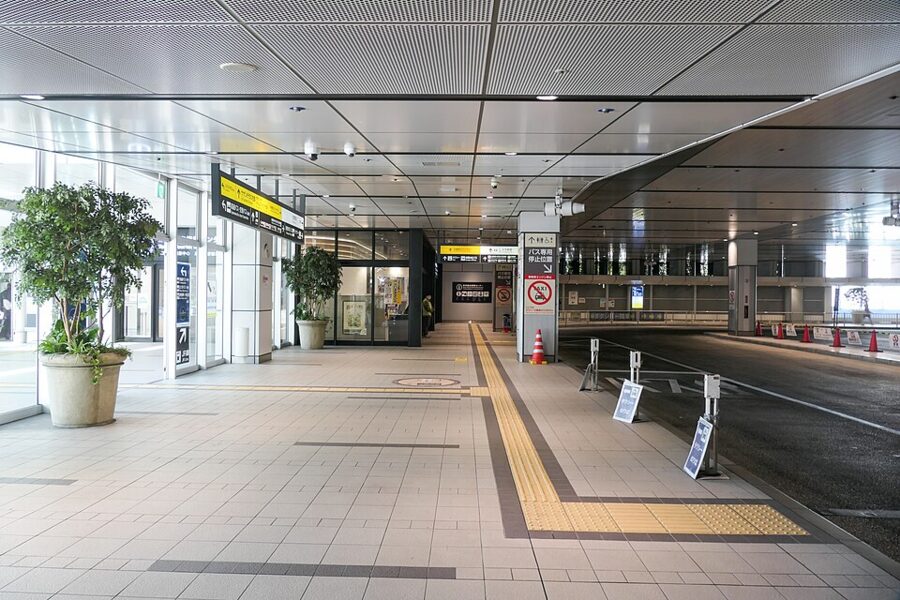
The Narita Express is the pick for Shibuya: ¥3,330 and about 75 minutes with no change, since Shibuya is the stop before Shinjuku on the western branch. The Skyliner and Yamanote route costs ¥2,840 and takes a little longer once the Nippori change is counted. The Limousine to Shibuya Station and the Cerulean Tower hotel costs ¥3,600 and runs only six times a day.
Tokyo Station and Ginza
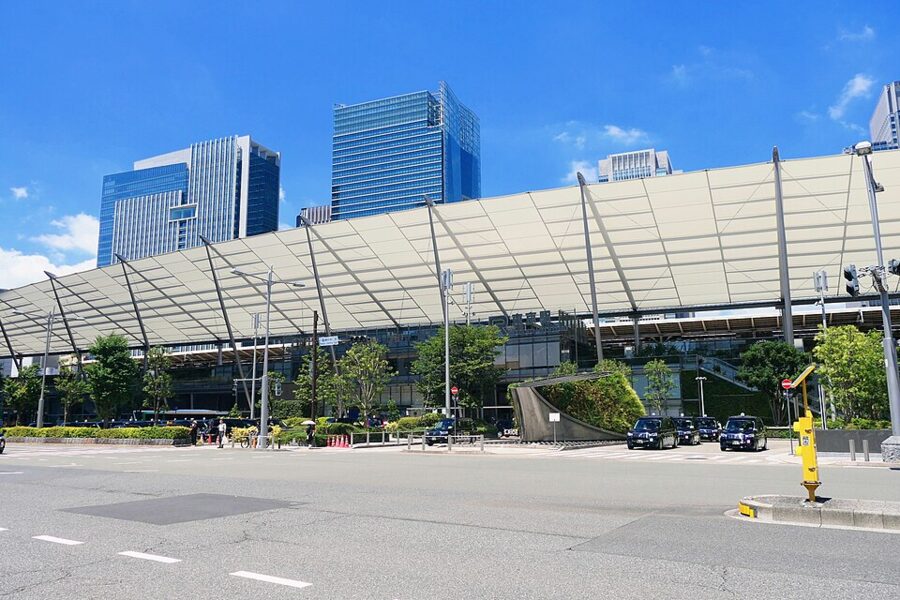
The bus wins on price: ¥1,500 to Tokyo Station’s Yaesu side or Ginza Station, about 68 and 81 minutes. The Narita Express to Tokyo Station costs ¥3,140 and takes from 53 minutes, arriving deep underground on the Sobu Line platforms, a long walk from the Marunouchi side. For Ginza by rail, the Skyliner to Ueno and the Tokyo Metro Ginza Line costs ¥2,760. Higashi-Ginza, at the east end of Ginza, is a one-seat ride on many Access Express trains for ¥1,420.
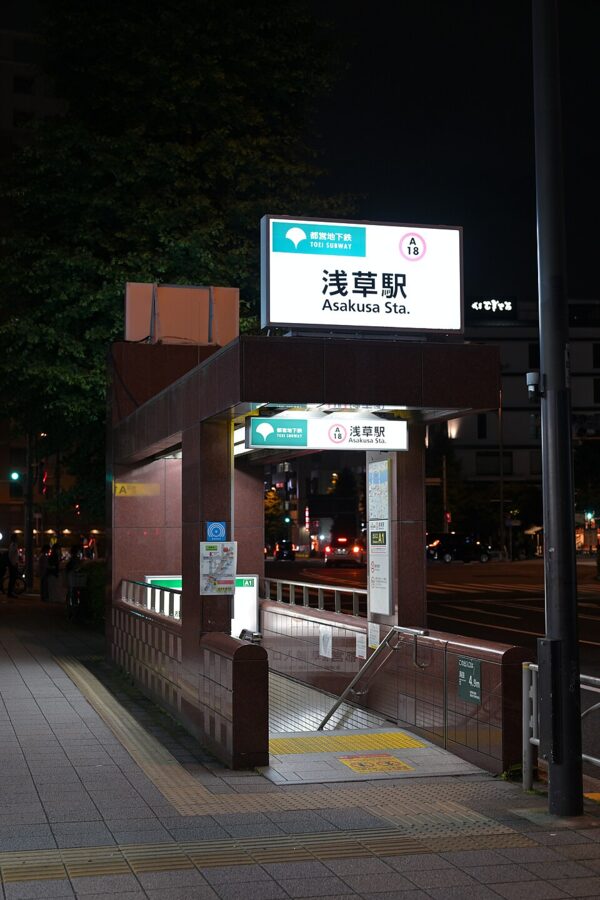
Asakusa and Ueno
This is Keisei country. The Access Express runs through to Asakusa for ¥1,380 in about an hour, and stops at Oshiage, the station under Tokyo Skytree, on the way. For Ueno, the Skyliner takes 41 minutes from Terminal 2 for ¥2,580, or the Keisei Main Line about 80 minutes for ¥1,060. For Akihabara, ride the Skyliner to Ueno or Nippori and take the JR Yamanote or Keihin-Tohoku Line a few stops south.

Ikebukuro
The Skyliner and the Yamanote Line from Nippori make the quickest run: ¥2,790 and about an hour. The Narita Express and a change at Shinjuku costs more and takes longer. The Airport Limousine’s low-cost bus to Ikebukuro Station West Exit costs ¥2,300, and the regular Limousine stops at Sunshine City and the Hotel Metropolitan for ¥3,600.

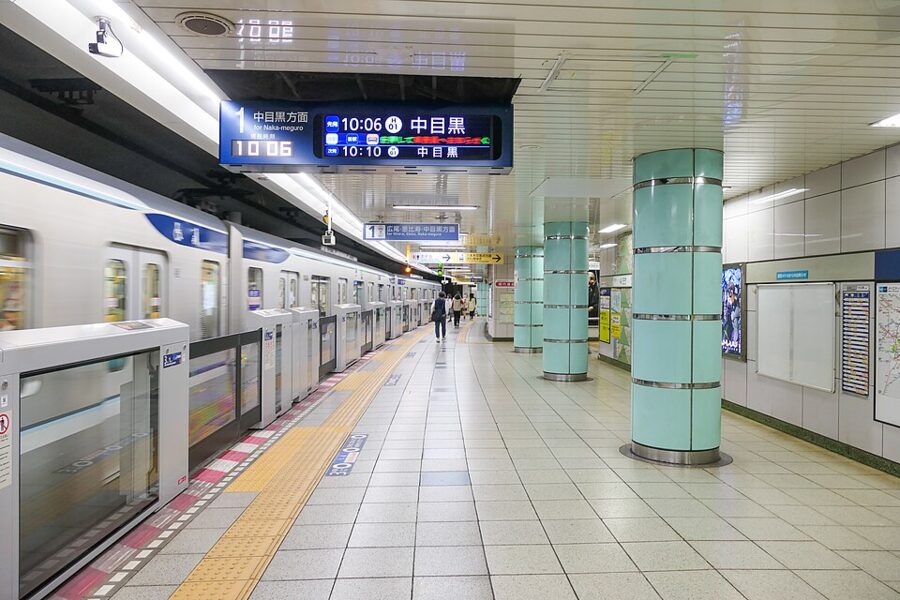
Roppongi
Roppongi has no airport train of its own, which is why the Limousine’s Akasaka and Roppongi route exists: ¥3,600 to the Okura, ANA InterContinental and Grand Hyatt, ¥3,100 to the Tokyo City Air Terminal on the way. By rail, the Skyliner to Ueno and the Tokyo Metro Hibiya Line costs ¥2,970 and takes about 75 minutes. The cheap route is the Access Express onto the Toei Asakusa Line and a change to the Toei Oedo Line at Daimon, about ¥1,480 and 100 minutes.

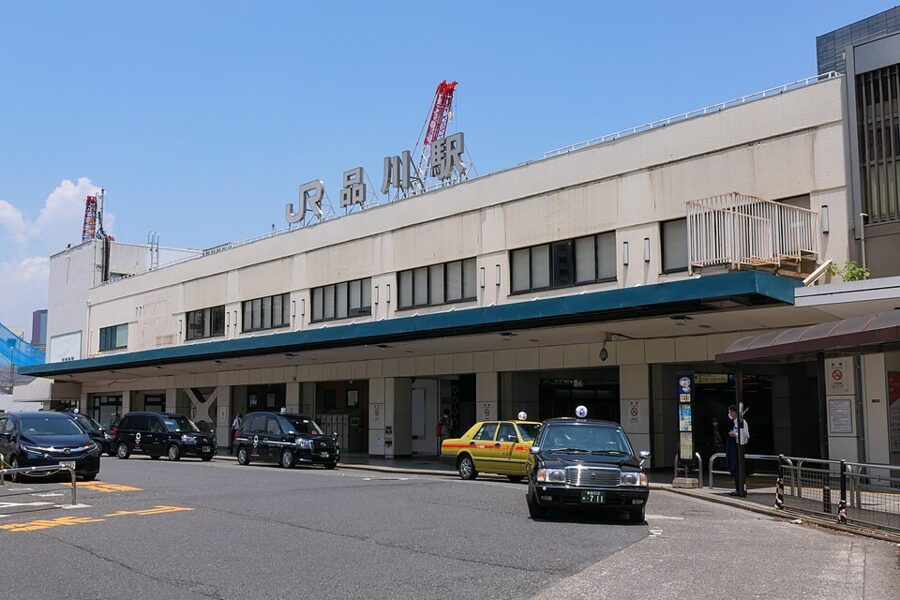
Shinagawa and Yokohama
The Narita Express runs to Shinagawa for ¥3,330 and to Yokohama for ¥4,480, on the trains or cars marked for Ofuna. The JR rapid train also goes through to Shinagawa for ¥1,600, in about 1 hour 45 minutes, and on to the Yokosuka Line. By bus, the Limousine runs to Yokohama City Air Terminal for ¥4,000 and to the Shinagawa Prince and other Takanawa hotels for ¥3,600, three times a day. For a stay south of the city, the Yokohama guide covers the stations and districts.

Landing late, leaving early
Planned backwards, a late landing at Narita runs on these last departures from Terminal 1, as of November 2026. Allow at least an hour from touchdown to the station on an international arrival, more on a busy evening at immigration.
- Narita Express to Tokyo, Shinjuku and Yokohama: 21:44
- JR rapid toward Tokyo Station: 22:57
- Keisei Skyliner to Nippori and Keisei Ueno: 23:00
- Keisei Access Express toward the Toei Asakusa Line: 23:00
- Airport Limousine to Shinjuku via the Tokyo City Air Terminal: 23:05
- Airport Bus Tokyo-Narita to Tokyo Station and Ginza: 01:45, at ¥3,000
After that, the fixed-fare taxi is the only way in, with the night surcharge on top. Or stay put. All three terminals keep some floors open all night: Terminal 1’s arrivals floor and basement and Terminal 2’s arrivals floors and basement stay open 24 hours, while their other floors close from 00:00 to 05:00, and Terminal 3’s two floors never close, according to the airport’s night and early-morning guide.
The same page lists what stays open around the clock: a Lawson convenience store in Terminal 1’s basement, a 7-Eleven in Terminal 2’s basement, a Yoshinoya beef bowl counter in Terminal 2, and in Terminal 3 a Lawson and a Matsuya, which opened in 2023 and is the one meal in the Terminal 3 food court served after 21:00. Terminal 2 also has a café and rest space charged by the hour, no reservation needed.
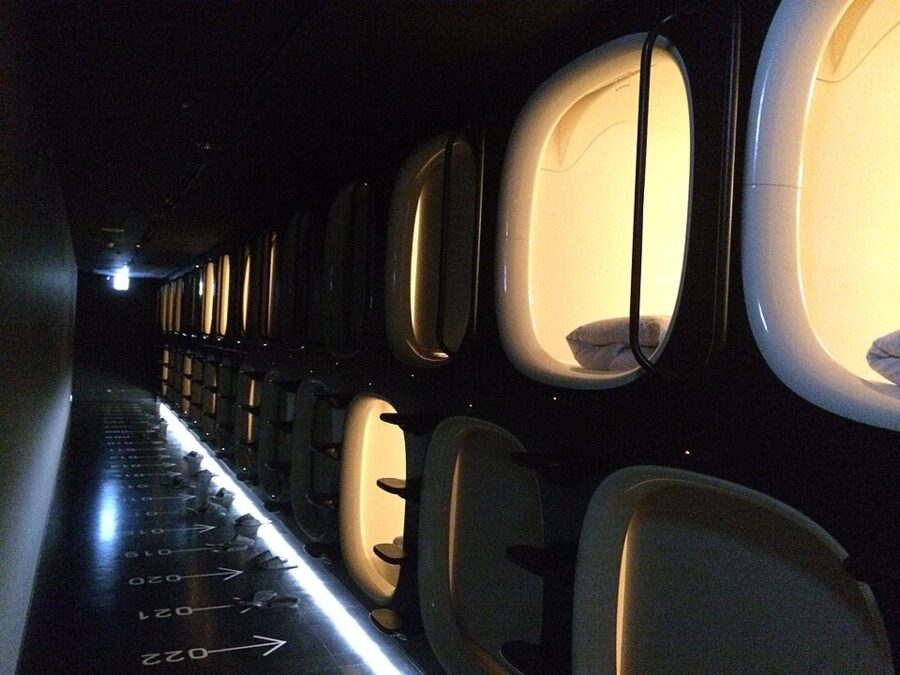
The bed at the airport is nine hours Narita Airport, a capsule hotel in the basement of the P2 car park, connected to Terminal 2 by a covered walkway and open 24 hours since 2014. It also sells short naps and showers. It fills on busy nights, so book ahead. The Narita Airport Rest House beside Terminal 1 closed in March 2025, as its site lies in the airport’s expansion area; the other hotels near Narita are outside the terminals and run their own shuttle buses from the bus stops.

Weather strands people here too. On August 13, 2026, heavy rain across Chiba halted the trains and about 6,600 people spent the night in the airport.
For an early flight, the first Skyliner from Keisei Ueno leaves at 05:20 and reaches Terminal 2 at 06:01. The first Narita Express leaves Shinjuku at 05:55 and Tokyo Station at 06:18, and the first regular buses from Tokyo Station leave at 05:20. That covers most flights from about 08:00; anything earlier means a taxi or a night in the capsule hotel.
The trip back
The airport asks you to arrive at least two hours before an international departure, and check-in times are set by each airline. I would leave three hours, because of the refund kiosk and because the train or bus out is an hour or more on top. Check the terminal first: some airlines use different terminals for international and domestic flights, and check-in counters can move from day to day.
The step that changed is tax-free shopping. Since November 1, 2026, shops charge consumption tax at the till and you get it back when you leave Japan, provided you leave within 90 days of the purchase. At the airport, you first get customs confirmation by scanning your passport at a customs tax refund kiosk in the departure lobby, or by doing it on your phone through Visit Japan Web on the dedicated customs Wi-Fi on the international departures floor. Bring every tax-free item with you, because customs can ask to see them.
The order matters, and the airport’s departure procedure page spells it out: customs confirmation cannot be done after you check your bags. So do the kiosk first, then the check-in counter.
The money comes back afterward. For cash, in yen only, use the cash refund kiosks before or after security, where you do not have to show the goods again; for a credit card, QR payment or bank transfer, follow the instructions the shop gave you. Without the customs confirmation, there is no refund, and some shops do not offer the cash option at the airport.
The check-in counters are on Terminal 1’s fourth floor, Terminal 2’s third floor and Terminal 3’s second floor. ANA and JAL passengers on international flights can use Face Express, the facial-recognition boarding system, from check-in to the gate. Carrying more than ¥1 million in cash out of the country, or goods bought duty-free, means a stop at the customs counter before passport control.
Narita or Haneda, if you get the choice? Haneda sits in the city’s southern bayside about 15 km from the center, with rides to Shinagawa in under 15 minutes, and wins for almost any hotel in Tokyo. Narita wins on international routes, low-cost fares and the Skyliner, which puts Ueno closer to Narita’s runways than many people expect. The Airport Limousine runs between the two airports for ¥3,600 in about 65 to 100 minutes, depending on the hour.
On the way back out, the first line still holds in reverse: Nippori to Terminal 2 in 36 minutes on the Skyliner for ¥2,580, or a ¥1,500 bus from Tokyo Station that takes about half an hour longer. Leave early enough to stand at the customs kiosk with your bags still in hand.