

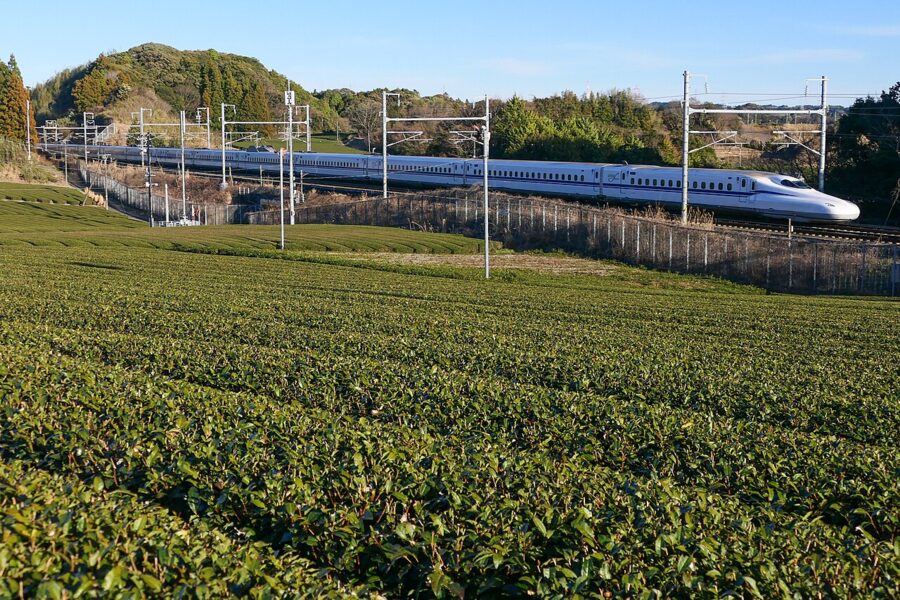
The fastest way from Tokyo to Kyoto is a Nozomi on the Tokaido Shinkansen (東海道新幹線) from Tokyo or Shinagawa Station, and it takes about 2 hours 15 minutes. A reserved seat bought at the station costs ¥14,170 one way in the regular season, and an unreserved seat ¥13,320, the same from either station. Book seat E in an ordinary car: it is the window on the right-hand side going west, and the right-hand side is where Mount Fuji appears.
That is most of the decision. Nozomi trains leave Tokyo several times an hour from about 06:00 to about 21:30, so you rarely need to plan around a departure. The money is in how you buy the ticket, and the time is in the walk to the platform and the first ten minutes at Kyoto Station.

The figures here are for one adult, one way, in the regular season, as JR Central (the railway that runs the line) posted them in November 2026. Reserved seats cost ¥200 more in the peak season, ¥400 more in the top peak, and ¥200 less in the off-peak season; unreserved seats cost the same every day. A fare rise for Nozomi reserved seats is already scheduled for tickets bought from July 1, 2027, and it is covered in the fares section below.
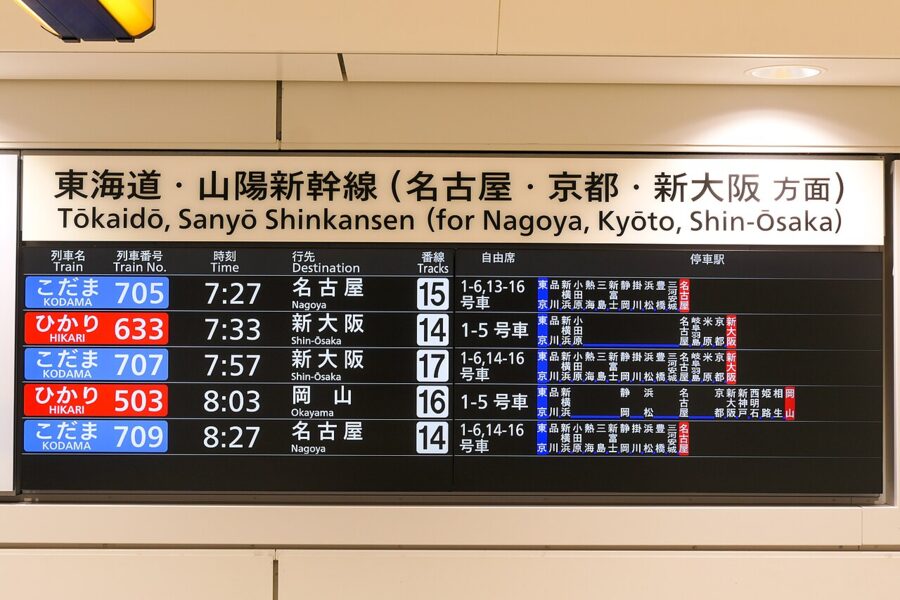

For the gates, the platforms (14 to 19) and the transfers inside Tokyo Station, see the Tokyo Station guide.
The answer in one table
Three kinds of train run between Tokyo and Kyoto on the same tracks. The Nozomi stops only at Shinagawa, Shin-Yokohama and Nagoya on the way. The Hikari adds a few stops that vary train by train, and the Kodama stops everywhere, though only some Kodama run as far as Kyoto.
| Train | Tokyo to Kyoto | Reserved seat (station ticket) | Unreserved seat | How often (November 2026) |
|---|---|---|---|---|
| Nozomi | about 2 h 11 min to 2 h 15 min | ¥14,170 | ¥13,320 | 6 an hour at midday on weekdays, up to 12 an hour at busy times |
| Hikari | about 2 h 34 min to 2 h 39 min | ¥13,850 | ¥13,320 | 2 an hour |
| Kodama | about 3 h 37 min | ¥13,850 | ¥13,320 | 1 an hour to Kyoto |
The frequencies and journey times are from JR Central’s own timetable search for a weekday and a Saturday in November 2026, and they shift a little with the season and the day of the week. The earliest and latest Nozomi of the day are a few minutes faster than the midday ones, at about 2 hours 7 or 8 minutes. JR Central publishes a basic Tokaido Shinkansen timetable in English, though it leaves out the extra trains.
The unreserved fare is the same on all three trains, so if you are going unreserved there is no reason to take anything but a Nozomi. The reserved fare differs by only ¥320 between the Nozomi and the others, for a train that is 20 to 25 minutes faster. Unless something below applies to you, take the Nozomi.
Nozomi, Hikari or Kodama
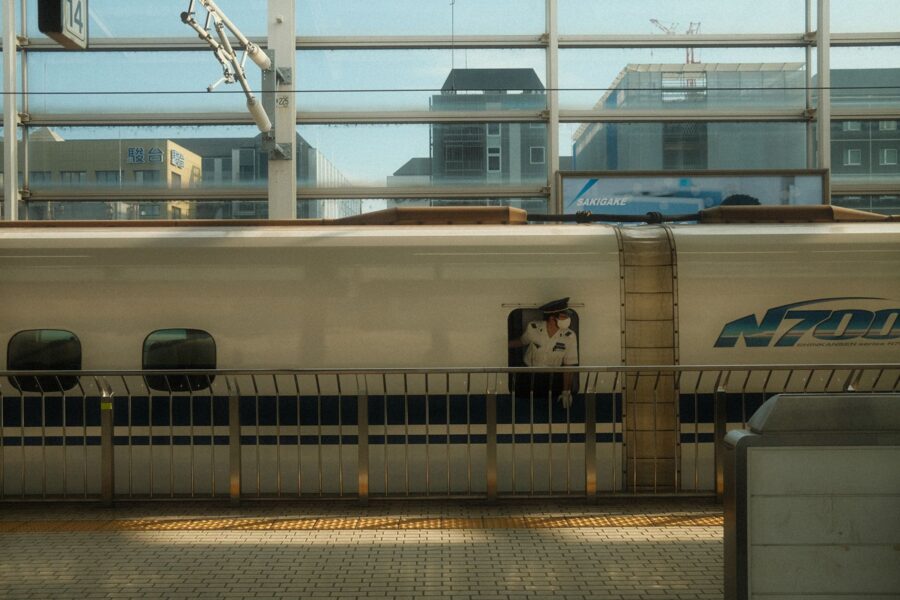
The Nozomi (のぞみ) dates from 1992 and is the reason the route works as a day trip. The line itself opened on October 1, 1964 as the world’s first high-speed railway, and its trains have run at up to 285 km/h since March 2020. Over the 513.6 km to Kyoto, the Nozomi’s handful of stops is what keeps the trip near two and a quarter hours.
When the Hikari makes sense
The Hikari (ひかり) is the train for Japan Rail Pass holders, because the pass covers the Hikari and the Kodama but not the Nozomi. Pass holders can ride a Nozomi only if they buy a separate Nozomi Mizuho ticket, which costs ¥4,960 from Tokyo to Kyoto, for any class of seat. Whether the pass pays for itself on a Tokyo and Kyoto trip is arithmetic, and the Japan Rail Pass guide does it; a single return trip on its own does not come close.
The Hikari also helps if you want to get off on the way. Which stations it serves changes from train to train: on a weekday in November 2026, the 12:03 from Tokyo stopped at Shizuoka and Hamamatsu, and the 12:33 at Toyohashi, Gifu-Hashima and Maibara. Check the stops of the train you book, not the train type.
The Kodama, and the cheap way to ride it
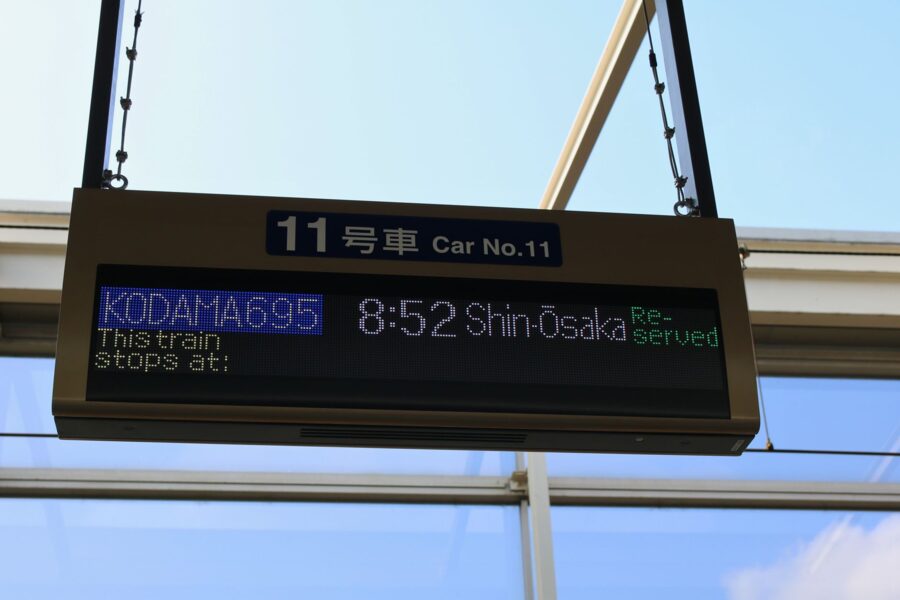
The Kodama (こだま) stops at all 14 stations between Tokyo and Kyoto. At the regular fare it makes no sense, since it costs the same as a Hikari and takes an hour longer. It makes sense in one case: JR Central’s travel arm sells a one-way Kodama plan, Puratto Kodama (ぷらっとこだま), that was listed at ¥10,960 from Tokyo to Kyoto on September 1, 2026, for a Monday to Thursday departure outside the peak season.
It is a travel product, not a ticket, so the price moves with demand and the rules are stricter. It sells from 10:00 one month ahead to 23:30 the day before, it does not run over Golden Week, Obon or the New Year holidays, and it is valid only on the train you booked. Since April 1, 2026 it has come with a choice of a drink voucher or a coupon for local shops and activities. If you have three and a half hours and a book, it saves about ¥3,200 on the Nozomi station fare.
What the ticket costs, and how to pay less
A Shinkansen fare is two charges added together: the basic fare, set by distance (¥8,360 from Tokyo to Kyoto), and the limited express charge for the train and the seat. The second part is where the differences come from. JR Central’s online service, smartEX, sells the same seats slightly cheaper and adds early-booking discounts.
| Tokyo or Shinagawa to Kyoto, regular season | Station ticket | smartEX |
|---|---|---|
| Nozomi, reserved | ¥14,170 | ¥13,970 |
| Hikari or Kodama, reserved | ¥13,850 | ¥13,650 |
| Any train, unreserved | ¥13,320 | ¥13,320 |
| Nozomi, Green Car | ¥19,040 | ¥18,840 |
| EX Hayatoku 21 (Nozomi, booked 21 days or more ahead) | not sold | ¥12,430 |
| EX Hayatoku 7 (Hikari or Kodama, booked 7 days or more ahead) | not sold | ¥11,940 |
The season adjustments come from JR Central’s calendar of seasonal reserved-seat charges: ¥200 off in the off-peak season, ¥200 extra in the peak season and ¥400 extra in the top peak, which covers the New Year holidays, Golden Week and Obon. The early-booking fares cost the same every day they are sold, but they are not sold on the busiest days at all.
Shin-Yokohama is a little cheaper as a starting point (¥13,500 for a Nozomi reserved seat at the station) because it is shorter. Shinagawa is not: from Shinagawa you pay exactly what you would from Tokyo.
The early-booking fares
EX Hayatoku 21 gets you a Nozomi reserved seat for ¥12,430 if you book between 10:00 one month before and 23:30 twenty-one days before you travel. The catch is in the small print: you cannot change the train after booking, and if you miss it you cannot even use an unreserved seat on a later train. Refunding costs ¥320, after which you rebook at the going rate.
EX Hayatoku 7 is the cheaper and slower version, ¥11,940 for a Hikari or Kodama that runs straight from Tokyo to Kyoto, booked at least seven days ahead. Both have a limited number of seats per train, and both exclude Golden Week, Obon and the New Year period. If your dates are fixed three weeks out, Hayatoku 21 is the best value on the line: ¥1,740 below the station price for the fastest train.
The 2027 price rise
On October 16, 2026, JR Central and JR West announced a rise in Nozomi reserved-seat charges for tickets bought from July 1, 2027. Between Tokyo and Kyoto the increase is ¥700, which takes the smartEX price to ¥14,670 and the station price to ¥14,870. Unreserved seats, and reserved seats on the Hikari and Kodama, are not affected.
The Green Car charge rises separately, for travel from December 15, 2027: for a trip of this length it goes from ¥5,400 to ¥8,400. The rise is set by purchase date, so a Nozomi seat for an August 2027 trip bought in June 2027 is still sold at the old price.

Green Car and Supreme Class
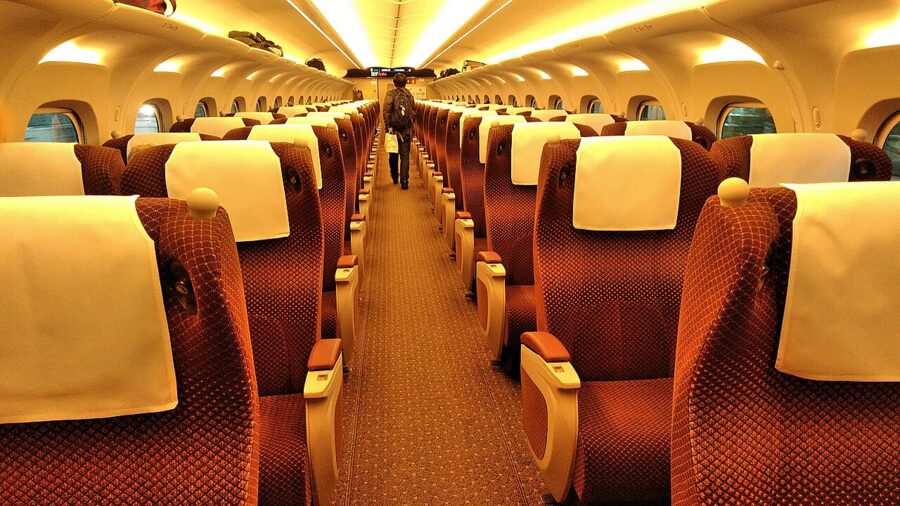
The Green Car (グリーン車) is first class: cars 8 to 10, with two-by-two seating, more legroom and quieter carriages. For about ¥4,900 over a Nozomi reserved seat it is a luxury rather than a necessity on a two-hour trip, but it has one practical advantage. According to JR Central’s notice on on-board sales, food and drinks are sold only in the Green Cars of Nozomi and Hikari trains; ordinary cars and all Kodama trains have no service at all.
Above the Green Car, JR Central introduced Supreme Class on October 1, 2026: private cabins in cars 7 and 10 on some Nozomi trains, booked only through smartEX. It is priced in a different league, ¥42,390 for the one-person cabin and ¥60,790 for the two-person cabin from Tokyo to Shin-Osaka, which is a curiosity for this trip rather than an option.
Buying and reserving
Reserved seats on the Tokaido Shinkansen go on sale at 10:00 one month before the day of travel, at ticket offices and machines. Outside the holiday peaks you can usually buy a reserved seat on the day, often for a Nozomi leaving within the hour. Book ahead if you travel on a Friday evening, a Sunday afternoon, in Golden Week, in Obon, over New Year, or in the autumn leaf weekends in Kyoto in November.
smartEX: the official app
The smartEX service is JR Central’s own online booking system for the Tokaido, Sanyo and Kyushu Shinkansen, in English, with no annual fee. You register with a credit card, then book, pay and choose your seat from a seat map. Some products can be reserved from 05:30 one year ahead; for those, the exact seat and train are confirmed after 08:00 one month before travel.
Its best feature is flexibility. Before you go through the gate, and before the departure time of your train, you can change to another train as many times as you like for free, up to four minutes before departure. If you miss your train on a standard smartEX booking, you can still ride later the same day in an unreserved seat.

Boarding with an IC card or a QR code
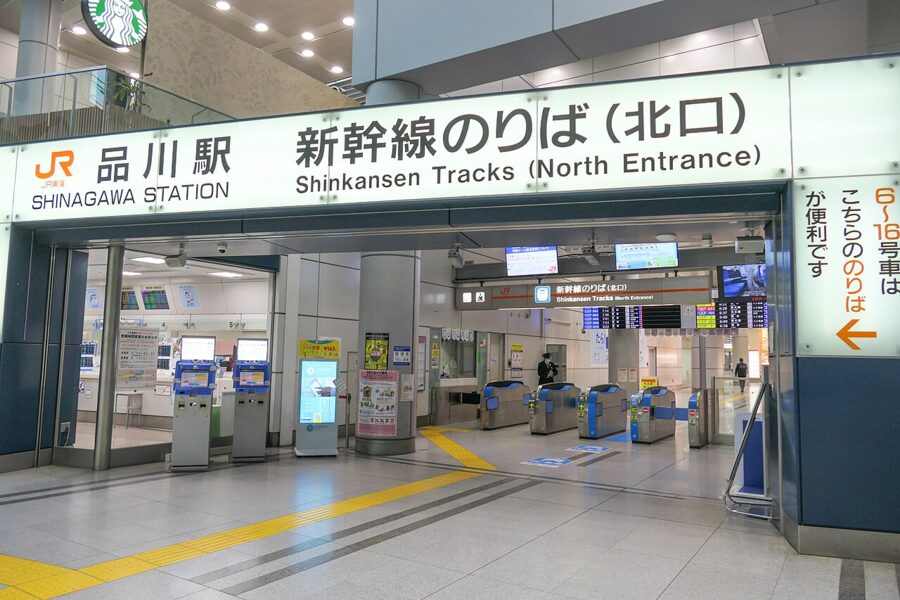
With smartEX there is no paper ticket. You board with a QR code on your phone or by tapping a transport IC card that you registered to your account, such as a Suica. The fare goes on the credit card, not the IC balance. When you pass the Shinkansen gate, it prints a small seat information slip; JR Central’s IC boarding guide warns that without it you can be charged the full fare again on the train.
Two details catch people out. If you enter through the ordinary JR gates first, at Tokyo Station’s Marunouchi side for example, you tap the same card at both gates, and the card needs at least the minimum train fare on it in the Suica area to get through the first gate. And JR Central requires the card to be registered before boarding: a Suica that is not linked to a smartEX booking will not open the Shinkansen gate on this line.
Ticket machines and ticket offices
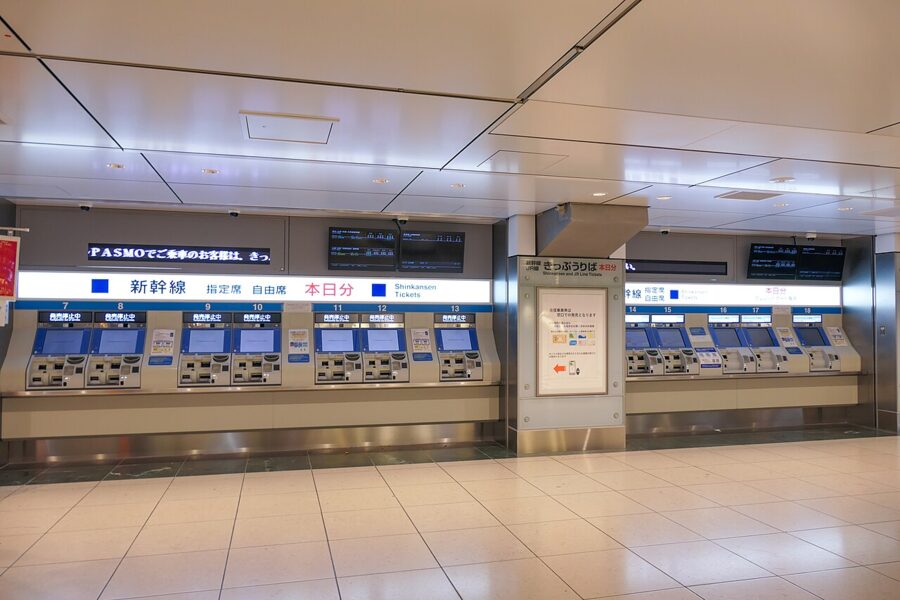
The reserved-seat ticket machines at Tokyo, Shinagawa and Kyoto all have English menus, take cash and cards, and sell every regular seat type, including the seats with an oversized baggage area. They are the quickest option if you do not want an account. The staffed ticket offices are the place for anything unusual, and for Japan Rail Pass seat reservations, though the lines at Tokyo Station can run long in the morning.
A paper ticket from the station comes as two cards, the basic fare ticket and the limited express ticket, or as one combined card. Put all of them into the gate together and take them back out; the gate keeps them at Kyoto.


Reserved or unreserved
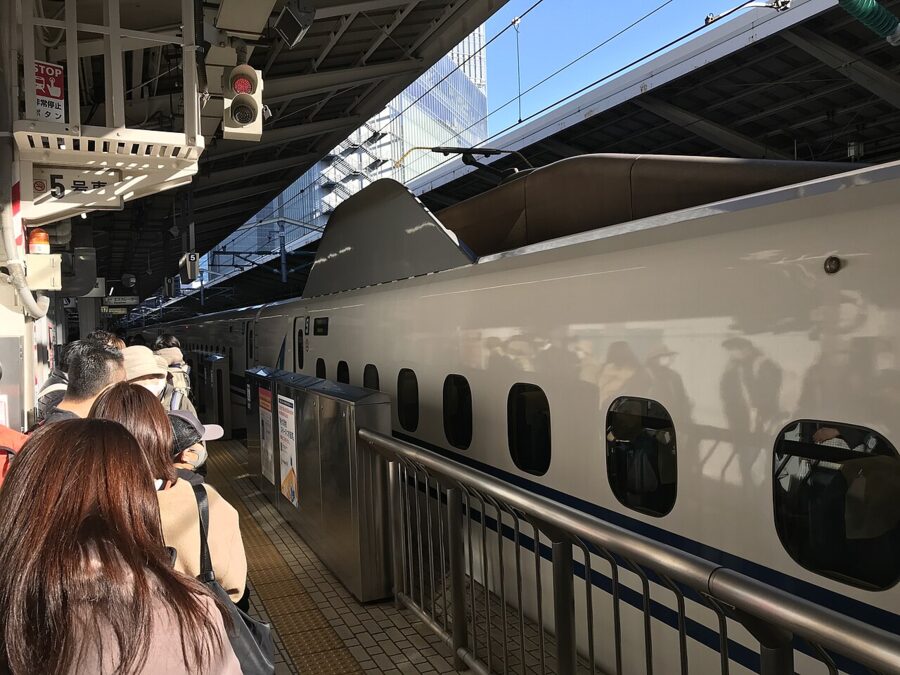
On a Nozomi only cars 1 and 2, at the Tokyo end of the train, are unreserved: 165 seats out of more than 1,300. Tokyo is the starting station, so outside busy periods you can get one by being on the platform 15 to 20 minutes early. From Shinagawa or Shin-Yokohama, the window seats are often gone, and a pair of seats together is harder still.
During the holiday peaks JR Central makes every Nozomi seat reserved, as its notice on all-reserved Nozomi trains explains. The rule covers Golden Week, Obon, the September and October holiday weekends, the late-November three-day weekend, the New Year period and the January and March holiday weekends. On those days an unreserved ticket lets you stand on the deck between cars, nothing more; the Hikari and Kodama keep their unreserved cars, and those fill up.
The verdict: reserve, unless you are traveling alone on a weekday at midday from Tokyo Station. The saving on an unreserved seat is ¥850, and a reserved seat is the only way to get seat E.
Tokyo or Shinagawa
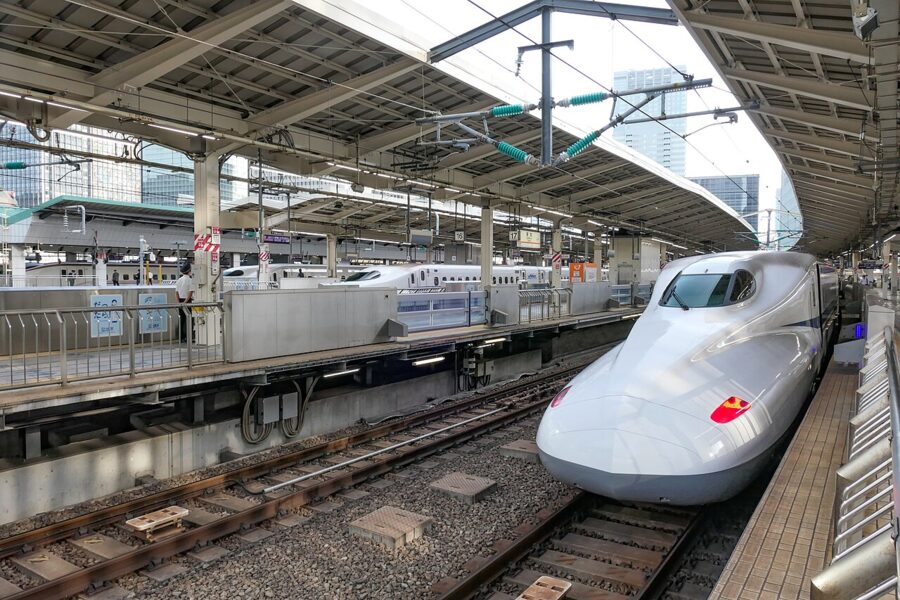

Board where it is easier for you to get to. Every Nozomi stops at both, the fare is identical, and Shinagawa is just a few minutes down the line, so the choice is about where you are staying and how much you trust your transfer. Shinagawa is closer for anyone in the south and west of the city, and it is on the Keikyu Line from Haneda Airport.
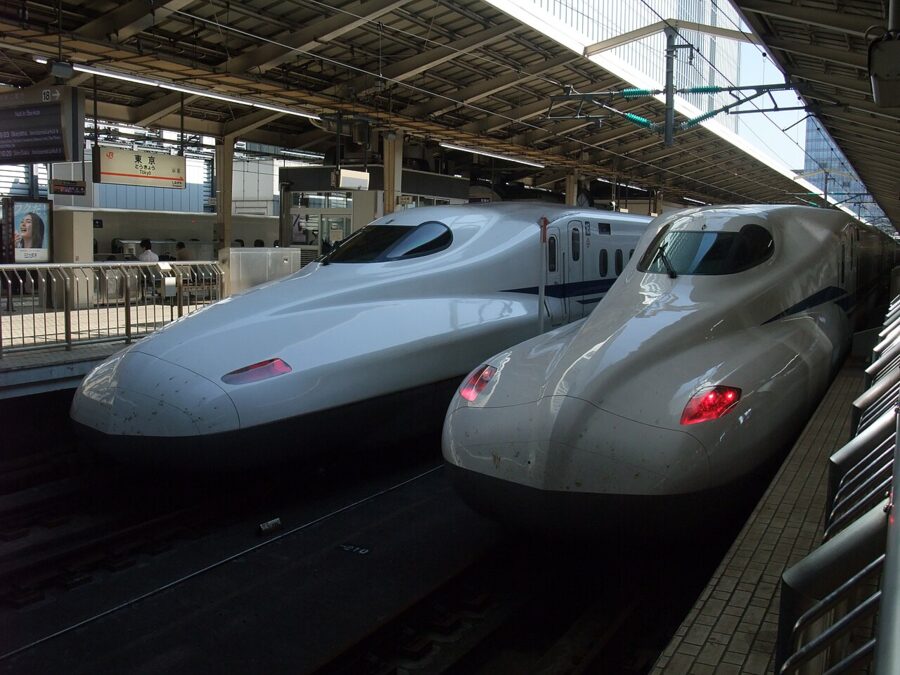
Tokyo Station is bigger and you have more time inside. The Tokaido Shinkansen platforms sit on the Yaesu side, on the east of the building, and from the Marunouchi side, or from the Yamanote and Chuo Line platforms, the walk to them takes 10 to 15 minutes once you add the transfer gate. Allow 20 minutes from arriving on a JR train to sitting on the Shinkansen, and 30 if you also want to buy food or a ticket.
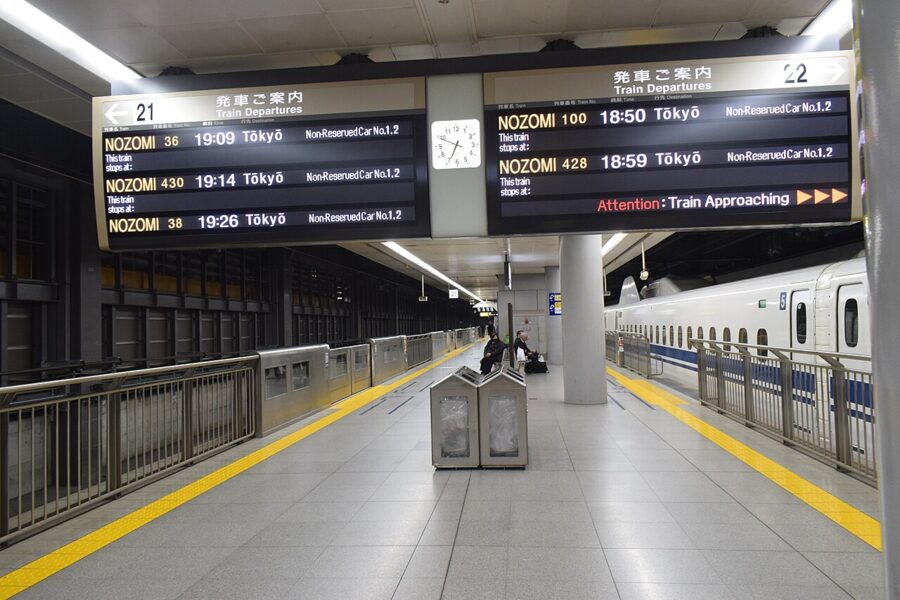

Shinagawa is the calmer of the two. Its Shinkansen gates are separate from the JR East gates, the concourse is compact, and the walk from the Yamanote or Keikyu platforms is short. The catch is the unreserved seats, which have usually been picked over by passengers who boarded at Tokyo.
For a first train out, the 06:00 Nozomi reached Kyoto at 08:08 on weekdays in November 2026, early enough to be at the temples before the tour groups. Being on it means sleeping close to one of the two stations; the business hotels around Tokyo and the hotels near the Shinkansen stations are the practical base. The last Nozomi that ran through to Kyoto on the same days left Tokyo at 21:24 and arrived at 23:31. For the trains and subways that get you to either station, the getting around Tokyo guide has the network.
Ekiben: buy lunch before the gate
An ekiben (駅弁), the station lunch box, is part of the ride, and with no cart service in ordinary cars you need to buy it before you board. The biggest selection at Tokyo Station is Ekibenya Matsuri (駅弁屋 祭), which stocks more than 150 kinds from all over Japan and opens 05:30–22:00 every day.
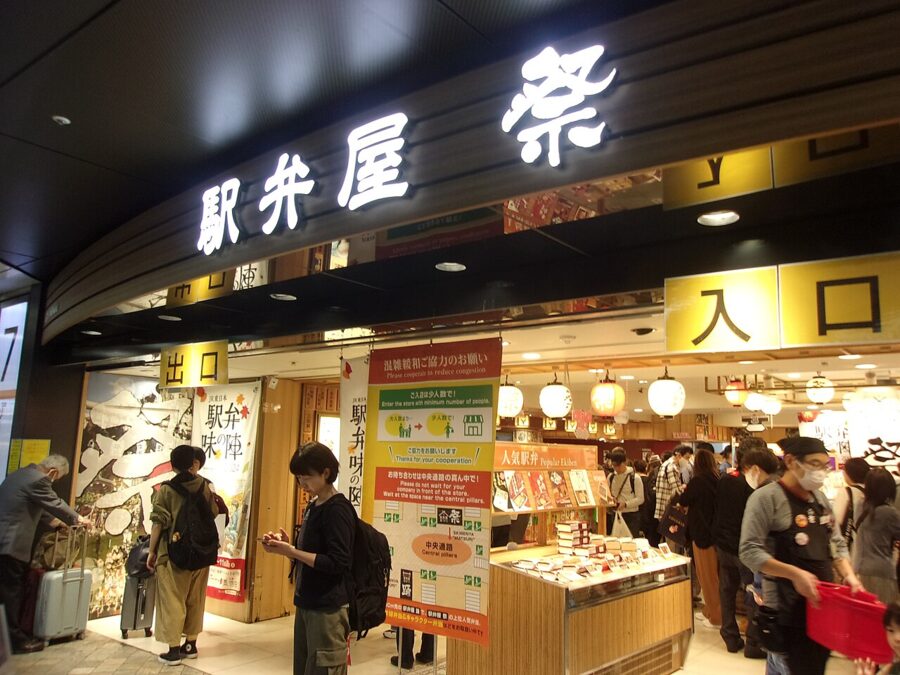
The one trap is the location. Matsuri is in the central passage inside the JR East gates, not inside the Tokaido Shinkansen gates on the Yaesu side, so if you walk straight in from the street to the Shinkansen you will miss it. The Tokaido Shinkansen concourse has its own kiosks with a smaller range.
The etiquette is relaxed: eating at your seat is normal on the Shinkansen, and nobody minds the smell of grilled eel at 11:00. Take your rubbish with you to the bins on the deck or at Kyoto.
Seat E and Mount Fuji
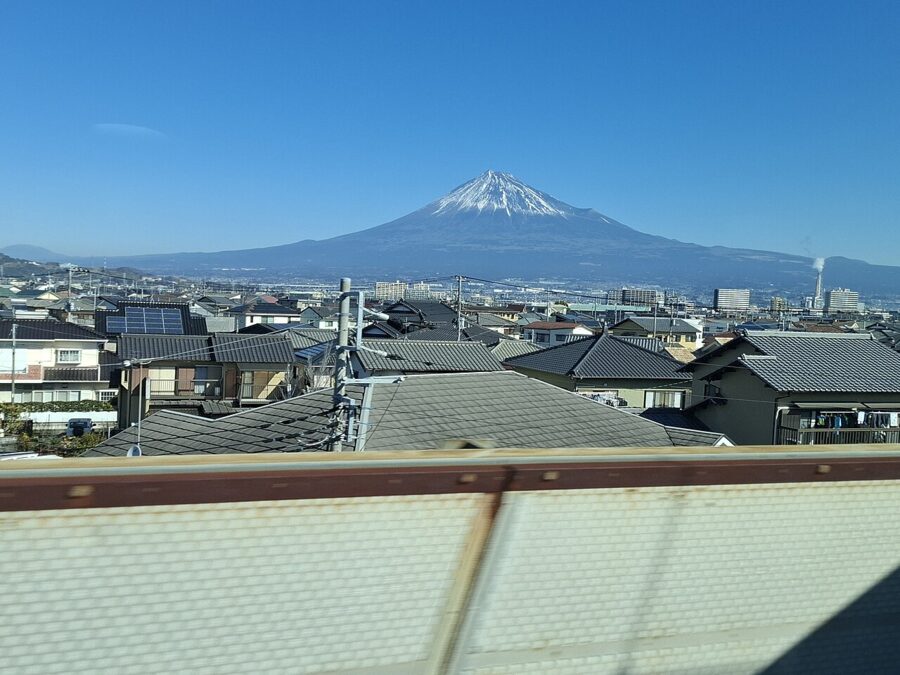
The window seats in an ordinary car are A and E. A is on the three-seat side, on the left going west, facing the coast; E is on the two-seat side, on the right, facing the mountains. Mount Fuji is on the right from Tokyo to Kyoto, so E is the seat, and D next to it is the second-best. In the Green Car, with two seats on each side, the window seat on the right is D.
Coming back from Kyoto to Tokyo, Fuji is on the left, and E is still the seat, because the seat letters stay on the same side of the train whichever way it runs.
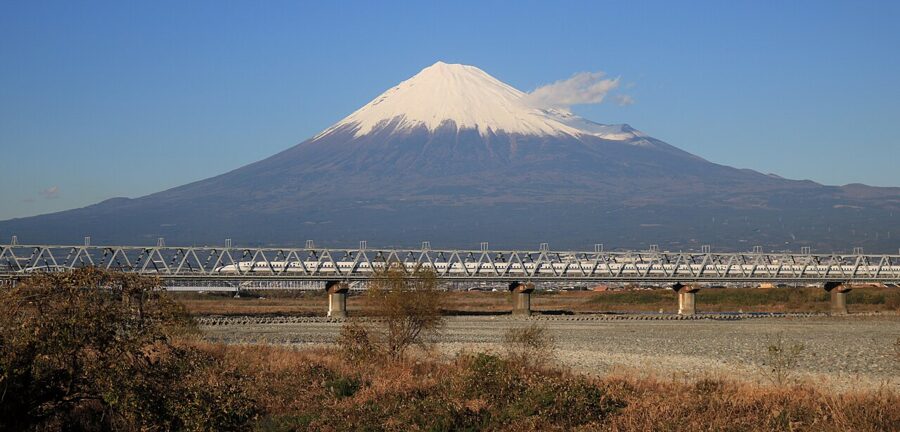

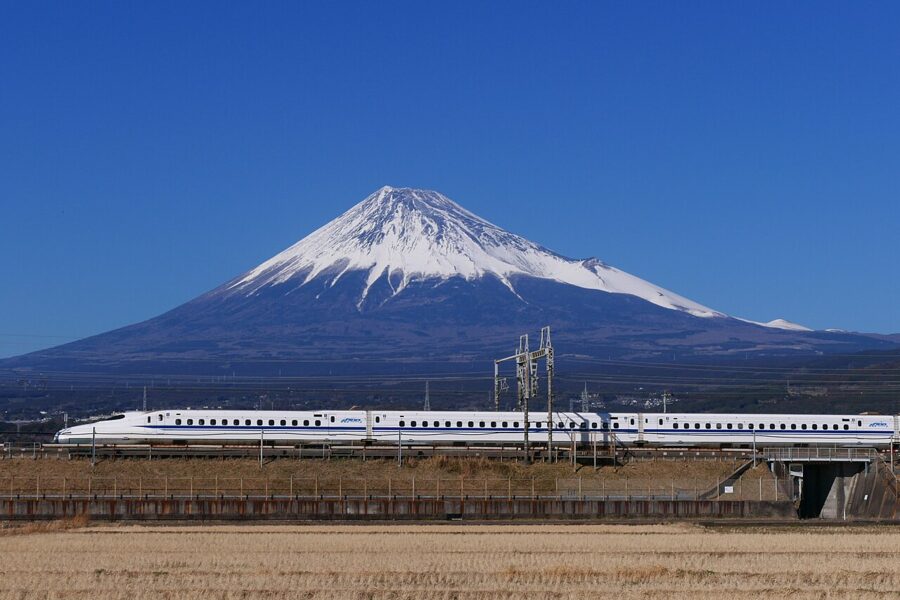
On a very clear day you can catch the summit earlier, past Shin-Yokohama, but the views that count come about 40 minutes after Tokyo, from around Mishima to just past Shin-Fuji. Here the line crosses a flat stretch with nothing between you and the mountain. The last good look is from the Fujikawa Bridge (富士川橋梁), the 1,373 m bridge over the Fuji River between Shin-Fuji and Shizuoka, a crossing of well under half a minute at speed.
Whether you see it at all is weather. The Japan Meteorological Agency’s climate normals for Shizuoka put it in two numbers: January averages 208 hours of sunshine and cloud cover of 4.4 tenths, and June 136 hours and 8.6 tenths. December to February gives the best odds, and mornings are generally clearer than afternoons; in the rainy season in June and the humid summer, a sighting is luck.
If you want the mountain itself rather than a glimpse from 285 km/h, the Mount Fuji guide covers the day trips. From the train, expect a few clear minutes on a dry winter morning, and a white cone in the haze or nothing at all in summer.
Luggage: the 160 cm rule
The Tokaido Shinkansen has a rule for big suitcases, and it is enforced. JR Central’s luggage rules measure a bag by adding its length, width and height. Up to 160 cm, roughly an airline checked bag, the bag goes on the overhead rack, at your feet or in the luggage storage areas on the decks between cars, with no reservation.
From 161 cm to 250 cm the bag is oversized, and you must reserve a “seat with an oversized baggage area”: a seat in the last row of certain cars, with the floor space behind the row shared by its five passengers. The seat costs nothing extra. Bring an oversized bag on board without the reservation and you pay a ¥1,000 fee; anything over 250 cm is not allowed on board at all.
Supply is the problem. A Nozomi has 57 of these seats (45 in ordinary cars and 12 in the Green Cars), a Hikari 42, and a Kodama 17, and there are none in the unreserved cars. In busy weeks they go early, so book them when you book the trip. You can do it at ticket machines, ticket offices and on smartEX; Japan Rail Pass holders ask at the ticket office or use the pass’s own reservation site.
The weight limits are unchanged: two pieces of up to 30 kg each, with total dimensions within 250 cm and no side longer than 200 cm. The rule applies only on the Tokaido, Sanyo, Kyushu and Nishi Kyushu Shinkansen, not on JR East’s lines out of Tokyo or on ordinary trains.

The alternative is to send the bag ahead. JR Central points travelers to Luggage Express, a same-day delivery that carries bags between hotels and stations in Tokyo and Kyoto on the Shinkansen itself: drop the bag off in the morning and it reaches your Kyoto hotel the same day, for ¥13,200 per item on the regular plan and ¥16,500 on the express plan in November 2026. That is close to the price of a second ticket, and worth it only for a heavy bag or a family with several.
The cheaper ways: buses and planes
The train is not cheap, and the alternatives are real. Overnight buses cost a third of the train or less and save a night’s hotel, and a sale fare on a plane can beat the Shinkansen on price. Neither beats it on time once you count the whole trip.
Overnight buses
Willer alone listed 16 overnight departures from the Tokyo area to Kyoto for one late-November night in 2026, and JR’s buses add about ten more. Most leave between 21:00 and 23:30 and arrive between about 04:00 and 07:30. Willer Express sells them on its own booking site, where prices change by date. Checked in November 2026, overnight seats from Tokyo to Kyoto ran from about ¥4,200 for a basic four-across seat to ¥15,400 for Willer’s ReBorn seat, depending on the date.
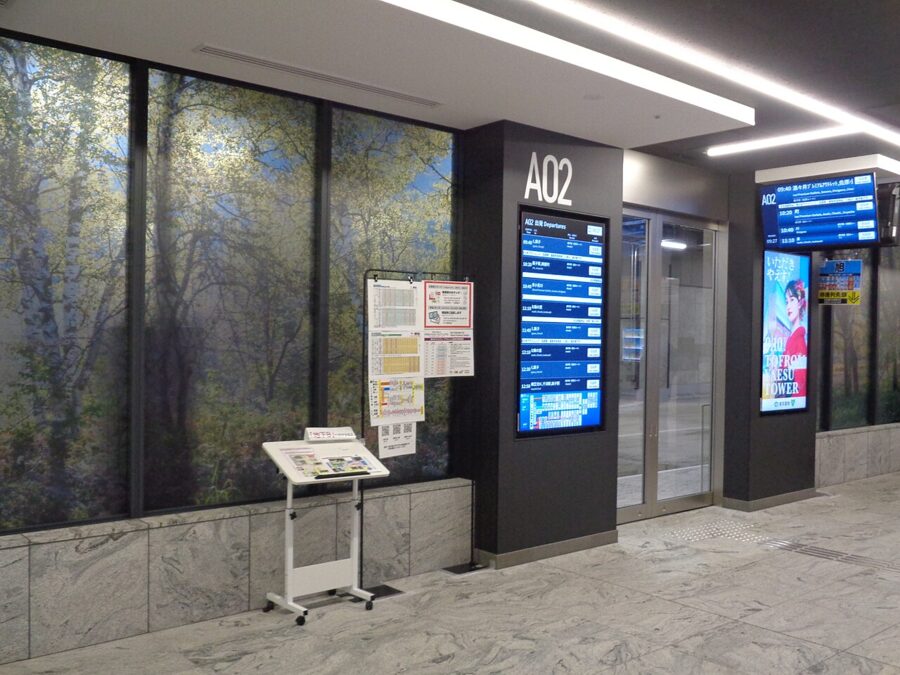
A typical Willer run leaves Bus Terminal Tokyo Yaesu at 21:40 and reaches the Hachijo side of Kyoto Station, bus stop G2, at 05:30. Others leave from Busta Shinjuku, the highway bus terminal above Shinjuku Station’s New South Exit, around 21:10 to 22:20, and stop at Kyoto Station’s Hachijo side between about 05:00 and 07:20 before going on to Osaka.
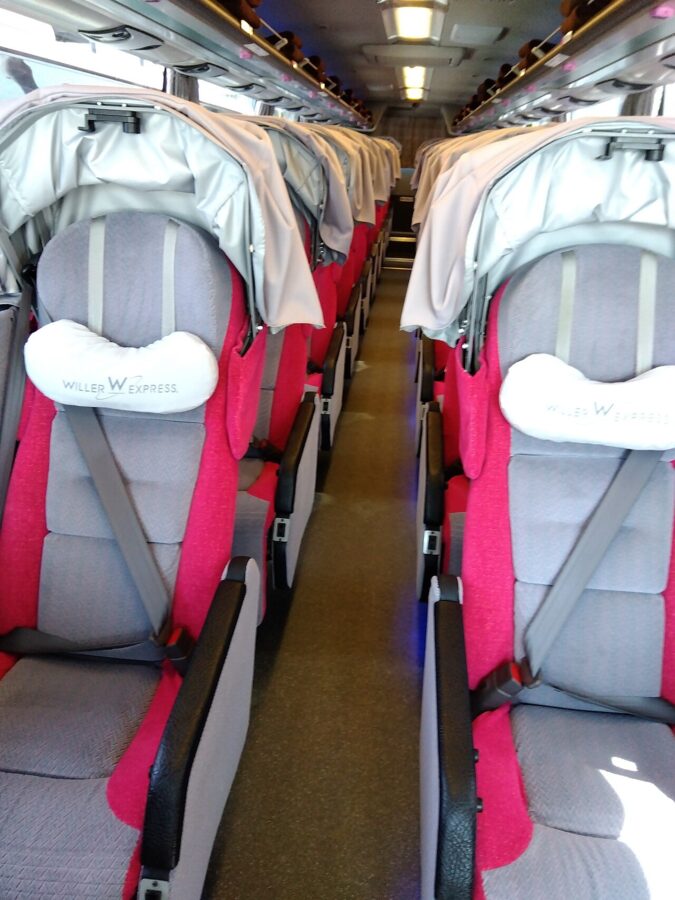

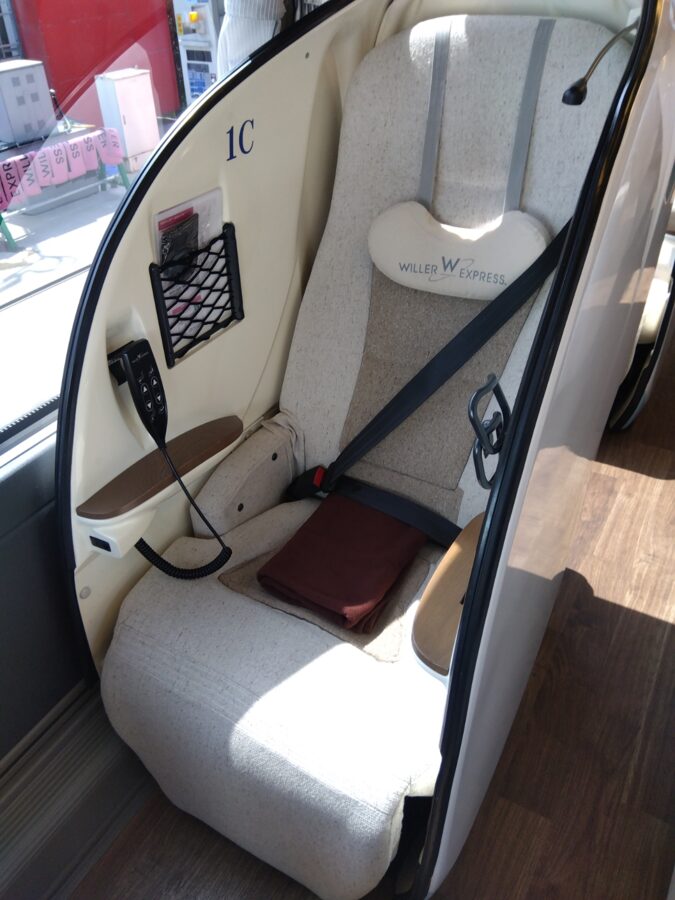
The seat type matters more than the operator. A standard four-across seat is a bus seat with a recline. Three-across seats with a curtain cost a few thousand yen more and are much easier to sleep in, and the top tiers, like the ReBorn, recline further with leg rests. Some buses have a toilet on board and others rely on rest stops at expressway service areas; the booking page lists which, and it is worth checking.

JR’s own buses, run by JR Bus Kanto and West JR Bus, are the other big operator. Their overnight Dream services leave the Yaesu South Exit of Tokyo Station between 21:00 and 22:30, some calling at Busta Shinjuku, and the timetable revised on August 1, 2026 has them reaching the Karasuma side of Kyoto Station between 04:06 and about 06:20. Fares are set by date and shown in JR Bus’s booking system.
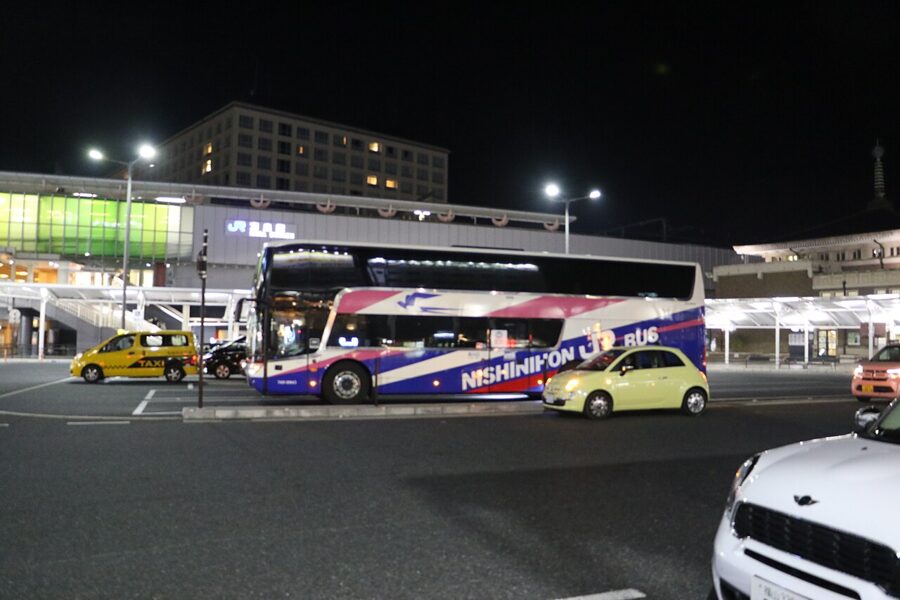

The real cost of the night bus is the morning. You arrive in Kyoto at 05:00 with nothing open, your hotel will not let you in until mid-afternoon, and you have slept badly. It is a good trade if you are on a tight budget and have a day of walking ahead that does not depend on being sharp, and a poor one otherwise.
The daytime bus
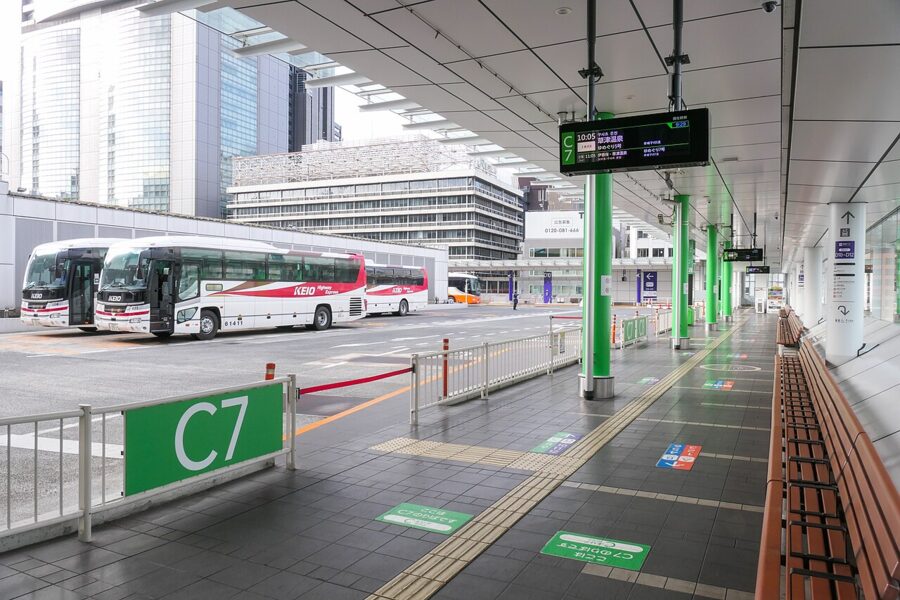
One JR bus a day runs from Tokyo to Kyoto Station in daylight. The Seishun Hiru Tokkyu 5 leaves the Yaesu South Exit at 09:10, calls at Busta Shinjuku at 09:50, and reaches the Karasuma side of Kyoto Station at 16:58, according to JR Bus Kanto’s daytime timetable. The other daytime runs stop at Kyoto Fukakusa, on the expressway in the south of the city, on their way to Osaka. Nearly eight hours on a bus is a long way to save money, but it is cheap and you see the country.

Flying
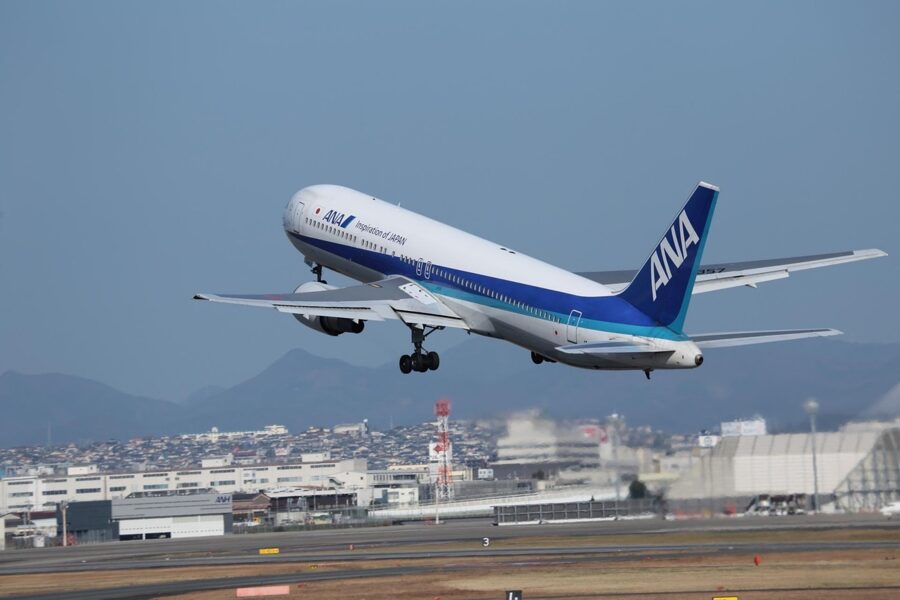
Kyoto has no airport. The nearest is Osaka’s Itami Airport, served by ANA and JAL from Haneda in a little over an hour in the air. ANA’s cheapest fare type, Simple, was listed in its fare chart for winter 2026 at ¥10,890 to ¥28,710 one way between Tokyo and Osaka, before the airport facility charge, for travel from October 25, 2026 to March 27, 2027. The low end is for early bookings on quiet flights.
Then add the trip at each end. From central Tokyo to Haneda is 30 to 45 minutes, you should be at the airport at least 30 minutes before departure, and the airport limousine bus from Itami to the Hachijo side of Kyoto Station takes about an hour. Door to door, that is three and a half to four hours, against about two and three-quarter hours by Nozomi.
Kansai International Airport, reached from Narita on low-cost carriers, is farther from Kyoto still, more than an hour by the Haruka limited express. The verdict: fly only if you are already at Haneda with a cheap seat in hand, or connecting from an international flight on the same ticket.
Arriving at Kyoto Station
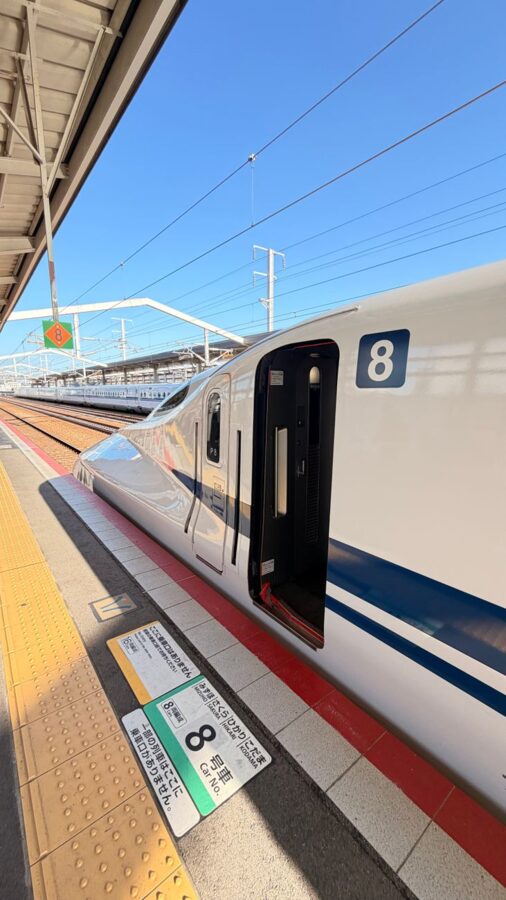
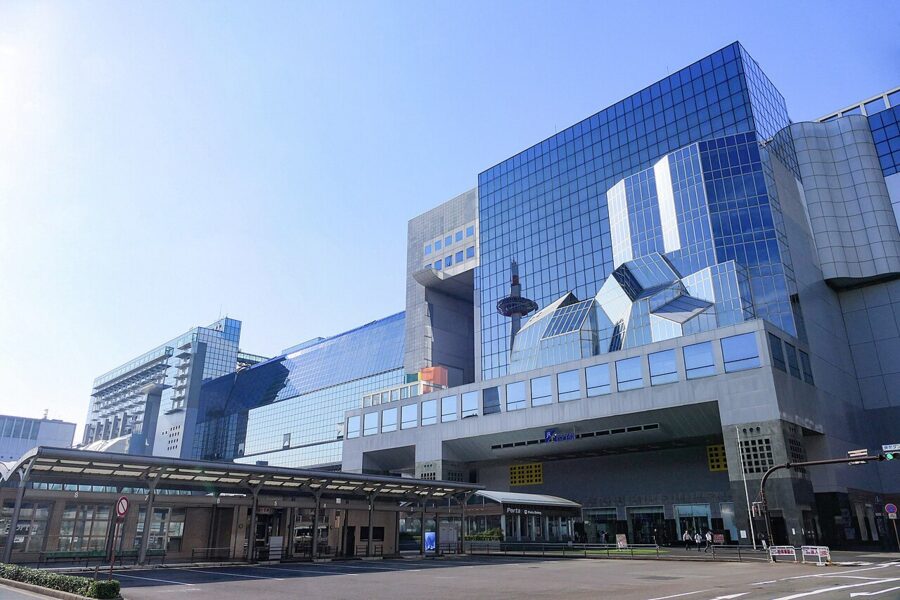
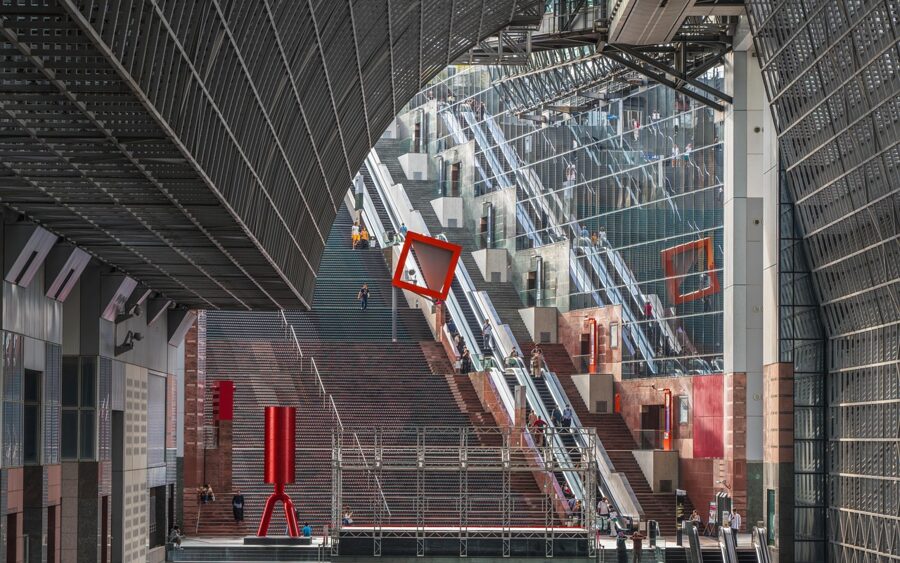
Kyoto Station (京都駅) is big and has two sides, and getting off the Shinkansen is the moment to decide which one you want. The Shinkansen platforms, 11 to 14, run along the south side of the station. Trains to Tokyo use 11 and 12; trains from Tokyo arrive at 13 and 14.
Hachijo side or Karasuma side
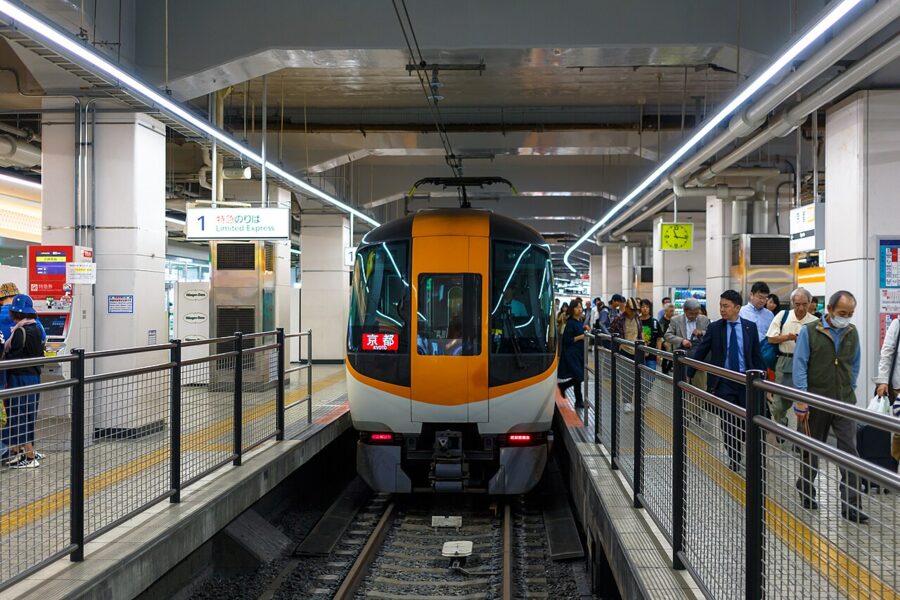
The Hachijo Exit (八条口) is on the south side, directly below the Shinkansen platforms. It has the Shinkansen’s own exit gates, the Kintetsu Line to Nara, the highway bus stops and the airport limousines, and a cluster of business hotels. If your hotel is south of the tracks or you are going to Nara, leave by the Shinkansen Hachijo gates and you are on the street in a couple of minutes.
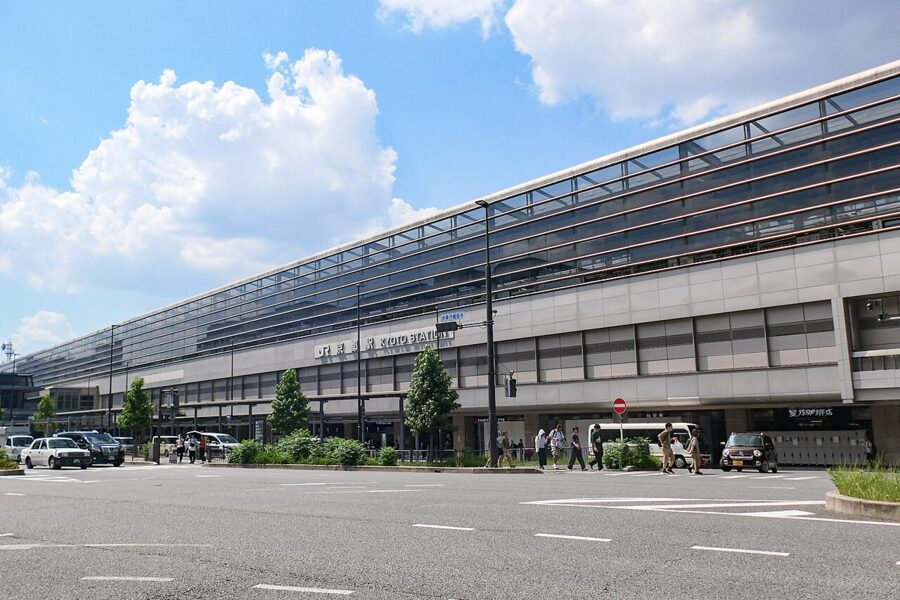
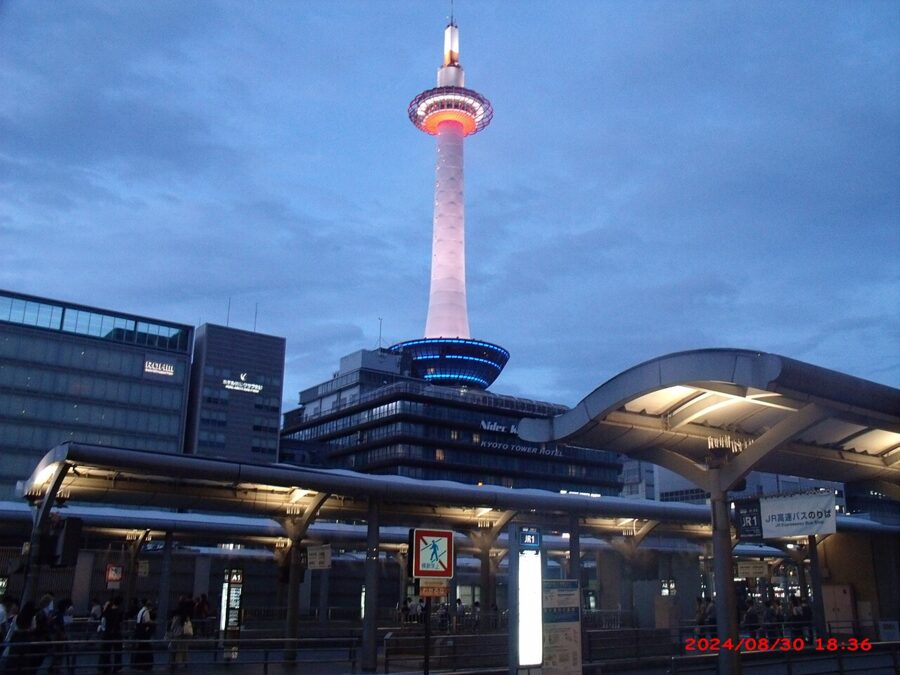
The Karasuma Exit (烏丸口), also called the Central Exit, is on the north side, facing Kyoto Tower and the city center. The main city bus terminal, the main taxi rank and the subway are all on this side. To get there, take the Shinkansen transfer gate into the JR concourse and walk north through the station, or use the free passage that crosses the station above the tracks, then down to the Karasuma side.
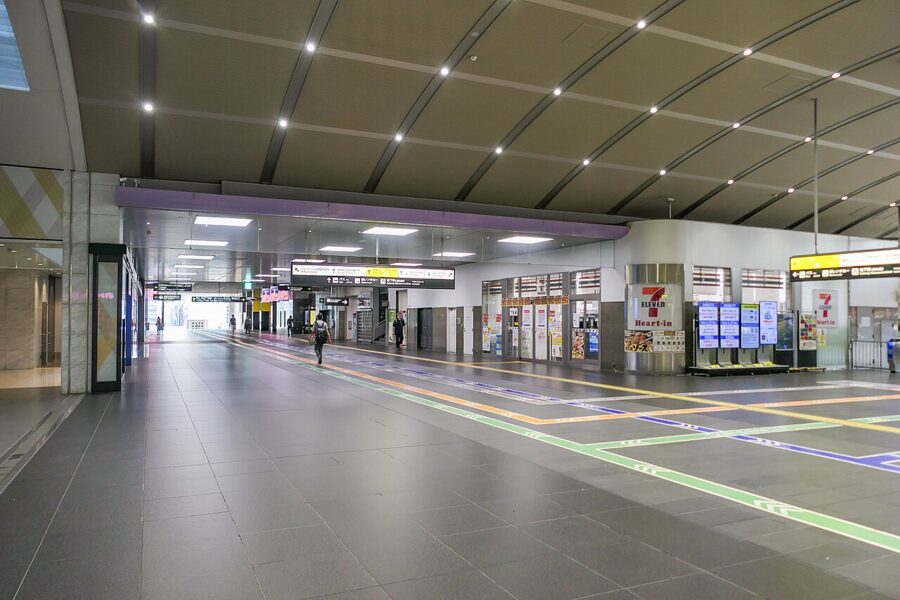
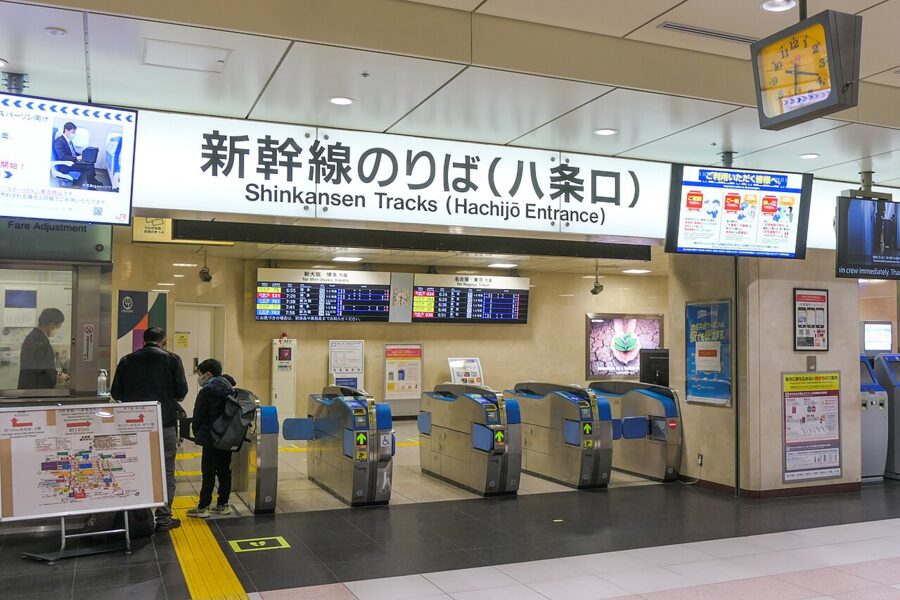

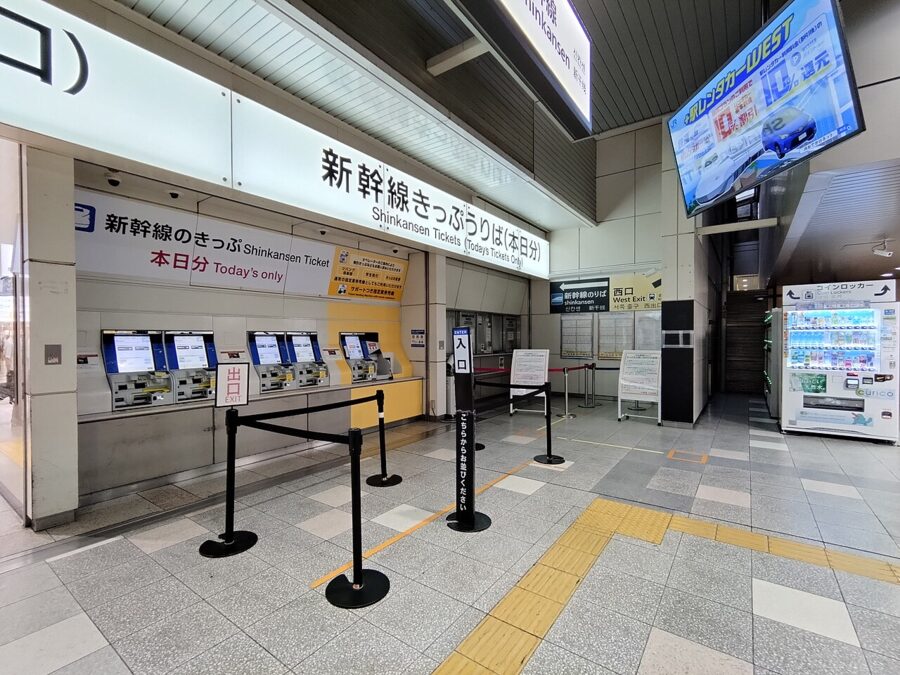
West Japan Railway’s station map for Kyoto sets the standard transfer time from the Shinkansen at 9 minutes for the JR lines (the Nara Line for Fushimi Inari and Uji, the Sagano Line for Arashiyama) and 10 minutes for the Kintetsu Line and the subway. With bags, or on your first visit, allow 15.

Buses and the subway
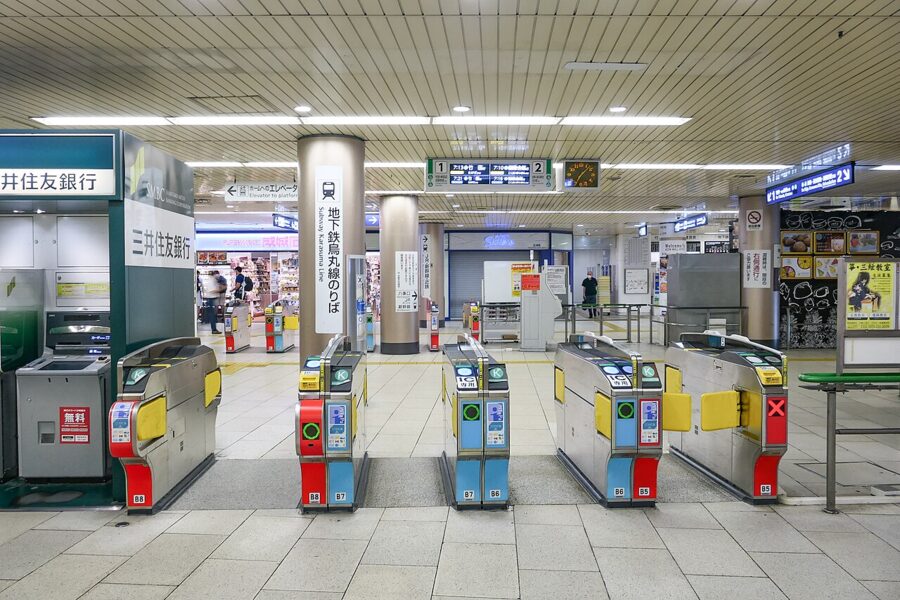
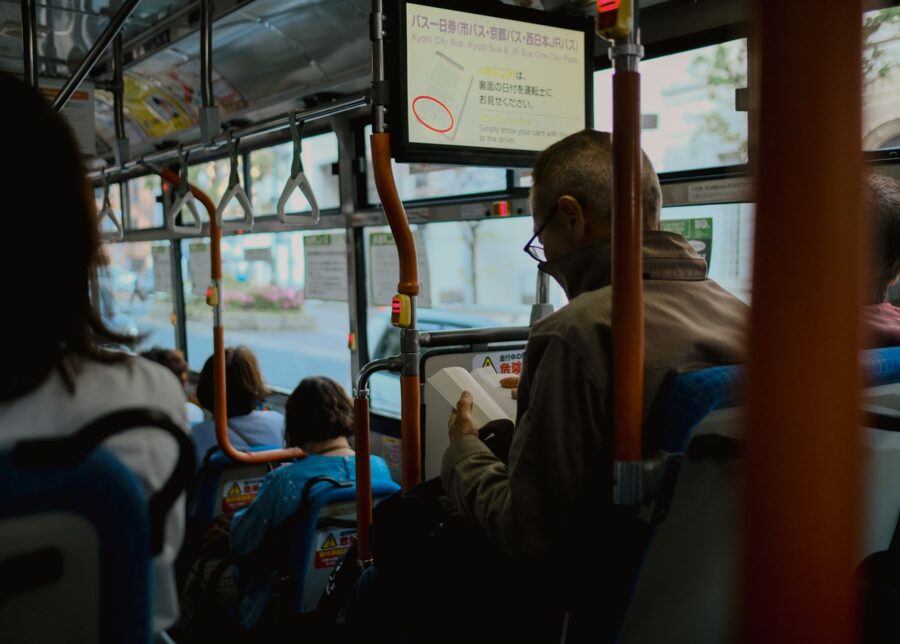
For most of the sights, the subway or a bus does the job. The Karasuma Line of the municipal subway runs north under the Karasuma side to Shijo and Karasuma Oike, for downtown and the Nishiki Market area. The city buses charge a flat ¥230 for an adult inside the central zone, payable by IC card, and leave from the terminal in front of the Karasuma Exit.
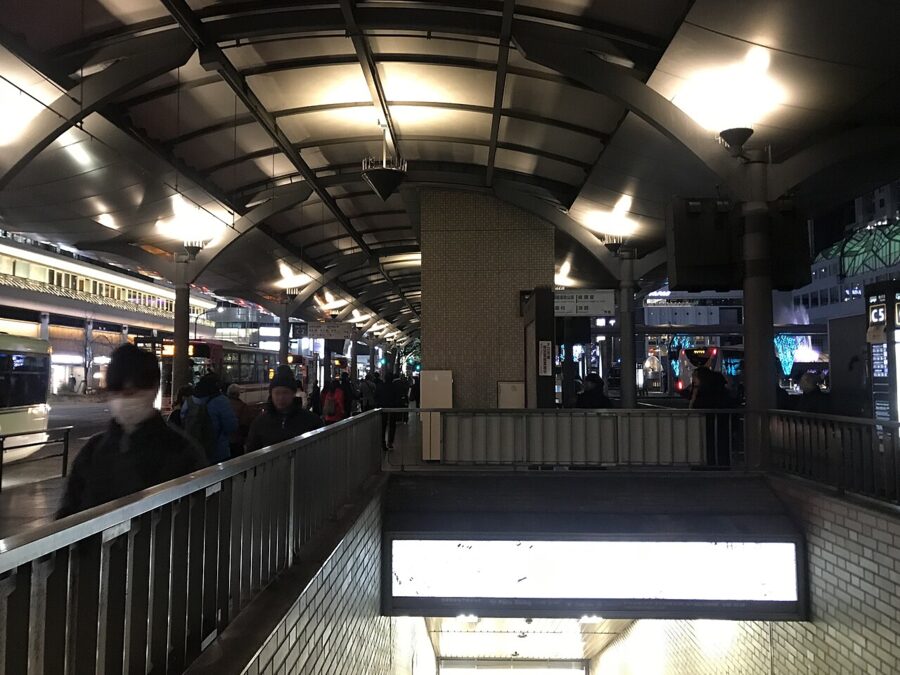

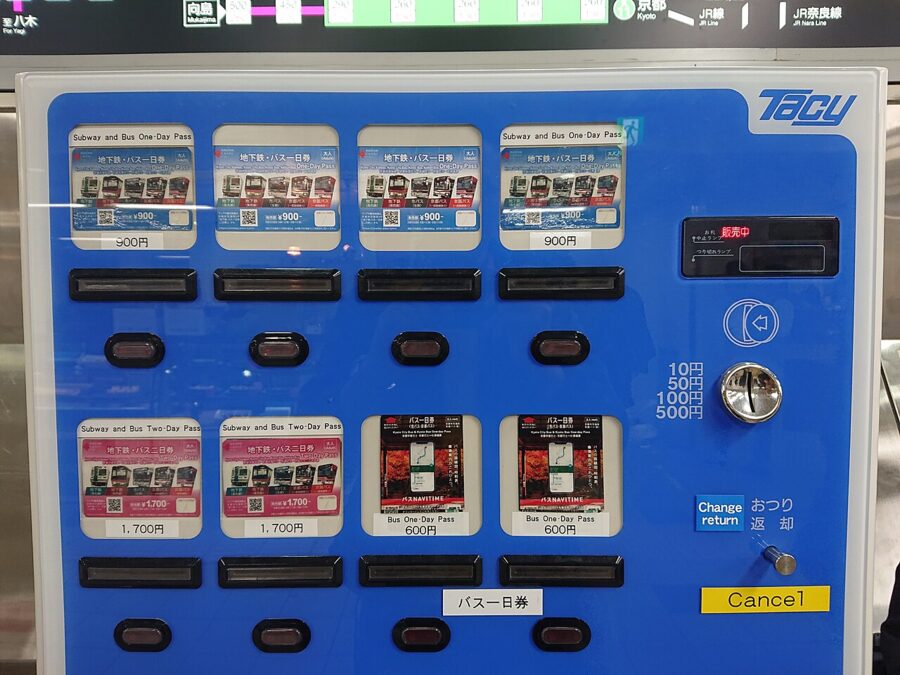
If you plan more than four rides in a day, the Subway and Bus 1-Day Pass at ¥1,100 is the better deal, and it is sold at the information counter in the bus terminal and at subway stations. The counter, in the bus information office in front of the Karasuma Exit, is open 07:30–19:30, according to the city’s list of information counters.

The city’s EX100 sightseeing express bus is the fastest way to Kiyomizu-dera: it stops only at the main sights and reaches the Gojo-zaka stop in about 10 minutes from bay D1, for ¥500, or free with the 1-day pass. It runs only on scheduled operating days, so check the schedule before you count on it.
Luggage in Kyoto
Kyoto’s buses are crowded, and city buses with a large suitcase are no fun for you or anyone else. If you are going to a hotel near the station, walk; if not, take a taxi from the Karasuma or Hachijo rank, or the subway if your hotel is near a station. To sightsee before check-in, use the coin lockers in the station or those in the subway stations, which the city’s transport bureau says are available roughly 05:30–23:30.
The Nozomi you booked three weeks out at ¥12,430, seat E, with an ekiben from the central passage on your knees, gets you into Kyoto two and a quarter hours after Tokyo. Leave by the right gate, and the city bus or the subway is ten minutes away. Book the early-bird fare by the 21st day before you go, and set an alarm for 10:00 one month out if your dates fall in a holiday week.