

Buy the Hakone Freepass at Shinjuku, ride the loop counterclockwise, and be on a train out of Tokyo by 08:00. That is the whole plan for Hakone (箱根) in one sentence. The detail behind it is which train, what the pass saves, where the line forms, and how late you can stay in a hot bath and still sleep in the city.
The pass costs ¥7,100 from Shinjuku for two days and has done since October 1, 2025, when it went up from ¥6,100. It covers the Odakyu round trip to Odawara and eight kinds of transport inside Hakone, from the mountain train to the pirate ship on Lake Ashi. The Romancecar, the reserved-seat express that runs straight through to Hakone-Yumoto in about 80 minutes, is not included: its ticket is ¥1,200 each way on top.
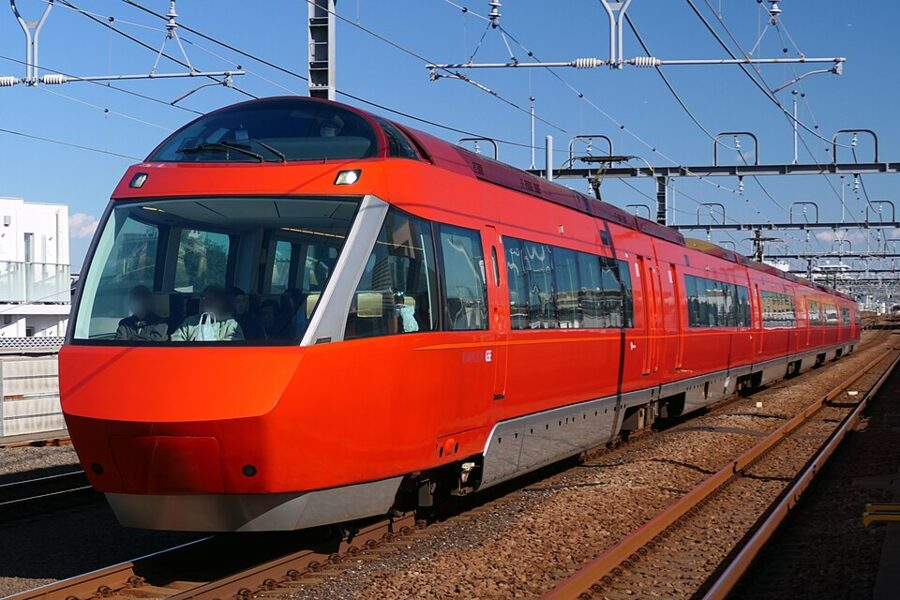

Is the Romancecar worth ¥1,200? On the way out, yes, if it is a weekend and you want a seat. Coming back, the regular Odakyu trains from Odawara are fine, and that saving pays for most of a day bath.
Does the pass pay? Odakyu’s own example is the classic day: Hakone Shrine, the Lake Ashi cruise and Owakudani, starting and ending at Shinjuku. Done on single tickets, that route costs ¥1,380 more than the two-day pass. The ropeway alone is ¥2,000 one way since the October 2025 fare rise, and the boat is ¥1,700, so the pass stops being a discount the moment you skip either.
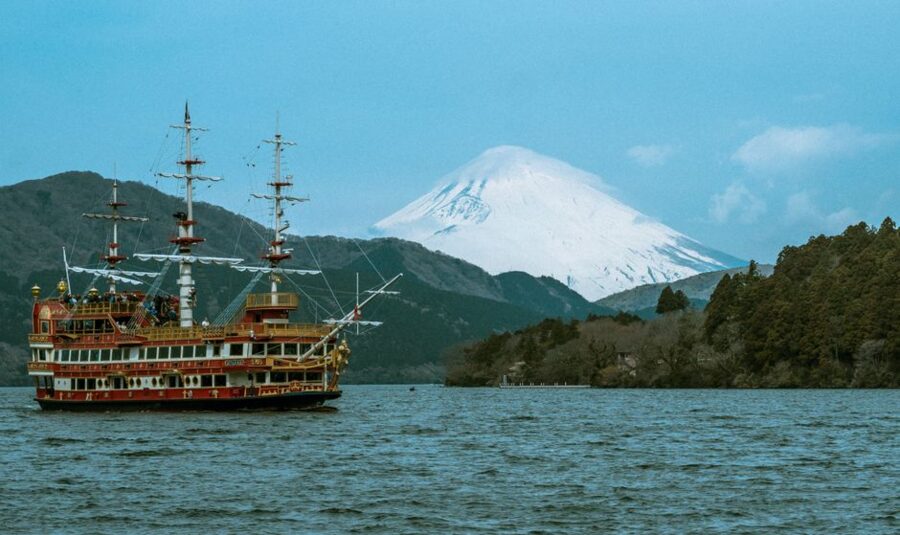
Which direction? Counterclockwise: train up to Gora, cable car to Sounzan, ropeway over Owakudani to Togendai, boat across the lake, bus back down to Hakone-Yumoto. Going this way puts the volcano before the midday crowds and the baths at the end, at the bottom of the hill, a short walk or shuttle from the station you leave from. Going the other way puts you in the ropeway line at 13:00 with everyone off the tour buses.
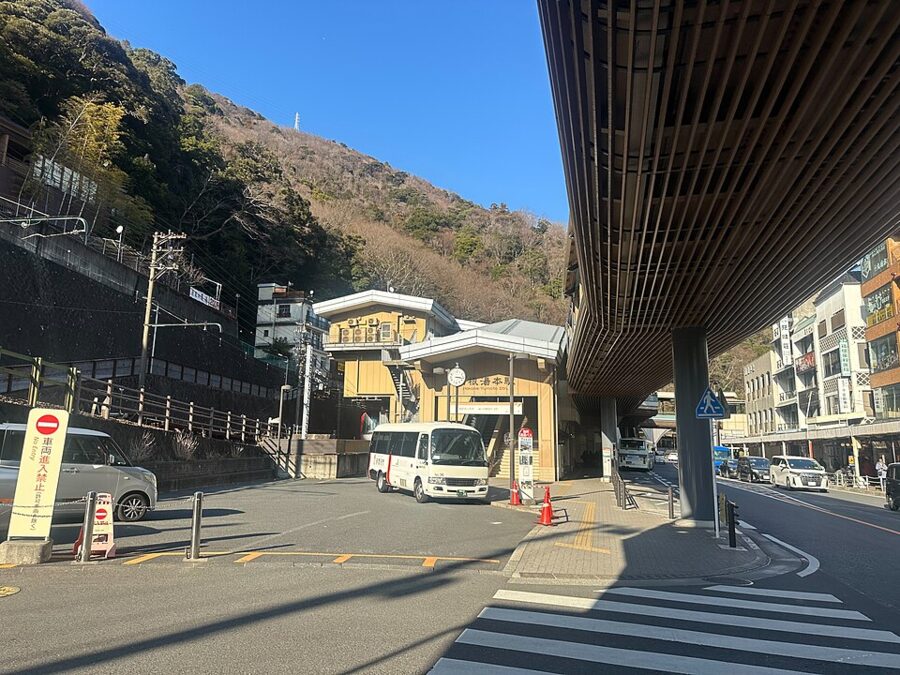

When to leave? On the timetable in force since March 14, 2026, the first weekend Romancecar leaves Shinjuku at 07:00 and reaches Hakone-Yumoto at 08:26; the 08:00 gets in at 09:24. On weekdays the first, at 07:37, is a slow one that takes until 09:22, and the 08:31 arrives at 10:18.
The last Romancecar back leaves Hakone-Yumoto at 19:50 on weekdays and 19:52 at weekends, both reaching Shinjuku at about 21:25. Hakone in a day works if you are on the mountain train by 09:30 and off the lake by about 15:00, before the roads down jam and the ropeway winds down for the evening.
If you are weighing Hakone against the other trips out of the city, the day trips from Tokyo guide puts it side by side with Kamakura, Nikko and Kawaguchiko.
Getting there: the Romancecar, the cheaper train, JR and the bus
Every practical route ends at one of two stations: Odawara, on the coast, where the Odakyu line and the Tokaido Shinkansen meet, or Hakone-Yumoto, 15 minutes further on and the real start of Hakone. A few highway buses skip both and go straight up to the lake.
The Odakyu Romancecar from Shinjuku
The Romancecar leaves from the Odakyu platforms on the west side of Shinjuku Station, the ones you reach through the Odakyu ticket gates rather than JR’s. Every seat is reserved. You need two things to board: the regular fare (or a pass that includes it, such as the Freepass) and the limited express ticket, which costs ¥1,200 to Hakone-Yumoto or ¥1,000 if you only go as far as Odawara. Bought online through Odakyu’s EMot ticket service it is ¥50 cheaper.
The fastest is the 09:00 “Super Hakone” at weekends, which runs Shinjuku to Hakone-Yumoto in 75 minutes. Most trains take about 85 minutes, and a few weekday morning ones take more than 100. If you board at Shinjuku on a Saturday morning in autumn without a ticket, expect the next few departures to be full; book a day or two ahead.
One quirk: between Odawara and Hakone-Yumoto, a Romancecar seat can only be bought on the platform on the day, and only if seats are left. If you came to Odawara another way, take the ordinary train for the last 15 minutes.
The cheaper train via Odawara
Skip the express and the trip costs the fare alone: ¥910 from Shinjuku to Odawara on Odakyu, then ¥360 on the Hakone Tozan Line to Hakone-Yumoto. A rapid express (快速急行) covers Shinjuku to Odawara in about an hour and a half, and the onward trains to Hakone-Yumoto leave from the next platform. It is slower and there is no guarantee of a seat, but it is the same rails, and the Freepass already includes it.
Odakyu itself warns that its trains out of Shinjuku are packed between 17:00 and 21:00 on weekdays, and asks people with suitcases to avoid them. For a day trip that does not matter. For a ryokan night with a big case, it is a reason to pay for the Romancecar out, or to use the luggage service described further down.
Pay with an IC card if you are not on a pass. How Suica and PASMO work across private lines like Odakyu is in the getting around Tokyo guide.
JR and the Shinkansen
From Tokyo Station, a Kodama or Hikari on the Tokaido Shinkansen reaches Odawara in about 35 minutes, for about ¥3,300 in an unreserved seat. That is more than three times the Odakyu fare from Shinjuku, and you still have to change at Odawara. It earns its price if you are staying near Tokyo Station, if you hold a JR pass, or if you are coming from Kyoto or Osaka and going on to Tokyo afterward.
If you arrive at Odawara by JR, buy the Freepass from Odawara instead: ¥6,000 for two days, covering everything in Hakone but not the Odakyu line to Tokyo.
The highway bus to the lake
Odakyu Highway Bus runs from Busta Shinjuku, the bus terminal above the station’s New South Exit, to Gotemba, Sengokuhara and Togendai on Lake Ashi. The Shinjuku to Hakone timetable gives 2 hours 25 minutes to Togendai and 2 hours 45 minutes to the end of the line at the Odakyu Yama no Hotel on the lake’s eastern shore. Seats are reserved out of Shinjuku. Freepass holders pay ¥1,400 instead of ¥2,000 for the Shinjuku to Gotemba section, and the pass covers the bus inside Hakone.
The bus makes sense in two cases: you are staying by the lake, or you want to do the loop backwards and finish in Hakone-Yumoto. On autumn weekends the Tomei Expressway is slow, so do not put a timed booking at the other end.
| Route | Time to Hakone-Yumoto | Cost one way, late 2026 | Verdict |
|---|---|---|---|
| Odakyu Romancecar from Shinjuku | about 75–105 min, mostly about 85 | ¥1,270 fare plus ¥1,200 express ticket | Best way out on a weekend morning |
| Odakyu rapid express, change at Odawara | about 1 hr 45 min | ¥1,270 fare only | Best way back; included in the Freepass |
| Tokaido Shinkansen to Odawara, then Hakone Tozan Line | about 50 min plus the change | about ¥3,300 to Odawara, plus ¥360 | For JR pass holders and Tokyo Station hotels |
| Highway bus from Busta Shinjuku | goes to Togendai instead, about 2 hr 25 min | see the operator’s fare table | For lake hotels and the loop in reverse |
The Hakone Freepass, done as arithmetic
The Hakone Freepass comes in two versions that matter: from Shinjuku, which includes the Odakyu round trip, and from Odawara, which covers Hakone only. Both prices went up by ¥1,000 on October 1, 2025.
| Bought at | 2 days, adult | 3 days, adult | 2 days, child (6–11) |
|---|---|---|---|
| Shinjuku | ¥7,100 | ¥7,500 | ¥1,600 |
| Odawara (Hakone area only) | ¥6,000 | ¥6,400 | ¥1,500 |
It is good for unlimited rides on the Hakone Tozan train and cable car, the Hakone Ropeway, the Hakone Sightseeing Cruise boats, the Hakone Tozan buses and the sightseeing loop bus within the covered area, plus designated sections of the Odakyu Highway Bus and Tokai Bus. The Odakyu part is one trip each way, though you can stop off along the line. Show it at about 70 museums, baths and restaurants for a discount, usually ¥100 to ¥200.
What it does not cover: the Romancecar ticket, and anything run by the rival Seibu-group and Fuji Kyuko-group companies around the lake, which means Izu Hakone buses and the smaller Lake Ashi boats that sail from different piers. If a bus stop sign says 伊豆箱根バス, the pass is no good on it.
Here are the single fares it replaces, as posted by Odakyu Hakone for late 2026:
- Odakyu, Shinjuku to Odawara: ¥910 each way
- Hakone Tozan Line, Odawara to Hakone-Yumoto: ¥360; Hakone-Yumoto to Gora: ¥460
- Cable car, Gora to Sounzan: ¥430
- Hakone Ropeway, any distance: ¥2,000 one way, ¥3,000 return (until September 30, 2025 it was ¥1,500)
- Lake Ashi cruise, Togendai to Moto-Hakone or Hakone-machi: ¥1,700 (it was ¥1,200); between Moto-Hakone and Hakone-machi: ¥600
Add a bus back to Hakone-Yumoto and the full loop from Shinjuku costs more than ¥8,000 on single tickets, which is how Odakyu arrives at its own figure: the Freepass worked example of the shrine, the boat and Owakudani from Shinjuku saves ¥1,380 over buying each ticket. Stay two days and use the buses to the museums, and the saving grows.
Skip it if all you want is a bath in Hakone-Yumoto and back. That trip is ¥2,540 in fares, a third of the pass.
You can buy it at any Odakyu station from a month ahead, at the ticket machines on the day, or as a digital ticket through EMot. The digital version is one pass per smartphone: a child without a phone cannot travel on your screen, so families usually buy paper. The paper pass is collected at the gate at the end of your trip.
The loop, stage by stage
Allow about two and a half hours of riding from Hakone-Yumoto to Moto-Hakone, plus whatever you stop for, and about 40 minutes on the bus back. Every leg is covered by the Freepass. The operator’s live service and crowding page is worth a look before you set off; it lists which legs are suspended for wind and gas, and on busy days the expected waits by station and hour.
Hakone Tozan train: Hakone-Yumoto to Gora
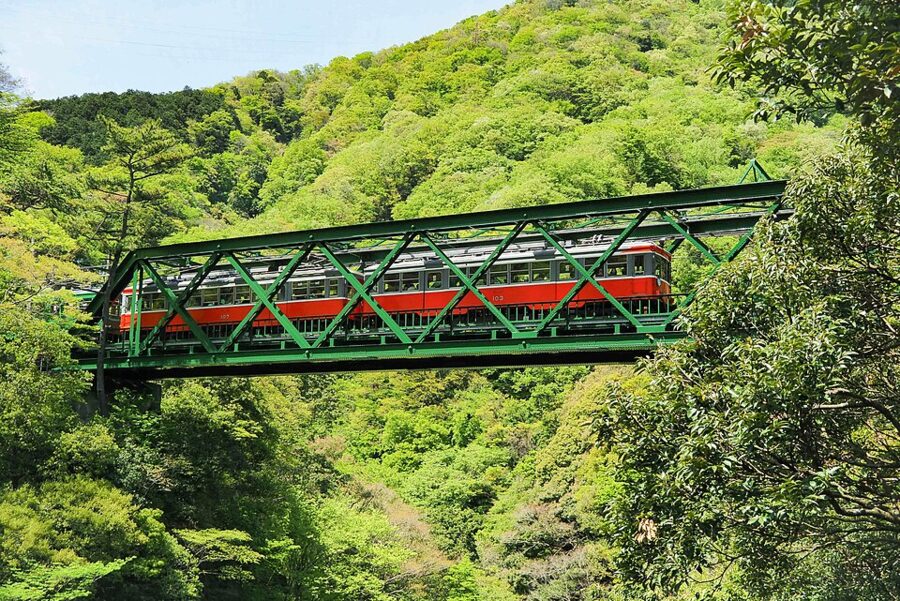
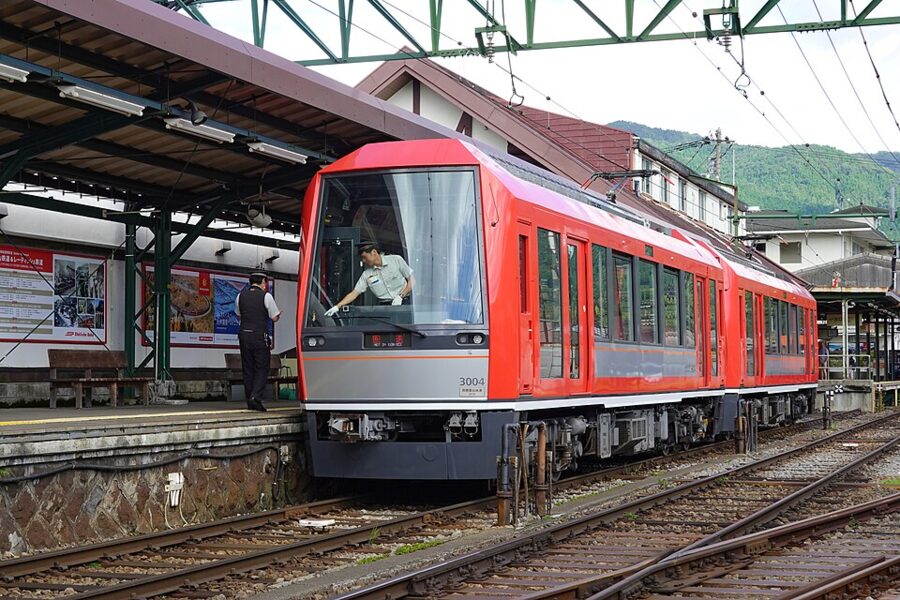
The Hakone Tozan train climbs 8.9 km from Hakone-Yumoto to Gora in about 40 minutes. It opened in 1919, and its steepest grade is 80 per mille, 8 meters up for every 100 forward, the steepest on any adhesion railway in Japan. To gain height in a narrow valley it reverses three times on switchbacks, and the driver and conductor swap ends each time.
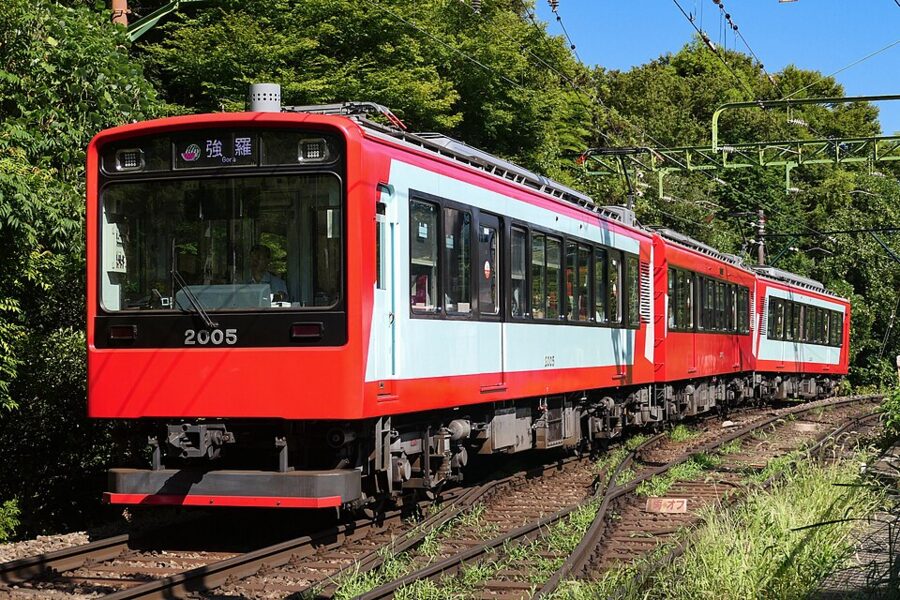
If you are not in a hurry, Miyanoshita (the old hotel village) and Chokoku-no-Mori (for the Open-Air Museum, two minutes from the station) are the stops worth breaking the ride for.
The oldest cars on the line, the 100 series Moha 1 and Moha 2, part of the railway for more than a century, will be retired in January 2028, according to the operator’s farewell notice. Until then they still run in regular service, mixed in with the newer trains, and there is no way to book one: you get what turns up.
Gora and the cable car to Sounzan
At Gora you change platforms for the cable car, a funicular that opened in 1921 with equipment imported from Switzerland. It climbs to Sounzan in about 10 minutes, with four intermediate stops, for ¥430. The current cars date from March 2020 and have long bench seats, which means most people stand.

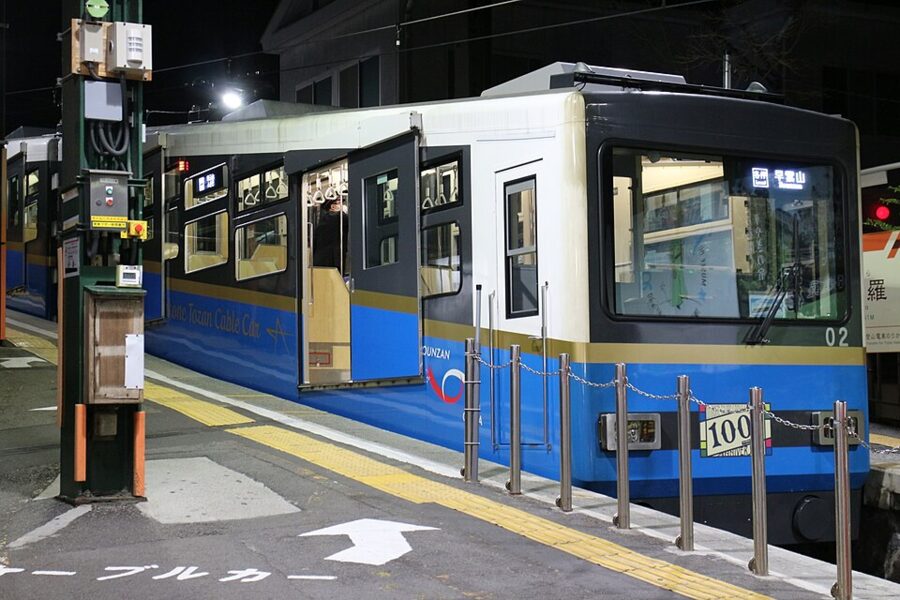

Gora is where the first line of the day forms on autumn weekends. On the busiest dates the operator offers free timed priority boarding at Gora for the cable car, booked online, along with a paid fast lane for the ropeway further up; both are announced a few weeks ahead on the priority boarding notice, and in November 2026 they ran on the third weekend.
The Hakone Ropeway over Owakudani
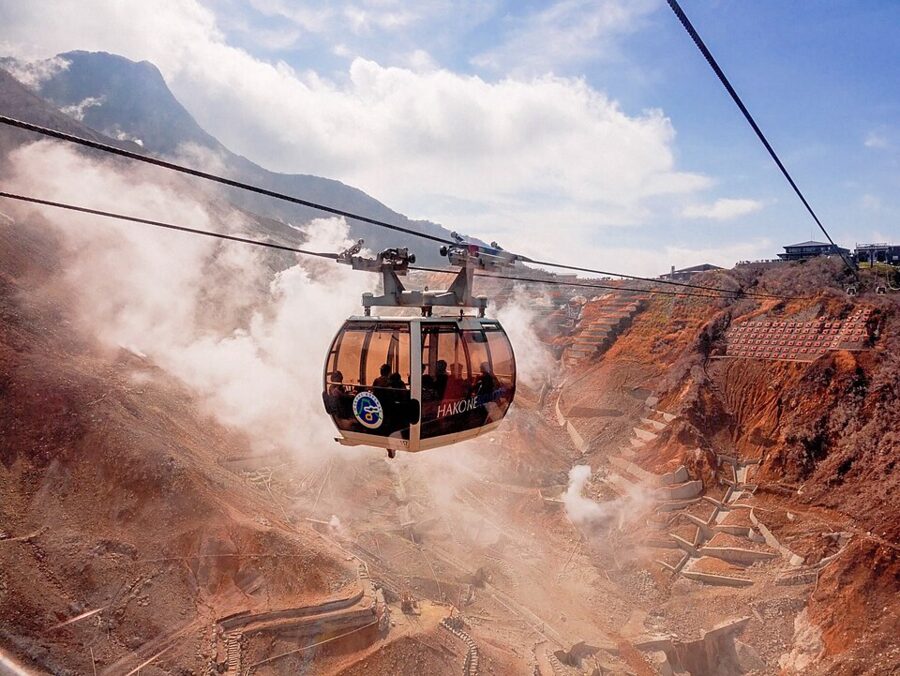
The Hakone Ropeway runs about 4 km from Sounzan to Togendai on the lake, via Owakudani and Ubako, in about 30 minutes. Each section takes about 10. The 18-seat gondolas come round about once a minute, so even a long line moves faster than it looks. You change gondolas at Owakudani, and the platforms for the two halves are on different sides of the station.

Hours are 09:00 to 17:00 from February to November and 09:00 to 16:15 from December to January, at every station. The ropeway stops for strong wind, lightning and approaching typhoons, and for volcanic gas (more on that below). Each winter it also closes one section at a time for maintenance, with replacement buses between the stations; the dates are posted on the ropeway page and change every year.
On peak autumn weekends a ¥500 paid fast lane runs at Sounzan and Owakudani between 11:00 and about 16:00, in 15-minute slots of up to 100 people, booked online and paid in cash at the gate. You still need a ticket or the Freepass. If you are at Sounzan before 10:00 you will not need it.
Lake Ashi by pirate ship
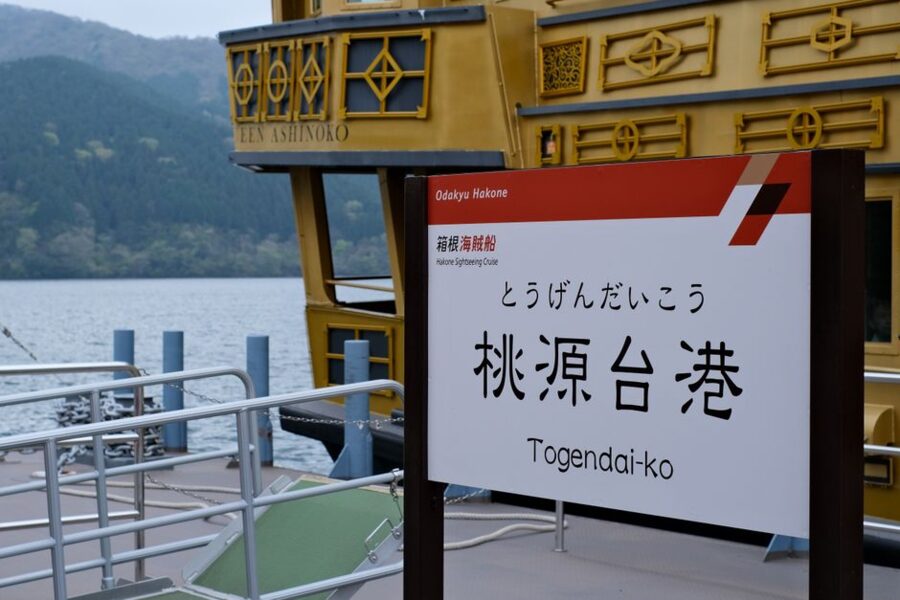
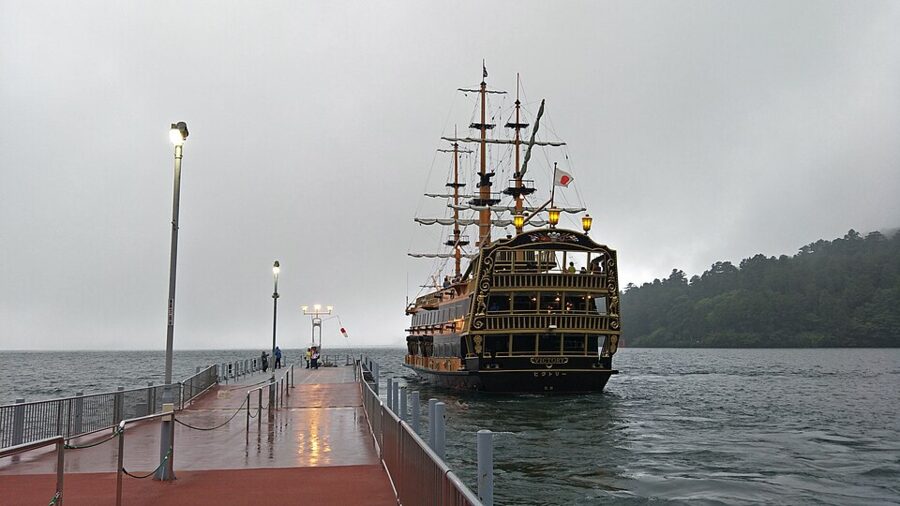
From Togendai, the Hakone Sightseeing Cruise crosses Lake Ashi to Hakone-machi or Moto-Hakone in 25 to 40 minutes. The three boats are dressed as old sailing warships: the Victory (in service since 2007), the Royal II (2013, refitted in 2026) and the Queen Ashinoko (2019). The decoration is kitsch and the views are real.
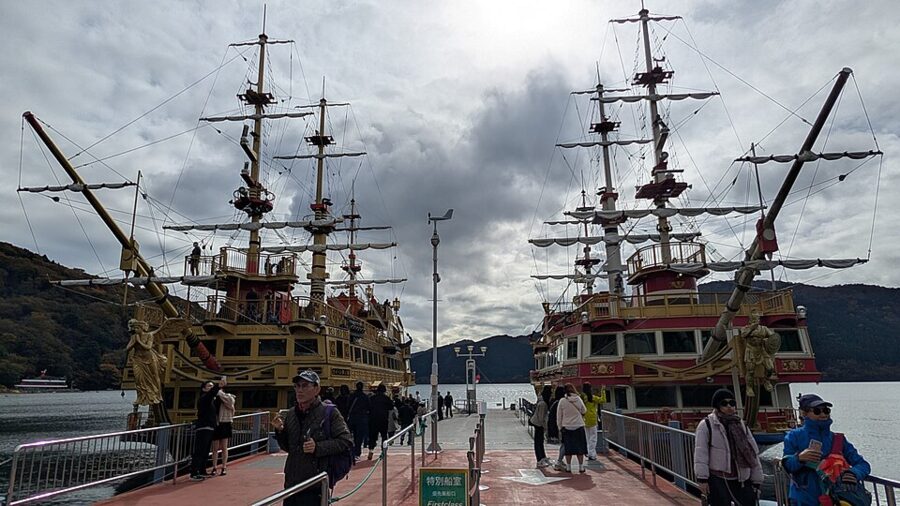

Get off at Moto-Hakone for Hakone Shrine and the buses back down; get off at Hakone-machi for the checkpoint and the old road. They are ¥600 and a short hop apart by boat, or a pleasant 20-minute walk along the shore past the cedar avenue.
In the winter timetable, from December 1 to March 19, some crossings take longer than the summer times. Lake Ashi itself, which a debris avalanche from the volcano dammed into its present shape about 3,000 years ago, is cold, deep and often half in cloud; take a layer even in May.
The bus back down
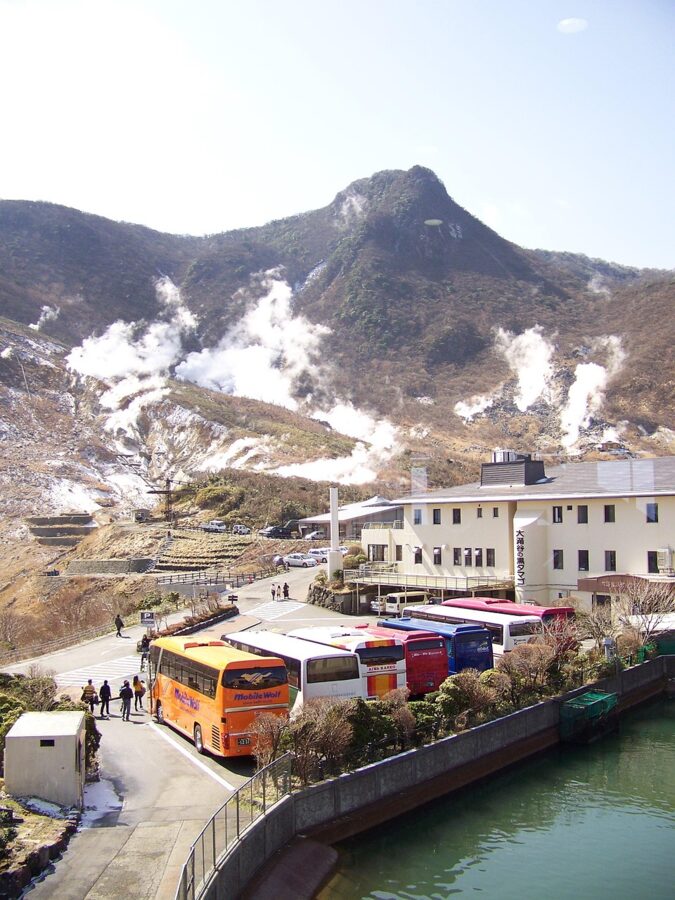
From Moto-Hakone port, three Hakone Tozan bus lines go back to Hakone-Yumoto, and the stop you want is the one in front of the pier. The H line takes about 40 minutes via Miyanoshita; the R line uses the Hakone Shindo bypass and takes about 25; the K line takes about 35 and runs down the old Tokaido road past Hatajuku and the Oku-Yumoto baths. All three are covered by the Freepass, and the K line is the one for the Tenzan baths.

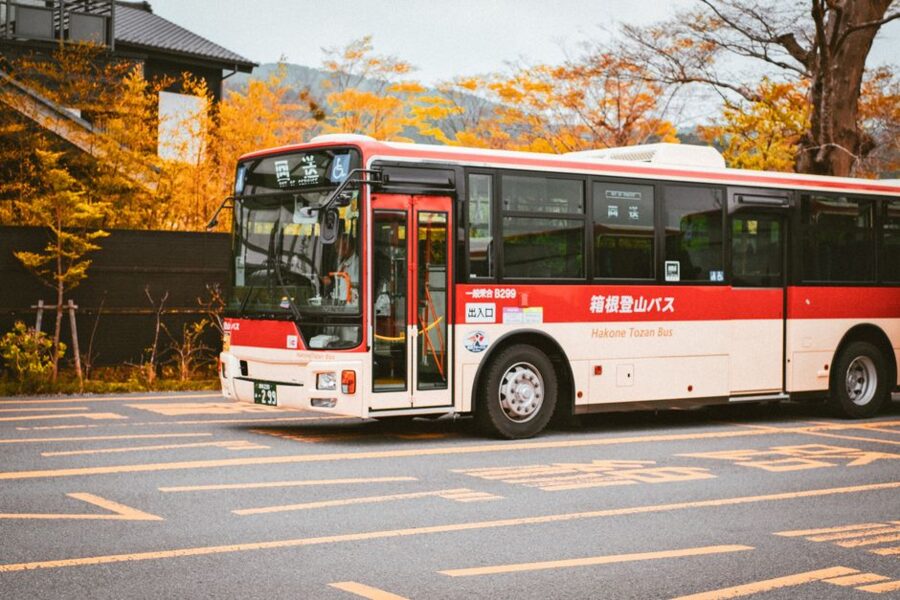
If the stop is crowded, the operator’s bus location system on its website shows where the next bus is, which tells you whether to wait or walk to the next stop.
Owakudani, and the volcano rules
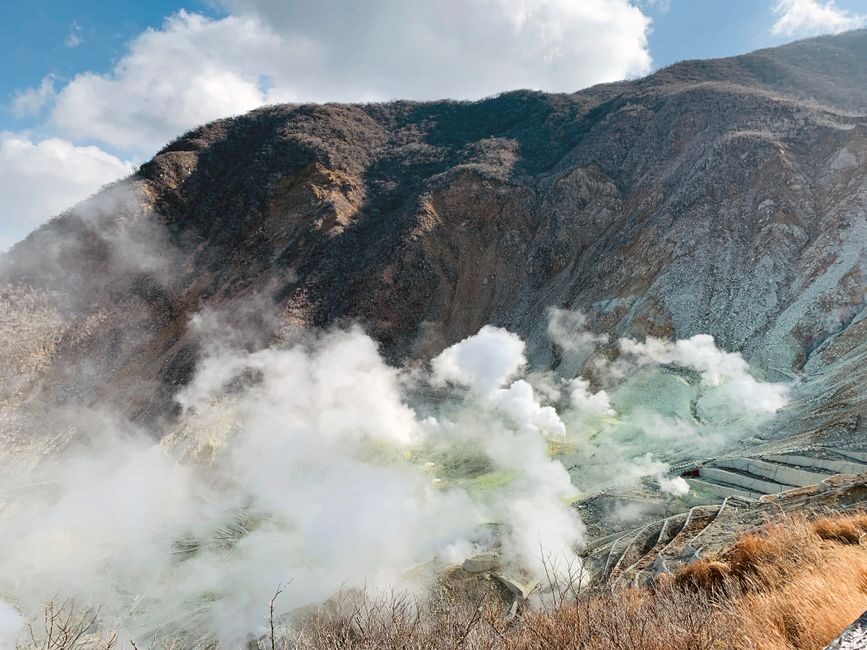
Owakudani (大涌谷) is the steaming crater valley on the north side of Mount Kamiyama, the highest peak of the Hakone volcano. Until 1873 it was called Jigokudani, the valley of hell; it was renamed for an imperial visit. It is where the ropeway changes gondolas, and where most people get off.
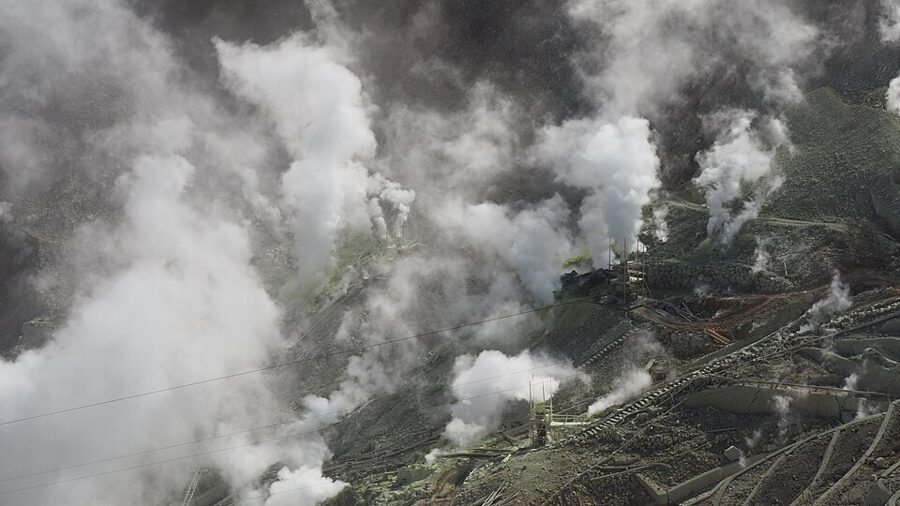

The ropeway station and the plaza in front of it were rebuilt and reopened on April 25, 2025, with a viewing area called Chikyu no Tani (ちきゅうの谷, roughly “Earth Valley”): a round terrace, a deck with a glass floor over the vents, and a ledge facing the ropeway. The station restaurant reopened as OWAKUDANI KITCHEN on July 17, 2026; per the operator’s own write-up of the new area, the curry starts at ¥1,650, hours are 10:30 to 16:00 with last orders at 15:30, and it takes no reservations.
The thing to eat is a kuro-tamago, an egg boiled in a volcanic spring until the shell turns black. Eating one is said to add seven years to your life. The Owakudani Kurotamago-kan shop sells them at four for ¥500, from 09:00 to 16:40, and they do sell out.
The alert level, and when the valley closes
Hakone is an active volcano, watched around the clock by the Japan Meteorological Agency, and it has a five-step alert scale. On November 24, 2026 it stood at Level 1, “keep in mind that this is an active volcano,” which is the normal state and puts no restrictions on visitors. The agency’s Hakoneyama page links the current warning and the monthly activity report.
The level has gone up twice in the past decade. On May 6, 2015 it was raised to Level 2 and the ropeway stopped; at the end of June a very small steam eruption opened a new vent about 1.2 km north of Owakudani and the level briefly went to 3. Owakudani reopened by day in July 2016. On May 19, 2019 it went to Level 2 again, the ropeway shut and ran replacement buses, and the level came back down to 1 on October 7, 2019.
Level 2 closes the Owakudani area and stops the ropeway, with buses standing in for it, as in 2019. The rest of Hakone carries on as normal: the baths, the lake, the museums and the train are well outside the restricted zone. If the level goes up before your trip, the practical change is that you take the bus from Gora or Sengokuhara to Togendai and skip Owakudani.
Gas closes the valley more often than eruptions do. Hakone Town lifts and imposes entry restrictions on the Owakudani area according to gas readings, as on July 6, 2022, when it closed the area for a day; the town’s volcano page keeps the record. The ropeway posts its own live gas readings and suspends service when they rise, and it stresses that those readings have no direct link to the alert level.
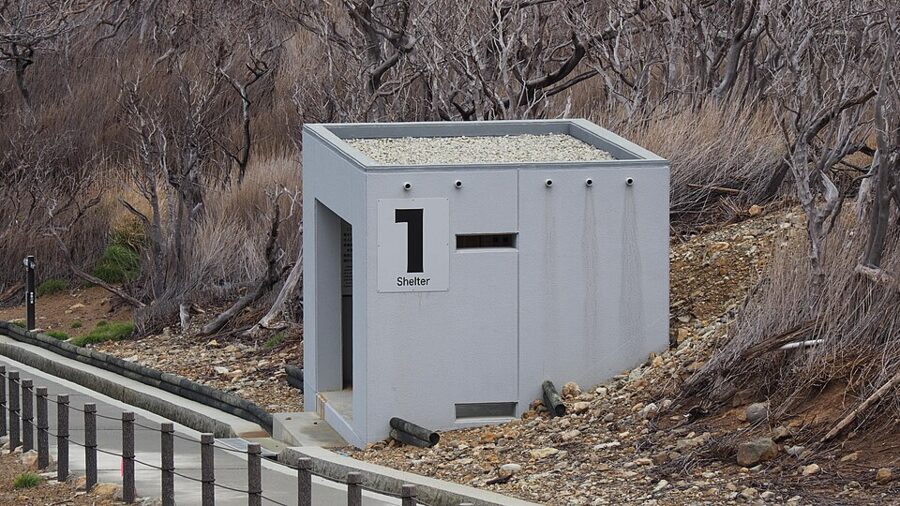

The hydrogen sulfide and sulfur dioxide in the air are the real hazard. The operators ask people with asthma or other breathing problems, heart conditions or anyone feeling unwell to stay away from the vents, and to leave if your eyes, nose or throat sting. If that is you, the viewing decks by the station are close enough.
The nature trail
The 700-meter path that climbs into the vent field, past the egg-boiling spring, was closed in 2015 and reopened only as a guided walk. The Owakudani nature trail runs four times a day, 30 people at a time, for about 40 minutes, with two wardens at the front and back. You book online, pay ¥800 per person at the start as a safety contribution, wear the helmet they hand you, and must be of elementary school age or older and able to run. It is canceled for high gas readings and for rain, strong wind or fog.
Book it if you can, because the trail is the only way to stand in the vent field rather than look down at it from a deck. Have a fallback: in fog or rain the walk is called off on the day.
Lake Ashi, Hakone Shrine and the Peace Torii
Moto-Hakone, at the south end of the lake, is the second stop on most loops. Hakone Shrine (箱根神社) is a 10-minute walk from the Moto-Hakone pier along the shore, and the Peace Torii, the red gate standing in the water that appears in every picture of Hakone, is at its lakeside edge.
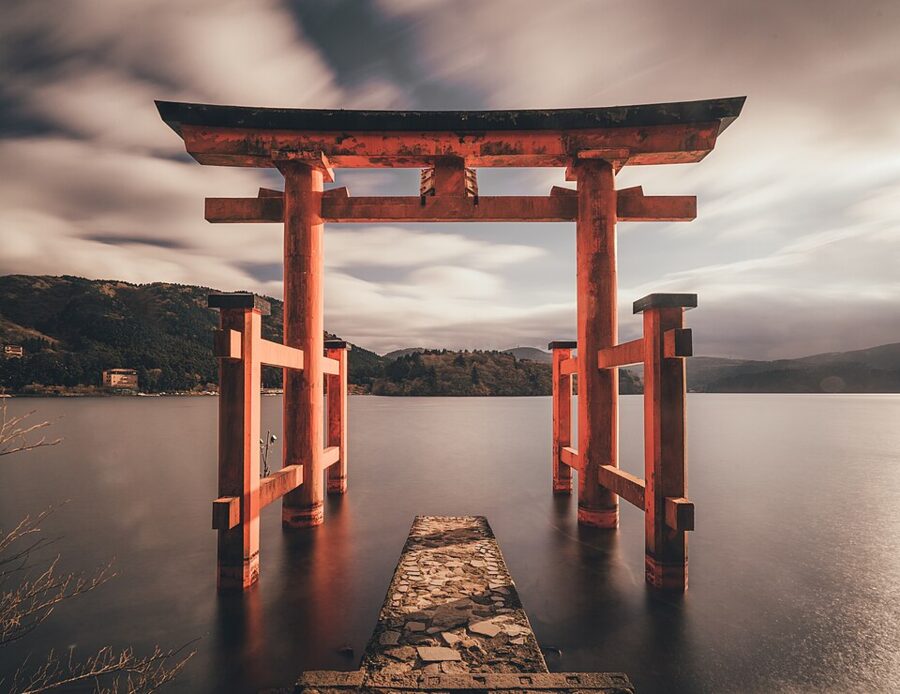
The shrine dates its founding to 757. It was the guardian shrine of the Kamakura shoguns, and Minamoto no Yoritomo made pilgrimages here. The main buildings sit at the top of stone steps in a grove of old cedars, with the Kuzuryu shrine to a nine-headed dragon of the lake on a smaller branch site in the grounds.
The Peace Torii line is the one thing in Hakone I would plan around. On autumn and holiday weekends people wait a long time for a turn to be photographed under the gate, one group at a time, while the shrine up the steps behind has almost no line at all. Go before 10:00 or after 15:30, take your picture from the side like everyone with sense, or accept the wait.
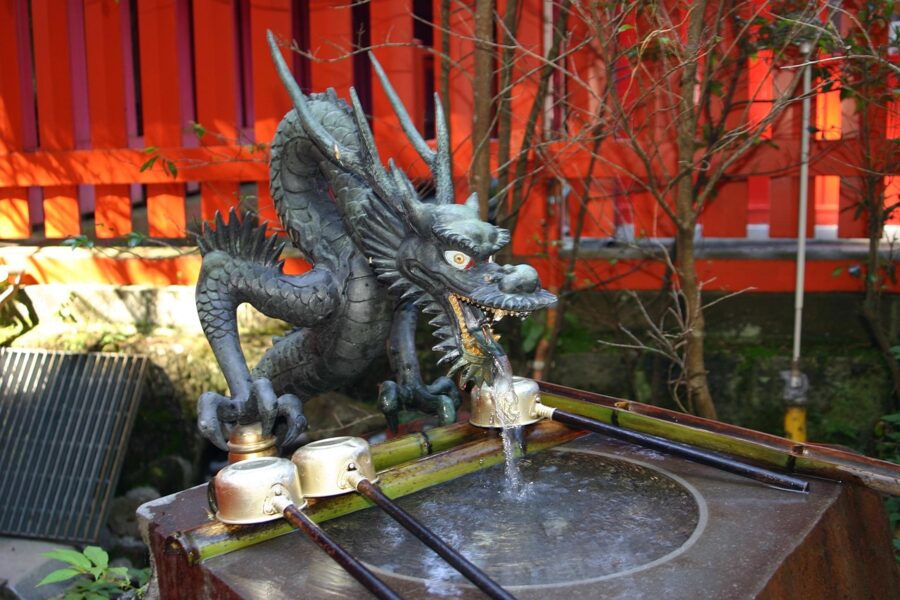
Access, if you come straight here rather than by boat: Odakyu Hakone gives about 40 minutes on the H line bus from Hakone-Yumoto to Moto-Hakone, while the shrine’s own access page allows an hour for the same ride. On a weekend, believe the shrine.
Between Moto-Hakone and Hakone-machi, Onshi Hakone Park occupies the small peninsula where the Hakone imperial villa stood until the grounds opened to the public in 1946. Its lookout, built to echo the villa, faces the outer rim of the caldera and Fuji across the lake, which makes it the best Fuji view on the south shore.

The old Tokaido and the Hakone Checkpoint
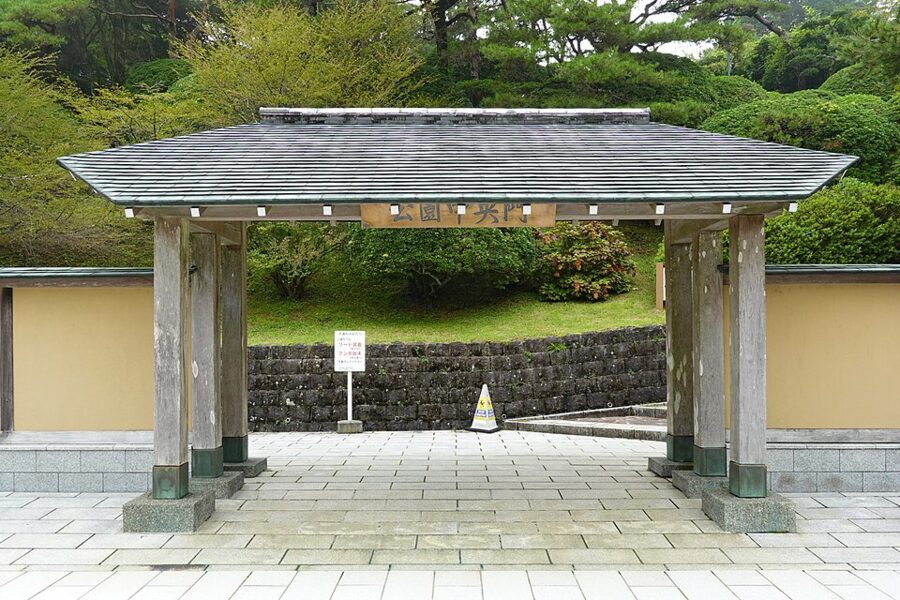
For the whole Edo period, travelers on the Tokaido highway between Edo and Kyoto were stopped and searched at Hakone. The checkpoint stood on the lakeshore from 1619 until the new government abolished it in 1869. Its guards looked hardest at two things, summed up in the phrase iri-deppo ni de-onna: guns coming into Edo, and women leaving it, because the wives of feudal lords were kept in the capital as hostages.
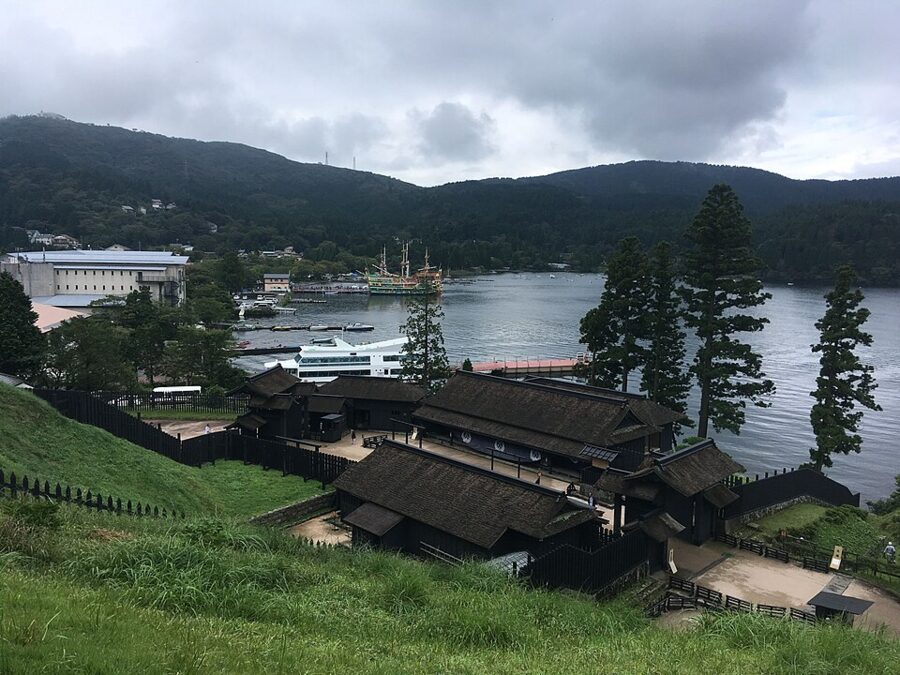

The Hakone Checkpoint (箱根関所) is a five-minute walk from Hakone-machi port and two minutes from the Hakone Sekisho-ato bus stop. It opens 09:00 to 17:00, closing at 16:30 from December to February, with last entry 30 minutes before. Admission is ¥500, or ¥400 with the Freepass. It is a 40-minute stop, and better than its reconstruction label suggests, because the rebuilt rooms are furnished and the mannequins of the guards are where the records put them.
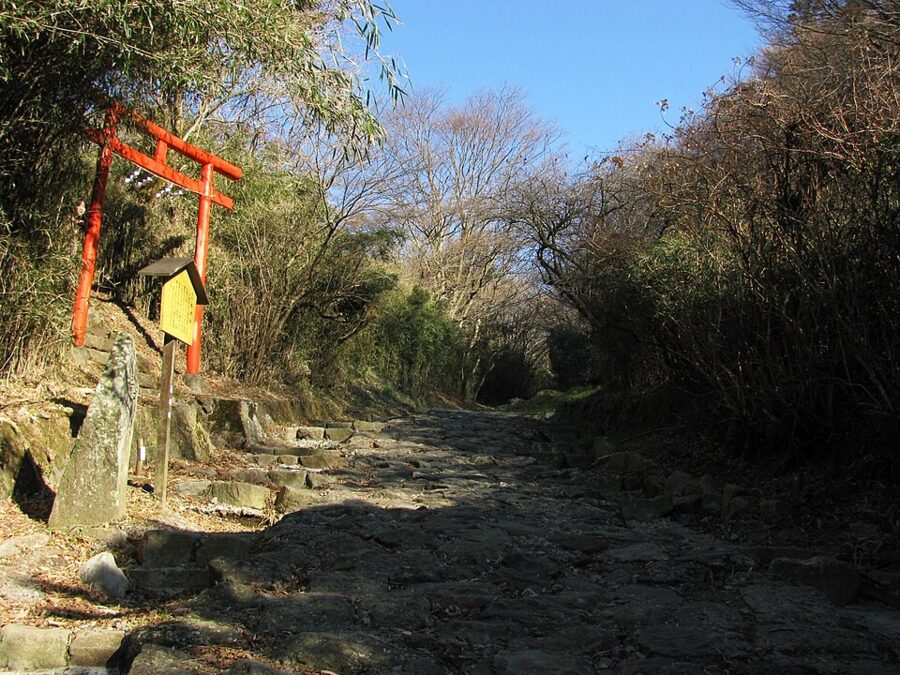
The old road itself survives in pieces. Between Moto-Hakone and Hatajuku, and below Hatajuku toward Hakone-Yumoto, long sections of the Edo-period stone paving still climb through cedar forest. The walk from Moto-Hakone down to Hatajuku is downhill most of the way; the K line bus follows the same route if your legs give out.

Hatajuku is the village where Hakone’s marquetry, yosegi-zaiku, geometric patterns made from different woods, is made and sold. It is a pleasant stop for half an hour, on the K line bus route back down to Hakone-Yumoto.
The museums
Hakone has more good museums than it has time to visit them in, and they are spread out: two on the train line, the rest in Sengokuhara and Kowakudani by bus. Pick one, two at most, on a day trip. On an overnight trip, the second morning is the time for them.
Hakone Open-Air Museum
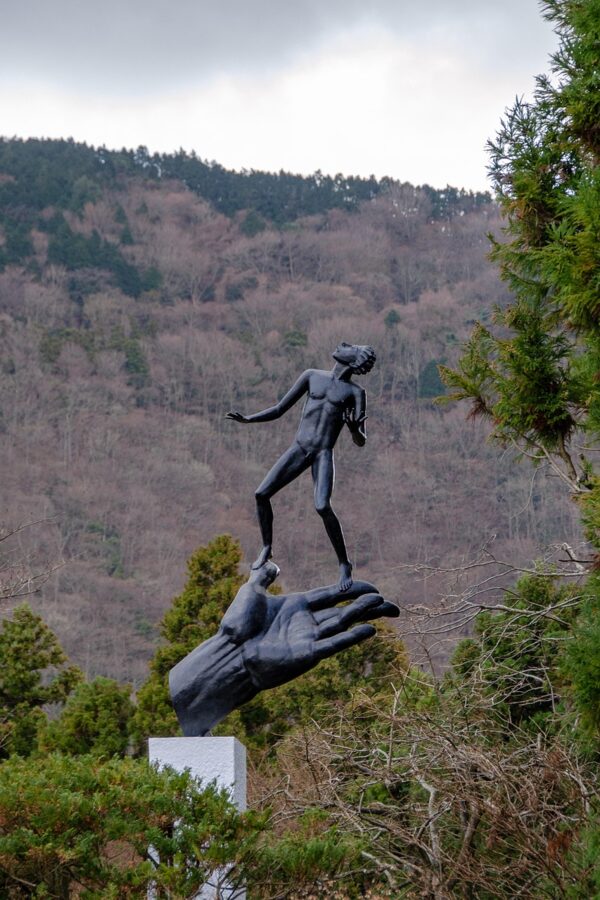
If you see one, see this. The Hakone Open-Air Museum (彫刻の森美術館) puts about 120 modern and contemporary sculptures across roughly 70,000 square meters of lawns facing the mountains, two minutes on foot from Chokoku-no-Mori Station. There is a Picasso pavilion, a cluster of Henry Moores, and Gabriel Loire’s 18-meter tower of stained glass, which you can climb inside. Yayoi Kusama’s I Am a Pumpkin went on show on April 19, 2026.
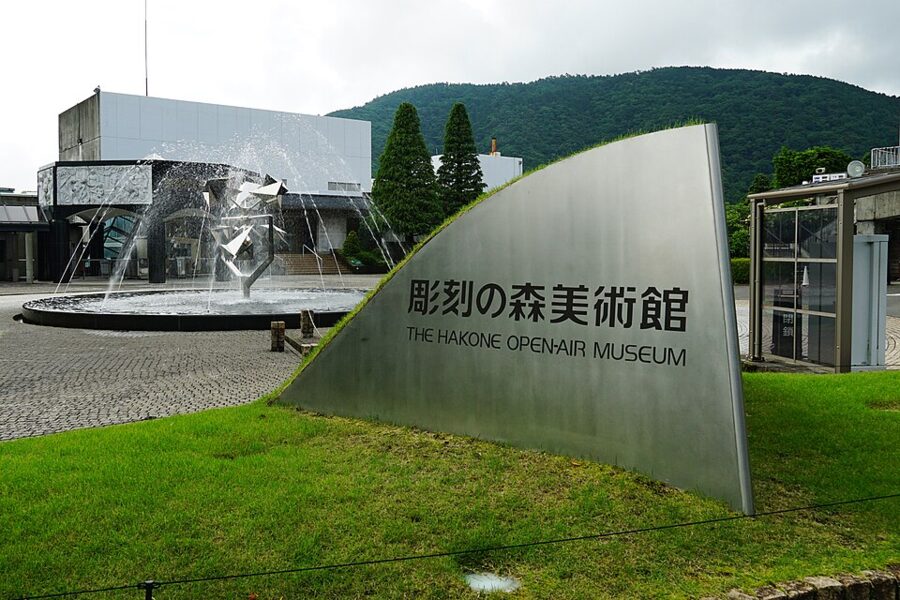

It opens 09:00 to 17:00 every day of the year. Admission at the window is ¥2,000 for adults, ¥1,800 if bought online beforehand; Freepass holders get a discount too. Allow two hours.
Pola Museum of Art
The Pola Museum of Art (ポーラ美術館) in Sengokuhara holds a serious collection of French Impressionists, with Monet, Renoir and Cezanne, plus Japanese Western-style painting, in a building set low into the beech forest. Its 2026 exhibition, marking 100 years since Monet’s death and the museum’s 25th year, runs until April 7, 2027, after which the museum closes for a changeover from April 8 to April 26, 2027.
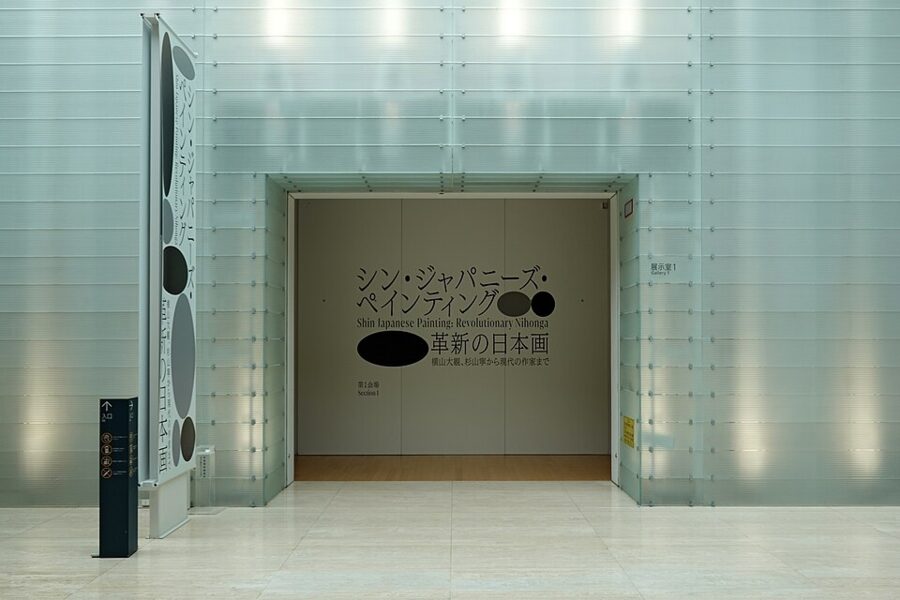

Hours are 09:00 to 17:00 (last entry 16:30), open daily except for exhibition changes. Adults pay ¥2,200 and anyone of junior high school age or younger gets in free. From Gora the Tozan bus toward the Shissei-kaen botanical garden stops outside.
Okada Museum of Art
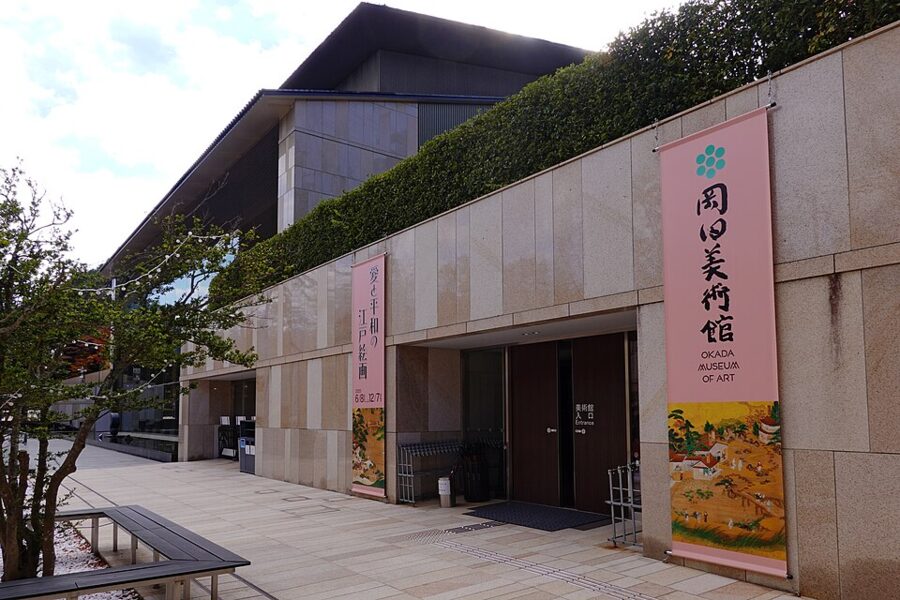
The Okada Museum of Art (岡田美術館) in Kowakudani is the dearest of the big museums at ¥2,800 for adults, and the one with the strongest collection of Japanese and East Asian art: painting, ceramics, lacquer and Chinese bronzes. The building is fronted by a huge mural of the wind and thunder gods, Kaze toki. It opens 09:00 to 17:00 (last entry 16:30) and closes on December 31, January 1 and during exhibition changes.

The rest, in a line each
- Hakone Museum of Art (箱根美術館), Gora: the oldest museum in Hakone, opened in 1952, with Japanese ceramics and a moss garden that was designated a national Place of Scenic Beauty in March 2021. Hours and admission: 09:30 to 16:30 from April to November, to 16:00 from December to March; closed Thursdays unless a holiday; ¥1,500. Go in November, for the maples.
- Lalique Museum Hakone, Sengokuhara: about 230 pieces of Rene Lalique’s glass and jewelry chosen from a collection of 1,500, open 09:00 to 16:00, with a restaurant that keeps going until 17:00. See the museum’s access page for the bus stop.
- Hakone Gora Park, between Gora and the first cable car stop: a formal French-style garden with a fountain and greenhouses, and the easiest place to fill half an hour while the cable car line goes down.

Hot springs and day baths
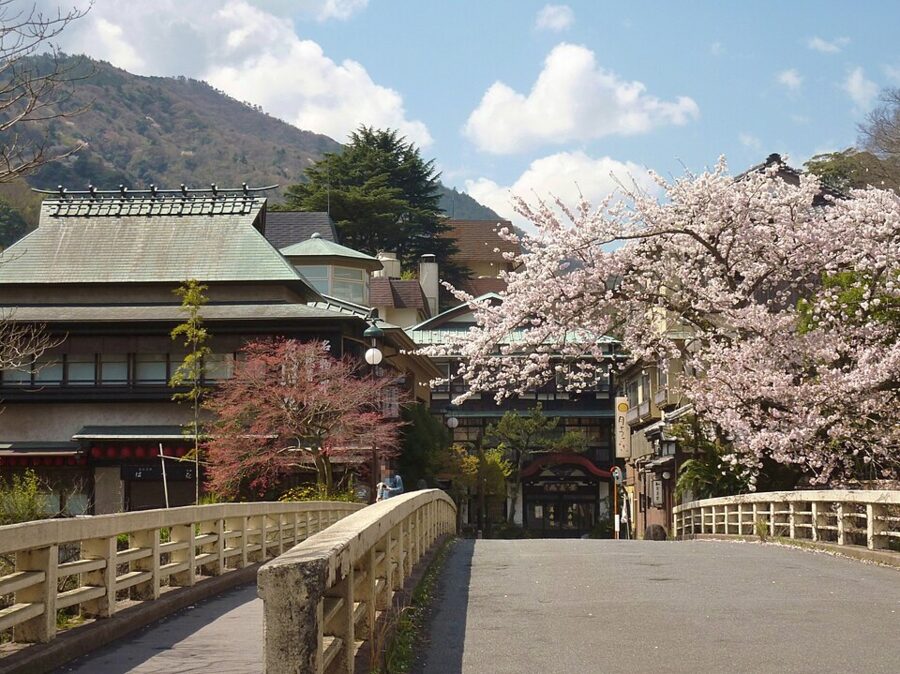
Hakone-Yumoto, the station town, is the oldest and busiest of Hakone’s hot spring villages: its first spring is dated to 738, and it is still in use. A day bath, higaeri onsen, means a bathhouse or an inn that lets you in for a fee without staying the night. Most charge ¥1,500 to ¥2,500, open late morning to evening, and sell or rent towels.

The rules, briefly
You bathe naked, in baths split by sex; swimsuits are not allowed. Wash and rinse thoroughly at the low showers first, sitting on the stool. The small towel stays out of the water: fold it on your head or leave it on the edge. Tie long hair up, keep your voice down, and dry off before you go back into the changing room.
That is all of it.
Tattoos are where Hakone has changed. Many baths still refuse them outright, a rule aimed at the yakuza that catches everyone else. But the town’s best-known day baths have moved, and two of them have written policies you can read before you go, listed below. If a bath is not listed, assume a refusal unless its own page says otherwise, or book a private bath.
Hakone Yuryo
The easiest bath from the station: a free shuttle bus from Hakone-Yumoto takes 3 minutes to a bathhouse built in old-farmhouse style, with an in-house restaurant if you want dinner before the train. Hakone Yuryo’s prices, unchanged since April 1, 2024, are ¥1,700–1,800 on weekdays and ¥2,000–2,200 at weekends and holidays, with the higher price on busier days; children are ¥1,000. It opens 10:00 to 20:00 on weekdays (last entry 19:00) and 10:00 to 21:00 at weekends (last entry 20:00).
Towels are not rented; a bath towel costs ¥550 and a face towel ¥300 at the desk, so bring your own. Since April 1, 2025, Yuryo has dropped its tattoo restriction altogether. Private family baths, the good option for couples, start at ¥10,400 for two people for two hours on weekdays.
Tenzan Tohji-kyo
Tenzan (天山湯治郷), in Oku-Yumoto up the old Tokaido road, is the bath people mean when they say Hakone has a proper wild one: a set of outdoor baths in a wooded side valley, run as a place for toji, the old idea of a hot spring cure. It takes no reservations, accepts groups of up to six adults only, refuses tour groups and guides, and takes cash only, with no ATM nearby. Bring a small towel.
Tenzan’s tattoo rule is unusually precise: one tattooed guest per party is admitted if they cover up with a jacket around the building; two or more tattooed guests together, even separately and of different sexes, are asked to leave. To get there, take the K line bus from stop 4 at Hakone-Yumoto to Oku-Yumoto Iriguchi (¥260), or the bath’s own shuttle (¥200, paid in coins, no change given), which does not run from the station between 11:00 and 13:00.
Up the line
Higher up, the baths are mostly inside ryokan and hotels, and day-visitor hours, where they exist, are set by each inn. Two easy dips without the full undress: the foot bath at the Open-Air Museum, and the foot bath at Sounzan station’s cu-mo Hakone terrace, which looks out over the outer rim of the caldera while you wait for the ropeway.
I would leave the bath for the end of the day in Hakone-Yumoto, after the bus back down. You are 3 minutes from the station, the last Romancecar is at 19:50 or 19:52, and on a weekend Yuryo lets you in until 20:00. Do the sums and there is time for both a long soak and dinner on the train.
Staying the night
The loop is a day. Hakone is better as a night, for one reason: the second morning. The Freepass is a two-day ticket at no extra cost, the ropeway opens at 09:00 before anyone from Tokyo can reach it, and Fuji, if it shows at all, shows best in the early morning. A night in a ryokan turns the crowded half of the trip into the empty half.
The areas
- Hakone-Yumoto and Tonosawa: the station town, the most inns, the most choice of price, and no transfer with your bags. The downside is that everything else is uphill.
- Miyanoshita: the old resort village two thirds of the way up the train line, built around the Fujiya Hotel, which opened in 1878 as one of Japan’s first Western-style resort hotels. It closed for a two-year rebuild in April 2018 and reopened in July 2020. Even if you stay elsewhere, the main dining room and the lounge are open to non-guests.
- Gora: the top of the train line and the start of the cable car, with a dense cluster of ryokan, many with private baths in the room. The best base for an early ropeway start.
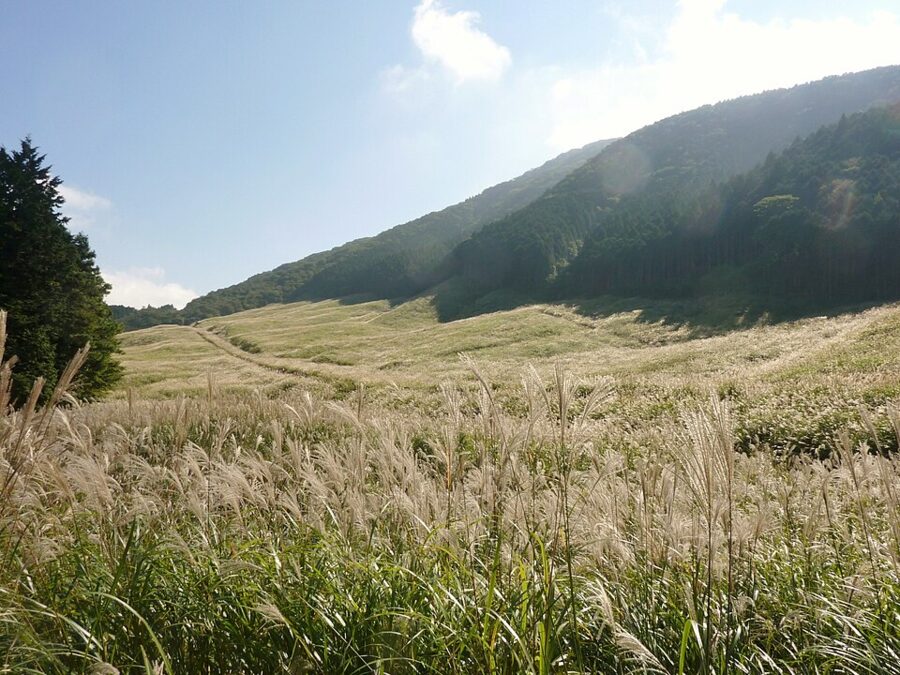
- Sengokuhara: high grassland on the north side, with the Pola and Lalique museums, and the pampas grass slope that turns gold from late September to mid-November. Quieter, and you will rely on buses.
- Lake Ashi: Moto-Hakone, Hakone-machi and the east shore. Lakeside hotels, the shrine at your door, and Fuji at breakfast on a clear day. The Odakyu Yama no Hotel on the east shore has a garden of about 3,000 azaleas that flower in May.

What a night costs
Ryokan prices in Hakone are quoted per person with dinner and breakfast included, not per room, and they swing by night of the week: a Saturday or the night before a holiday costs well above a Tuesday in the same room. Budget business-style rooms in Hakone-Yumoto cost a fraction of a ryokan with a private outdoor bath in Gora. Compare like with like: whether the dinner is served in the room, whether the room has its own bath, and whether the bath on the premises is real hot spring water.
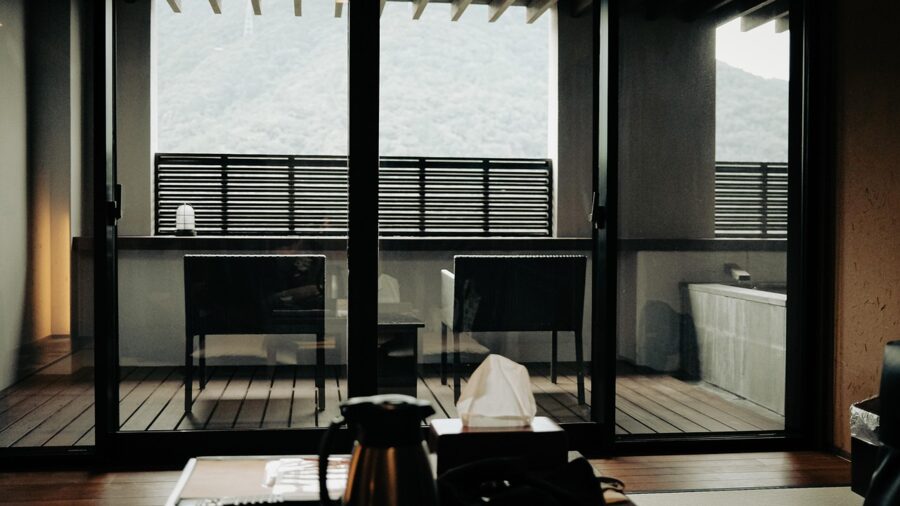
Hakone’s town assembly voted in early October 2026 to bring in an accommodation tax on overnight stays. If you are booking for 2027 or later, ask your inn whether it applies to your dates and whether it is in the quoted price.
Luggage, and the second morning
Do not drag a suitcase around the loop. The Hakone Luggage Transport Service (箱根キャリーサービス, the Hakone Carry Service), run by Hakone Tozan Bus, takes bags from a counter inside the Hakone-Yumoto ticket gates to your inn. Hand them in between 08:30 and 12:00 and they are at the hotel after 15:00. The fee is ¥1,500 per piece each way, or ¥2,500 for a large one (up to 200 cm in total length, width and height, and 30 kg).
Same-day online bookings close at 11:30. For the return, ask your hotel’s front desk by 10:00 and collect the bags at Hakone-Yumoto between 13:30 and 18:30; return trips cannot be booked online. Only partner inns are covered, so check yours, and note that in early January, when traffic jams the roads around Lake Ashi, some inns cannot be served.
The second morning, then: check out at 10:00 with the bags booked down to the station, be at the ropeway or the museums by 09:00 or 09:30, and you have the hours before the first Tokyo trains arrive almost to yourself. You will see the line at Sounzan building as you come back down.
Seeing Fuji from Hakone
Fuji is about 30 km from Lake Ashi as the crow flies, and from Hakone you see its upper half over the ridges. The places that show it, if it is out:
- The ropeway between Owakudani and Togendai, looking west, and the decks at Owakudani station
- The open deck of the cruise boats, looking northwest from the middle of the lake
- Onshi Hakone Park and the lakeshore between Moto-Hakone and Hakone-machi
- Lakeside hotel rooms facing northwest
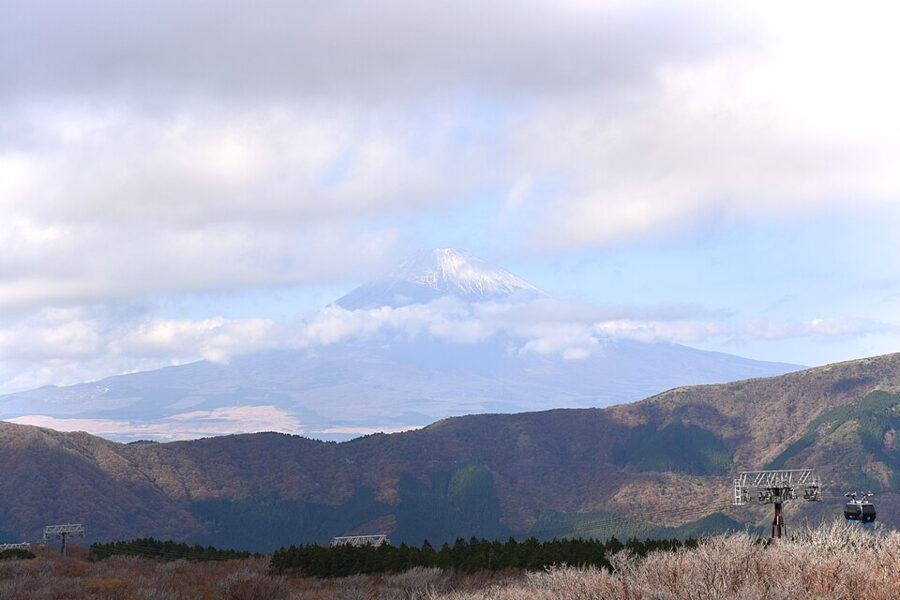

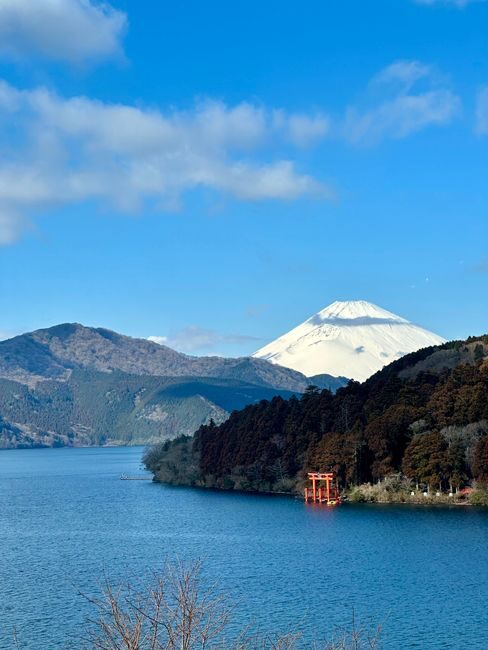
When: the clear, dry months are December to February, and the morning is the time. Hakone’s rain gauge, run by the Japan Meteorological Agency, averages 3,561 mm of rain a year over 1991–2020, more than twice what falls on central Tokyo. The wettest months are June to October, with September the worst at 449 mm; December is the driest at 108 mm. In summer the mountain is in haze or cloud more often than not.
From June to October, treat a Fuji sighting in Hakone as a bonus, not a plan. For the city side of the calendar, the Tokyo weather guide has the month by month.
And if Fuji is the point of the trip, Hakone is the wrong one. From Kawaguchiko, on the north side, the mountain fills the view across the lake from the station area, it is much closer, and a clear morning is all you need. The Mount Fuji guide covers that trip, the buses from Shinjuku and the climbing season. Hakone is the trip for the baths, the ride and the volcano, with Fuji when it feels like it.
One day, timed
A weekend day that works, starting from Shinjuku and assuming no line longer than 30 minutes. On weekdays start later and expect it to be quieter. All times are approximate except the trains.
| Time | Where | Note |
|---|---|---|
| 08:00 | Romancecar from Shinjuku | Arrives Hakone-Yumoto 09:24 |
| 09:40–10:20 | Tozan train to Gora | Off at Chokoku-no-Mori for the museum |
| 10:30 | Cable car to Sounzan | About 10 minutes |
| 10:45–12:00 | Ropeway to Owakudani, then on to Togendai | Eggs, viewing decks, or the guided trail if booked |
| 12:15–12:50 | Boat to Moto-Hakone | Upper deck for Fuji |
| 13:00–14:30 | Hakone Shrine, lunch, the lakeshore | Walk to Hakone-machi for the checkpoint if there is time |
| 14:45–15:30 | Bus down to Hakone-Yumoto | Earlier in November |
| 15:45–18:00 | Day bath | Yuryo by shuttle, or Tenzan by the K line bus |
| 18:13 or 18:45 | Romancecar back | Weekend times; last one 19:52 |
If you want only part of it, cut from the front: skip the train and cable car, take a bus straight from Hakone-Yumoto to Moto-Hakone, and do the lake, the shrine and a bath. Or cut the lake and do the train, Owakudani and a bath, and go back the way you came. Either keeps the bath at the end.
For fitting Hakone into a longer stay, the Tokyo travel guide lays out the trip planning around it.
The 08:00 from Shinjuku is the train the plan hangs on. Miss it and take the 08:20 or the 09:00 Super Hakone, and the day still works. Miss the 19:52 back from Hakone-Yumoto, and the ordinary trains via Odawara still get you to Shinjuku that night, on the same Freepass you bought that morning.