

About three million people a day passed through the gates of Shinjuku Station (新宿駅) in fiscal 2024, enough for Guinness to list it as the busiest station in the world. The ones who get lost nearly all make the same mistake: they leave the platform before deciding which side of the tracks they want. Decide first. East is Kabukicho, Isetan and the big stores; west is the government towers, the hotels and the bus stops; south is Shinjuku Gyoen, the highway buses and the shops built over the tracks.
That is the one rule, and since July 19, 2020 the station has forgiven you for breaking it. That day the East-West Free Passage opened under the north end of the JR platforms, outside the ticket gates, so coming up on the wrong side costs a short, level walk and no fare. Before then the free routes across were a low railway bridge, a road overpass and a subway corridor, and all three still work.
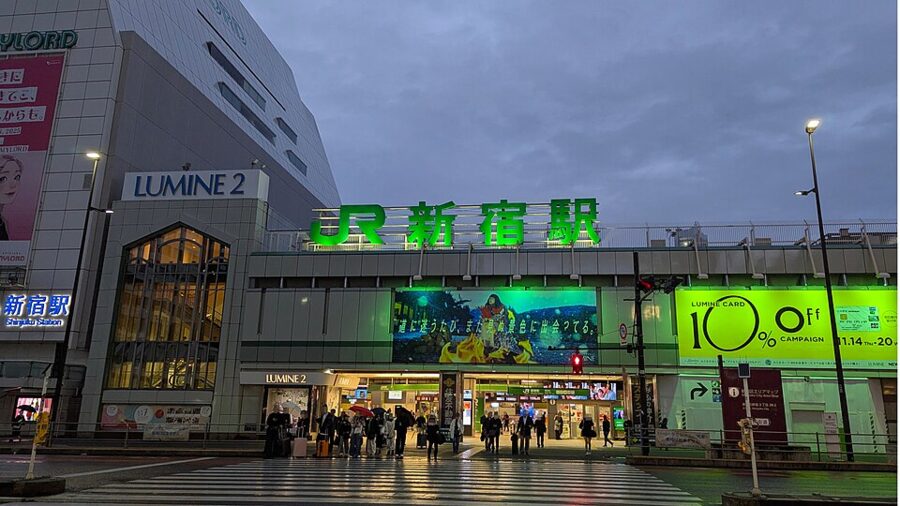

Here is the exit for each common destination, using the names on the signs.
| Going to | Follow signs for | Then |
|---|---|---|
| Kabukicho, Golden Gai | JR East Exit (East Gate or Central East Gate) | Up to the East Exit plaza, then north across Yasukuni-dori |
| Tokyo Metropolitan Government Building | West Exit | The underground walkway west from the West Exit plaza, or the Toei Oedo Line one stop to Tochomae |
| Shinjuku Gyoen (Shinjuku Gate) | South Exit | Head east; the garden puts its Shinjuku Gate 10 minutes away on foot |
| Busta Shinjuku and highway buses | New South Gate or Koshu-kaido Gate | Departures are on the fourth floor |
| Isetan, Shinjuku-sanchome | East Exit, then the Metro Promenade | Underground east under Shinjuku-dori to exits B3 to B5 |
| Omoide Yokocho | West Exit | North along the tracks toward the railway bridge |
| Seibu-Shinjuku Station | East Exit, then Metro Promenade exit B10 | Through Subnade, the mall under Yasukuni-dori |
| Narita Express | Platforms 5 and 6 | Inside the gates; follow the red line marked for the Narita Express on the basement floor |
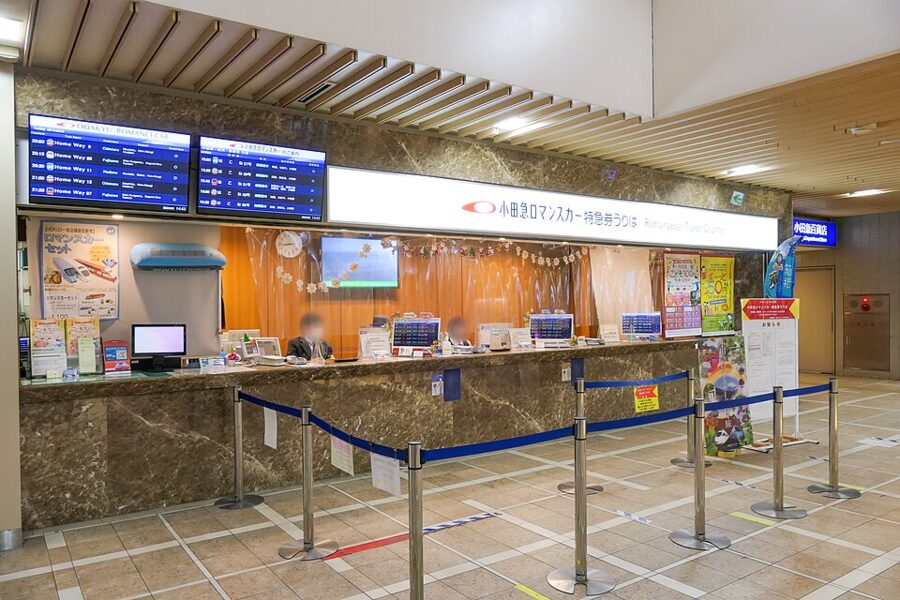
| Odakyu Romancecar to Hakone | Odakyu West Ground Gate | Ground-level platforms at the north end of the Odakyu terminus |
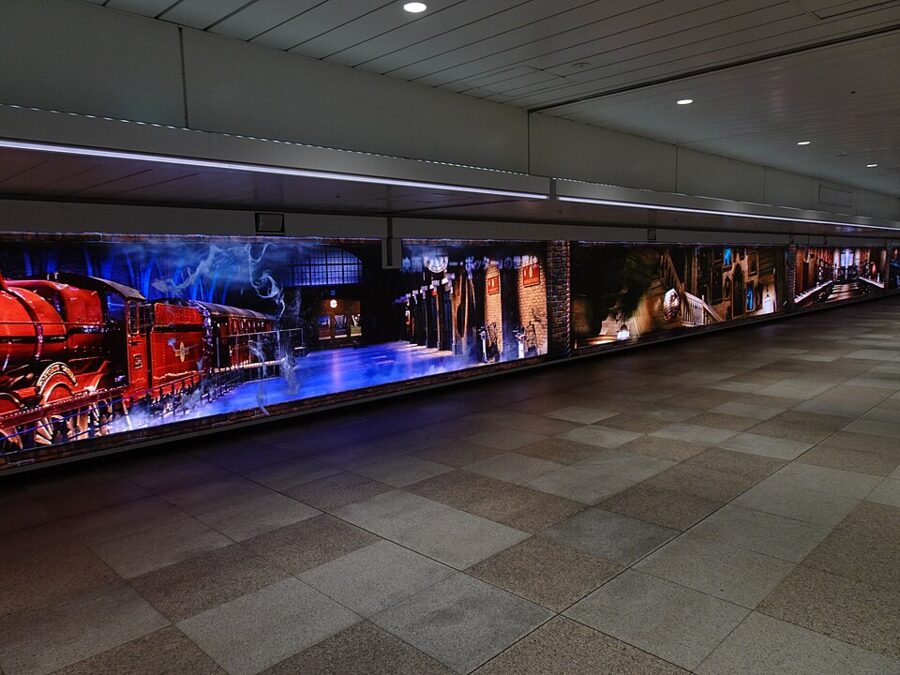

The district itself, its sights and its night, is in the Shinjuku district guide.
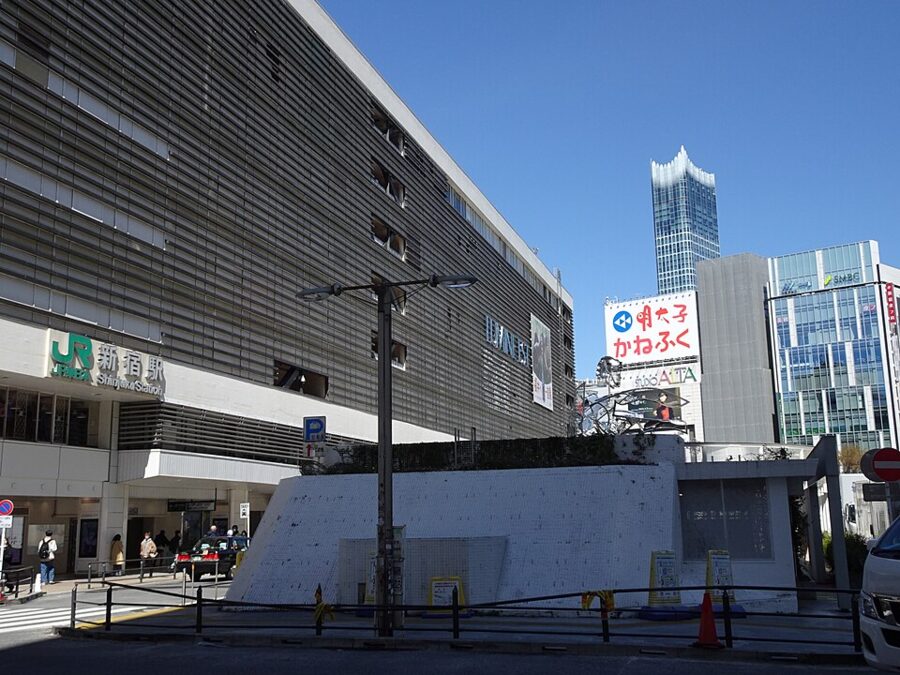

Five operators, and which changes stay inside the gates
Five operators share the name. JR East runs the main station in the middle; Odakyu and Keio run private-railway terminals on its west side; Tokyo Metro has the Marunouchi Line under the north end; and Toei, the city’s subway, has two lines under Koshu-kaido at the south-west corner. Each has its own gates. Changing between them is where the station earns its reputation, so this is the part worth reading before you go.
JR East
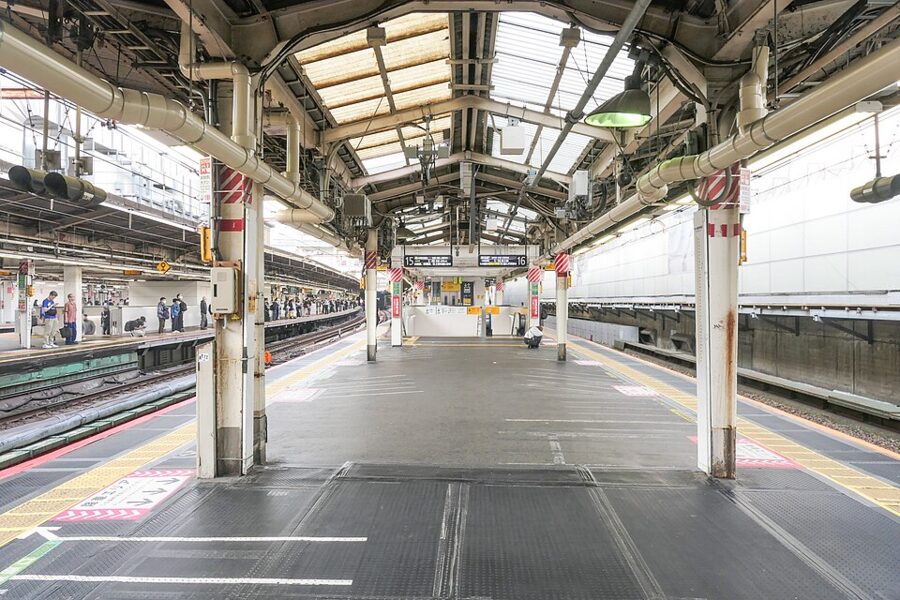
JR Shinjuku has 16 tracks on eight island platforms, numbered from the east. The JR Yamanote Line (JY17) uses track 14 toward Ikebukuro and track 15 toward Shibuya. The yellow Chuo-Sobu local trains (JB10) use 13 toward Ochanomizu and 16 toward Mitaka.
The orange JR Chuo Line Rapid (JC05) leaves from 7 and 8 toward Tokyo and from 11 and 12 toward Takao. The limited expresses to Matsumoto and Kofu use 9 and 10, the Narita Express and the Tobu trains to Nikko use 5 and 6, and the Saikyo Line (JA11) and Shonan-Shinjuku Line (JS20) share tracks 1 to 4 at the south-east corner.
Changing between JR lines never takes you through a gate. Three passages link the platforms: the connecting corridor that replaced the old North Passage in 2020, the Central Passage one floor down in the middle, and the South overpass at street level on Koshu-kaido. A fourth deck at the far south end, over the tracks, carries the gates to Busta Shinjuku. Platforms 7 to 16 reach that deck by escalator only, from the very end of the platform, so allow for a walk along the train.
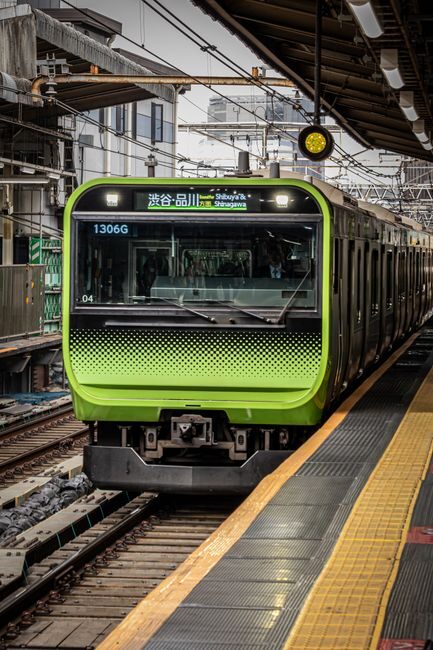
The full network, the IC cards and the passes are in the guide to getting around Tokyo; here the point is that Shinjuku is one JR station, however many platforms it has. The Chuo Line Rapid runs straight across the city to Tokyo Station, which is the one for the Shinkansen.
Odakyu and Keio
Odakyu (OH01) and Keio (KO01) both end here, side by side on the west of the JR tracks, and both have direct transfer gates into JR. You put your ticket or IC card through one gate that closes your JR journey and opens the private-railway one, without seeing daylight. For Odakyu there are two: the Odakyu transfer gate on the Central West side, one floor down, and a second on the South overpass beside the Odakyu South Gate. For Keio the transfer gate is off the Central Passage and leads under the Odakyu concourse to the Keio gates.
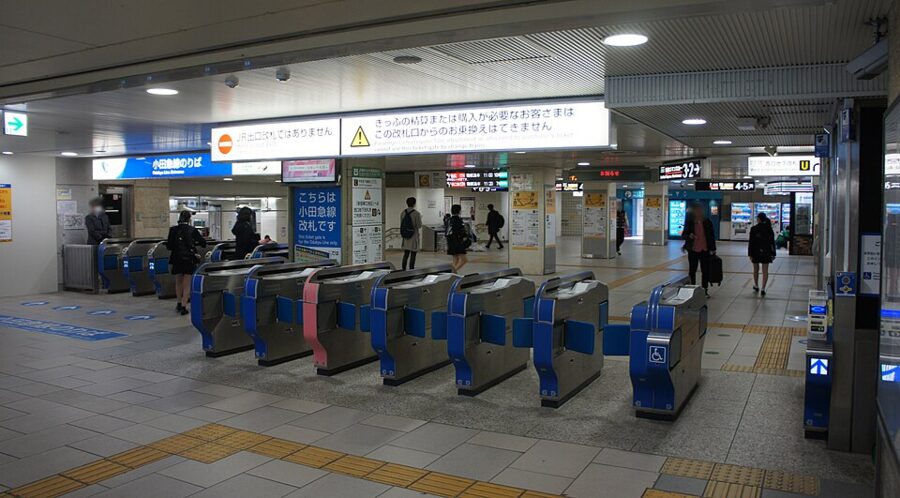

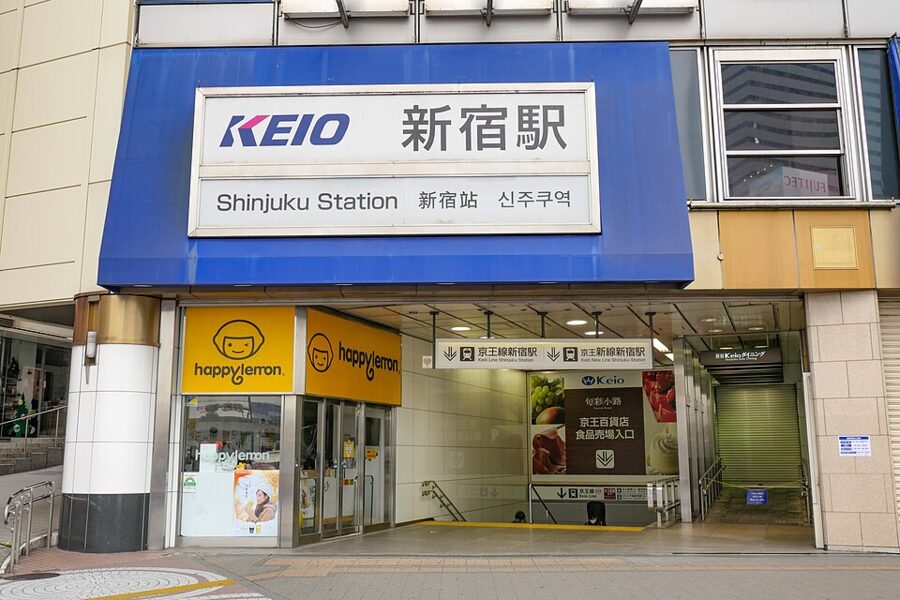
Two details catch people. Since the free passage opened in July 2020, the JR Central East Gate no longer handles Keio or Odakyu tickets, so you cannot come in from the east side of JR and walk straight through to the private lines. And Keio has two Shinjuku stations under one name. Keio Line trains to Hachioji and Takaosanguchi leave from the terminus under the Keio department store, while the Keio New Line runs from deep platforms under Koshu-kaido and continues as the Toei Shinjuku Line.
The New Line matters more than it looks. Trains from the main Keio Line terminus pass Hatsudai and Hatagaya without stopping, so for those two stops you need the New Line. Its first trains leave more than 30 minutes earlier than the terminus ones, and the last two Keio trains of the night, both for Sakurajosui, also go from the New Line platforms, which is worth knowing if you are planning a night around last trains.
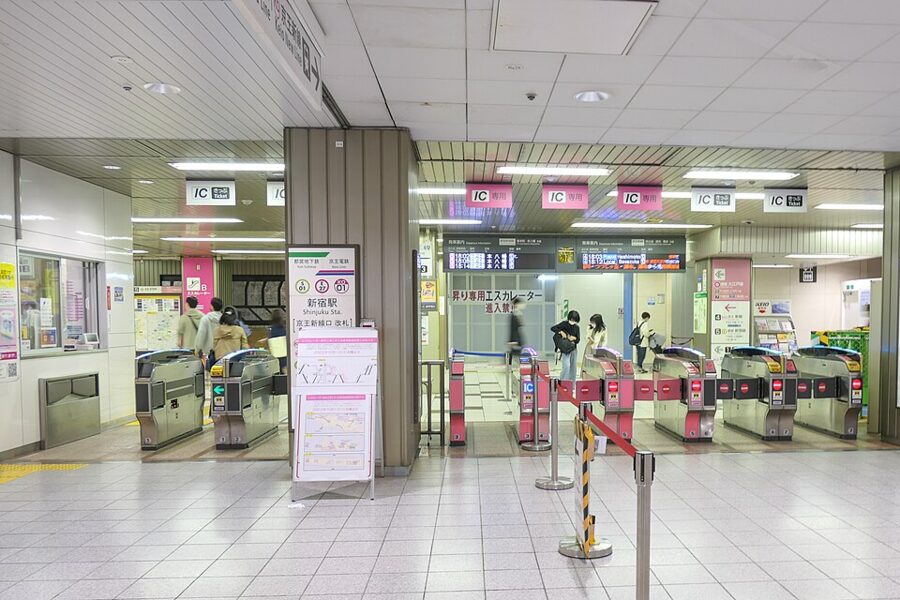

The subways, and Seibu up the road
The Toei Shinjuku Line (S01) and the Keio New Line are one station. The Toei Oedo Line (E27) platforms lie further south and seven floors down, and they connect to the Keio and Toei Shinjuku Line side inside the gates through a corridor on the fourth basement level. The Oedo Line gate marked for JR comes out one floor below street level, facing the Keio New Line gate.
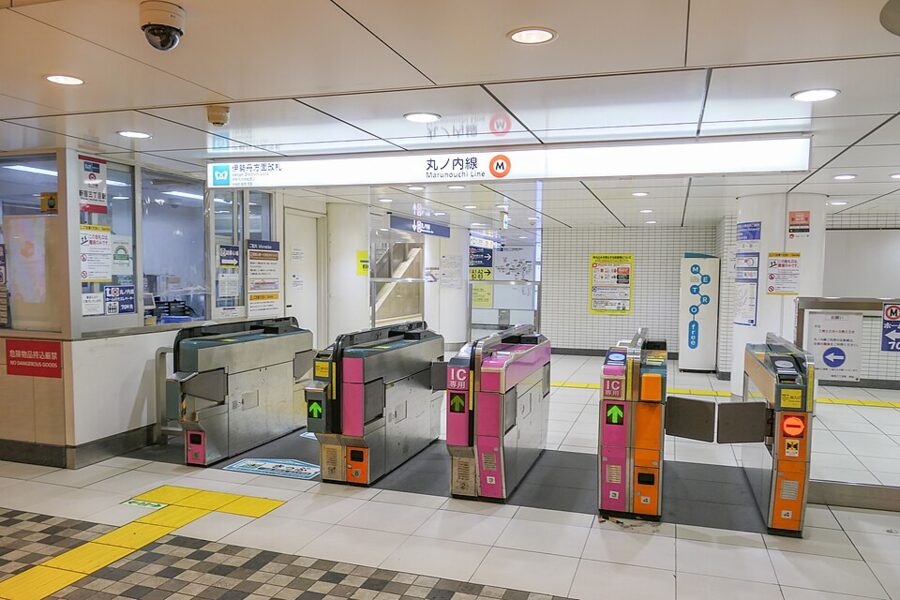
The Tokyo Metro Marunouchi Line (M08) is the odd one out. Its platform runs east to west under the north end of the station, with a gate at each end, and changing to anything else means leaving its gates. There is no ¥70 Metro-to-Toei transfer discount between the Marunouchi Line and the Toei lines at Shinjuku, because the walk is too long; the discount applies if you change to the Toei Shinjuku Line at Shinjuku-sanchome, or to the Oedo Line at Shinjuku-nishiguchi (E01), a separate Oedo station under the north-west corner that shares exits with the Marunouchi Line.
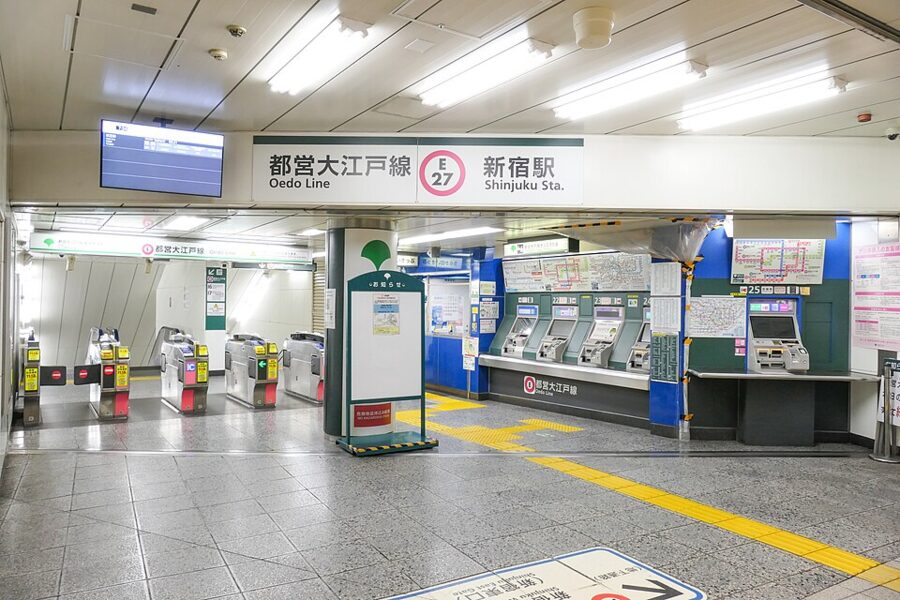

Seibu-Shinjuku (SS01), the terminus of the Seibu Shinjuku Line, is a separate station a few hundred meters away on the north edge of Kabukicho. It opened on March 25, 1952 as a temporary terminus, meant to last only until the line could be carried into the East Exit building, and that plan fell through. Walk it in the open from the East Exit, or underground through the Metro Promenade and Subnade.
Every exit, by what is on the other side
“Exit” and “gate” are used loosely on the signs. Since 2020 JR has called its ticket barriers gates (East Gate, West Gate), while the streets beyond are still signed East Exit and West Exit. Follow either; they point the same way. On JR platforms the gate names hang on yellow signboards, and choosing the right staircase is half the job.
East: the East Gate and the Central East Gate
Both JR east gates are one floor down. The East Gate opens onto the east end of the free passage and the basement of Lumine Est; the Central East Gate comes out at the south end of the same basement. Stairs from either lead up to the East Exit plaza, the big crossing and the 3D cat on the Cross Shinjuku Vision screen across the road. Kabukicho begins on the north side of Yasukuni-dori, and Golden Gai lies along its east side, a short walk beyond.
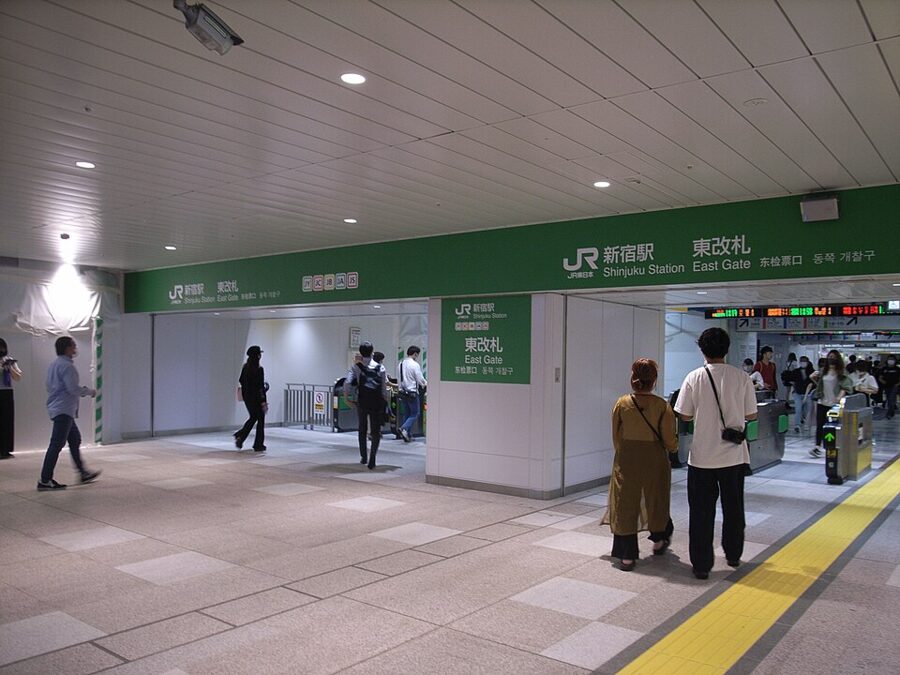

The Metro Promenade exits on this side carry letters and numbers: A8 and A9 come up by Lumine Est and the Central East Gate, B10 leads to Subnade and Seibu-Shinjuku, and B12b surfaces on Yasukuni-dori, the street that marks the bottom edge of Kabukicho.
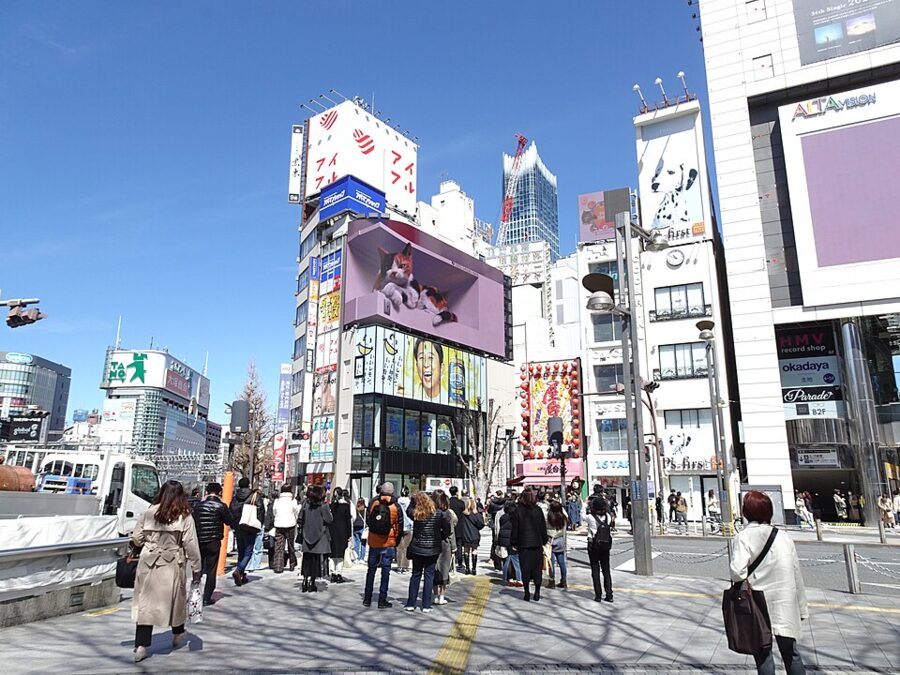

West: the West Gate, Odakyu and Keio
The JR West Gate is at the west end of the free passage, one floor down. Through it you reach the West Exit underground plaza, with the bus and taxi stops, the Marunouchi Line west gate and the walkway toward the government towers. The JR Central West Gate opens to the same plaza a little further south, beside the Odakyu and Keio entrances.
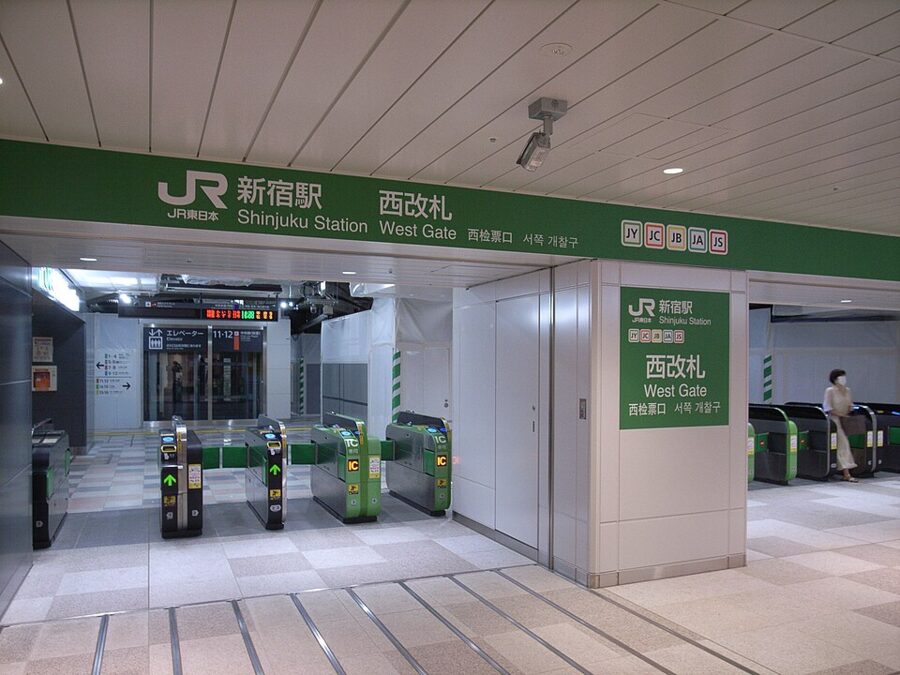

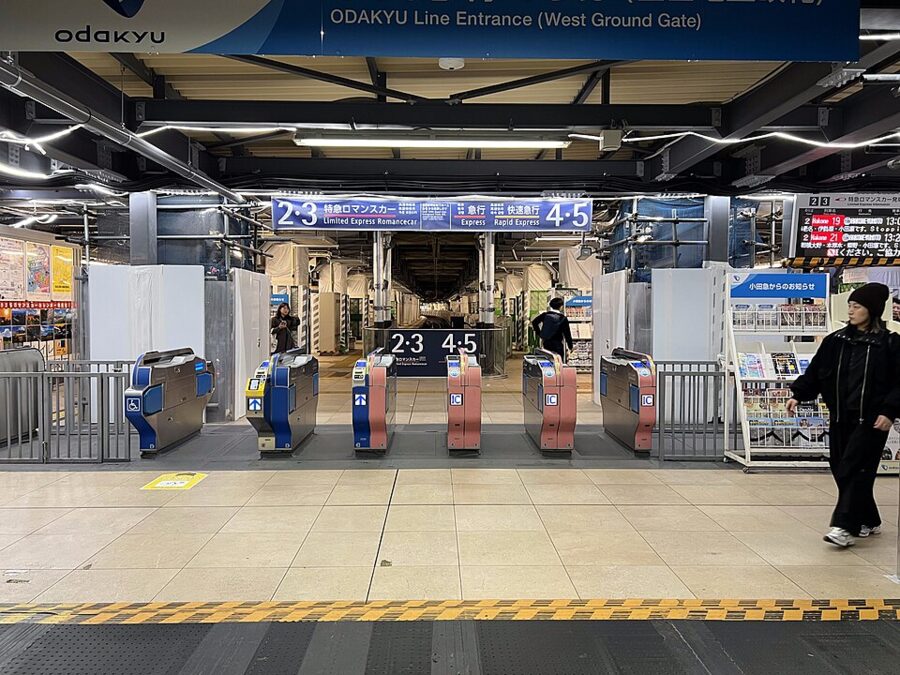
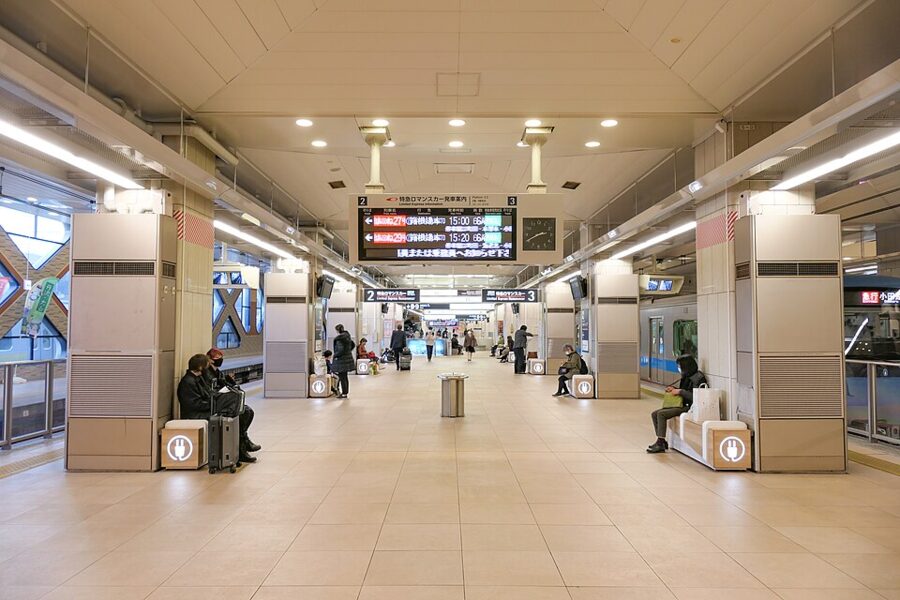
Odakyu has two west gates stacked one above the other: the West Ground Gate at street level, on the head end of the ground-floor platforms where the Romancecar leaves, and the West Underground Gate one floor down for the lower platforms. Every arriving Odakyu train stops at the far end, nearest these gates, whatever its length.
Keio’s gates are all underground and color-coded. The Keio West Gate is painted pink and the Keio Department Store Gate navy, both up a central staircase from the platforms.
The Hiroba Gate, up from the head of the platforms, is exit-only and comes out in the West Exit underground plaza. The Lumine Gate, at the south end, opens 06:30 to 22:00 and leads into Lumine 1, through which you can reach the JR and Odakyu South gates without going outside. In the morning rush a temporary exit-only gate opens 07:10 to 09:00 to drain the crowds.

For the free observation decks at the Tokyo Metropolitan Government Building, go out through any west gate into the underground plaza and keep walking west; the Metro Promenade numbering marks exit A16 for the government building. The lazy option is the Oedo Line: Tochomae, the next stop, sits under the building. In late 2026 the South deck admits visitors 09:30 to 21:30 and closes on the first and third Tuesday of the month.
South: the South Gate, the Southeast Gate and the Busta deck
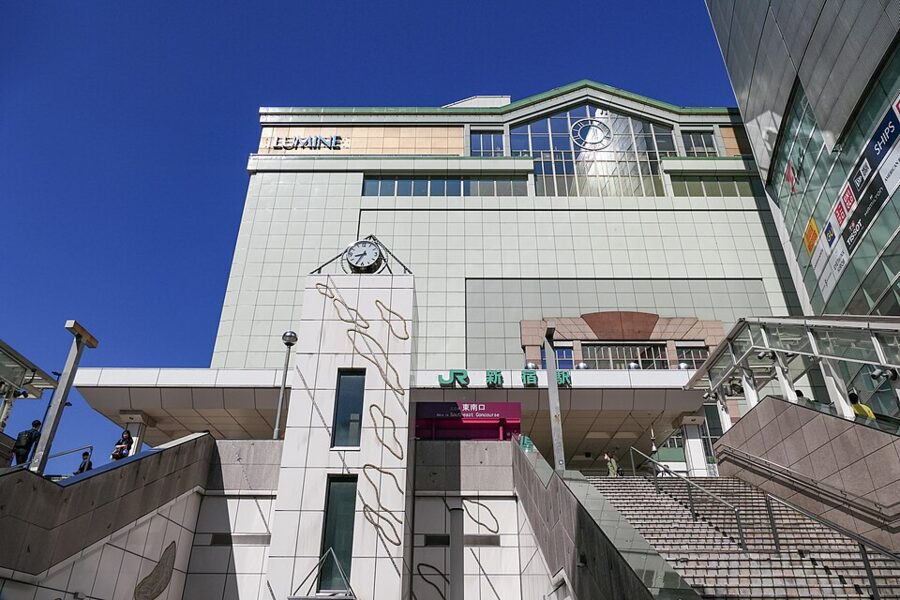
The JR South Gate opens straight onto the Koshu-kaido overpass, with the Odakyu South Gate next to it and Lumine 2 above. This is the street-level exit for Shinjuku Gyoen: the Environment Ministry, which runs the garden, puts its Shinjuku Gate at 10 minutes on foot from the South Exit.
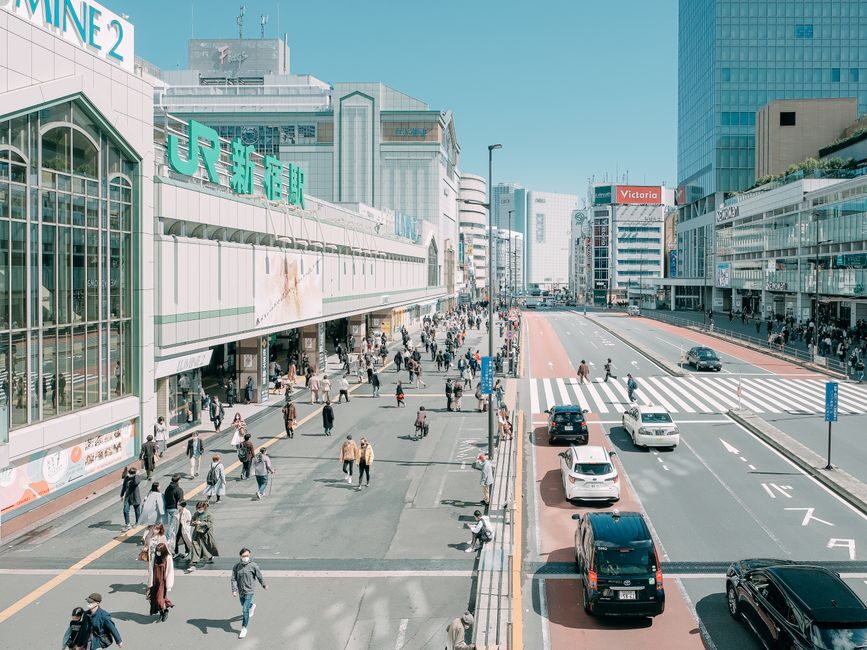
At the east end of the same overpass the Southeast Gate opens 06:00 to 24:00, with outdoor stairs down to street level on the east side of the tracks. It is handy for the Flags building and the streets toward Shinjuku-sanchome, and it is the JR exit most likely to be shut when you want it late at night.

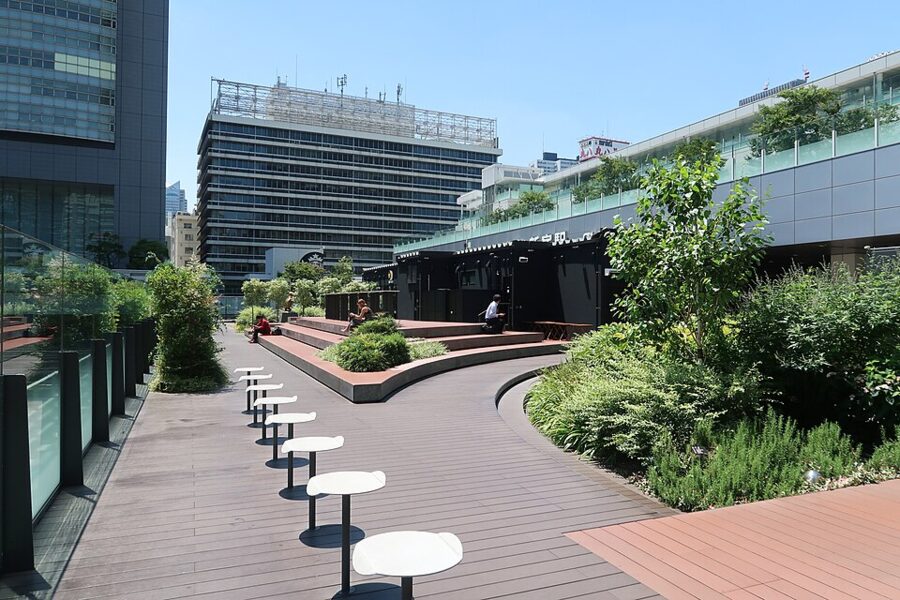
Across Koshu-kaido, on a deck built over the southern end of the tracks, JR has three more gates. The Koshu-kaido Gate faces the road diagonally across from the South Gate. The New South Gate sits directly behind it, closest to Takashimaya Times Square and the Shinjuku Southern Terrace walkway, and opens onto Suica’s Penguin Park. The Miraina Tower Gate, at the east end of the deck, serves the JR Shinjuku Miraina Tower and the NEWoMan shops, and is staffed only by intercom all day.
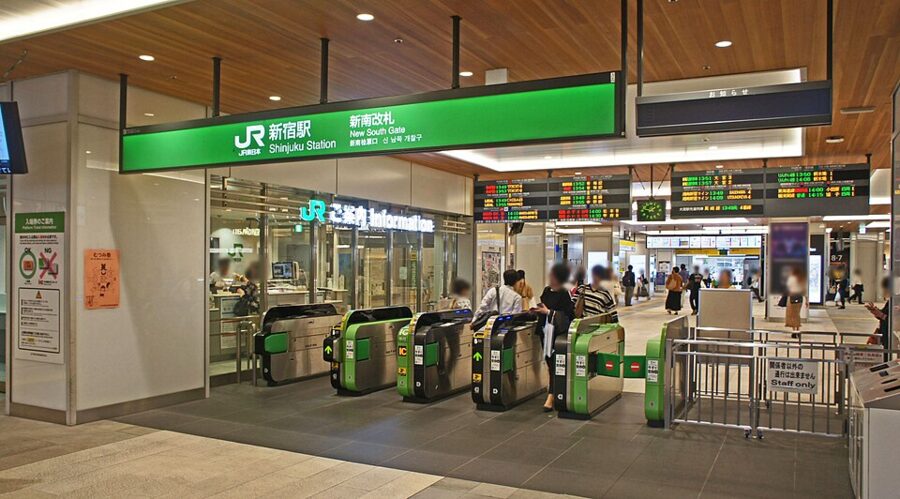


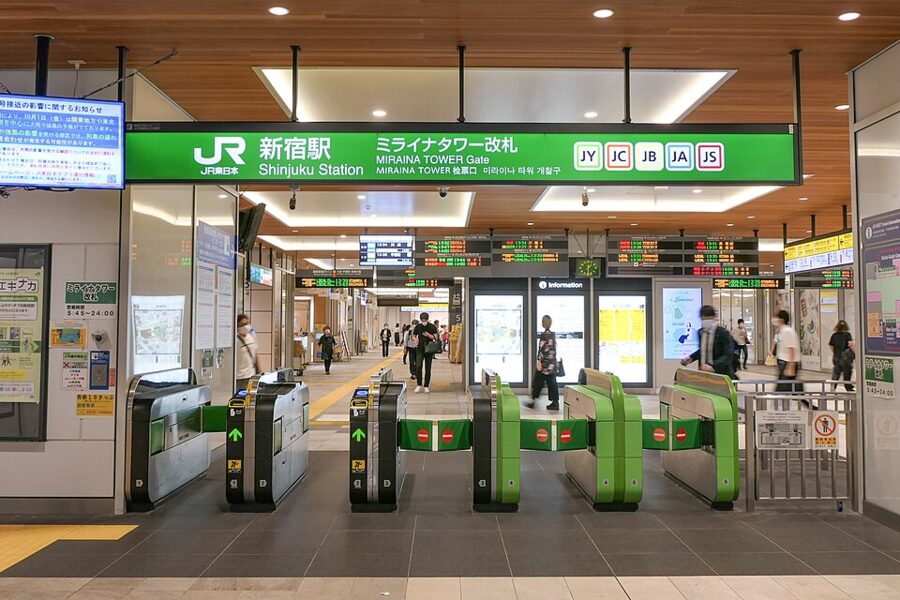

Crossing from west to east
Use the free passage. It is the only crossing that is level, lit, out of the rain and free, and it runs under the north end of the JR station between the East Gate and the West Gate, opening at the east end into the Lumine Est basement and at the west end into the West Exit underground plaza. JR built it by widening the old North Passage from 17 meters to 25 and moving both gates to its south side. It took the place of a detour that for decades meant either a platform ticket or a long way round.
The old ways round still work, and each has a use:
- The Metro Promenade, the underground corridor along the Marunouchi Line, crosses beneath the tracks between the Marunouchi west and east gates and carries on under Shinjuku-dori to Shinjuku-sanchome. The stretch between the two Marunouchi gates closes early in the morning and late at night.
- The Koshu-kaido overpass at the South Exit is the open-air route, and the one to take if you are going between the south side and Busta Shinjuku anyway.
- The railway bridges at the north end: the big girder bridge over Yasukuni-dori and the low Tsunohazu underpass beside Omoide Yokocho. Both are fine on foot, but the Tsunohazu underpass is low and narrow, and not where I would drag a suitcase.
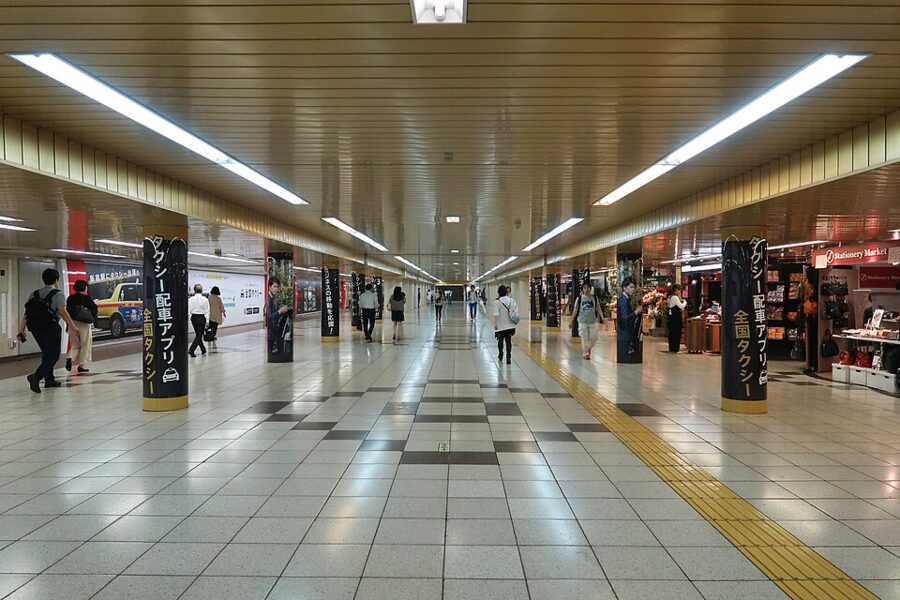

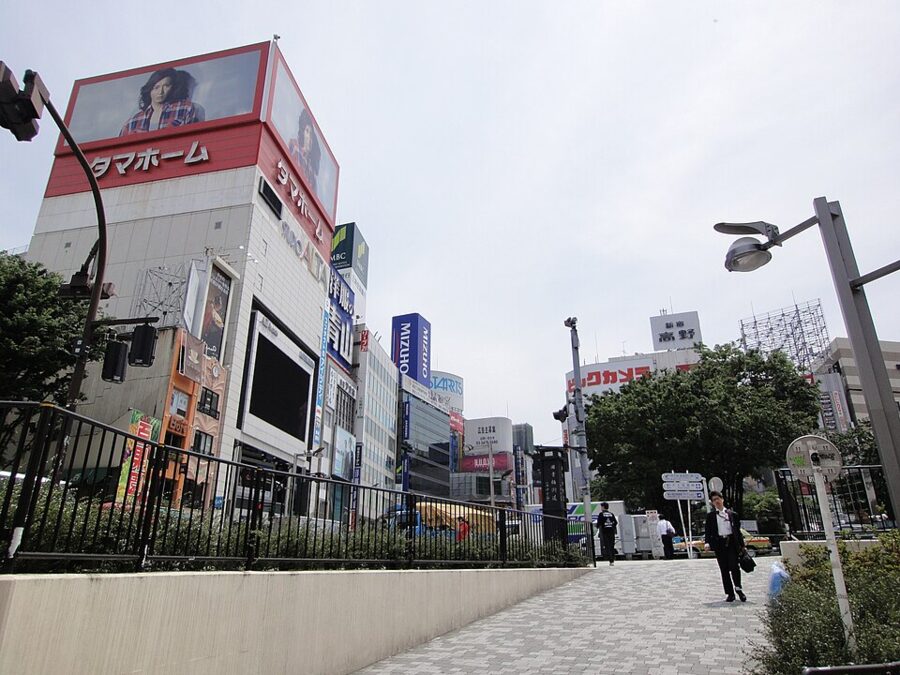

If you hold a JR ticket and are changing trains, none of this applies: the connecting corridors inside the gates cross from the east platforms to the west ones, and you never touch the free passage at all.
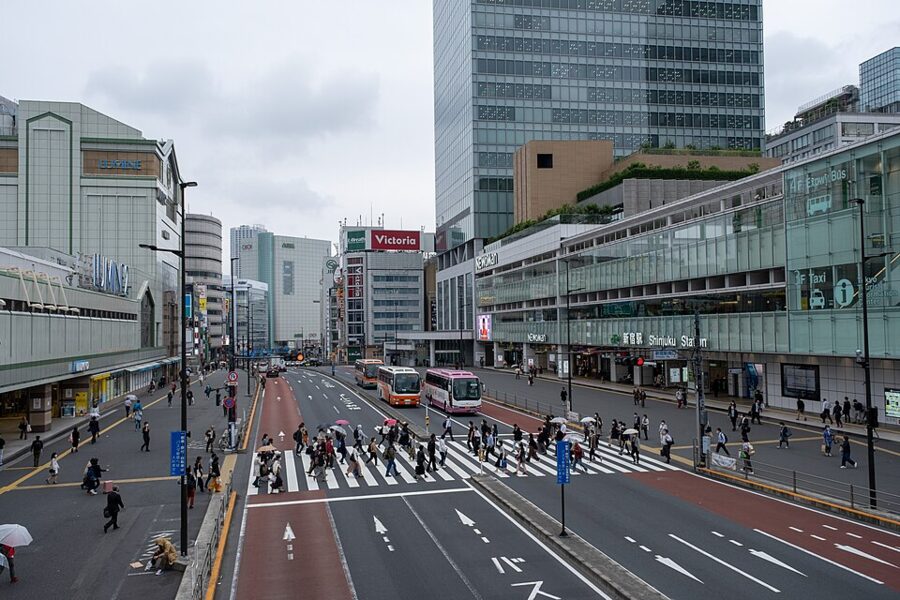

Busta Shinjuku, the Narita Express and the Romancecar
Three kinds of long trip leave from three different corners, and each has its own approach.
Busta Shinjuku and the highway buses
Busta Shinjuku (バスタ新宿) opened on April 4, 2016, on a deck over the tracks on the south side of Koshu-kaido, and gathered up highway bus stops that had been scattered across 19 locations around the West Exit. At opening it handled up to 1,625 departures a day from 118 companies, to 39 prefectures, which made it the biggest highway bus terminal in Japan. The address is in Shibuya ward, because the ward boundary runs along Koshu-kaido; the name stayed Shinjuku.
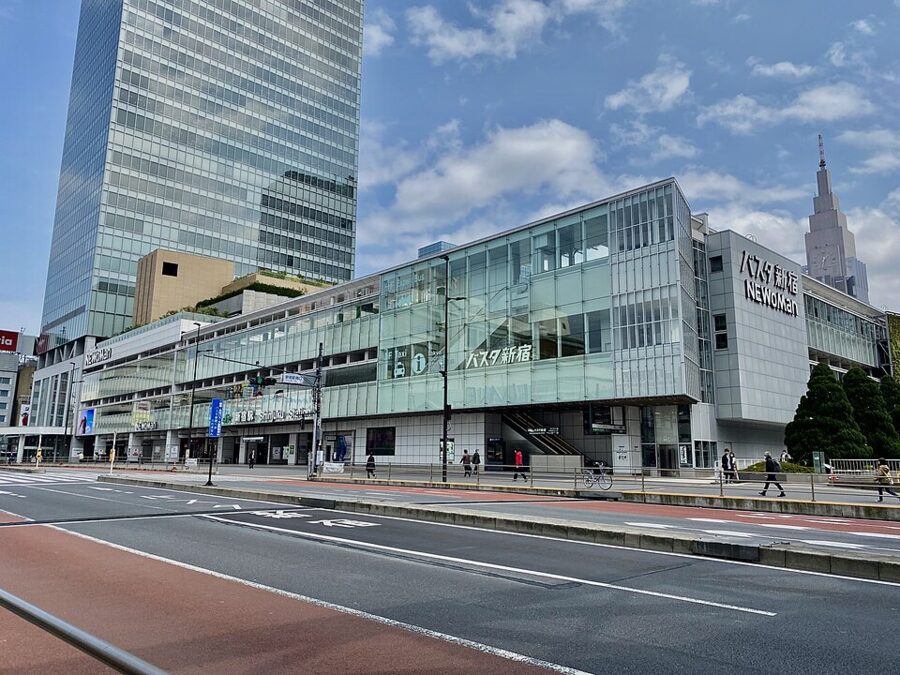

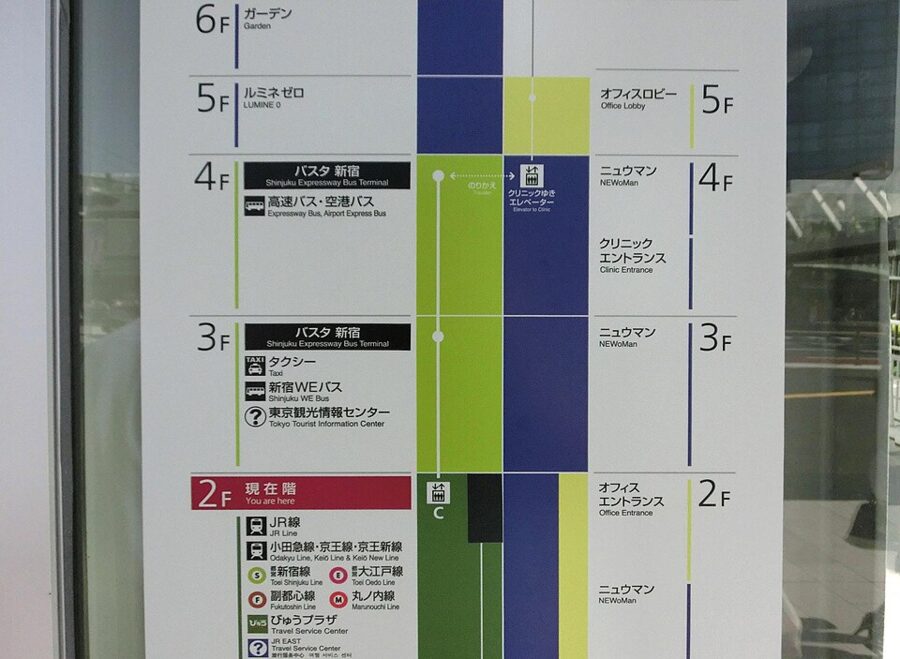
The floors are the thing to learn. The second floor, level with Koshu-kaido, holds the station gates and the entrance. The third floor has the taxi stands, the highway bus arrivals and a Tokyo Tourist Information Center. The fourth floor is the departure level, with the bus bays, ticket counters, waiting area and a convenience store.
Busta’s own notice says boarding starts about 10 minutes before departure, so be on the fourth floor by then.

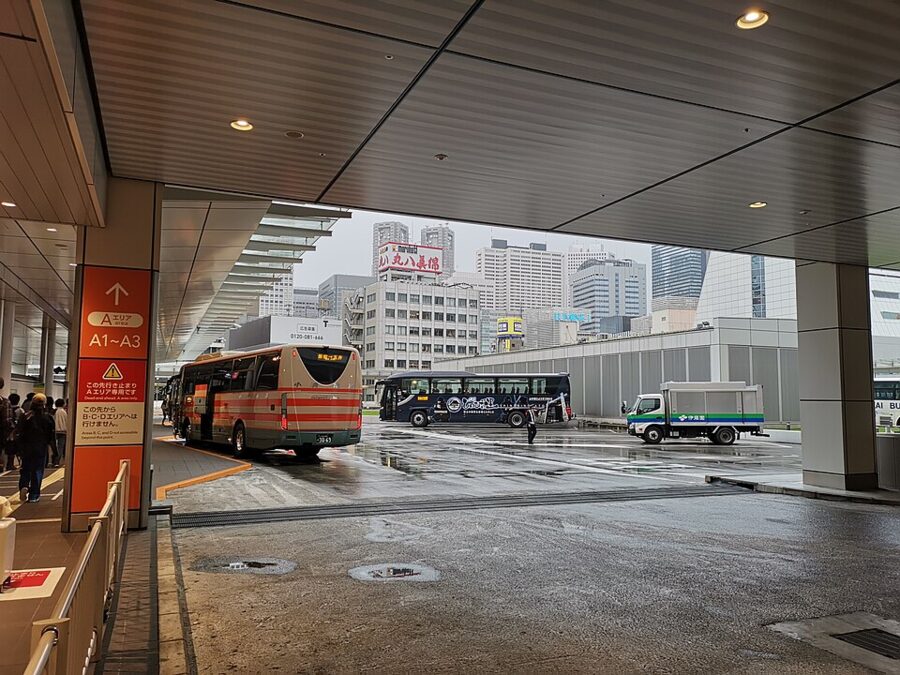
Most travelers use Busta for the buses to the Fuji Five Lakes, the Kawaguchiko run in particular, which the Mount Fuji guide compares with the train. Airport limousine buses for Haneda and Narita leave from the fourth floor too, and they beat the train if you are carrying more than you can lift up a staircase.

The third-floor Tokyo Tourist Information Center is run by the metropolitan government and opens 06:30 to 21:00 every day. It stores and forwards luggage, changes money, sells transport tickets and lends wheelchairs and strollers, which makes it the best place on the south side to leave a bag for the day.
The Narita Express and the Chuo Line expresses
The Narita Express leaves from platforms 5 and 6, at the south-east corner of the JR station, together with the Tobu limited expresses to Nikko and Kinugawa. From the East Gate or the free passage, go through the gates and follow the red line on the basement floor labeled for the Narita Express; it leads along a long corridor to the platform stairs. The comparison with buses and with the Keisei trains is in the Narita Airport guide.
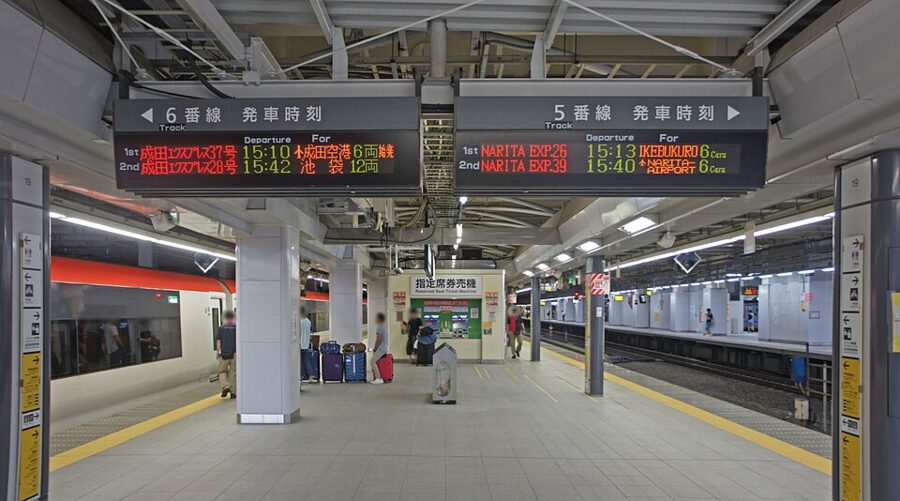

The Azusa and Kaiji limited expresses to Matsumoto and Kofu use platforms 9 and 10, in the middle of the station. Their next stop is Tachikawa.
The Romancecar to Hakone
Odakyu’s Romancecar limited expresses to Hakone-Yumoto, Odawara and Enoshima leave from the ground-level platforms of the Odakyu terminus, entered through the West Ground Gate. Every Romancecar seat is reserved, so buy before you board, at the Romancecar ticket office or the machines in the station. Everything about the trip itself, the passes and the line beyond Odawara, is in the Hakone guide.

For the other classic day trip, the JR Shonan-Shinjuku Line runs straight from tracks 1 to 4 through Yokohama to Kamakura on its Zushi-bound trains, with no change needed.

Underground: the Promenade, Subnade and the walk to Shinjuku-sanchome
You can cross most of central Shinjuku without going up to the street, and in summer rain or a winter wind that is worth knowing. The spine is the Metro Promenade under Shinjuku-dori, from the Marunouchi Line gates to Shinjuku-sanchome station. Its exits are numbered in A, B and C series, each signed with the building it comes up in.
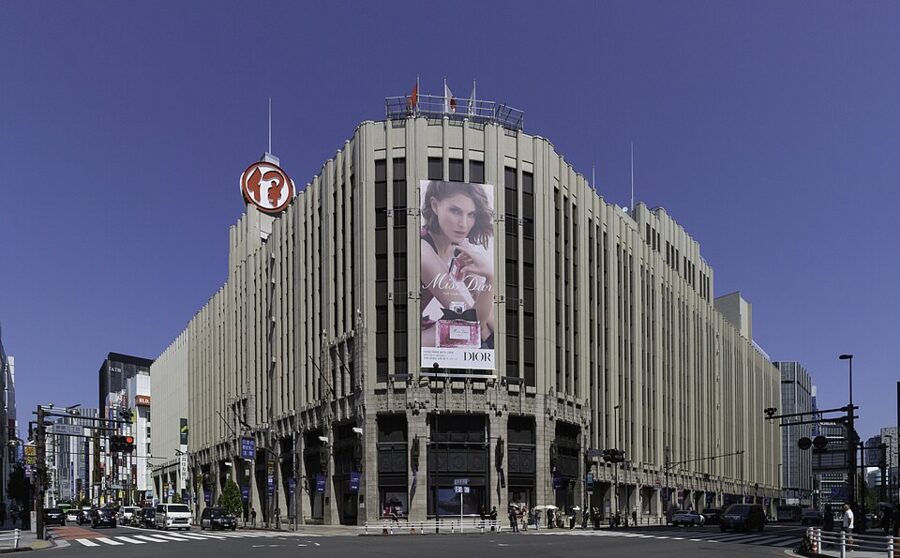
For Isetan, walk the Promenade east and take exits B3 to B5, which come up at the store. If you are already on the Marunouchi, Fukutoshin or Toei Shinjuku lines, ride to Shinjuku-sanchome instead: Isetan’s own access page counts about a minute from the Isetan-side gates there. Shinjuku-sanchome is also the closest station to the Shinjuku Gate of the garden, about five minutes from exit E5.


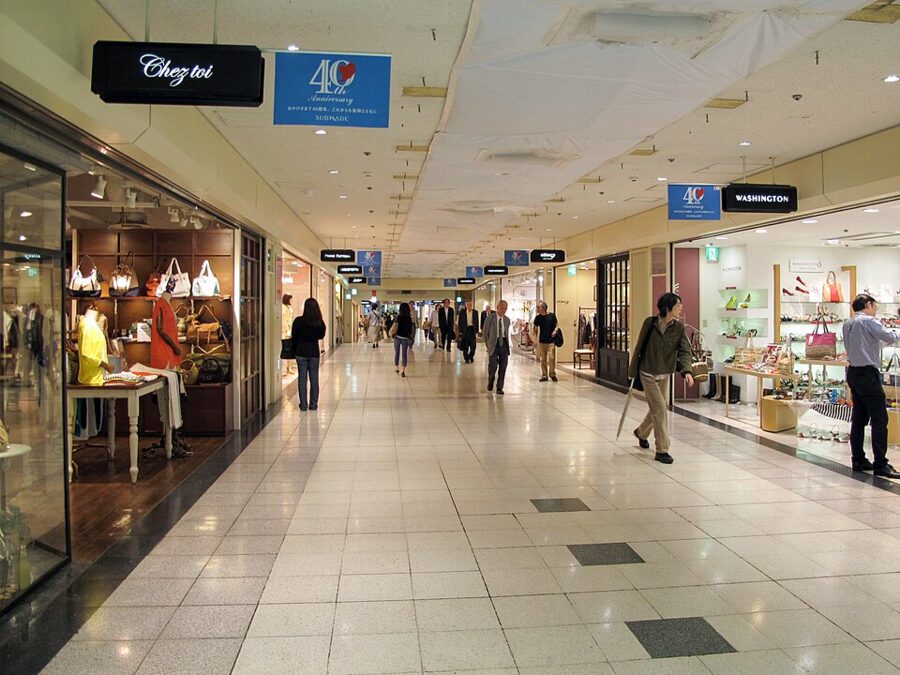

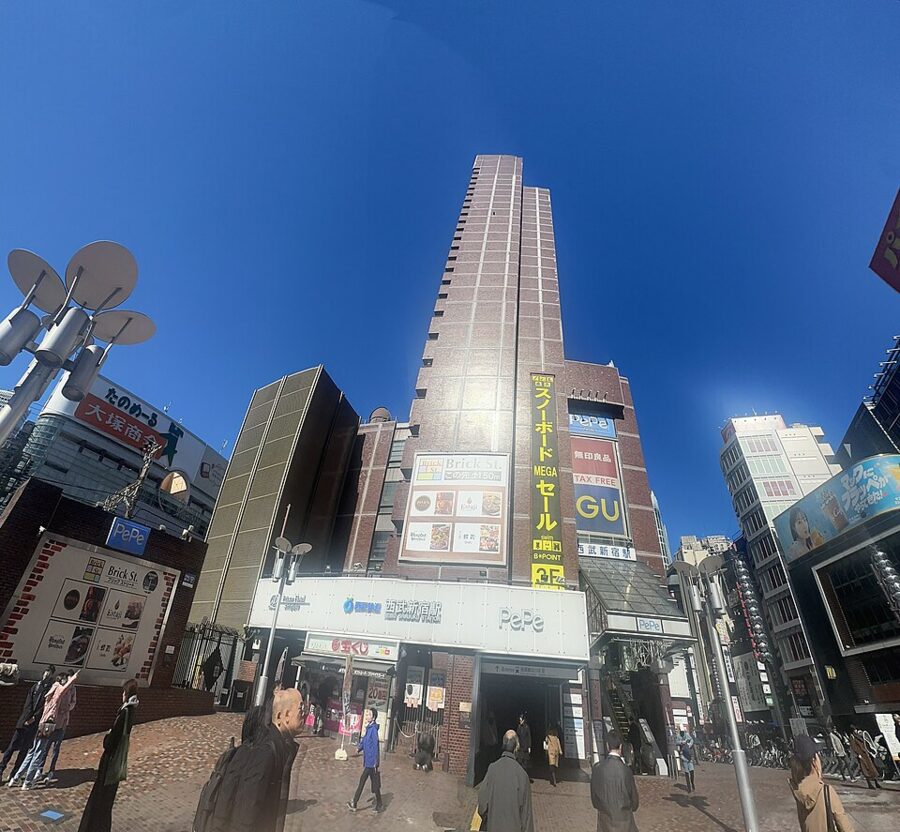
Subnade (サブナード), opened on September 15, 1973, runs under Yasukuni-dori and Shinjuku More 4-bangai with more than 80 shops, and links the Metro Promenade to Seibu-Shinjuku Station through the PePe building. The metropolitan government’s rebuild plan includes a new underground link of about 140 meters between Subnade and the Metro Promenade, so the two will one day join without the dog-leg.

On the west side the underground plaza connects to the Odakyu and Keio stores, the Keio Mall arcade, and the walkway west toward the skyscrapers. Expect detours there: the plaza has been under construction since 2022 and its walkways change every few months (more on that below).
Lockers, lifts, and when the crowds come
Lockers and luggage
Large lockers go first. JR East’s own locker guide, updated in September 2025, warns that the suitcase-size boxes can be full by late morning. Its prices at that date were ¥300 for the smallest box up to ¥1,000 for the largest at standard lockers, and ¥300 to ¥900 at the reservable Multi Ecube lockers, which add ¥100 to ¥200 to the medium and large sizes at peak times. Multi Ecube boxes can be booked up to a month ahead for ¥500 per box.
Where to look, from the same JR East locker guide (box counts as of August 2025):
- Inside the gates, basement corridor to platforms 5 and 6. The one JR itself calls most likely to have space, with 42 large boxes; follow the Narita Express line.
- Inside the South Gate, second floor: the biggest bank, with 76 large boxes, handy for the Odakyu transfer.
- Outside the gates at the East Exit, street level and the basement passage: 64 large boxes at street level, and reservable ones by the Central East Gate.
- By the New South Gate, outside the gates near Suica’s Penguin Park, and inside by the escalators to platforms 13 and 14: the ones for Busta Shinjuku.
Two of the JR banks, at the East Exit and just inside the East Gate, offer same-day delivery to hotels in the 23 wards and Urayasu. Keio runs its own lockers by its gates, including the Keio West and Keio Department Store mezzanines and the Keio New Line entrance, and posts live availability for each bank. The other option is the tourist center at Busta, above.

Lifts, step-free routes and toilets
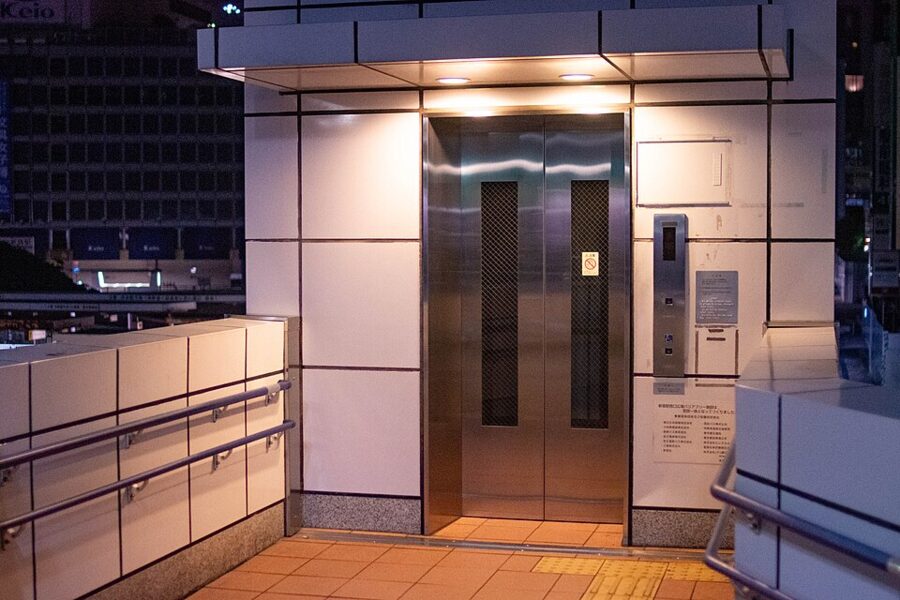
A Shinjuku terminal elevator and stairs map covering the whole station is linked from Odakyu’s station page, and it is the one map worth saving to your phone if you use a wheelchair or a stroller. A few points from the operators’ own descriptions:
- JR: the connecting corridor by the free passage has lifts to platforms 9 to 16, and the South overpass has lifts and escalators to every platform except 5 and 6, which are reached from the basement corridor or the Busta deck.
- Odakyu: the lifts from the South Gate serve every platform, ground and underground; the West gates have no lift inside the barrier.
- Keio: lifts link the Keio West and Department Store gate level with the boarding platforms; the arrival-only platform has none, so use the head end to cross.
- Marunouchi Line: the lift and escalators are at the east end only.
The accessible toilets inside the JR Central Passage and on the South overpass are kept locked; press the intercom beside the door and staff open them. Keio’s station page carries a terminal map and an elevator map as PDFs, and Tokyo Metro posts each month’s lift shutdowns for its Shinjuku station.

When the crowds come
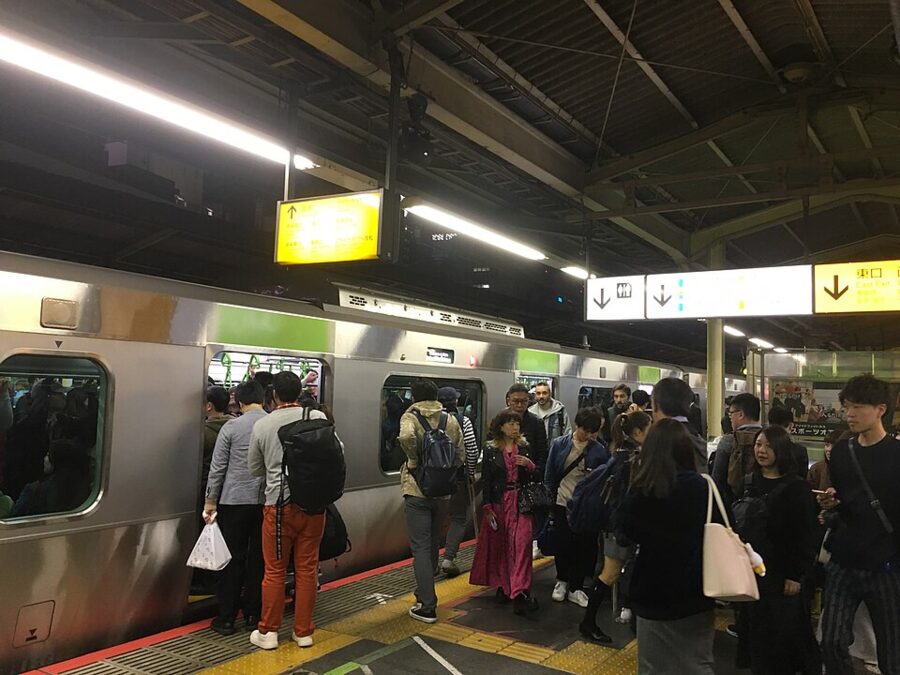
Avoid weekday mornings from 07:00 to 10:00 if you have luggage, and Friday evenings on the Chuo Line Rapid platforms to Takao (11 and 12), which are narrower than the others and fill dangerously when trains are delayed. The busiest flows run from the private railways into JR and the subway in the morning and back in the evening, so the Odakyu and Keio transfer gates are the worst places to be against the current.
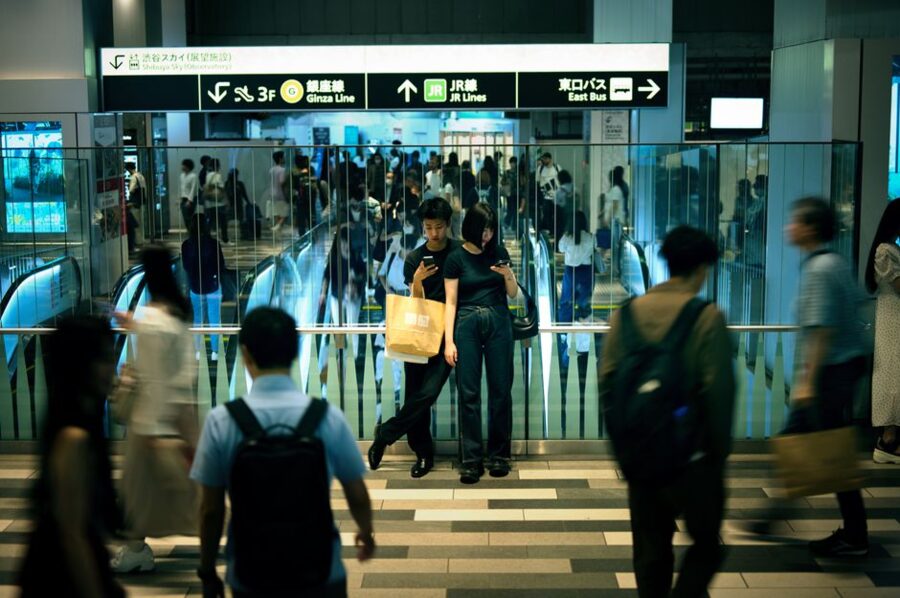
The numbers explain it. JR East counted 666,809 people boarding at Shinjuku per day in fiscal 2024, the most of any JR East station. Keio counted 684,055 people entering and leaving per day in fiscal 2025, Odakyu 458,284 and Tokyo Metro 201,609, before the Toei figures are added.
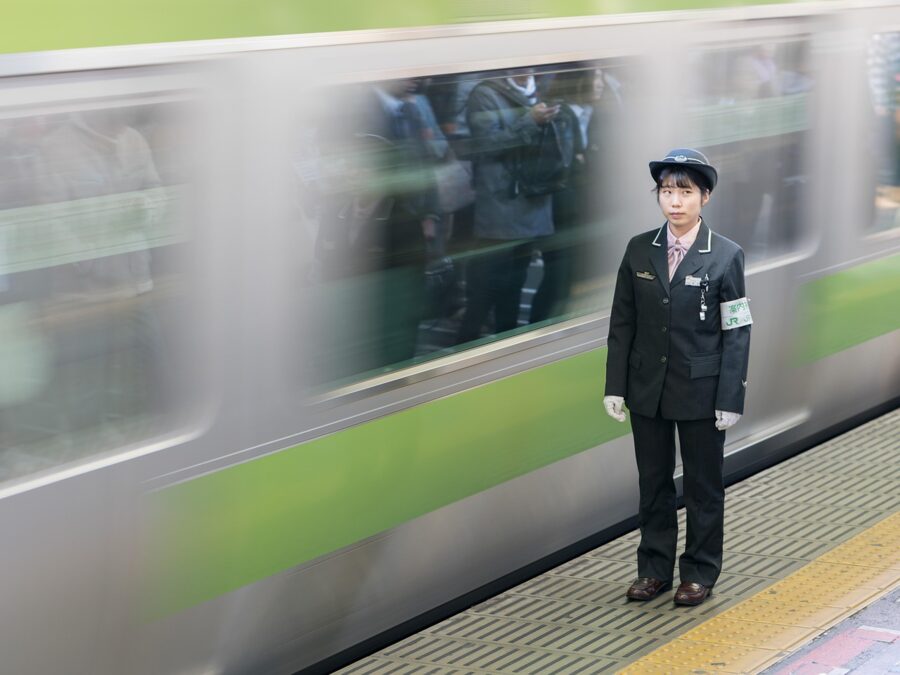
The rebuild: what has gone, what has moved, and what comes next
The metropolitan government calls the whole program Shinjuku Grand Terminal. Its 2018 plan rebuilds the station plazas, adds east-west decks across the tracks, puts pedestrians ahead of cars on both sides, and replaces the aging station buildings with towers; the land readjustment that ties it together is scheduled to finish in fiscal 2046. That is a long time to plan around, so here is what has changed by late 2026.
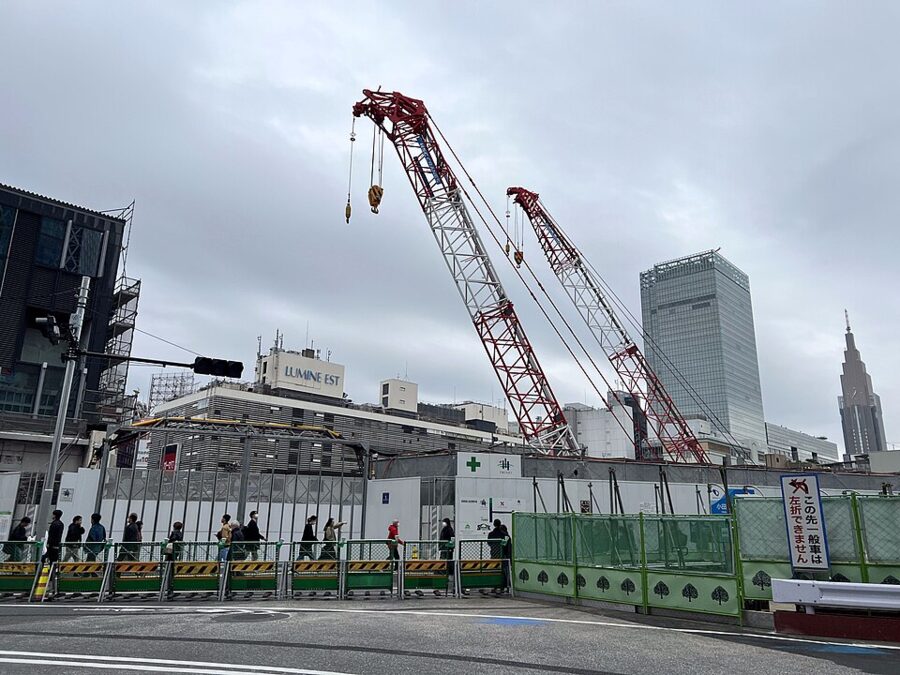
Gone
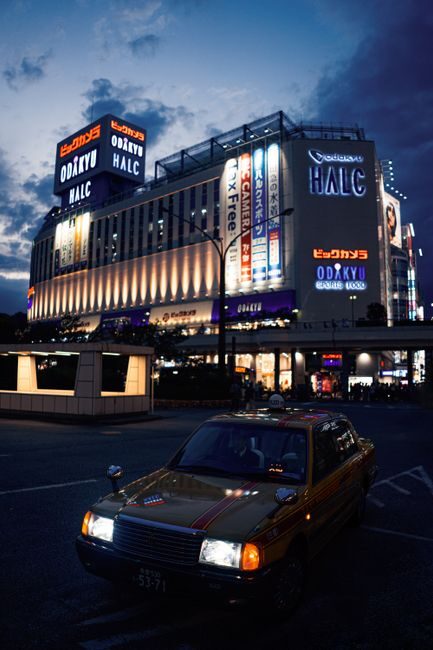
- The Odakyu department store main building closed on October 2, 2022, and demolition started the next day. Odakyu and Tokyo Metro are building a 48-story tower of about 260 meters on the site, with new construction started in March 2024 and completion scheduled for fiscal 2029. The department store trades on from the HALC building next door.
- The Shinjuku Subaru Building on the West Exit plaza was demolished between August 2018 and May 2019.
- Studio Alta on the East Exit closed on February 28, 2025; demolition is expected to run to about 2027.
- The JR Shinjuku Building and seven neighbors south-west of the station are being cleared for a 37-story tower of about 225 meters by Keio and JR East, after which the Keio department store and Lumine 1 will be replaced by a 110-meter building.
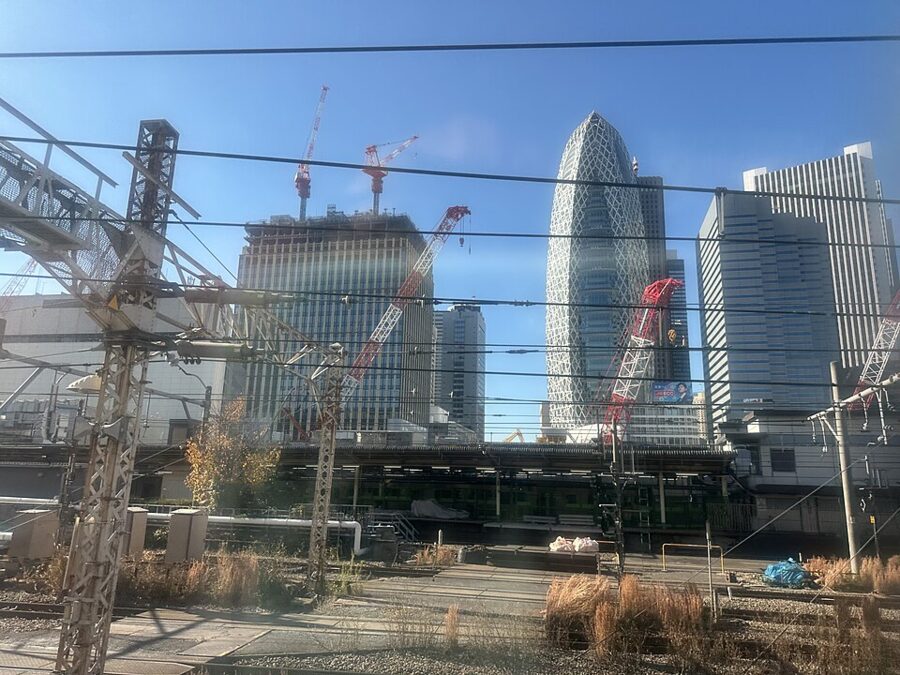

Moved
The West Exit plaza is where the rebuild bites. The bus stairs from the plaza closed in stages from August 2022 to February 2023, the crossing on the plaza went in October 2023, and a series of switches since then have rerouted almost everything. The metropolitan government’s construction portal for the station lists each one, with route videos:
- From April and May 2025 the West Exit taxi ranks were closed or moved, the Keio-side underground rank closing and the JR-side one moving toward Shinjuku Central Park.
- From June 21, 2025 the West Exit bus stops began to move, and from September 27, 2025 cars can no longer drive north-south through the plaza, with bus and taxi stands moved again to match.
- Walkways on the plaza changed on February 17 and June 23, 2026.
- From October 2026 to late February 2027, road works on the plaza run at night, 23:00 to 05:00, rebuilding bus stops, roofs and curbs.
- From the first train on December 19, 2026, the underground corridor linking the Oedo Line and the west-side Marunouchi gate with the JR gates closes, replaced by a temporary passage further west with stairs in three places and a ramp for wheelchairs.
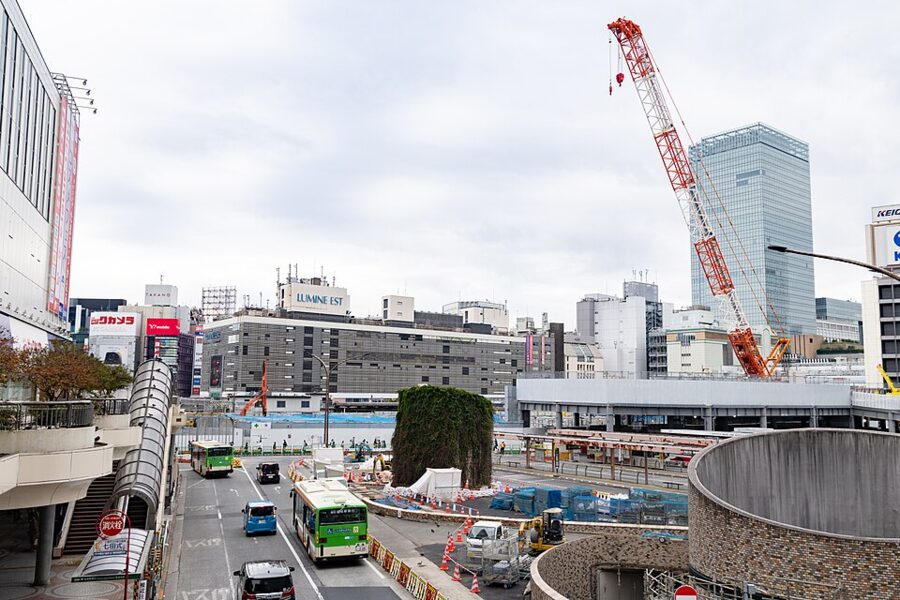

Two smaller changes affect the station itself. Odakyu’s underground transfer gate to JR goes IC-card only from March 2027, as its Shinjuku station page notes. And JR East scheduled platform doors on the Chuo-Sobu local tracks 13 and 16 to come into use from late November 2026.
Next
The West Exit tower is due in fiscal 2029. The south-west towers, the decks over the tracks and the new East Exit plaza follow on the way to the fiscal 2046 finish. Until then the West Exit will keep moving its stops every few months, and the free passage will stay what it has been since July 2020: the fixed line across the middle of a station that is otherwise always being rebuilt.
So decide your side before you leave the platform. If you are wrong, the free passage is one floor down at the north end, and the walk across takes less time than reading the signs.